
Review · SANTIAGO DE COMPOSTELA TOURS
Santiago de Compostela: Finisterre, Muxía & Costa da Morte
The Atlantic edge rewards a full day. This trip links Finisterre and Muxía with fishing villages, a medieval bridge, a waterfall, and wide coastal views, making it a strong choice if you have only one free day beyond Santiago. I like the comfortable air-conditioned coach and the number of places covered for $59.28. The main drawback is the pace: nine hours is a long stretch, especially after walking the Camino.
I also like that the tour gives you real free time in Fisterra for lunch and wandering, rather than keeping you tied to the guide. Guides such as Andrea, Dani, Christian, Daniel, Reuben, and Nago or Nagore have been praised for clear explanations and good group care, though the bilingual or sometimes trilingual narration can feel rushed when the microphone misbehaves.
In This Review
- Key points to know before booking
- Why this Costa da Morte day trip works
- Ponte Maceira and its medieval river crossing
- Muros, a fishing port with old stone lanes
- Ézaro Waterfall and the short scenic pause
- Cape Finisterre and the lighthouse at the end of the world
- Fisterra town, lunch, and time to wander
- Muxía, the sea sanctuary, and giant granite stones
- The coach, guide, and bilingual commentary
- How the schedule feels over nine hours
- Weather, group size, and practical planning
- Who should book this tour?
- Should you book the Finisterre and Muxía tour?
- FAQ
- Where does the tour start and finish?
- How long does the tour last?
- Is lunch included?
- Is the tour offered in English?
- What is included in the price?
- Can I cancel for a full refund?
Key points to know before booking
- Six varied stops: You see a medieval riverside village, a fishing town, a waterfall, two coastal pilgrimage sites, and the Cape Finisterre lighthouse.
- Best post-Camino option: The bus lets you reach the traditional end of the pilgrimage without adding a long walk.
- Nine hours on the road: It is an efficient day, but not a restful half-day outing.
- Fisterra gets the longest break: You have about 90 minutes for food, the port, and the old lanes.
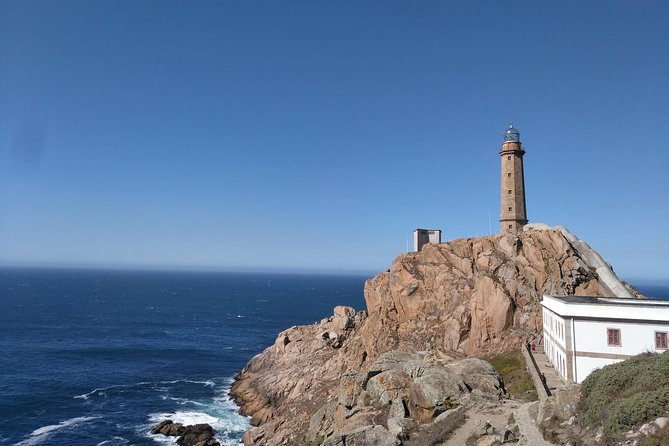
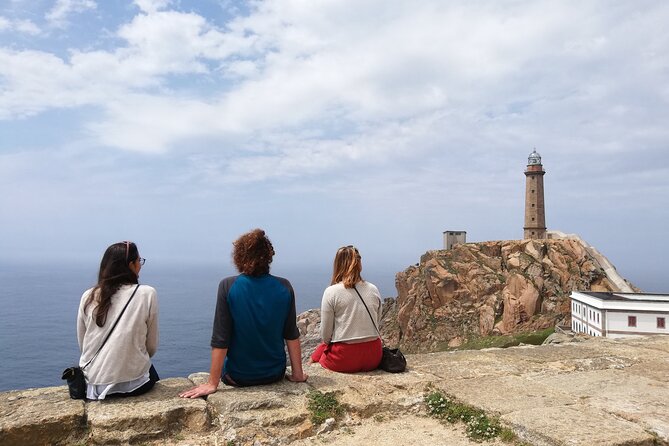
- Muxía may be the highlight: The sea sanctuary, giant stones, and views toward Cabo Vilán give this stop a strong sense of place.
- Lunch is extra: You choose and pay for your meal in Fisterra, so it pays to check the menu before sitting down.
Why this Costa da Morte day trip works
This is a bus tour for seeing a lot of Galicia in one sweep. From Santiago de Compostela, you head west toward the Costa da Morte, a rugged Atlantic coast shaped by fishing, pilgrimage, storms, and old local legends.
The day is not built around long guided walks. Most stops last between 25 and 40 minutes, while Fisterra gives you about an hour and a half. That makes the trip appealing after the Camino de Santiago, when your feet may be willing to admire another beautiful place but not eager to hike several more miles.
The price is one of the tour’s strongest points. At $59.28 per person, transport between six stops is included, along with a guide and an air-conditioned vehicle. You still pay for lunch, but the cost is low for a full day reaching places that would take more planning by public transport.
The tradeoff is simple: you gain coverage, not solitude. A coach can carry up to 50 people, although some departures have been much smaller, including one group of about 15. The larger the group, the more important it is to listen for meeting times and return promptly to the bus.
A few more Spain trips worth a look
- Santiago: Cathedral & Museum Tour + Pórtico of Glory Option
★ 4.7 · 2,116 reviews - From Santiago: Finisterre, Muxia & Costa da Morte Excursion
★ 4.7 · 1,481 reviews - Excursion to Finisterre + Muxia + Costa da Morte (7 stops)
★ 5.0 · 1,367 reviews
Ponte Maceira and its medieval river crossing
The first stop is Ponte Maceira, a small village near Santiago with a handsome 14th-century bridge over the Tambre River. You get about 25 minutes here, enough to cross the bridge, look at the old mills, and walk a little along the cobbled streets.
This is a good opening stop because it introduces a quieter side of Galicia. The village sits among trees and river scenery rather than grand monuments. The medieval mills add a practical touch to the setting, reminding you that this was a working community, not a village arranged only for photographs.
Twenty-five minutes is also the limit of the stop. You will not have time for a slow exploration of every lane or a long riverside walk. I would treat it as a pleasant orientation to rural Galicia, not as one of the day’s major destinations.
Admission is free, and there is no extra activity to arrange. Stay aware of the guide’s instructions because the tour moves on quickly.
Muros, a fishing port with old stone lanes
Muros gives you about 30 minutes to explore a historic fishing town. You can walk through its 16th-century center or head toward the port, where the town’s connection to the sea is easy to feel.
I like this stop because it breaks up the day with ordinary coastal life. The stone lanes and harbor are more intimate than the grand views at Finisterre, and the short walk gives you a quick look at how Galicia’s fishing communities developed around the water.
The timing calls for a choice. If old buildings interest you, use your half hour for the historic center. If you prefer working waterfronts and boats, go toward the port. Trying to do both may leave you hurrying back to the coach.
Muros is also one of the stops that divides opinion. Some people find the early village visits less important than the final coastal sites. If your main goal is Finisterre and Muxía, remember that the tour is designed to provide variety, not to spend the whole day at the Atlantic viewpoints.
Ézaro Waterfall and the short scenic pause
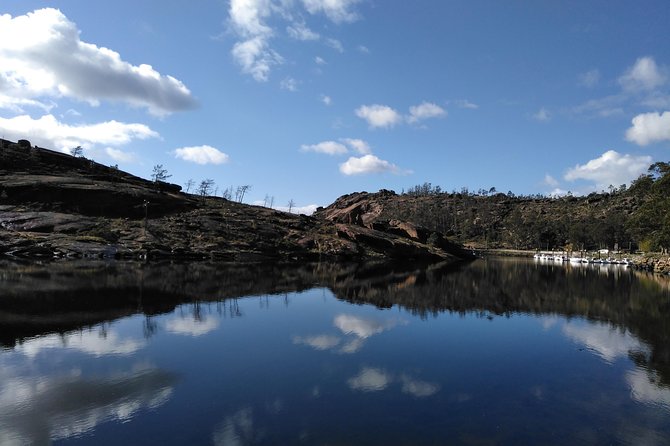
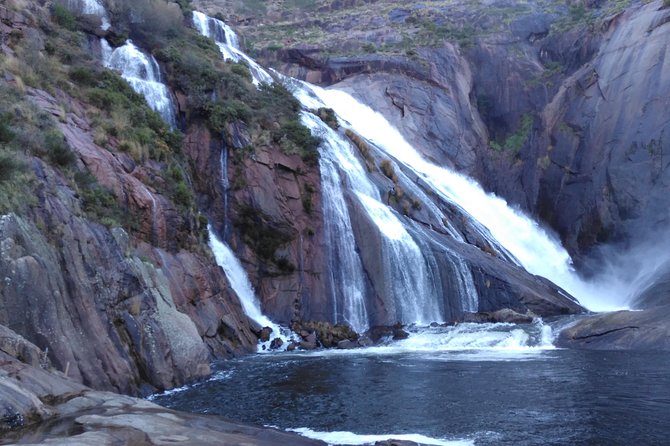
At Fervenza de Ézaro, the Xallas River drops roughly 40 meters into the sea near Monte Pindo. You have about 30 minutes to see the waterfall and the surrounding rock scenery.
This is an unusual sight in Galicia, since the river reaches the ocean in such dramatic fashion. It gives the day a useful change of rhythm after the village stops. You are not just moving from one church or viewpoint to another. The route includes water, rock, forested slopes, and open coast.
The stop is brief, so do not expect a long nature walk. The waterfall can also be affected by weather and visibility, as can every outdoor view on this route. A rainy or foggy day may soften the experience, though the tour still provides a worthwhile way to reach the coast.
Some people would trade this stop for extra time in Fisterra or Muxía. I understand that view. If you want the widest possible coastal experience, 30 minutes at Ézaro may feel short. If you enjoy seeing different types of scenery in one day, it earns its place.
A completely different kind of day out in Santiago de Compostela:
- Finisterre and Costa da Morte: The Most Complete Tour of Santiago
★ 5.0 · 733 reviews - From Santiago: Finisterre, Muxia, Ézaro – 7 stops day tour
★ 4.6 · 553 reviews - Santiago de Compostela: Finisterre, Muxia & Costa da Morte
★ 4.7 · 526 reviews - Santiago de Compostela Cathedral and Museum Guided Tour
★ 4.6 · 511 reviews
Cape Finisterre and the lighthouse at the end of the world
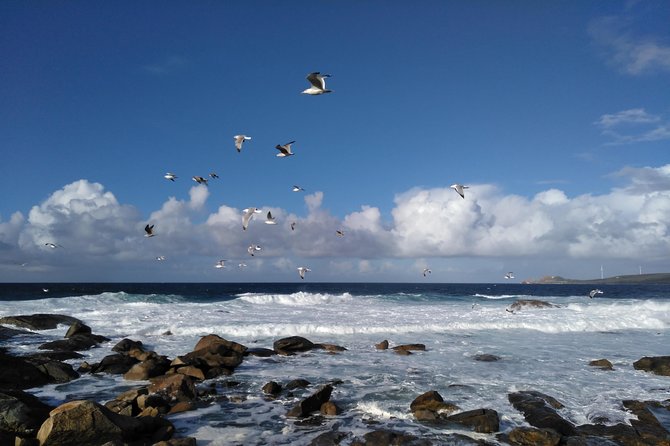
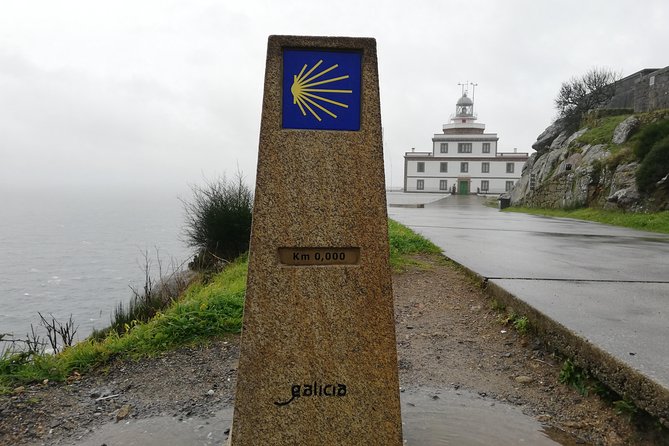
The Faro de Fisterra is the emotional center of the trip for many people. Ancient Greeks and Romans treated this cape as the End of the World, and the old name still gives the place a special pull.
From the lighthouse area, you look toward the Ría de Corcubión and the Carnota coast. Monte Pindo, a large granite formation, marks the view. The cape also connects directly with the Camino, since many pilgrims continue from Santiago to Finisterre after reaching the cathedral.
You have about 40 minutes at the lighthouse. That is enough to take in the viewpoint, walk around the area, and think about the meaning of the place. It is not enough for a long coastal hike, so keep your plans modest and stay near the agreed meeting point.
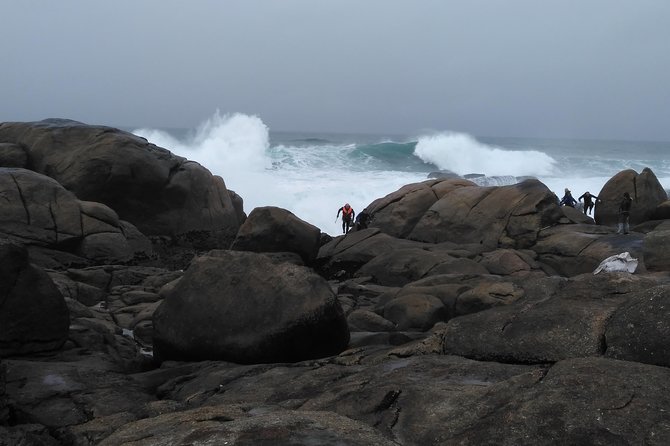
The weather matters here more than almost anywhere else on the tour. In clear conditions, the Atlantic views can be the day’s finest. In fog or heavy rain, the cape becomes moody and mysterious, but you may lose the broad views across the water. Bring a rain layer even if Santiago is dry when you leave.
A small practical tip: bring a phone charging cable or spare battery. You will have repeated photo stops, and a full day of pictures can drain a phone before the final return to Santiago.
Fisterra town, lunch, and time to wander
After the lighthouse, the bus takes you into Fisterra, the fishing town. Here you have about 90 minutes, the longest free period of the day.
This is where the schedule works best. You can walk around the port, explore the narrow lanes, and find lunch without being forced into a tightly guided meal. Galician seafood is a natural choice, but you should inspect prices and menus before ordering.
Lunch is not included. One organized meal option offered to some groups cost €20 for a pilgrim-style menu, but the quality and service did not suit everyone. Some diners had a much better seafood meal elsewhere. My advice is practical: take a moment to compare choices, ask what the menu includes, and check if bread or drinks cost extra.
Ninety minutes is enough for a meal and a short walk, but not both at a leisurely pace if the restaurant is slow. Tell the guide if you need directions, and keep a close eye on the departure time. Missing the bus would turn a pleasant lunch into a very expensive taxi problem.
Fisterra is also a good place to buy or photograph a traditional end-of-Camino marker if that matters to you. The tour does not promise a special pilgrimage ceremony, so think of this stop as personal free time rather than a formal conclusion.
Muxía, the sea sanctuary, and giant granite stones
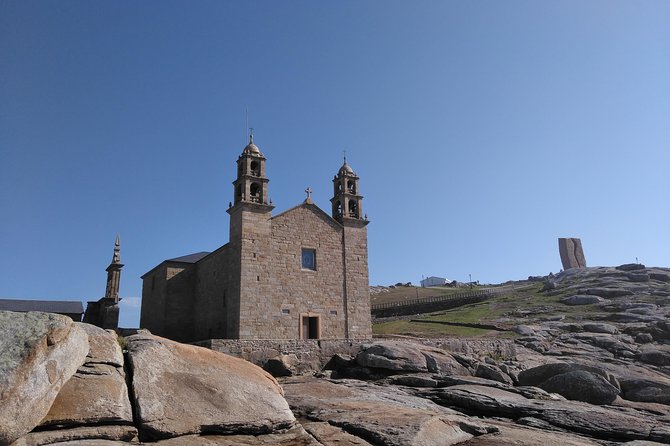
Muxía is often the most memorable stop. You have about 30 minutes to see the Sanctuary of the Boat and the unusual stones beside the sea.
The sanctuary is tied to the story of the Virgin arriving by boat, and the rocks carry their own traditions. Look for the Pedra de Abalar, the Pedra dos Cadrís, and the Piedra del Timón. Their names and legends give this exposed shoreline a character that is part religious, part maritime, and part older folk belief.
From the sanctuary, a short path leads toward Monte Corpiño. The higher you go, the more you can see of the estuary, Cabo Vilán, the beaches of Leis and Lago, and Monte Facho. With only 30 minutes, you will need to choose between the sanctuary, the rock formations, and the higher viewpoint.
I would prioritize the sanctuary and shoreline first. The stones and waves are the main reason this stop feels different from Fisterra. If the guide gives clear directions and you move promptly, you may have time for a short climb, but do not count on a full walk up Monte Corpiño.
Muxía also carries a strong post-Camino meaning. Many people extend their pilgrimage beyond Santiago to Finisterre and Muxía, and this town gives that extra journey a fitting spiritual and natural setting. You can appreciate it just as easily without having walked the Camino, but the connection will feel especially strong if you have.
The coach, guide, and bilingual commentary
The tour begins at the Toxo Travel office on Rúa dos Bautizados, 12, in Santiago, at 9:00 a.m. The group then walks about five minutes to the larger coach bus. The activity ends back at the meeting point, usually around 6:00 p.m. based on the published schedule and typical timing.
The air-conditioned coach is a real advantage. The roads toward the Costa da Morte include curves and narrow sections, and a skilled driver matters. Frank was praised for careful driving, while another driver was noted for handling winding roads with confidence. You can use the travel time to rest, read, or simply watch Galicia pass by.
The tour is offered in English, but the guide may also speak Spanish, and sometimes another language. The bilingual format takes extra time. Strong guides such as Andrea, Christian, Dani, Daniel, Reuben, and Nago or Nagore have been praised for clear explanations, energy, and good organization.
The weak point can be the delivery. Some guides speak quickly or repeat a prepared explanation with little feeling. A faulty bus microphone has also made commentary hard to hear on some departures. If you care deeply about detailed interpretation, this tour may feel basic. If you mainly want transport, orientation, and time at the sights, the guide service should be enough.
How the schedule feels over nine hours
Nine hours sounds manageable on paper, but this is a full day. You make six stops, climb on and off the coach several times, and spend much of the time moving between places.
The stop lengths are sensible for a broad overview. Ponte Maceira gets 25 minutes, Muros and Ézaro get 30 minutes each, the lighthouse gets 40 minutes, Fisterra gets 90 minutes, and Muxía gets 30 minutes. The schedule gives each place a purpose, but it rarely allows you to linger.
I would book this after the Camino only if you are comfortable sitting on a bus for most of the day. Many tired pilgrims find that very helpful. You see the final coastal destinations without adding another demanding walk, and you can nap between stops.
If you are fresh and have several days in Santiago, consider spending more time independently in one or two coastal towns. This tour is best for coverage and convenience. It is less suited to photographers, hikers, or anyone who wants a slow afternoon beside the sea.
Weather, group size, and practical planning
The coast is exposed, and weather can change the mood of every stop. Fog and rain may reduce the views at Fisterra and Muxía, while wind can make the shore feel much wilder. The operator may cancel for poor weather and offer another date or a full refund.
The maximum group size is 50. That is a sizeable coach group, so punctuality is not optional. The bus may have a toilet, but it is not available for public use, so plan to use facilities when you find them and take advantage of stops.
Most people can participate, and service animals are allowed. The tour is near public transportation, though the provided meeting point is the Toxo Travel office. Confirmation is sent when you book, and cancellation is free up to 24 hours before the start time. Late cancellations and last-minute changes are not refunded.
Who should book this tour?
I would choose this trip if you have one spare day in Santiago and want to reach Finisterre, Muxía, and the Costa da Morte without arranging a car. It is especially useful after the Camino, when your legs need a break but you still want to finish the journey at the Atlantic.
It also suits first-time visitors who want a broad introduction to western Galicia. You see rural architecture, fishing towns, a waterfall, a lighthouse, pilgrimage sites, and sea views in one organized day.
I would hesitate if you dislike coach schedules, crowded group departures, or short photo stops. I would also think twice if your only goal is a long, quiet visit to Finisterre. In that case, a smaller or shorter outing may fit better.
Should you book the Finisterre and Muxía tour?
Book it if value, variety, and simple transport matter most. For $59.28, you cover a large area, avoid the stress of driving, and reach the two great pilgrimage destinations on the Costa da Morte.
Go with realistic expectations. This is a busy sightseeing day, not a slow coastal retreat. Choose your own lunch in Fisterra, carry rain protection and a phone charger, listen carefully for meeting times, and give priority to Muxía and the lighthouse if time feels tight. For many people, that mix of practical transport and powerful Atlantic scenery makes this one of the better day trips from Santiago.
FAQ
Where does the tour start and finish?
The tour starts at Toxo Travel, Rúa dos Bautizados, 12, 15702 Santiago de Compostela, at 9:00 a.m. It ends back at the same meeting point.
How long does the tour last?
The experience lasts approximately nine hours. The planned schedule begins at 9:00 a.m. and returns to Santiago around the end of the day.
Is lunch included?
No. Lunch is not included, and you have free time to choose a meal in Fisterra.
Is the tour offered in English?
Yes. The tour is offered in English. Guides may also provide commentary in Spanish, and some departures include narration in additional languages.
What is included in the price?
An air-conditioned vehicle is included. Admission is free at each listed stop, while lunch and other personal expenses are not included.
Can I cancel for a full refund?
Yes, if you cancel at least 24 hours before the experience start time. Cancellations made less than 24 hours in advance are not refunded. If poor weather or an insufficient number of bookings cancels the tour, you can receive a different date or experience, or a full refund.
Recently added around Santiago de Compostela
- Santiago de Compostela: Massage Treatment★ 4.8 · 170 reviews
- From Santiago: Lugo & Cathedrals Beach Guided Excursion★ 4.5 · 174 reviews
- Tapas Tour of Santiago de Compostela★ 4.5 · 191 reviews
- From Santiago: Rías Baixas Galicia Seafood & Wine Day Tour★ 4.6 · 209 reviews
- Santiago de Compostela: Finisterre, Costa da Morte, Ézaro, Muros & Carnota★ 4.5 · 220 reviews
- Masaje del Peregrino★ 5.0 · 243 reviews
- Excursion to Rias Baixas with Winery – Optional mussel boat★ 5.0 · 276 reviews
- Santiago de Compostela: Cathedral, Museum, and Old Town Tour★ 4.8 · 382 reviews
Santiago de Compostela Tours, compared.
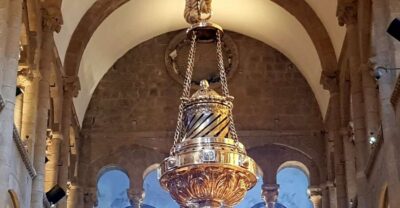
Santiago: Cathedral & Museum Tour + Pórtico of Glory Option
Read our review →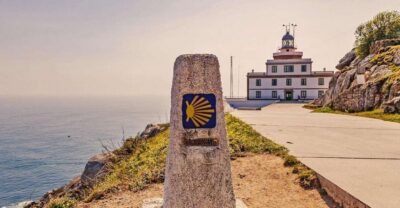
From Santiago: Finisterre, Muxia & Costa da Morte Excursion
Read our review →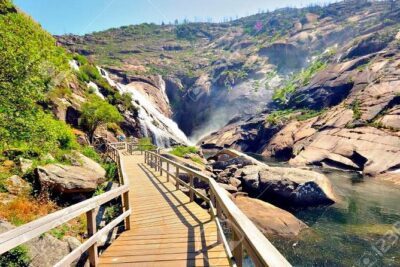
Excursion to Finisterre + Muxia + Costa da Morte (7 stops)
Read our review →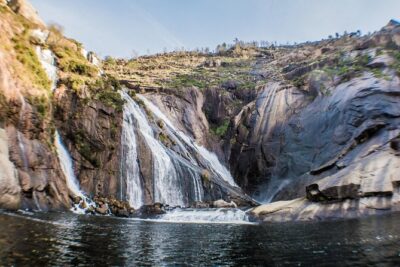
Finisterre and Costa da Morte: The Most Complete Tour of Santiago
Read our review →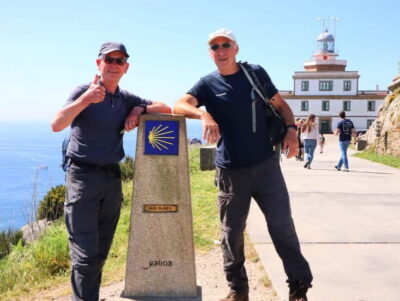
From Santiago: Finisterre, Muxia, Ézaro – 7 stops day tour
Read our review →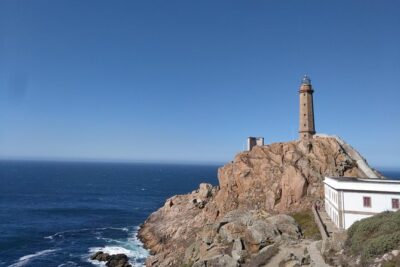
Santiago de Compostela Cathedral and Museum Guided Tour
Read our review →
Visit to the Cathedral of Santiago + Portico de la Gloria Option
Read our review →Browse the lists this tour appears in