
Review · SANTIAGO DE COMPOSTELA TOURS
Santiago de Compostela: Finisterre, Costa da Morte, Ézaro, Muros & Carnota
The Atlantic edge is closer than it feels. This full-day outing gives you seven varied stops without the bother of arranging buses between remote coastal villages, and I especially like the waterfall at Ézaro and the medieval setting of Ponte Maceira. The price, $59.28 per person, is also fair for roughly nine hours of transport, guiding, and insurance.
The main tradeoff is pace. You get a useful first look at a large stretch of Galicia, but most stops are brief, and a poor pickup arrangement can cost valuable time. The tour is conducted in English and Spanish, and guides such as Lucia, Noelle, Ana, and Alexis have been praised for clear explanations and friendly help.
In This Review
- Key points to know before booking
- Why this day trip makes sense from Santiago
- Muros: a quick introduction to Galician fishing life
- Carnota’s enormous granite hórreo
- Ézaro waterfall, where river meets Atlantic
- Fisterra: lunch at the end of the Roman world
- Cape Finisterre lighthouse and Atlantic views
- Muxía and the Sanctuary of A Barca
- Ponte Maceira: the quiet final stop
- The guide makes a real difference
- Price, group size, and the day’s rhythm
- Who should book this Costa da Morte tour?
- Should you book it?
- FAQ
- Where does the tour start and end?
- How long does the experience last?
- Is lunch included?
- Is the tour offered in English?
- What is included in the price?
- How far in advance is the tour usually booked?
Key points to know before booking
- Seven stops in about nine hours: You visit Muros, Carnota, Ézaro, Fisterra, the Fisterra lighthouse, Muxía, and Ponte Maceira in one long day.
- A strong choice after the Camino: Fisterra marks kilometer zero for many pilgrims, making this an appealing finale after walking to Santiago.
- Ézaro is the visual highlight: The waterfall drops directly toward the sea, a rare sight in southern Europe.
- Lunch is not included: You receive free time in Fisterra to eat, with guides offering restaurant and menu suggestions.
- The group may reach 55 people: The bus is comfortable, but you should expect a shared coach rather than an intimate minibus.
- Check the meeting details carefully: The listed start is Capela do Pilar at 9:00 a.m., and past pickup confusion makes it wise to confirm the exact departure point.
Why this day trip makes sense from Santiago
The Costa da Morte is not an easy region to cover by public transport in one day. The villages are scattered, the coast is broad, and the best sights include a lighthouse, a waterfall, a sanctuary, a long granite granary, and a medieval bridge.
That is the real value here. You spend the day looking out the bus window instead of trying to match infrequent connections. The coach returns to the same Santiago meeting point, so you can see the western coast without changing hotels or managing a rental car.
The route lasts about nine hours, beginning at 9:00 a.m. It is a full day, not a quick side trip, but the schedule is arranged to give you a taste of several different parts of Galicia. I would choose it if you want range and convenience more than long, unhurried visits.
The bus has been praised as comfortable, and the drivers, including Antonio and Vincente, have received warm comments for handling the roads well. That matters on a day with several transfers. You are not simply visiting one destination, you are moving through a large portion of the province.
A few more Spain trips worth a look
- Santiago: Cathedral & Museum Tour + Pórtico of Glory Option
★ 4.7 · 2,116 reviews - From Santiago: Finisterre, Muxia & Costa da Morte Excursion
★ 4.7 · 1,481 reviews - Excursion to Finisterre + Muxia + Costa da Morte (7 stops)
★ 5.0 · 1,367 reviews
Muros: a quick introduction to Galician fishing life
The first stop is Muros, one of Galicia’s attractive fishing villages. You have about 30 minutes to walk through its narrow streets or look around the small fish stalls.
This is a short orientation stop rather than a full village visit. You can get a feel for the old port, take a few photographs, and follow the guide’s introduction before moving on. Some visitors have especially enjoyed the small-town atmosphere and even stopped for churros here.
I would keep your expectations in check. Thirty minutes goes quickly, particularly if the coach is parked away from the center or you need time for photographs. Stay aware of the meeting instructions and do not wander too far. Muros is valuable because it begins the day with ordinary coastal life, not just famous viewpoints.
Carnota’s enormous granite hórreo
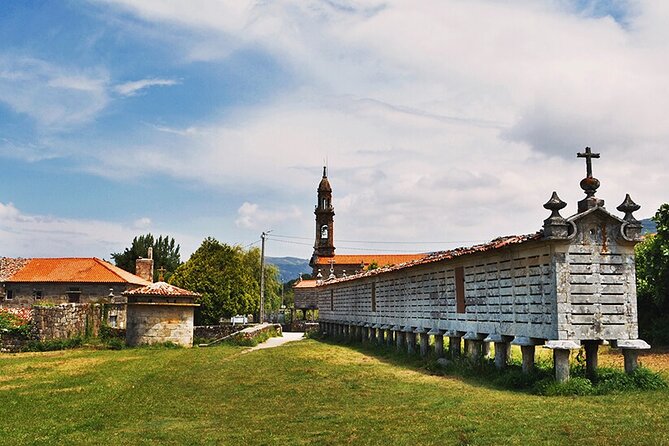
Next comes the Hórreo de Carnota, a long 18th-century grain store built from granite. It sits near Carnota Beach, described as Galicia’s longest beach, and it is one of the region’s recognizable monuments.
A hórreo is a raised storage building designed to keep grain dry and away from animals. The Carnota example is impressive less because of interior access and more because of its length, stone construction, and setting. The stop lasts about 20 minutes, so you will mainly view it from outside and hear why it mattered to rural communities.
This is a good stop for anyone interested in Galician architecture and farming traditions. If your main interest is dramatic scenery, it may feel less exciting than Ézaro or Cape Finisterre. Still, it breaks up the coastal views and gives the day a useful cultural layer.
Ézaro waterfall, where river meets Atlantic
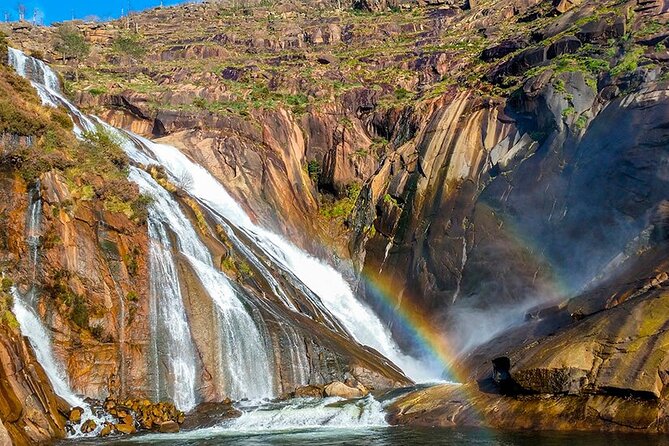
The Fervenza de Ézaro is one of the day’s strongest stops. The river reaches the sea by way of a waterfall, a striking combination that gives this part of the Costa da Morte its special character.
You have around 45 minutes here, enough to walk to the viewing area, take photographs, and listen to the explanation about Mount Pindo, sometimes called the Celtic Olympus. The setting also includes fishing villages and beaches, so you are seeing more than a single cascade.
The waterfall is particularly rewarding on a clear day. Several parts of this tour depend heavily on weather, and Ézaro is no exception. In heavy rain, you may spend less time outside, and cloud can soften the coastal views. Even then, the waterfall remains a worthwhile stop because the river’s route toward the sea is unusual and easy to appreciate in a short visit.
Wear shoes suitable for walking and keep your camera ready. The 45-minute window is generous compared with some other stops, but it is not long enough for a serious hike around Mount Pindo.
A completely different kind of day out in Santiago de Compostela:
- Finisterre and Costa da Morte: The Most Complete Tour of Santiago
★ 5.0 · 733 reviews - From Santiago: Finisterre, Muxia, Ézaro – 7 stops day tour
★ 4.6 · 553 reviews - Santiago de Compostela: Finisterre, Muxia & Costa da Morte
★ 4.7 · 526 reviews - Santiago de Compostela Cathedral and Museum Guided Tour
★ 4.6 · 511 reviews
Fisterra: lunch at the end of the Roman world
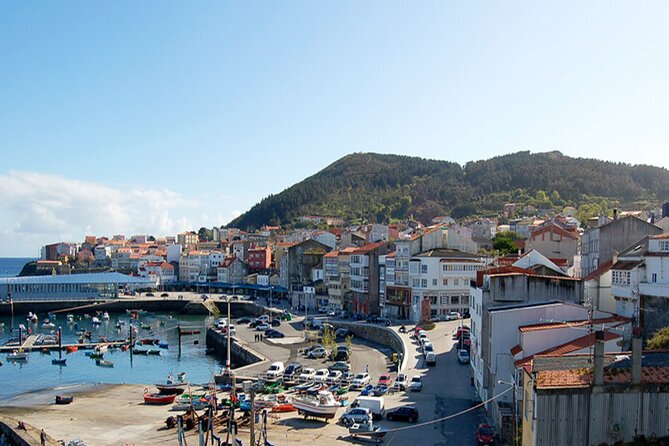
Fisterra, also called Finisterre, receives the longest free period in the middle of the day. You have about 90 minutes to eat and walk through the small streets around the port.
The name means end of the earth, reflecting the old Roman view of this western point. For pilgrims, it carries an extra meaning. The Camino de Santiago traditionally ends in Santiago, but many walkers continue west to Fisterra, where kilometer zero marks the symbolic finish of the journey.
This is where the tour’s practical planning pays off. You do not need to hunt for a restaurant after arriving by yourself, and the guide can point you toward local food. Guides Noelle and Lucia, in particular, have been praised for restaurant suggestions, including advice on what to order.
Lunch is not included, so budget separately for your meal. The free time is long enough for a relaxed lunch, but not for an extensive exploration of the town. If you want a slow seafood meal or time at the waterfront, keep an eye on the clock. The coach cannot wait indefinitely for a late return.
The port and narrow streets offer a pleasant pause after the morning’s stops. This is also a good moment to ask the guide questions, refill your water, and prepare for the more symbolic part of the day at the lighthouse.
Cape Finisterre lighthouse and Atlantic views
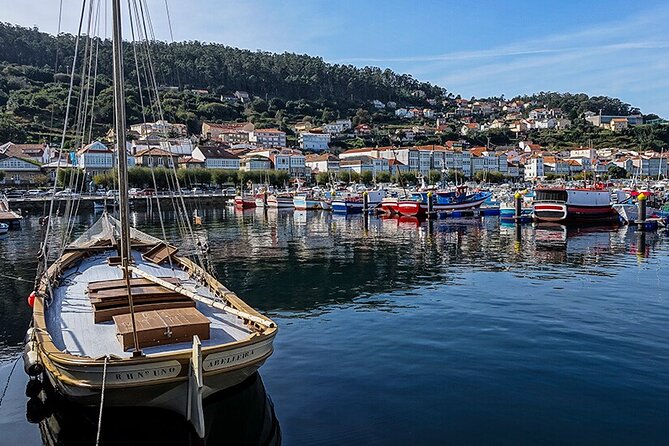
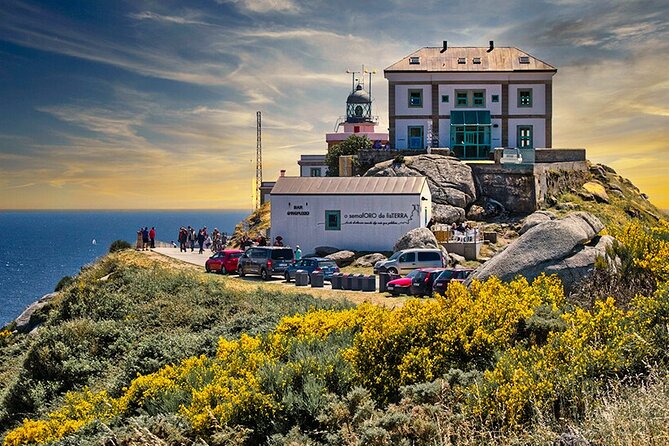
The Faro de Fisterra marks the western edge of the route. The lighthouse was the first built on the Costa da Morte, and its position gives you broad views over the Atlantic.
You have about 40 minutes here. The visit is less about entering a building and more about standing at the edge, seeing the lighthouse, and understanding why this headland gathered older religious traditions before Christianity. The site is linked with the pre-Christian Ara Solis cult and now carries strong Camino meaning as kilometer zero.
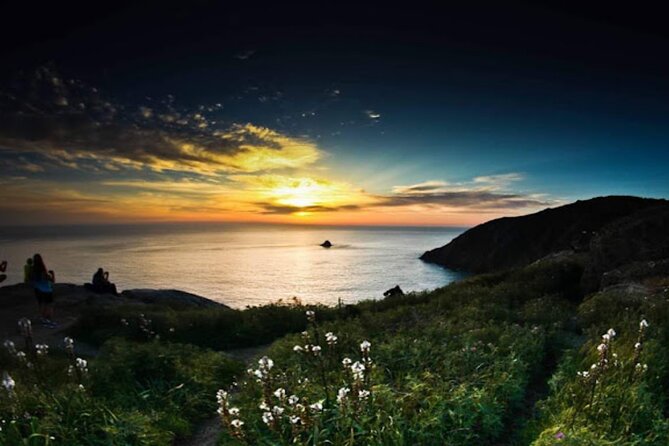
The views depend on the weather. On a clear day, this is likely to be one of the most memorable parts of the outing. In mist or heavy rain, the experience becomes moodier and the horizon may disappear. Several people have found the day worthwhile even in poor weather, but this is a tour where sunshine makes a real difference.
Keep your time outdoors in mind. The wind can be strong at the cape, and the 40-minute stop passes quickly while you walk between viewpoints. This is not a place to rush, but it is also not a stop where you can safely lose track of the group.
Muxía and the Sanctuary of A Barca
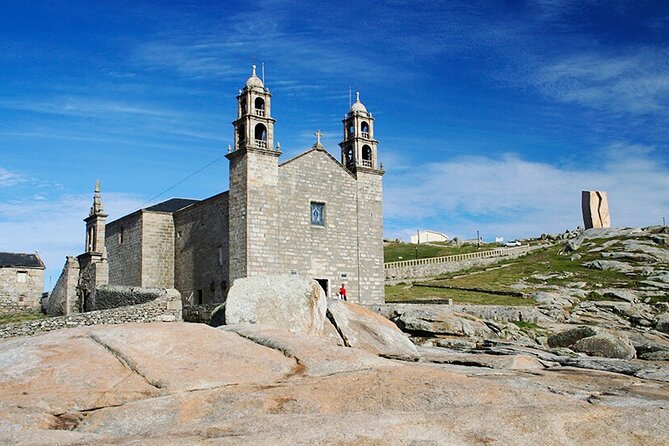
The route continues to Muxía, a pilgrimage center connected with the Camino de Santiago. The main visit is the Sanctuary of Nuestra Señora de la Barca, set beside the Atlantic with large rocks and sacred stones around it.
You have about 40 minutes to see the church, hear the stories tied to the pilgrimage, and take in the setting. The tour also refers to the Skin Way, a pilgrimage route associated with the sanctuary. You will not have time for a long coastal walk, but you can appreciate why this place has drawn pilgrims for centuries.
This stop adds a spiritual and cultural note after the open views at Fisterra. I find that useful because the day is not only a succession of lookouts. It connects the coast with the older religious traditions and pilgrimage routes that shape Galicia.
Again, weather affects the visit. Rain can make the rocks slippery and may persuade you to remain near the bus or church. Bring rain protection, especially outside the drier summer months. The tour can be canceled for poor weather, with a different date or full refund offered, but conditions can still change during an otherwise operating trip.
Ponte Maceira: the quiet final stop
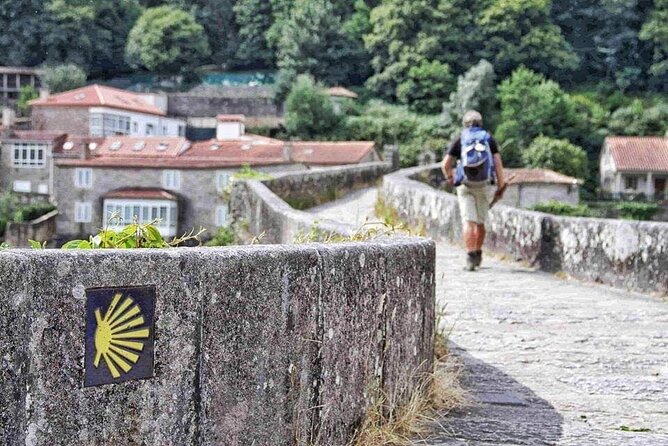
The last stop is Ponte Maceira, a small medieval settlement founded in the 13th century. You walk near its Gothic bridge and mills, with about 30 minutes for the visit.
This is a pleasing finish because it moves inland from the exposed coast. The bridge and water create a calmer setting, and the town’s link with the Camino gives the stop a natural connection to Fisterra and Muxía.
The short visit is also the source of one practical concern. Thirty minutes may be enough to walk from the meeting point, see the bridge, and return, but it leaves little room for lingering. If you move slowly or want to explore beyond the central area, you may feel hurried.
Some people would prefer to skip this final stop and return directly to Santiago. I understand that view after a long day. I would keep Ponte Maceira if you like medieval villages and Camino history, but I would not choose this tour expecting a deep visit at every location.
The guide makes a real difference
The tour is bilingual, with explanations in Spanish and English. The strongest part of the experience depends on the guide’s ability to switch between languages without losing the group.
Lucia has been singled out for clear explanations, helpful restaurant advice, and an excellent command of both languages. Noelle, also written as Noel in some feedback, has been praised for keeping the schedule organized and making the final Camino experience memorable. Ana and Alexis have also received positive comments for their information and friendly approach.
You should expect narration throughout the day, especially while riding between stops. The subject matter ranges from Roman ideas about the end of the world to pre-Christian worship, Camino routes, fishing villages, rural grain storage, and medieval bridges.
Not every guide’s narration will be equally easy for every listener to follow. One person found the explanation difficult to understand, so your experience may depend on accent, bus noise, and where you sit. If a detail matters to you, ask a question during a stop. The guides are there to help, and several have been praised for answering questions directly.
Price, group size, and the day’s rhythm
At $59.28, this is a good-value day if you want to see a wide area without paying for private transport. The fee includes round-trip bus transportation, a bilingual guide, and insurance. Lunch and personal spending are extra.
The maximum group size is 55 people. That explains why the schedule needs firm meeting times and why some stops can feel organized around getting everyone back to the coach. The larger group also keeps the price down, but it means this is not the outing for private conversations or a flexible route.
The time allocation is mostly sensible. Fisterra receives 90 minutes for lunch and a walk, Ézaro gets 45 minutes, and the lighthouse and Muxía each receive 40 minutes. Muros, Carnota, and Ponte Maceira are shorter visits.
Pickup organization deserves special attention. The stated meeting point is Capela do Pilar, Av. de Xoán Carlos I, 6, Santiago de Compostela, at 9:00 a.m. Past confusion involving two addresses caused one delayed departure and lost sightseeing time. Check your confirmation carefully, arrive early, and use the provider’s contact details if anything looks unclear. A guide once contacted a party through WhatsApp to redirect them, so having that communication channel available may help.
Who should book this Costa da Morte tour?
I would recommend it most strongly if you have limited time in Santiago, have just completed the Camino, or want an easy first look at western Galicia. The Fisterra and Muxía stops give pilgrims meaningful end points, while the waterfall, hórreo, fishing villages, and bridge keep the day varied.
It also suits you if you prefer a guide to supply historical context. Several sites are easy to admire but harder to interpret on your own, particularly the sacred stones at Muxía and the old agricultural purpose of Carnota’s hórreo.
I would hesitate if you want long walks, independent meals, or hours at one beach. The schedule is efficient, not leisurely. You should also think twice if the forecast calls for persistent rain. The tour can still operate, but the lighthouse and coastal viewpoints lose much of their impact when the sky closes in.
Should you book it?
Book this tour if your priority is seeing many important places in one day with comfortable transport and a bilingual guide. At this price, the combination of Fisterra, Muxía, Ézaro, Muros, Carnota, and Ponte Maceira offers solid value, especially for people without a car.
Skip it if you want a slow coastal day or have already explored these towns independently. For most first-time visitors based in Santiago, though, this is a practical and well-rounded introduction to the Costa da Morte, with enough history and scenery to make the long ride worthwhile.
Free cancellation is available up to 24 hours before the 9:00 a.m. start. The activity requires good weather and a minimum number of people, so a cancellation by the operator may result in another date, another experience, or a full refund.
FAQ
Where does the tour start and end?
The tour starts at Capela do Pilar, Av. de Xoán Carlos I, 6, in Santiago de Compostela, at 9:00 a.m. It ends back at the same meeting point.
How long does the experience last?
The tour lasts approximately nine hours.
Is lunch included?
No. You receive about 90 minutes of free time in Fisterra to choose and pay for lunch yourself.
Is the tour offered in English?
Yes. The guided tour is offered in both English and Spanish.
What is included in the price?
Round-trip transportation by bus, a bilingual guide, and all insurance are included.
How far in advance is the tour usually booked?
On average, the experience is booked 18 days in advance. Confirmation is received at the time of booking.
Recently added around Santiago de Compostela
- Santiago de Compostela: Massage Treatment★ 4.8 · 170 reviews
- From Santiago: Lugo & Cathedrals Beach Guided Excursion★ 4.5 · 174 reviews
- Tapas Tour of Santiago de Compostela★ 4.5 · 191 reviews
- From Santiago: Rías Baixas Galicia Seafood & Wine Day Tour★ 4.6 · 209 reviews
- Santiago de Compostela: Finisterre, Muxía & Costa da Morte★ 5.0 · 235 reviews
- Masaje del Peregrino★ 5.0 · 243 reviews
- Excursion to Rias Baixas with Winery – Optional mussel boat★ 5.0 · 276 reviews
- Santiago de Compostela: Cathedral, Museum, and Old Town Tour★ 4.8 · 382 reviews
Santiago de Compostela Tours, compared.
Santiago: Cathedral & Museum Tour + Pórtico of Glory Option
Read our review →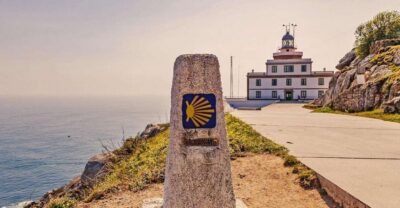
From Santiago: Finisterre, Muxia & Costa da Morte Excursion
Read our review →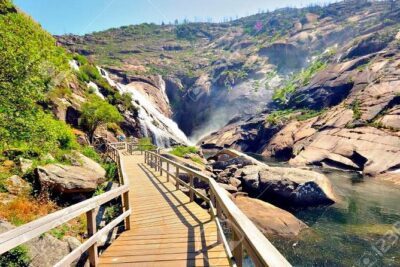
Excursion to Finisterre + Muxia + Costa da Morte (7 stops)
Read our review →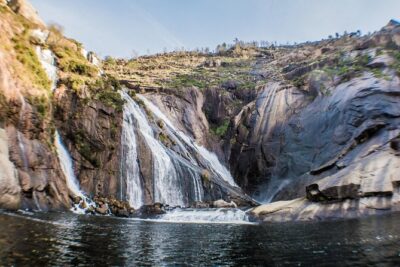
Finisterre and Costa da Morte: The Most Complete Tour of Santiago
Read our review →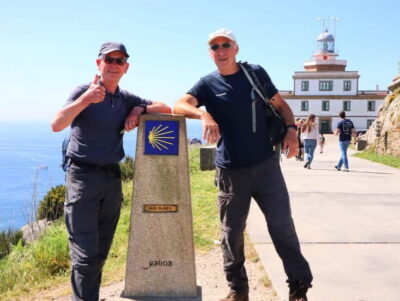
From Santiago: Finisterre, Muxia, Ézaro – 7 stops day tour
Read our review →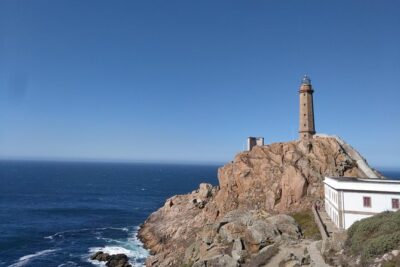
Santiago de Compostela Cathedral and Museum Guided Tour
Read our review →
Visit to the Cathedral of Santiago + Portico de la Gloria Option
Read our review →Browse the lists this tour appears in