
Review · SANTIAGO DE COMPOSTELA TOURS
Masaje del Peregrino
Your feet have earned an hour off. Masaje del Peregrino is built for pilgrims finishing the Camino, with a 60-minute massage and stretching session aimed at tired legs, sore feet, stiff backs, and general muscle fatigue. I like the central location near Santiago Cathedral, and I like that the treatment can focus on the parts of your body that need the most help. The free recovery gel and official Camino souvenir add a pleasant touch.
The main consideration is pressure. One person found the massage quite intense, while others praised a gentle approach, so you should speak clearly about what your body needs. This is a private activity for your own group, but it is still a focused treatment rather than a full spa day with a long list of facilities.
In This Review
- Key points at a glance
- Why this massage makes sense after the Camino
- Arriving at Av. de Raxoi, 5
- The first few minutes: tell the therapist what hurts
- The 60-minute massage and stretching session
- Creams, arnica, and the recovery gel
- What the location adds to the experience
- Is $90.74 fair for one hour?
- Who will get the most from it?
- How to make your hour count
- Should you book Masaje del Peregrino?
- FAQ
- Where does the massage take place?
- How long does the experience last?
- What type of massage is offered?
- Is the massage suitable for couples?
- Are massage oils used?
- What is included with the treatment?
- Is this a private activity?
- Is the experience offered in English?
- Can I cancel for a full refund?
Key points at a glance
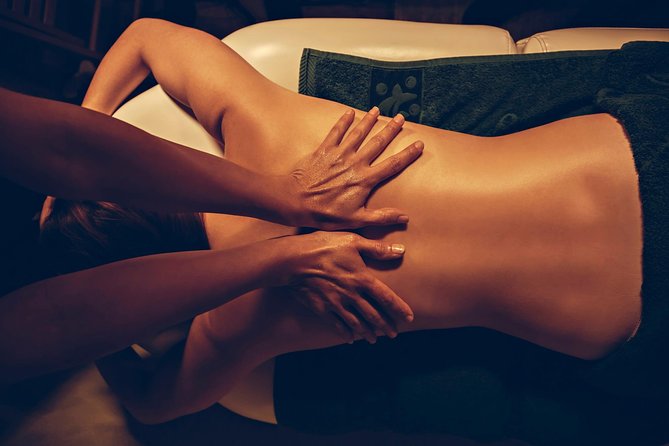
- A 60-minute pilgrim-focused treatment: The massage combines bodywork with stretching to help you recover after long days on foot.
- A few steps from the Cathedral: The meeting point at Av. de Raxoi, 5 puts you in one of Santiago’s most convenient central spots.
- You choose the focus: Ask the therapist to spend more time on aching feet, calves, legs, back, neck, or another problem area.
- Creams, not massage oils: Neutral massage creams are used, along with natural products associated with arnica and harpagofito recovery care.
- Useful extras included: You receive water, a muscle recovery gel, and an official zero-euro Camino ticket souvenir.
- A strong record of satisfaction: The experience has a 4.9 rating from 243 reviews, with 98 percent recommending it.
Why this massage makes sense after the Camino
Walking the Camino changes what you need from a massage. After 100 kilometers, 240 kilometers, or more than 500 kilometers, your body may not want a luxury treatment designed mainly for quiet relaxation. It may want attention on the calves that tightened on hills, the feet that carried you over rough paths, and the lower or upper back that spent days under a pack.
Masaje del Peregrino is designed around that reality. The session combines massage with stretching and aims at recovery after physical effort. That does not mean every minute will be a hard sports massage. You can ask for gentle pressure, and the treatment can be directed toward the areas causing the most trouble.
I especially like this practical focus. Several people left feeling less pain or more rested, and one person said the massage helped the body sleep well and feel re-energized. That is a better measure for a post-Camino treatment than whether the room has fancy extras.
The experience also suits people who have not walked the Camino. You might simply want an hour of calm near the Cathedral, or you might arrive with sore legs after sightseeing and city walking. Still, the strongest reason to book is clear: you have just finished a long pilgrimage and want your body treated as carefully as your passport gets stamped.
A few more Spain trips worth a look
- Santiago: Cathedral & Museum Tour + Pórtico of Glory Option
★ 4.7 · 2,116 reviews - From Santiago: Finisterre, Muxia & Costa da Morte Excursion
★ 4.7 · 1,481 reviews - Excursion to Finisterre + Muxia + Costa da Morte (7 stops)
★ 5.0 · 1,367 reviews
Arriving at Av. de Raxoi, 5

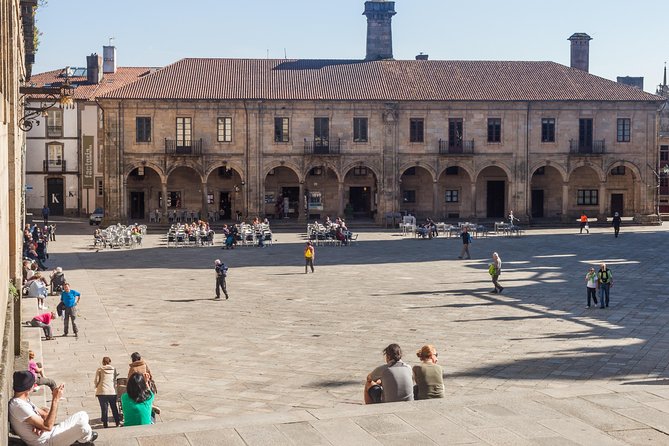
The meeting point is Av. de Raxoi, 5, 15705 Santiago de Compostela. It is only a few minutes from the Cathedral, which makes the location especially useful on your arrival day. You can attend the massage without arranging transport across town, and you can return to the historic center afterward.
The exact setting is described as a comfortable massage room within a coworking space. That is not the same as entering a large hotel spa, so set your expectations accordingly. The advantage is location. You are paying for a treatment in the heart of Santiago, not for a resort-style circuit of pools, saunas, and lounges.
The space has been praised for cleanliness, a pleasant smell, relaxing music, and a quiet atmosphere. Those details matter after days in shared accommodation and busy pilgrim routes. A calm room lets you shift gears quickly from walking mode to recovery mode.
The location also works well for a couple. A couple’s massage is available, allowing you and your partner to schedule the same type of recovery stop together. That saves time at the end of a Camino, when you may want to spend your remaining hours eating, collecting your Compostela, or simply sitting near the Cathedral.
The first few minutes: tell the therapist what hurts
A good treatment starts with a clear conversation. The massage is not presented as a rigid routine, so tell the therapist where you need attention and what pressure feels right. If your feet are tender, say so. If your calves are tight but your back needs more work, say that too.
Several people praised the therapist’s attentiveness and said the pressure was checked during the session. That is useful for anyone unsure about a strong massage. You do not need to accept painful pressure to receive a helpful treatment.
The experience can cover much of the body. One detailed account described work on the neck, back, legs, hands, chest area, and feet. Your session may not spend equal time on every part, especially if you ask for extra attention on your lower legs or back, but the treatment is intended to be adaptable.
I would arrive ready to explain your Camino distance and your main problem areas. Saying my feet are sore but I want gentle pressure is more useful than simply asking for a pilgrim massage. The staff can then shape the hour around your condition.
The 60-minute massage and stretching session
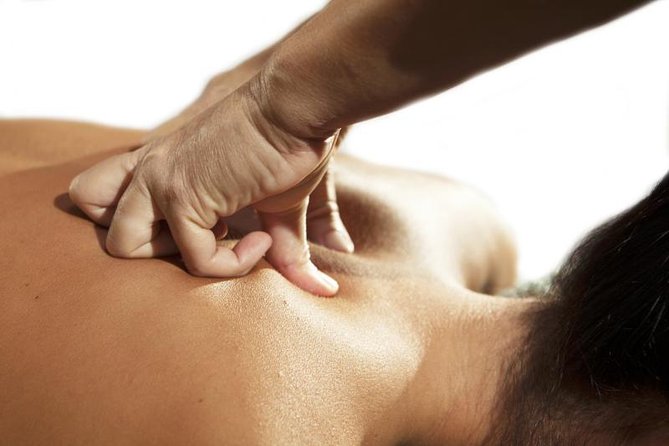
The central part of the experience lasts about one hour. Massage and stretches are combined, with the goal of loosening tired muscles and helping your body recover after exertion.
For many pilgrims, the feet and lower legs will be the priority. Long walking days can leave the soles tender and the calves tight. The massage can also address the back, shoulders, neck, hands, and other areas that have worked hard under a backpack or through repeated walking.
The reviews describe a range of pressure, from gentle and soothing to very intense and deep. That range is not necessarily a problem, but it makes communication important. If you prefer a light recovery treatment, make that clear before and during the appointment. If you are seeking firmer work on stubborn knots, mention that as well.
Relaxing music and a quiet room help the session feel restful, but this is still a functional treatment. You are not simply lying down for an hour. Stretching forms part of the recovery plan, and the therapist may focus on mobility as well as relaxation.
The most encouraging detail is the repeated praise for personal attention. One person said the therapist worked especially well on the legs and stiff upper back, with relief lasting for several days. Another said the treatment left them feeling as if they had a new body after finishing the Camino. Results will vary, but the focus on problem areas gives this experience a practical edge.
A completely different kind of day out in Santiago de Compostela:
- Finisterre and Costa da Morte: The Most Complete Tour of Santiago
★ 5.0 · 733 reviews - From Santiago: Finisterre, Muxia, Ézaro – 7 stops day tour
★ 4.6 · 553 reviews - Santiago de Compostela: Finisterre, Muxia & Costa da Morte
★ 4.7 · 526 reviews - Santiago de Compostela Cathedral and Museum Guided Tour
★ 4.6 · 511 reviews
Creams, arnica, and the recovery gel
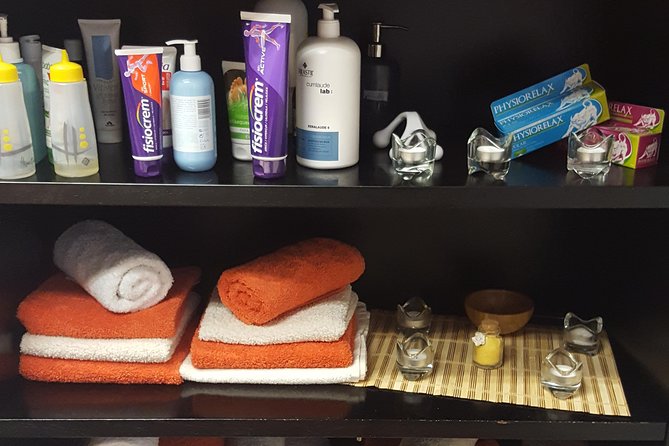
The massage uses neutral creams rather than oils. That can be useful if you want to dress soon afterward without feeling heavily coated, or if you simply prefer a cleaner finish. The experience also highlights natural products with arnica and harpagofito, ingredients commonly associated with muscle and joint comfort.
You receive a small muscle recovery gel as a gift. It contains arnica and harpagofito and is intended for use after physical effort to help reduce the feeling of tired muscles. You also receive water, which is a simple but welcome detail after a long walk or a warm day.
The gel is not a substitute for rest or medical care. Think of it as a handy post-walk product to apply later when your muscles feel tired. The value is partly practical and partly generous: you leave with something you can use after the appointment instead of receiving only an hour of treatment.
The second gift is an official zero-euro Camino ticket. It has no cash value, but it makes a fitting souvenir of the pilgrimage. If you are collecting small Camino mementos, this is more personal than a generic discount card.
What the location adds to the experience
A massage near the Cathedral is more than a map detail. Santiago is a place where many pilgrims complete an emotional and physical journey on the same day. You may have collected your Compostela, attended a service, or simply stood in front of the Cathedral trying to understand that the walk is over.
Having a recovery appointment nearby lets you keep your day simple. You do not need to cross the city while stiff and tired. You can move from the central pilgrim area into a quiet treatment room, then return to the same historic district afterward.
The trade-off is that a central location can feel more urban and practical than secluded. The treatment space is described as being in a coworking setting, so do not book this expecting a countryside retreat. I would choose it for convenience, professional service, and the quality of the massage itself.
Is $90.74 fair for one hour?
At $90.74 per person, this is not the cheapest massage you could find in Spain. The price needs to be judged against what you are getting: a private one-hour appointment, a central Santiago location, stretching, water, a recovery gel, and a Camino souvenir.
For someone who has walked for days or weeks, the timing can make the cost worthwhile. A treatment that helps your legs, feet, and back settle before your next night of sleep may be more useful than another ordinary souvenir or an extra restaurant stop.
The value is strongest if you book soon after finishing your route. It is less compelling if you are only looking for a budget massage and have no particular muscle soreness. In that case, compare local options before booking.
Couples may also see practical value because both people can arrange treatment together. That saves the effort of finding separate appointments and keeps the recovery plan tied to the same part of the day.
The experience is often booked 29 days ahead on average. That suggests you should not assume a preferred time will be open at the last minute, especially if you want a weekend or late appointment. Last-minute availability may exist, but advance planning is wiser if your arrival date is fixed.
Who will get the most from it?
I would recommend Masaje del Peregrino most strongly to:
- Pilgrims finishing a long route, especially those with sore feet, calves, legs, or back
- People who want a private appointment rather than a shared group activity
- Couples who want their recovery time together
- Visitors staying near the Cathedral
- Anyone who prefers a massage that can change focus during the session
- People who appreciate a quiet room, relaxing music, and clean surroundings
It may be less suitable if you want a full spa facility, a treatment with only very light touch, or a long appointment with several separate therapies. The one-hour format is focused and useful, but it is not an all-day wellness visit.
Most people can participate, and service animals are allowed. The activity is near public transportation, although the central address may make walking from nearby accommodation just as convenient. Confirmation arrives when you book, and free cancellation is available up to 24 hours before the start time. Changes or cancellations inside that window are not refunded.
How to make your hour count
Book the treatment for a time when you do not need to rush afterward. The session lasts about an hour, but you will enjoy it more if you can walk out slowly, drink your water, and let your body settle.
Tell the therapist what you want before the massage begins. Mention how far you walked, which areas hurt, and whether you prefer gentle or firm pressure. During the treatment, speak up if the pressure is too strong or too light.
If your feet are badly sore, do not assume intense pressure is automatically better. One person praised a very deep treatment after walking more than 500 kilometers, while others specifically valued a gentle approach. Your ideal pressure depends on your body, not on how tough the route was.
Use the recovery gel later as directed on its packaging. The product is included as a useful follow-up, but the larger recovery tools remain sleep, food, water, and a slower pace the next day.
Should you book Masaje del Peregrino?
Book it if you have just finished the Camino and want a well-located, private hour aimed at real muscle recovery. The Cathedral-side address, flexible focus, stretching, attentive service, and included gel make it more useful than a generic relaxation massage.
I would be more cautious if $90.74 feels high for one hour or if you expect a large spa. You are mainly paying for the treatment, the central location, and the pilgrim-specific approach.
For a sore-footed pilgrim who wants to sleep better and walk around Santiago with less discomfort, this is an easy experience to justify. Schedule it soon after your final stage, explain exactly what needs attention, and ask for the pressure that helps rather than hurts.
FAQ
Where does the massage take place?
The meeting point is Av. de Raxoi, 5, 15705 Santiago de Compostela, A Coruña, Spain. It is near Santiago Cathedral.
How long does the experience last?
The massage lasts approximately 60 minutes and includes stretching.
What type of massage is offered?
It is a full-body massage focused on recovery after the Camino. You can direct attention toward the areas of your body that need it most.
Is the massage suitable for couples?
Yes. A couple’s massage option allows you and your partner to receive the experience together.
Are massage oils used?
No. Neutral massage creams are used rather than oils.
What is included with the treatment?
The experience includes water, a muscle recovery gel with arnica and harpagofito, and an official zero-euro Camino ticket souvenir.
Is this a private activity?
Yes. Only your group participates in the activity.
Is the experience offered in English?
Yes. It is offered in English.
Can I cancel for a full refund?
Yes, if you cancel at least 24 hours before the experience start time. Cancellations or changes made less than 24 hours before the start time are not refunded or accepted.
Recently added around Santiago de Compostela
- Santiago de Compostela: Massage Treatment★ 4.8 · 170 reviews
- From Santiago: Lugo & Cathedrals Beach Guided Excursion★ 4.5 · 174 reviews
- Tapas Tour of Santiago de Compostela★ 4.5 · 191 reviews
- From Santiago: Rías Baixas Galicia Seafood & Wine Day Tour★ 4.6 · 209 reviews
- Santiago de Compostela: Finisterre, Costa da Morte, Ézaro, Muros & Carnota★ 4.5 · 220 reviews
- Santiago de Compostela: Finisterre, Muxía & Costa da Morte★ 5.0 · 235 reviews
- Excursion to Rias Baixas with Winery – Optional mussel boat★ 5.0 · 276 reviews
- Santiago de Compostela: Cathedral, Museum, and Old Town Tour★ 4.8 · 382 reviews
Santiago de Compostela Tours, compared.
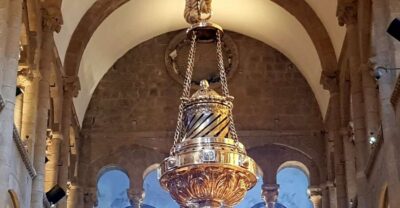
Santiago: Cathedral & Museum Tour + Pórtico of Glory Option
Read our review →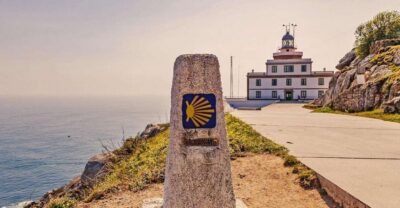
From Santiago: Finisterre, Muxia & Costa da Morte Excursion
Read our review →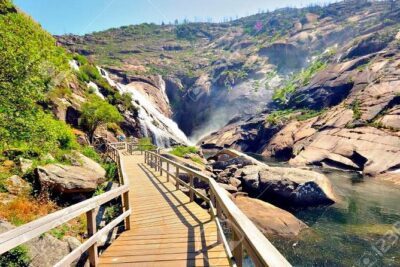
Excursion to Finisterre + Muxia + Costa da Morte (7 stops)
Read our review →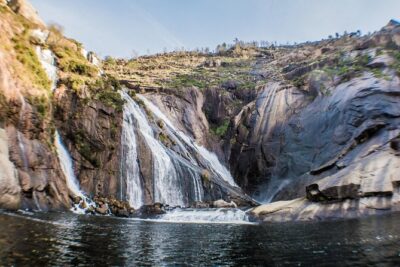
Finisterre and Costa da Morte: The Most Complete Tour of Santiago
Read our review →
From Santiago: Finisterre, Muxia, Ézaro – 7 stops day tour
Read our review →
Santiago de Compostela Cathedral and Museum Guided Tour
Read our review →
Visit to the Cathedral of Santiago + Portico de la Gloria Option
Read our review →Browse the lists this tour appears in