
Review · JEREZ TOURS
Jerez: Yeguada de la Cartuja Carthusian Horses Tour
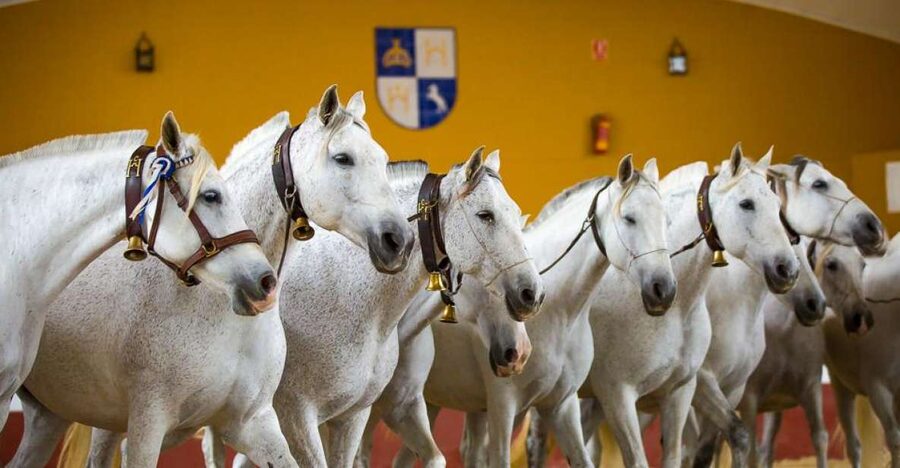
The horses arrive at a gallop. At Yeguada de la Cartuja, near Jerez, you see Carthusian horses at different stages of life, from young foals to powerful stallions. I like the mix of farm tour and live horsemanship, and I like that the visit feels tied to Andalusia rather than being only a staged performance. The main drawback is the remote location, which can make a taxi cost far more than the $22 admission.
The 2.5-hour visit is a fine choice even if you are not an expert on horses. Guides such as Andre, Caroline, and Linda have been praised for making the breeding story clear and lively. Still, families with very young children may find the tour a little long, and you should plan your return ride before arriving.
In This Review
- Key points to know before you go
- Reaching Fuente del Suero outside Jerez
- Why the Carthusian bloodline matters
- Walking through the farm and paddocks
- The main arena and the dressage display
- What makes this different from a standard horse show
- How the $22 price measures up
- Timing, language, and accessibility
- Who should book this experience?
- Should you book the Yeguada de la Cartuja tour?
- FAQ
- Where is Yeguada de la Cartuja located?
- How long does the experience last?
- What animals will I see?
- Is horse riding included?
- Is food included?
- What languages are available?
- Is the farm wheelchair accessible?
- Can I bring a pet?
- What should I wear?
- Can I cancel the booking?
Key points to know before you go
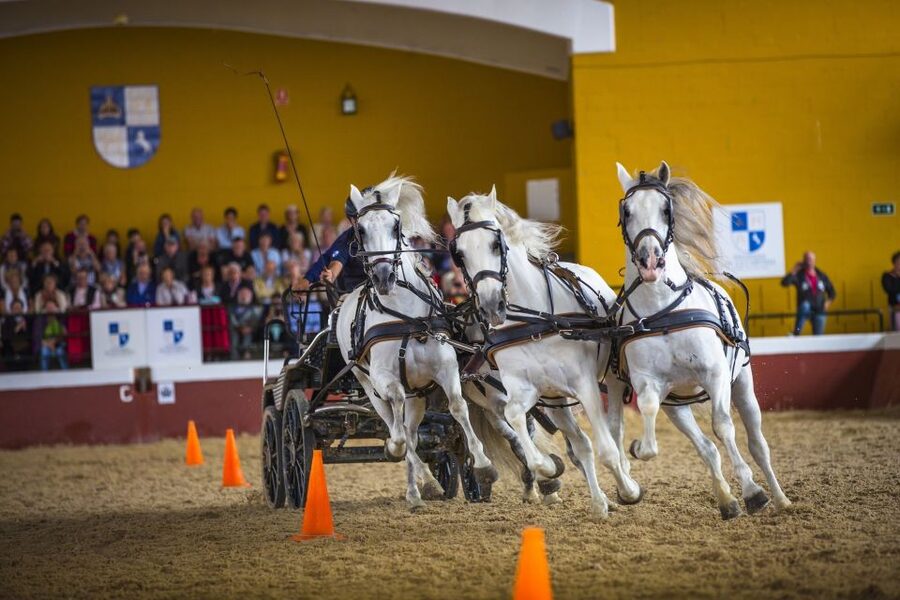
- More than 200 Cartujano horses: The farm preserves one of the most important bloodlines of Andalusian horses.
- Free-running horses: You see colts, mares, and stallions outside the confines of a standard riding-school display.
- Foals and mothers: The current year’s foals are one of the most appealing parts of the visit, especially for families and horse lovers.
- A one-hour arena show: The tour ends with dressage and controlled horsemanship in the main arena.
- A $22 experience with extra transport costs: Admission is inexpensive, but the farm is difficult to reach without a car.
- English, Spanish, and German tours: Language support makes the history and breeding details easier to follow.
Reaching Fuente del Suero outside Jerez
Yeguada de la Cartuja is at Finca Fuente del Suero, near Jerez de la Frontera. You will find plenty of parking at the ticket office, making a rental car the simplest option.
The setting matters. This is not a city-center attraction with horses brought in for a quick show. The farm occupies the historic Fuente del Suero estate, next to the former Carthusian monastery that gave the bloodline its name. The open setting helps you understand why this area became important for horse breeding.
If you are coming from Jerez without a car, arrange your ride carefully. A taxi has cost some visitors about $50 for the trip there and back to Jerez. Another visitor traveling from Cádiz port paid for a taxi and had the driver wait during the tour, which solved the return problem but required planning.
Do not rely blindly on your sat-nav. One driver was directed toward the motorway and told to walk from there, while another was sent to a riding school in Jerez and arrived late. Use the exact farm name, Finca Fuente del Suero, and allow extra time. The ticket office is the meeting point, and your admission is collected there.
The remote location is the main practical weakness of the experience. The $22 price looks excellent until you add a costly taxi. If you already have a car, the value becomes much stronger.
More horse riding:
- Jerez de la Frontera: How the Andalusian Horses Dance
★ 4.6 · 6,168 reviews - El Salobre: Horse Riding Adventure with Transfer Options
★ 4.5 · 1,609 reviews - Jerez de la Frontera: Andalusian Horse Dance and Museums
★ 4.7 · 1,289 reviews
Why the Carthusian bloodline matters
The Carthusian, or Cartujano, horse is a branch of the Spanish horse tradition with a long connection to the Carthusian monks. The monastery near Jerez became a major center for breeding Jerezano horses in the 15th century, and the breeding tradition has continued into the present day.
The tour explains this story through the horses themselves. You are not simply shown a polished animal and told that it is special. You learn how the lineage is protected, how the horses are bred, and how they are cared for through different stages of life.
That approach gives the visit more purpose. You begin to notice differences between a foal, mare, and stallion, and you see why breeding is a long-term process rather than a quick commercial operation. The farm’s stated work focuses on preserving and improving the Cartujano breed, a point the guides return to throughout the visit.
The strongest guides make this easy to follow. Caroline has been praised for explaining the history, breeding process, and bond between mother and colt while keeping the group involved. Andre has been described as friendly, entertaining, and well informed. Linda has also received praise for an engaging English-language tour.
You do not need previous horse knowledge. The explanations are aimed at ordinary visitors, not just riders or breeders.
Walking through the farm and paddocks
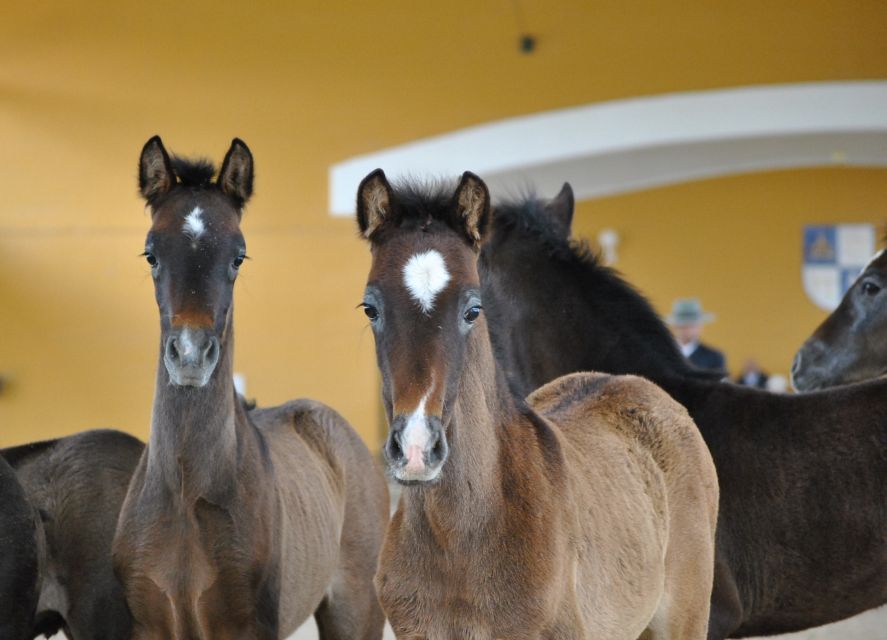
The guided portion takes you around the farm and introduces the horses in several settings. The exact order can vary, but you should expect to see colts and mares running free, stallions in their own area, and the year’s foals.
The free-running horses are a highlight because they show a more natural side of the animals. You see the horses move as horses, not only as trained performers. Their size, balance, and energy are easier to appreciate when they are walking or running together.
The foals and mares offer a different kind of interest. The relationship between mother and colt becomes part of the story, and this is one reason the visit works well for families with older children. Several visitors especially enjoyed seeing the newest foals in the arena.
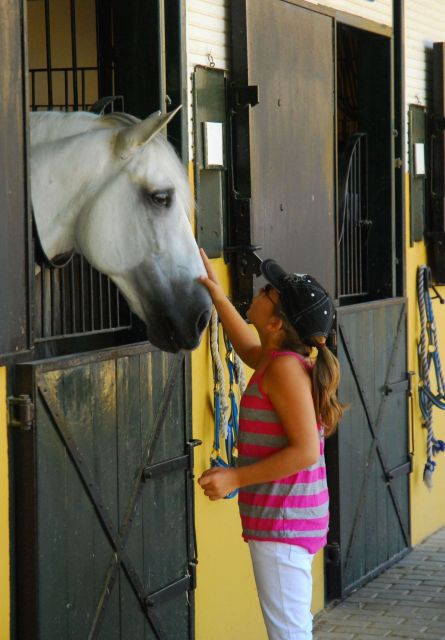
You may also have a chance to stroke or interact with some of the horses. That contact is not the same as riding, and riding is not included, but it gives the visit a personal touch. The experience is built around observing and learning, not getting on a horse.
The farm staff have been praised for treating the horses well and for creating a welcoming atmosphere. I would still remind you that animals have their own limits. Follow the guide’s instructions, move calmly, and do not assume every horse can be touched.
Wear shoes that can handle walking around a working farm. Comfortable clothes are recommended, and a face mask or protective covering is listed among the suggested items. Andalusian sun can be strong, so bring suitable protection even though the exact amount of shade is not specified.
The main arena and the dressage display
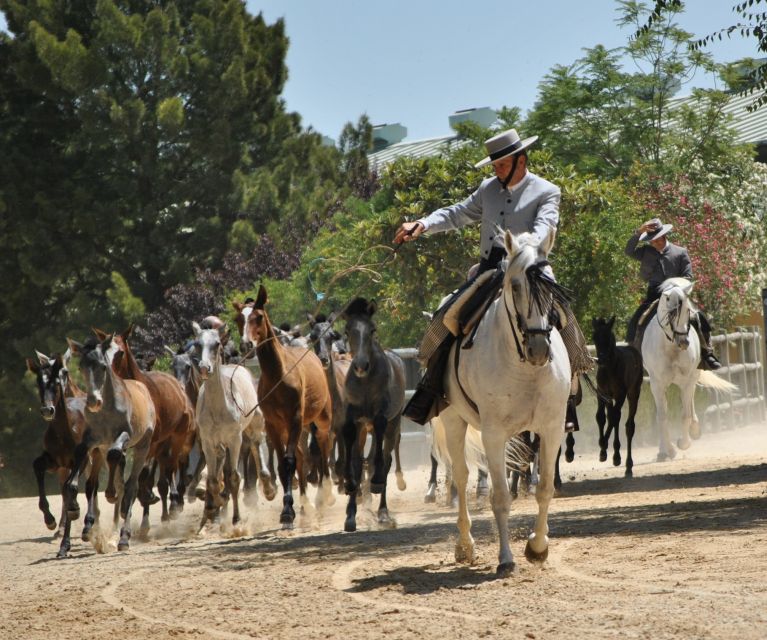
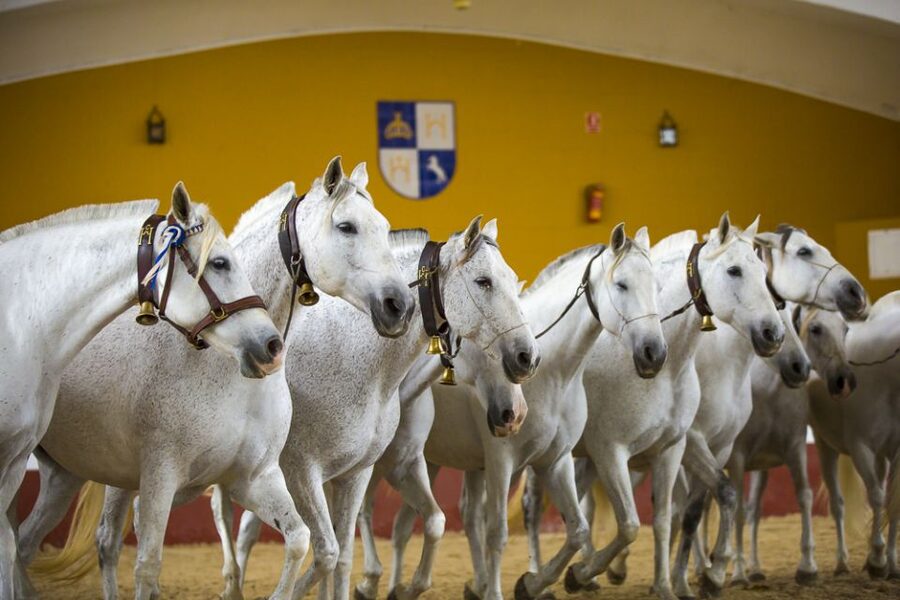
The final part is the show in the main arena. The exhibition lasts about an hour, and it gives you a clear look at the training and control behind the breed’s famous elegance.
The most memorable moment for many people is the arrival of several horses in the arena together. The sight of them moving as a group gives the show scale and energy before the quieter dressage work begins.
Dressage is less about speed than precision. Watch the communication between horse and rider: small movements, controlled steps, balance, and changes in pace. The attraction is not simply that the horses are beautiful. You are seeing breeding, training, and concentration working together.
The show also provides a useful break after the walking tour, especially on a warm day. One visitor described sitting down for the performance as a welcome pause from the sun. The arena setting lets you focus on the horses without having to keep moving around the farm.
There is one seating point to consider. Your ticket includes a seat number, and one person found that a side section had a poor view even though more central seats appeared to be empty. You may not be able to change seats once the show begins, so check your assigned place early and ask staff if there is a genuine accessibility concern.
The display is polished, but it does not erase the farm’s working purpose. The best part is the link between what you learn outside and what you see in the arena. After watching the young horses and breeding groups, the performance feels like the next chapter rather than a separate attraction.
A few more Spain trips worth a look
- Jerez: Royal Andalusian School of Equestrian Art Admission
★ 4.6 · 882 reviews - Jerez: Bodegas Fundador Guided Tour with Tasting Session
★ 4.8 · 714 reviews - Jerez: Guided Winery Tour with Wine Tasting
★ 4.4 · 636 reviews - Jerez de la Frontera: Sherry Winery Tour with Tasting
★ 4.6 · 309 reviews
What makes this different from a standard horse show
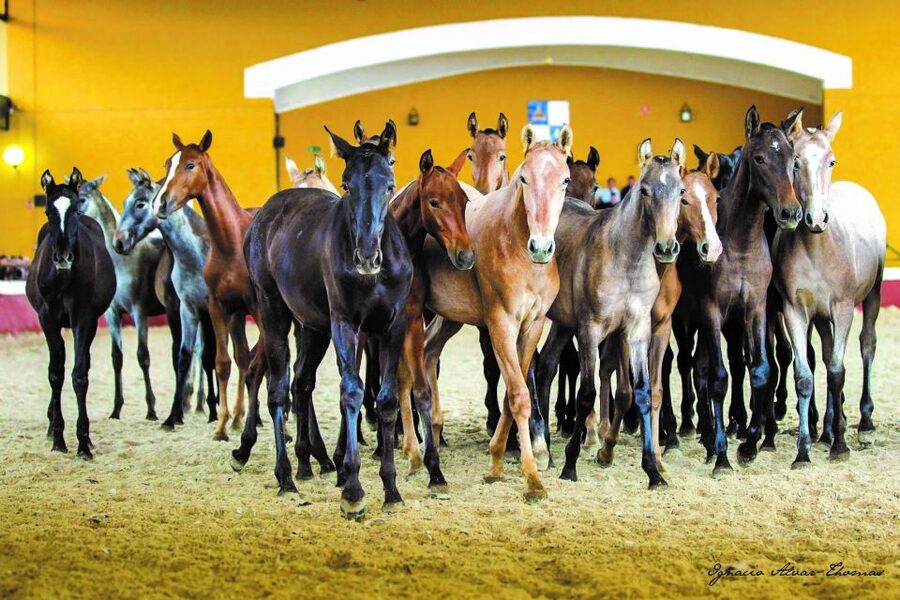
A regular horse show can give you skilled riding and a few dramatic movements. This visit gives you context first.
You see the breeding operation, the younger animals, the mares, and the stallions. You hear why the Cartujano lineage matters to Spanish culture. Then you watch trained horses perform. That sequence helps you understand the animals beyond their appearance.
I also like the balance between information and spectacle. The tour is not presented as a dry lecture about bloodlines, but it is not only an excuse to watch a performance. One visitor praised the way historical facts and stories were kept in good balance.
The experience is particularly strong for anyone who already loves horses. You can spend time looking at conformation, movement, temperament, and the relationship between mare and foal. You may also enjoy asking questions during the tour.
If horses do not interest you at all, the visit still offers a view into Andalusian tradition and rural life, but the show will probably be the main reward. The tour runs for 2.5 hours, and one person felt it could be shortened for families with children. Very young children may struggle with the length and with listening during the explanatory parts.
How the $22 price measures up
At $22 per person, the admission is good value for the time included. You receive a guided farm visit and the arena exhibition, with no separate charge for the main show.
The price is especially fair if you are already staying near Jerez and can drive. Two and a half hours is long enough to feel substantial without taking an entire day. You also get more than a quick photo stop: there is history, animal care, breeding information, free-running horses, foals, and dressage.
Transport changes the calculation. A $50 taxi can cost more than two admissions, and the farm’s rural setting means you should not assume a cheap or frequent ride back. If you are visiting from Cádiz port, Jerez, or another nearby base, compare the cost of a round-trip taxi with a rental car or organized transfer.
Food and drink are not included. Horse riding is also not included, so do not book this expecting a riding lesson or trail ride. You are paying for access, guiding, and the exhibition.
There is a gift shop at the end. It can be a pleasant stop for horse-related clothing and souvenirs, but service may be slow when several groups finish at once. One visitor had to leave desired clothing behind because a long line reached the door and a waiting ride could not stay.
Timing, language, and accessibility
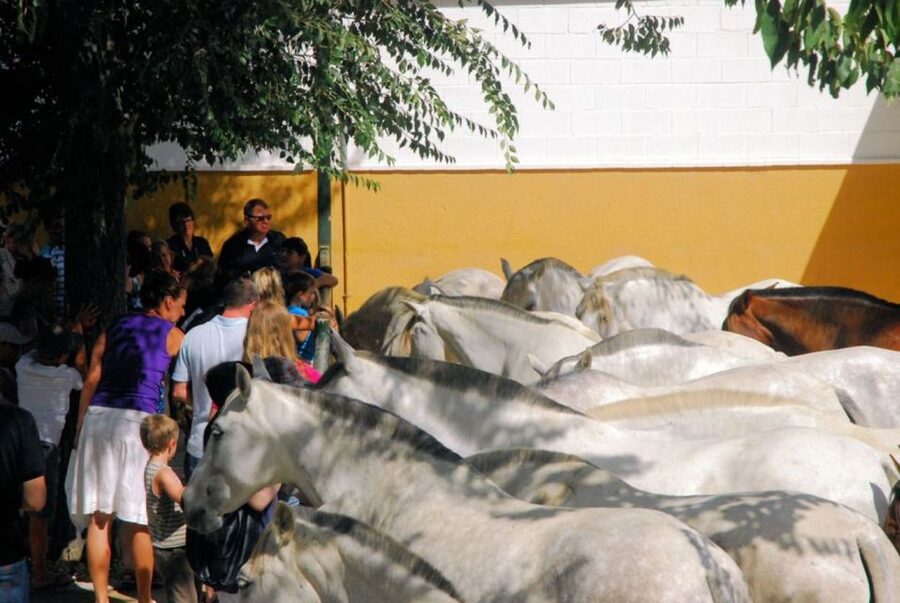
The total duration is 2.5 hours, with the farm tour and show making up the central parts of the visit. Starting times vary, so check availability for your date when booking.
Live guiding is available in Spanish, English, and German. That is important here because the breeding story adds much of the value. An English-speaking guide can explain details that would be easy to miss if you only watched the horses.
The staff have accommodated wheelchair users, and the experience is listed as wheelchair accessible. If you use a wheelchair, mention your needs when booking and confirm the practical arrangements with the provider, since a farm and arena can involve different surfaces and viewing areas.
The main show uses assigned seating. Arrive with enough time to collect your tickets at the ticket office and find your group. One late arrival missed the start of the English group after a navigation problem, while another person missed the group being called and had the tour begin without them.
The sensible plan is simple: arrive early, go directly to the ticket office, confirm your language group and seat, and avoid wandering off before the guide calls everyone together.
Who should book this experience?
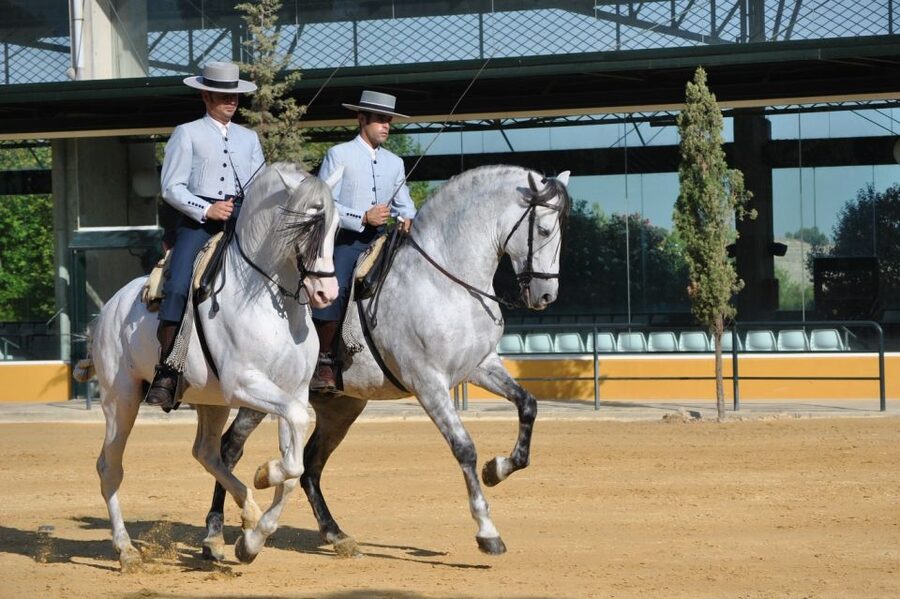
I would put this near the top of the list for horse lovers visiting Andalusia. You get close to the animals, see several age groups, and watch polished horsemanship in the same visit.
It also suits families with school-age children. The foals are engaging, the horses are impressive, and the show gives the afternoon a clear finish. Very young children may find the 2.5-hour format too long, especially during the history and breeding explanations.
This is a good choice for people interested in Spanish culture, even if they do not ride. The Carthusian tradition connects horses with Jerez, the monastery, agriculture, and national identity. You come away with a clearer sense of why the Andalusian horse matters.
I would be less enthusiastic if you have no practical way to reach the farm. The admission is cheap, but a large taxi bill can weaken the value. I would also avoid squeezing this into a tight cruise-port schedule unless your return transport is firmly arranged.
Should you book the Yeguada de la Cartuja tour?
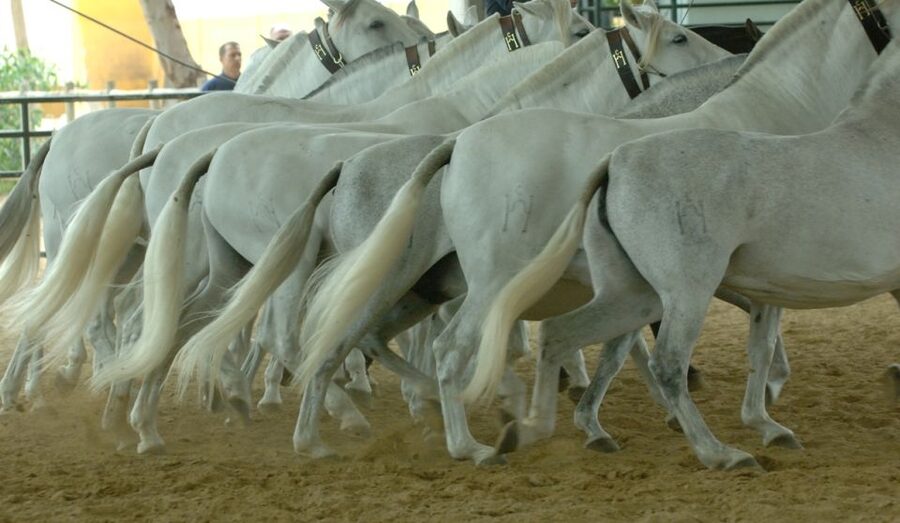
Book it if you can solve the transport and have at least a passing interest in horses. The combination of free-running horses, young foals, and a one-hour dressage display gives you much more than a staged photo opportunity.
At $22, the experience is reasonably priced, well organized, and accessible to a broad audience. The most important practical advice is to use the correct farm address, arrive early, confirm your tour language, and arrange the ride home before the show ends.
Skip it only if your schedule is tight, taxi costs are a serious concern, or your young children are unlikely to manage a long guided visit. For everyone else, Yeguada de la Cartuja offers a memorable look at one of Andalusia’s most distinctive traditions.
FAQ
Where is Yeguada de la Cartuja located?
The farm is at Finca Fuente del Suero near Jerez in Andalusia, Spain. The ticket office at the finca is the meeting point, and parking is available.
How long does the experience last?
The visit lasts 2.5 hours. It includes the guided farm tour and the exhibition in the main arena.
What animals will I see?
You can see free-running colts, mares, and stallions, along with the current year’s foals. The tour explains the horses at different stages of life.
Is horse riding included?
No. Horse riding is not included. The experience includes the guided tour and the arena show.
Is food included?
No. Food and drink are not included in the price.
What languages are available?
Live guides are available in Spanish, English, and German.
Is the farm wheelchair accessible?
The experience is listed as wheelchair accessible, and staff have accommodated wheelchair users during the visit.
Can I bring a pet?
Pets are not allowed. Assistance dogs are permitted.
What should I wear?
Comfortable shoes and comfortable clothing are recommended. A face mask or protective covering is also listed among the items to bring.
Can I cancel the booking?
You can cancel up to 24 hours in advance for a full refund. A reserve-now, pay-later option is also available.
Recently added around Spain
- Half-Day Luxury Catamaran Sailing Cruise in Granada★ 5.0 · 165 reviews
- Jeep Safari to Teide and Masca★ 4.5 · 165 reviews
- Madrid: Thyssen Museum Guided Tour with Skip-the-Line Entry★ 4.5 · 165 reviews
- Visit in Spanish to the Cathedral Mosque. Does not include entrance ticket★ 5.0 · 165 reviews
- Canyoning in Andalucia: Rio Verde Canyon★ 5.0 · 165 reviews
- Guided Tour to Caminito del Rey from Malaga★ 4.5 · 165 reviews
- VIP Private Segway Tour of Palma★ 5.0 · 165 reviews
- Las Palmas: Private Old City Guided Walking Tour with Tapas★ 4.6 · 166 reviews
Jerez Tours, compared.
Jerez de la Frontera: How the Andalusian Horses Dance
Read our review →
Jerez de la Frontera: Andalusian Horse Dance and Museums
Read our review →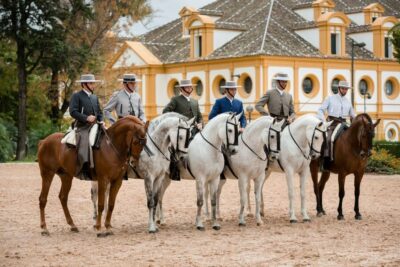
Royal Andalusian School of Equestrian Art Admission
Read our review →
Bodegas Fundador Guided Tour with Tasting Session
Read our review →
Jerez de la Frontera: Sherry Winery Tour with Tasting
Read our review →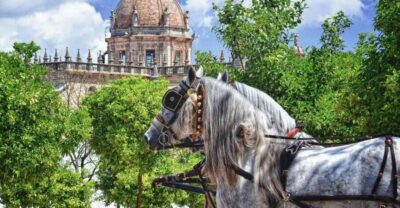
Bodegas Álvaro Domecq Guided Tour with Wine Tasting
Read our review →Browse the lists this tour appears in