
Review · JEREZ TOURS
Jerez: Royal Andalusian School of Equestrian Art Admission
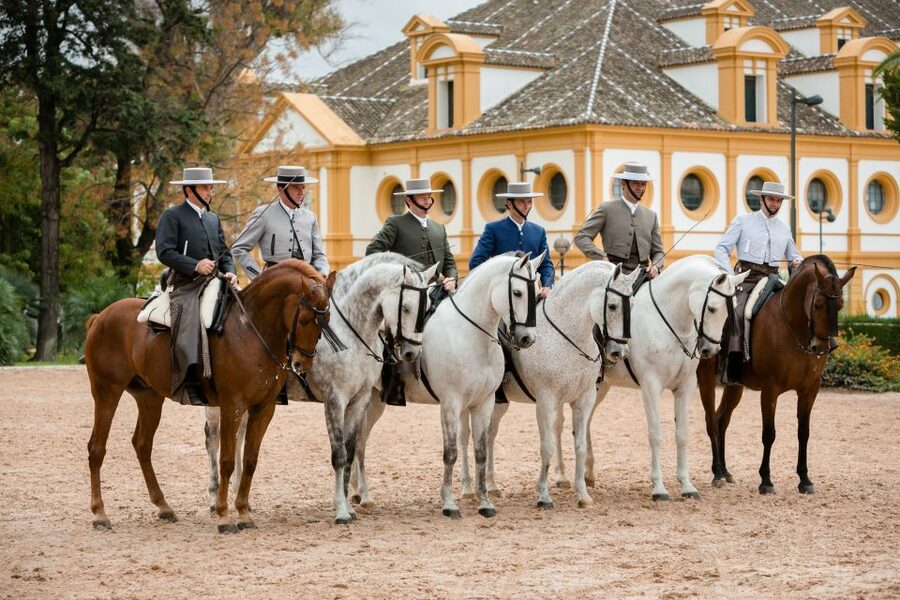
Watch Andalusia’s finest horses at work. Jerez’s Royal Andalusian School of Equestrian Art gives you far more than a museum visit. For about $18, you can see the palace, gardens, stables, tack room, riding arenas, saddlery, and carriage collection. I especially like the chance to watch daily horse training and the careful look behind the scenes. The main drawback is that training and saddlery visits are not available on Saturdays, and tour times can be confusing.
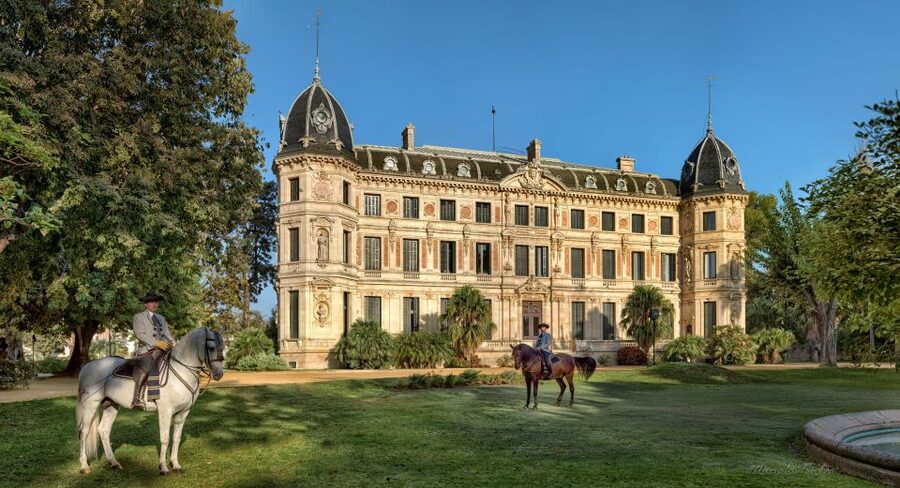
The setting is polished and beautiful, with a Charles Garnier palace, exotic plants, and an impressive central fountain. I also like that the visit works for more than serious horse fans: the museums explain Andalusian riding traditions clearly, while the stables and indoor arena supply the real excitement. Bring your ticket receipt, and check exactly which admission option you bought, since the famous horse show is separate from the school visit.
In This Review
- Key points to know before you go
- Why this Jerez visit is worth your time
- Start with the gardens and Garnier’s palace
- The Museum of Equestrian Art explains the tradition
- See the saddlery and the work behind the equipment
- The stables bring you close to the horses
- Watch daily training in the riding arenas
- Finish with the carriage museum
- How long should you allow?
- Language, access, and ticket details
- Who will enjoy this most?
- Should you book the Royal Andalusian School?
- FAQ
- How much does admission to the Royal Andalusian School cost?
- How long does the visit last?
- Does admission include the horse show?
- Can I watch the horses training?
- Is the saddlery open every day?
- What languages are available for the guided tour?
- Is the school wheelchair accessible?
- What museums are included?
- Can I bring a bottle or animal inside?
- What should I bring for a discounted ticket?
Key points to know before you go
- Training is the star attraction: Watch horses and riders work in the outdoor rings and indoor arena, except on Saturdays.
- The $18 ticket covers a lot: Admission includes the school grounds, palace rooms, equestrian museum, stables, tack room, saddlery, and carriage museum.
- The horses are close, but not always touchable: You can see the school’s prized horses in their octagonal stables, though access is controlled.
- The visit is guided where it matters: A guide leads you through the stables, tack room, and working areas, with Spanish, English, French, and German available.
- Allow more than the stated two hours if possible: The official duration is two hours, but some people spend close to four hours exploring the grounds and museums.
- Do not confuse admission with the performance: The training visit does not automatically include the celebrated horse show.
Why this Jerez visit is worth your time
Jerez is known for sherry, flamenco, and horses. At the Royal Andalusian School of Equestrian Art, you get a close look at one of the city’s most important traditions without simply sitting in a performance hall.
The school trains Andalusian horses in classical dressage. You see the animals at rest in the stables, at work in the arena, and supported by the people who care for their equipment. That range gives the visit substance. You are not just admiring beautiful horses for a few minutes. You are seeing the daily work behind the polished public show.
I consider the admission especially good value for horse lovers. The same ticket opens several parts of the complex, including the palace, gardens, equestrian museum, stables, indoor arena, saddlery, and carriage museum. At around $18 per person, it is reasonably priced for a two-hour visit, and it can take longer if you stop for every exhibit.
The school is also a good choice for families and mixed-interest groups. A dedicated rider may focus on training methods and tack. Someone less interested in horses can spend time in the palace, gardens, and carriage collection. The only caution is that the visit is less rewarding if you arrive expecting the full performance. Admission to the school and admission to the horse show are not the same thing.
A few more Spain trips worth a look
- Jerez de la Frontera: How the Andalusian Horses Dance
★ 4.6 · 6,168 reviews - Jerez de la Frontera: Andalusian Horse Dance and Museums
★ 4.7 · 1,289 reviews - Jerez: Yeguada de la Cartuja Carthusian Horses Tour
★ 4.8 · 970 reviews
Start with the gardens and Garnier’s palace
Your visit begins at the reception center. An audio-visual presentation on Andalusian equestrian art is available until 11:00 AM, so an early arrival may give you a useful introduction before you enter the grounds.
Schedules can shift. One visitor with an English booking found that the English portion did not begin until 11:15, while another had an introductory video cancelled without notice. I would treat the presentation as a useful extra, not the part of the visit around which you build your entire day.
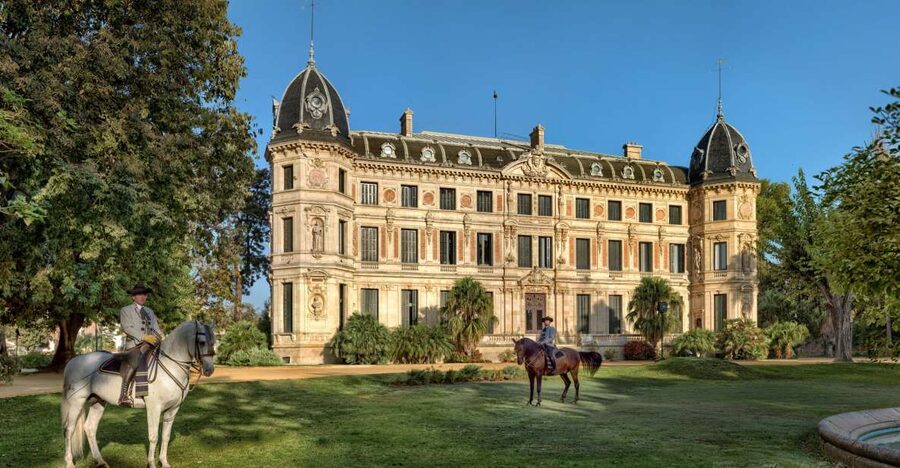
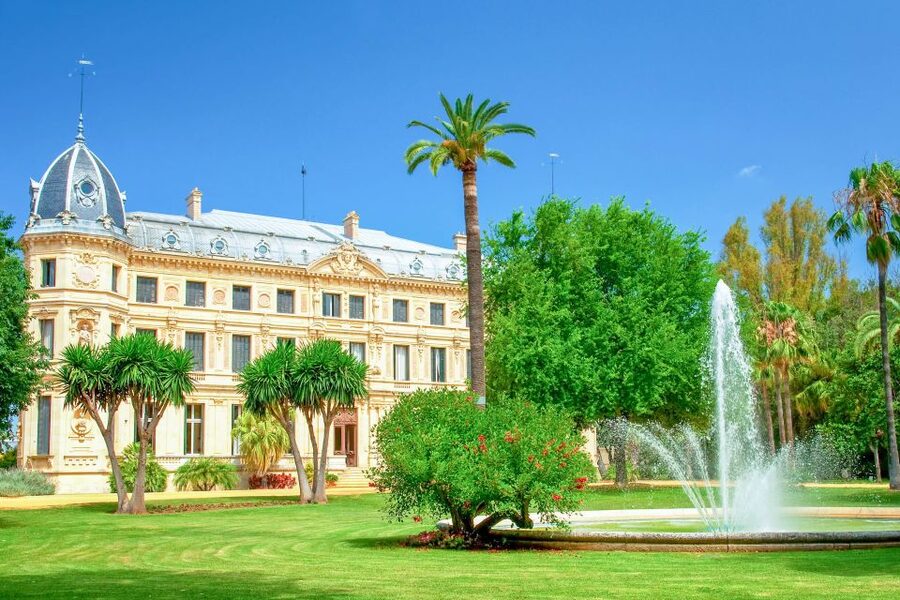
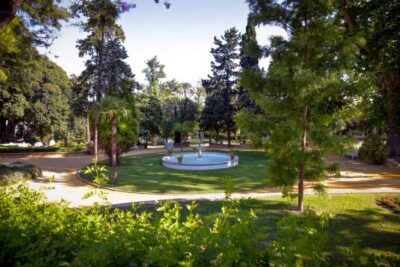
From reception, you enter the gardens. Exotic plants frame a large fountain at the center, and its water jets draw your eyes toward the palace beyond. This opening gives the school a calm, formal feel before you reach the busier working areas.
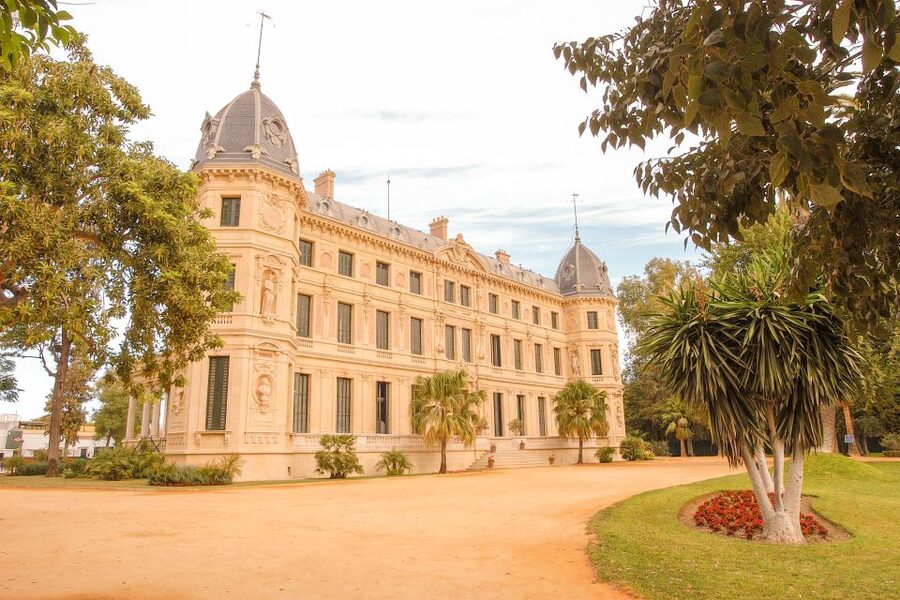
The palace was designed by Charles Garnier and reflects 19th-century architectural taste. On the ground floor, you can see rooms decorated in their original style. These halls add context to the school. The institution is not just a stable and riding arena, but a formal cultural center with a long public role in Andalusia.
I would take a few minutes here before rushing toward the horses. The palace rooms are not the main reason most people come, but they help explain the setting and make the visit feel like a tour of a complete institution rather than a single attraction.
The Museum of Equestrian Art explains the tradition
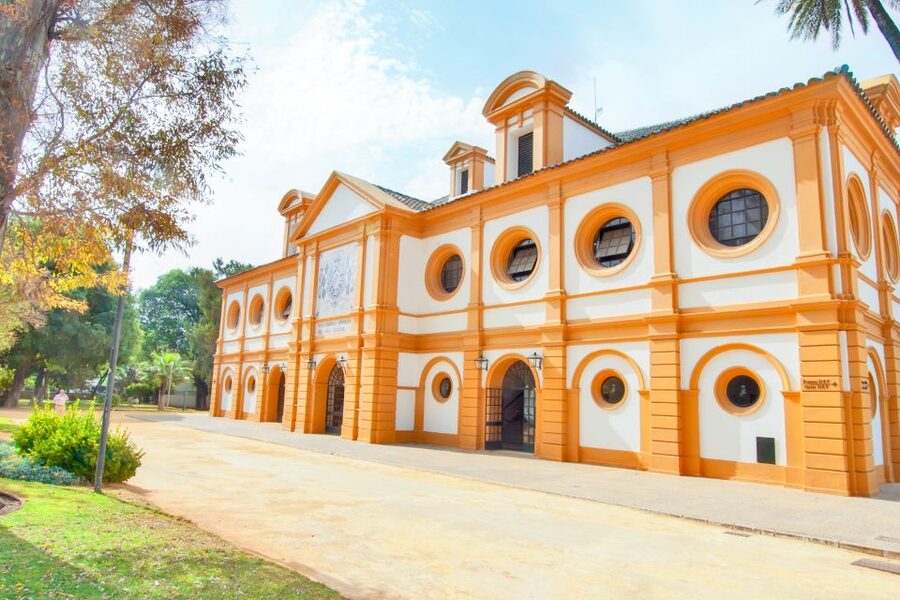
In the basement, the Museum of Equestrian Art occupies 11 rooms. The displays cover the origins and development of equestrian art in Andalusia, the role of the horse in the region, the school itself, and the movements horses perform.
This is where the audio-visual material and interactive exhibits can help. You get a clearer idea of why Andalusian horses are prized and how riding developed into a formal art. The museum also gives you something to study if training is paused or if the weather makes outdoor viewing uncomfortable.
The exhibits received strong praise for explaining the regional horse tradition and the tricks used in performances. A few video displays were not working during one visit, so the technology may not always be perfect. Still, the 11-room layout provides enough material to make the museum worthwhile on its own.
I like seeing the museum before or after the stables, depending on your schedule. Before the stables, it gives you a vocabulary for what you are about to see. Afterward, it helps connect the horses’ daily work with the school’s wider purpose.
See the saddlery and the work behind the equipment
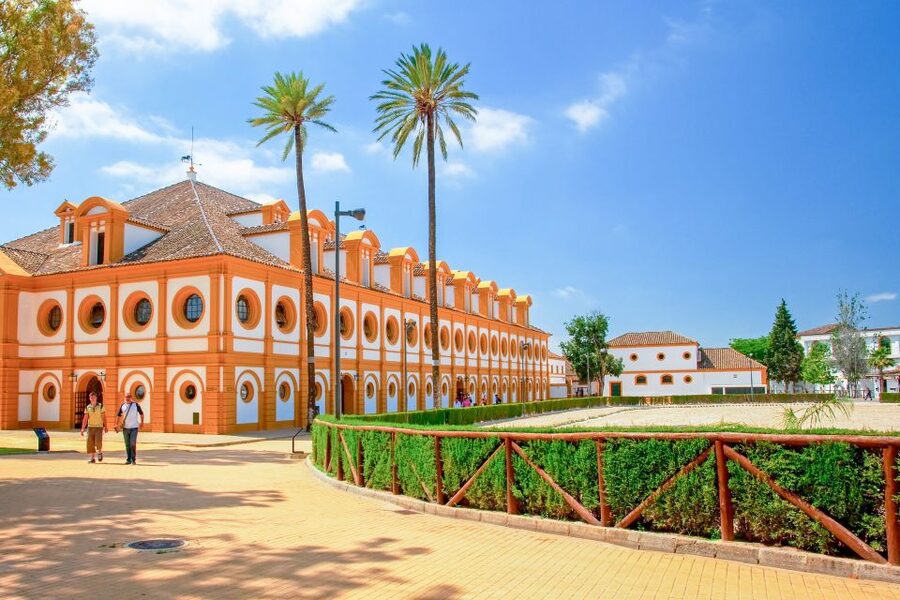
The saddlery is one of the most interesting stops because it shows the skilled work that supports both training and performances. The master harness maker and apprentices make and repair harnesses there.
This part is easy to overlook if you only want photographs of horses, but I think it gives the visit its strongest behind-the-scenes quality. Tack is not a decorative afterthought. It must be made, fitted, maintained, and stored with care.
The saddlery is not open for this part of the visit on Saturdays. The same Saturday limitation applies to horse training, so plan a weekday visit if these working areas are important to you.
One detailed visit also included the humidity-controlled tack room. That detail matters because it shows the level of care given to the equipment. In the tack room, you see the harnesses used for everyday training and public shows, neatly kept in the center of the octagonal stable complex.
A completely different kind of day out in Spain:
- Barcelona: Sagrada Familia Entry Ticket with Audio Guide
★ 4.6 · 105,312 reviews - Barcelona: Park Güell Admission Ticket
★ 4.4 · 76,534 reviews - Seville: Royal Alcázar Entry Ticket
★ 4.6 · 28,378 reviews - Barcelona: Casa Batlló Entry with Self-Audioguide Tour
★ 4.7 · 25,359 reviews
The stables bring you close to the horses
The school’s stables are arranged in an octagonal complex. In the center, the tack room holds the harnesses, while the surrounding stalls house some of the school’s most emblematic horses.
This is often the emotional high point of the visit. You see the horses at close range rather than only from a distant arena seat. Their size, posture, and calm behavior are easier to appreciate here, especially when you can ask the guide questions about how they are kept.
Access is supervised. You should not expect to wander freely into every stall or handle the horses whenever you wish. One person loved being able to pat the horses, while another felt it was strange to look at them through the bars without an opportunity to touch one. That difference captures the experience well: the horses are close, but this is a working school, not a petting zoo.
The condition of the premises is another strong point. The stables and wider grounds have been described as immaculate, and the horses as being in excellent condition. That care is part of what you are paying to see. The visit shows not only the beauty of the animals, but also the discipline and upkeep required to train them.
Guides can make a major difference here. Javi was praised for answering questions, and Elena was remembered for explaining the stables and tack room clearly. Harry also received credit for making the visit informative. If you get an English-speaking guide who communicates well, the stable tour becomes much more than a quick walk past stalls.
Watch daily training in the riding arenas
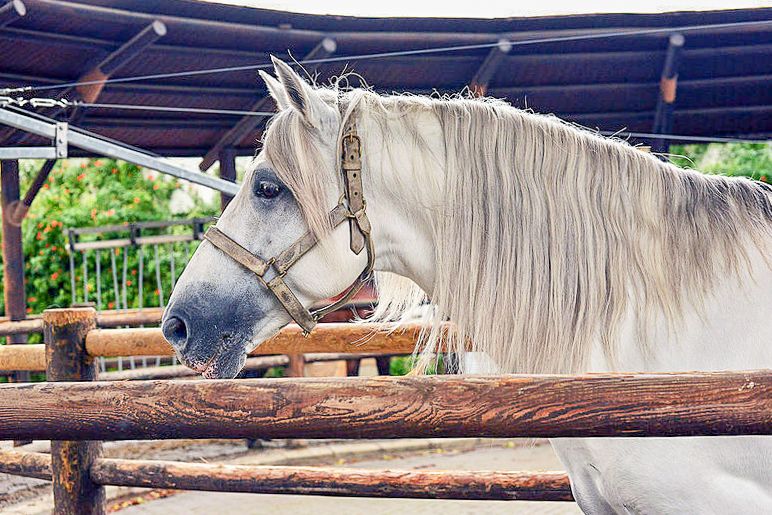
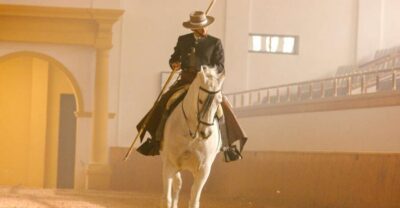
The outdoor exercise rings and indoor arena show the school in action. Here, horses and riders practice the controlled movements associated with classical dressage.
Training is not a performance, and that is part of its appeal. You may see repetition, warm-up work, lunging, carriage driving, or riders refining a movement. The excitement comes from watching the skill develop rather than receiving a finished theatrical presentation.
The indoor arena was designed in an Andalusian style and can hold 1,600 people. During daily training, it gives you a proper view of the horse-and-rider partnership. One visit also included watching stallions being lunged and carriage driving, which shows how varied the school’s work can be.
You may not be allowed to photograph inside the arena. Follow the staff’s instructions, since the rules can differ between areas. The management can also change the program, so the exact training session is not guaranteed.
Training does not take place as part of this visit on Saturdays. If seeing the horses work is your main goal, choose another day and check the available starting time before booking.
Finish with the carriage museum
The carriage museum completes the route. Its collection includes carriages, horses, harnesses, and equestrian costumes.
This final stop expands the story beyond riding. Carriages show how horses once served transport, ceremony, and public life, while the harnesses and costumes reveal the craft and presentation involved. It is a useful final chapter after seeing modern training and the working tack room.
The carriage museum is included in admission, but its distance from the main buildings can matter on a hot day. One visitor skipped it because of the heat after seeing the stables and equestrian museum. If you visit during a warm afternoon, save water and energy for this section rather than assuming it is a quick room beside the arena.
How long should you allow?
The listed duration is two hours, which is enough for a well-organized visit through the principal areas. I would allow at least that much time, with extra room if you want to read the museum displays, watch training for a while, or linger in the gardens.
Some people have spent almost four hours at the school. That longer visit makes sense if you arrive early, watch more than one training activity, explore both museums, and take your time around the palace.
The school may close parts of the complex or finish daily activity by early afternoon. An older visit reported that everything shut at 2:00 PM, so do not assume you can arrive late and see the full program. Morning is the safer choice, especially if you want the audio-visual introduction and working demonstrations.
The English tour may not begin at the exact time you expect. One booking arranged for 10:00 AM involved a wait for the presentation and then a delay while staff gathered enough English-speaking visitors for a group. The eventual guide also spoke too quietly for that visitor. This seems to be an occasional organizational problem rather than the usual experience, but it is worth allowing some flexibility.
Language, access, and ticket details
Guided visits are offered in Spanish, English, French, and German. The quality of your visit depends partly on the guide, since the stables and working areas are not simply open for independent wandering.
The school is wheelchair accessible. Present your printed receipt or mobile ticket at the ticket office. If you buy a discounted ticket, bring proof of eligibility. Without that document, you may need to pay the difference to the full standard price, if full-price tickets are still available.
The grounds do not allow bottles, cans, animals, or objects that management considers unsuitable. The program may also be altered by the school, so treat the published route as a plan rather than an absolute promise.
Free cancellation is available up to 24 hours before the visit, and you can reserve now and pay later. Those options help if your Jerez schedule is still moving, though the key practical decision is choosing a day other than Saturday if training matters to you.
Who will enjoy this most?
I would choose this experience if you love horses, dressage, traditional craft, or working institutions that let you see daily routines. It is especially good for anyone who has already seen a performance and wants to understand what happens behind it.
Families can also do well here, provided children can manage a guided visit with museum rooms and controlled viewing areas. The horses provide an immediate focus, while the fountain, palace, and carriages add variety.
You should think twice if your only goal is to see horses perform dramatic routines. The admission visit gives you training, not necessarily the full staged show. For the famous performance, book the separate show ticket and check its schedule carefully.
I would also avoid building the visit around a strict minute-by-minute plan. The setting is worth taking at a relaxed pace, and the guided portion may not start exactly when you expect.
Should you book the Royal Andalusian School?
Yes, if you want an affordable and varied look at Jerez’s horse culture. For about $18, you get far more than a stable entrance: a palace, gardens, 11-room museum, saddlery, tack room, stables, riding arenas, and carriage collection. The horses are the main attraction, but the supporting spaces explain why the school matters.
Book for a weekday, arrive in the morning, and confirm that your ticket covers the visit you want rather than the separate performance. If possible, choose a guided option and leave extra time for the museum and carriage collection.
I would skip it only if your schedule is extremely tight, you dislike museums, or you are expecting a full theatrical show with every admission ticket. For most visitors with even a passing interest in horses, this is one of Jerez’s strongest cultural stops.
FAQ
How much does admission to the Royal Andalusian School cost?
The listed price is $18 per person.
How long does the visit last?
The stated duration is two hours. You may spend longer if you explore the museums, gardens, palace, and carriage collection at a relaxed pace.
Does admission include the horse show?
The admission described here covers the school facilities and training visit. The full horse show is a separate experience and should not be assumed to be included.
Can I watch the horses training?
Yes, horse training takes place in the outdoor exercise rings and indoor arena, except on Saturdays. The management may change the program.
Is the saddlery open every day?
The saddlery visit is not available on Saturdays. The master harness maker and apprentices make and repair equipment there on other scheduled visit days.
What languages are available for the guided tour?
Guided visits are available in Spanish, English, French, and German.
Is the school wheelchair accessible?
Yes, the experience is listed as wheelchair accessible.
What museums are included?
Admission includes the Museum of Equestrian Art and the carriage museum. The equestrian museum has 11 rooms.
Can I bring a bottle or animal inside?
No. Bottles, cans, animals, and objects management considers unsuitable are not allowed on the grounds.
What should I bring for a discounted ticket?
Bring documentary proof of your eligibility for the discount. If you cannot show it at the ticket office, you may have to pay the difference to the full standard price, if tickets remain available.
Recently added around Spain
- Half-Day Luxury Catamaran Sailing Cruise in Granada★ 5.0 · 165 reviews
- Jeep Safari to Teide and Masca★ 4.5 · 165 reviews
- Madrid: Thyssen Museum Guided Tour with Skip-the-Line Entry★ 4.5 · 165 reviews
- Visit in Spanish to the Cathedral Mosque. Does not include entrance ticket★ 5.0 · 165 reviews
- Canyoning in Andalucia: Rio Verde Canyon★ 5.0 · 165 reviews
- Guided Tour to Caminito del Rey from Malaga★ 4.5 · 165 reviews
- VIP Private Segway Tour of Palma★ 5.0 · 165 reviews
- Las Palmas: Private Old City Guided Walking Tour with Tapas★ 4.6 · 166 reviews
Jerez Tours, compared.
Jerez de la Frontera: How the Andalusian Horses Dance
Read our review →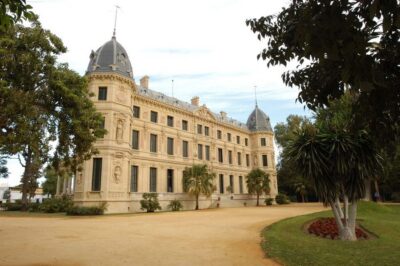
Jerez de la Frontera: Andalusian Horse Dance and Museums
Read our review →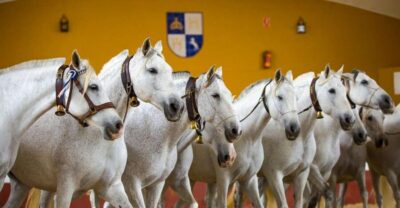
Bodegas Fundador Guided Tour with Tasting Session
Read our review →
Jerez de la Frontera: Sherry Winery Tour with Tasting
Read our review →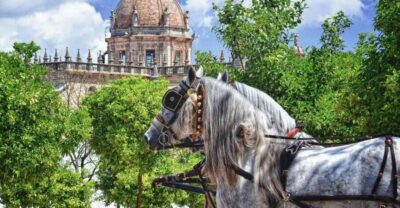
Bodegas Álvaro Domecq Guided Tour with Wine Tasting
Read our review →Browse the lists this tour appears in