
Review · JEREZ TOURS
Jerez de la Frontera: How the Andalusian Horses Dance
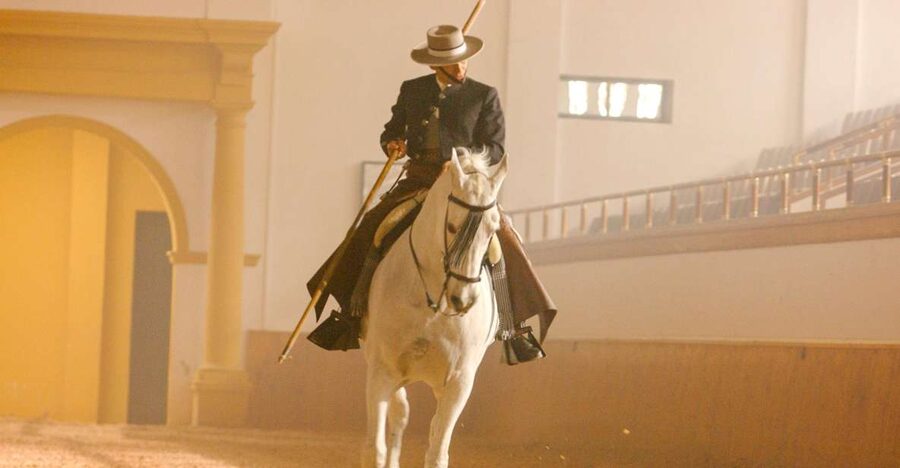
The horses perform with startling precision. At the Royal Andalusian School of Equestrian Art in Jerez, you watch trained horses and riders present a polished equestrian ballet set to Spanish music. I like the mix of classical dressage and working traditions, and I like that the 90-minute to two-hour program offers far more than a single riding display. The main consideration is that the exact program can change, and you cannot choose a particular row or seat number.
I also appreciate the setting. The performance takes place at one of Spain’s best-known centers for Andalusian horsemanship, where the horses, costumes, carriages, and music all support the same old-world presentation. At $31 per person, it is a strong-value cultural show, especially if you are staying in Jerez or visiting from Cádiz.
The experience suits horse lovers, families, and anyone who wants a memorable evening beyond sherry tastings and historic churches. It is less appealing if you dislike formal performances or expect a hands-on horse encounter. This is a presentation to watch, not a riding lesson.
In This Review
- Key points to know before you go
- Why Jerez is the right place for this show
- Arriving at the Royal Andalusian School
- The opening numbers: Doma Vaquera in action
- Classical dressage and the art of small signals
- Carriage driving adds speed and old-fashioned style
- Work in hand shows obedience without a saddle
- The Carrousel brings the performance together
- Music, costumes, and the value of the setting
- How much time and money should you allow?
- What to bring and what to leave behind
- Who will enjoy this most?
- Should you book the Andalusian Horse show?
- FAQ
- Where does the Andalusian horse show take place?
- How long does the performance last?
- What is included in the price?
- Can I choose my seat?
- What documents should I bring?
- Is the venue wheelchair accessible?
- Can I take photographs or bring a pet?
Key points to know before you go
- Watch several equestrian styles: The performance combines classical dressage, Doma Vaquera, carriage driving, work in hand, and a final Carrousel.
- Expect six to eight choreographies: The school selects the exact numbers for each performance, so no two visits need to follow precisely the same sequence.
- Look for the hardest movements: Pirouettes, passage, piaffe, Spanish walk, levades, caprioles, and courbettes may appear in the program.
- The setting adds ceremony: Spanish music, traditional 18th-century costumes, and formal riding make this feel like a staged cultural event.
- Plan for the ticket office: Go to the Reservation Box Office at the Foundation and bring your printed voucher plus passport or ID card.
- Seat selection is limited: You buy by ticket category, while the venue assigns the row and seat according to booking order.
Why Jerez is the right place for this show
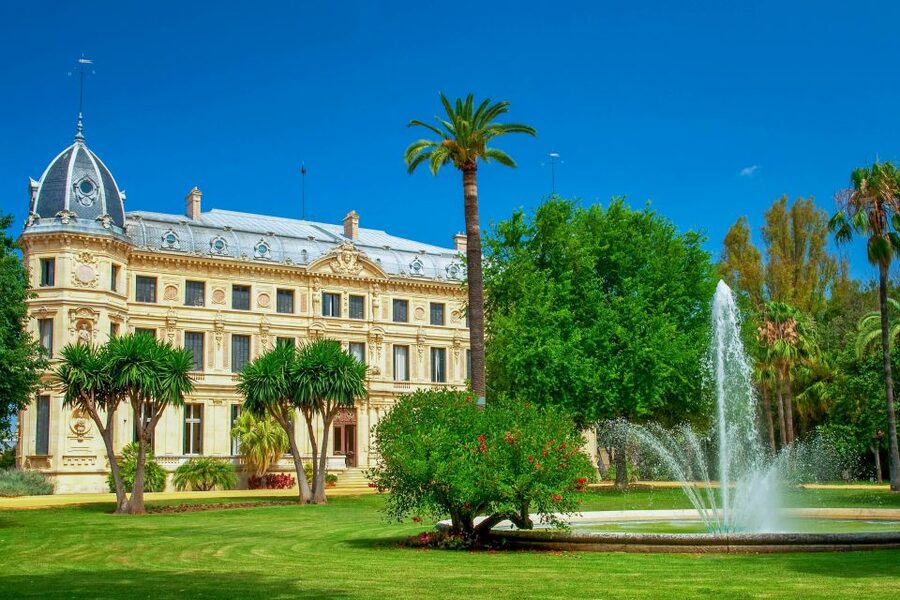
Jerez de la Frontera is closely linked with Andalusian horses, sherry, and working riding traditions. The Royal Andalusian School of Equestrian Art brings those strands together in a purpose-built performance rather than presenting horses as a background attraction.
That matters because the show is not simply a parade of attractive animals. You see how a horse can respond to small signals, change pace, work alone or beside another horse, and perform movements that require strength, balance, and long training. The polished presentation helps you notice the difference between ordinary riding and advanced equestrian work.
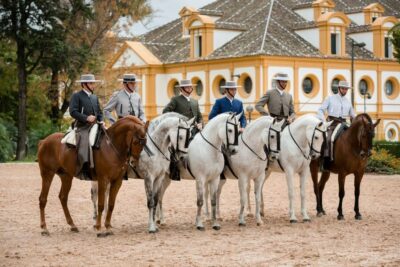
The formal style also gives the event a sense of occasion. Riders wear traditional costumes inspired by the 18th century, while the music sets a distinctly Spanish mood. You are watching sport, art, and working heritage at the same time.
The show usually lasts from 90 minutes to two hours. That is long enough to give the program substance without taking up an entire day. If you are planning around lunch, a train from Cádiz, or another Jerez activity, check the performance time carefully because starting times vary.
More horse riding:
- El Salobre: Horse Riding Adventure with Transfer Options
★ 4.5 · 1,609 reviews - Jerez de la Frontera: Andalusian Horse Dance and Museums
★ 4.7 · 1,289 reviews - Jerez: Yeguada de la Cartuja Carthusian Horses Tour
★ 4.8 · 970 reviews
Arriving at the Royal Andalusian School
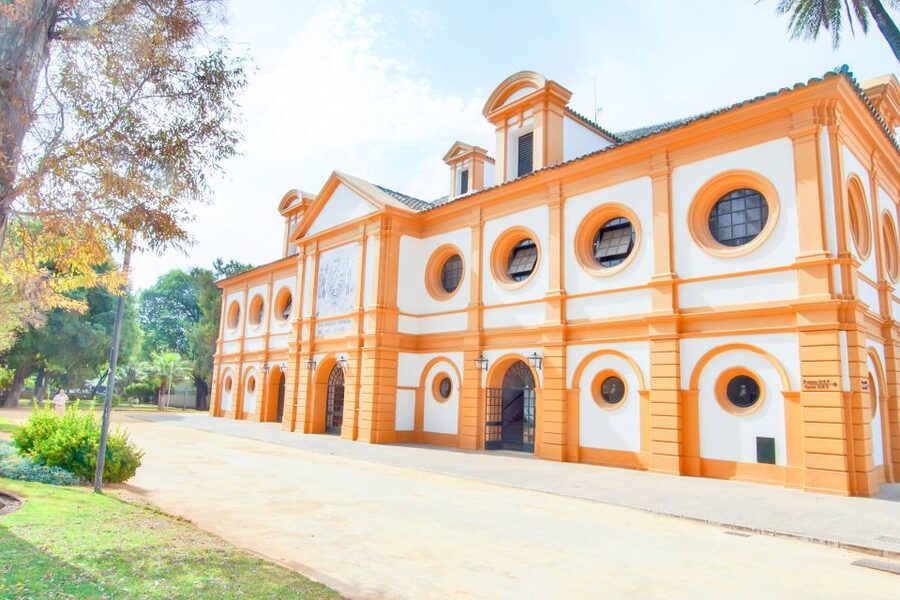
Your first stop is the Reservation Box Office at the Fundación Real Escuela Andaluza del Arte Ecuestre, also called the Foundation Royal Andalusian School of Equestrian Art. This is where you exchange or present your booking documentation and collect your access to the performance.
Bring your printed voucher, since the instructions specifically call for a paper copy. You should also carry your passport or ID card. If you bought a reduced-price ticket, bring proof that you qualify for the discount. Without acceptable proof, you may have to pay the difference to the standard price, if full-price tickets are still available.
The ticket system is organized by category rather than by a chosen seat map. You cannot select a specific row or seat number, so booking earlier may help with the order in which seats are assigned. The good news is that a recent performance assessment found the viewing positions generally strong, with all seats offering a good view.
The venue is wheelchair accessible. Still, if you have specific seating or access needs, it is sensible to raise them at the box office before the performance begins.
The opening numbers: Doma Vaquera in action
One of the most distinctive parts of the show is Doma Vaquera, the Spanish riding discipline based on cattle herding. It gives the performance a practical edge that pure dressage does not always provide.
The horseman rides with one hand while guiding the horse around the arena. The sequence may begin at a trot, then shift into a gallop, with changes in rhythm and tight pirouettes. You may also see arreones, sudden breaks into a gallop that give the display a burst of speed.
This section helps explain where Spanish riding came from. The movements are not random tricks. They are linked to the demands of working around cattle, where a rider needs quick changes of direction, control, and a horse that reacts immediately.
For you as a spectator, Doma Vaquera is often easier to understand than the more technical dressage numbers. You can see the change from controlled movement to sudden acceleration. It also gives the performance a lively contrast to the quieter, more measured work that follows.
Classical dressage and the art of small signals
The classical dressage section shifts the mood. The horses perform advanced exercises to classical music, and the riders appear to do very little. That apparent calm is part of the skill.
The school’s repertoire can include The Colts, Airs on Horseback, Pas de Deux, Passage and Piaffer, Domino on Horseback, Airs Above the Ground, and Fantasy. The exact six to eight choreographies depend on the schedule set by the school.
A Pas de Deux places two horses and riders together, requiring timing and spacing as well as individual control. Passage and piaffe show the horse collecting its movement, lifting each step, and maintaining rhythm in a small area. These movements can look effortless from the seats, but the close coordination is what makes them special.
The name Airs Above the Ground refers to some of the most demanding classical movements, with the horse leaving the ground in carefully controlled actions. If your program includes these exercises, watch the horse’s balance and the rider’s posture rather than waiting only for a dramatic leap.
This part of the performance rewards patience. The best moments are sometimes quiet ones: a horse holding a steady rhythm, moving in perfect alignment with another horse, or responding to a barely visible cue.
A few more Spain trips worth a look
- Jerez: Royal Andalusian School of Equestrian Art Admission
★ 4.6 · 882 reviews - Jerez: Bodegas Fundador Guided Tour with Tasting Session
★ 4.8 · 714 reviews - Jerez: Guided Winery Tour with Wine Tasting
★ 4.4 · 636 reviews - Jerez de la Frontera: Sherry Winery Tour with Tasting
★ 4.6 · 309 reviews
Carriage driving adds speed and old-fashioned style
The carriage-driving display changes the shape of the show. Instead of focusing on a single rider seated on a horse, you watch horses draw carriages under the direction of coachmen using traditional harnesses.
These carriages once served as everyday transport. At the school, they now belong to sport and exhibition, but the handling still requires careful coordination. The coachmen demonstrate control, timing, and dexterity while guiding the horses and managing the vehicle.
This is a particularly good section for visitors who are interested in historic transport. You see how a practical form of travel has been preserved as a skilled performance. The carriages also make the arena feel larger, since the horses must account for the vehicle behind them as they turn and change direction.
The carriage numbers can be less immediately dramatic than a gallop or a leap. Their appeal comes from control and presentation. Watch the harness work and the way the coachmen keep the team together through turns.
Work in hand shows obedience without a saddle
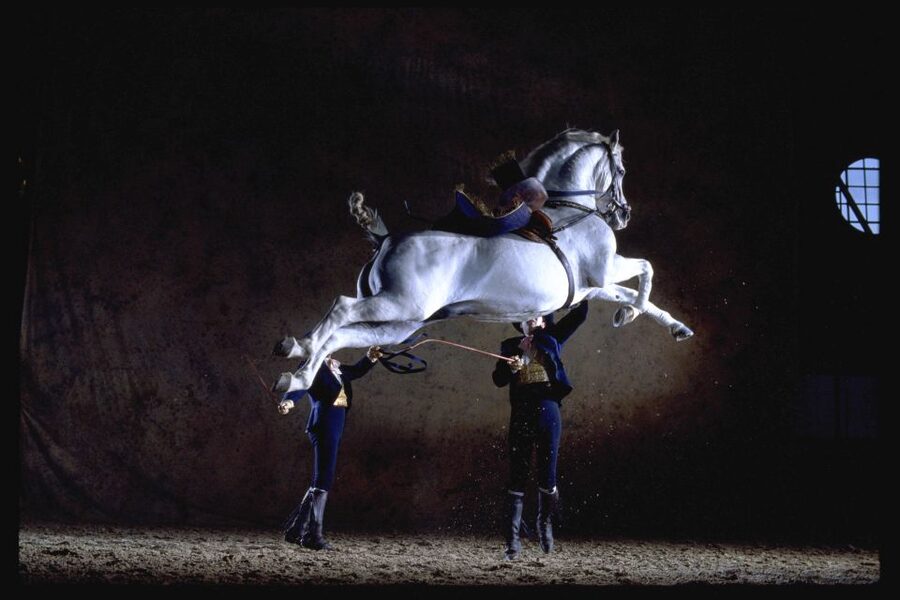
Work in hand is one of the clearest demonstrations of training. The rider is not seated on the horse, yet the horse continues to respond to commands and performs demanding classical exercises.
The school may include Haute École movements such as levades, caprioles, courbettes, piaffe between pillars, and the Spanish walk. Each requires a high level of balance and obedience.
A levade asks the horse to raise the front of its body while keeping the hind legs grounded. A courbette involves a series of controlled jumps from the hindquarters, while a capriole is a more explosive movement in which the horse kicks out with its hind legs. Piaffe between pillars presents a horse working in a confined position, and the Spanish walk shows an exaggerated, elevated step.
You may find this section especially useful if you are unfamiliar with dressage. Without a rider in the saddle, the horse’s response becomes easier to see. The movements no longer look like the result of a rider’s visible body position. Instead, you notice the communication between horse and handler.
The Carrousel brings the performance together
The Carrousel usually provides the closing number. A group of horses and riders performs advanced exercises in unison, creating a formal finish to the program.
The challenge here is group coordination. Each horse must maintain its own pace and position while matching the larger pattern. The riders need to leave enough space, hold their lines, and respond together as the formation changes.
This closing display brings together the show’s main themes: discipline, ceremony, music, costume, and Spanish riding tradition. It can feel grand without relying on loud effects or theatrical decoration. The horses themselves provide the spectacle.
I recommend saving your attention for the final minutes rather than treating the Carrousel as an encore to ignore. Group work is where the scale of the school’s training becomes most visible.
Music, costumes, and the value of the setting
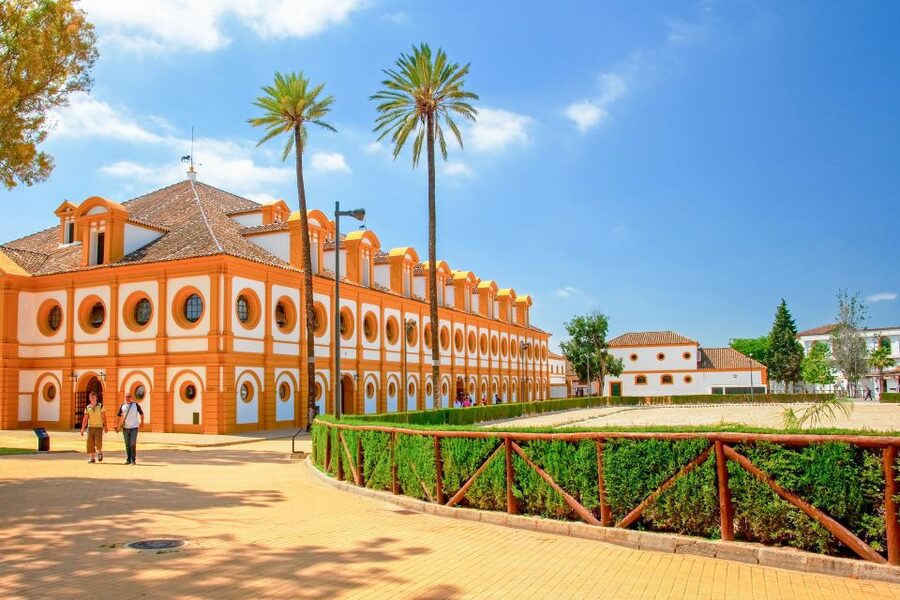
The music is not a minor background detail. Classical pieces support the dressage exercises, while the broader program uses quintessential Spanish music to shape the mood. The sound helps you understand when a number is formal, playful, energetic, or ceremonial.
The 18th-century style costumes serve a similar purpose. They connect the performance to older Spanish riding traditions and give the riders a unified appearance. The clothing is part of the story, not just decoration.
The venue itself adds value to the $31 ticket. You are not watching an isolated arena act in a temporary setting. You are visiting the foundation responsible for preserving and presenting this form of equestrian art.
Some performances may also allow you to see riders and trainers in action before or after the main event. That extra glimpse can be rewarding because it shows the work behind the polished display. One useful caution: the gift shop may close earlier than you expect, so do not leave shopping until the last moment if you want a souvenir.
How much time and money should you allow?
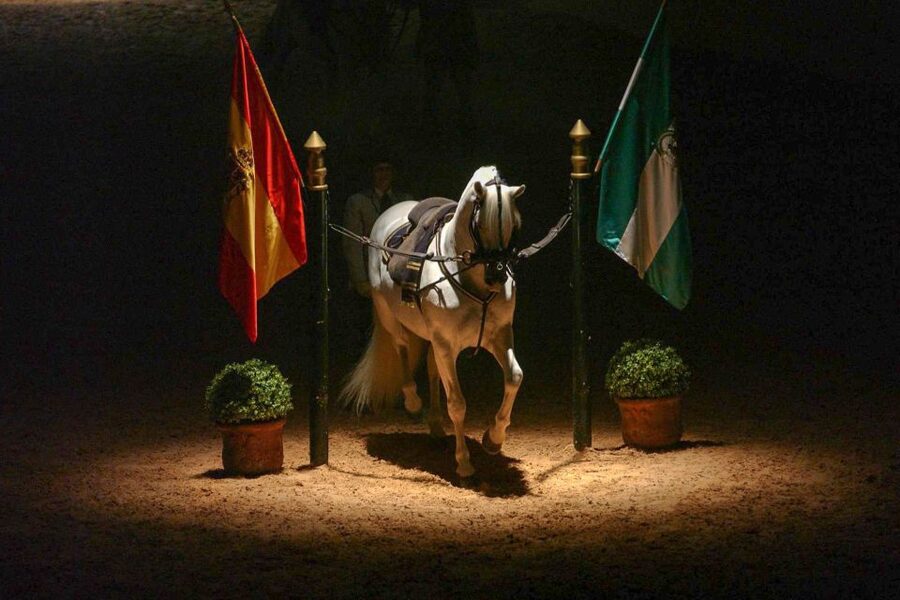
At $31 per person, the show offers good value for a major cultural attraction in Andalusia. The ticket includes entrance to the performance, while the main cost to plan separately is getting to the foundation.
The 90-minute to two-hour duration makes it easy to fit into a Jerez day. It can work as a stand-alone visit, or as an evening activity after exploring the city. If you are based in Cádiz, the trip can be manageable by train followed by a short taxi ride, according to the practical experience of one recent visitor.
You should not judge the price only by the number of minutes in the arena. The ticket supports a carefully trained group of horses and riders, a formal venue, costume presentation, music, and several different riding disciplines. Compared with a short tourist demonstration, this is a full performance.
The exact program can change at the management’s discretion. That is normal for a live equestrian show, but it means you should not book solely because one particular choreography is listed. Treat the repertoire as a menu of possible numbers rather than a guaranteed running order.
What to bring and what to leave behind
The basic requirements are simple:
- Printed voucher
- Passport or ID card
- Proof of eligibility for any discounted ticket
The venue does not allow pets, flash photography, glass objects, audio recording, weapons, or sharp objects. Bottles and cans are also prohibited, along with any other item management considers unsuitable.
Flash photography is especially important to remember. Even if you see a striking movement, you need to keep the flash off. Audio recording is not permitted, so plan to enjoy the performance without trying to capture it on your phone.
The assigned seating system means you should arrive with enough time to visit the box office calmly. Since you cannot choose a row or seat number, an early booking is the most sensible way to improve your place in the allocation order.
Who will enjoy this most?
I would recommend the show to anyone with an interest in horses, dressage, Spanish traditions, or live performance. You do not need technical riding knowledge to enjoy it, though knowing a little about piaffe, pirouettes, and Doma Vaquera will help you recognize what you are seeing.
Families may appreciate the clear visual variety. The horses change pace, work alone and in pairs, draw carriages, and perform in groups. That keeps the program moving better than a single repeated riding demonstration.
It is also a good choice for a special occasion in Jerez. The costumes and music give it a formal evening feel, while the reasonable price keeps it within reach for many budgets.
I would hesitate only if you want a small, informal encounter with horses. The school presents a disciplined public performance, and the exact choreography is selected by the institution. You have limited control over seating and no guarantee that every listed number will appear.
Should you book the Andalusian Horse show?
Yes, if you are in Jerez or spending several days in Cádiz. The show combines high-level horsemanship with Spanish music, traditional clothing, carriage work, and working-riding techniques. The strongest moments are the pirouettes, the coordinated Carrousel, the powerful movements in work in hand, and the sudden speed of Doma Vaquera.
Book it with realistic expectations. You are buying a formal equestrian ballet, not an interactive activity, and the program may change. Bring your printed voucher and identification, arrive prepared for assigned seating, and consider visiting the gift shop before the performance ends.
For $31, this is one of the more distinctive cultural experiences in the Jerez area. If the idea of watching Andalusian horses perform sounds appealing, I would make room for it.
FAQ
Where does the Andalusian horse show take place?
The show takes place at the Fundación Real Escuela Andaluza del Arte Ecuestre, also known as the Foundation Royal Andalusian School of Equestrian Art, in Jerez de la Frontera.
How long does the performance last?
The experience lasts between 90 minutes and two hours. Starting times vary, so check availability for the date you want.
What is included in the price?
The ticket includes entrance to the equestrian show. The listed price is $31 per person.
Can I choose my seat?
No. Tickets are sold by category, without a choice of row or seat number. Seats are allocated according to the order of purchase or booking.
What documents should I bring?
Bring your printed voucher and passport or ID card. If you bought a discounted ticket, you must also bring proof of eligibility.
Is the venue wheelchair accessible?
Yes, the activity is wheelchair accessible.
Can I take photographs or bring a pet?
Pets are not allowed. Flash photography and audio recording are prohibited, and glass objects, bottles, cans, weapons, and sharp objects are not permitted.
Recently added around Spain
- Half-Day Luxury Catamaran Sailing Cruise in Granada★ 5.0 · 165 reviews
- Jeep Safari to Teide and Masca★ 4.5 · 165 reviews
- Madrid: Thyssen Museum Guided Tour with Skip-the-Line Entry★ 4.5 · 165 reviews
- Visit in Spanish to the Cathedral Mosque. Does not include entrance ticket★ 5.0 · 165 reviews
- Canyoning in Andalucia: Rio Verde Canyon★ 5.0 · 165 reviews
- Guided Tour to Caminito del Rey from Malaga★ 4.5 · 165 reviews
- VIP Private Segway Tour of Palma★ 5.0 · 165 reviews
- Las Palmas: Private Old City Guided Walking Tour with Tapas★ 4.6 · 166 reviews
Jerez Tours, compared.
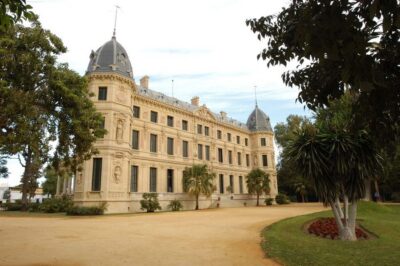
Jerez de la Frontera: Andalusian Horse Dance and Museums
Read our review →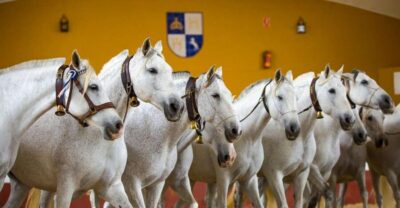
Royal Andalusian School of Equestrian Art Admission
Read our review →
Bodegas Fundador Guided Tour with Tasting Session
Read our review →
Jerez de la Frontera: Sherry Winery Tour with Tasting
Read our review →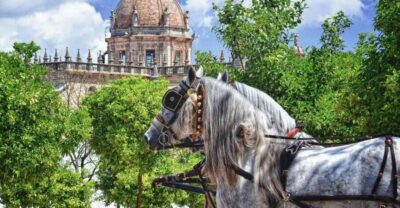
Bodegas Álvaro Domecq Guided Tour with Wine Tasting
Read our review →Browse the lists this tour appears in