

Review · GOTHIC QUARTER TOURS
Barcelona Historical Walking Tour: Gothic Quarter and El Born
Barcelona’s oldest streets reward slow walking. I like that this two-hour tour reaches corners a bus cannot, from the artists’ café Els 4 Gats to the scarred walls of Plaça Sant Felip Neri. I also like the mix of major sights, Roman remains, Jewish history, Catalan identity, and local legends. The main drawback is that two hours is tight for eleven stops, and entry to Barcelona Cathedral and Santa Maria del Mar is not included.
This is a good first-day orientation for Barcelona, especially if you want history explained as you walk rather than viewed through a coach window. The group can include up to 20 people, so it is small enough for questions but not a private tour. Bring comfortable shoes, and book a morning departure if you can: the streets are cooler and less crowded then.
In This Review
- Key points to know before you book
- Starting among artists at Els 4 Gats
- Catalan identity in one photomosaic
- Barcelona Cathedral and the story of Saint Eulalia
- Roman Barcelona behind the Gothic façade
- The Bishop’s Bridge and a Gothic superstition
- The quiet sorrow of Plaça Sant Felip Neri
- Through the old Jewish quarter, El Call
- Government, monarchy, and Barcelona’s darker past
- From Wheat Square to Angel Square
- Ending at Santa Maria del Mar in El Born
- What the guides add to the walk
- Is $30.25 good value?
- Timing, meeting point, and walking comfort
- Who should take this Barcelona walking tour?
- Should you book it?
- FAQ
- How long is the Barcelona Historical Walking Tour?
- Where does the tour start?
- Where does the tour finish?
- Is admission to the churches included?
- How many people can join the tour?
- Can I cancel for a full refund?
Key points to know before you book
- Els 4 Gats opens the tour with Picasso and Gaudí: This old café links Barcelona’s modernist art scene with the city’s social life.
- The route connects two historic districts: You walk from the Gothic Quarter into El Born, seeing Roman, medieval, religious, and civic landmarks in one compact circuit.
- Stories are the real attraction: Guides such as Juan, Lidia, Jordan, Sonia, and Darren have been praised for mixing facts, humor, traditions, and useful food suggestions.
- The walk is easy but packed: Most of the route is manageable, though eleven stops in about two hours means you will hear more than you can fully explore.
- Church admission costs extra: Barcelona Cathedral and the Basilica de Santa Maria del Mar are visited from outside unless you arrange and pay for entry separately.
- The price is reasonable for an introduction: At $30.25 per person, the tour offers a useful historical framework before you explore on your own.
Starting among artists at Els 4 Gats
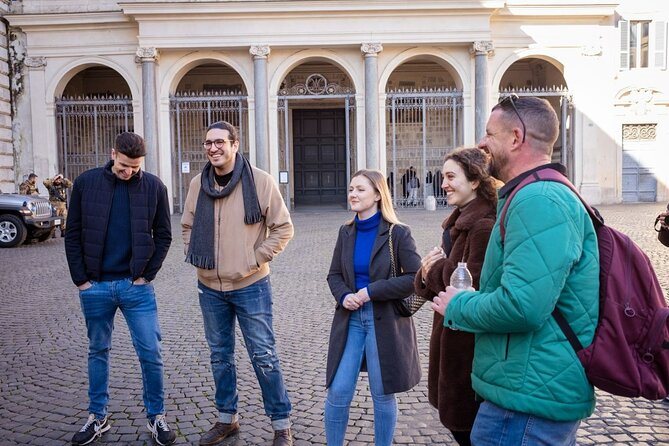
The tour begins at Plaça del Vuit de Març in Ciutat Vella, placing you right in Barcelona’s old center. From there, the first stop is Els 4 Gats, a historic café and restaurant associated with artists, writers, intellectuals, Pablo Picasso, and Antoni Gaudí.
This is a smart opening. Instead of starting with a long list of dates, the guide can place you in the social world that shaped modern Barcelona. The café’s Art Nouveau design and artistic past help explain why the city became such an important center for modernist art.
You should not expect a long meal stop or a full interior visit. The scheduled time is about ten minutes, enough for an explanation and a look at the setting. I would treat it as a quick introduction to Picasso and Gaudí, not a substitute for visiting their major works elsewhere in the city.
The guides vary, but the strongest descriptions point to a lively, story-led approach. David was praised for his focus on Gaudí, while Juan used an iPad to show historical images and answer questions. That kind of visual aid can make a short stop more useful, especially when the city looks very different today from the Barcelona of Picasso’s youth.
More Historical Tours in Barcelona
- Barcelona: Tapas Walking Tour with Food, Wine, and History
★ 4.8 · 4,261 reviews - Barcelona Tapas Walking Tour: Food, Wine & History
★ 4.5 · 1,928 reviews - Barcelona: 2.5-Hour Bike or E-Bike Historical Tour
★ 4.5 · 1,262 reviews
Catalan identity in one photomosaic
The next stop, El Mon Neix En Cada Besada, is a large photomosaic created in 2014. Its name translates roughly as The World Begins with Every Kiss, but the artwork carries a serious political and historical message.
The mosaic relates to the Catalan defeat on September 11, 1714, during the War of the Spanish Succession. That date later became La Diada, Catalonia’s national day. The work is tied to ideas of freedom and collective memory, giving your guide a chance to explain a part of Barcelona that is easy to miss if you only focus on Gaudí and Gothic architecture.
You will spend around ten minutes here. The stop works best when the guide explains the meaning behind the photographs rather than treating it as a simple photo opportunity. It also gives the tour a useful change of pace: Barcelona’s past is not only Roman and medieval. Political identity still shapes how the city sees itself.
Barcelona Cathedral and the story of Saint Eulalia
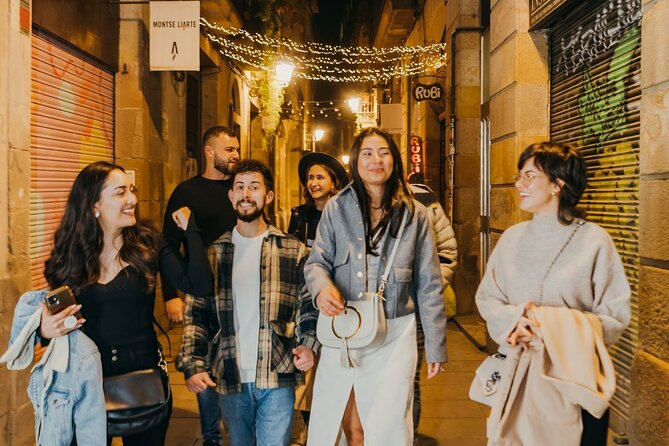
The route then reaches Barcelona Cathedral, the great Gothic church in the center of the old city. It honors Saint Eulalia, Barcelona’s patron saint, who was tortured and killed by the Romans, according to Christian tradition.
The exterior alone gives you plenty to examine: pointed Gothic forms, carved details, and the imposing scale of the church in its tight urban setting. The guide provides context that helps you understand the building as more than an impressive façade.
The visit is listed for about ten minutes, and admission is not included. That matters. If you want to go inside, check the current visiting arrangements and budget separately. This tour is designed as a walking overview, not a full church visit.
I like the placement of the cathedral because it anchors the Gothic Quarter’s religious importance. Still, ten minutes is brief. You will get the main story and a chance to take photographs, but you will need to return on your own if you want a slower look at the interior.
Roman Barcelona behind the Gothic façade
At Casa de l’Ardiaca, the tour shifts from church history to the city’s Roman foundations. This unusual building combines Gothic and Renaissance elements and incorporates part of the Roman wall and aqueducts.
That mixture is one of the most rewarding parts of the route. Barcelona’s Gothic Quarter is not simply a preserved medieval town. Beneath and around its later buildings are traces of Barcino, the Roman settlement that came first.
Casa de l’Ardiaca is free to visit from the itinerary’s point of view, but the tour allows only about ten minutes. Your guide’s explanation is important because Roman remains can be easy to overlook when they are built into later walls.
This is also where the tour earns its price. You are not only being led to famous squares. You are being shown how different periods overlap in the same few streets. Once you understand that, the old center becomes easier to read during the rest of your stay.
More Walking Tours in Barcelona
- Barcelona Tapas and Wine Experience Small-Group Walking Tour
★ 5.0 · 5,804 reviews - Barcelona: Tapas Food Crawl Walking Tour with Tastings
★ 4.9 · 1,798 reviews - Barcelona: Gothic Quarter Ghosts and Legends Walking Tour
★ 4.7 · 1,443 reviews - Barcelona Helicopter, Sailboat & Old Town Private Walking Tour
★ 5.0 · 1,395 reviews
The Bishop’s Bridge and a Gothic superstition
Carrer de Bisbe was one of the main routes through Roman-occupied Barcino. Today, the eye-catching Pont del Bisbe gives the street its most famous view.
The bridge is Neo-Gothic rather than an untouched medieval structure, and its design has inspired a superstition. Your guide will explain the legend, which adds a little mystery to the architecture. It is the sort of short local story that makes a place memorable after the dates and names have faded.
This stop is brief and often popular for photographs. Since the street is narrow and the bridge draws attention, your guide’s position and speaking volume matter. One negative experience on this type of tour involved a guide who spoke too softly, causing people to leave. That is unusual among the strong comments about the tour, but it is a useful reminder: a group walking through tight streets needs clear narration.
The quiet sorrow of Plaça Sant Felip Neri
Plaça Sant Felip Neri is one of the most affecting stops. Tucked away in the Gothic Quarter, the square has a peaceful appearance, but its damaged walls recall a tragic episode connected with the Spanish Civil War.
The scars in the walls are not decorative. They give the square a physical record of violence and loss. This is a place where a good guide should slow down and let the setting speak, rather than rushing to the next photo stop.
The tour’s storytelling style appears to work well here. Guides such as Thami and Sara were praised for explaining local traditions and city history in a way that kept the walk interesting for different ages. For families, this stop may need a little care because the subject is sombre, but it adds emotional weight to the route.
Through the old Jewish quarter, El Call
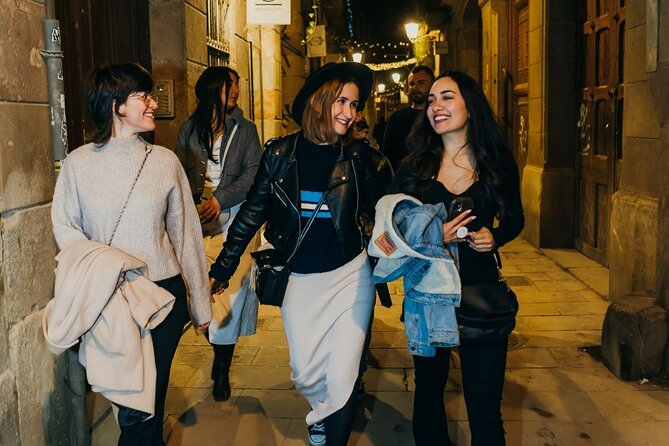
MUHBA El Call takes you into Barcelona’s former Jewish quarter. The area is marked by narrow streets, medieval architecture, a synagogue, and stories tied to Jewish life in the city.
This stop broadens the tour beyond the usual Gothic Quarter highlights. You get a glimpse of a community that was central to medieval Barcelona but is often reduced to a brief paragraph in guidebooks. The small streets make the past feel close, though they also make it hard to gather a large group in one place.
The tour does not promise a long museum visit. Instead, you receive an introduction to the quarter, its buildings, and its legends. If this subject interests you, note the location and return later for a longer exploration.
Government, monarchy, and Barcelona’s darker past
Plaça de Sant Jaume is the civic heart of the old city. Government buildings surround the square, and political activity still gives it a different mood from the quieter lanes nearby.
Your guide can use this open space to explain how Barcelona’s institutions function and why the square remains important. It is also a useful pause after the narrow streets of the Jewish quarter.
Next comes Plaça del Rei, home to the Royal Palace. At first glance, the square looks polished and regal. The guide’s job is to connect that grand setting with the less comfortable parts of Barcelona’s past.
The stop offers a glimpse into the city’s monarchy and medieval power structures. It is not simply a pretty courtyard. Listen for the darker details, since they give the royal buildings more meaning. Again, the ten-minute schedule favors a clear overview rather than a full archaeological or palace visit.
From Wheat Square to Angel Square
Plaça de l’Àngel was once known as Wheat Square, a major place for grain trading. Its modern name comes from a heavenly legend, which gives the guide another chance to pair everyday commerce with local folklore.
This is a small but useful example of how street names preserve old functions. Barcelona’s center was not only a place of palaces and churches. It was also a working city where food, trade, and markets shaped daily life.
The legend makes the stop accessible for children and anyone who enjoys a good story. It also breaks up the heavier material from the cathedral, war-scarred square, and medieval power centers.
Ending at Santa Maria del Mar in El Born
The tour ends at the Basilica de Santa Maria del Mar in El Born. This Catalan Gothic church is closely linked with Barcelona’s maritime past and is one of the route’s most impressive final sights.
Ending here makes good practical sense. You finish in El Born, a district with its own character, rather than returning to the starting point. From this location, you can continue exploring the neighborhood, stop for food, or revisit the church at your own pace.
Admission to the basilica is not included, so plan to pay separately if you want to go inside. The guided stop gives you the building’s historical setting, but the interior deserves more than a rushed glance if your schedule allows.
The final church also brings several threads together: religion, architecture, trade, and the sea. After walking through Roman remains and medieval lanes, you can see how Barcelona’s maritime wealth helped shape its religious buildings.
What the guides add to the walk
The guide can make or break a compact city tour, and this experience has a broad group of named guides who have drawn strong praise.
Juan is repeatedly described as energetic and well informed about Spanish history. He answered questions, offered trivia, used an iPad with historical images, and gave suggestions for restaurants, bars, food, and other attractions. That is especially useful if you take this tour near the beginning of your stay.
Lidia’s style combines energy, humor, and local knowledge. She has also been praised for being a clear storyteller. Jordan brings comedy into the history, which can help keep a two-hour walk lively. Darren has been good at holding a teenager’s attention while explaining different neighborhoods and their main sights.
Sonia, Petra, Thami, Sara, Vanesa, Jorge, Craig, Justin, Tammy, and Mariah have also received warm comments for their energy, historical explanations, humor, family-friendly manner, or practical advice. Because the assigned guide can vary, you should book this tour for its route and format, not for one particular person.
There is one practical warning. Clear sound matters in the Gothic Quarter, where streets are tight and outside noise can swallow a quiet voice. Most of the guide feedback is very positive, but one poorly projected tour caused several people to leave. If you cannot hear, speak up early.
Is $30.25 good value?
At $30.25 per person, I consider this a fair price for a two-hour guided walk, especially in a city where the old center can feel confusing at first. You are paying for a guide who connects eleven locations into one story, not merely for access to buildings.
The value is strongest if you are new to Barcelona. In two hours, you receive a framework for the Roman city, the Gothic Quarter, El Call, Catalan identity, the royal center, and El Born. You can then return to the places that interest you most.
The value is lower if you want long interior visits. The cathedral and Santa Maria del Mar require separate admission, and each stop receives only about ten minutes. Independent visitors who prefer to read every plaque or spend an hour inside one church may find the pace too quick.
Group discounts may reduce the cost for larger bookings. The maximum group size is 20, which is more personal than a large coach excursion but still not intimate in the way a private guide would be.
Timing, meeting point, and walking comfort
The tour starts at Plaça del Vuit de Març and ends at Plaça de Santa Maria, 1, beside the Basilica de Santa Maria del Mar. Both points are in Ciutat Vella, and the meeting area is near public transportation.
The route is described as an easy walk that most people can manage. Still, you will be on foot for roughly two hours, often moving through old streets and standing during explanations. Wear shoes that can handle regular walking, and leave room in your schedule for photographs.
Morning is the best choice if available. One useful tip is that the streets feel cooler and less busy earlier in the day. The tour starts on time, so arrive ready at the stated meeting place rather than counting on a late arrival.
Confirmation is provided when you book, and free cancellation is available up to 24 hours before the start time. Changes or cancellations inside that window are not refundable.
Who should take this Barcelona walking tour?
I would recommend it most strongly to:
- First-time visitors who want a clear introduction to the old city
- Families looking for a manageable historical walk
- Visitors who enjoy local legends alongside major monuments
- Anyone who wants to connect the Gothic Quarter with El Born
- People who prefer a guide’s explanation to independent reading
- Repeat visitors who want fresh context for streets they have already seen
It is less suitable if your main goal is entering every church, taking a long architectural tour, or exploring one district in great depth. The experience gives you breadth, stories, and direction. You will need to make your own return visits for depth.
Should you book it?
Book this tour if you want a lively, practical introduction to Barcelona’s old center. The route is compact but varied, and the best guides turn Roman walls, political symbols, legends, and churches into a connected story.
I especially like it as a first or second morning activity. You can learn the shape of the Gothic Quarter and El Born, note places worth returning to, and finish near Santa Maria del Mar with the rest of the day ahead.
Skip it if you dislike group walking or want extended time inside monuments. Otherwise, $30.25 is a sensible investment for two hours of orientation, local stories, and a better understanding of what you are seeing.
FAQ
How long is the Barcelona Historical Walking Tour?
The tour lasts approximately two hours.
Where does the tour start?
It starts at Plaça del Vuit de Març in Ciutat Vella, Barcelona.
Where does the tour finish?
The tour ends at the Basilica de Santa Maria del Mar, at Plaça de Santa Maria, 1, in Ciutat Vella.
Is admission to the churches included?
No. Admission to Barcelona Cathedral and the Basilica de Santa Maria del Mar is not included.
How many people can join the tour?
The maximum group size is 20 travelers.
Can I cancel for a full refund?
Yes. You can cancel at least 24 hours before the experience starts for a full refund. Cancellations or changes made less than 24 hours before the start time are not accepted for a refund.
More Historical Tours
- Barcelona Erotic Museum – Explore Art, History & Fun
★ 4.4 · 450 reviews - Andorra Original History and Sightseeing Tour (Private, Pickup)
★ 5.0 · 350 reviews - Barcelona: Dark History Night Walking Tour
★ 4.8 · 344 reviews - Tarragona and Sitges Small Group Tour – Roman History & Culture
★ 4.5 · 339 reviews
More Gothic Quarter Tours
- Barcelona Gothic Quarter Tapas & Taverns Food & Wine Tour
★ 5.0 · 1,470 reviews - Barcelona: Old Town and Gothic Quarter Walking Tour
★ 4.8 · 1,393 reviews - Barcelona Old Town & Gothic Quarter Small Group Tour
★ 5.0 · 1,308 reviews - Barcelona: El Born and Gothic Quarter Wine & Tapas Bar Tour
★ 4.8 · 674 reviews
Recently added around Barcelona
- Intro Segway Tour Barcelona 1h★ 4.9 · 166 reviews
- Barcelona: Bike or eBike Tour, Top Sights & Local Insights★ 4.9 · 166 reviews
- Instagram Photoshoot Tour in Barcelona★ 5.0 · 167 reviews
- Artisan Ceramic Making Experience★ 5.0 · 168 reviews
- Barcelona: Big Fun Museum Ticket★ 4.2 · 169 reviews
- Sagrada Familia Evening Private Tour with Expert Guide★ 4.5 · 170 reviews
- Gaudi’s Crypt in Colonia Güell with Audioguide★ 4.4 · 170 reviews
- Las Golondrinas Barcelona 60-min Boat Tour★ 4.0 · 170 reviews
Gothic Quarter Tours, compared.
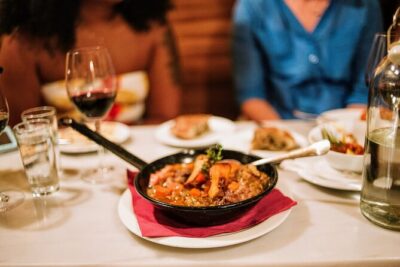
Barcelona Gothic Quarter Tapas & Taverns Food & Wine Tour
Read our review →
Gothic Quarter Ghosts and Legends Walking Tour
Read our review →
Barcelona Old Town & Gothic Quarter Small Group Tour
Read our review →
El Born and Gothic Quarter Wine & Tapas Bar Tour
Read our review →
Kids and Family Gothic Quarter Walking Tour in Barcelona
Read our review →
Browse the lists this tour appears in