
Review · GOTHIC QUARTER TOURS
Barcelona: Gothic Quarter Walking Tour
Old stones still have plenty to say. This 3.5-hour German-language walking tour links Roman Barcelona, medieval power, Jewish heritage, and the city’s later struggles in one well-paced route. I especially like the small-group format and the way the guide connects grand events with odd, memorable details, such as the dancing egg and houses moved stone by stone.
I also like that the tour ends in the Ribera Quarter, near Santa Maria del Mar, rather than simply circling Plaça de Catalunya. Guide Johannes has been praised for adapting the walk to personal needs and adding practical advice about restaurants, shopping, and local specialties. The main consideration is stamina: three and a half hours on old streets can feel tiring, and the tour focuses on exteriors rather than full interior visits.
In This Review
- Key points at a glance
- Why this Gothic Quarter walk is more than a pretty stroll
- Starting at Plaça de Catalunya
- Roman water and the first city beneath your feet
- Gothic Quarter lanes, legends, and awkward truths
- The Crown of Aragon and a city looking seaward
- The Jewish Quarter and the remains of a lost world
- The Inquisition, royal fear, and the Columbus story
- Santa Maria del Mar and the Ribera Quarter
- Odd details that make the history stick
- Pace, walking effort, and weather
- What the $212 group price really means
- Who will get the most from this tour
- Should you book the Barcelona Gothic Quarter walk?
- FAQ
- Where does the tour begin?
- Where does the tour finish?
- How long does the tour last?
- What language is the tour conducted in?
- Is this a private tour?
- Are interior visits included?
- Does the tour run in bad weather?
- What should I wear for the cloister visit?
Key points at a glance
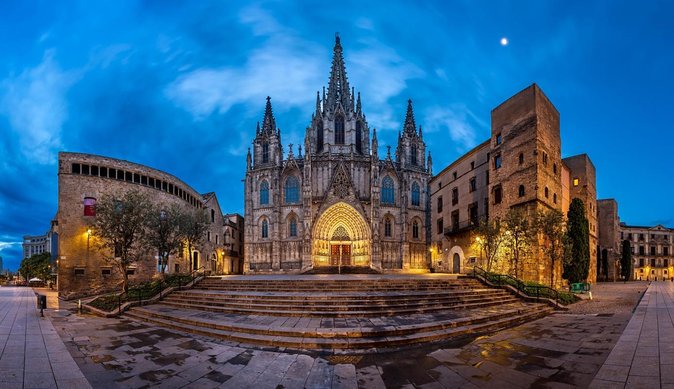
- A German tour with a strong story line: Roman water systems, the Crown of Aragon, the Inquisition, the Civil War, and modern Barcelona all fit into one connected walk.
- Starts at Plaça de Catalunya: The meeting point is in front of Hotel Olivia Plaza, at Plaça de Catalunya 19.
- Finishes by Santa Maria del Mar: The route ends at Passeig del Born 22, placing you in the lively Ribera Quarter for an easy next stop.
- Mostly outside, with a few exceptions: You see monuments, lanes, squares, churches, and civic buildings from the street. Interior entry fees are not included.
- Private group for up to four: At $212 per group, the price works out to $53 per person if four people join.
- Runs in all weather: Bring sun protection and water in summer, and a light jacket in winter. Rain will not automatically cancel the walk.
Why this Gothic Quarter walk is more than a pretty stroll
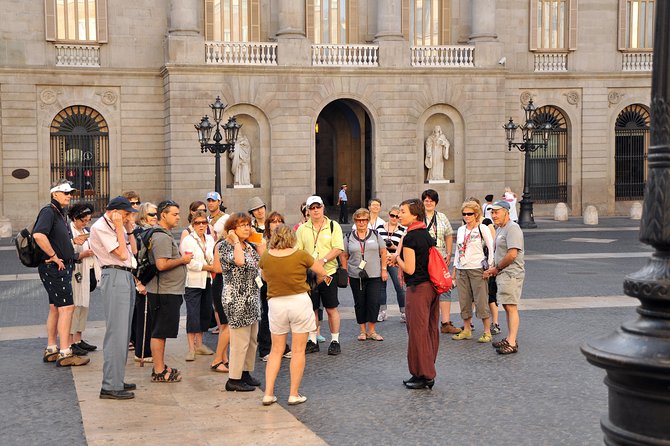
Barcelona’s old city can look like a collection of attractive lanes with no clear beginning or end. This tour gives those lanes a timeline. You begin with Roman Barcelona, move through the medieval city and the Crown of Aragon, then follow the story toward the early 18th century and the scars left by later political conflict.
I like this approach because the Gothic Quarter is easy to admire but harder to understand. A narrow alley may have Roman foundations below it, a medieval religious connection behind it, and a modern café in front of it. The guide’s job is to make those layers readable without turning the walk into a lecture.
The tour also treats Barcelona as a living port city, not a museum frozen in the Middle Ages. That matters. You get old walls, royal stories, religious traditions, and political drama, but you also hear how Barcelona keeps changing. The result should feel less like a parade of dates and more like a portrait of a city that has repeatedly remade itself.
Because the guide speaks German, this is especially useful if you want complex subjects explained in your strongest language. History involving dynasties, religious minorities, civil conflict, and shifting political power can lose its shape when you are working through a second language. Here, you can focus on the streets around you.
More Walking Tours in Barcelona
- Barcelona Tapas and Wine Experience Small-Group Walking Tour
★ 5.0 · 5,804 reviews - Barcelona: Tapas Walking Tour with Food, Wine, and History
★ 4.8 · 4,261 reviews - Barcelona Tapas Walking Tour: Food, Wine & History
★ 4.5 · 1,928 reviews
Starting at Plaça de Catalunya
The walk begins in front of Hotel Olivia Plaza at Plaça de Catalunya 19. This is a practical place to meet because the square is a major reference point between the modern center and the old city.
Do not expect the tour to spend much time explaining the square itself. Its value here is orientation. From this busy starting point, the route moves toward the older quarters, where the traffic and broad urban scale give way to tighter lanes and smaller squares.
I would arrive a little early. The meeting point is specific, but Plaça de Catalunya is large and active. Finding the hotel frontage before the start will make the first few minutes calmer, especially if you are carrying luggage or meeting a private guide for the first time.
Roman water and the first city beneath your feet
The earliest part of the story reaches back to Roman Barcelona. One unusual subject is Roman luxury, including flowing water for a convalescent colony. That detail gives you a useful way to think about Roman urban life. It was not only about roads, soldiers, and walls. Water, comfort, health, and status mattered too.
You will not be visiting an archaeological museum as part of this walk. Instead, the Roman past is explained through the surviving urban fabric and the places where old and new construction meet. That is one of the strengths of a walking tour here: the city itself becomes the display case.
The guide also places Barcelona’s religious development into this early story. The idea of a holy city facing competition hints at the way power was shared and contested among religious and civic forces. I would expect the explanation to be more valuable than any single Roman remnant, since it helps you understand why later Barcelona developed as both a spiritual center and a hard-working port.
Gothic Quarter lanes, legends, and awkward truths
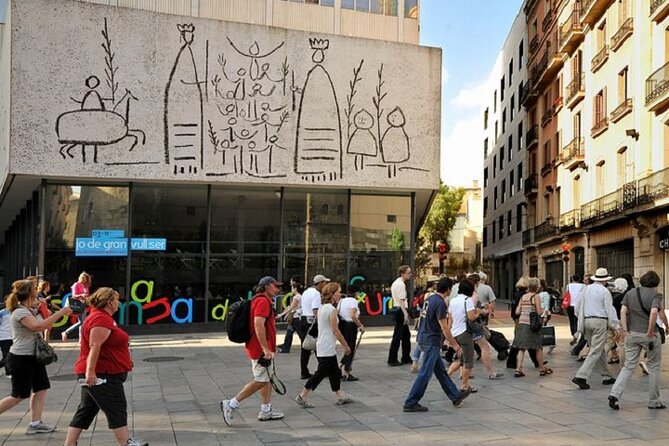
The Gothic Quarter is at its best when you slow down. The route uses small alleyways and romantic squares rather than rushing from one famous façade to the next. You have time for photographs, and the walk allows for a bathroom break without making you feel you are holding up the group.
The stories are not all polished legends. The tour includes the birth of a nation, political violence, and a bloody struggle. It also asks how the dragon came to Barcelona, then shifts to darker material involving a young girl in the pines and a French soldier’s bayonet.
That mix is important. Barcelona’s past is full of symbols, but it is also full of fear, punishment, and power struggles. A good guide lets you enjoy the romance of the old streets while showing you what happened behind the pretty surfaces.
You will hear about a slightly spooky brotherhood and the hound kings, a phrase tied to the tour’s treatment of the Inquisition. These subjects should appeal if you prefer history with human characters and sharp turns. If you want only architecture, the stories may feel like a lot to absorb over one afternoon.
More Gothic Quarter walks:
- Barcelona Gothic Quarter Tapas & Taverns Food & Wine Tour
★ 5.0 · 1,470 reviews - Barcelona: Gothic Quarter Ghosts and Legends Walking Tour
★ 4.7 · 1,443 reviews - Barcelona: Old Town and Gothic Quarter Walking Tour
★ 4.8 · 1,393 reviews - Barcelona Old Town & Gothic Quarter Small Group Tour
★ 5.0 · 1,308 reviews
The Crown of Aragon and a city looking seaward
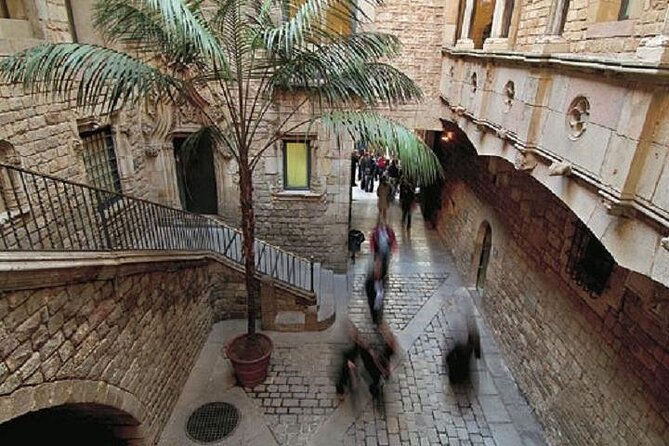
One of the central themes is the rise of the Crown of Aragon, from a small city to a maritime force. This section explains why Barcelona’s old center contains more than religious monuments. Trade, political authority, shipping, and civic decision-making all helped shape the city.
The tour also covers the Council of the Hundreds, represented in the subject We’re talking to you!. This points to the role of local government and public voices in medieval Barcelona. You will not simply hear about kings. You will also encounter the people and institutions that tried to share, limit, or challenge royal power.
Then comes the death of King Martin, presented as the beginning of the end of shared decision-making. This is the kind of turning point that can make a walking route click. A square or palace is not just an old backdrop. It becomes a place where a political system changed direction.
I appreciate that the route gives political history room. Barcelona is often sold through architecture and food, but the city’s identity also comes from its long arguments over authority. The guide seems to use the streets to explain those arguments in a way that remains tied to what you can see.
The Jewish Quarter and the remains of a lost world
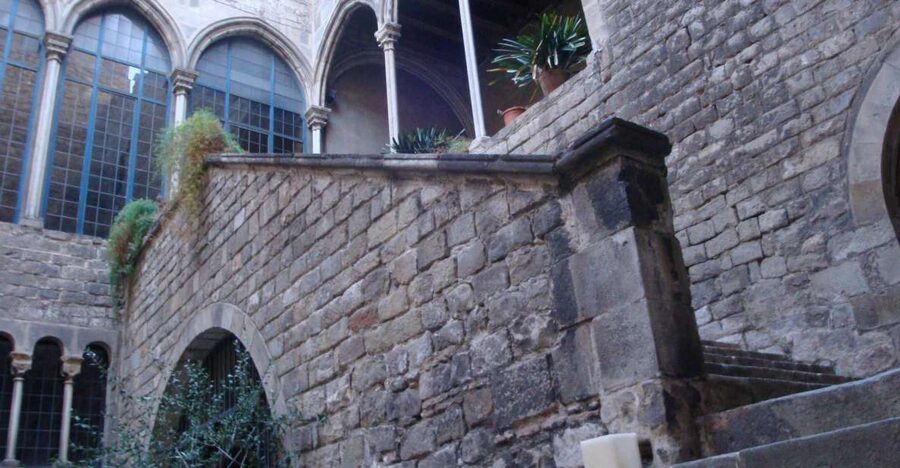
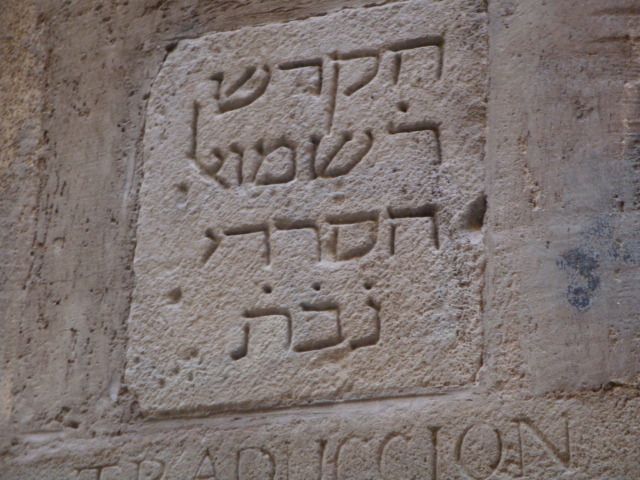
The Jewish Quarter brings a different kind of history into the walk. The tour focuses on remnants of a lost world, which is a careful way to approach a district where much has disappeared, changed, or been built over.
This part may be emotionally heavier than the opening Roman stories. You are dealing with a community that once formed part of Barcelona’s urban life, followed by persecution and disappearance. The route’s value is in showing that the old city was never culturally simple.
I would pay close attention here, because the lanes can look similar and the remains may not announce themselves loudly. The guide’s explanation gives meaning to details you might otherwise pass without noticing. At the same time, do not expect a full museum visit or a large collection of objects. Interior exploration is generally outside the program.
The Inquisition, royal fear, and the Columbus story
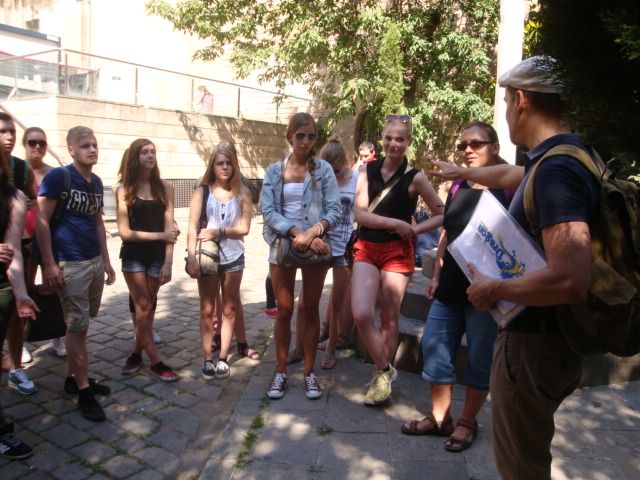
The royal palace section adds a dramatic turn. King Fernando’s fears and his failure to receive Columbus at home are part of the tour’s storytelling. This is a useful reminder that famous historical meetings are often surrounded by uncertainty, status, and personal calculation.
The Inquisition appears again in this part of the route, along with warnings about praise and power. The overall message is not a simple celebration of rulers. Kings, church authorities, military figures, and civic leaders all appear as people managing risk, reputation, and control.
This is also where the tour’s storytelling style seems most distinctive. Topics such as the French soldier, the hound kings, a general’s head, and royal anxieties are memorable because they are strange. You may not remember every date, but you are likely to remember the images.
Santa Maria del Mar and the Ribera Quarter
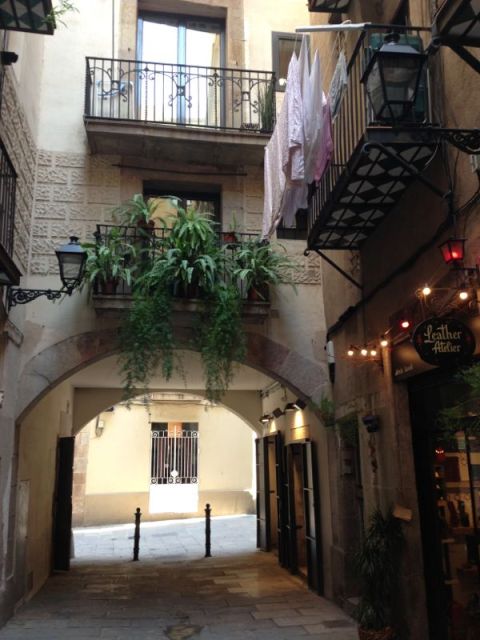
The walk eventually reaches the Ribera Quarter and finishes near Passeig del Born 22, close to Santa Maria del Mar. This is an excellent ending point because the district adds a different mood from the narrower lanes of the Gothic Quarter.
Santa Maria del Mar is presented as the first collaborative project, with legends and heroes attached to it. The subject fits the wider theme of the tour: Barcelona was built not only by monarchs and officials, but also through shared work and civic effort.
The tour does not include standard interior visits or entry fees. You should therefore think of Santa Maria del Mar as an exterior stop unless the guide makes one of the stated exceptions. If entering the church is a priority, plan that separately and check opening arrangements for your date.
The ending also gives you options. Since you finish in the Born area, you can continue exploring on foot, stop for food, or use the location as a base for the next part of your day. The route does not strand you at the starting square.
Odd details that make the history stick
Several subjects give this tour a playful edge. You may hear about the dancing egg, a local tradition that turns a simple object into a small public spectacle. There is also a half house and the song of the knife-grinder, details that show how the old city’s stories are often attached to ordinary objects and odd corners.
The tour includes My Immortal, a romantic place marked by the scars of the Spanish Civil War. That combination of romance and damage is very Barcelona: beauty is rarely far from political memory.
Another memorable thread concerns a mulberry grave, the vengeance of the Bourbon kings, and the head of a general. These are not tidy textbook headings, and that is their advantage. They give the guide room to tell the past as a sequence of people, fears, accidents, and symbols.
I also like the mention of houses moved stone by stone. It is a good example of why you should not judge the Gothic Quarter only by its age. Some of what looks ancient may reflect later reconstruction, preservation, or deliberate historical presentation. The tour helps you ask better questions about what you are seeing.
Pace, walking effort, and weather
The walk is described as relaxed, but the timing still matters. Three and a half hours is a serious block of sightseeing, especially on uneven old-city streets. One review described the experience as tiring while still rating it highly, which is a fair warning rather than a criticism.
You will have time for photos and bathroom breaks, but this is not a short orientation loop. Wear comfortable shoes and keep your bag light. The route stays on streets and squares, so you will be outside for most of the time.
The tour runs in sun, rain, and wind, including strong showers. In summer, bring a hat, sunglasses, sunscreen, and a small bottle of water. In winter, a jacket or thin coat should be enough according to the supplied guidance, but Barcelona weather can shift, so a flexible layer remains sensible.
For the cloister visit, you need clothing that reaches at least the knees and covers the shoulders. This is an easy detail to miss, particularly in hot weather. Dress for the religious setting if you want that part of the route to go smoothly.
What the $212 group price really means
The price is $212 for a group of up to four people. If four people share the cost, that is $53 per person for three and a half hours, or roughly $15 per person per hour. For a private German-language guide, that can be a fair deal, especially if you value the ability to ask questions and shape the conversation.
For one or two people, the price is less attractive on a per-person basis. You are paying for the group rather than buying four separate tickets, so the value improves sharply when your party is full.
The price includes the city tour with a guide, but not interior visits or entry fees. That keeps the basic cost clear, though you should budget separately if you want to enter paid sites. Since the walk is mainly about streets, squares, and exterior views, it can still work well for a first look at the old city.
Free cancellation up to 24 hours before the start and reserve-now, pay-later booking add useful flexibility. Those policies matter if your Barcelona schedule is still shifting.
Who will get the most from this tour
I would recommend this walk to German-speaking visitors who want context instead of a quick list of famous buildings. It suits couples, families, and small groups who enjoy asking questions and spending time on stories.
It is also a good fit if you want practical help for the rest of your stay. Guide Johannes has been praised for offering restaurant, shopping, and local-specialty advice, as well as bringing extra photos to support the explanation. Those small additions can be valuable when you are deciding where to eat or what to see next.
I would be more cautious if your main goal is museum access, church interiors, or a short, low-effort introduction. The route is long, the history is dense, and most monuments are viewed from outside. People with mobility concerns should note that the activity is wheelchair accessible, but old-city streets can still make any walking route physically demanding.
Should you book the Barcelona Gothic Quarter walk?
Book it if you want a private German-language history walk that connects Roman Barcelona with medieval politics, the Jewish Quarter, the Inquisition, the Spanish Civil War, and the Ribera Quarter. The high 4.9 rating from 383 reviews fits the tour’s strongest qualities: thoughtful structure, useful local advice, and guides who can adjust to personal needs.
I would especially choose it for a group of four, where the $212 price becomes much easier to justify. Bring water, wear good shoes, and accept that the tour is about streets, stories, and exterior views rather than a string of ticketed interiors. If that sounds like your kind of Barcelona, this is a strong way to get your bearings while seeing the old city as a place where the past still presses close.
FAQ
Where does the tour begin?
It begins in front of Hotel Olivia Plaza at Plaça de Catalunya 19, 08002 Barcelona.
Where does the tour finish?
The walk finishes at Passeig del Born 22, 08003 Barcelona, in the Ribera area.
How long does the tour last?
The activity lasts 3.5 hours. The guided old-city tour is described as three hours, with the full activity schedule listed at 3.5 hours.
What language is the tour conducted in?
The live tour guide speaks German.
Is this a private tour?
Yes. The group type is private, and the price covers a group of up to four people.
Are interior visits included?
No. Interior visits and entry fees are not included, although there may be a couple of exceptions during the route.
Does the tour run in bad weather?
Yes. It runs in sun, rain, wind, and even strong showers. Bring suitable clothing and sun protection for the forecast.
What should I wear for the cloister visit?
Wear clothing that reaches at least the knees and covers your shoulders. This requirement applies if you want to visit the cloister.
More Walking Tours
- Barcelona: Tapas Food Crawl Walking Tour with Tastings
★ 4.9 · 1,798 reviews - Barcelona Helicopter, Sailboat & Old Town Private Walking Tour
★ 5.0 · 1,395 reviews - Barcelona: Helicopter Flight, Boat Ride, and Walking Tour
★ 4.7 · 1,334 reviews - Barcelona: City Walking Tour with Local Guide
★ 4.9 · 980 reviews
Recently added around Barcelona
- Barcelona: Tibidabo Amusement Park Admission Ticket★ 4.2 · 383 reviews
- Half-Day Spanish Cooking Class & Boqueria Market Tour★ 4.9 · 383 reviews
- Barcelona: Montjuic Hill E-Bike Tour★ 4.8 · 386 reviews
- Barcelona: Helicopter Flight over Barcelona’s Coastline★ 4.7 · 388 reviews
- Best of Barcelona: Sagrada Familia & Park Guell Tour with Pick-up★ 5.0 · 389 reviews
- Barcelona Private Sailing Tour with Drinks for Family and Friends★ 5.0 · 389 reviews
- Barcelona & Sagrada Familia Half-Day Tour with Hotel Pickup★ 4.6 · 390 reviews
- Barcelona: Banksy Museum, Permanent Exhibition Ticket★ 4.7 · 392 reviews
Gothic Quarter Tours, compared.

Barcelona Gothic Quarter Tapas & Taverns Food & Wine Tour
Read our review →
Gothic Quarter Ghosts and Legends Walking Tour
Read our review →
Barcelona Old Town & Gothic Quarter Small Group Tour
Read our review →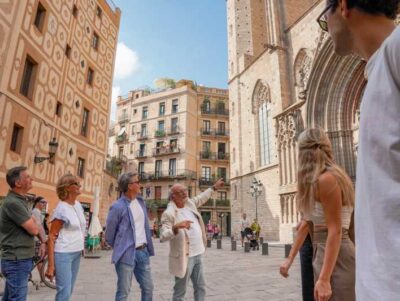
El Born and Gothic Quarter Wine & Tapas Bar Tour
Read our review →
Kids and Family Gothic Quarter Walking Tour in Barcelona
Read our review →
Browse the lists this tour appears in