
Review · HISTORICAL TOURS
Barcelona: Dark History Night Walking Tour
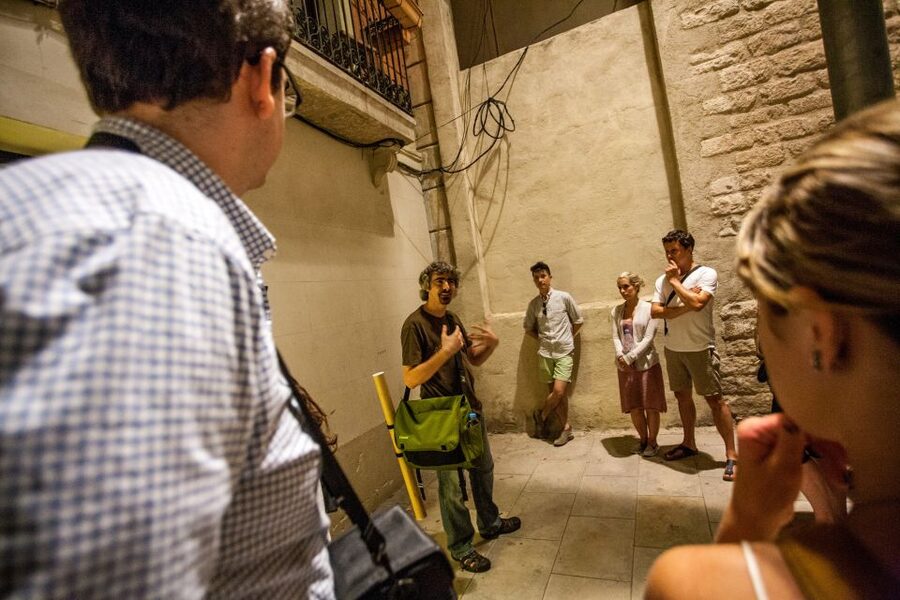
Barcelona has stories its sunshine hides. This two-hour walk through El Born and La Ribera trades ghost-tour tricks for real accounts of torture, executions, forgotten cemeteries, and the Spanish Inquisition. I like the serious historical focus, and I like the way guides use a portable projector, photos, books, readings, and props to make old events easier to picture. The main drawback is the subject matter: children under 14 are not permitted, and some stories are genuinely grim.
I also like the intimate feel that can come with a small group. Guides such as Elena, Sara, Noah, Albert, and Ross have been praised for strong storytelling and lively group interaction. The walk runs in English only, and its start time changes with nightfall, so you need to check the exact departure when booking.
In This Review
- Key points to know before you book
- Why Barcelona’s dark side works so well at night
- Meeting at the Arc de Triomf
- El Born and La Ribera: the setting becomes part of the lesson
- The Spanish Inquisition without the sugar coating
- Forgotten cemeteries and places of execution
- A rare look at Barcelona’s executioner
- Legends, props, and the portable projector
- Pace, walking effort, and group size
- Is $24 a fair price?
- Weather, age limits, and what to bring
- Who should book the Dark History Night Walking Tour?
- FAQ
- How long is the Barcelona Dark History Night Walking Tour?
- Where does the tour meet?
- What areas does the tour visit?
- Is this a ghost tour?
- What language is the tour in?
- Is the tour suitable for children?
- What happens if it rains?
Key points to know before you book
- Real history, not a ghost show: The tour focuses on documented punishments, executions, Inquisition victims, and medieval life.
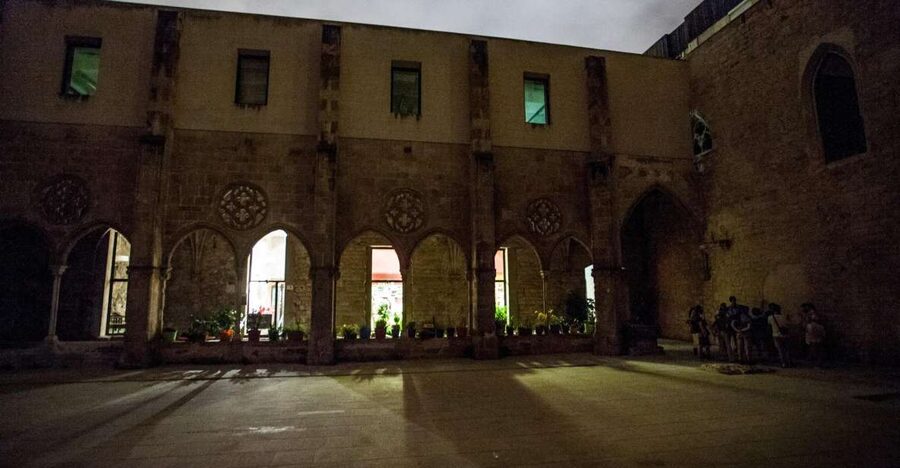
- El Born after dark: Narrow streets and old buildings provide the setting for stories about Barcelona’s darker past.
- Excellent visual aids: A wall projector, images, books, clippings, readings, and props help turn names and dates into memorable scenes.
- Guide quality matters: Elena and Sara receive especially strong praise for energy, warmth, and theatrical storytelling, while Noah, Albert, and Ross have also led highly regarded walks.
- Two hours for $24: That is a fair price if you want guided context rather than simply wandering through the old districts.
- Bring weather gear: The walk operates in rain and other conditions, and heavy rain does not automatically cancel it.
Why Barcelona’s dark side works so well at night
Barcelona is easy to admire in daylight. Gaudí, beaches, markets, and broad avenues tend to get the attention. Yet the oldest neighborhoods make more sense when you slow down and consider the people who lived, suffered, worshipped, worked, and were punished there centuries ago.
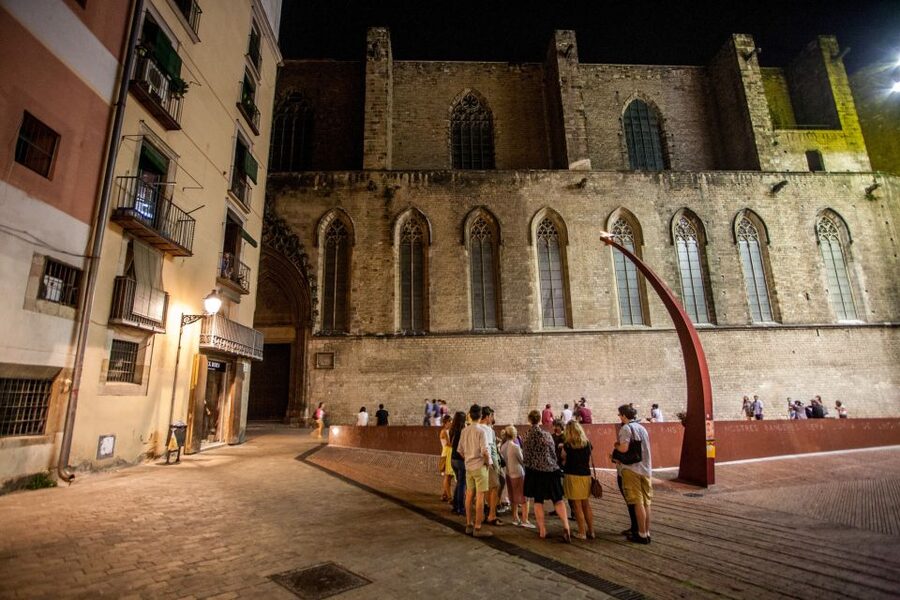
This tour uses darkness as atmosphere, not as a cheap scare. You move through the medieval parts of central Barcelona while the guide explains how public authority, religion, rumor, and punishment shaped daily life. The effect is less haunted house and more outdoor history lesson with a sinister edge.
That distinction matters. If you want actors jumping from doorways or claims about supernatural sightings, this is the wrong choice. A few local legends may appear, but the focus is on true historical events and the darker customs of the city.
I find that approach more rewarding. A ghost story can entertain you for an evening, but learning why a place was used for executions or how an executioner lived gives the street a lasting meaning. You may pass the same area later and see more than pretty stonework and clever lighting.
More Historical Tours in Barcelona
- Barcelona: Tapas Walking Tour with Food, Wine, and History
★ 4.8 · 4,261 reviews - Barcelona Tapas Walking Tour: Food, Wine & History
★ 4.5 · 1,928 reviews - Barcelona: 2.5-Hour Bike or E-Bike Historical Tour
★ 4.5 · 1,262 reviews
Meeting at the Arc de Triomf
The tour begins under the arch of the Arc de Triomf, beside the Arc de Triomf Metro station on Line 1. This is a practical meeting point, with a clear landmark and straightforward public transport access.
Give yourself enough time to find the arch and locate the guide before the scheduled start. The exact departure time changes during the year because it is linked to nightfall. That makes sense for the atmosphere, but it means you should not assume the tour begins at the same hour every month.
The group then heads toward the medieval neighborhoods of El Born and La Ribera. The walk is in English, and headsets are supplied so you can hear the guide while moving between stops. That is a small but useful feature on a city walk, especially when the group is spread along narrow streets.
The tour is listed as wheelchair accessible. Still, a night walk through old central districts can involve uneven historic streets and changing crowd conditions, so check the current route details if you have particular mobility needs.
El Born and La Ribera: the setting becomes part of the lesson
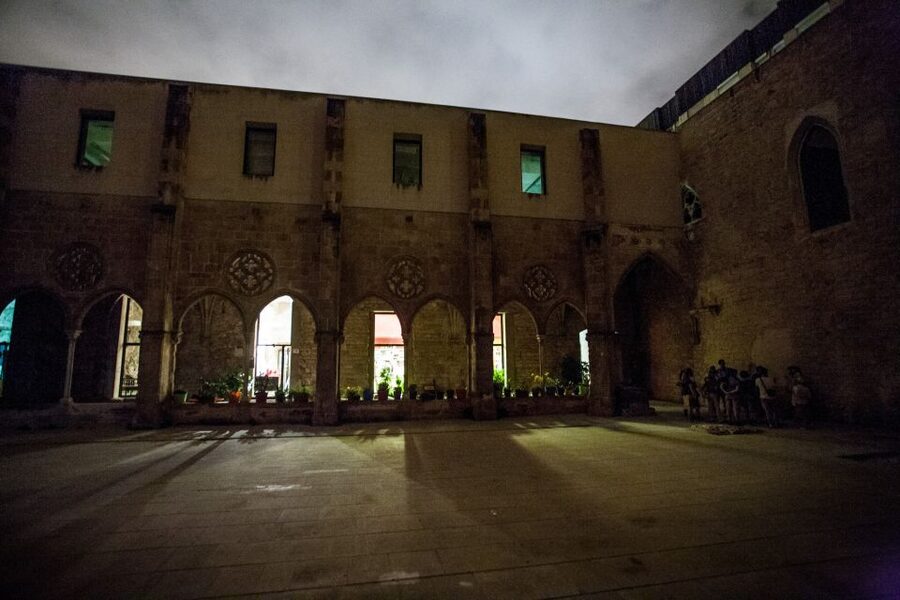
El Born is not just a backdrop for the tour. Its maze of streets helps you picture a much older Barcelona, long before the city became a major modern destination. The neighborhood’s close-set buildings and medieval character give the guide plenty of visual material to work with.
The walk also takes in La Ribera, another central district tied to Barcelona’s old urban life. Rather than stopping only at famous monuments, the experience uses streets, architecture, old names, and overlooked sites to explain what happened here.
You should not expect a museum-style procession with a fixed list of grand interiors. The value comes from standing in the city itself while the guide connects the surroundings to stories of punishment, belief, crime, and social control.
Some people will find this more engaging than a standard sightseeing route. You are not simply told that Barcelona is old. You are shown how the old city functioned, and how violence could be made public and even treated as a form of civic order.
The tradeoff is that the route is not built around long visits inside major attractions. If your priority is entering churches, museums, or historic buildings, use this as a companion experience rather than your main history tour.
The Spanish Inquisition without the sugar coating
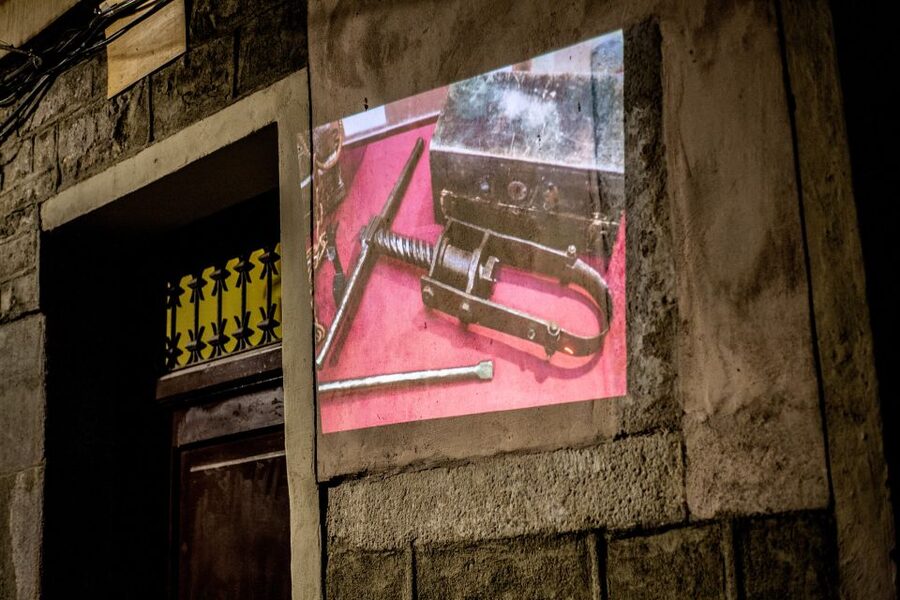
The Spanish Inquisition is a central subject, and the guide places it within the wider story of religious suspicion and punishment. The discussion includes victims, accusations, trials, and the grim consequences of being judged a heretic or outsider.
This is where a good guide makes a major difference. Dates alone can turn a difficult subject into a lecture. The strongest guides on this tour use individual cases, readings, images, and vivid explanation to show how fear and authority affected real people.
The subject also reaches beyond one institution. You hear about alleged witches, medieval punishments, and the wider realities of life in an older Barcelona. The material can be disturbing, but it is not presented as a cheap spectacle.
I especially like that the tour gives you a more human view of history. Instead of treating the Inquisition as a remote phrase from a textbook, the guide explains what suspicion could mean for someone living in the city. That makes the subject easier to understand and harder to forget.
The English is delivered live by the guide, so accents and speaking speed matter. Past guides have been praised for speaking clearly and explaining things in an accessible way, including Noah, who was noted for slow, well-enunciated delivery. Even so, this is a story-heavy walk, so you should be comfortable listening in English for two hours.
More Walking Tours in Barcelona
- Barcelona Tapas and Wine Experience Small-Group Walking Tour
★ 5.0 · 5,804 reviews - Barcelona: Tapas Food Crawl Walking Tour with Tastings
★ 4.9 · 1,798 reviews - Barcelona: Gothic Quarter Ghosts and Legends Walking Tour
★ 4.7 · 1,443 reviews - Barcelona Helicopter, Sailboat & Old Town Private Walking Tour
★ 5.0 · 1,395 reviews
Forgotten cemeteries and places of execution
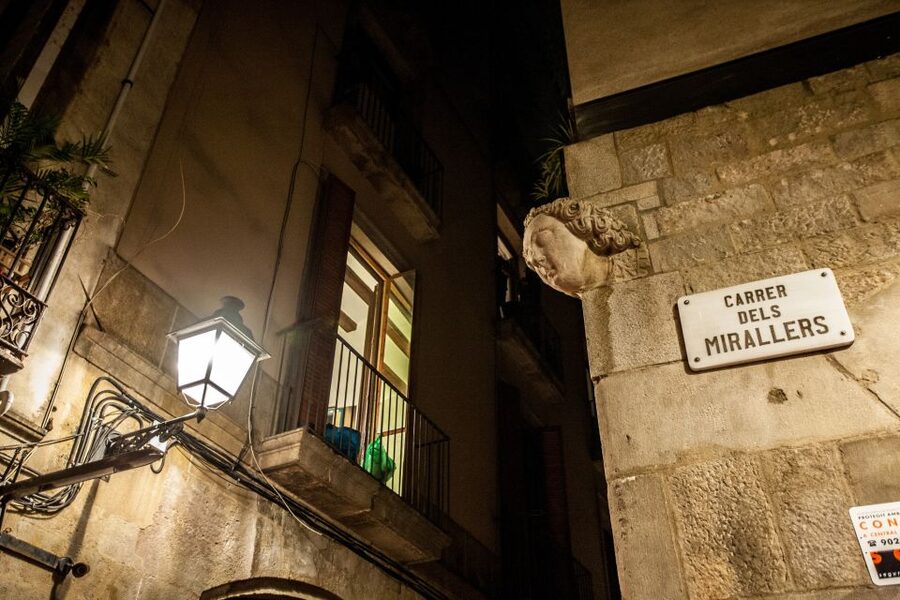
The tour points out forgotten cemeteries and sites connected with executions. These locations may not look dramatic today. That is part of the point. A quiet corner, ordinary street, or altered building can conceal a past that is far less peaceful than its present appearance suggests.
At execution sites, the guide explains how punishment worked as public theater. The purpose was not only to harm the condemned person. Public punishment also warned everyone watching. Standing near such a place while hearing its history gives the idea a physical weight that a general city lecture cannot provide.
Cemeteries offer a different lesson. They reveal how the city treated the dead, the condemned, and people pushed outside accepted society. The tour uses these places to show that Barcelona’s past was not only about rulers and famous artists. It was also about people whose names and lives were nearly erased.
Do not expect every site to be preserved as a clear attraction with signs and displays. Some places are remembered through fragments, local knowledge, street names, and surrounding architecture. That can make the experience feel authentic, but it also asks you to pay close attention to the guide’s explanation.
A rare look at Barcelona’s executioner
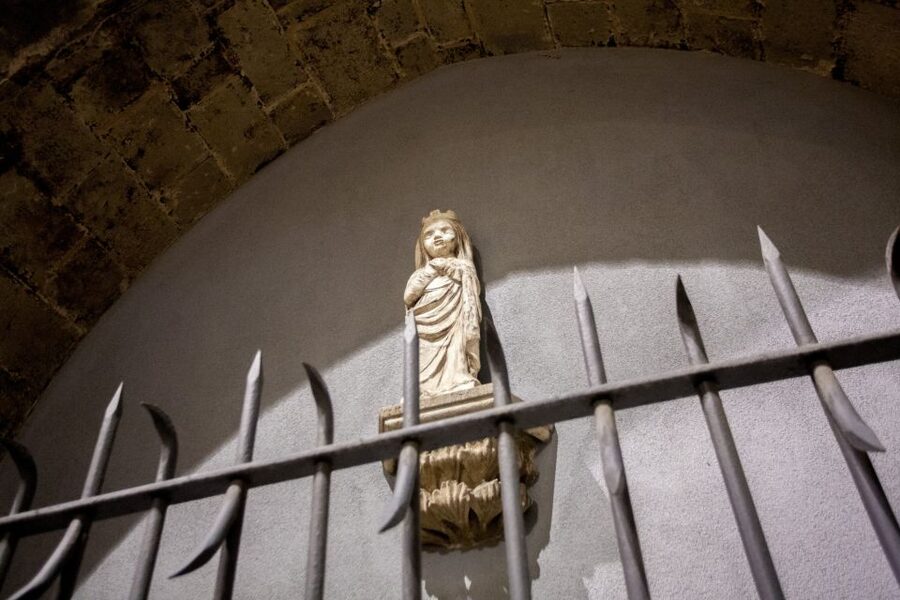
One of the more unusual themes is the life of Barcelona’s executioner. This moves the focus away from the condemned and toward the person assigned to carry out punishment.
That perspective is valuable because executioners often occupied an uncomfortable place in society. They held an official role, yet the work could make them social outsiders. The guide uses this subject to explore how medieval and early modern communities dealt with people whose jobs were necessary to the authorities but feared or rejected by ordinary residents.
It is the sort of detail you are unlikely to pick up while walking alone. You may learn a great deal about Barcelona’s architecture by yourself, but not necessarily about the social position of an executioner or the human cost behind a public sentence.
This part also helps prevent the tour from becoming a simple list of gruesome incidents. The larger question is how a society creates punishment, who carries it out, and what happens to the people involved. That gives the darker material some real structure.
Legends, props, and the portable projector
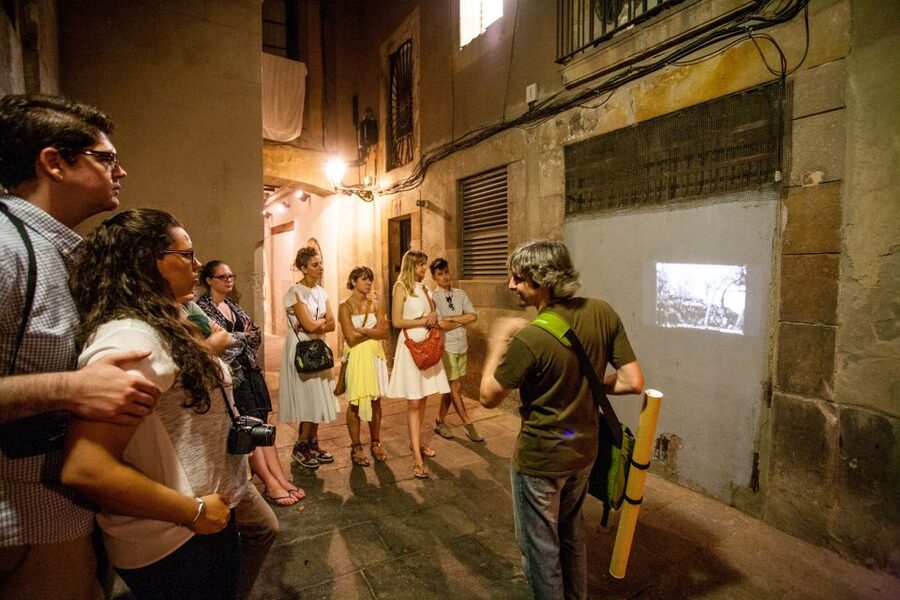
The tour includes some of Barcelona’s darker legends, but they are secondary to the factual history. The guide may use old photographs, paintings, clippings, literary excerpts, books, or a portable digital projector to support the explanation.
The wall projector is an unusual touch on a walking tour. Visual material can be difficult to use outdoors, but when it works, it helps you connect a present-day street with an older image or account. Props add a touch of theater without turning the evening into a staged scare show.
This is one of the most praised parts of the experience. Guides such as Elena and Sara have been singled out for using visuals and interactive material to bring the stories to life. The best guides do not simply hold up a picture and read from it. They use it to give the group something concrete to examine.
The visual aids also help if you are not naturally drawn to medieval history. A name or date may slip away. A striking image, short reading, or physical prop gives your memory something to hold on to.
Still, the quality of the evening depends heavily on the guide. Several different guides lead the tour, and each will have a personal style. Elena is known for energy, audience participation, and a talent for dramatic storytelling. Sara has been praised for warmth, passion, and a friendly way of involving the whole group. Noah, Albert, Ross, and others have also been described as engaging presenters.
Pace, walking effort, and group size
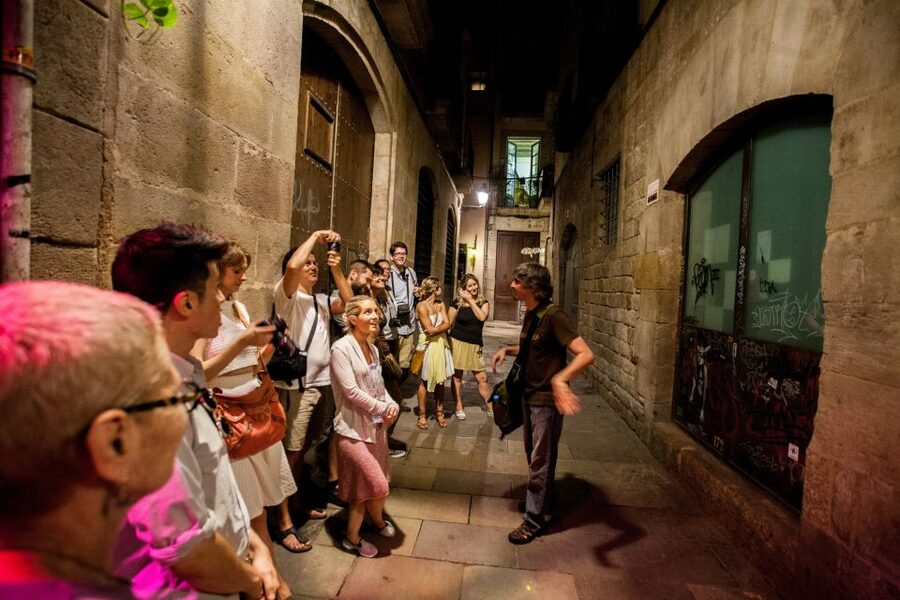
The tour lasts two hours. That is long enough to build a proper story, but not so long that the evening becomes an endurance test. The route is a walking tour through central neighborhoods, not a full-day excursion, and the available comments describe the walking as manageable.
You will spend much of the time moving from one point to another and then stopping while the guide speaks. Wear comfortable shoes, especially if you have already spent the day exploring Barcelona on foot.
Group size can shape the experience. When numbers are low, the walk can feel almost personal, with more room for questions and direct conversation. Small groups of three, four, or five have made the evening feel intimate for some participants.
You should not count on every departure being tiny. Numbers are limited, but the exact group size is not guaranteed. Headsets help preserve the experience when the group is larger, and an interactive guide can keep the talk from feeling like a speech delivered over your head.
The pace has generally been well received, with guides described as keeping the two hours moving without making the material feel rushed. If you prefer a fast march with minimal explanation, this tour may feel slow. If you want time to listen and absorb the stories, the pace is a strength.
Is $24 a fair price?
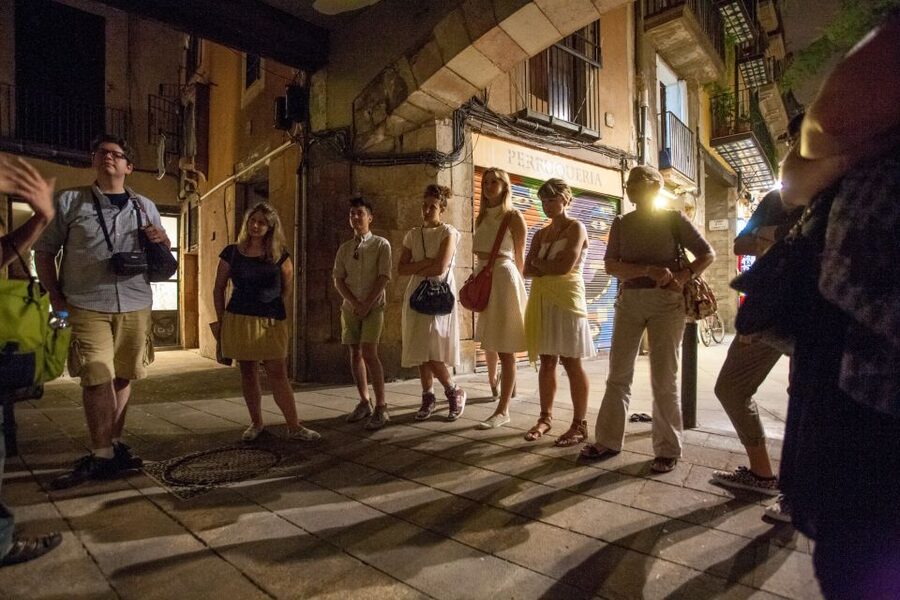
At $24 per person, this is a reasonable evening activity in central Barcelona. You are paying for a two-hour live walk, a professional local guide, headsets, and visual material that would be difficult to assemble for yourself.
The value is strongest if you care about interpretation. You can walk through El Born and La Ribera without paying anything, of course. What you cannot easily provide yourself is the connection between an ordinary street, a forgotten cemetery, an execution site, the Inquisition, and the social life of an executioner.
The price also compares well with the amount of time involved. Two hours gives the guide room to build a complete theme instead of offering a few spooky anecdotes. The experience can work as an evening introduction to the old districts, especially if you want something more focused than a general city walk.
The limits are clear. This is not a museum ticket, a restaurant meal, or a private tour. You will not receive a full survey of Barcelona’s entire past, and you should not book it if you dislike dark subject matter or long stretches of spoken English.
Free cancellation up to 24 hours before departure and the option to reserve now and pay later make it easier to fit into a changing itinerary. Since numbers are limited, booking early is sensible, particularly if you want a specific evening.
Weather, age limits, and what to bring
The tour operates in all kinds of weather. Rain alone is not a reason for cancellation, so bring suitable rain gear if the forecast looks poor. A camera is also listed as something to bring, although you should be respectful when photographing people, private property, or sensitive locations.
Children under 14 are not permitted. That rule fits the subject matter, which includes torture, executions, victims of the Inquisition, and other disturbing parts of medieval life.
The experience suits adults and older teenagers who enjoy history with a grim edge. It can also work well for someone who likes ghost tours but wants a factual alternative. One useful way to think about it is this: the atmosphere may feel eerie, but the content is historical rather than paranormal.
Who should book the Dark History Night Walking Tour?
I would choose this tour if you have already seen Barcelona’s famous sights and want a different way to understand the old city. It is also a good first or second evening activity if you enjoy walking, storytelling, and unusual historical details.
Book it if you like:
- Spanish Inquisition history and medieval social life
- Small-group walks with time for questions
- Visual aids, readings, and theatrical storytelling
- Exploring El Born and La Ribera after dark
- Real historical darkness rather than invented supernatural scares
Think twice if you want a light, family-friendly activity, a ghost tour, or a route built around entering major monuments. The material is serious, the tour is English only, and the weather can be unkind.
For most adults with an interest in Barcelona beyond Gaudí and tapas, the $24 price is justified. The strongest reason to go is not the promise of a scare. It is the chance to walk through familiar-looking streets and understand the human stories that made them troubling places.
FAQ
How long is the Barcelona Dark History Night Walking Tour?
The tour lasts two hours.
Where does the tour meet?
Meet the guide under the arch of the Arc de Triomf. The nearest Metro station is Arc de Triomf on Line 1.
What areas does the tour visit?
The walk explores the medieval neighborhoods of El Born and La Ribera in central Barcelona. Some historical references also relate to the Gothic Quarter.
Is this a ghost tour?
No. It is a historical night walk based on real events, including executions, torture, the Spanish Inquisition, and medieval life. A few local legends may be included, but there are no planned paranormal activities or scary pranks.
What language is the tour in?
The live tour guide speaks English, and the tour is offered in English only.
Is the tour suitable for children?
The tour is not suitable for children under 14, who are not permitted to join.
What happens if it rains?
The tour operates in all kinds of weather. Rain and other weather conditions are not normally enough to cancel it, so bring suitable rain gear during wet weather.
More Walking Tours
- Barcelona: Old Town and Gothic Quarter Walking Tour
★ 4.8 · 1,393 reviews - Barcelona: Helicopter Flight, Boat Ride, and Walking Tour
★ 4.7 · 1,334 reviews - Barcelona: City Walking Tour with Local Guide
★ 4.9 · 980 reviews - Barcelona: Guided Food Walking Tour with Tapas and Wine
★ 5.0 · 848 reviews
More Historical Tours
- Barcelona Erotic Museum – Explore Art, History & Fun
★ 4.4 · 450 reviews - Andorra Original History and Sightseeing Tour (Private, Pickup)
★ 5.0 · 350 reviews - Tarragona and Sitges Small Group Tour – Roman History & Culture
★ 4.5 · 339 reviews - Historical and Modernist Bike Tour Barcelona
★ 5.0 · 262 reviews
Recently added around Barcelona
- Intro Segway Tour Barcelona 1h★ 4.9 · 166 reviews
- Barcelona: Bike or eBike Tour, Top Sights & Local Insights★ 4.9 · 166 reviews
- Instagram Photoshoot Tour in Barcelona★ 5.0 · 167 reviews
- Artisan Ceramic Making Experience★ 5.0 · 168 reviews
- Barcelona: Big Fun Museum Ticket★ 4.2 · 169 reviews
- Sagrada Familia Evening Private Tour with Expert Guide★ 4.5 · 170 reviews
- Gaudi’s Crypt in Colonia Güell with Audioguide★ 4.4 · 170 reviews
- Las Golondrinas Barcelona 60-min Boat Tour★ 4.0 · 170 reviews
Historical Tours, compared.
Madrid Essential: Historic Center, Plaza Mayor & Royal Palace
Read our review →
Tapas Walking Tour with Food, Wine, and History
Read our review →
Sevilla Food Tour: Tapas, Wine, History & Traditions
Read our review →
Valencia Old Town Tour with Wine & Tapas in 11th Century Historic Monument
Read our review →
Barcelona Tapas Walking Tour: Food, Wine & History
Read our review →
Ultimate Seville Tapas, Wine & History Small Group Tour
Read our review →
Skip-the-Line Great Mosque-Cathedral History Tour
Read our review →
Browse the lists this tour appears in