
Review · HISTORICAL TOURS
Tarragona and Sitges Small Group Tour – Roman History & Culture
Ancient stones, salty air, and one long day. This Tarragona and Sitges tour pairs Roman sights with seaside towns, giving you two very different escapes from Barcelona in about ten and a half hours. I especially like the chance to walk across the 2,000-year-old aqueduct and the useful mix of guided touring and free time. The main trade-off is pace: Tarragona has a lot to see, while Sitges can become crowded, especially on a Sunday.
The small-group minivan keeps the day personal and avoids the fuss of arranging several train and taxi connections. Guides such as Sergio, Rod, Xavier, Enrique, Jordi, and Stephen have earned praise for clear explanations and friendly help. Still, bring good shoes, sun protection, and patience for a full day that begins early and ends around 7pm.
In This Review
- Five details worth knowing before you book
- Why this Barcelona day trip works
- Starting near Palau de la Música at 8:15am
- El Pont del Diable, the day’s great first stop
- Tarragona, where Roman and modern life overlap
- The amphitheater and the limits of free time
- Roc de Sant Gaieta, a short and unusual coastal stop
- Three hours in Sitges for lunch, shops, and the sea
- How the guides shape the day
- Price, comfort, and what you still pay
- Who should book this experience?
- FAQ
- Where does the tour begin?
- Where does the tour finish?
- Is hotel pickup included?
- Is transportation included?
- What language is the tour offered in?
- Are meals and drinks included?
- Are entrance fees included?
- Can I swim in Sitges?
- How far in advance is this tour usually booked?
- Should you book the Tarragona and Sitges tour?
Five details worth knowing before you book
- Walk on El Pont del Diable: The Roman aqueduct near Tarragona is the day’s most unusual photo stop, and you can cross its upper level.
- Tarragona packs in Roman layers: You see the old walls, cathedral, forum, circus, underground passageways, and amphitheater in one guided walk.
- Roc de Sant Gaieta is a quick coastal pause: Allow about 20 minutes for its tiny white houses and rocky shoreline.
- Sitges gives you three hours: Use the time for lunch, small shops, side streets, waterfront cafes, or a quick swim.
- The value is strongest for first-time visitors: Transport, guiding, and several major stops are covered for $119.48, but monument entry and meals cost extra.
Why this Barcelona day trip works
Barcelona has enough sights to fill a week, yet a day outside the city can reset your sense of place. Tarragona gives you Roman Spain on a human scale. Sitges then shifts the mood to beaches, whitewashed houses, cafes, and shopping.
I like this contrast. You are not spending ten hours looking at one type of monument. Instead, the day moves from a countryside aqueduct to an old Mediterranean city, then to a coastal resort with time to choose your own pace.
The tour is conducted in English and includes an air-conditioned minivan. That matters because the route involves several stops, and public transport would require more planning. You meet near Palau de la Música at 8:15am, leave at 8:30am, and return to central Barcelona around 7pm to 7:15pm.
The tour is described as small group, though the supplied details give two different maximum sizes, 15 people and 8 people. Confirm the expected group size when you book. Either way, a minivan is more useful than a large coach here. It can handle the narrow approach into Tarragona and keeps the day from feeling like a parade.
More Historical Tours in Barcelona
- Barcelona: Tapas Walking Tour with Food, Wine, and History
★ 4.8 · 4,261 reviews - Barcelona Tapas Walking Tour: Food, Wine & History
★ 4.5 · 1,928 reviews - Barcelona: 2.5-Hour Bike or E-Bike Historical Tour
★ 4.5 · 1,262 reviews
Starting near Palau de la Música at 8:15am
The meeting point is on C/ Palau de la Música, 1, close to the famous concert hall in central Barcelona. You have time to use the restroom and grab a quick coffee before departure, which is helpful because the first drive lasts about 90 minutes.
As you leave through Barcelona’s Eixample district, the guide gives a short introduction to the city and the route. This opening talk is not just filler. It helps you understand why Tarragona mattered to Rome and how the coastal towns fit into Catalonia’s story.
You do not get hotel pickup, so plan extra time to reach the office. At the end, the minivan normally drops you at Plaça de Catalunya or possibly Arc de Triomf, depending on traffic and group size. From either point, you can continue by metro or taxi.
El Pont del Diable, the day’s great first stop
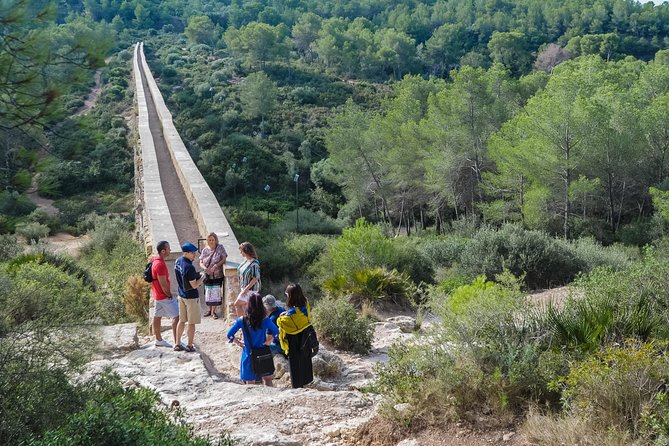
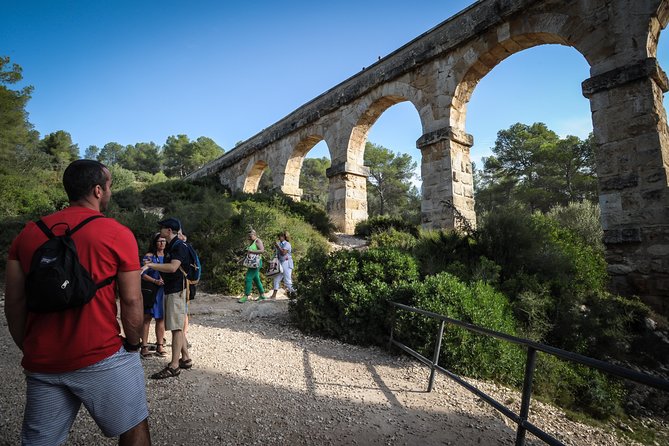
Around 10am, you reach Les Ferreres Aqueduct, better known as El Pont del Diable, or the Devil’s Bridge. Built in the first century BC, it once formed part of Tarragona’s water system.
The aqueduct is impressive because it is not just something you view from below. You can walk across the top from one side to the other. That short crossing gives the stop a real sense of place. You are standing on Roman construction nearly 2,000 years old, rather than simply taking a picture beside it.
Allow about 40 minutes here. The stop is free, but the footing and outdoor setting make sensible clothing important. Wear shoes you can walk in and bring a hat or sun protection. Several people especially wished for more time at the aqueduct, so use your minutes well. Walk across it, look back through the arches, and take your photographs before returning to the minivan.
This is one of the tour’s best design choices. A Roman aqueduct can be hard to appreciate when surrounded by city traffic or museum labels. Here, the structure has room around it, and the guide can explain its purpose before you move on.
Tarragona, where Roman and modern life overlap
The group reaches Tarragona’s old quarter around 11am. You enter through a narrow opening in the ancient walls, and the city quickly reveals its unusual character. Modern streets and homes overlap with the remains of ancient Tarraco, once a major Roman center on the Iberian Peninsula.
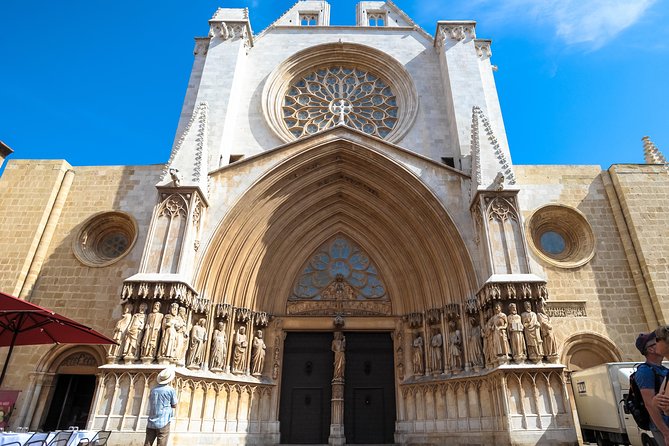
The walking route takes about two hours. It begins along the Archaeological Walkway, where you see sections of the old stone walls. From there, you pass the medieval hospital and continue toward the cathedral.
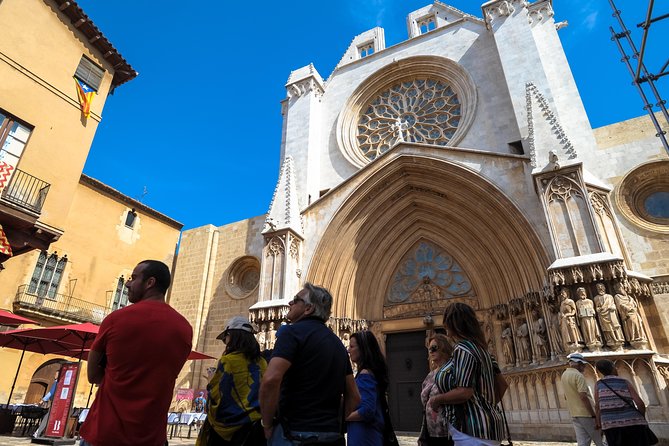
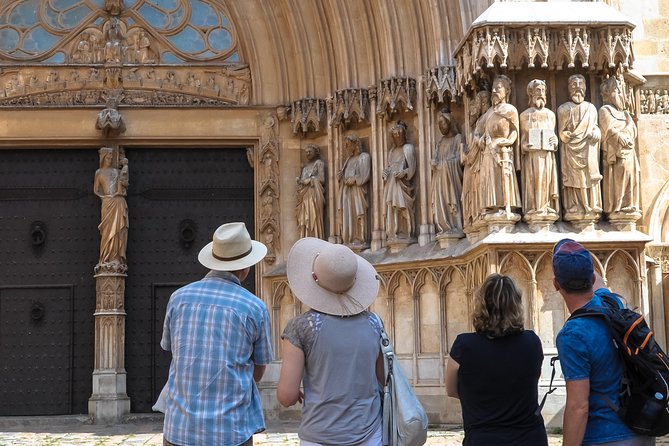
Depending on the day, the cathedral area may include a Sunday antique market. That adds a pleasant local touch, but it can also make the area busier. Your guide helps connect the medieval buildings to the Roman remains, so the old quarter feels like a living city rather than a collection of ruins.
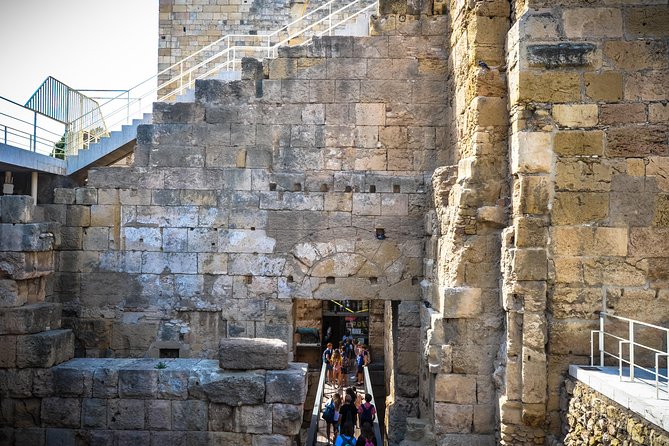
Next comes the Roman Forum and the Circus. The forum shows how public life once worked, while the circus is especially striking because parts of it are woven into the present-day city. You walk through underground passageways that once held the circus stands, then emerge at Plaça de la Font, a popular square located inside the former circus area.
This is where a guide earns the fee. Without context, Roman blocks can blur together. With a good explanation, you begin to see the old racing track beneath the streets and understand how much of Tarragona grew over the ancient city instead of replacing it.
More history and heritage tours:
- Barcelona Erotic Museum – Explore Art, History & Fun
★ 4.4 · 450 reviews - Andorra Original History and Sightseeing Tour (Private, Pickup)
★ 5.0 · 350 reviews - Barcelona: Dark History Night Walking Tour
★ 4.8 · 344 reviews - Historical and Modernist Bike Tour Barcelona
★ 5.0 · 262 reviews
The amphitheater and the limits of free time
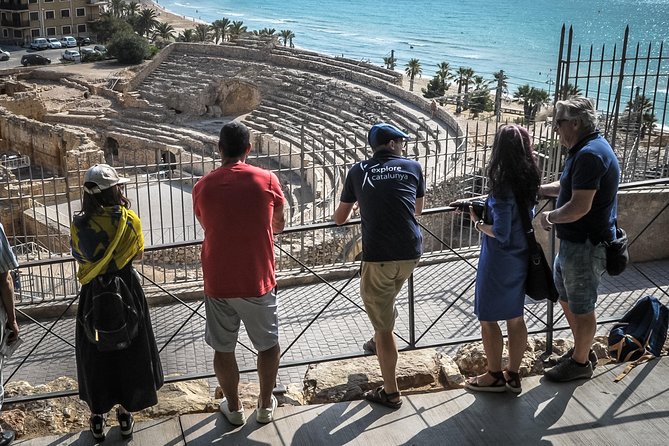
The final major Tarragona sight is the Roman amphitheater, set above the sea. From the viewpoint, you can look down toward the arena and imagine the public spectacles held there.
One detail makes the site especially memorable: a Christian church was built in the middle of the arena, using blocks from the amphitheater itself. The building is a reminder that Tarragona’s past was not preserved in a neat sequence. Later communities reused, reshaped, and lived among the Roman remains.
The route gives you a strong overview, but entrance tickets to museums and monuments are not included. The walking tour focuses on exterior views and accessible remains, and you may not have enough free time to enter every major site. One practical complaint is easy to understand: visitors who want to go inside the amphitheater or Roman Circus may wish for more time in Tarragona.
If Roman archaeology is your main reason for booking, this is the key decision point. You see many important places, but the schedule also has to leave room for Roc de Sant Gaieta and Sitges. If you would rather study Tarragona at length, an independent day there could suit you better.
Roc de Sant Gaieta, a short and unusual coastal stop
Around 1:30pm, the minivan pauses at Roc de Sant Gaieta for about 20 minutes. This is a compact settlement built along a rocky shoreline, with tiny white houses and a decorative style influenced by fishing villages and Roman-Greek ideas.
The stop is brief, so think of it as a stretch of the legs and a photo break, not a full visit. You can stroll between the small houses, take in the sea views, and get a taste of the coast before continuing to Sitges.
I like this interlude because it breaks up the drive and adds a place you might not otherwise include in a Barcelona trip. The drawback is simple: 20 minutes goes quickly. If you want a long walk or time to sit by the water, this will feel short.
Three hours in Sitges for lunch, shops, and the sea
You reach Sitges around 2:30pm and have about three hours before leaving at 5:30pm. This is the most flexible part of the day.
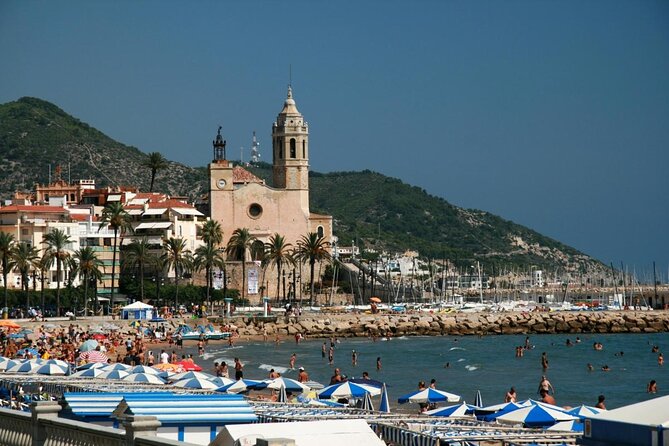
Sitges began as a fishing village and became fashionable in the 1890s. Its old streets still have whitewashed fisher houses, while the waterfront now offers cafes, restaurants, boutiques, and bars. You can wander through the shaded side streets, then head toward the long sandy beach and seafront.
The tour does not include lunch, so you choose where and how much to spend. Dining options cover different budgets, but Sunday crowds can make a restaurant meal take longer than expected. Keep an eye on the departure time. A two-hour lunch can leave little time for the beach or shops.
You can also swim. Sitges has 17 beaches, and the schedule allows a quick dip if you plan carefully. Bring a swimsuit and beach towel if that appeals to you. Sun protection is just as useful for those staying on land, since the day includes several outdoor walks.
Sitges is a good counterpoint to Tarragona. After Roman walls and archaeological remains, you get a relaxed coastal town where you can make your own choices. Some people may prefer to skip Sitges and spend longer in Tarragona, especially if Roman sites are the main goal. For couples, families, or anyone who wants history plus water views, the combination is more balanced.
How the guides shape the day
The guide is central to the experience because much of Tarragona is best understood through explanation rather than entry tickets. Sergio is praised for being clear, genial, and able to keep the group engaged. Rod is noted for strong historical explanations and practical suggestions during free time.
Xavier is described as cheerful, patient, hospitable, and a good driver. Enrique receives similar praise for lively commentary and helpful recommendations. Jordi and Stephen are also singled out for answering questions and keeping the day comfortable.
The exact guide affects the tone, but the pattern is consistent: the strongest part of the tour is the human explanation of Tarragona. You can ask questions in a small group, rather than waiting for a guide to address a large crowd.
Price, comfort, and what you still pay
At $119.48 per person, the tour is not the cheapest way to reach Tarragona and Sitges. It is a fair price if you value door-to-door regional transport, an English-speaking professional guide, and a carefully arranged route over ten and a half hours.
The minivan is air-conditioned and described as comfortable, though the vehicle is small. You spend a fair amount of time on the road, so comfort matters. The trade-off is that the tour covers several places in one day, which would be awkward to arrange independently.
Food and drinks are not included. Neither are entrance fees for Tarragona museums and monuments. Treat the base price as covering transport and guiding, then budget separately for lunch, drinks, and any site admissions you choose.
The tour is free to cancel up to 24 hours before the start time for a full refund. It requires a minimum number of participants, so a cancellation caused by low numbers comes with the choice of another date or a full refund.
Who should book this experience?
I would choose this tour if you want a broad Catalonia day trip without renting a car or building several connections yourself. It suits couples, families with older children, and first-time visitors who want Roman sites but also need a change of pace.
It is less suitable for anyone who dislikes early starts, long days, or guided walking. Children aged four and under are not recommended. You should also be comfortable walking outdoors and bringing your own sun protection.
History fans should note the schedule carefully. You get a strong guided introduction to Tarragona, including the aqueduct, forum, circus, and amphitheater, but not unlimited time inside every monument. Beach lovers will appreciate Sitges, while dedicated archaeology fans may wish for a Tarragona-only outing.
FAQ
Where does the tour begin?
The tour begins at C/ Palau de la Música, 1, in Ciutat Vella, Barcelona. Meet at about 8:15am for the 8:30am departure.
Where does the tour finish?
The tour ends in central Barcelona around 7pm to 7:15pm. The drop-off is usually Plaça de Catalunya, though it may be the tour office or Arc de Triomf depending on traffic and group size.
Is hotel pickup included?
No. You must reach the central Barcelona meeting point yourself.
Is transportation included?
Yes. Transport by air-conditioned minivan is included.
What language is the tour offered in?
The tour operates in English only.
Are meals and drinks included?
No. Food and drinks are not included, so you pay for lunch and refreshments in Sitges.
Are entrance fees included?
No. Entrance fees for museums and monuments in Tarragona are not included.
Can I swim in Sitges?
Yes. You have free time in Sitges and may swim if you bring a swimming costume and beach towel.
How far in advance is this tour usually booked?
It is booked on average 48 days in advance. The experience also provides confirmation at the time of booking.
Should you book the Tarragona and Sitges tour?
Book it if you want Roman ruins, sea views, and easy transport in one day. The aqueduct crossing is the standout moment, Tarragona gives you a thoughtful look at Roman and medieval Spain, and Sitges supplies the freedom to eat, shop, stroll, or swim.
Skip it if you want a slow archaeological study of Tarragona or dislike structured days. For most Barcelona visitors with one spare day, though, this is a well-shaped outing with a strong guide, good variety, and enough personal time to keep the minivan from feeling like a cage.
Recently added around Barcelona
- Intro Segway Tour Barcelona 1h★ 4.9 · 166 reviews
- Barcelona: Bike or eBike Tour, Top Sights & Local Insights★ 4.9 · 166 reviews
- Instagram Photoshoot Tour in Barcelona★ 5.0 · 167 reviews
- Artisan Ceramic Making Experience★ 5.0 · 168 reviews
- Barcelona: Big Fun Museum Ticket★ 4.2 · 169 reviews
- Sagrada Familia Evening Private Tour with Expert Guide★ 4.5 · 170 reviews
- Gaudi’s Crypt in Colonia Güell with Audioguide★ 4.4 · 170 reviews
- Las Golondrinas Barcelona 60-min Boat Tour★ 4.0 · 170 reviews
Historical Tours, compared.
Madrid Essential: Historic Center, Plaza Mayor & Royal Palace
Read our review →
Tapas Walking Tour with Food, Wine, and History
Read our review →
Sevilla Food Tour: Tapas, Wine, History & Traditions
Read our review →
Valencia Old Town Tour with Wine & Tapas in 11th Century Historic Monument
Read our review →
Barcelona Tapas Walking Tour: Food, Wine & History
Read our review →
Ultimate Seville Tapas, Wine & History Small Group Tour
Read our review →
Skip-the-Line Great Mosque-Cathedral History Tour
Read our review →
Browse the lists this tour appears in