
Review · JEWISH QUARTER TOURS
Seville Former Jewish Quarter Walking Tour: Santa Cruz
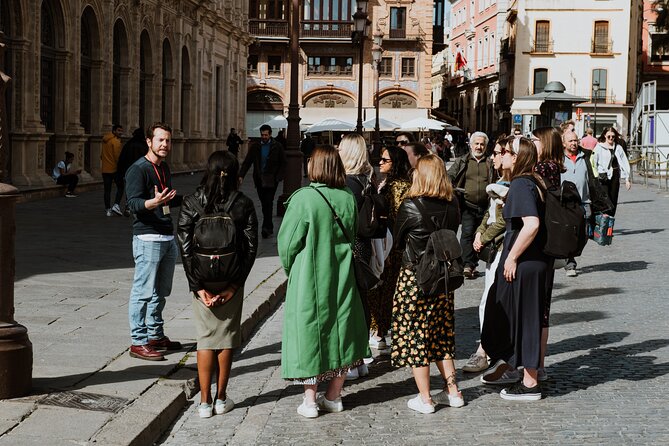
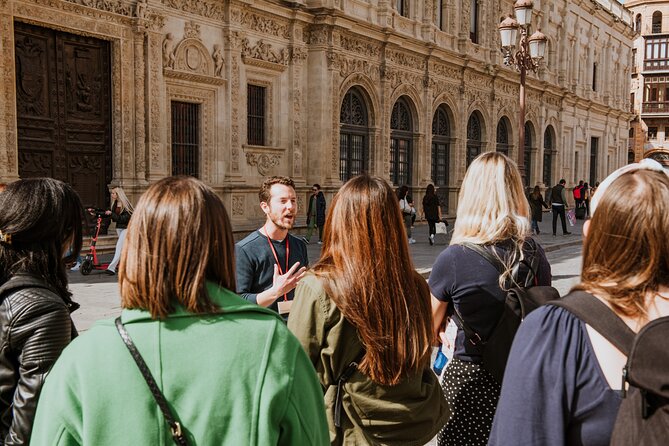
Stories bring old streets to life. This two-hour Santa Cruz walk connects Seville’s Jewish past with legends, opera, art, royal power, and the narrow lanes most visitors would miss. I like the way the route mixes major sights such as Plaza del Triunfo with quieter corners like Calle Susona and Callejón del Agua. I also like the small-group limit of 15, since guides such as Julio, Lara, Maria, and Anna have been praised for answering questions and adjusting their talks to the group.
The main thing to consider is the historical focus. The streets and stories are memorable, but little physical evidence of the former Jewish Quarter survives. Some participants wanted more detail about Jewish family life, community contributions, and daily life. At $18.02 per person, this is good value if you want a guided introduction, though history-minded visitors may wish for a more academic treatment.
In This Review
Key points before you book
- A story-led route through Santa Cruz: The walk uses legends about Susona, Rosina, and mysterious disappearances to make Seville’s past easier to picture.
- Ten stops in about two hours: You move from Plaza del Triunfo to Plaza de Santa Cruz, with roughly 12 minutes assigned to each listed stop.
- Strong guides make the difference: Julio is often praised for humor and storytelling, while Lara, Maria, and Anna are noted for clear explanations, patience, and warmth.
- The Jewish past is often invisible: You will learn about former streets, communities, persecution, and change, but you should not expect a museum-style display of surviving Jewish objects.
- A compact central meeting point: The tour begins at Plaza del Triunfo and ends at Plaza de Santa Cruz, both in Seville’s old town.
Santa Cruz is easy to admire and surprisingly hard to read. Its tight lanes, tiled courtyards, small plazas, and whitewashed walls are beautiful, but the Jewish past is not always marked in a way that explains what you are seeing.
That is where this tour earns its keep. A guide points out how the area changed over time and connects present-day streets with the people and events associated with them. You are not simply walking through a pretty quarter. You are being asked to picture a neighborhood that has been reshaped by conquests, religious change, violence, art, royal life, and legend.
I especially like the use of stories. Julio has been praised for separating local legends from historical fact, a useful habit in a city where romance and memory often share the same street corner. That approach keeps the walk entertaining without treating every tale as proven history.
The route also reaches beyond Jewish history. It touches the Alcázar, Murillo, opera, royal ceremonies, and Seville’s broader past. That wider frame helps you see the former Jewish Quarter as part of the city rather than as an isolated historical pocket.
The walk begins at Plaza del Triunfo, a central square surrounded by some of Seville’s most important monuments. It has witnessed royal events, conquests, and public ceremonies, making it a sensible place to begin a discussion about power and changing communities.
This opening stop gives your guide room to explain the setting before leading you into the smaller lanes of Santa Cruz. The ticket is free, and there is no hotel pickup, so you need to reach the square yourself.
Look for the guide under the statue at the meeting point. One participant found the guide easy to spot there, which matters in a busy central area where several walking groups may gather.
The next stops are Fuente de la Plaza de la Alianza and Plaza de Dona Elvira. These spaces show why Santa Cruz is best explored on foot. The streets tighten, the pace slows, and the large civic scale of Plaza del Triunfo gives way to intimate corners.
Plaza de la Alianza is described as a former meeting place for nobles and a setting for medieval court intrigues. That combination of public life and private maneuvering gives the guide a useful way to talk about how the quarter functioned beyond its postcard appearance.
Plaza de Dona Elvira brings a more romantic mood. It is one of the area’s most picturesque corners, surrounded by legends and nostalgia. You may find this part especially enjoyable if you like architecture, atmosphere, and local stories, although the emphasis can feel less factual than a formal history lecture.
The narrow streets are one of the walk’s strongest features. You can see plenty of them on your own, but it is harder to understand why they matter without someone explaining the people and events linked to them.
Calle Susona recalls the story of Susona, a young Jewish woman caught between love and betrayal. Her tale is one of the route’s emotional centerpieces, and it gives the guide a way to discuss the tension between personal choices, community pressure, and local memory.
The story is compelling, but it is also a reminder to listen carefully to how your guide handles legend. The strongest guides on this tour appear to make a clear distinction between the romantic version and the historical record. That balance is important in Santa Cruz, where a dramatic tale can sometimes overshadow the less theatrical story of ordinary life.
This is also where the tour’s main limitation becomes clear. The route can tell you what happened to the neighborhood and how its population changed, yet there are few visible remains that let you independently verify or picture Jewish life in detail.
If you want a walk built around surviving artifacts, inscriptions, or preserved interiors, this may feel thin. If you want an accessible starting point, Calle Susona gives you a memorable doorway into the subject.
The route then moves to Hospital de los Venerables, a Baroque building that once housed retired priests. Today, it contains centuries of sacred art and reflects Seville’s Golden Age.
Although this is not presented as a Jewish site, it helps explain the religious and artistic world that shaped later Seville. The building also broadens the tour beyond a single community, which several participants appreciated. Guides have been praised for adding non-Jewish history, opera, art, and city life rather than staying on one narrow track.
Next comes Casa de Murillo, associated with Bartolomé Esteban Murillo, the celebrated 17th-century painter. Murillo’s work is tied to Seville’s light and religious culture, so this stop adds an artistic layer to the walk.
Do not expect a long gallery visit here. The experience is an outdoor walking tour, and the listed stops are treated as points for explanation rather than extended admissions. The value comes from seeing how Santa Cruz connects to Seville’s art and religious identity.
The route includes Calle Sierpes, one of Seville’s best-known streets. It is linked with stories of mysterious disappearances and old urban legends.
This stop gives the tour another change of tone. The walk moves from community history and religious change into folklore. That variety keeps a two-hour walk from becoming a steady march through dates and names.
Then comes Rosina’s Balcony, connected with the character from The Barber of Seville. Rosina is presented as clever and playful, a figure inspired by the spirit of the neighborhood.
Opera references are a recurring pleasure on this route. One particularly well-received guide was praised for explaining Seville’s role in operas while also discussing its difficult past. I think this is a smart addition because it shows how the city has been imagined by artists, composers, and storytellers.
The drawback is that some stops rely more on association than on a major physical attraction. If you expect to enter a famous building at every point, you may find the route less substantial. If you enjoy seeing how fiction grows from a place, these stops add charm.
Callejón del Agua is one of the walk’s most atmospheric passages. It is a narrow, cool lane where water from the Royal Alcázar once flowed. The passage is associated with poems, love stories, and whispered secrets, making it an ideal setting for the tour’s blend of history and legend.
This is the kind of place where a guide is especially useful. On your own, you might notice the shade and narrow walls. A good explanation adds the old water system, the Alcázar connection, and the stories attached to the lane.
The final stop is Plaza Patio de Banderas, a broad courtyard behind the Alcázar walls. Its setting recalls empires, royal ceremonies, and Seville’s changes over the centuries.
The ending at Plaza de Santa Cruz keeps you in the heart of the old town. That is convenient if you want to continue exploring, eat nearby, or revisit one of the lanes while the stories are still fresh. Dinner is not included, and the tour does not provide hotel transport.
The tour’s best purpose is to help you notice the absence of a former community. Seville’s Jewish Quarter does not offer a neat collection of visible remains at every turn. Instead, the guide reconstructs the neighborhood through street names, local memory, changing populations, persecution, and the movement of people.
The subject includes both periods of Jewish influence and the violence that later befell the Jewish population. Several participants valued explanations of the pogroms and the consequences for Jewish citizens. One especially useful point raised on the walk is how influential the Jewish population was during the time of the king living next to the Judería.
Still, you should set your expectations correctly. Two participants felt the tour did not explain enough about Jewish families, community life, or contributions to Seville society. That criticism is fair. The route appears strongest as a broad introduction with stories and place-based context, not as a full study of Jewish institutions, occupations, customs, or household life.
I would recommend asking questions as you go. Guides such as Lara and Anna have been praised for taking time with questions, and Julio has been praised for answering them clearly. The more specific your interest, the more you may gain from the conversation.
The guide can make or break this experience. Julio receives especially strong praise for humor, clear storytelling, local facts, and his ability to explain both Jewish and non-Jewish parts of Seville. Lara is noted for patience and careful answers, while Maria and Anna are praised for warmth, passion, and strong command of the subject.
That does not mean every guide will give the same tour. The feedback includes a few disappointed participants who wanted more historical detail. The experience depends on how much depth your guide brings to the same streets.
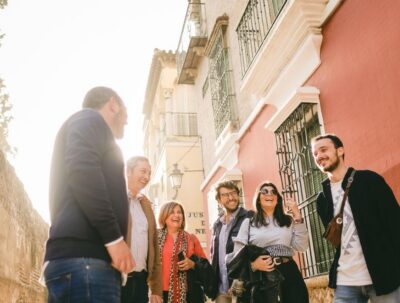
The group limit is 15 people. That is small enough for a more personal walk, although one participant described a group as big while also saying the guide managed it well. Expect a shared tour rather than a private conversation.
The advertised duration is about two hours, with ten listed stops and roughly 12 minutes assigned to each. One participant described the actual walk as a little over an hour, so the pace may vary. If your schedule is tight, allow the full two hours rather than counting on the shorter version.
At $18.02 per person, the tour is priced as an affordable introduction to Santa Cruz. You are paying for a guide in English or Spanish, not for meals, hotel pickup, or admissions.
That price makes sense if you want to understand the quarter before exploring alone. A guide can help you notice details and connect streets that otherwise seem unrelated. It also gives you a chance to ask questions, which is useful with a subject that is not always visible in the built environment.
The value is less clear if you already know Seville’s Jewish history well or want access to major interiors. The listed stops are free, and much of the experience takes place outdoors. In that case, you are paying for interpretation, structure, and storytelling.
The tour is offered in English and Spanish. The booking information lists English as the offered language, so check your selected option carefully. Confirmation is provided at booking, and free cancellation is available up to 24 hours before the start time. A minimum number of participants is required, and if that minimum is not reached, you are offered another date or a full refund.
The route is near public transportation, service animals are allowed, and most people can participate. Wear shoes suited to uneven old-town streets, and bring a plan for hot, rainy, or cool weather since this is an outdoor walk.
I would choose this tour for a first visit to Seville, especially if you want more than photographs of Santa Cruz’s lanes. It suits people who enjoy stories, local legends, religious history, art, opera, and the way different eras overlap in one neighborhood.
Families can also do well here. One participant noted that children enjoyed the information, suggesting that the stories help younger listeners stay interested. The two-hour format is long enough to provide context without taking up an entire day.
This is also a good first-day activity because it helps you get your bearings in the old town. The route begins near major landmarks and ends in Santa Cruz, with plenty of suggestions for further exploration from the guide.
I would be more cautious if your main goal is detailed Jewish social history. Ask direct questions about families, occupations, community life, and Seville’s Jewish contributions. If the guide provides that depth, the tour can be rewarding. If not, you may leave with strong impressions of legends and locations but an incomplete picture of the community itself.
FAQ
More Walking Tours in Seville
- Seville: Small-Group City Highlights Walking Tour
★ 5.0 · 1,204 reviews - Cultural Walking Tour of Seville Monumental
★ 5.0 · 861 reviews - Seville: Tapas, Taverns, and History Walking Tour
★ 4.9 · 676 reviews
How long does the Santa Cruz walking tour last?
The tour is advertised as approximately two hours. The route lists ten stops, with about 12 minutes at each stop, though the actual pace may vary.
Where does the tour begin?
The meeting point is Plaza del Triunfo in Seville’s Casco Antiguo, at Pl. del Triunfo, 41004 Sevilla, Spain.
Where does the tour end?
The tour ends at Plaza de Santa Cruz, at Pl. de Sta Cruz, 41004 Sevilla, Spain.
More Jewish Quarter walks:
- Seville: Small-Group Jewish Quarter Discovery Walking Tour
★ 4.9 · 499 reviews - Private Tour Jewish Quarter, center and Plaza de España
★ 5.0 · 127 reviews - Seville: Small Group Jewish Quarter Tour with Tapas & Drinks
★ 5.0 · 119 reviews - Seville Jewish Quarter Small Group Tour with Tapas and Drinks
★ 5.0 · 110 reviews
Is the tour offered in English?
Yes. The tour is available in English and Spanish. The booking information specifically lists English as the offered option, so confirm the language when reserving.
What is included in the price?
The price includes a guided walking tour in English or Spanish. Dinner and hotel pickup are not included.
How many people can join the tour?
The maximum group size is 15 participants.
Can I cancel for a refund?
You can cancel at least 24 hours before the start time for a full refund. Cancellations or changes made less than 24 hours before the start time are not accepted for a refund.
I would book it if you want an affordable, engaging introduction to Seville’s former Jewish Quarter and prefer stories over a dry list of dates. The best guides, especially Julio, Lara, Maria, and Anna, appear to bring patience, humor, and strong local insight to the route.
Go in expecting a neighborhood reading rather than a museum visit. You will see lanes, squares, old buildings, legends, opera connections, and reminders of a community whose physical traces have often disappeared. If you want a clear first look at Santa Cruz, the tour is worth $18.02. If you need a detailed study of Jewish family life and social contributions, use this as a starting point and plan to seek more specialized information afterward.
More Walking Tours
- Seville: Tapas, Taverns and History Guided Walking Tour
★ 4.9 · 515 reviews - Seville Guided Small-Group Walking Tour
★ 5.0 · 435 reviews - Seville Private Walking Tour with Alcazar & Cathedral Tickets
★ 5.0 · 332 reviews - Seville Small-Group Monumental Highlights Walking Tour
★ 5.0 · 278 reviews
Recently added around Seville
- Seville Jewish Quarter walking tour: Santa Cruz District★ 4.8 · 104 reviews
- Seville: Museum of Fine Arts Guided Tour★ 4.8 · 107 reviews
- Seville: El Patio Sevillano Flamenco Show Ticket & Dinner★ 4.1 · 108 reviews
- Seville: 3 Bars Pub Crawl + VIP Club Entrance & 3 Free Shots★ 4.3 · 108 reviews
- Seville: Flamenco Show at Tablao Flamenco Andalusí★ 4.7 · 109 reviews
- Seville Jewish Quarter Small Group Tour with Tapas and Drinks★ 5.0 · 110 reviews
- Flamenco Show & Tapas Small Group Tour in Seville★ 5.0 · 111 reviews
- Seville:Exclusive FlamencoShow with Drink, VIP, or Dinner Options★ 4.0 · 111 reviews
Jewish Quarter Tours, compared.
Cordoba Mosque & Jewish Quarter Tour with Tickets
Read our review →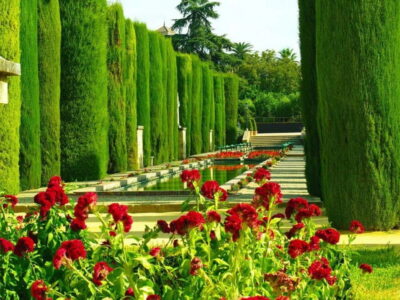
Mosque-Cathedral, Jewish Quarter and Alcázar Tour
Read our review →
Jewish Quarter and Mosque-Cathedral Guided Tour
Read our review →
Mosque-Cathedral, Alcazar & Jewish Quarter with Tickets
Read our review →
Mosque-Cathedral of Cordoba and Jewish Quarter Tour
Read our review →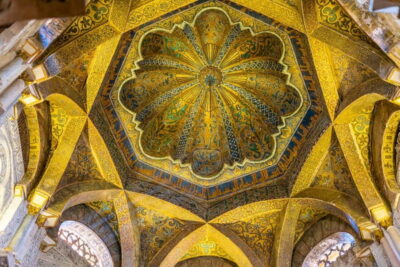
Small-Group Jewish Quarter Discovery Walking Tour
Read our review →Browse the lists this tour appears in