
Review · MUSEUMS
Seville: Museum of Fine Arts Guided Tour
Art comes alive when someone explains its secrets. This two-hour tour of Seville’s Museum of Fine Arts brings the city’s paintings, sculptures, and former convent setting into focus, with a licensed guide leading a small group of no more than eight people. I like the excellent historical context, especially the way guide Julio connects religious art to Spanish society, artists, and the period in which each work was made. I also like the chance to see the elegant cloisters and the museum’s Murillo room without having to plan your own route.
The main consideration is time. Two hours gives you a carefully chosen introduction, not a full look at every room. That is a sensible trade if you want guidance, but you should stay afterward if you prefer to study art at your own pace. At $23 per person, the tour is particularly good value for anyone who would otherwise use an audio guide and miss the symbolism and background that a live expert can explain.
In This Review
- Key points at a glance
- Why Seville’s fine arts museum deserves your time
- Meeting at Plaza del Museo
- Entering the Convent of La Merced
- Following the museum’s artistic progression
- Murillo and the heart of the collection
- Why a live guide beats an audio guide here
- The value of $23
- Accessibility and practical limits
- Who will enjoy this tour most
- Should you book the Museum of Fine Arts tour?
- FAQ
- How long does the Seville Museum of Fine Arts tour last?
- What is the price of the tour?
- Where does the tour meet?
- How will I identify the guide?
- Is museum admission included?
- What languages are available?
- How many people can join the group?
- Can I stay in the museum after the tour?
- Is the museum tour wheelchair accessible?
- Are transportation, food, or drinks included?
- Can I cancel the booking?
Key points at a glance
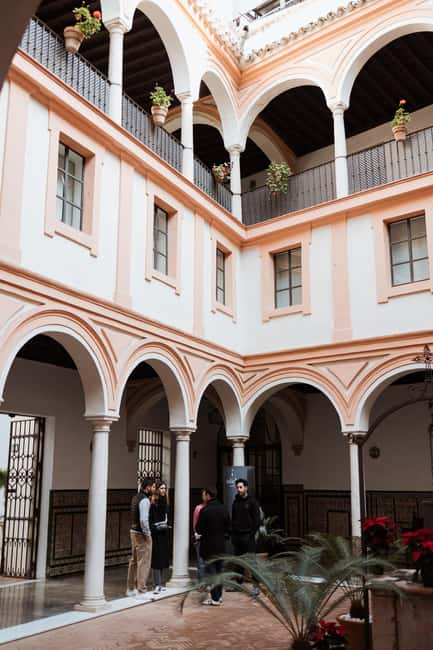
- A former convent with beautiful courtyards: The Museum of Fine Arts occupies the Convent of La Merced, where the Claustro de los Bojes and Claustro Mayor add architecture and quiet spaces to the art visit.
- Strong focus on Sevillian painting: You will see Gothic works, Renaissance pieces, Baroque art, and Sevillian Costumbrismo, with special attention to Bartolomé Esteban Murillo.
- Julio is a major strength: His historical training, clear English, friendly manner, and ability to answer questions have made him a favorite guide on this tour.
- Small groups improve the visit: With a maximum of eight participants, it is easier to hear explanations and ask about details.
- Express security access is included: You skip the standard line through an express security check, though you still need to meet the guide outside.
- You can stay after the tour: The guided portion lasts about two hours, but you may continue looking around the museum afterward.
Why Seville’s fine arts museum deserves your time
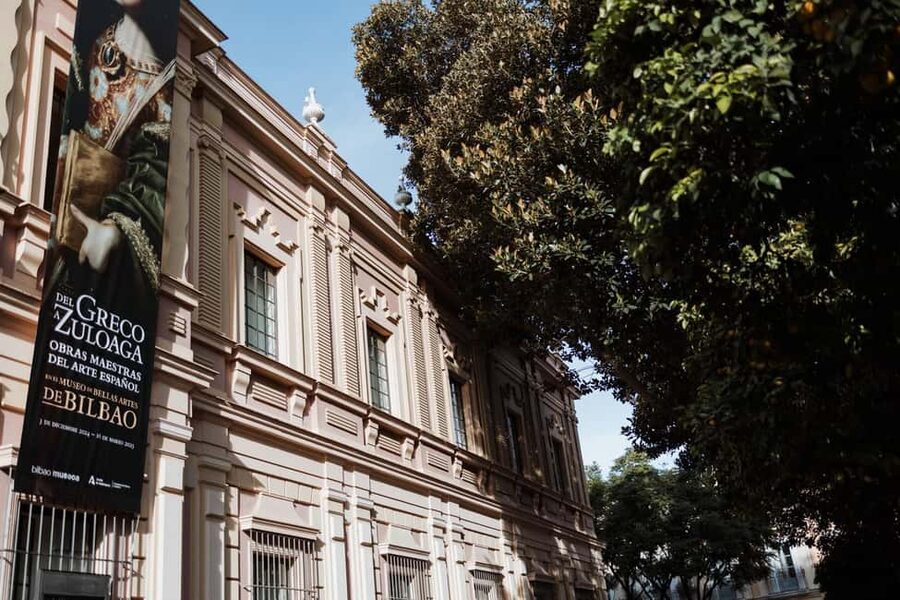
Seville is famous for its cathedral, Alcázar, orange trees, and flamenco. Its art museum can be easier to overlook, which is a mistake if you want to understand the city beyond its postcard sights.
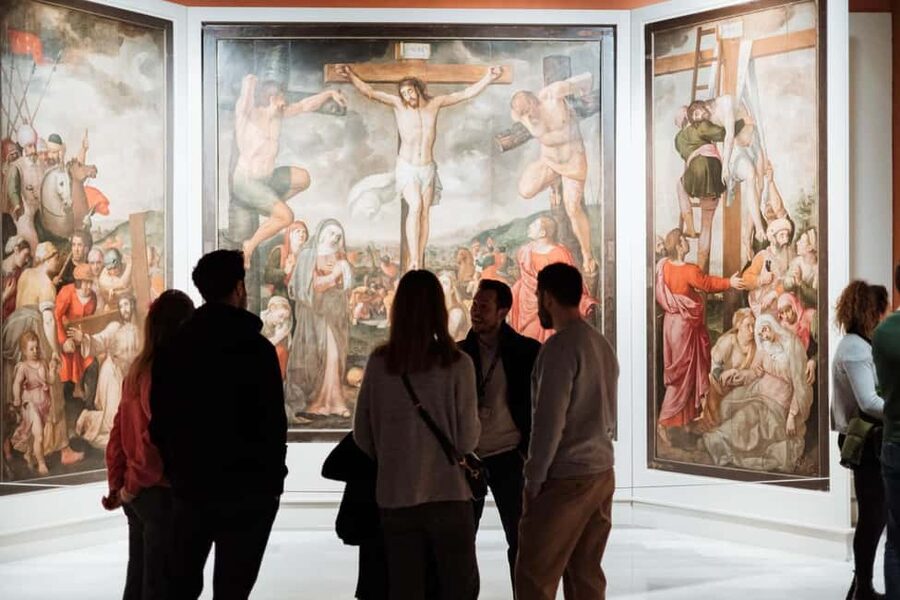
The collection traces several important phases of Andalusian art. You begin with Sevillian Gothic works and move toward Renaissance and Baroque painting, seeing how artistic styles changed alongside religious practice, wealth, and public taste. The museum also presents Sevillian Costumbrismo, a style concerned with everyday local life and customs.
I find this range useful because it gives your visit a clear shape. Instead of seeing a sequence of attractive but unrelated paintings, you can follow the artistic development of Seville and Andalusia across the centuries.
The building matters just as much. The museum is housed in the former Convent of La Merced, a historic religious complex with Renaissance and Baroque features. Its cloisters give the visit a natural pause between galleries. You are not simply moving from one white exhibition room to another. You are looking at art inside a building that was designed for contemplation, ceremony, and religious life.
More museums:
- Seville: Puro Flamenco Show with Optional Museum Ticket
★ 4.8 · 6,088 reviews - Seville: Museum of Illusions Entry Ticket
★ 4.2 · 1,196 reviews - A Fantastic Visit To The Museum Of Illusions Seville
★ 4.5 · 390 reviews
Meeting at Plaza del Museo
The tour starts at the Asociación Amigos del Museo de Bellas Artes, at Plaza del Museo beside the statue of Murillo. Look for a guide with a blue umbrella or a name tag reading Sevilla Guías & Tours.
This is a straightforward meeting point, but give yourself enough time to find the statue and identify the group. The museum is in Seville’s historic center, and transportation to the plaza is not included, so you need to make your own way there.
The guide speaks English or Spanish. A small group limit of eight is valuable here. In a crowded art museum, a large group can make it hard to hear or ask questions. With fewer people, the guide can adjust explanations to the group’s interests and answer individual questions.
That personal approach is especially useful if you do not have much background in art. Julio has been praised for explaining complex ideas in a clear, digestible way. He has also guided people with strong interest in history and iconography, so the tour can work for both beginners and more experienced museum visitors.
Entering the Convent of La Merced
The first pleasure is architectural. La Merced gives the museum a sense of place before you even start looking closely at the paintings.
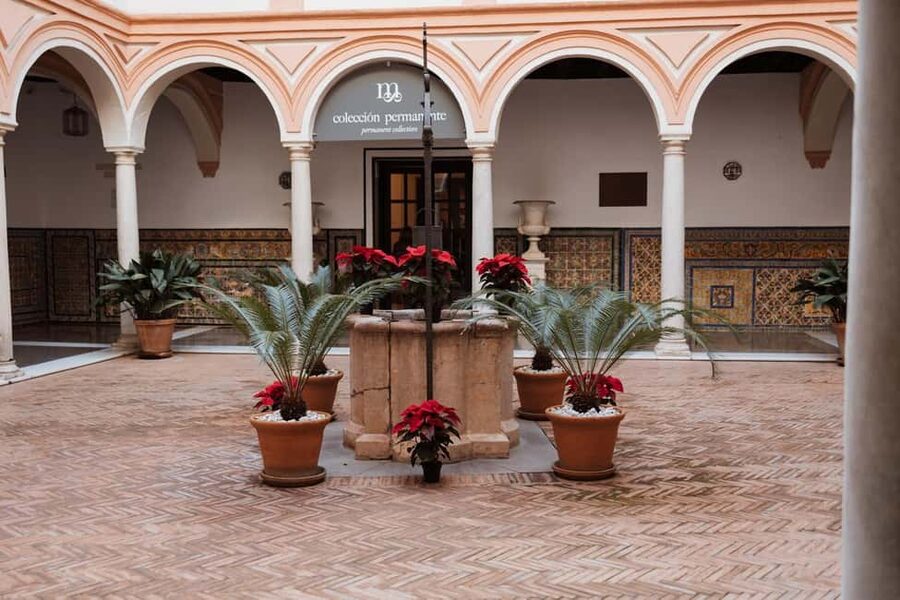
You walk through elegant halls and peaceful cloisters, including the Claustro de los Bojes and the Claustro Mayor. These spaces frame the visit and help you understand the original purpose of the building. The transition from courtyard to gallery is part of the attraction, not just a route between rooms.
The former convent setting also adds useful context to the religious works inside. Many paintings were made for churches, monasteries, or devotional settings. Seeing them in a former religious complex helps you think about how they were originally encountered, rather than treating them only as isolated museum objects.
The building itself is worth a visit even if you are not an art specialist. You may find the courtyards more immediately appealing than some of the darker religious paintings, but the guide helps connect the two. That connection is one reason I prefer this tour to wandering through the museum without preparation.
Following the museum’s artistic progression
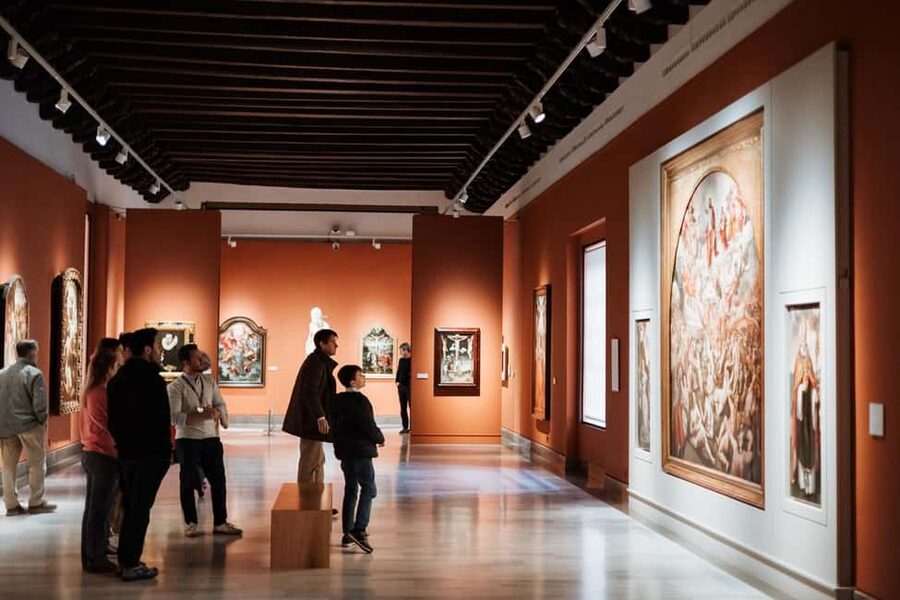
The tour covers a selected route rather than every artwork. That is the right approach for two hours. A guide who tried to explain everything would leave you with a blur of names and dates.
You can expect to see Gothic works from Seville and other parts of Andalusia, then move into Renaissance masterpieces. A key work is Saint Jerome Penitent by Torrigiano, a Renaissance sculpture that shows the changing interest in the human body, emotion, and natural detail.
The guide’s role is important here. Art in a Spanish museum often carries layers of religious symbolism that are not obvious at first glance. A saint’s gesture, an object held in the hand, a particular color, or the arrangement of figures may all have a purpose. Julio has a background in history and explains iconography, artistic choices, and the social setting behind the works.
I like that this kind of explanation gives you tools to keep using after the tour. You are not just memorizing that a painting is by a famous artist. You are learning how to look at it.
The chronological approach also helps you notice contrasts. Gothic works can feel formal and devotional, while Renaissance artists often show more interest in bodily presence and space. Baroque painting adds drama, movement, and emotional force. The guide draws out those shifts without requiring you to arrive with an art history degree.
A few more Spain trips worth a look
- Seville: Royal Alcázar Entry Ticket
★ 4.6 · 28,378 reviews - Seville: Live Flamenco Dancing Show Ticket at the Theater
★ 4.7 · 16,396 reviews - Seville: 1-Hour Guadalquivir River Sightseeing Eco Cruise
★ 4.2 · 10,281 reviews - Seville: Cathedral, Giralda, and Royal Alcázar Guided Tour
★ 4.7 · 9,165 reviews
Murillo and the heart of the collection
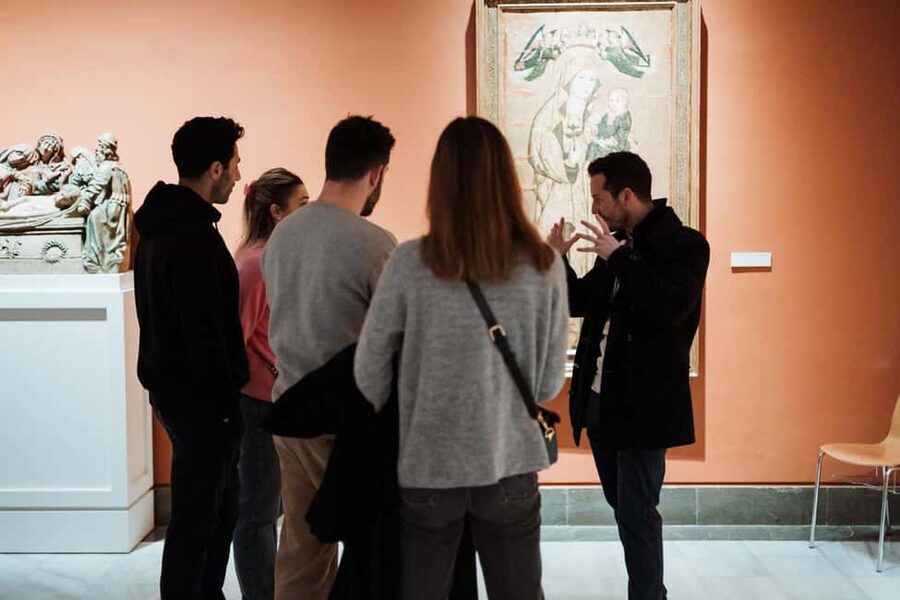
The room devoted to Bartolomé Esteban Murillo is one of the main reasons to book this tour. Murillo is closely tied to Seville, and his paintings are central to the city’s artistic identity.
A guide can explain more than the basic facts of his life. You can learn how his work relates to Seville, religious devotion, local society, and the people who commissioned art. That wider setting makes the paintings easier to understand and less likely to blend together.
Several people who took this tour singled out the guide’s discussion of Murillo and the relationship between art and Spanish society. That is exactly the sort of subject that benefits from a live explanation. A wall label may identify a painting, but it rarely gives you a clear sense of why the artist mattered to Seville or how local people might have responded to the work.
You will also see selected works by other major Sevillian artists. The tour does not treat Murillo as an isolated genius. Instead, it places him within the broader story of Seville’s artistic production.
Why a live guide beats an audio guide here
I am usually happy to use an audio guide when it is well made. In this museum, though, a live guide offers something extra: conversation.
Julio has been praised for his ability to answer questions, adjust the level of detail, and explain symbolism in plain English. His style is described as friendly, engaging, and professional. He also gives useful advice about Seville when asked, which can add practical value to the rest of your visit.
A small group also means you can stop when a particular painting catches your attention. If you are confused by an image or want to know why a work is important, you can ask immediately. One guide even used an earpiece, making it easier to follow the explanation without the guide having to raise his voice.
There is one limitation. A live tour follows the guide’s selection, so you may not spend equal time with every section. If you already know the collection well, you may want to return on your own after the guided visit. The good news is that you can remain in the museum after the two-hour tour.
The value of $23
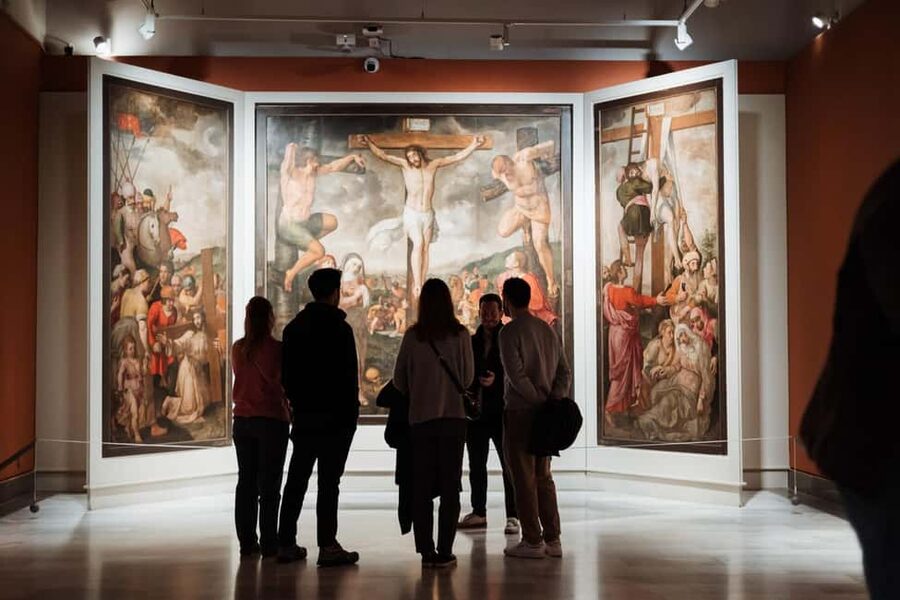
At $23 per person, this is a modestly priced guided museum visit, especially since admission is included. The real question is what you would gain by visiting alone.
If you already understand Spanish art and enjoy reading labels, a self-guided visit may be enough. But if you want help with chronology, religious imagery, and the connection between Murillo and Seville, the guide adds real value. Several people who had little art background found the visit easier and more rewarding because the paintings were placed in context.
The small group matters too. You are not paying for a large crowd and a rushed speech at the front. The group is limited to eight, and the guide can respond to questions.
The express security check saves some time, although the tour is not a private after-hours visit. Food, drinks, and transportation are not included. Those are minor omissions for a museum visit in the center of Seville, where you can easily arrange your own meal or continue exploring nearby afterward.
Flexible booking also helps. You can reserve now and pay later, and cancellation is free up to 24 hours before the start time. Check the available start time when booking, since the schedule can vary.
Accessibility and practical limits
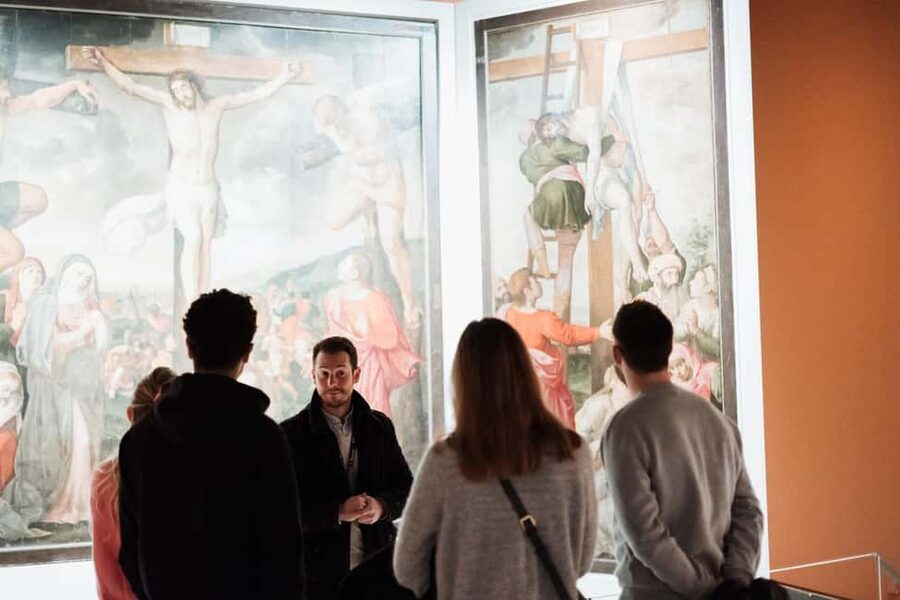
The museum tour is wheelchair accessible, which makes it suitable for visitors who need step-free access. Pets are not allowed.
The meeting point is outside at Plaza del Museo, so plan your route before the start. You should also allow a little extra time to identify the blue umbrella or the Sevilla Guías & Tours name tag.
The tour is offered in English or Spanish. If you need one particular language, confirm the selected option when you book. Since the tour lasts two hours, wear comfortable shoes and expect to spend much of the visit standing, even though the provided information does not specify the availability of seating in every room.
The best timing depends on your plans. A morning tour can give you a focused start to an art day. An afternoon visit works well if you want to pair the museum with other sights in Seville’s center. Either way, leave room afterward if you want to revisit the Murillo room or examine works the guide passed over.
Who will enjoy this tour most
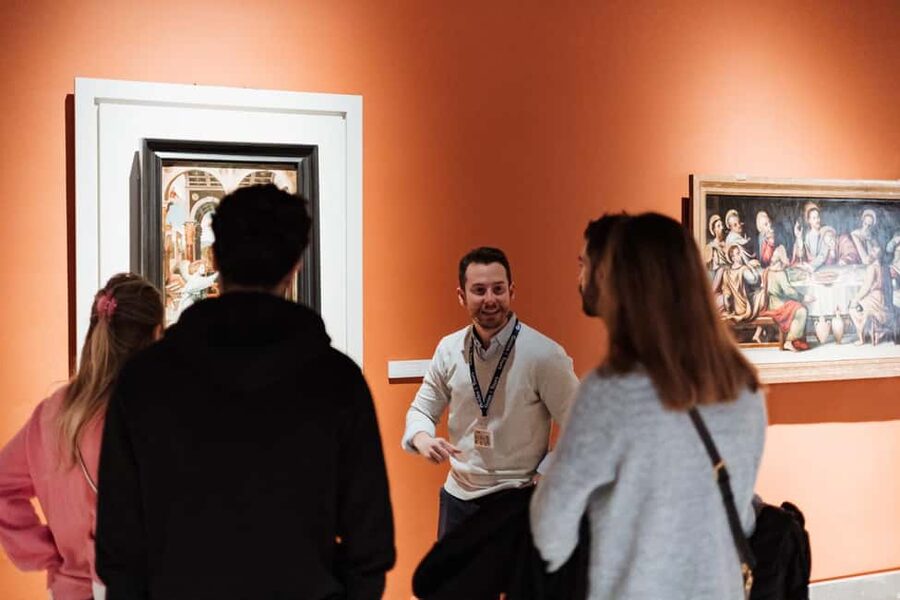
I would choose this tour for first-time visitors to Seville who want an introduction to Spanish and Andalusian art without spending half a day studying beforehand.
It also suits families with older children and teenagers, since stories, symbolism, and historical context can make religious art easier to approach. The guide’s ability to adjust explanations is useful when members of a group have different levels of interest.
Art students, history fans, and experienced museum visitors may also enjoy it, particularly if they want to ask questions. The focus on iconography, period, artist, and social context goes beyond a simple highlight reel.
I would be less likely to recommend it to someone who wants complete freedom to linger at one painting for twenty minutes. You can stay afterward, but the guided portion moves according to a set plan. Likewise, if you want a broad survey of every corner of the museum, you should treat the tour as an introduction and plan extra time afterward.
Should you book the Museum of Fine Arts tour?
Yes, if you want the building and the collection to make sense together. The former convent, cloisters, Gothic works, Renaissance sculpture, Baroque painting, and Murillo room give you plenty to see, but a short guided visit helps turn those pieces into a connected story.
The strongest reason to book is the guide quality, especially if Julio is leading your departure. His history background, clear English, friendly manner, and skill with symbolism have consistently made the art easier to understand.
At $23, the tour is a good buy for anyone who might otherwise rely on an audio guide or wander without direction. Book it if you value context and conversation. Skip it only if you already know the museum well or prefer to explore every room at your own pace.
FAQ
How long does the Seville Museum of Fine Arts tour last?
The guided tour lasts two hours.
What is the price of the tour?
The price is $23 per person.
Where does the tour meet?
The meeting point is the Asociación Amigos del Museo de Bellas Artes at Plaza del Museo, beside the statue of Murillo.
How will I identify the guide?
The guide will have a blue umbrella or a name tag reading Sevilla Guías & Tours.
Is museum admission included?
Yes, entrance to the Museum of Fine Arts of Seville is included.
What languages are available?
The tour is offered in English or Spanish with a live guide.
How many people can join the group?
The group is limited to eight participants.
Can I stay in the museum after the tour?
Yes. After the guided portion, you may remain in the museum and continue exploring.
Is the museum tour wheelchair accessible?
Yes, the activity is wheelchair accessible.
Are transportation, food, or drinks included?
No. You need to arrange transportation to the meeting point, and food and drinks are not included.
Can I cancel the booking?
Yes. You can cancel up to 24 hours in advance for a full refund. You can also reserve now and pay later.
Recently added around Seville
- Seville Jewish Quarter walking tour: Santa Cruz District★ 4.8 · 104 reviews
- Seville Former Jewish Quarter Walking Tour: Santa Cruz★ 5.0 · 105 reviews
- Seville: El Patio Sevillano Flamenco Show Ticket & Dinner★ 4.1 · 108 reviews
- Seville: 3 Bars Pub Crawl + VIP Club Entrance & 3 Free Shots★ 4.3 · 108 reviews
- Seville: Flamenco Show at Tablao Flamenco Andalusí★ 4.7 · 109 reviews
- Seville Jewish Quarter Small Group Tour with Tapas and Drinks★ 5.0 · 110 reviews
- Flamenco Show & Tapas Small Group Tour in Seville★ 5.0 · 111 reviews
- Seville:Exclusive FlamencoShow with Drink, VIP, or Dinner Options★ 4.0 · 111 reviews
Museums, compared.

FC Barcelona Museum “Barça Immersive Tour” Ticket
Read our review →
Park Güell and Gaudí House Museum Entry Ticket
Read our review →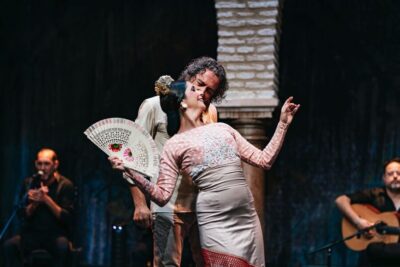
Puro Flamenco Show with Optional Museum Ticket
Read our review →
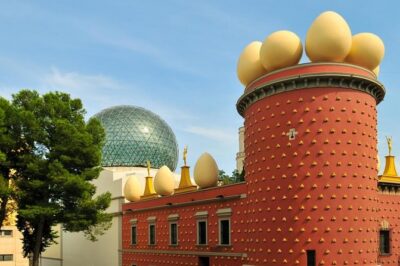
Girona & Dali Museum Small Group Tour with Pick-up from Barcelona
Read our review →
Oceanogràfic, Hemisfèric & Science Museum Combo
Read our review →Browse the lists this tour appears in