
Review · WALKING TOURS
Seville Small-Group Monumental Highlights Walking Tour
Seville rewards a good first walk. This two-hour tour links the city’s major sights with clear stories, and I especially like the small group of no more than 10 and the route from the old center to Plaza de España. It gives you a useful map of Seville before you decide which monuments deserve an indoor visit.
I also like the strong guide work. Carmen, Laura, Carlos, Miguel, Cristina, Marta, Manuel, Barbara, and Valentín are all praised for clear explanations, humor, patience, and a relaxed pace. The main drawback is simple: you do not enter the monuments, so anyone wanting the Cathedral, Alcázar, or Plaza de España inside needs separate tickets and more time.
In This Review
- Key points at a glance
- Why this two-hour Seville walk works
- Starting at Plaza de San Francisco
- The former mosque and the Giralda
- Seville as the Port of the Indies
- The Alcázar from the outside
- The Golden Tower and Seville’s river connection
- The old Tobacco Factory and industrial Seville
- Plaza de España and the 1929 exhibition
- Guide quality and the small-group difference
- Timing, walking, and who should book
- Should you book the Seville Monumental Highlights Walk?
- FAQ
- How long does the Seville Monumental Highlights Walking Tour last?
- What language is the tour offered in?
- How much does the tour cost?
- How many people can join the tour?
- Where does the tour begin?
- Where does the tour end?
- Are monument entrance tickets included?
- What sights are covered from outside?
- Can Plaza de España close during the tour?
Key points at a glance
- A compact route across Seville’s historic core: Begin at Plaza de San Francisco and finish at Plaza de España.
- No more than 10 people: The small group makes it easier to hear the guide and ask questions.
- Big historical sweep in about two hours: You move from the 1500s and the Port of the Indies to Moorish Seville, royal power, industry, and the 1929 Ibero-American Exhibition.
- Outdoor sightseeing only: The guide explains the major monuments from outside, but entrance tickets are not included.
- A useful first-day orientation: The route helps you decide what to revisit on your own, especially if you have only a short stay.
- Strong guide reputation: Individual guides are often praised for lively storytelling, good English, thoughtful pacing, and the ability to adapt to the group.
Why this two-hour Seville walk works
Seville can feel confusing at first. The historic center folds narrow lanes, grand plazas, former religious buildings, royal sites, and modern city streets into one dense area. A guide helps you connect those pieces instead of seeing each monument as an isolated photo stop.
This route is best understood as an orientation walk with historical context. You are not signing up for long indoor visits or a slow architectural study. You are walking between major landmarks while the guide explains how Seville changed under Roman, Muslim, Christian, imperial, and industrial influences.
That broad view is the tour’s real value. In a short time, you see how a former mosque became part of the Cathedral complex, how Seville grew through Atlantic trade, why the Alcázar remains a working royal palace, and how later civic projects reshaped the city.
The price is $30.25 per person. For a licensed English-speaking guide and roughly two hours of focused sightseeing, that is a fair price, especially if this is your first morning or afternoon in Seville. The value drops if you already know the city well or want full monument visits. In that case, you are paying mainly for interpretation and orientation rather than admission.
More Walking Tours in Seville
- Seville: Small-Group City Highlights Walking Tour
★ 5.0 · 1,204 reviews - Cultural Walking Tour of Seville Monumental
★ 5.0 · 861 reviews - Seville: Tapas, Taverns, and History Walking Tour
★ 4.9 · 676 reviews
Starting at Plaza de San Francisco
The tour begins at Pl. de S. Francisco, 17, in the Casco Antiguo, Seville’s old center. This is a practical starting point because the opening discussion places you directly in the civic heart of the city.
The first stop explains Seville’s City Hall and the city’s importance during the 1500s. That period matters because Seville became closely tied to Spain’s trade with the Americas. The guide uses the building and surrounding square to show that Seville was not simply a beautiful Andalusian city. It was also a center of administration, commerce, and international power.
I like this opening because it begins with a real urban setting rather than a long list of dates. You get a sense of how public buildings expressed the city’s status. The guide’s job here is to provide the frame for everything that follows.
The square can be busy, and the tour takes place outdoors. Stay close to the guide at the beginning, since city-center streets can quickly spread a group out. The maximum group size of 10 should help, but good walking habits still matter.
The former mosque and the Giralda
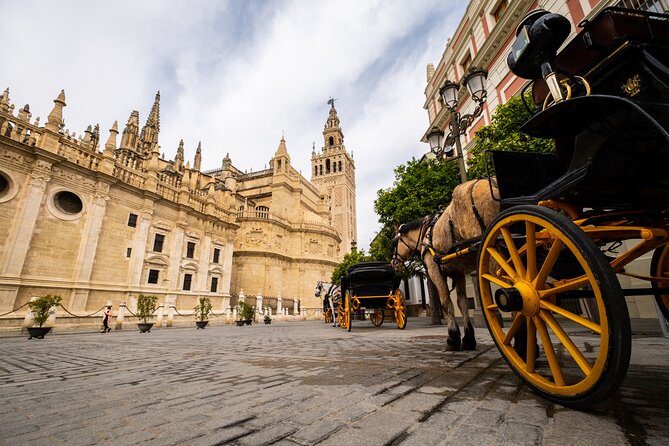
The route then moves toward the Cathedral area, where the guide explains the former mosque and the Giralda Tower from outside. This is one of the most useful parts of the walk because Seville’s religious story is visible in the buildings themselves.
The Giralda began as a Muslim minaret and later became the bell tower of the Cathedral. You will not be touring the interior on this experience, but the exterior explanation helps you see the building as a record of changing rule and faith.
The guide connects Muslim and Christian periods rather than treating them as separate chapters. That makes the monument easier to understand. You can look at the tower and see how one city reused, altered, and reinterpreted an earlier structure.
The outdoor format has a clear limitation. You will hear about the Cathedral and Giralda, but you will not explore the interior, climb the tower, or study the details at close range. If those are priorities, use this walk to get oriented, then arrange a separate visit.
The guide quality matters here. Cristina is praised for speaking clearly over street noise and choosing shady places when possible. That sort of practical care is important in Seville, where a sunny stop can become tiring quickly.
Seville as the Port of the Indies
One of the tour’s strongest historical links is the explanation of Seville as the Port of the Indies. After Spain’s voyages to the Americas, Seville became a major center for trade with the New World.
This subject gives the earlier City Hall discussion more weight. The city’s power in the 1500s was tied to ships, goods, administration, and control of overseas commerce. A good guide can make that economic story feel present in the streets, even when you are looking at ordinary buildings and plazas.
I find this kind of context more useful than memorizing isolated royal names. It explains why Seville acquired such grand civic and religious buildings, and why the city became a key place in Spain’s connection with the Americas.
The historical material can be dense. One guide, Carlos, is praised for his enthusiasm but is also described as giving more dates and details than some people could easily remember. If you prefer a light overview, tell your guide early. If you enjoy history, ask questions and let the conversation go further.
More walking tours:
- Seville: Tapas, Taverns and History Guided Walking Tour
★ 4.9 · 515 reviews - Seville: Small-Group Jewish Quarter Discovery Walking Tour
★ 4.9 · 499 reviews - Seville Guided Small-Group Walking Tour
★ 5.0 · 435 reviews - Seville Private Walking Tour with Alcazar & Cathedral Tickets
★ 5.0 · 332 reviews
The Alcázar from the outside
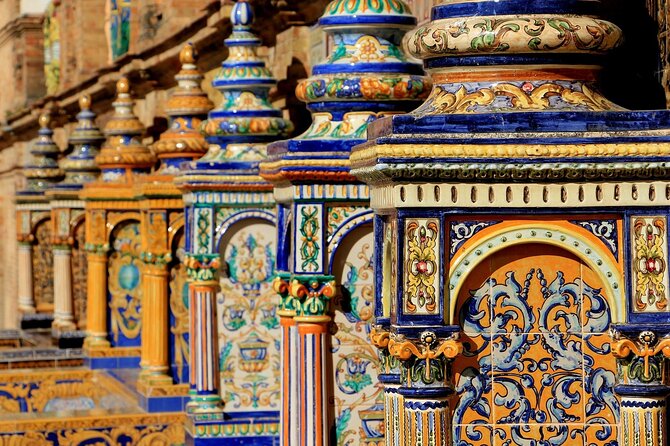
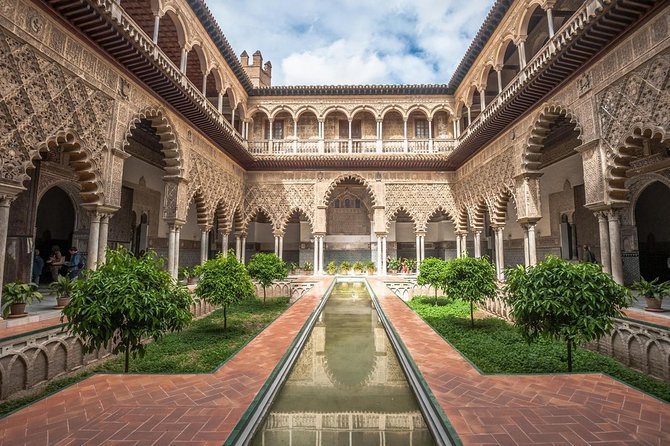
The next major stop is the Real Alcázar, described as the oldest royal palace in Europe still in use. The guide explains the site from outdoors and traces its use by rulers since the 1000s.
That distinction matters. You will understand the Alcázar’s long political role, but you will not walk through its courtyards, halls, gardens, or decorated rooms on this tour. The exterior briefing is a preview, not a substitute for a palace visit.
Still, the outside explanation is valuable. The Alcázar brings together Muslim origins, Christian royal use, and centuries of additions. From the street, you can begin to understand why it is not just one palace built at one time, but a royal complex shaped by successive rulers.
If you plan to visit inside later, this stop helps you choose what to notice. Listen for the changes in function and style. You will have a better sense of why the site feels layered rather than uniform.
This is also a good point to judge the tour’s pace. The walk covers several major areas, so explanations must stay focused. The best guides appear to balance detail with movement. Laura and Valentín are praised for being engaging and friendly, while Barbara is noted for bringing photos and props to help explain the past.
The Golden Tower and Seville’s river connection
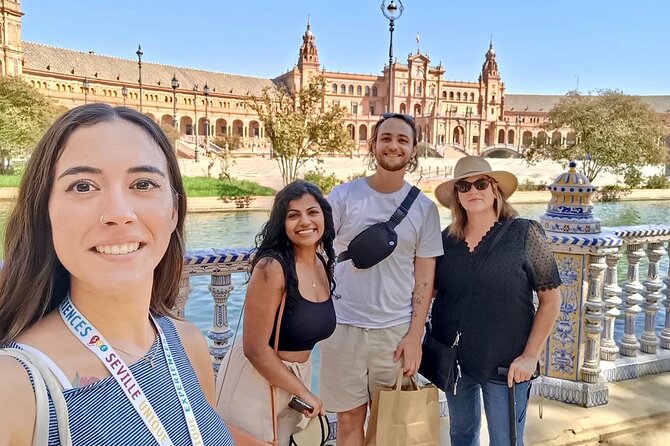
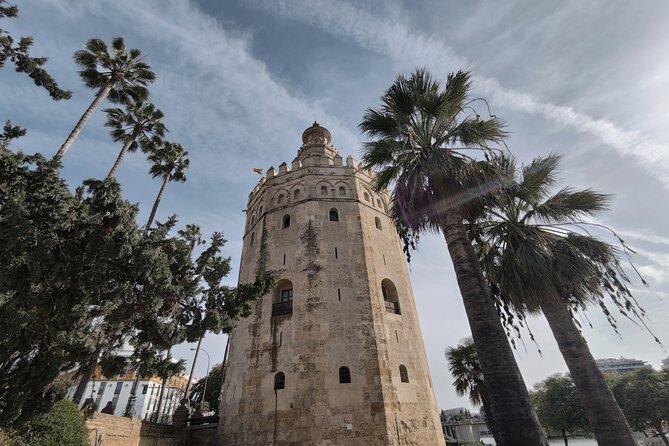
The route includes the last Muslim building of Seville, a watchtower later linked to the city’s entrance from the ocean. This is the Torre del Oro, or Golden Tower, a small but important reminder that Seville’s story is tied to the river and maritime access.
The tower’s role makes more sense after the Port of the Indies discussion. Seville’s fortunes depended not only on palaces and churches, but also on movement along the water. The guide connects defense, shipping, and the city’s relationship with the Atlantic.
As with the other stops, you see the site from outside. That keeps the walk moving and allows the guide to cover more ground, but you lose the detail that comes with an indoor visit. The tower works well as a short stop within a larger route rather than as the main focus.
This section should appeal to anyone who likes practical urban history. It explains why a riverfront building mattered and how Seville’s location shaped its role. You are not just collecting landmarks. You are learning why they were built where they were.
The old Tobacco Factory and industrial Seville
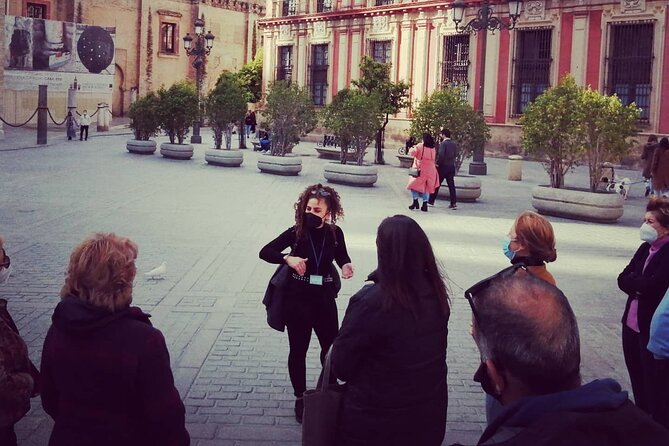
The former Tobacco Factory introduces a different side of the city. Built in the 1700s, it represents Seville’s industrial architecture and shows that the city’s past was not limited to palaces, churches, and royal power.
The building helps broaden the tour’s story. After hearing about medieval rule and overseas trade, you see how economic activity continued to shape the city in a later period. The factory also adds a useful change of scale: this was a large working complex, not a ceremonial monument.
The guide explains the building from outdoors, so the stop is mainly about structure, purpose, and urban development. It is a good reminder that Seville’s architecture reflects work and production as well as religion and monarchy.
This part may be less immediately famous than the Cathedral or Giralda. That is precisely why it adds value. You get a more complete picture of Seville rather than a procession of the city’s most photographed sights.
Plaza de España and the 1929 exhibition
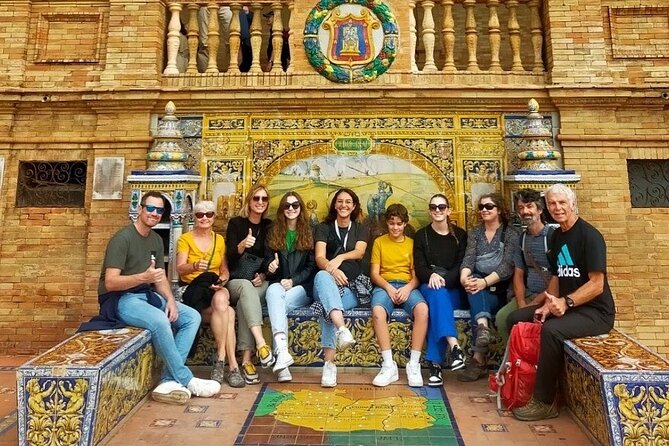
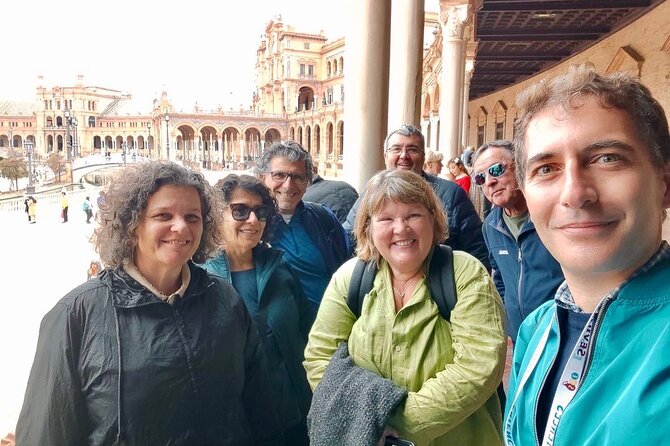
The walk finishes at Plaza de España, the grand centerpiece of the Ibero-American Exhibition. The exhibition brought major changes to Seville’s urban design, and the plaza served as the host country pavilion.
It is an effective ending because the plaza looks forward rather than back. Much of the tour deals with older layers of the city, while Plaza de España shows how Seville presented itself in the modern era. Its scale and design make more sense once you know it was created for a major international event.
The ending at Av. Isabel la Católica is also useful for planning. You can continue around the plaza, return to the center, or use the site as a starting point for more sightseeing. The tour does not include admission to any monuments, and Plaza de España itself may be closed by the city council during a heavy wind alert.
That closure policy is worth taking seriously. It is outside the guide’s control, so check conditions close to your tour date if Plaza de España is especially important to you. Even if access changes, the broader walking route still provides substantial context.
Guide quality and the small-group difference
The guide can make or break a short walking tour. Here, the strongest pattern is consistent: guides are praised for clear English, humor, historical skill, and a willingness to answer questions.
Carlos is frequently singled out for his passion, broad knowledge, and ability to involve the group. Carmen is praised for adapting her explanations to the people on the walk. Miguel is described as easy to ask questions of, while Laura is noted for warmth, communication, and a personal approach.
Barbara brings an academic background in history and archaeology and sometimes uses photos or props. Cristina is praised for sensible pacing, speaking loudly enough in noisy streets, and looking for shade. Those details tell you what a good session can feel like: not just facts, but an alert guide who notices the group.
The group cap of 10 is a real advantage. You should be able to hear more easily, ask questions without interrupting a large crowd, and stay connected to the guide. It also creates a more personal atmosphere than a large city tour.
The small group does not guarantee a private tour. You still share the guide with other people, and the level of conversation may depend on the group’s interests. But for $30.25, it is a favorable setup.
Timing, walking, and who should book
The advertised duration is about two hours, though one account describes a walk lasting closer to two and a half hours. Plan some flexibility rather than scheduling a tight restaurant reservation immediately afterward.
The walking is described as easy, but you are outdoors for the full experience. Wear comfortable shoes, bring water, and prepare for sun. The route crosses central Seville, so street noise and changing shade are part of the setting.
This tour suits you best if:
- You are visiting Seville for the first time.
- You have only a short stay and want to see the main areas quickly.
- You prefer stories and local explanation to a silent monument checklist.
- You want help deciding which sites deserve separate entry tickets.
- You enjoy asking questions in a small group.
- You want a gentle introduction before a longer palace or Cathedral visit.
It is less suited to you if you want extensive time inside the monuments, a private guide, or a specialist tour focused on one building. The outdoor format gives you breadth, not close study.
Confirmation arrives at booking, and free cancellation is available up to 24 hours before the start time. Service animals are allowed, public transport is nearby, and most people can participate. The experience is offered in English.
Should you book the Seville Monumental Highlights Walk?
I would book this tour early in a first Seville visit, ideally near the start of your stay. It gives you the city’s major historical links in a short, manageable route and helps you spend later hours more wisely.
The tour is especially good value for the guide’s interpretation and the small group. Just keep your expectations clear: this is an outdoor introduction, not an admission package. If you want to enter the Cathedral, Giralda, Alcázar, or other monuments, budget separately and reserve time for those visits.
Book it if you want a lively overview, practical orientation, and a chance to ask questions. Skip it if you already know Seville well or want every minute spent indoors. For first-time visitors, the route and the guides make this a sensible way to meet the city before going deeper.
FAQ
How long does the Seville Monumental Highlights Walking Tour last?
The tour lasts approximately two hours. One account describes the walk lasting about two and a half hours, so allow a little extra time in your schedule.
What language is the tour offered in?
The guided tour is offered in English.
How much does the tour cost?
The listed price is $30.25 per person.
How many people can join the tour?
The group has a maximum of 10 travelers.
Where does the tour begin?
The meeting point is Pl. de S. Francisco, 17, Casco Antiguo, 41004 Sevilla, Spain.
Where does the tour end?
The tour ends at Plaza de España, Av. Isabel la Católica, 41004 Sevilla, Spain.
Are monument entrance tickets included?
No. Tickets and visits inside the monuments are not included.
What sights are covered from outside?
The route includes City Hall, the former mosque and Giralda Tower, the Port of the Indies area, the Real Alcázar, the Torre del Oro, the former Tobacco Factory, and Plaza de España.
Can Plaza de España close during the tour?
Yes. The city council can close Plaza de España during a heavy wind alert.
Recently added around Seville
- Art and Wine in Sevilla★ 5.0 · 165 reviews
- Seville: Cathedral and Alcázar Guided Tour★ 4.6 · 167 reviews
- From Seville: White Villages and Ronda Full-Day Trip★ 4.2 · 168 reviews
- Guided Tour Sevilla Cathedral★ 4.5 · 169 reviews
- Cathedral and Real Alcàzar in Italian★ 5.0 · 170 reviews
- Seville: Guadalquivir River Cruise with Lunch or Dinner★ 4.5 · 170 reviews
- White Villages and Ronda: Day trip from Seville.★ 4.7 · 171 reviews
- Private Walking Tour Alcazar and Cathedral in Sevilla★ 5.0 · 172 reviews
Walking Tours, compared.
Barcelona Tapas and Wine Experience Small-Group Walking Tour
Read our review →
Tapas Walking Tour with Food, Wine, and History
Read our review →
Albaicín and Sacromonte Guided Sunset Walking Tour
Read our review →
Toledo Tour & Vineyard Walk with Wine Tasting from Madrid
Read our review →
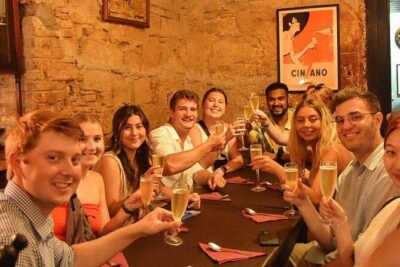
Barcelona Tapas Walking Tour: Food, Wine & History
Read our review →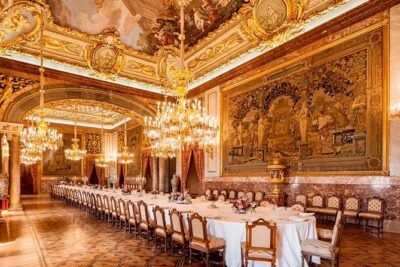
Madrid Old Town & Royal Palace Walking Tour Skip the Line Ticket
Read our review →
Browse the lists this tour appears in