
Review · CITY TOURS
From Seville: Italica Roman City & Medieval Monastery Tour
Ancient Rome sits just outside Seville. This half-day outing combines Italica’s huge amphitheater and remarkable mosaics with the quieter San Isidoro del Campo monastery, making it a strong history trip without a long journey. I especially like the comfortable transport and the guides’ lively storytelling. The main tradeoff is time: you get a useful introduction to both sites, but only limited minutes to wander on your own.
The $46 price is fair for entry tickets, transport, and a local guide. I would book this if you want the ruins explained rather than simply photographed, especially after hearing guides such as Carlos León, Miguel, Alberto, José Luis, and Jesús praised for turning archaeology into an entertaining story. Leave some space after the tour, since traffic or a spirited guide can push the four-hour schedule longer.
In This Review
- Key things to know before visiting Italica
- Why Italica makes a smart half-day trip from Seville
- The 20-minute ride out of Seville
- Walking through Italica’s Roman streets
- The amphitheater and the Dragonpit
- San Isidoro del Campo after the Roman ruins
- Guides are the heart of the experience
- Is four hours enough?
- The value of $46
- Who should book this tour?
- FAQ
- How long does the Italica and monastery tour last?
- How far is Italica from Seville?
- How long is the guided visit at Italica?
- How long is the monastery visit?
- Is transportation included?
- Are entrance tickets included?
- Is food included?
- What languages are available?
- Can I choose a private tour?
- Where does the tour finish?
- Should you book it?
Key things to know before visiting Italica
- Italica was founded in 206 BC: Roman general Publius Cornelius Scipio established the city after the Battle of Ilipa.
- Two Roman emperors were born here: Trajan and Hadrian both came from Italica, giving the site unusual importance.
- The amphitheater held about 25,000 people: Its underground corridors and animal holding area make the ancient arena easy to picture.
- The Dragonpit is real Roman archaeology: Game of Thrones used Italica’s amphitheater for a major Season Seven scene.
- The monastery changes the mood: San Isidoro del Campo adds Mudejar, Gothic, and Baroque architecture to the Roman remains.
- Shared and private formats are available: Shared tours use three Seville meeting points, while private tours can include hotel pickup in the city.
Why Italica makes a smart half-day trip from Seville
Seville has enough palaces, churches, and plazas to fill several days, so an outing beyond the center needs to earn its place. Italica does. It is close enough for a short bus ride, yet the setting feels far removed from the modern city.
The journey takes about 20 minutes by bus or coach in each direction. A second transfer of roughly 10 minutes connects Italica with San Isidoro del Campo. That leaves most of the four hours for sightseeing rather than sitting in traffic.
I like the pairing because the two stops tell different stories. Italica shows Roman urban life on a grand scale: streets, houses, mosaics, and an arena built for mass entertainment. The monastery shifts the focus to medieval and later religious architecture. You get ancient public life first, then a fortress-like religious complex.
The tour suits you best if you want context. Italica’s ruins are impressive, but without an explanation, you may mainly see broken walls and patterned floors. A guide can point out how the streets worked, explain the scale of the amphitheater, and connect the emperors to the place.
A few more Spain trips worth a look
- Seville: Royal Alcázar Entry Ticket
★ 4.6 · 28,378 reviews - Seville: Live Flamenco Dancing Show Ticket at the Theater
★ 4.7 · 16,396 reviews - Seville: 1-Hour Guadalquivir River Sightseeing Eco Cruise
★ 4.2 · 10,281 reviews
The 20-minute ride out of Seville
Shared tours depart from one of three meeting points in Seville, depending on the option and departure time. Private tours may collect you from your hotel or apartment if the address falls inside the pickup area. If not, the operator gives you the nearest accessible pickup point.
The transport is one of the tour’s practical strengths. Several people specifically praised the comfortable coach, and one noted USB charging ports. That small detail matters when you are using your phone for photos, maps, and Seville plans later in the day.
Do not treat the departure point casually. The meeting location can vary, and one booking found that satellite navigation led slightly astray. Check the exact instructions after booking and arrive early enough to identify the group without stress.
The bus may carry several groups together at first, with language groups separating once you arrive. Available languages are English, French, Italian, and Spanish. A minimum of four people speaking the same language is needed to guarantee that language. If the number is too low, you may be offered another language, another date, or a full refund.
Walking through Italica’s Roman streets
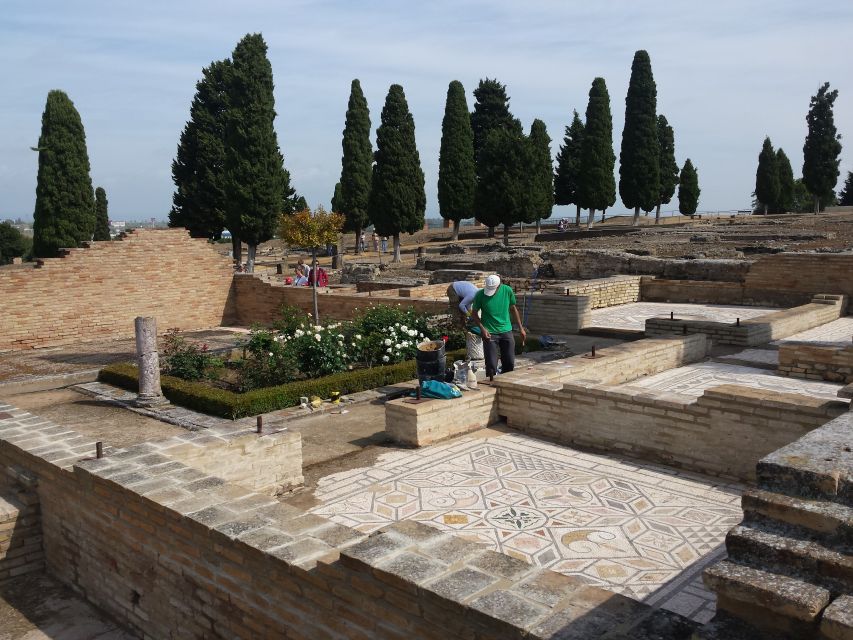
Italica began in 206 BC, founded by Publius Cornelius Scipio. Later expansion made it one of the major Roman archaeological sites in Spain, and its connection with Trajan and Hadrian gives the ruins more weight than a typical provincial settlement.
The guided visit lasts about 105 minutes. Expect to walk through the ancient city while the guide explains what you are seeing. The emphasis is not only on dates and names. It is on how Roman planning, public buildings, mosaics, and entertainment fit together.
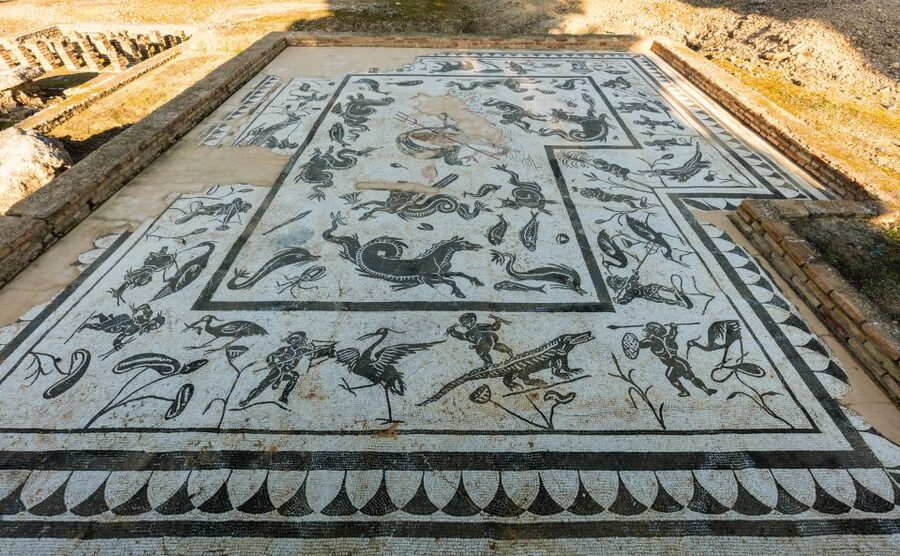
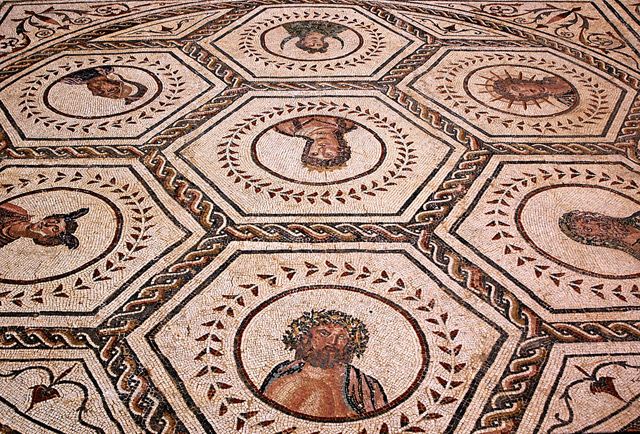
The mosaics are a major reason to come. Their patterns remain strikingly clear in several parts of the site, and they help you picture the private houses that once occupied these blocks. I find mosaics more useful than a bare wall because they preserve a sense of taste, money, and daily life.
The site is still being excavated and restored. That is exciting, since Italica is not a finished museum display. At the same time, you should expect some areas to look incomplete. The available facilities are limited to a small exhibition and toilets, and one booking found the toilets poorly maintained. Bring water and consider eating before departure, since there is no included food and no guaranteed snack stop.
The ground can require steady walking, and the pace may feel brisk if you move more slowly. One guide, Carlos León, was praised for making sure a person using a walking aid could keep up, but the tour is still a group visit with a fixed route. If you need extra time for photographs or frequent rests, ask about the private option.
The amphitheater and the Dragonpit
The amphitheater is Italica’s big moment. It once seated around 25,000 people, an astonishing capacity for a city outside modern Seville. Standing in the arena, you can grasp the difference between reading about Roman spectacles and seeing the structure that held an enormous crowd.
The tour takes you through underground passages used by gladiators. You also see the area where lions were kept before combat. These details make the building easier to understand: the arena was not just an oval of seats, but a working machine with hidden corridors, holding spaces, and controlled movement beneath the floor.
Game of Thrones fans have another reason to pay attention. The amphitheater served as the Dragonpit during a key Season Seven summit. The television connection is fun, but it should be the extra, not the main reason to come. The ancient architecture carries the visit even if you have never watched the show.
Time management is the one weakness here. The guided route covers the amphitheater and the wider city, then some time is available for photographs. A few people wanted another 15 minutes to return to the arena and see it from different levels. If taking pictures is your priority, stay close to the guide and use the free moments carefully.
Rain can also affect the experience. One October visit continued successfully in wet weather, but the site is open and exposed. Check the forecast and bring suitable clothing. Summer heat deserves equal respect, since much of the experience takes place outdoors.
A completely different kind of day out in Seville:
- Seville: Cathedral, Giralda, and Royal Alcázar Guided Tour
★ 4.7 · 9,165 reviews - Seville: Setas de Sevilla Entry Ticket
★ 4.6 · 8,901 reviews - Seville: Cathedral, Giralda & Alcazar Entry With Guided Tour
★ 4.6 · 8,560 reviews - Seville: Priority Access Cathedral, Giralda & Alcázar Tour
★ 4.8 · 7,563 reviews
San Isidoro del Campo after the Roman ruins
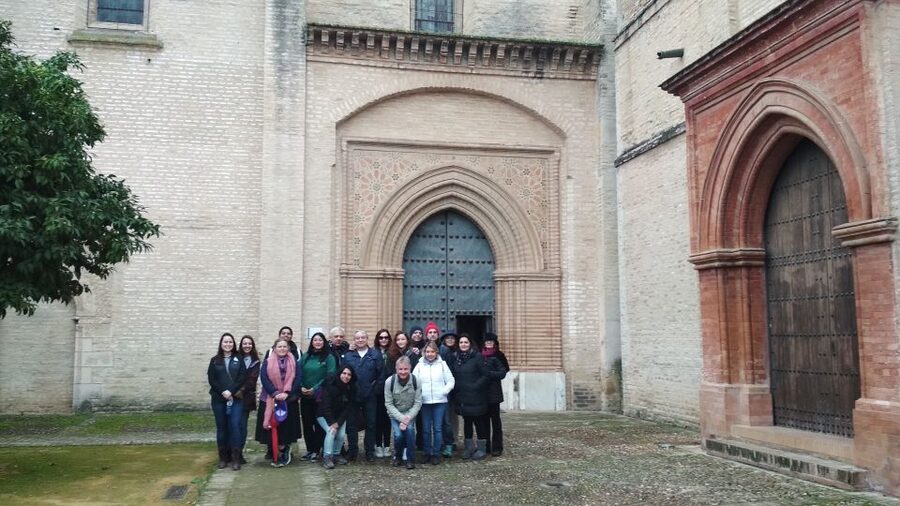
After roughly 10 minutes on the bus, you reach the Monastery of San Isidoro del Campo. The guided visit lasts about 40 minutes, so it is shorter than Italica, but that does not make it an afterthought.
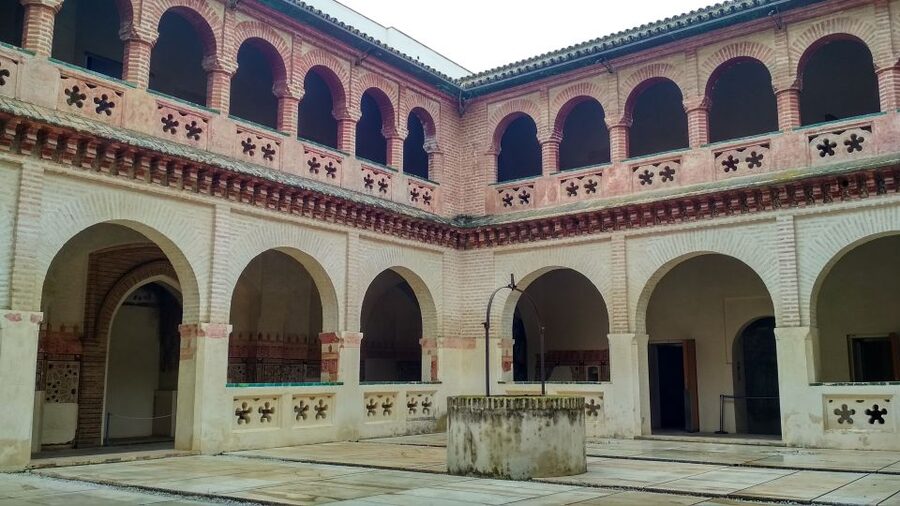
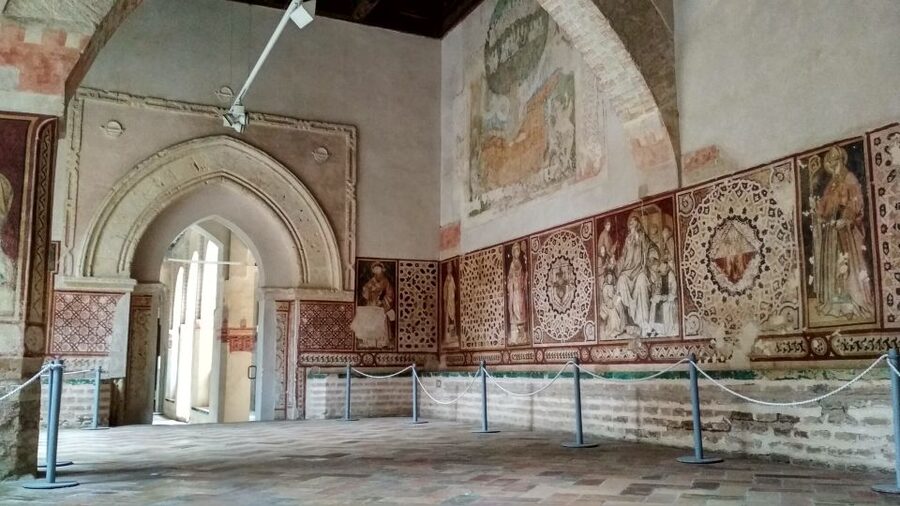
The monastery has the feel of a medieval fortress and brings together Mudejar, Gothic, and Baroque elements. That mix gives you a different visual vocabulary after the broad Roman streets and geometric mosaics. You move from civic ambition and spectacle to religious life, later decoration, and fortified architecture.
I was struck by how often this stop changes people’s expectations. Some arrive mainly for the Roman city and find the monastery equally compelling. The quieter rooms and architectural details reward anyone who likes interiors, religious art, and photography.
Only part of the monastery is open, in part because of funding problems. That means you should not expect a vast complex with every room accessible. Still, the 40-minute visit gives enough time to understand how the building functioned and to notice its layered design.
The pairing also helps you place Andalusia in a longer time frame. Italica belongs to the Roman period, while San Isidoro reflects medieval and later Spain. Seeing both on one outing makes the region feel less like a single historical chapter.
Guides are the heart of the experience
The strongest feature is the guiding. I would not choose this trip solely for a bus ride to an archaeological site. I would choose it because a good guide can give the stones a human scale.
Carlos León received repeated praise for his background in archaeology, careful explanations, humor, and attention to different walking speeds. Miguel was repeatedly described as engaging, funny, and clear. Alberto was valued for art history, detailed answers, and visible enthusiasm for the subject.
Other praised guides included Jesús, José Luis, José, Carlos, Petra, Rebecca, Joanna, Nacho, Katherine, Nieve, and Sergio. That range suggests a broad guide team rather than dependence on one person, though your exact guide will depend on date, language, and group.
A good guide also helps with pacing. Nieve was appreciated for keeping stops short while making the information interesting. That matters at Italica, where too much detail can turn a beautiful walk into a lecture. The best guides explain enough, then let you look.
The private tour may be worth considering if you want more questions, a slower pace, hotel pickup, or more control over photographs. The shared tour offers better value for most people, especially at $46, but a private format can make sense for families, small groups, or anyone with particular mobility needs.
Is four hours enough?
Four hours is enough for a well-organized introduction, not a leisurely archaeological study. The stated timing allows about 105 minutes at Italica, 40 minutes at the monastery, and roughly 50 minutes of total bus travel. The remaining time covers meeting, transitions, and normal delays.
In practice, the outing may run longer. Traffic leaving Seville caused one delayed start, but the lost time was added rather than simply cutting the visits short. Another person found the overall experience longer than four hours. That is good if you have flexibility, but inconvenient if you schedule lunch, a museum, or a train immediately afterward.
I would leave at least a few hours free after the planned return. This is especially important if your guide is generous with explanations or traffic slows the bus. The tour ends at one of four Seville drop-off locations, including Calle Rastro 12A, Hotel Don Paco, and Calle Trajano 6, depending on the option.
There is no meal included. Eat before setting out, carry water, and do not count on finding a proper snack at Italica. One person felt hungry toward the end and would have welcomed a short food break.
The value of $46
At $46 per person, the shared tour offers solid value. Entry tickets, transport from Seville, and a live local guide are included. You avoid arranging your own bus or taxi, buying admission separately, and working out how to connect two sites in one morning or afternoon.
The value depends on how you normally travel. If you enjoy reading signs and exploring independently, Italica can still be visited without a guide, and you may prefer having more time alone. But you will give up the historical explanation that many people considered the best part.
The private tour costs more than the shared option, though the exact price depends on the selected format. Pickup is available for the private version in eligible parts of Seville. For a group splitting the cost, the extra privacy and flexibility may be worthwhile.
Free cancellation up to 24 hours before departure and reserve-now, pay-later booking also reduce the financial risk. The language requirement is the main condition to watch. If four people are not booked in your chosen language, the operator may offer an alternative or a full refund.
Who should book this tour?
I recommend it for first-time visitors to Seville who want Roman archaeology without giving up an entire day. It is also a good fit for history students, families with older children, Game of Thrones fans, and anyone who prefers stories to silent ruins.
Teenagers can enjoy the amphitheater and its television connection, while the monastery adds enough variety to keep the outing from feeling like one long archaeological stop. The tour is also a strong choice for people who do not want to manage regional transport themselves.
I would hesitate if you need extensive free time, dislike group pacing, or have a tightly packed Seville schedule. The facilities at Italica are limited, the day can run over four hours, and the ruins require outdoor walking. For photographers, independent explorers, or people who want a slower pace, the private option deserves a closer look.
FAQ
How long does the Italica and monastery tour last?
The scheduled duration is four hours. The tour can run longer because of traffic, delays, or extra time added to preserve the planned visits.
How far is Italica from Seville?
The bus or coach ride from Seville to Italica takes about 20 minutes.
How long is the guided visit at Italica?
The guided visit at Italica lasts about 105 minutes.
How long is the monastery visit?
The guided visit to San Isidoro del Campo lasts about 40 minutes.
Is transportation included?
Yes. Transport from Seville is included in the tour.
Are entrance tickets included?
Yes. Entry tickets for Italica and the monastery are included.
Is food included?
No. Food and drinks are not included.
What languages are available?
The tour is available in English, French, Italian, and Spanish. At least four participants speaking the same language are needed to guarantee that language.
Can I choose a private tour?
Yes. You can choose between a shared group tour and a private tour. Private tours may include hotel pickup within the eligible pickup area in Seville.
Where does the tour finish?
Depending on the option booked, drop-off is available at one of four Seville locations, including Calle Rastro 12A, Hotel Don Paco, and Calle Trajano 6.
Should you book it?
Yes, if you want an efficient, well-explained visit to two very different historic sites. Italica supplies the scale, mosaics, emperors, gladiator passages, and famous amphitheater. San Isidoro del Campo adds architectural variety and a quieter look at later Andalusian history.
Book the shared tour for the best price, arrive early at the correct meeting point, eat beforehand, and keep your afternoon open. Choose private pickup if convenience and pace matter more than saving money. I would not book this for a rushed schedule, but for most Seville itineraries, $46 buys a worthwhile half-day beyond the city center.
Recently added around Seville
- Art and Wine in Sevilla★ 5.0 · 165 reviews
- Seville: Cathedral and Alcázar Guided Tour★ 4.6 · 167 reviews
- From Seville: White Villages and Ronda Full-Day Trip★ 4.2 · 168 reviews
- Guided Tour Sevilla Cathedral★ 4.5 · 169 reviews
- Cathedral and Real Alcàzar in Italian★ 5.0 · 170 reviews
- Seville: Guadalquivir River Cruise with Lunch or Dinner★ 4.5 · 170 reviews
- White Villages and Ronda: Day trip from Seville.★ 4.7 · 171 reviews
- Private Walking Tour Alcazar and Cathedral in Sevilla★ 5.0 · 172 reviews
City Tours, compared.



City Sightseeing Barcelona Hop-On Hop-Off Bus Tour: 24 or 48-Hour
Read our review →

Granada City Train 1 or 2-Day Hop-On Hop-Off Ticket
Read our review →

Barcelona City Tour Hop-On Hop-Off with Optional Boat
Read our review →Browse the lists this tour appears in