
Review · HOP-ON HOP-OFF BUS TOURS
Granada City Train 1 or 2-Day Hop-On Hop-Off Ticket
Granada is easier from a little train. The Granada City Train gives you a simple way to see the old center, reach the Alhambra area, and enjoy hilltop views without turning every outing into a climb. I like the broad route, the useful audio commentary in 12 languages, and the freedom to make a quick circuit or hop off at places that catch your eye.
At about $8 per person, it is especially good value for a first look at the city. I also like that you can use it for one or two days, depending on your plans. The main catch is capacity: trains can fill quickly, and the ride over Granada’s old cobblestones is noisy and bumpy. You may need to wait for the next train at a busy stop.
In This Review
- Quick points before you book
- Why this little train works well in Granada
- Stop 1: Alhambra Generalife ticket office
- Stop 2: Alhambra and Puerta de la Justicia
- Stop 3: Plaza Nueva
- Stop 4: Alhóndiga
- Stop 5: Cathedral and Royal Chapel
- Stop 6: Mirador de San Cristóbal and Jardines de Zoraya
- Stop 7: Arco de Elvira and Hospital Real
- Stop 8: Calle Reyes Católicos and Plaza Isabel la Católica
- Stop 9: Calle Molinos and Campo del Príncipe
- Stop 10: Carmen de los Mártires
- A complete circuit first, then selective hopping
- What the ride feels like on old Granada streets
- Is $8 good value?
- Practical details that can save you time
- Who should book the Granada City Train?
- Should you book it?
- FAQ
- How long is the Granada City Train ticket valid?
- How often does the train run?
- Does the train go to the Alhambra?
- Is an audio guide included?
- Do I need to bring headphones?
- Can I use a baby stroller on the train?
- Is the train service available during Easter and Christmas?
Quick points before you book
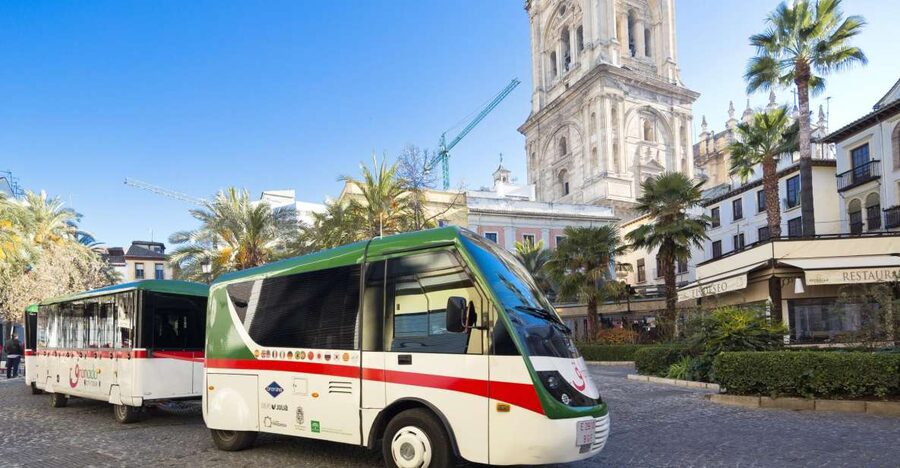
- The Alhambra Route reaches the monument area, making it useful for visitors who want to avoid walking all the way up Granada’s hills.
- Trains run every 30 to 45 minutes, but full carriages can make the wait longer in busy periods.
- The complete circuit is a smart first ride, helping you decide which sights deserve a second look.
- The route includes 10 important stops, from Plaza Nueva and the Cathedral to Mirador de San Cristóbal and Carmen de los Mártires.
- Audio commentary comes in 12 languages, but you must bring your own headphones.
- The train is practical rather than luxurious, with open-carriage seating, old-stone-road bumps, sudden braking, and plenty of city noise.
Why this little train works well in Granada
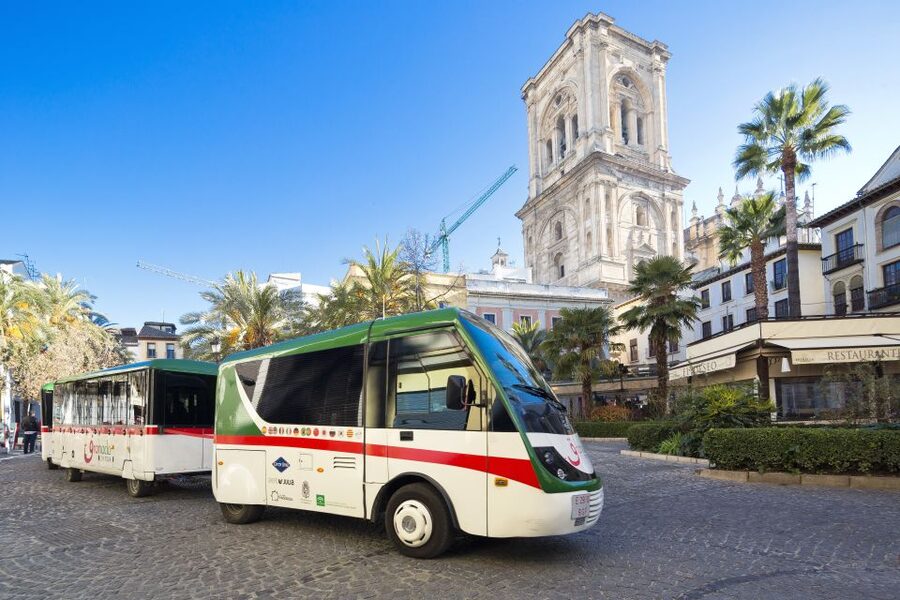
Granada looks compact on a map, but its hills change the calculation. The walk from the center toward the Alhambra is not a gentle stroll for everyone, and several worthwhile viewpoints sit above the main streets. The city train takes the strain out of those climbs while giving you a moving view of the city.
This is not a formal guided walking tour. You sit in a specially designed road train, listen to the audio commentary, and watch Granada pass by. The narrow streets are part of the fun. The train squeezes through areas where a large sightseeing bus could not go, although that also means tight turns, traffic delays, and occasional stops while the driver waits for room.
I would use it early in your stay. Take one full circuit first, note the stops that interest you, then return later on foot or by train. That approach gives you an overview before you spend time exploring individual monuments and neighborhoods.
The train is also useful when your legs need a break. It can serve as sightseeing transport for a day, though you should not treat it like a city bus with perfectly predictable arrival times. The advertised interval is 30 to 45 minutes, and city traffic or events can affect the regular service.
More hop-on hop-off bus tickets:
- Barcelona: 24 or 48-Hour Hop-On Hop-Off Bus Tour
★ 4.4 · 20,872 reviews - Barcelona: City Sightseeing Hop-On Hop-Off Bus Tour
★ 4.4 · 10,061 reviews - Valencia: 24 or 48-Hour Hop-on Hop-off Bus Ticket
★ 3.9 · 5,611 reviews
Stop 1: Alhambra Generalife ticket office
The route begins at the Alhambra Generalife ticket office, Stop 1. This is the practical starting point if you are visiting the Alhambra and want to connect your train ride with that major sight.
Keep in mind that the train ticket does not include admission to the Alhambra. It takes you to the monument area, but you still need your own entry arrangements for the palace and grounds.
Starting here gives you a useful downhill option. You can visit the Alhambra first, then use the train toward the center, or begin with the full ride and return to the Alhambra later. One sensible plan is to ride the entire route once, then get off near the top and walk downhill afterward.
From Monday through Friday, train service to the Alhambra pauses from 2:00 p.m. to 2:30 p.m. because the Cuesta del Caidero closes under municipal rules. Outside that half-hour period, the regular route continues.
Stop 2: Alhambra and Puerta de la Justicia
The second Alhambra stop is at Puerta de la Justicia, one of the monument’s best-known entrances. This is handy for getting close to the complex without tackling the full uphill route from central Granada.
The train cannot replace time inside the Alhambra. The palace interiors, Generalife gardens, and wider grounds deserve a separate visit and require their own ticket. Think of this stop as a transport advantage and a good way to place the monument at the top of your day.
The ride up is one of the strongest reasons to choose this experience. You get the view and the access without committing to a long climb. The tradeoff is that the approach can feel slow when traffic is heavy, and seats may be limited at popular times.
Stop 3: Plaza Nueva

Plaza Nueva is Granada’s oldest square and one of the best places to pause for coffee. It also makes a good central base for exploring nearby streets and setting off toward the Alhambra on foot.
I like this stop because it lets you break the ride into a real Granada day. Sit for a drink, watch the city move around the square, then continue when you are ready. If you are using a one-day ticket, this is a natural place to get off because several central sights are close by.
The square can be a busy boarding point. If the train is full, you may need to wait for the next one rather than expect an immediate seat. For that reason, avoid building a tightly timed plan around a single departure.
A few more Spain trips worth a look
- Montserrat & Cogwheel Train, Gourmet Wine Tasting & Tapas/Lunch
★ 5.0 · 6,290 reviews - From Málaga: Ronda+Setenil de las Bodegas with Little Train
★ 4.6 · 4,115 reviews - Mallorca: Island Tour with Boat, Tram & Train from the South
★ 4.4 · 3,888 reviews - Montserrat with Cog-Wheel Train & Black Madonna Priority Access
★ 4.5 · 3,400 reviews
Stop 4: Alhóndiga
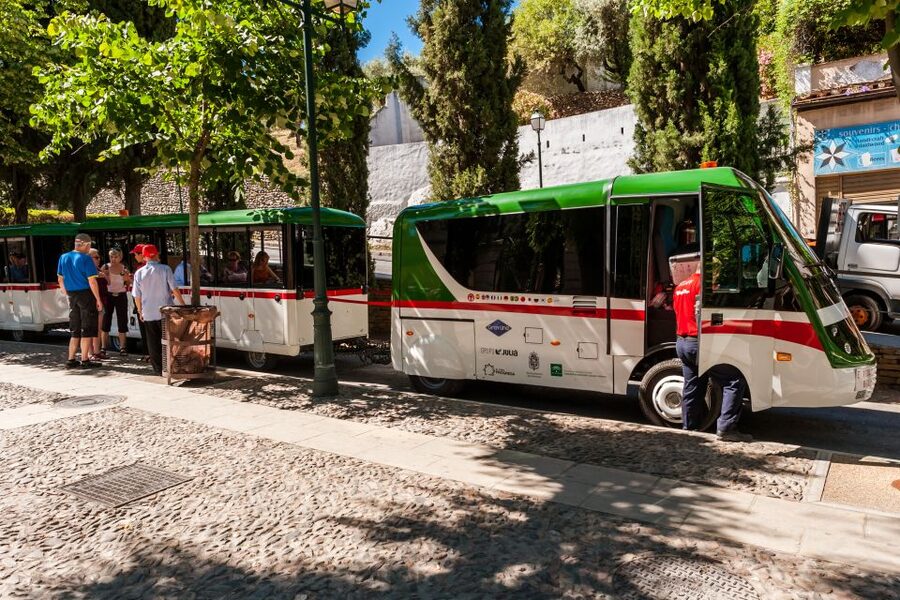
The Alhóndiga stop places you in the central shopping and pedestrian area. It is a useful pause between the monument district and the Cathedral area, especially if you want to mix sightseeing with time in the city center.
This stop is less about one single famous monument and more about positioning. You can use it to break up the route, browse the central streets, or simply get off for a while before boarding again.
For a first ride, I would stay on through this section unless you already know you want to explore here. The train’s audio commentary gives you a better sense of how the central areas connect, and you can return later if something catches your attention.
Stop 5: Cathedral and Royal Chapel
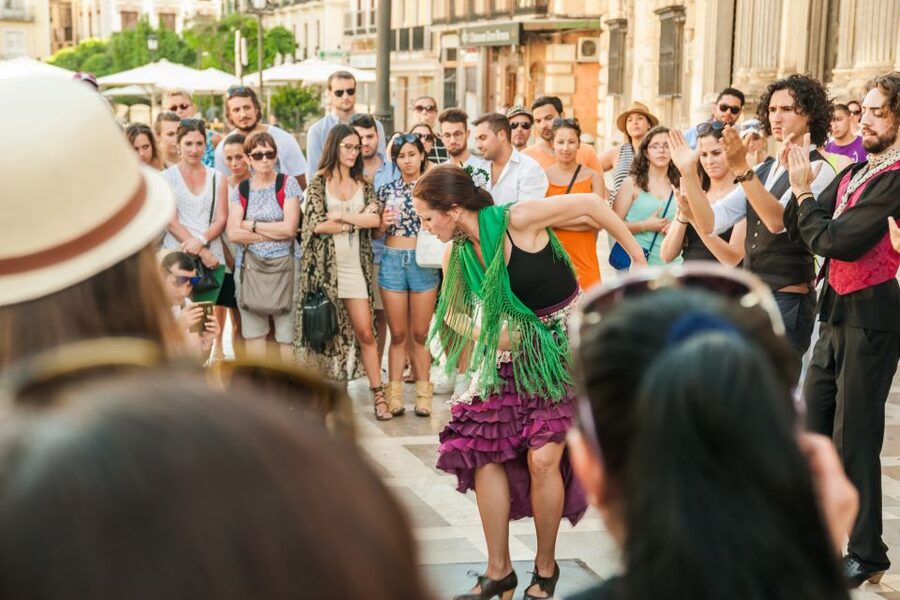
The Cathedral of Granada and Royal Chapel stop is one of the route’s most valuable central stops. The Cathedral is a major Renaissance monument, while the Royal Chapel is associated with the Catholic Monarchs, Isabella I and Ferdinand.
You can get off here to visit the buildings, but entrance tickets are not included in the train fare. The stop also works well for anyone who wants to explore the surrounding old streets without walking from the Alhambra district.
This is a good place to use the audio guide before deciding what deserves a closer visit. The commentary will not replace a full visit inside the Cathedral or chapel, but it can give you useful context while you move through the city.
Stop 6: Mirador de San Cristóbal and Jardines de Zoraya
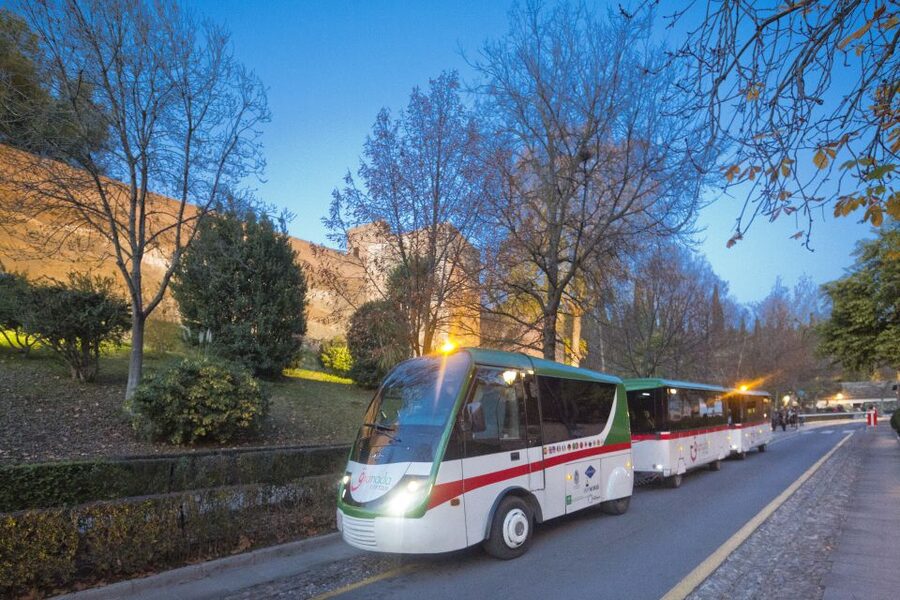
For views, pay attention to Mirador de San Cristóbal. This elevated viewpoint looks across Granada and is one of the more rewarding stops for photographs and orientation.
Some passengers use this area for sunset, and it is easy to see why. The city opens out from the viewpoint, offering a different perspective from the narrow central streets. Jardines de Zoraya is also nearby, adding a cultural and garden setting to this part of the route.
The hill is exactly why the train helps. Walking here can be tiring, particularly after a full day of monuments. If you are sensitive to jolting, though, the ride over stone roads may be uncomfortable. The carriage can sway, and the brakes may feel abrupt at times.
Stop 7: Arco de Elvira and Hospital Real

The Arco de Elvira and Hospital Real stop gives you access to two different sides of Granada. Arco de Elvira is a surviving gateway connected with the city’s old defensive lines, while Hospital Real is an important historic building now linked with the University of Granada.
This section helps show that Granada is more than the Alhambra and the Cathedral. You get a look at the city’s older entrances, university life, and changing urban fabric.
It is also one of the stops where a complete circuit proves useful. On your first pass, the audio commentary and street views provide orientation. On a later pass, you can decide if you want to spend time around the arch or Hospital Real.
Stop 8: Calle Reyes Católicos and Plaza Isabel la Católica
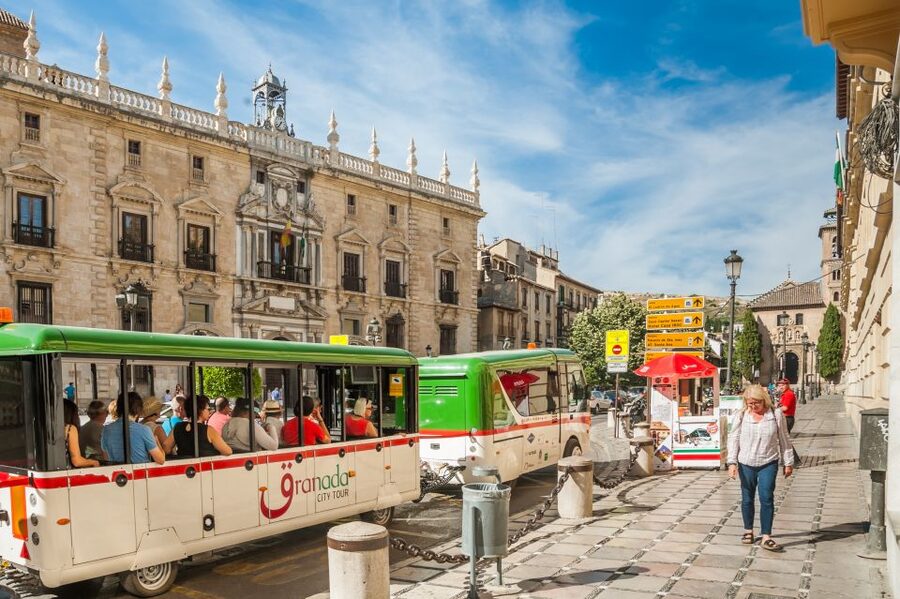
At Calle Reyes Católicos and Plaza Isabel la Católica, the train returns you to one of the city’s main central corridors. The stop is named for the prominent street and the plaza’s monument to Queen Isabella and Christopher Columbus.
This is a convenient point for connecting the older center with Granada’s active commercial streets. It is also close enough to Plaza Nueva that you can walk between the two areas if the next train is full.
The road here can be busier than the smaller lanes. Expect the usual city traffic delays, especially during events or other unusual conditions. The operator notes that service may change because of traffic, city events, or force majeure circumstances, so keep some flexibility in your schedule.
Stop 9: Calle Molinos and Campo del Príncipe
The Calle Molinos and Campo del Príncipe stop takes you toward the Realejo area, the old Jewish quarter on the slopes below the Alhambra. Campo del Príncipe is a spacious square and a good place to pause away from the tightest central streets.
This stop is useful if you want to explore Granada at a slower pace. The route gives you access to a neighborhood that can be tiring to reach from the center on foot, especially when you have already spent hours walking.
The train also gives you a pleasant contrast here. One minute you are in a busy central corridor, and soon after you are moving through quieter, hillier streets. The roads remain uneven, so this is not the smoothest section for anyone with a back problem.
Stop 10: Carmen de los Mártires
The final listed stop is Carmen de los Mártires, near the Alhambra’s lower surroundings. A carmen is a traditional Granada house with gardens, and this stop is a good reminder that the city’s character comes from its homes, courtyards, gardens, and hill paths as much as from its headline monuments.
This is another strong stop for combining the train with a walk. You can get off, explore nearby sites, and later continue toward the center. Since the route runs in a loop, check the direction and wait for the next train at the marked stop.
If you are making only one circuit, this area gives you attractive views and a sense of the Alhambra district from outside the main monument complex. It is also a practical place to finish a sightseeing loop before heading back toward central Granada.
A complete circuit first, then selective hopping
The best use of the ticket is usually a two-stage plan. First, stay aboard for the full route. This takes about an hour and a half according to one practical account, though the exact time can change with traffic and loading at stops.
Use that first ride to mark three things: sights you want to visit, viewpoints you want to photograph, and streets you would rather avoid walking uphill. Then start hopping off. Plaza Nueva, the Cathedral, Mirador de San Cristóbal, the Alhambra stops, and Carmen de los Mártires are the most obvious places to build into a day.
A one-trip ticket is still worthwhile if you have limited time. It gives you a quick overview and helps you understand Granada’s layout. If you plan to stop several times, the one-day pass makes more sense. The two-day option works best if you want the train to function as both a sightseeing ride and a way to reduce walking between separate outings.
Do not assume every stop will have a vacant seat waiting for you. At busy times, you may see people waiting through more than one departure. Holiday weekends and summer periods can be especially crowded, and the service does not always add extra trains when demand rises.
What the ride feels like on old Granada streets
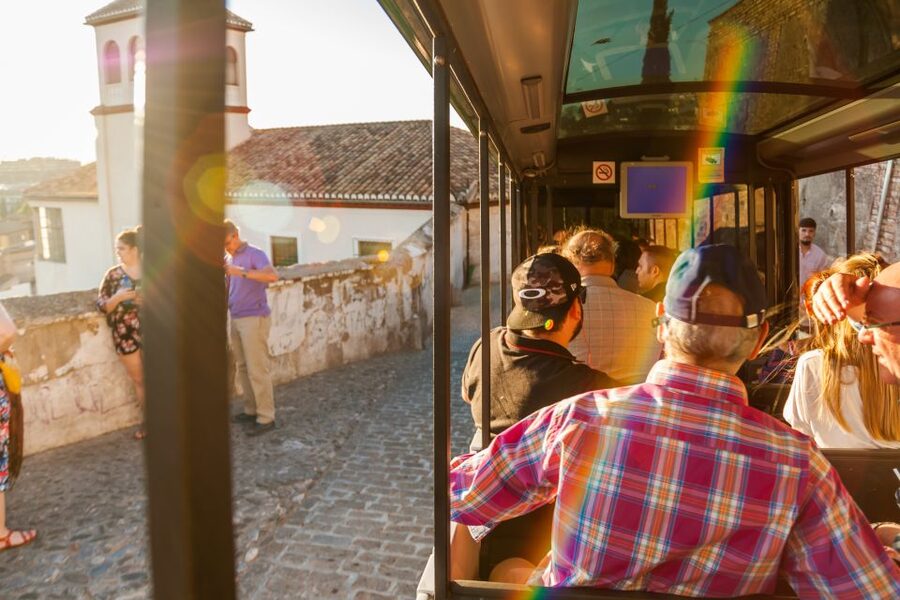
The train is clean and generally well maintained, with friendly, helpful drivers reported by people who used it. The open-carriage design gives you good views and fresh air, but it also exposes you to street noise, weather, and the full rumble of cobblestones.
I would not choose it for a smooth luxury ride. The old roads produce a steady bounce, and sudden braking can be uncomfortable. One report even noted a carriage door opening while the train was moving, which is a reason to pay attention to your seating area and follow staff instructions.
The bumps matter most if you have a chronic back issue or poor balance. For everyone else, they are part of the character of this unusual vehicle, much like the creaks and tight turns that come with moving through old streets.
The audio commentary is available in Spanish, Catalan, Chinese, English, French, German, Italian, Japanese, Arabic, Portuguese, Russian, and Korean. It adds useful background as you pass the monuments, but bring your own headphones. Headphones are not included, and the moving train can be noisy.
Is $8 good value?
At around $8 per person, this is one of Granada’s more affordable sightseeing choices. The value is strongest when you use the train for more than one simple ride. A full circuit alone gives you a low-cost city overview, while a one-day or two-day pass can also save energy on the hills.
The train is particularly good value for:
- A first visit when you want to understand the city’s layout.
- Short stays when you need to see major areas quickly.
- Anyone who wants to reach the Alhambra without walking uphill.
- Families or mixed-age groups who do not all want the same amount of walking.
- Visitors who enjoy views and street life more than a formal guided tour.
The value drops if you need strict departure times or a quiet ride. Waiting for a full train can eat into a short day, and the audio may be hard to hear over traffic and engine noise. If you only want to move from one point to another, a normal local transport option may be more direct, but this train adds sightseeing to the journey.
Practical details that can save you time
Your ticket is used from the route’s starting point at the Alhambra Generalife ticket office, Stop 1. Bring headphones for the audio guide, and keep your booking information available. One person was mistakenly told a physical ticket was required, while the email ticket was enough, so check the instructions attached to your own booking carefully.
Folded baby strollers are allowed if they do not exceed 35 centimeters in height and 55 centimeters in width. Space is limited, so folding the stroller before boarding is important.
Opening hours change during Easter week and the Christmas period. Special times include 9:00 a.m. to 3:00 p.m. from April 10 to April 16, 4:00 p.m. to 8:00 p.m. on April 17, and 10:00 a.m. to 4:00 p.m. on December 24, December 31, and January 5.
Free cancellation is available up to 24 hours before the activity, and you can reserve now and pay later if you need flexible planning. Check the current availability and operating times before you set your day around the train.
Who should book the Granada City Train?
I would choose this for a first day in Granada, especially if you want a quick orientation before visiting the Alhambra, Cathedral, and viewpoints. It is also a smart choice for anyone who wants to reduce uphill walking without paying for a private vehicle.
It suits families, older adults, short-stay visitors, and people who prefer a relaxed overview before exploring on foot. The multilingual audio makes it easy to follow, provided you bring headphones.
I would think twice if you dislike bumpy rides, cannot wait comfortably for a later departure, or want a tightly scheduled sightseeing day. The train is popular, and the 30 to 45-minute interval can feel long when a full carriage passes you by.
Should you book it?
Yes, if you see the Granada City Train as a low-cost sightseeing ride with useful transport, not as a polished tour bus. Ride the full circuit first, use the Alhambra route to save your legs, and plan extra time for crowded stops.
For about $8, the combination of city views, multilingual commentary, central monuments, hillside neighborhoods, and Alhambra access is hard to beat. Just bring headphones, expect bumps, and avoid making your schedule so tight that one full train can spoil your day.
FAQ
How long is the Granada City Train ticket valid?
You can choose a one-trip ticket, a one-day ticket, or a two-day ticket. The one-day and two-day options allow you to hop on and off at the route’s stops during the selected period.
How often does the train run?
The Alhambra Route trains generally run every 30 to 45 minutes. Traffic, city events, adverse conditions, and other circumstances can affect regular service.
Does the train go to the Alhambra?
Yes. The route includes Alhambra Generalife at the ticket office and Alhambra at Puerta de la Justicia. The train ticket does not include admission to the Alhambra itself.
Is an audio guide included?
Yes. Audio commentary is included in 12 languages: Spanish, Catalan, Chinese, English, French, German, Italian, Japanese, Arabic, Portuguese, Russian, and Korean.
Do I need to bring headphones?
Yes. Headphones are not included, so bring your own to use the audio guide.
Can I use a baby stroller on the train?
Yes, but the stroller must be folded and cannot exceed 35 centimeters in height and 55 centimeters in width.
Is the train service available during Easter and Christmas?
Special opening hours apply during Easter week and the Christmas period. The listed special times include 9:00 a.m. to 3:00 p.m. from April 10 to April 16, 4:00 p.m. to 8:00 p.m. on April 17, and 10:00 a.m. to 4:00 p.m. on December 24, December 31, and January 5.
More 2-Day Experiences
- Seville: 2-Day Hop-on Hop-off Bus Ticket
★ 3.8 · 593 reviews
Recently added around Granada
- Guided visit to the Alhambra, Nasrid Palaces and Generalife★ 5.0 · 169 reviews
- Granada City Center and Albaicin Private Tour★ 5.0 · 181 reviews
- Alhambra & Generalife Tour including Transport & Admission★ 4.3 · 187 reviews
- Granada full day: La alhambra completa + el Albaicin y Sacromonte★ 5.0 · 188 reviews
- Alhambra, Nasrid Palaces, Generalife & Alcazaba Private Tour★ 5.0 · 190 reviews
- Private Tour to The Alhambra with Nasrid Palaces in Granada★ 5.0 · 192 reviews
- Granada: Albaicin and Sacromonte Private Tour★ 5.0 · 197 reviews
- Zooming Through Granada: A Fun-Filled Electric Bike Tour★ 4.5 · 201 reviews
Hop-On Hop-Off Bus Tours, compared.



City Sightseeing Barcelona Hop-On Hop-Off Bus Tour: 24 or 48-Hour
Read our review →


Barcelona City Tour Hop-On Hop-Off with Optional Boat
Read our review →
Browse the lists this tour appears in