
Review · CRUISES & BOAT TOURS
Barcelona City Tour Hop-On Hop-Off with Optional Boat
Barcelona rewards a good first look. This bus tour gives you two linked routes across the city, from Gaudí’s masterpieces and Montjuïc to the beaches and Port Vell. I like the freedom to hop off whenever you choose and the multilingual audio guide, which helps you understand what you are seeing without joining a large walking group. The main caution is timing: traffic, full buses, route changes, and the limited catamaran schedule can eat into a tightly planned day.
I also like that one ticket covers both routes for 24 or 48 consecutive hours. It is a useful way to get your bearings after arrival, though stops can be farther from sights than the map suggests. Park Güell, in particular, involves an uphill walk, and transfers between routes may require about 10 minutes on foot.
In This Review
- Key points to know before you go
- Start with a full loop to understand Barcelona
- The waterfront route, from beaches to Gaudí
- Pla de Palau and Barceloneta
- Torre Glòries and Sant Pau
- Park Güell
- La Pedrera, Casa Batlló, and Catalunya Square
- Arc de Triomf, Picasso, and Port Olímpic
- The Montjuïc and western route
- World Trade Center and Montjuïc
- Joan Miró Museum and Poble Espanyol
- Sants, Camp Nou, and Diagonal
- Using the 24-hour and 48-hour passes
- The one-hour catamaran option
- Comfort, commentary, and bus capacity
- Crowds, traffic, and route planning
- Who should book this Barcelona bus tour?
- FAQ
- How long is the Barcelona City Tour?
- Can I use one ticket on both routes?
- How long is the pass valid?
- Where can I board the bus?
- Is the audio commentary available in English?
- Is the catamaran included with every ticket?
- Where does the catamaran leave from?
- Are catamaran departure times guaranteed?
- What happens if bad weather cancels the catamaran?
- Can I use the tour if I have an auditory disability?
- Should you book it?
Key points to know before you go
- Two routes cover very different sides of Barcelona: One focuses on the waterfront, Gaudí sites, and northern neighborhoods, while the other reaches Montjuïc, Poble Espanyol, Camp Nou, and Sants.
- The full circuit takes about 2 hours per route: Ride both routes first if you want a city overview, then use the pass to return to selected stops.
- The upper deck gives the best views: It is popular, but buses can fill up, especially at later stops. The upper deck has cover for rainy weather.
- Park Güell is not right beside its stop: Allow for an uphill walk of roughly five blocks, and do not pair the stop with a tightly timed admission.
- The catamaran is pleasant but schedule-sensitive: The one-hour cruise leaves from Moll de les Drassanes near Columbus, with departures subject to availability and weather.
- The pass works best over two days: A 48-hour ticket must be used on consecutive days, but it gives you far more room to combine sightseeing with actual visits.
Start with a full loop to understand Barcelona
The easiest way to use this tour is to begin with a full circuit, ideally early in your first day. You can board at any stop, but Pla de Palau, Plaça de Catalunya, Arc de Triomf, or the World Trade Center area are practical places to begin, depending on where you are staying.
The bus gives you a broad look at Barcelona without asking you to master the metro or city buses immediately. You can sit upstairs, plug in the provided headphones, and follow the commentary in English or another available language. The narration points out landmarks, parks, restaurants, shopping areas, and major neighborhoods.
A complete ride on each route takes about two hours, so riding both without getting off is already a substantial city tour. I would not treat that as wasted time if this is your first visit. It helps you understand how the waterfront, Eixample, Montjuïc, and the northern attractions fit together.
Still, this is not a fast transport system. Barcelona traffic can slow the buses, and the vehicles sometimes pause at stops to keep service intervals steady. Live arrival information in the app has also proved unreliable at times, so I would not build a timed museum entry around a predicted bus arrival.
More Boat Trips in Barcelona
- Barcelona: Daytime or Sunset Catamaran Cruise with Music
★ 4.3 · 5,923 reviews - Barcelona: Sunset Catamaran Cruise with Live Music
★ 4.7 · 3,024 reviews - Barcelona: Sunset or Day Catamaran Cruise with Tapa & Drink
★ 4.5 · 2,930 reviews
The waterfront route, from beaches to Gaudí
One route begins around the old harbor and Barceloneta before turning inland toward Barcelona’s best-known modernist sights. It is the route I would choose first if your main goals are the beach, Sagrada Família, Park Güell, Casa Milà, and Casa Batlló.
Pla de Palau and Barceloneta
Pla de Palau puts you close to the old city and the waterfront. From here, the bus heads toward Passeig Marítim de la Barceloneta, where you get views of the beach and the broad seafront promenade.
The next stops reach Av. d’Icària, Platja Bogatell, and the streets around Carrer de Bac de Roda and Passeig de Garcia Fària. These stops show a less monumental side of Barcelona, with beaches, apartment blocks, and open coastal views. If you want a break from churches and museums, getting off near Bogatell gives the route a more relaxed feel.
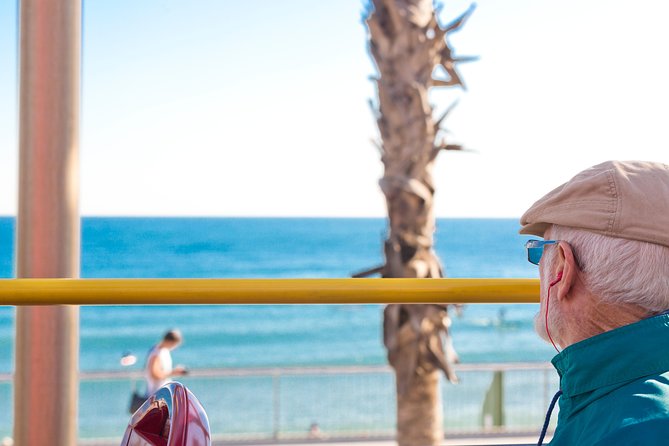
The waterfront section also reaches Port Olímpic. The marina and nearby beaches reflect the city’s major waterfront redevelopment, and the open top deck is especially enjoyable here on a clear day. Wind and rain are possible, so the covered upper deck matters more than you might expect.
Torre Glòries and Sant Pau
The Mirador Torre Glòries stop brings you near one of Barcelona’s most recognizable contemporary towers. The bus then continues toward the Recinte Modernista de Sant Pau, a large modernist complex designed by Lluís Domènech i Montaner.
Sant Pau is easy to overlook when you are focused on Gaudí, but it is one of the more rewarding stops on this route. It gives you a chance to see another major expression of Catalan modernism, with a different style and setting from the Sagrada Família.
This is also an important transfer area. The route maps indicate a walking connection between the Sagrada Família stop and the Sant Pau stop, but the transfer is not directly beside the bus. Allow about 10 minutes on foot, and do not expect staff to escort you from one route to the other.
More Hop-On Hop-Off Bus Tours in Barcelona
- Barcelona: 24 or 48-Hour Hop-On Hop-Off Bus Tour
★ 4.4 · 20,872 reviews - Barcelona: City Sightseeing Hop-On Hop-Off Bus Tour
★ 4.4 · 10,061 reviews - City Sightseeing Barcelona Hop-On Hop-Off Bus Tour: 24 or 48-Hour
★ 4.0 · 5,250 reviews - Barcelona: Hop-On Hop-Off Bus with Sailing Cruise
★ 4.3 · 412 reviews
Park Güell
Park Güell is one of the most popular stops, but the bus does not leave you at the park entrance. The stop is about five blocks away and uphill, so allow extra time for the walk.
That distance matters. If you have a timed Park Güell admission, arriving by this bus can be risky if traffic delays you. The pass is better for flexible sightseeing than for a schedule packed with exact entry slots.
Once you reach the park, the reward is Gaudí’s playful architecture and city views. Plan this as a real stop, not a quick photograph. If you only want to admire the park from outside, the bus still gives you a useful route toward the hill, but the walk may feel excessive for a brief visit.
La Pedrera, Casa Batlló, and Catalunya Square
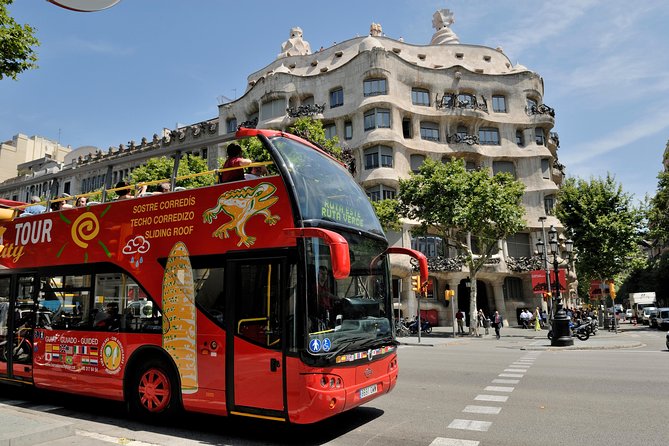
La Pedrera, also called Casa Milà, is one of the strongest stops for Gaudí fans. Its rippling stone façade is easy to recognize from the bus, while a full visit takes you into one of the architect’s most imaginative buildings.
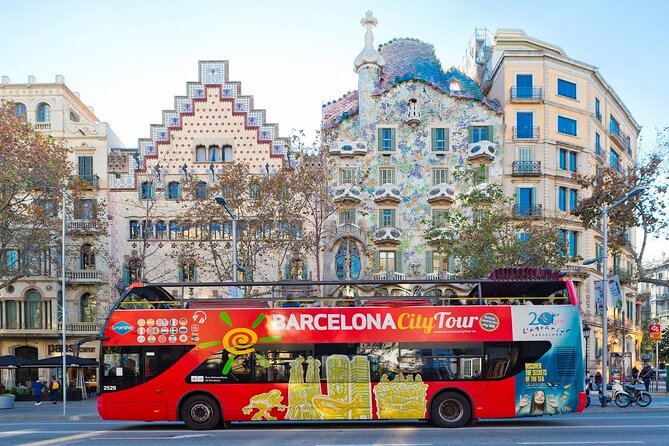
Casa Batlló, on Passeig de Gràcia, offers another memorable façade and places you in one of Barcelona’s main shopping districts. The route also passes through the central area near Catalunya Square, a good point for combining the bus with a walk through the old center.
These stops are close to major attractions, but you still need to reserve entry tickets separately. The bus pass covers transport and commentary, not admission to Gaudí buildings, Park Güell, museums, or other paid sights.
Arc de Triomf, Picasso, and Port Olímpic
Arc de Triomf is a useful stop for the monumental arch, Passeig de Picasso, and the green space around Passeig de Pujades. It is also one of the places where you can connect with the boat option.
The route returns toward the waterfront and Pla de Palau, completing a circuit that combines architecture, beaches, shopping streets, and harbor views. If you ride the full loop without getting off, expect roughly two hours, depending on traffic.
The Montjuïc and western route
The second route reaches the hill of Montjuïc, Poble Espanyol, Sants, Camp Nou, and the western stretch of the city. It is the route to choose for museums, city views, exhibition grounds, and football history.
World Trade Center and Montjuïc
The World Trade Center stop sits near the harbor and Moll de les Drassanes. It is also the main area for the catamaran, so many people combine this route with the boat.
The bus then climbs Montjuïc, stopping near Avinguda Miramar, the Olympic Stadium area, and other points along the hill. Montjuïc gives you some of the best broad views in the city, especially from the upper deck. It also makes clear how Barcelona rises from the waterfront toward the hills.
Stops near the Olympic facilities and Montjuïc Castle are useful for a longer visit, but the hill has several separate attractions. You will need to choose carefully rather than trying to see everything during one short hop-off.
Joan Miró Museum and Poble Espanyol
The route reaches the Joan Miró Museum and Poble Espanyol. The museum is devoted to one of Catalonia’s most important modern artists, while Poble Espanyol is a purpose-built collection of Spanish architectural styles, craft workshops, shops, and places to eat.
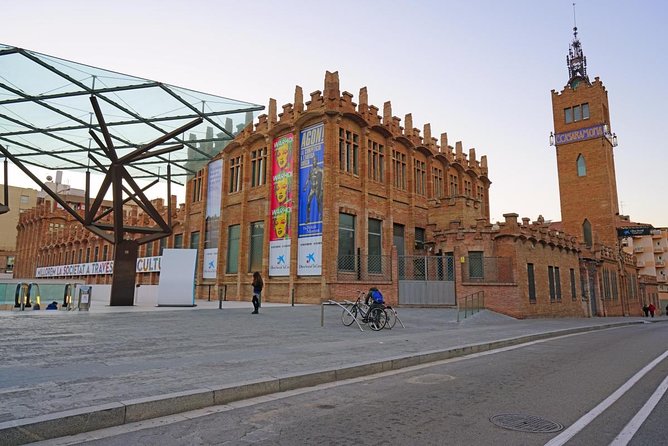
CaixaForum Barcelona and Avinguda de la Reina Maria Cristina add more cultural stops near the exhibition grounds. This part of the route is a good fit if you want art and architecture rather than a quick parade of famous façades.
Montjuïc stops can be spread out, so check your intended stop before getting off. The bus is useful for reducing the uphill walking, but it does not remove all walking from the visit.
Sants, Camp Nou, and Diagonal
The western route continues to Estació de Sants and Spotify Camp Nou. The football stadium is an obvious choice for supporters, while Sants is one of the city’s main transport areas.
The bus then follows Av. Diagonal, with stops near numbers 635 and 571, before reaching Plaça de Francesc Macià. That stop may be relocated or canceled during roadworks, so check the current route before relying on it.
La Pedrera appears again on this route, giving you another chance to reach Casa Milà. The route then continues to Sagrada Família, Barcelona Nord Bus Station, Carrer de la Marina, Port Olímpic, and Pla de Palau.
The second route is useful because it connects areas that are awkward to combine on foot. It is less focused on the classic center than the first route, but it gives you a fuller picture of Barcelona.
Using the 24-hour and 48-hour passes
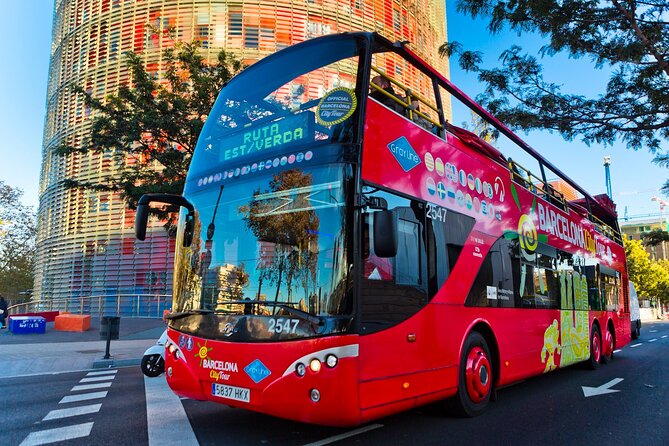
The 24-hour ticket suits a short stay or a visitor who wants a single orientation day. Start early, ride a full route, get off for one or two priority sights, and use the second route if time remains.
The 48-hour ticket costs more, but it is easier to justify if you plan to visit several attractions. Use the first day for broad sightseeing and the second for selective stops. A simple plan might be:
- Day one: Ride both routes and note the places you want to revisit.
- Day two: Stop at Park Güell, La Pedrera, Montjuïc, or the waterfront.
- Use walking between nearby stops rather than staying on the bus for every short connection.
The 48-hour pass must be used on consecutive days. Validation starts your clock, so think about when you will first board rather than activating it casually at the end of the afternoon.
At about $39.65 per person, the value depends on how much you ride. It is not a bargain if you use it only as a single two-hour sightseeing loop. It becomes more useful when you combine the routes with several hop-offs, especially in areas such as Montjuïc and the waterfront where distances add up.
The one-hour catamaran option
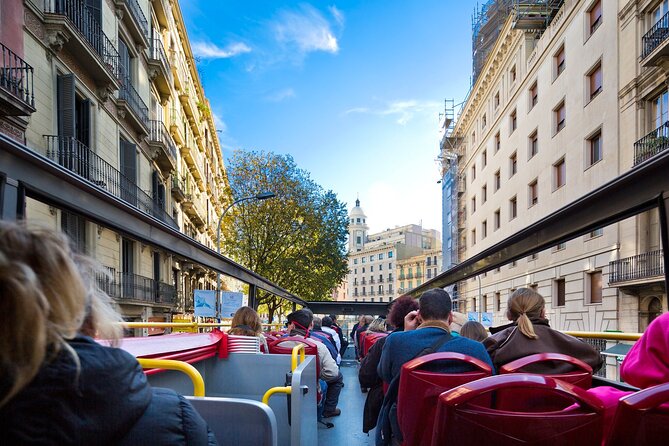
The optional boat cruise adds a one-hour trip along Barcelona’s coast. You can reach it from Arc de Triomf, Passeig de Colom, or the World Trade Center area, with boarding at Moll de les Drassanes near Columbus.
The cruise offers a welcome change from the bus. From the water, you see the waterfront from a different angle, and the sea breeze can be refreshing after a day in the city. It is particularly pleasant when the weather is calm.
The catch is the schedule. Sailing times are informative and subject to availability, so check them before building your day around the boat. The bus staff provide the catamaran ticket when you redeem your voucher on board, and the departure is not something you should assume runs every hour.
Bad weather can cause cancellation. An alternative day may be offered, and if that is not possible, a partial refund is supposed to be available, but the practical problem remains: a canceled cruise can disrupt your plans. Some passengers also found it difficult to reach the boat in time when weather or bus delays intervened.
I would add the catamaran only if you have a flexible schedule. If you have fixed Sagrada Família or museum tickets, the boat may create more pressure than it is worth.
Comfort, commentary, and bus capacity
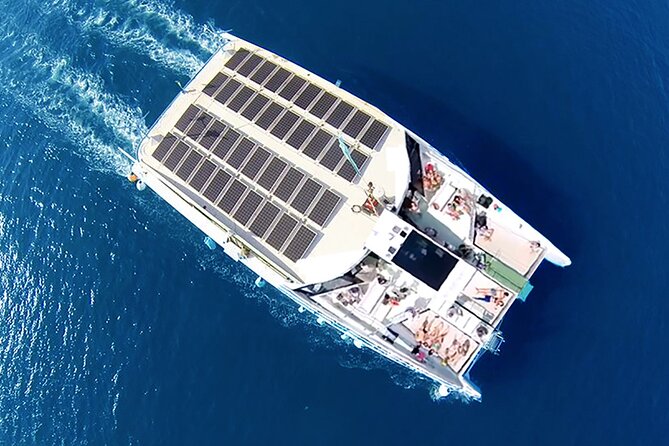
The double-decker buses are comfortable enough for a long circuit, though the seats can feel tight. The upper deck gives the best views, especially along the beaches and on Montjuïc, but it fills quickly.
There is cover on the upper deck for bad weather. Rain does not automatically ruin the ride, though the view is less open and the buses may feel crowded. Wi-Fi can be weak upstairs, so do not depend on it for navigation.
The audio commentary is available in several languages, including English. It gives useful context and points out sights near each stop, which is more helpful than a silent ride through unfamiliar streets.
The system also includes a multilingual looping option for people with auditory disabilities. Seats using that system are marked, and people who need it have priority. However, the arrangement did not work well for everyone, so anyone relying on hearing assistance should confirm how the system operates when boarding.
Crowds, traffic, and route planning
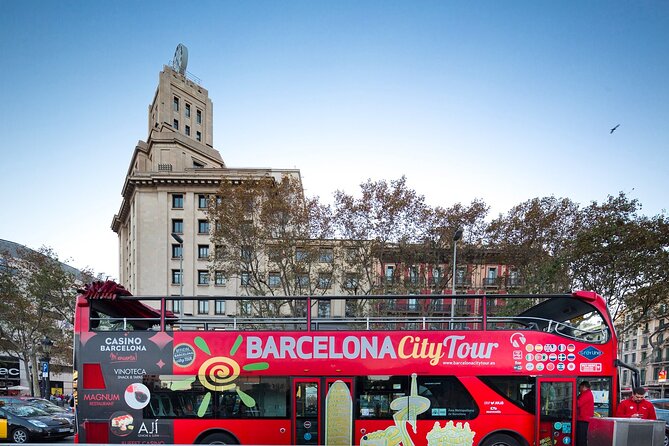
This is a city bus in a large European city, not a private road vehicle. Traffic delays are part of the deal, and buses can be full depending on where you board.
Some buses may pause longer at one stop and then move quickly through another. Route staff can be helpful, but directions between lines are not always clear. Read the map before you get off, especially around Sagrada Família, Sant Pau, and the change between the two routes.
I suggest marking three things before boarding:
- Your must-see stops
- The walking distance from each stop to the attraction
- The last practical time to begin your return route
The map can make nearby stops look closer than they feel on foot. If a connection matters, ask the driver or staff before leaving the bus, then allow extra time.
Pets are permitted only when carried in a suitable basket. Pickup and drop-off from your hotel are not included, and extra services on board cost more.
Who should book this Barcelona bus tour?
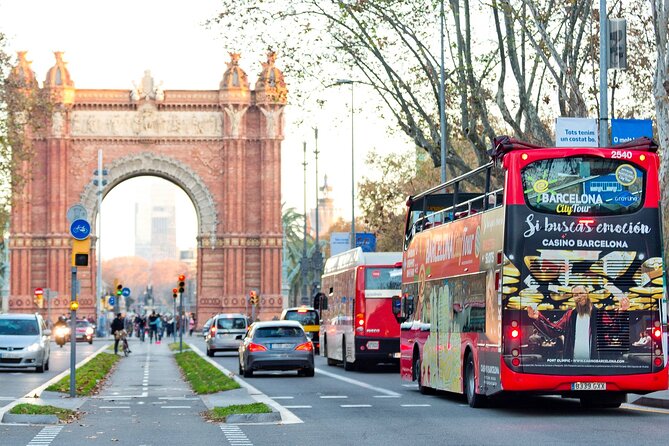
I would book it for a first visit, a short stay, or a first day when you want to see the city without making many transport decisions. It is also useful if your group has mixed interests, since one person can get off for Gaudí, another can explore the beach, and everyone can rejoin later.
The tour is less suitable if you want fast point-to-point transport. Barcelona’s metro, taxis, and walking routes can be quicker for individual journeys. It is also a poor match for a day filled with timed admissions, since traffic and walking distances make exact arrival times hard to control.
The catamaran is a pleasant extra, but I would not choose the package solely for the boat. Check the sailing schedule first, keep the afternoon flexible, and treat the cruise as a bonus rather than the centerpiece.
FAQ
How long is the Barcelona City Tour?
A full ride is approximately 2 hours and 20 minutes, though traffic and stop conditions can affect the total time. Each of the two routes takes about two hours to ride completely.
Can I use one ticket on both routes?
Yes. A single ticket includes all routes and stops, and you can move from one route to the other.
How long is the pass valid?
You can choose a 24-hour or 48-hour pass. The 48-hour ticket must be used on consecutive days from the date of validation.
Where can I board the bus?
You can begin at any conveniently located stop on either route. Stops include Pla de Palau, Arc de Triomf, the World Trade Center, Sagrada Família, Port Olímpic, and many others.
Is the audio commentary available in English?
Yes. The audio guide is available in English and several other languages.
Is the catamaran included with every ticket?
The catamaran is included only when you select the boat option. The cruise lasts one hour.
Where does the catamaran leave from?
The boat leaves from Moll de les Drassanes near Columbus. You can reach the boat from areas near Arc de Triomf, Passeig de Colom, or the World Trade Center.
Are catamaran departure times guaranteed?
No. The published sailing times are informative and subject to availability. Check the schedule before planning your day around the cruise.
What happens if bad weather cancels the catamaran?
An alternative day may be offered. If another day is not possible, a partial amount of the reservation may be refunded.
Can I use the tour if I have an auditory disability?
The buses have an audio system adapted for people with auditory disabilities, using a multilingual looping system with headphones and no wires. Seats with this system are marked, and passengers who need it have priority, although the system may not work equally well for everyone.
Should you book it?
Book this tour if you want a broad view of Barcelona, easy access to distant districts, and the freedom to explore without buying separate bus tickets. The strongest plan is a 48-hour pass used over two consecutive days, with one day for orientation and one for selected sights.
Choose the 24-hour version if your schedule is short and you mainly want the overview. Add the catamaran only when you can accept weather changes and limited departure times. Used with realistic expectations, this is a useful introduction to Barcelona, not a perfect substitute for walking, the metro, or carefully timed attraction visits.
More Hop-On Hop-Off Bus Tours
- Barcelona Hop-On Hop-Off Bus and FC Barcelona Immersive Tour
★ 4.2 · 362 reviews - Shore Excursion: Barcelona City Tour Hop-On Hop-Off
★ 4.0 · 280 reviews - Barcelona: Hop-On Hop-Off Bus & Aquarium Tour
★ 4.5 · 221 reviews - Valencia: 24 or 48-Hour Hop-on Hop-off Bus Ticket
★ 3.9 · 5,611 reviews
Recently added around Barcelona
- Intro Segway Tour Barcelona 1h★ 4.9 · 166 reviews
- Barcelona: Bike or eBike Tour, Top Sights & Local Insights★ 4.9 · 166 reviews
- Instagram Photoshoot Tour in Barcelona★ 5.0 · 167 reviews
- Artisan Ceramic Making Experience★ 5.0 · 168 reviews
- Barcelona: Big Fun Museum Ticket★ 4.2 · 169 reviews
- Sagrada Familia Evening Private Tour with Expert Guide★ 4.5 · 170 reviews
- Gaudi’s Crypt in Colonia Güell with Audioguide★ 4.4 · 170 reviews
- Las Golondrinas Barcelona 60-min Boat Tour★ 4.0 · 170 reviews
Cruises & Boat Tours, compared.

Eco-Yacht Whale and Dolphin Watching and Swimming
Read our review →
Daytime or Sunset Catamaran Cruise with Music
Read our review →
Ibiza Beach Hopping Cruise with Paddleboards, Drinks and Food 6h
Read our review →
Costa Adeje: Whale & Dolphin Eco-Cruise with Snacks & Drinks
Read our review →
Los Gigantes: Dolphin & Whale Watching Cruise with Swim Stop
Read our review →Browse the lists this tour appears in