
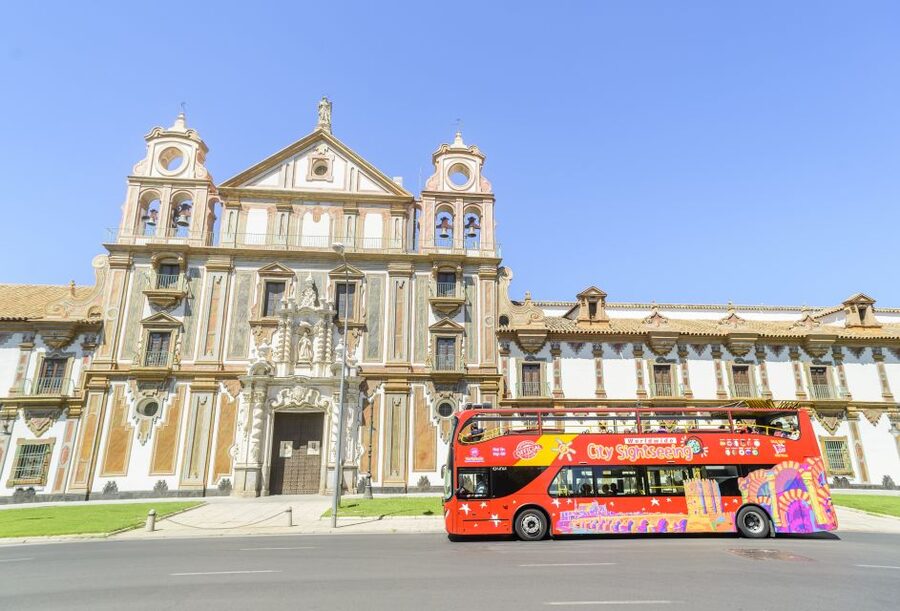
Review · HOP-ON HOP-OFF BUS TOURS
Córdoba: City Sightseeing Hop-On Hop-Off Bus Tour
Córdoba reveals itself one gateway at a time. This full-day bus pass gives you a useful overview of the city, with two routes covering major monuments, railway connections, gardens, river views, and streets too narrow for a large bus. I especially like the choice between the red panoramic route and the smaller blue minibus, plus the included Judería walking tour. The main catch is the 70-minute gap between buses, which can turn a short hop into a long wait.
I also like the clear audio commentary in 10 languages, including English, Spanish, French, German, Italian, Chinese, Japanese, Arabic, and Russian. It is a good way to get your bearings before visiting the Mosque-Cathedral, Alcázar, Roman Temple, or Palacio de Viana on foot. Still, some audio sockets have not worked, and the commentary can occasionally lag behind the bus.
In This Review
- Key points at a glance
- What this Córdoba bus tour actually covers
- Start with the red route for Córdoba’s big picture
- Three city gates tell Córdoba’s story
- Towers, walls, and the northern neighborhoods
- The blue minibus reaches Córdoba’s intimate streets
- The Mosque-Cathedral and Alcázar stops
- Palaces, gardens, and the Roman Temple
- Medina Azahara requires separate planning
- Audio commentary, comfort, and the practical weak spots
- Is $32 good value for one day?
- My suggested one-day plan
- Who should book this Córdoba bus tour?
- FAQ
- How long is the Córdoba hop-on hop-off ticket valid?
- How many stops does the tour have?
- What are the two bus routes?
- How often do the buses run?
- When does the Judería walking tour begin?
- Are attraction tickets included?
- Is the tour wheelchair accessible?
Key points at a glance

- Two very different routes: The red panoramic bus covers wider roads and river views, while the blue minibus slips through Córdoba’s narrow historic lanes.
- Twenty-seven stops across the network: You can reach the main sights, railway and bus station, gardens, old gates, palaces, towers, and the historic center.
- A useful first-day orientation: The commentary helps you understand Córdoba’s Roman, Islamic, Jewish, and Christian layers before you explore on foot.
- The Judería walk is included: Meet at the Puente Romano stop at 6pm for a one-hour walking tour in English or Spanish.
- The timetable needs planning: Buses run about every 70 minutes, from roughly 9:30am to 6pm, so do not hop off without checking when the next one arrives.
- The blue minibus is often the more memorable ride: Its smaller size allows it to pass through streets the double-decker cannot manage.
What this Córdoba bus tour actually covers
Your 24-hour ticket works on two lines. The red Panorámica del Río route uses a larger sightseeing bus and takes about 70 minutes for a complete circuit. The blue Córdoba Íntima route uses a minibus and takes about 30 minutes.
The supplied tour details also describe a complete trip lasting 1 hour and 20 minutes, so the published timings are not perfectly consistent. In practical terms, plan on about 70 minutes for the red loop and 30 minutes for the blue loop, with waiting time added between departures.
The network is described as having 27 stops. The detailed route information lists 17 stops on the panoramic line and 10 on the intimate line, with a few shared locations. That is enough coverage for a broad first look, but this is not a substitute for walking through Córdoba’s old quarter. The bus gets you close. Your feet do the important work afterward.
You can start at any marked stop. The two stated first stops are Avenida Fray Albino 2 for the red line and Calle Caballerizas Reales for the blue line, but a mobile or paper voucher can be redeemed at any route stop.
More hop-on hop-off bus tickets:
- City Sightseeing Cordoba Hop-On Hop-Off Bus Tour
★ 4.0 · 213 reviews - Barcelona: 24 or 48-Hour Hop-On Hop-Off Bus Tour
★ 4.4 · 20,872 reviews - Barcelona: City Sightseeing Hop-On Hop-Off Bus Tour
★ 4.4 · 10,061 reviews
Start with the red route for Córdoba’s big picture
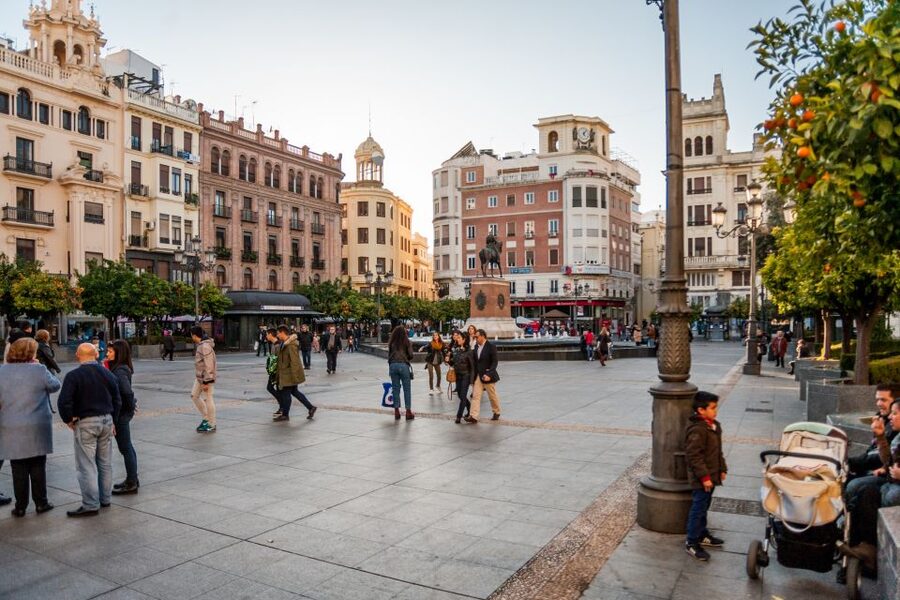
The red line is the best place to begin if you have just arrived. It connects the riverfront, railway station, broad avenues, northern districts, and the main historic sights. The open upper deck gives you a good look at rooftops, walls, towers, and the city’s wide views.
The first listed stop, Panorámica del Río, sits near the Guadalquivir. From here, the bus helps you understand Córdoba’s position beside the river, a major reason the city became important to successive civilizations. The route then passes the Jardín Botánico and Zoológico, followed by Ciudad de los Niños, a useful stop if you are traveling with children.
At San Basilio, you are close to the old quarter’s flower-filled patios and the district associated with Córdoba’s traditional courtyard homes. This is a better stop for wandering than simply looking from the bus window. The nearby Puerta de Almodóvar is one of the city’s surviving historic gates.
Three city gates tell Córdoba’s story

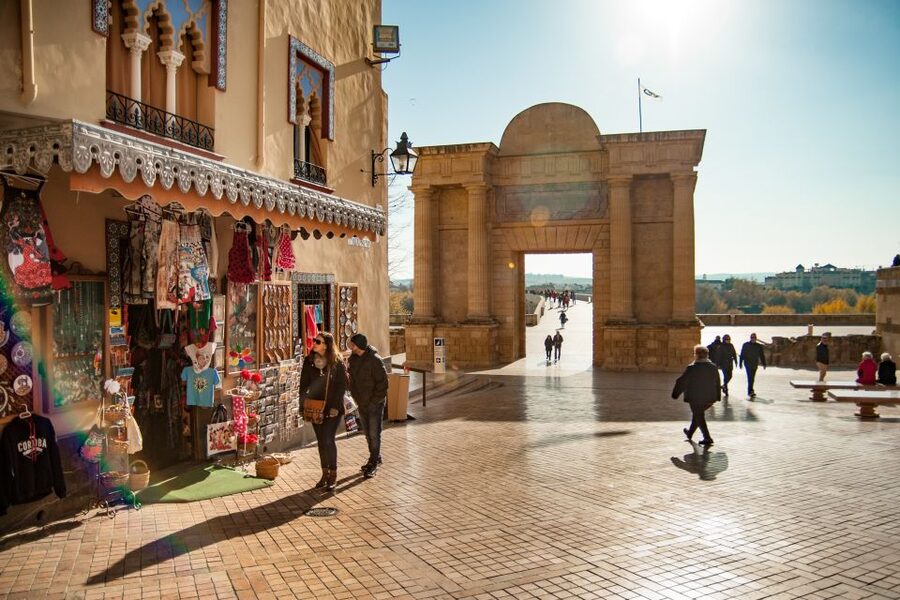
Córdoba once had 13 city gates. This tour brings you near three of them: Puerta de Almodóvar, Puerta de Sevilla, and Puerta del Puente.
Puerta de Almodóvar is particularly useful for reaching the Jewish quarter, or Judería. It marks one of the most direct approaches to the lanes around the Mosque-Cathedral and the old synagogue area. The gate itself is worth a pause, but the real reward is continuing through the compact streets beyond it.
Puerta de Sevilla, associated with the San Basilio area, gives you another entry point into the old city. Puerta del Puente sits by the Roman Bridge and the river, beside some of Córdoba’s strongest evening views. If you plan to take the included Judería walk, note that it begins at 6pm from the Puente Romano stop, listed as stop 16 on the red route.
The walking tour lasts one hour and is offered in English and Spanish. It is a fine way to finish the bus day, since the old quarter makes more sense when someone points out the connections between its streets, walls, and religious buildings.
Towers, walls, and the northern neighborhoods
The red route reaches several towers and defensive structures that can be hard to connect on foot during a short visit. These include the Malmuerta Tower, Belén Tower, Puerta del Rincón, Calahorra Tower, and Donceles Tower.
The Malmuerta stop, paired with Santa Marina, takes you toward Córdoba’s northern districts. This part of town gives you a break from the most concentrated tourist streets and brings you closer to churches, small plazas, and older residential areas. It is a good place to hop off if you want to see more than the Mosque-Cathedral district.
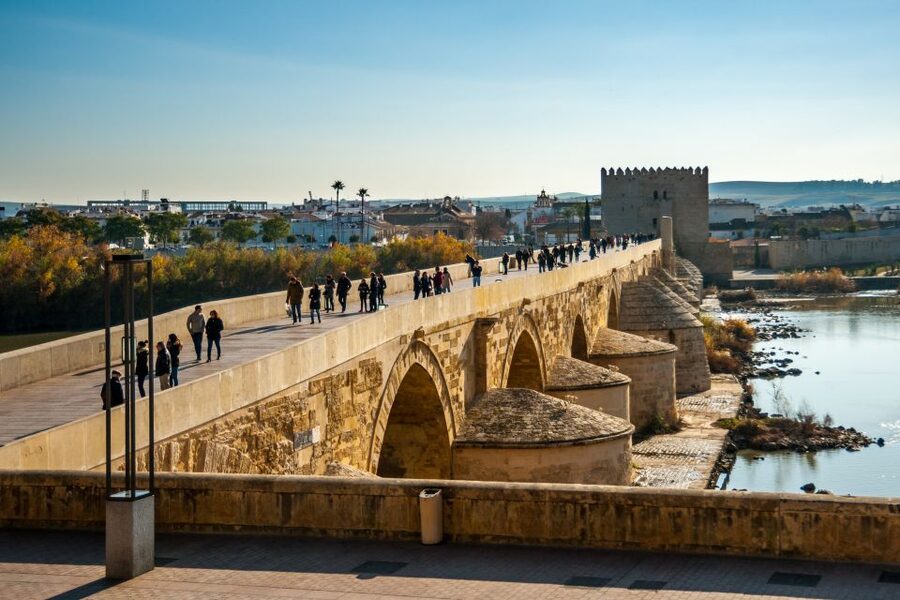
The Calahorra Tower is at the southern end of the Roman Bridge. Its position makes it especially helpful for understanding Córdoba’s defenses and the river crossing. You can combine this stop with a walk across the bridge toward the historic center, then continue to the Alcázar and Mosque-Cathedral area.
The bus commentary adds context, but it is not always perfectly timed. The audio may describe a stop just after the bus has passed it, and some passengers have found that the driver did not announce upcoming stops. Keep the route map open if you can, and tell the driver where you want to get off.
A few more Spain trips worth a look
- Córdoba: Skip-the-Ticket-Line Mosque-Cathedral Guided Tour
★ 4.6 · 9,634 reviews - Cordoba Mosque-Cathedral: Skip-the-Line Guided Tour
★ 4.7 · 6,610 reviews - Córdoba: Jewish Quarter, Mosque, and Alcázar Tour
★ 4.7 · 4,279 reviews - Cordoba: Equestrian Show General Entry
★ 4.5 · 2,333 reviews
The blue minibus reaches Córdoba’s intimate streets
The blue Córdoba Íntima route is the more distinctive half of this experience. Its smaller vehicle can handle narrow roads that the large red bus cannot reach. You pass closer to Córdoba’s old buildings, often with a more immediate view of the street rather than a broad city panorama.
The route begins at the Alcázar de los Reyes Cristianos and continues to the Mezquita-Catedral, San Pedro, Realejo and San Andrés, Palacio de Viana, Palacio de la Merced, the Roman Temple, Plaza de las Tendillas, Arco del Portillo, and the river panorama.
This is the route I would prioritize if you have already seen Córdoba’s general layout or if you want a more local-feeling ride. One practical warning: the minibus can fill up. If it is full, you may need to wait roughly another 70 minutes for the next departure, depending on the day and stop.
The intimate route is also a good choice for anyone who has limited walking ability. A past passenger used the service after an injury and found a stop near an apartment made it possible to move around with crutches. The bus does not eliminate walking, but it can reduce the distance between separate parts of the city.
The Mosque-Cathedral and Alcázar stops
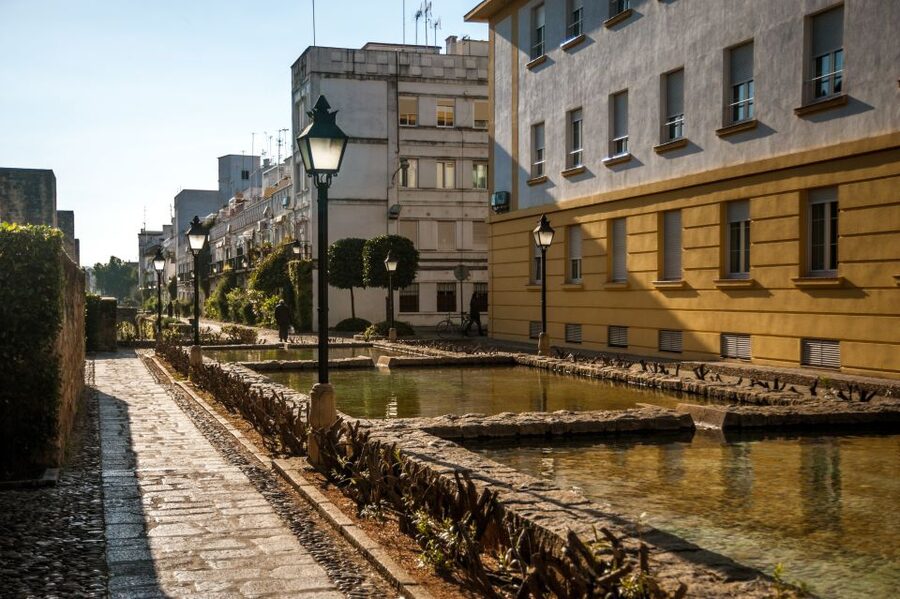
The Alcázar de los Reyes Cristianos and Mosque-Cathedral are the two essential stops on the blue line. Neither attraction ticket is included, so you need to budget separately if you plan to enter.
The Mosque-Cathedral is the place where Córdoba’s religious layers come together most powerfully. The site began as a Christian church, became a mosque under Islamic rule, and later returned to Christian use. The familiar forest of columns and arches is only part of the story. The audio commentary helps explain why the building matters, but you should allow your own time inside rather than treating it as a quick photo stop.
The Alcázar, near the starting point of the blue line, adds a different view of power in Córdoba. Here you find fortress architecture, royal associations, and formal gardens. The route makes it easy to pair the Alcázar with the riverfront and Roman Bridge, but you should check opening times separately because the bus ticket does not include admission.
For most first visits, I would get off at the Alcázar or Mosque-Cathedral area and walk between them. The attractions are close enough to combine, and the old streets between them are part of the experience.
Palaces, gardens, and the Roman Temple
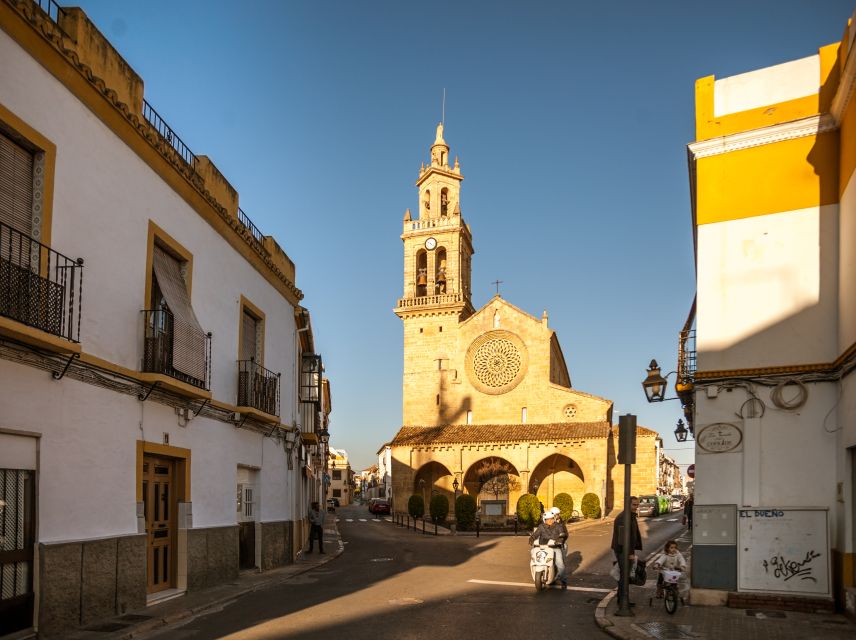
The route makes useful stops at Palacio de Viana and Palacio de la Merced. Palacio de Viana is known for its courtyards and gardens, making it a natural choice if you want a quieter pause after the crowded monument zone. Córdoba’s courtyards are not just decoration. They show how residents adapted to the city’s sunny climate by building inward-facing spaces with shade, plants, and water.
Palacio de la Merced, now linked with the provincial government, gives you another look at Córdoba’s grand architecture and formal gardens. The stop also connects with the wider red route, so you can transfer between lines without returning to your original starting point.
The Roman Temple stop near the Ayuntamiento is one of the best reminders that Córdoba’s story did not begin with the medieval period. Only part of the ancient temple survives, but the columns are striking against the modern city. Nearby streets lead back toward the historic center, making this a sensible place to leave the bus and explore on foot.
Arco del Portillo adds another small piece of the old urban structure. It is not as famous as the main gates, but that is exactly why it works well as a short stop. You get a glimpse of how the old city connected its neighborhoods without spending half a day on transport.
Medina Azahara requires separate planning
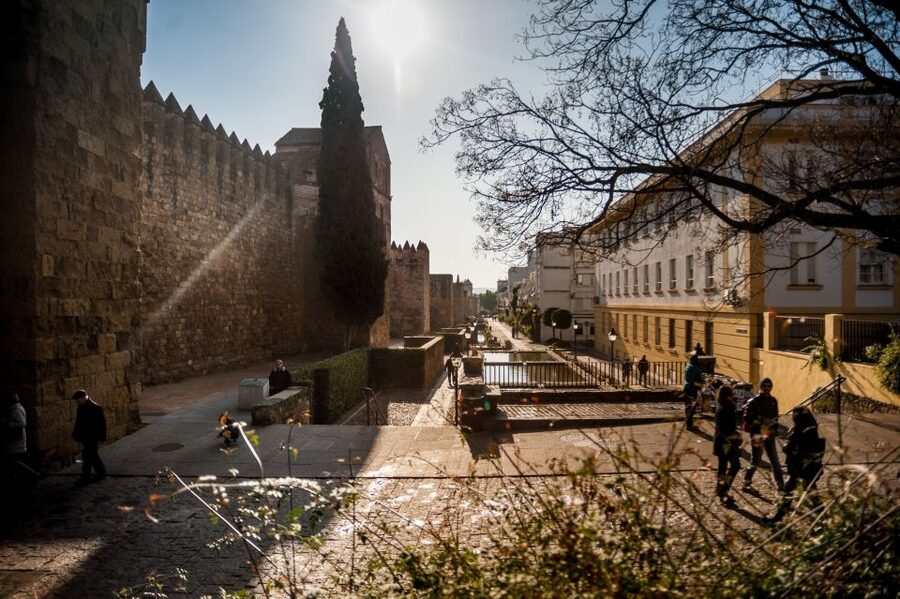
The tour information includes Medina Azahara among Córdoba’s major sights, describing it as the palace city built by caliph Abd al-Rahman III. Its inclusion is useful as a reminder that Córdoba’s major monuments extend beyond the central streets.
However, the listed bus stops and routes do not provide a clearly stated Medina Azahara connection. Do not assume this hop-on hop-off ticket transports you there. You should treat Medina Azahara as a separate outing and confirm transport and admission arrangements before setting aside time for it.
This matters because a one-day bus pass can create the illusion that every named attraction is directly covered. In reality, the network is strongest for the central city, riverfront, historic gates, palaces, towers, and main monument district.
Audio commentary, comfort, and the practical weak spots
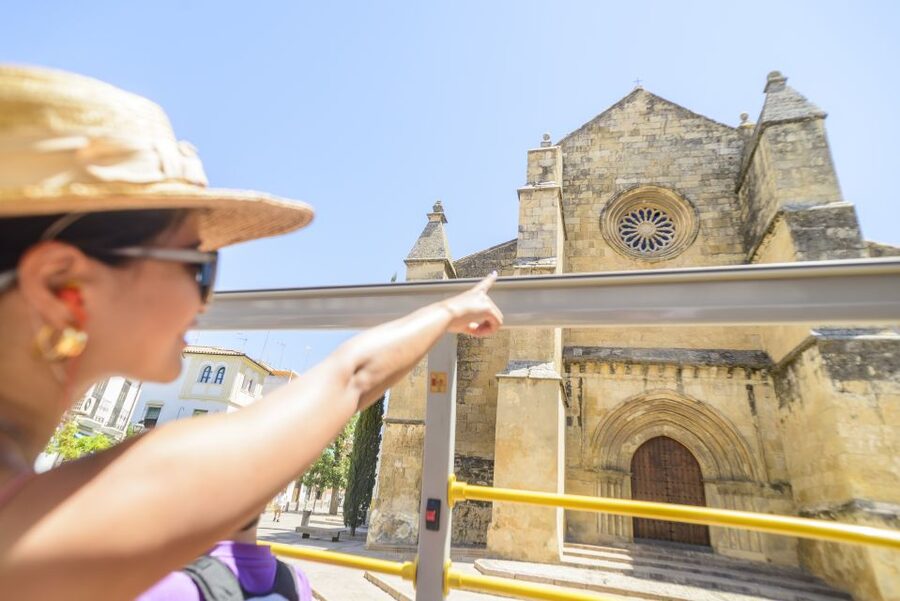
The audio guide is available in nine listed languages: Spanish, Chinese, English, French, German, Italian, Japanese, Arabic, and Russian. A Spanish children’s commentary is also included. Headphones are supplied.
The narration is generally clear and helpful for getting the city’s layout. I would use it on the first full circuit, then hop off at the places that interest you most. Some audio outlets on the lower level of the double-decker have not worked, so the upper deck may be the safer choice if the commentary matters to you.
The top deck offers better views, but Córdoba can be very sunny. In hot weather, the open-air seats may be uncomfortable for a full circuit. The lower level gives you shade, though you may have a poorer view and a greater chance of faulty audio equipment.
The service is wheelchair accessible. Pets and smoking are not allowed. The buses operate from about 9:30am until 6pm, with departures every 70 minutes on both routes. On the specified February 20 service date, buses run every 60 minutes instead, so check the current timetable for your own date.
The biggest operational issue is frequency. A city bus that comes every 10 or 15 minutes lets you improvise. This one does not. If you get off at a quiet stop, you may wait a long time. At some stops, the bus may pass if nobody is waiting, so make yourself visible and confirm the route direction.
Is $32 good value for one day?
At $32 per person, the ticket is good value if you use both routes and take advantage of the included walking tour. A full red circuit, a blue minibus ride, several short hops, and the evening Judería walk can add up to a useful day of sightseeing without repeatedly paying for local transport.
The value is weaker if you only ride once. Córdoba’s core sights are close together, and you can walk between many of them. One passenger found the tour too short because the city was manageable on foot. That is a fair criticism, especially if you are fit, staying near the center, and have plenty of time.
I see the pass as a city orientation tool, not simply a way to avoid walking. It is most useful when you arrive by train and want a stop near the railway or bus station, when you are staying outside the old center, when you have limited mobility, or when you want to reach scattered neighborhoods such as Santa Marina and San Lorenzo.
The price also makes more sense if you visit paid attractions separately and use the bus to connect them. None of those entrance tickets are included, so do not mistake the pass for an all-inclusive Córdoba card.
My suggested one-day plan
Start on the red route in the morning and stay aboard for the full circuit. Use the commentary to mark the gates, towers, palaces, gardens, and neighborhoods you want to revisit.
Next, get off near the Alcázar or Mosque-Cathedral. Visit the attractions you have chosen, then walk through the Judería toward the Roman Bridge. If you are not entering the monuments, the old quarter, riverfront, and Roman Temple still provide a strong walking day.
Use the blue minibus later, ideally from its first stop if possible. The smaller vehicle is the part most likely to feel special, but it is also the part most likely to fill up.
Finish at the Puente Romano stop for the 6pm Judería walking tour. Since the tour is only offered in English and Spanish, choose the audio guide earlier in the day if you need another language.
Who should book this Córdoba bus tour?
You should book it if you have one day in Córdoba, want a quick sense of the city’s layout, are staying away from the center, or prefer not to walk between every monument. It is also a sensible option for anyone with mobility limits, since the route links distant parts of town and is wheelchair accessible.
Families may like the children’s commentary in Spanish and the stop near Ciudad de los Niños. History-minded visitors will appreciate the way the route links Roman remains, Islamic architecture, Jewish Córdoba, Christian palaces, old gates, and defensive towers.
I would skip it if your main goal is to spend the day slowly walking the compact old quarter. The buses are not frequent, the audio can misfire, and several top sights still require separate tickets. In that case, buy entry tickets and explore on foot.
For most first-time visitors, I think the pass earns its keep if you ride both lines and join the Judería walk. Start early, track the timetable, and treat the bus as a practical framework for exploring Córdoba rather than the main event.
FAQ
How long is the Córdoba hop-on hop-off ticket valid?
The ticket is valid for 24 hours, described for this activity as one day.
How many stops does the tour have?
The network is described as having 27 stops across Córdoba. The detailed route information lists 17 stops on the red Panorámica del Río route and 10 on the blue Córdoba Íntima route.
What are the two bus routes?
The red route is the Panorámica del Río route and takes about 70 minutes for a full circuit. The blue route is the Córdoba Íntima minibus route and takes about 30 minutes.
How often do the buses run?
The buses normally run every 70 minutes. On the specified February 20 service date, they run every 60 minutes.
When does the Judería walking tour begin?
The Judería walking tour begins at 6pm from the Puente Romano stop, listed as stop 16 on the Panorámica route. It lasts one hour and is offered in English and Spanish.
Are attraction tickets included?
No. The bus pass includes transportation, audio commentary, headphones, and the Judería walking tour, but entry tickets for attractions are not included.
Is the tour wheelchair accessible?
Yes, the tour is wheelchair accessible. Pets and smoking are not allowed.
Recently added around Cordoba
- Visit in Spanish to the Cathedral Mosque. Does not include entrance ticket★ 5.0 · 165 reviews
- Cordoba Mosque Guided Tour★ 4.5 · 170 reviews
- Córdoba: Tablao Flamenco at Doble de Cepa with Optional Meal★ 4.4 · 197 reviews
- Cordoba: Medina Azahara Museum and Archaeological Site Tour★ 4.8 · 199 reviews
- Patios of Cordoba Walking Tour★ 4.4 · 199 reviews
- Cordoba Flamenco Show at Tablao El Cardenal with a Drink★ 4.5 · 210 reviews
- City Sightseeing Cordoba Hop-On Hop-Off Bus Tour★ 4.0 · 213 reviews
- Cordoba Monuments Intensive Tour in English Tickets included★ 4.5 · 214 reviews
Hop-On Hop-Off Bus Tours, compared.



City Sightseeing Barcelona Hop-On Hop-Off Bus Tour: 24 or 48-Hour
Read our review →

Granada City Train 1 or 2-Day Hop-On Hop-Off Ticket
Read our review →
Barcelona City Tour Hop-On Hop-Off with Optional Boat
Read our review →Browse the lists this tour appears in