
Review · HISTORICAL TOURS
Barcelona: The Spanish Civil War Historical Walking Tour
Barcelona’s past is not all Gaudí and tapas. This 2.5-hour Spanish Civil War walking tour brings you into the old town’s political scars, where anarchists, fascists, loyalists, and foreign volunteers fought over Spain’s future. I like its clear explanations of tangled factions, and I like the way old streets connect to George Orwell’s Homage to Catalonia.
The guides, including Javier, Chrisa, Yannis, Filipa, Henrieta, Evan, and Chryssa, are praised for making difficult material easy to follow. The main drawback is simple: you spend much of the tour standing outdoors, and the subject is war, dictatorship, repression, and political conflict. It is not light sightseeing, and children may find it heavy.
In This Review
- Key points to know before you book
- Why this Barcelona history walk matters
- Meeting at Plaça de Catalunya
- Entering the old town’s political streets
- Making sense of the factions
- Foreign powers, the International Brigades, and the Church
- Orwell’s Barcelona, seen on foot
- Pictures, pacing, and the physical effort
- What the guides do especially well
- Finishing by Barcelona city hall
- Is $46 a fair price?
- Who should take this tour?
- Should you book the Spanish Civil War Historical Walking Tour?
- FAQ
- Where does the tour meet?
- How long does the tour last?
- What language is the tour in?
- Is the tour wheelchair accessible?
- Is the tour suitable for children?
- Does the tour run in bad weather?
- Is audio equipment included in the price?
- Does the price include food or hotel transportation?
- Can I book a private group?
Key points to know before you book
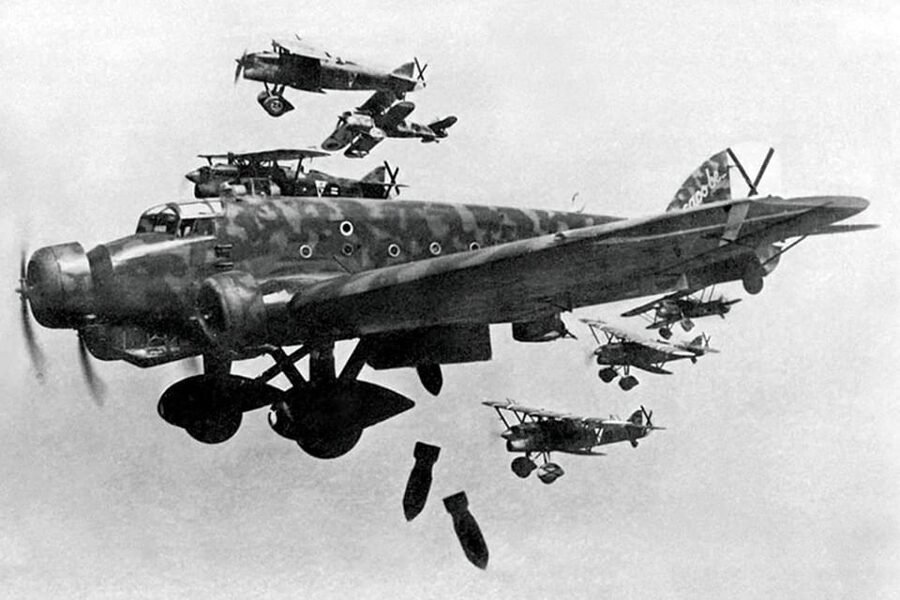
- Barcelona’s old town becomes the classroom: The route uses streets and neighborhoods where fighting and bombing took place.
- The guide untangles the factions: You learn how fascists, republicans, anarchists, labor groups, the Catholic Church, and international volunteers fit into the story.
- Orwell’s Barcelona comes alive: The walk includes places linked to scenes described in Homage to Catalonia.
- Pictures add needed clarity: Guides use historical images to show what streets and buildings looked like during the conflict.
- It is more standing than walking: The pace is manageable, but comfortable shoes and suitable clothing matter.
- The price buys context, not just landmarks: At $46 per person, the tour is useful if you want Barcelona’s modern political story, not only its famous architecture.
Why this Barcelona history walk matters
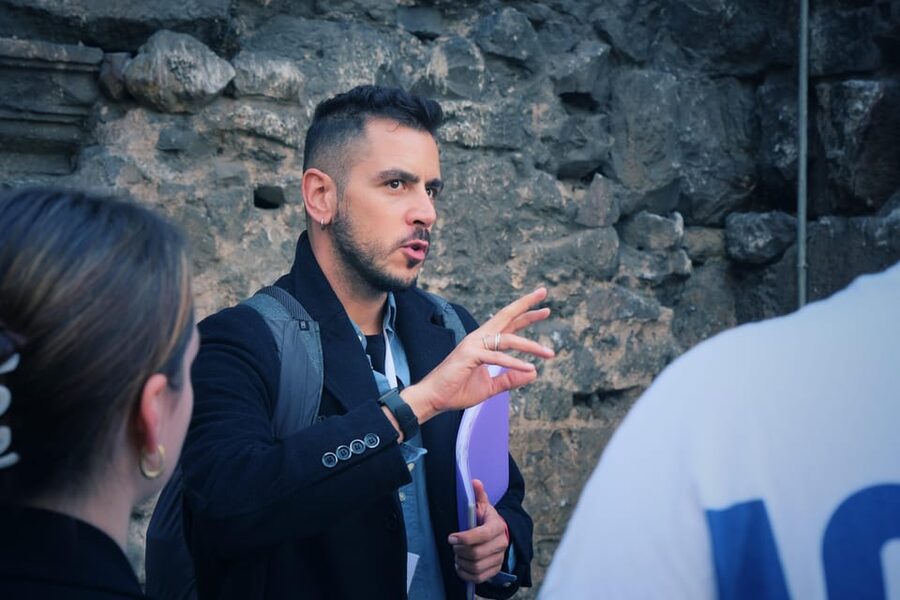
Barcelona is easy to admire at face value. You can wander from Plaça de Catalunya into the Gothic Quarter, admire medieval lanes, and move on to the next church or café. This tour asks you to pause and consider what happened in those same streets less than a century ago.
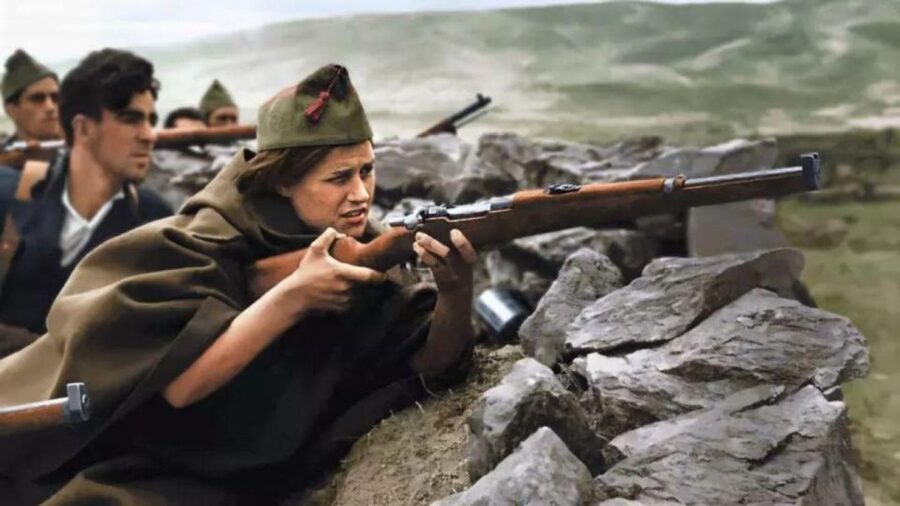
The Spanish Civil War was not a neat battle between two clearly defined sides. It involved competing political parties, military leaders, anarchist movements, labor organizations, regional interests, foreign powers, and ordinary people trying to survive. Barcelona became one of the clearest places to see those conflicts collide.
I value the tour because it does not treat the war as an isolated event. The guide explains the conditions that led to the outbreak, the war itself, and the 36-year dictatorship that followed under Francisco Franco. That wider frame matters. Without it, the political clashes in Barcelona can feel like a confusing chain of names and dates.
The walk also looks at how Spain deals with this period now. The lack of prominent official museums and memorials makes a strong local guide especially useful. Much of the evidence is not presented in a formal exhibition. Instead, it sits in the streets, buildings, photographs, and silences.
More Historical Tours in Barcelona
- Barcelona: Tapas Walking Tour with Food, Wine, and History
★ 4.8 · 4,261 reviews - Barcelona Tapas Walking Tour: Food, Wine & History
★ 4.5 · 1,928 reviews - Barcelona: 2.5-Hour Bike or E-Bike Historical Tour
★ 4.5 · 1,262 reviews
Meeting at Plaça de Catalunya
The tour begins on the sidewalk in front of the Foot Locker at Plaça de Catalunya. Look for a guide carrying a white umbrella. This is a busy square, so give yourself enough time to locate the group rather than arriving at the last minute.
Plaça de Catalunya is a practical starting point. It connects the newer central city with the old town, and the walk soon moves toward the historic streets where much of Barcelona’s wartime story unfolded. You do not need hotel pickup, and food and drinks are not included, so eat beforehand if you are likely to get hungry during a two-and-a-half-hour morning or afternoon.
The tour is conducted in English. An optional audio guide may be available, and wireless guiding equipment is typically used depending on the guide. There is an extra charge of €1 per person for the equipment, payable by cash or card at the beginning.
Entering the old town’s political streets
The first part of the walk sets up the background. Your guide explains why Spain was so divided before the war and how industrial Barcelona developed its own powerful labor and political movements.
This preparation is important because the conflict cannot be understood through Franco and the army alone. You need to know about the Second Republic, political reform, class tension, regional identity, labor unions, fascism, and anarchism. The best guides present this in stages, checking that the group is following along instead of unloading a list of unfamiliar names.
The streets provide more than scenery. The tour points out places connected to fighting, political tension, and fascist bombing. You may look at an ordinary corner and learn that it once carried a very different meaning for people living through the conflict.
Do not expect every stop to look dramatic. That is part of the point. Barcelona’s wartime scars are often subtle, and the city’s polished tourist facade can hide the violence that took place beneath it. The guide’s photographs help bridge the gap between the present-day street and its earlier appearance.
Making sense of the factions
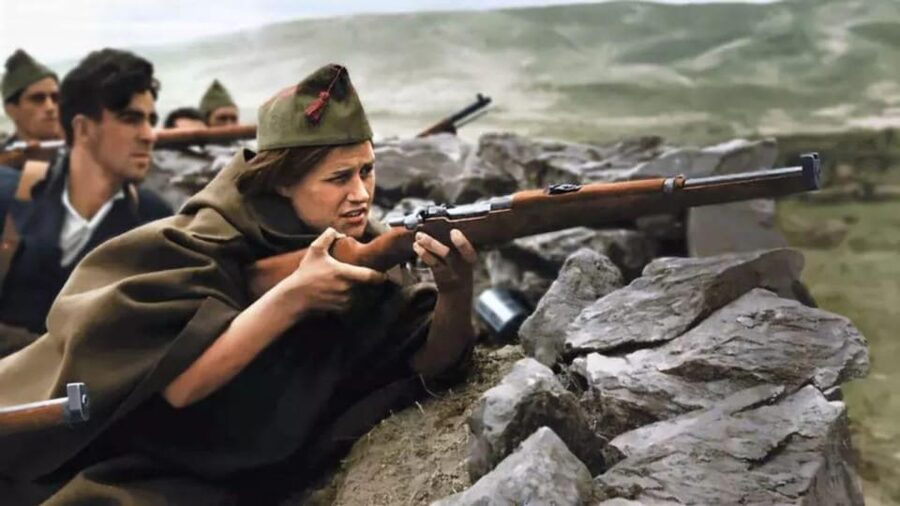
This is the part many people need most. The Spanish Civil War involved so many groups that even readers who have done some preparation can lose track of who supported whom, and when those alliances changed.
The tour explains the major political forces in plain language. You will hear about the military and fascist side, the republican government, anarchist groups, labor movements, and other left-wing factions. The guide also addresses the competing goals within the republican camp, rather than presenting it as one united block.
That distinction gives the tour much of its value. The conflict was not only a simple contest between fascism and democracy. It was also a struggle over revolution, social organization, religion, class, regional power, and the future shape of Spain.
Guides such as Chrisa and Evan have been especially praised for explaining the actors’ motives without making the material feel like a lecture. Yannis is also noted for presenting the industrial and political background before moving into the war itself. That order helps you follow the cause-and-effect instead of memorizing disconnected facts.
The approach aims to be fair and clear. It does not mean the guide treats every political position as morally identical. It means you get enough context to understand why different people joined different movements.
More Walking Tours in Barcelona
- Barcelona Tapas and Wine Experience Small-Group Walking Tour
★ 5.0 · 5,804 reviews - Barcelona: Tapas Food Crawl Walking Tour with Tastings
★ 4.9 · 1,798 reviews - Barcelona: Gothic Quarter Ghosts and Legends Walking Tour
★ 4.7 · 1,443 reviews - Barcelona Helicopter, Sailboat & Old Town Private Walking Tour
★ 5.0 · 1,395 reviews
Foreign powers, the International Brigades, and the Church
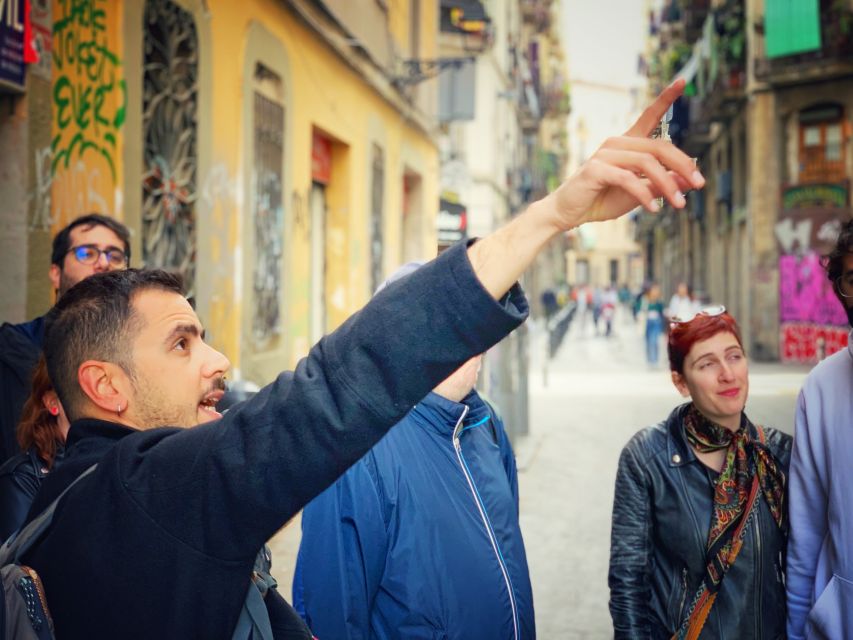
The war was also an international event. The tour addresses the roles of Hitler and Mussolini, the International Brigades, and the response of the Western Allies. These questions show why the Spanish Civil War matters beyond Spain.
You will also examine the role of the Catholic Church, an essential subject in understanding both the conflict and Franco’s Spain. Religion was not a side issue. It connected to authority, social order, political identity, and the dictatorship that followed.
This section can become complicated quickly, so the guide’s skill matters. The strongest explanations keep returning to Barcelona and to the people who lived through these decisions. The walk is not simply a military timeline. It considers the experience of everyday residents and the forces shaping their lives.
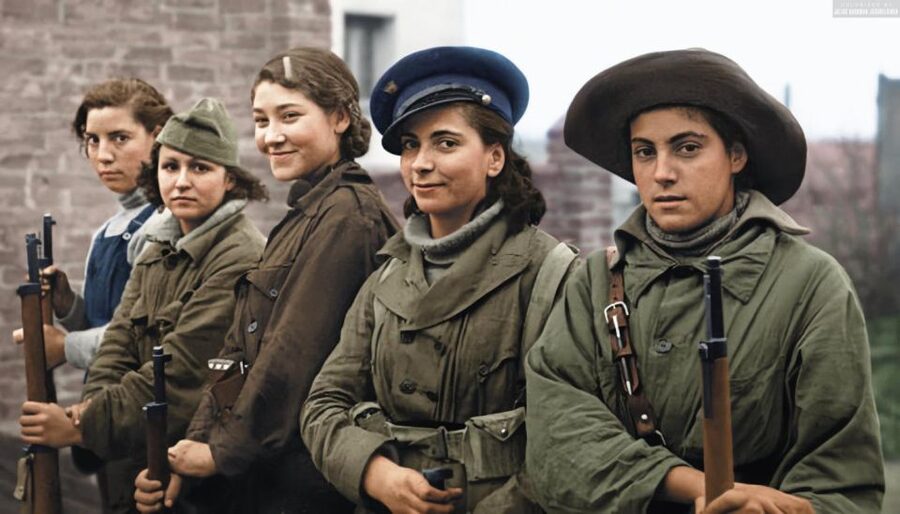
I also appreciate the attention given to women and political participation. One part of the discussion includes the Mujeres Libres movement and the place of women in the Second Republic and Civil War. That broadens the story beyond the best-known male leaders and battle commanders.
Orwell’s Barcelona, seen on foot
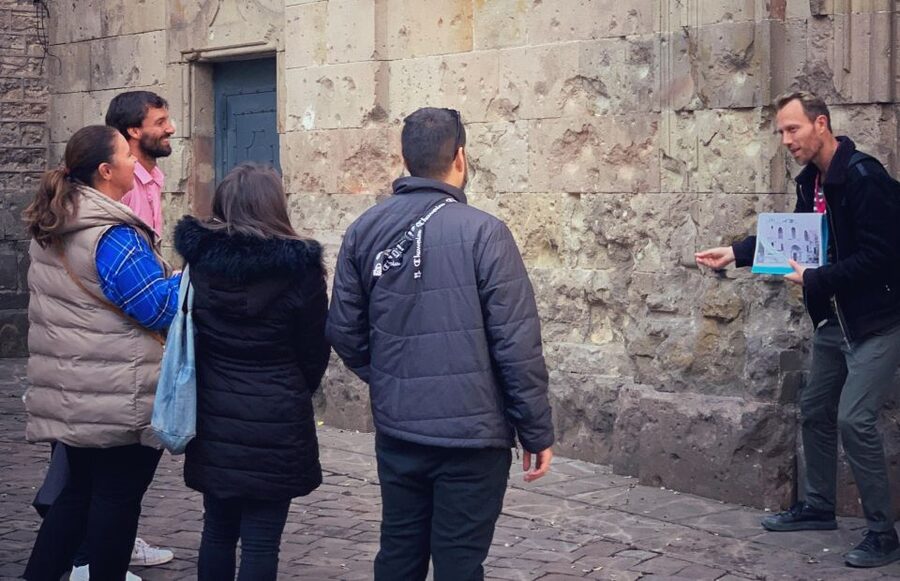
George Orwell’s Homage to Catalonia gives many English-speaking readers their first introduction to the Spanish Civil War. This tour connects the book to actual places in Barcelona.
You will visit locations Orwell mentions and learn how the street fighting and political divisions shaped his experience. The value here is not simply taking a photograph at a literary site. The guide explains what Orwell saw, what he misunderstood, and how his account fits into the larger conflict.
If you have read the book, these stops add physical context. If you have not, they still give you a useful literary doorway into the period. You may want to read at least a short overview of Orwell’s experience before arriving, but prior study is not required.
One useful caution: the route is not a dramatic parade of preserved ruins. Barcelona has changed, and many sites look ordinary today. The interest comes from the contrast between the current city and the photographs and stories supplied by the guide.
Pictures, pacing, and the physical effort
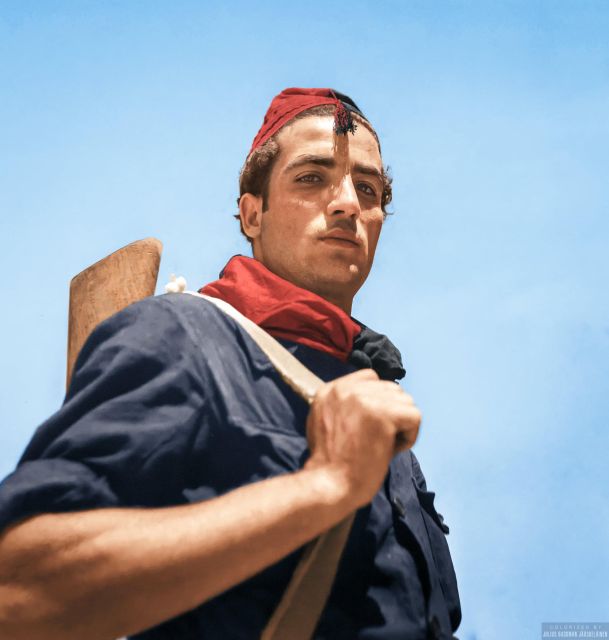
The tour lasts about 2.5 hours, but you are not walking continuously for that entire time. The pattern is generally a short walk, a stop for explanation, more walking, and another standing section.
That makes the route manageable for many people who worry about stamina. Still, you should wear comfortable shoes because you remain on your feet for most of the tour. There are no promises of regular seated breaks, and standing can be more tiring than walking.
The wireless audio system is useful in busy streets, particularly when the guide is explaining a complicated point. It is not always used, and the €1 charge is separate from the tour price. If you have hearing concerns, ask at the start how the system will work.
The tour runs rain or shine. Barcelona can feel very different in wet or cold weather, and one January participant specifically advised wrapping up on a cold day. Bring a rain layer when the forecast looks doubtful. The white umbrella helps identify the guide, but it is not a substitute for your own weather gear.
The experience is wheelchair accessible, though the old town’s streets and the amount of standing may still affect your comfort. If accessibility is important for you, confirm the practical details when booking.
What the guides do especially well
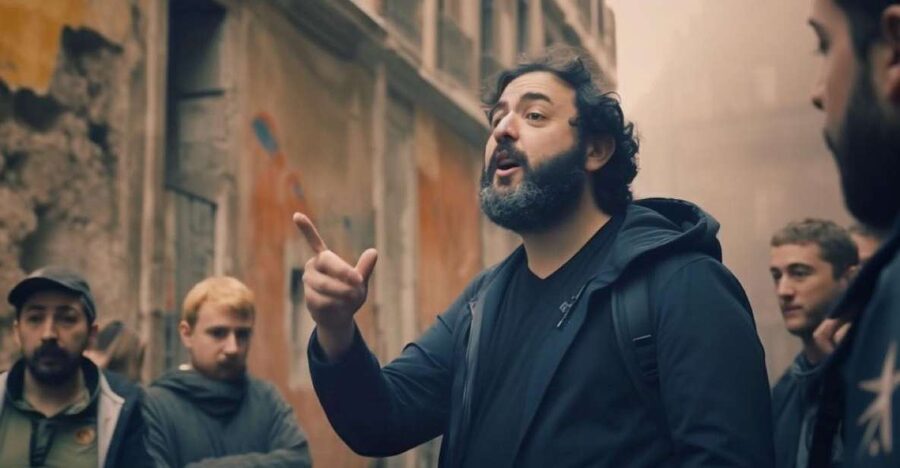
Guide quality is the tour’s biggest strength. The names most often associated with strong experiences include Javier, Chrisa, Yannis, Filipa, Henrieta, Evan, and Chryssa.
Javier is praised for dry humor, clear answers, and a friendly manner. Chrisa is noted for breaking a complicated subject into manageable sections, while Yannis is valued for detailed explanations and enthusiasm for the subject. Filipa brings strong academic interest in Franco’s Spain, and Henrieta is appreciated for clear English and patient answers.
Evan is especially effective for people who know little about the war. He has been praised for presenting the many factions without bias and for handling questions with good humor. Chryssa is noted for connecting the historical material to modern Spanish politics and the importance of historical memory.
The experience can vary slightly with the individual guide. That is normal on a walking tour built around explanation rather than fixed attractions. The common strength is the effort to make the story understandable without flattening it into a simple good-versus-bad tale.
Expect time for questions. Guides have answered questions about politics, social movements, the wider European setting, and the war’s effects on Spain today. Some have also added restaurant recommendations after the walk, which is a welcome practical touch.
Finishing by Barcelona city hall
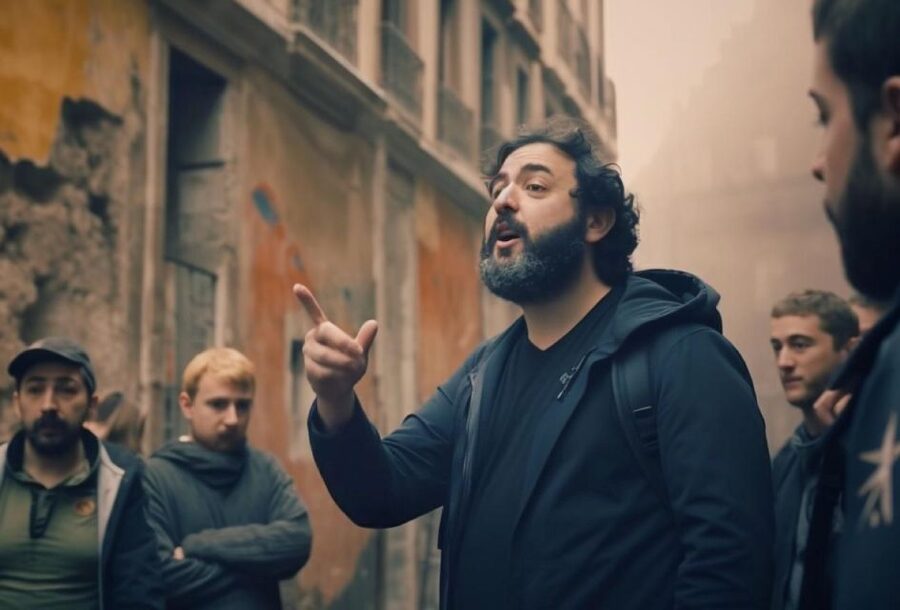
The walk ends in the middle of the Gothic Quarter, near Barcelona city hall. That location works well for continuing your day. You are already in the old town, close to more historic streets, cafés, and places to eat.
The ending also leaves you with a useful way to read the rest of Barcelona. After the tour, the Gothic Quarter is less anonymous. A square, façade, or narrow lane may prompt questions about who used the space, which political group controlled it, or how the dictatorship changed public memory.
The tour does not pretend that a single afternoon can settle Spain’s arguments about the past. Instead, it gives you a framework for noticing what is absent as well as what remains visible. That is a worthwhile result in a city where the most famous sights often dominate attention.
Is $46 a fair price?
At $46 per person, this is not a bargain-priced stroll. You are paying for an English-speaking professional guide, historical preparation, visual material, and the chance to connect scattered sites into one coherent story. The €1 audio equipment charge is extra, if the system is used.
I think the price is fair for the right audience. A standard old-town walk can show you architecture and major landmarks, but it is unlikely to explain the political violence, foreign intervention, dictatorship, and memory issues tied to those streets.
The value is lower if you want a relaxed introduction to Barcelona or prefer a tour focused on food, architecture, or art. It is also less suitable if you dislike long explanations or sensitive political subjects.
Free cancellation up to 24 hours before the start and the reserve-now, pay-later option make planning easier. Those terms are useful when your Barcelona schedule is still changing.
Who should take this tour?
I would choose this tour if you have read Orwell, are interested in 20th-century Europe, or want to understand why Spanish politics and historical memory still carry such emotional weight. It is also a good choice if you have already seen the main sights and want a different view of the city.
You do not need a degree in history. Several guides are especially good at starting with basics and building toward the more complicated parts. Still, one participant sensibly noted that a little advance reading can help because the subject becomes detailed at times.
Families can join, but the tour is not advised for children because it deals with war, dictatorship, politics, and repression. Older teenagers with an interest in history may find it rewarding, while younger children are unlikely to get much from it.
A private group is available if you want more control over the pace or prefer to discuss difficult material with your own party. The regular English tour should suit most independent visitors who are comfortable joining a group.
Should you book the Spanish Civil War Historical Walking Tour?
Book it if you want Barcelona to make more sense. The strongest parts are the guides’ explanations, the historical images, the Orwell connections, and the focus on ordinary people as well as famous leaders.
Skip it if you want a scenic stroll with little standing or if political history is not your idea of a holiday. For everyone else, this is one of the more useful ways to look beyond Barcelona’s postcard image. Bring comfortable shoes, prepare for the weather, and arrive curious. You will leave with more questions, but also with a much clearer map of the past.
FAQ
Where does the tour meet?
The tour meets on the sidewalk in front of the Foot Locker at Plaça de Catalunya. Your guide will carry a white umbrella.
How long does the tour last?
The walking tour lasts about 2.5 hours.
What language is the tour in?
The live tour guide speaks English. An optional English audio guide may also be available.
Is the tour wheelchair accessible?
Yes, the activity is listed as wheelchair accessible. Keep in mind that the tour includes considerable standing and takes place outdoors in the old town.
Is the tour suitable for children?
Children are allowed to join, but the tour is not advised for them because it discusses politics, war, and dictatorship.
Does the tour run in bad weather?
Yes. The tour takes place rain or shine, so bring suitable clothing for the forecast.
Is audio equipment included in the price?
Wireless tour guiding equipment is typically used, depending on the guide. If used, it costs an additional €1 per person and can be paid by card or cash at the beginning.
Does the price include food or hotel transportation?
No. Hotel pickup and drop-off, food, and drinks are not included.
Can I book a private group?
Yes, a private group option is available.
More Walking Tours
- Barcelona: Old Town and Gothic Quarter Walking Tour
★ 4.8 · 1,393 reviews - Barcelona: Helicopter Flight, Boat Ride, and Walking Tour
★ 4.7 · 1,334 reviews - Barcelona: City Walking Tour with Local Guide
★ 4.9 · 980 reviews - Barcelona: Guided Food Walking Tour with Tapas and Wine
★ 5.0 · 848 reviews
More Historical Tours
- Barcelona Erotic Museum – Explore Art, History & Fun
★ 4.4 · 450 reviews - Andorra Original History and Sightseeing Tour (Private, Pickup)
★ 5.0 · 350 reviews - Barcelona: Dark History Night Walking Tour
★ 4.8 · 344 reviews - Tarragona and Sitges Small Group Tour – Roman History & Culture
★ 4.5 · 339 reviews
Recently added around Barcelona
- Intro Segway Tour Barcelona 1h★ 4.9 · 166 reviews
- Barcelona: Bike or eBike Tour, Top Sights & Local Insights★ 4.9 · 166 reviews
- Instagram Photoshoot Tour in Barcelona★ 5.0 · 167 reviews
- Artisan Ceramic Making Experience★ 5.0 · 168 reviews
- Barcelona: Big Fun Museum Ticket★ 4.2 · 169 reviews
- Sagrada Familia Evening Private Tour with Expert Guide★ 4.5 · 170 reviews
- Gaudi’s Crypt in Colonia Güell with Audioguide★ 4.4 · 170 reviews
- Las Golondrinas Barcelona 60-min Boat Tour★ 4.0 · 170 reviews
Historical Tours, compared.
Madrid Essential: Historic Center, Plaza Mayor & Royal Palace
Read our review →
Tapas Walking Tour with Food, Wine, and History
Read our review →
Sevilla Food Tour: Tapas, Wine, History & Traditions
Read our review →
Valencia Old Town Tour with Wine & Tapas in 11th Century Historic Monument
Read our review →
Barcelona Tapas Walking Tour: Food, Wine & History
Read our review →
Ultimate Seville Tapas, Wine & History Small Group Tour
Read our review →
Skip-the-Line Great Mosque-Cathedral History Tour
Read our review →
Browse the lists this tour appears in