
Review · HOP-ON HOP-OFF BUS TOURS
Barcelona: Hop-On Hop-Off Bus & Aquarium Tour
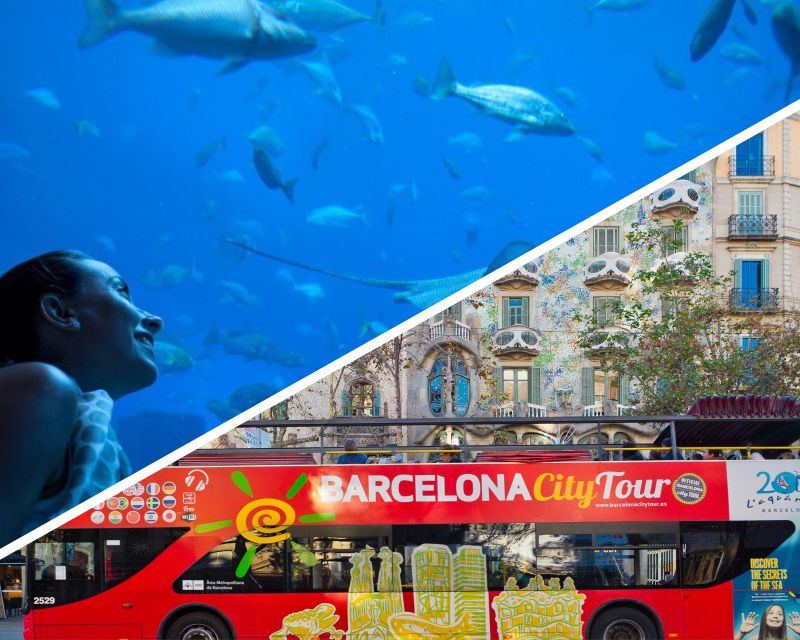
See Barcelona from above, then beneath the sea. This combo pairs a 24 or 48-hour double-decker bus ticket with entry to the Barcelona Aquarium, giving you a simple way to cover far-flung sights without arranging several separate rides. I like the freedom to leave the bus whenever a neighborhood catches your eye, and I like that the aquarium adds a calm indoor stop beside the port.
The main drawback is practical rather than glamorous: stop signage can be hard to follow when you want to rejoin the bus somewhere new. You need to pay attention to the official stop locations and allow extra time, especially on the longer routes. At $73 per person, this works best if you use the bus for several stops and make full use of the aquarium ticket.
In This Review
- Key points to know before you go
- How the Barcelona City Tour works
- The orange West route, from the port to Montjuïc and Camp Nou
- World Trade Center and the lower port
- Miramar Gardens and the Joan Miró Foundation
- Anella Olímpica and MNAC
- Poble Espanyol and the Mies van der Rohe Pavilion
- Plaça d’Espanya and Estació de Sants
- Camp Nou and the FC Barcelona Museum
- Plaça Pius XII and the Diagonal district
- La Pedrera and the Sagrada Familia connection
- Estació del Nord, the Zoo, and the waterfront
- The green East route, from Barceloneta to Park Güell
- Pla de Palau and Barceloneta
- Port Olímpic, Bogatell, and Nova Mar Bella
- Fòrum and Torre Glòries
- Sant Pau and the Gaudí connection
- La Pedrera, Casa Batlló, and Plaça Catalunya
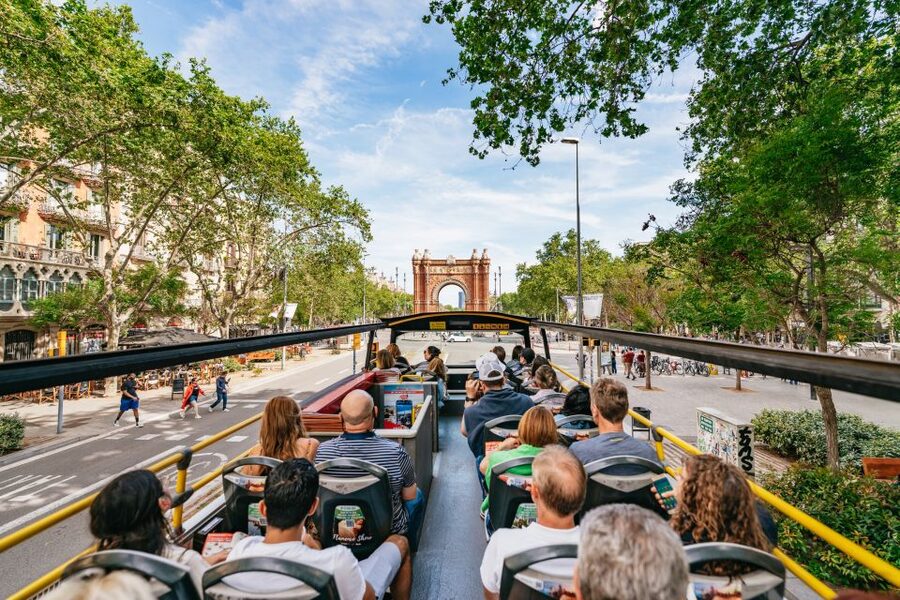
- Arc de Triomf and El Born
- The Barcelona Aquarium: the calmer half of the combo
- Is $73 a fair price?
- Practical weaknesses and useful timing advice
- Who will get the most from this tour?
- Should you book the Barcelona bus and aquarium combo?
- FAQ
- Where can I start the Barcelona City Tour?
- How long are the bus tickets valid?
- How often do the buses run?
- Are both bus routes included?
- Can I use the aquarium ticket more than once?
- Which languages are available for the audio guide?
Key points to know before you go

- Two complete routes use one ticket: The orange West route and green East route cover central Barcelona, Montjuïc, the waterfront, the Sagrada Familia area, Park Güell, Camp Nou, and more.
- Each full route takes about two hours: Add waiting and sightseeing time, and one route can fill much of a day.
- The aquarium ticket is single use: Plan that visit carefully rather than treating it like an attraction you can enter repeatedly.
- Buses generally run from 9:00 AM until 7:00 PM: Service is usually about every 30 minutes, though seasonal frequency can range from roughly 5 to 30 minutes.
- Plaça Catalunya is the main starting point: You can also board at any Barcelona City Tour stop.
- The open-top bus is best for orientation: It gives you a quick feel for Barcelona’s layout before you return to the places you want to explore on foot.
How the Barcelona City Tour works

The bus is designed for flexible sightseeing, not a guided walking tour. You ride between stops, listen to the multilingual audio guide, then get off whenever you want. Your ticket covers both routes for one or two consecutive days, depending on the option you choose.
The buses are air-conditioned double-deckers, with an open upper level. The top deck gives you a broad view of Barcelona’s boulevards, church towers, modern buildings, and hills. It is also exposed to sun and wind, so the lower deck can be the smarter choice during hot weather or when the bus is moving through busy streets.
The audio system is available in English, Catalan, Spanish, French, German, Russian, Portuguese, Chinese, Japanese, Dutch, Hebrew, Italian, Arabic, Swedish, Norwegian, and Turkish. An adapted audio system is also provided for people with auditory disabilities through a multilingual looping system.
I would use Plaça Catalunya as your first boarding point if you want an easy start and a sense of the full network. Still, you do not have to begin there. If you are already near the port, Sagrada Familia, Camp Nou, or another listed stop, boarding locally may save you a cross-town walk.
The important point is to keep the timetable in mind. A full loop takes about two hours, and buses generally operate from 9:00 AM to 7:00 PM, with the last return around 7:00 PM. A bus may come sooner during some periods, but I would plan around a 30-minute wait rather than assume the next one will arrive in five minutes.
More Hop-On Hop-Off Bus Tours in Barcelona
- Barcelona: 24 or 48-Hour Hop-On Hop-Off Bus Tour
★ 4.4 · 20,872 reviews - Barcelona: City Sightseeing Hop-On Hop-Off Bus Tour
★ 4.4 · 10,061 reviews - City Sightseeing Barcelona Hop-On Hop-Off Bus Tour: 24 or 48-Hour
★ 4.0 · 5,250 reviews
The orange West route, from the port to Montjuïc and Camp Nou
The orange route is the broad sightseeing circuit. It links the waterfront with Montjuïc, Plaça d’Espanya, Sants, Camp Nou, the Diagonal district, La Pedrera, Sagrada Familia, and the old port.
World Trade Center and the lower port
The World Trade Center is a useful starting point if you are staying near the harbor. From here, the route begins with Barcelona’s port setting and moves toward Montjuïc. This section is helpful for getting your bearings, but it is not the best place to spend the whole morning if your main interests are Gaudí buildings or the old city.
Miramar Gardens and the Joan Miró Foundation
Jardins de Miramar brings you onto the Montjuïc hillside, where the city and port open up below. The nearby Fundació Joan Miró is the key stop for modern art, with work by the Barcelona-born artist Joan Miró.
You can choose this area for a slower cultural visit, or stay on the bus for the views. The uphill setting means you should wear comfortable shoes if you get off and plan to walk between attractions.
More hop-on hop-off bus tickets:
- Barcelona City Tour Hop-On Hop-Off with Optional Boat
★ 4.0 · 3,012 reviews - Barcelona: Hop-On Hop-Off Bus with Sailing Cruise
★ 4.3 · 412 reviews - Barcelona Hop-On Hop-Off Bus and FC Barcelona Immersive Tour
★ 4.2 · 362 reviews - Shore Excursion: Barcelona City Tour Hop-On Hop-Off
★ 4.0 · 280 reviews
Anella Olímpica and MNAC
The Anella Olímpica is the Olympic ring from the 1992 Barcelona Games. It gives you a sense of the city’s modern sporting identity and its use of Montjuïc as a major public space.
The next important stop is the Museu Nacional d’Art de Catalunya, usually called MNAC. The building itself is a major sight, and the museum covers Catalan art across several periods. This is one of the route’s better stops if you want a museum with a strong local focus rather than another quick photograph from the bus.
Poble Espanyol and the Mies van der Rohe Pavilion
Poble Espanyol is a purpose-built architectural and craft complex representing different parts of Spain. It is more polished and arranged than an ordinary neighborhood, but it can be a convenient stop if you want shops, workshops, and a compact look at several architectural styles.
Nearby, Caixafòrum and the Mies van der Rohe Pavilion offer a different mood. The pavilion is spare and modern, with clean lines and a strong connection to Barcelona’s architectural culture. These stops suit visitors who want more than famous facades.
Plaça d’Espanya and Estació de Sants
Plaça d’Espanya is one of Barcelona’s major transport and public spaces. It is a useful transfer point and a practical place to reconnect with the city after visiting Montjuïc.
Estació de Sants serves the main railway station. It is not usually a sightseeing destination by itself, but it can be useful if your hotel or onward train is in this part of town. The bus route is at its best here as a connector between areas that are too far apart for an easy walk.
Camp Nou and the FC Barcelona Museum
The Camp Nou stop serves the stadium and Museu FC Barcelona. This is an obvious priority for football fans, but it is also a good example of why the bus can save time. Camp Nou is not close to the port or the Gothic center, and reaching it by ordinary sightseeing walks would take planning.
The exact stadium experience can depend on operating conditions, but the listed stop gives you access to the museum area. Check your available time before getting off, since a football visit can easily take longer than a quick photo stop.
Plaça Pius XII and the Diagonal district
Plaça Pius XII, L’Illa Diagonal, and Avinguda Diagonal show a more modern, business-oriented side of Barcelona. The Diagonal is one of the city’s major arteries, with shopping, offices, and large urban blocks.
This section may feel less essential if your first visit is focused on medieval streets and Gaudí. It is still useful for seeing how Barcelona extends beyond the old center and for reaching La Pedrera without crossing the city on foot.
La Pedrera and the Sagrada Familia connection
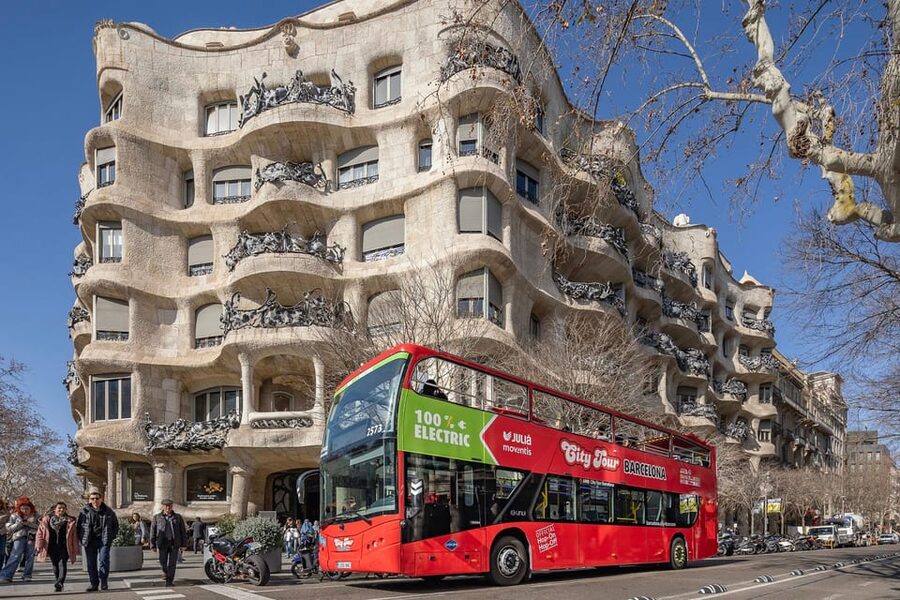
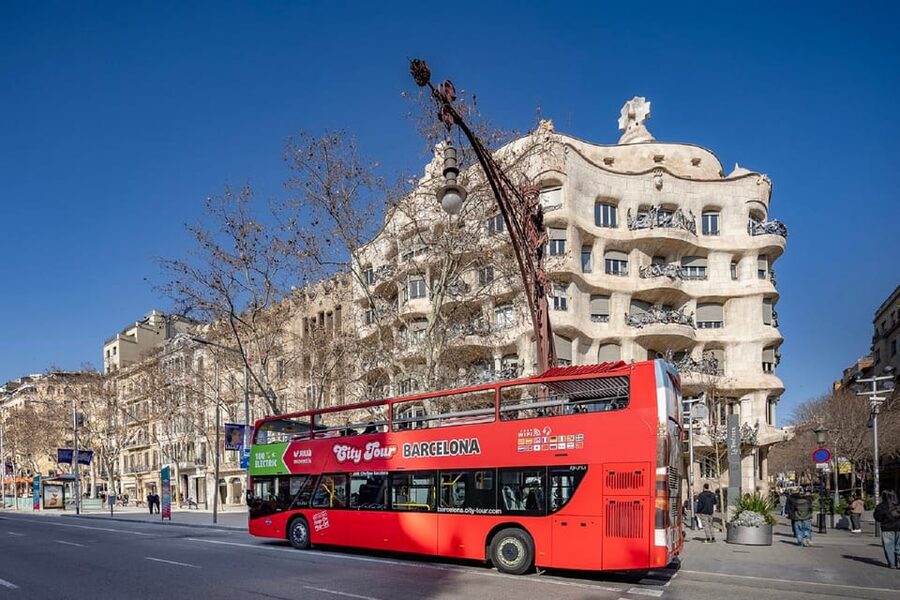
La Pedrera, also known as Casa Milà, is one of Antoni Gaudí’s most striking works. Its rippling stone facade and unusual roof make it a natural bus stop, even if you only get off for photographs.
The Sagrada Familia stop is especially useful because it connects the two routes. Orange route passengers can reach Park Güell without riding all the way to Port Olímpic, while green route passengers can visit Sagrada Familia without completing the full green loop. This connection saves time, but you need to check the direction of the next bus before leaving the stop.
Estació del Nord, the Zoo, and the waterfront
The route continues through Estació del Nord toward the Zoo and Poblenou. The Zoo stop serves Parc de la Ciutadella and the eastern side of the old city. Poblenou adds a more contemporary neighborhood feel, with the waterfront and former industrial areas nearby.
Port Olímpic, Pla de Palau, and Passeig de Colom bring you back toward the harbor. Passeig de Colom is a good place to combine bus sightseeing with a walk along the waterfront or into the older streets.
The green East route, from Barceloneta to Park Güell

The green route focuses on the eastern waterfront, newer coastal districts, Gaudí highlights, and Park Güell. It is the route most likely to help you connect the sea with Barcelona’s hillier northern neighborhoods.
Pla de Palau and Barceloneta
Pla de Palau sits near the old port and the edge of the historic center. Barceloneta then takes you toward the city’s famous beach district. You get a quick look at the contrast between old harbor streets and Barcelona’s broad coastal redevelopment.
The bus is useful here because the waterfront stretches farther than it first appears. You can get off for a walk, but keep the return bus schedule in mind. A pleasant seaside stroll can turn into a long wait if you miss the next departure.
Port Olímpic, Bogatell, and Nova Mar Bella
Port Olímpic was developed for the 1992 Olympic Games and remains one of the city’s recognizable coastal areas. The route continues past Platja del Bogatell and Nova Mar Bella, giving you a wider view of Barcelona’s beaches beyond Barceloneta.
These stops are good for a slower day. They are less important if you are trying to fit every major monument into one afternoon, but they show how the city’s shoreline continues well beyond the central port.
Fòrum and Torre Glòries
The Fòrum area represents a newer, more open section of the city. It is not as compact or instantly historic as the center, but it helps you see Barcelona’s eastern edge.
Torre Glòries is one of the city’s most recognizable modern towers. The bus offers a convenient way to see it without arranging a separate trip. If modern architecture interests you, this route gives you a useful contrast with Gaudí’s organic forms.
Sant Pau and the Gaudí connection
The Recinte Modernista de Sant Pau is a major modernist complex and one of the green route’s most worthwhile stops. Its buildings are linked to Barcelona’s early 20th-century design tradition and provide a less obvious alternative to the better-known Gaudí sites.
The route then reaches Park Güell. Because the park sits away from the central sights, this is one of the places where the bus earns its keep. The Sagrada Familia connection also matters here, since it lets you move between two major Gaudí areas without taking the complete loop.
La Pedrera, Casa Batlló, and Plaça Catalunya
La Pedrera appears again as a connection point between the routes. Casa Batlló, farther along Passeig de Gràcia, gives you another of Gaudí’s famous facades, with a very different look from Casa Milà.
Plaça Catalunya is the main central stop and the easiest place to finish a route or change your sightseeing plan. From here, you are close to major shopping streets and the old center, although the bus itself does not replace exploring those areas on foot.
Arc de Triomf and El Born
Arc de Triomf is a broad urban landmark leading toward Parc de la Ciutadella. El Born provides access to one of the city’s most atmospheric historic districts, along with the park and nearby cultural sites.
This final section is a good reminder that the bus works best as a framework. You see the city from the road, then choose the places where you want to slow down. You will not get the full character of El Born from the upper deck alone.
The Barcelona Aquarium: the calmer half of the combo
The Barcelona Aquarium is at the port and focuses on Mediterranean marine life. It is described as the world’s largest Mediterranean-themed aquarium, with displays organized around different marine communities and the species that live in them.
The exhibits include habitats based on protected areas along Spain’s coast, including the Ebro Delta and the Medes Islands. These settings give the aquarium a clear regional focus rather than presenting only a collection of tropical fish.
The main feature is the Oceanarium, where an acrylic tunnel runs through the tank. Walking through it gives you the sensation of moving among the marine life, including sharks. This is the part most likely to make the visit memorable for children, though adults who like marine habitats will find plenty to study as well.
The aquarium ticket is valid for a single use. I would not leave the visit to chance at the end of a packed bus day. Place it into your plan when you are already near the port, perhaps alongside Barceloneta, Port Olímpic, Pla de Palau, or Passeig de Colom.
The aquarium also gives you a useful break from Barcelona’s heat, traffic, and long museum queues. One of the strongest points of this package is that it combines outdoor sightseeing with an indoor attraction. If the weather turns poor, the aquarium becomes even more valuable.
Is $73 a fair price?
The $73 price makes sense when you use both parts of the package. You are paying for a 24 or 48-hour sightseeing network, access to both routes, the audio system, a discount booklet, a route guide, and one aquarium entry.
The value is weaker if you only ride one short section and make a quick aquarium visit. In that case, you may spend much of the ticket’s usefulness on waiting and repositioning. The package rewards a day with several stops, or two days with a slower plan.
The 48-hour option is the better fit if you want to visit Park Güell, Sagrada Familia, Montjuïc, Camp Nou, the aquarium, and the waterfront without rushing. The 24-hour option can work if you mainly want an orientation loop plus two or three carefully chosen stops.
I would also factor in the price of convenience. Barcelona’s major sights are spread across the city. The bus is not always the fastest way to move from one place to another, but it reduces the need to study several connections while you are sightseeing. That matters if you are visiting for a short stay or prefer a simple plan.
Practical weaknesses and useful timing advice
The biggest irritation is finding the correct stop when you want to get back on. Stop signs may not be obvious, and it can be unclear where the bus will pull in after you leave. I would photograph the stop information before walking away and confirm the route color and direction before exploring.
Do not assume every bus will appear within five minutes. Service varies by season, with departures generally about every 30 minutes and a stated range of roughly 5 to 30 minutes. Events, demonstrations, sports, cultural programs, and other city conditions can also change the route.
The itinerary can be altered when Barcelona hosts major events. Keep your plan flexible, especially if you have timed visits elsewhere. The ticket includes a discount booklet, but the useful part is the route guide, which helps you see where the two lines connect.
The aquarium entrance is separate in the sense that it is a one-time visit. You should not treat it like a hop-on, hop-off attraction. Plan one solid visit rather than expecting to leave and return later.
Who will get the most from this tour?
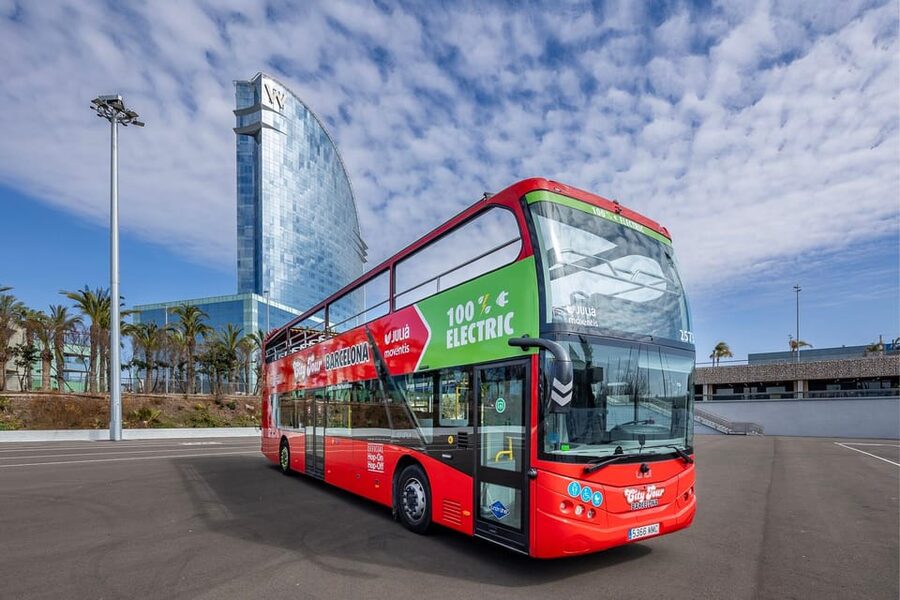
I would recommend this package to first-time visitors who want a broad look at Barcelona before choosing where to spend more time. Families may also like the mix of open-air bus sightseeing and the aquarium’s Oceanarium tunnel.
It suits anyone staying for two days and wanting to cover distant areas without arranging every trip individually. It is also helpful if you want to reach Montjuïc, Camp Nou, Park Güell, and the coast in one broad plan.
You may want a different approach if you prefer walking every street, already know Barcelona well, or plan to visit only the central Gothic Quarter and Passeig de Gràcia. The bus shows you the city, but it cannot replace time on foot in the old neighborhoods.
Should you book the Barcelona bus and aquarium combo?

Book it if you value flexibility, want to cover several separate parts of Barcelona, and will make time for the aquarium. The strongest value comes from the 48-hour ticket, several bus stops, and a planned aquarium visit near the port.
Choose the 24-hour option if your schedule is tight and you can map out your priority stops in advance. Just keep the weak stop signage and variable bus frequency in mind. For $73, this is a useful city orientation package, not a bargain for a single short ride.
FAQ

Where can I start the Barcelona City Tour?
Plaça Catalunya is the main stop, but you may start at any Barcelona City Tour stop listed on the two routes.
How long are the bus tickets valid?
The ticket is valid for either one or two consecutive days, depending on the option selected.
How often do the buses run?
Barcelona City Tour generally operates buses about every 30 minutes from 9:00 AM to 7:00 PM, with the last return around 7:00 PM. Seasonal frequency can vary between approximately 5 and 30 minutes.
Are both bus routes included?
Yes. One ticket covers all stops on both the orange West route and the green East route.
Can I use the aquarium ticket more than once?
No. The Aquarium of Barcelona ticket is valid for a single use.
Which languages are available for the audio guide?
The audio guide is available in English, Catalan, Spanish, French, German, Russian, Portuguese, Chinese, Japanese, Dutch, Hebrew, Italian, Arabic, Swedish, Norwegian, and Turkish. An adapted multilingual looping system is also available for people with auditory disabilities.
More Aquariums
- Barcelona Aquarium: Entry Ticket
★ 4.3 · 13,335 reviews - Mallorca: Palma Aquarium Entry Ticket w/ Optional 3D Cinema
★ 4.5 · 2,280 reviews - Seville Aquarium Admission Ticket
★ 4.6 · 1,947 reviews - Madrid: Zoo Aquarium Madrid Ticket
★ 4.6 · 1,663 reviews
Recently added around Barcelona
- Intro Segway Tour Barcelona 1h★ 4.9 · 166 reviews
- Barcelona: Bike or eBike Tour, Top Sights & Local Insights★ 4.9 · 166 reviews
- Instagram Photoshoot Tour in Barcelona★ 5.0 · 167 reviews
- Artisan Ceramic Making Experience★ 5.0 · 168 reviews
- Barcelona: Big Fun Museum Ticket★ 4.2 · 169 reviews
- Gaudi’s Crypt in Colonia Güell with Audioguide★ 4.4 · 170 reviews
- Sagrada Familia Evening Private Tour with Expert Guide★ 4.5 · 170 reviews
- Las Golondrinas Barcelona 60-min Boat Tour★ 4.0 · 170 reviews
Hop-On Hop-Off Bus Tours, compared.


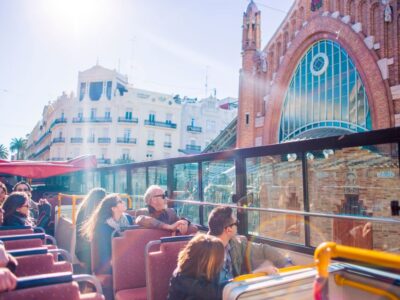

City Sightseeing Barcelona Hop-On Hop-Off Bus Tour: 24 or 48-Hour
Read our review →
Granada City Train 1 or 2-Day Hop-On Hop-Off Ticket
Read our review →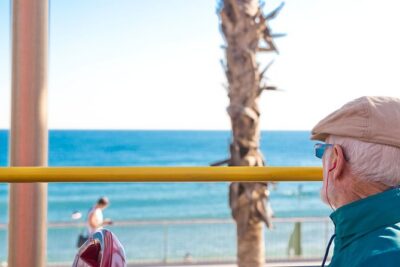
Barcelona City Tour Hop-On Hop-Off with Optional Boat
Read our review →Browse the lists this tour appears in