
Review · AUDIO TOURS
Seville: Hospital de los Venerables Ticket with Audio Guide
A small museum with a grand interior. Seville’s Hospital de los Venerables gives you a focused look at 17th-century religious architecture, with a handsome courtyard, a painted Baroque church, and the Centro Velázquez. I especially like the chance to see works by Velázquez, Murillo, and Pedro Roldán in one compact visit, and the included audio guide helps explain what you are looking at. The main drawback is that the site feels more like an art center than a museum about the hospital itself.
The courtyard and church are the real stars. Their arches, wooden doors, orange trees, frescoes, and carved details reward a slow visit. At $14 per person, the ticket offers fair value if you care about Spanish art and historic interiors, though visitors looking for a large museum may find the collection modest.
In This Review
- Key points to know before you go
- Why Hospital de los Venerables deserves a place in your Seville plan
- Entering the 17th-century courtyard
- Inside the Baroque church
- The sacristy and its quieter details
- The Centro Velázquez and Seville’s painters
- How the audio guide improves the visit
- The VR360º addition
- Is $14 good value?
- Who will enjoy this visit most?
- How long should you allow?
- My recommendation
- FAQ
- Where is Hospital de los Venerables located?
- What does the ticket include?
- How much does admission cost?
- How long is the ticket valid?
- Is an audio guide included?
- Which languages are available for the audio guide?
- Can I see works by Velázquez?
- Are works by Murillo included?
- Is the VR360º experience included?
- Is the building wheelchair accessible?
Key points to know before you go
- The Centro Velázquez displays work connected with Diego Velázquez, Bartolomé Esteban Murillo, and other Sevillian artists.
- The Baroque church contains frescoes designed and painted by the Valdés family, along with sculpture by Pedro Roldán.
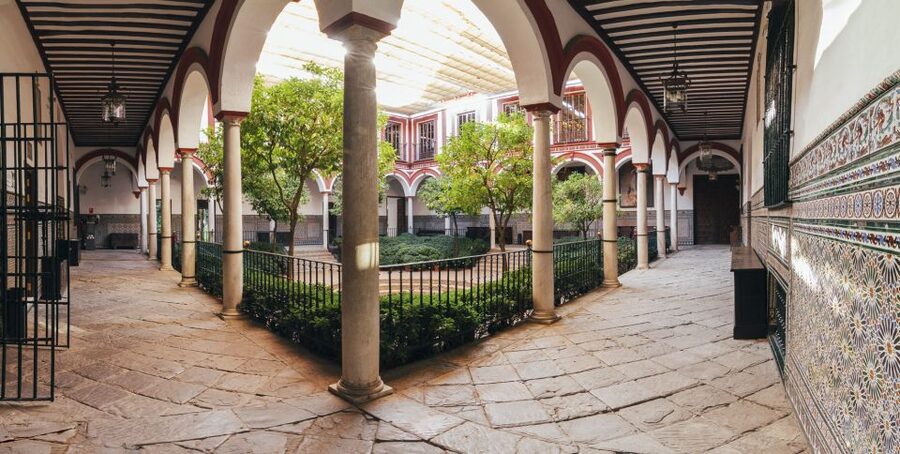
- The traditional courtyard has orange trees, arches, and old wooden gates, and has also served as a setting for theatrical performances.
- The audio guide is included in Spanish, French, German, and Italian, making the visit easier to follow at your own pace.
- The new VR360º experience adds a modern view of the historic building and is included with admission.
- A one-day ticket costs $14, with free cancellation up to 24 hours before the visit and an option to reserve now and pay later.
Why Hospital de los Venerables deserves a place in your Seville plan
Seville has no shortage of grand monuments. The Alcázar and cathedral take the biggest share of attention, but that can make a smaller site such as Hospital de los Venerables a pleasant change of pace. You can see the building, church, courtyard, and art center without committing half a day.
The hospital was founded by Canon Justino de Neve to care for elderly priests. That purpose matters because the building was not designed simply as a palace or a showy church. It was a working institution, built around the needs of its residents, then given the polished Baroque decoration expected of an important religious foundation.
I like the contrast between the plain idea of a care home and the elaborate setting. Painted walls, carved sculpture, arches, and decorated spaces turn the visit into a lesson in how religion, charity, and art worked together in Seville.
Still, keep your expectations in check. The site does not appear to present a large, detailed exhibition about daily hospital life. You will learn about the building through its rooms and audio commentary, but the artistic displays take center stage.
More self-guided tours:
- Casa de Salinas Entry Ticket with Audio Guide
★ 4.5 · 202 reviews - Barcelona: Sagrada Familia Entry Ticket with Audio Guide
★ 4.6 · 105,312 reviews - Barcelona: La Pedrera-Casa Milà Ticket & Audio Guide Option
★ 4.7 · 15,099 reviews
Entering the 17th-century courtyard
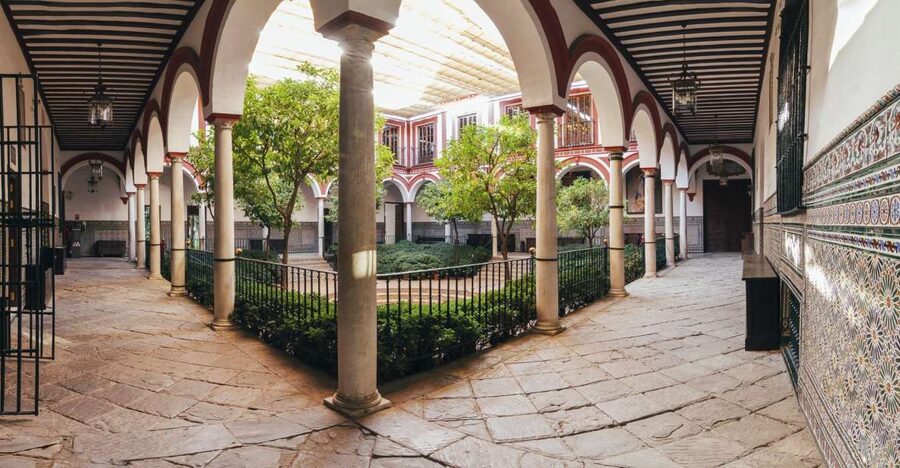
The courtyard is the natural starting point for understanding the building. Its traditional Sevillian design uses arches, warm stone, orange trees, and carefully made wooden doors. It is not a vast plaza. Its appeal comes from proportion and detail.
Take a moment here before rushing toward the art center. The courtyard gives you the building’s rhythm. You can see how the rooms open toward a shared central space, a common feature of Andalusian architecture that provides light, air, and a place for people to gather.
The wooden gates deserve a close look. They are more than practical entrances. Their construction and age help you picture the building before it became a cultural venue. This is also one of the more photogenic parts of the visit, although you should give the architecture your attention rather than treating the patio as a quick photo stop.
The courtyard has also been used for performances of plays by Miguel de Cervantes and others, as well as theater and music events. That detail gives the space a second life. You are not just seeing an old passageway. You are standing in a setting that has long supported public performance.
I would allow enough time to walk around the patio twice. The first pass gives you the broad view. The second lets you notice the doors, arches, upper levels, and painted details that can disappear when you are focused on finding the next room.
Inside the Baroque church
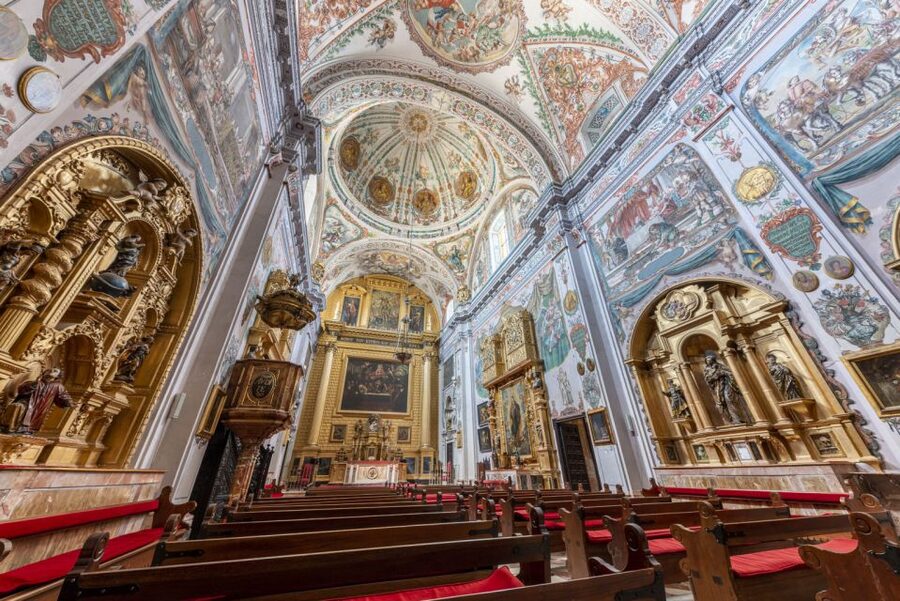
The church is the most visually powerful part of the visit. It dates from the end of the 17th century and uses the full Baroque vocabulary: arches, painted surfaces, sculpture, and carefully arranged decoration.
The frescoes on the walls were designed and made by the Valdés family. Look for the way the painted scenes extend the architecture. Baroque artists often used illusion and movement to make a building feel larger and more dramatic, and these frescoes are best appreciated from different points in the church.
You will also see works by the sculptor Pedro Roldán. His presence adds another layer to the interior. Paintings draw your eye across the walls, while sculpture gives the church physical form and shadow. Together, they make the room feel more active than a simple gallery.
The church is not just a container for art. The paintings and sculpture were made for a religious setting, so their placement matters. The decoration was meant to guide attention, support worship, and express the institution’s purpose. An audio guide is useful here because it can help connect the objects with the building around them.
I recommend standing quietly in the center for a minute, then moving closer to the walls. From the middle, you get the overall effect. Up close, you can study the fresco work and the way the painted scenes interact with the arches.
The sacristy and its quieter details
The sacristy offers a different mood from the main church. It is a more contained space, but its architecture still shows the care given to the hospital’s religious rooms.
This is where the visit benefits from slowing down. The main church may catch your eye first, while the sacristy rewards attention to materials, shape, and construction. Its survival over several centuries is part of its appeal, but avoid looking only for grand paintings. The room’s value also lies in how it supported the religious life of the institution.
The sacristy is included in your ticket, so do not skip it if the entrance is easy to miss. It helps complete the church experience and gives you a better idea of how the building functioned beyond its most decorated public space.
A few more Spain trips worth a look
- Granada: Alhambra Entry Ticket with Audio Guide
★ 4.1 · 5,950 reviews - Casa Batllo Admission Ticket with Intelligent Audio Guide
★ 4.5 · 3,168 reviews - Madrid: Las Ventas Bullring Tour with Audio Guide
★ 4.6 · 3,154 reviews - Cordoba: Mosque-Cathedral E-Ticket with Audio Guide
★ 4.1 · 2,124 reviews
The Centro Velázquez and Seville’s painters
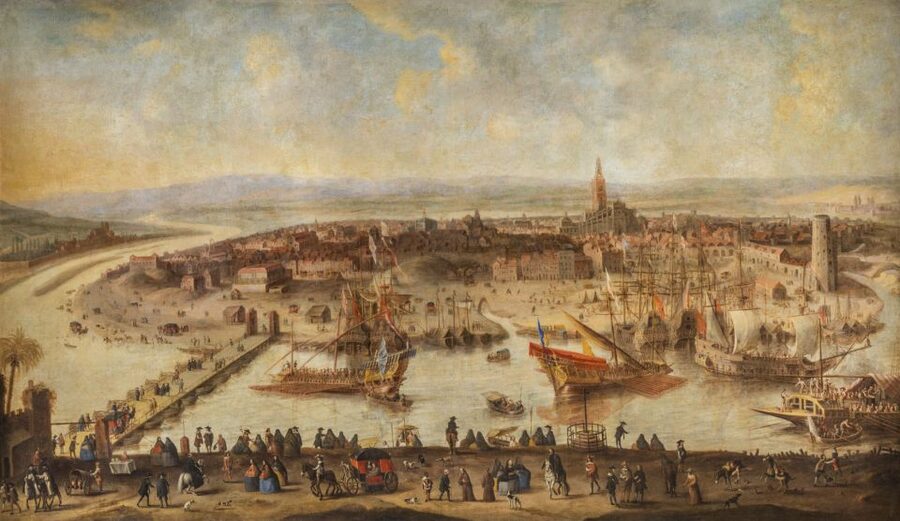
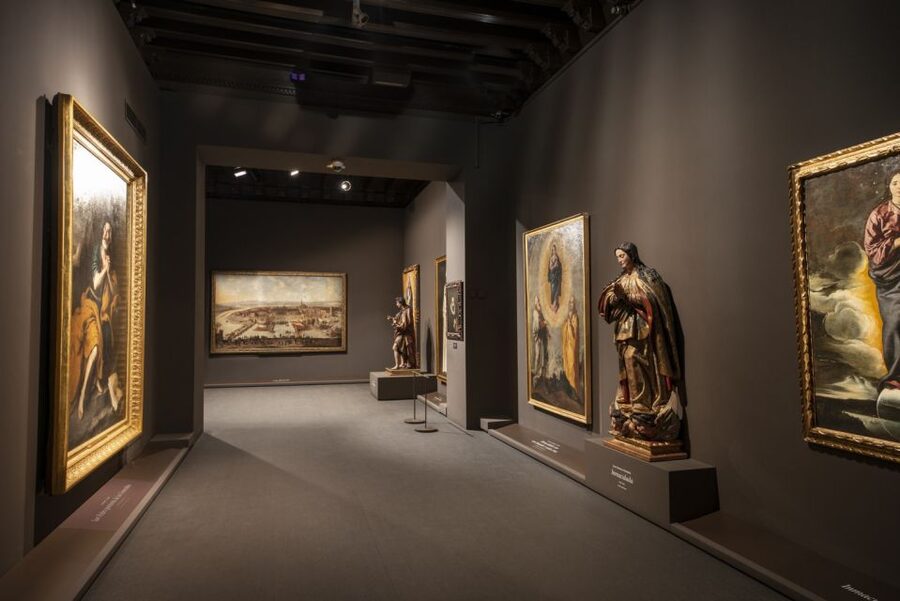
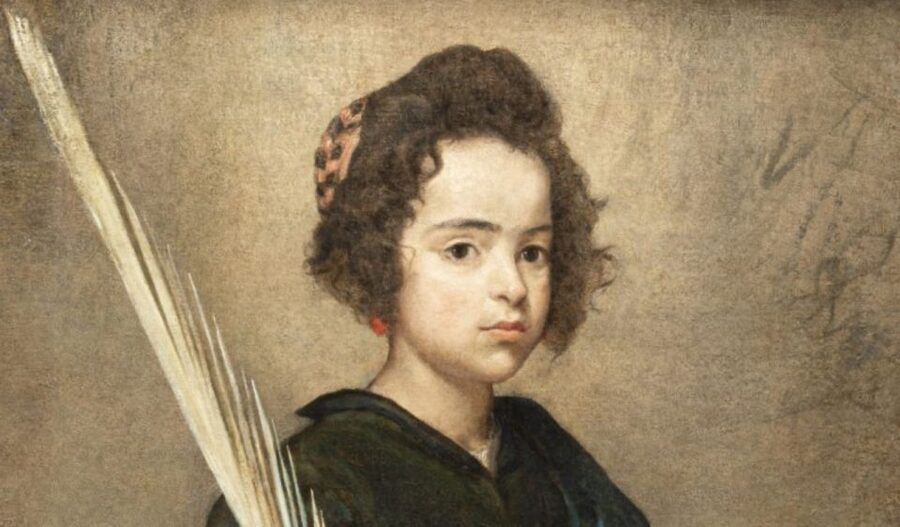
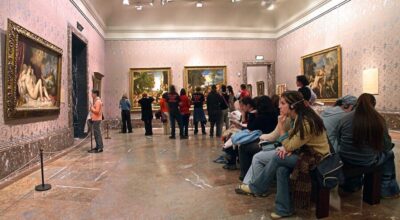
The Centro Velázquez is the main reason to choose this attraction if your interests lean toward painting. It presents works by major Sevillian artists, including Diego de Silva y Velázquez and Bartolomé Esteban Murillo.
Seeing Velázquez in person is a strong point for a $14 admission. Reproductions cannot fully show the surface, scale, and handling of paint, and the chance to view his work in Seville connects the art to the city where he was born and trained.
Murillo adds an important local contrast. His work is closely tied to Seville’s religious and artistic culture, and placing his paintings near Velázquez gives you a compact look at two important Spanish painters.
Do not expect the size of a major national museum. The art center is valuable because it is concentrated. You can spend time with a smaller number of works rather than racing through room after room. That makes it a good choice for you if you want quality and context without a long museum visit.
The art center also changes the character of the attraction. The hospital is not presented only as an architectural monument. It is also a place to look at Sevillian art in a setting that retains its original religious atmosphere.
How the audio guide improves the visit
The audio guide is included, which is important because the building’s meaning is not always obvious from its decoration alone. Frescoes, sculpture, and architecture can look beautiful without telling you why they are there.
The guide is available in Spanish, French, German, and Italian. It gives you a way to move at your own speed, pause when a painting catches your attention, and avoid being tied to a fixed group schedule.
One especially positive note concerns the history content. The guide is described as easy to use and detailed enough to make the visit worthwhile. That is useful here because the hospital’s original purpose could otherwise fade behind the art.
If your visit includes a live guide named Alvaro, his guidance has also been singled out for praise. The standard experience, however, includes the audio guide, so you should plan around that rather than assume a live tour is part of every admission.
Use the audio guide selectively. You do not need to listen to every word while standing in the courtyard. Save your closest attention for the hospital’s foundation, the major paintings, the Valdés frescoes, and the role of the church and sacristy.
The VR360º addition
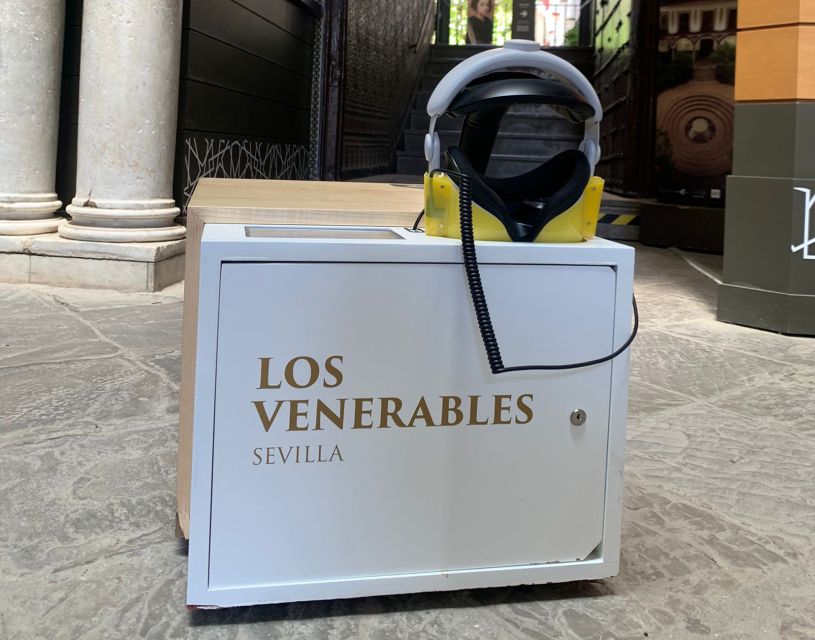
The VR360º virtual experience adds a modern layer to an otherwise historic visit. It is included in the ticket and offers a way to see Hospital de los Venerables from a new angle.
This will not replace the real courtyard or church. Virtual views can show the building’s layout and create a sense of perspective that is harder to get while standing in one room. For some visitors, it will be the most memorable part of the modern presentation. For others, it may feel like a short extra after the physical spaces have already made the strongest impression.
I would treat it as a bonus rather than the main reason to book. The real value remains the church, art center, courtyard, and sacristy. Still, its inclusion makes the $14 price easier to justify, particularly if you enjoy museum technology or want a fuller picture of the building.
Is $14 good value?
At $14 per person, this is a reasonable midrange admission for Seville. You receive entry to the courtyard, church, sacristy, and Centro Velázquez, plus the audio guide and VR360º experience.
The value depends on what you want from a museum. If you are excited by Velázquez, Murillo, Baroque interiors, and historic religious buildings, the ticket is well judged. You get several related experiences in one compact site.
If your main interest is the hospital’s social history, the value is less certain. The building was founded to care for elderly priests, but the visit focuses more heavily on art and architecture than on a detailed account of institutional life.
The price also works well for a flexible day in Seville. The ticket is valid for one day, and you can check available starting times before booking. Free cancellation up to 24 hours ahead and the option to reserve now and pay later are useful if your schedule is still changing.
Who will enjoy this visit most?
I would recommend Hospital de los Venerables to:
- Art lovers who want to see works by Velázquez and Murillo.
- Architecture fans drawn to Baroque churches and traditional courtyards.
- Visitors who prefer a focused cultural stop instead of a huge museum.
- People who enjoy audio guides and virtual presentations.
- Anyone looking for a quieter attraction to pair with Seville’s larger monuments.
You may want to skip it if you only want a detailed account of hospital life or if you have little interest in religious art. The visit is elegant and worthwhile, but its strongest material is visual.
The site is wheelchair accessible, which makes it easier for more people to enjoy the main spaces. Language support is limited to Spanish, French, German, and Italian for the audio guide, so check that the available language suits you.
How long should you allow?
The ticket is valid for one day, but the supplied information does not set a fixed visit length. I would plan enough time to see the courtyard, church, sacristy, art center, and VR360º experience without rushing.
A short visit can cover the main rooms. A slower visit makes more sense if you want to listen to the audio guide, study the frescoes, and spend time with the paintings. The site’s appeal comes from details, so rushing through it would flatten the experience.
Because no transport or group size is specified, plan this as a self-guided cultural visit rather than a scheduled excursion. Check the available starting times when you book.
My recommendation
I would book Hospital de los Venerables if you want a compact Seville experience built around art and architecture. The church, courtyard, and Centro Velázquez offer a strong mix, and the included audio guide gives the building useful context.
I would not book it solely because of the hospital’s name. The visit does not promise a large social-history exhibition. Choose it for the Baroque church, Velázquez and Murillo paintings, traditional patio, and frescoes, with VR360º as a welcome extra.
At $14, it is a sensible choice for an art-minded afternoon or a quieter stop between Seville’s major sights. Flexible cancellation and reserve-now, pay-later booking make it an easy addition when your plans are not fully fixed.
FAQ
Where is Hospital de los Venerables located?
It is in Seville, in Spain’s Andalusia region.
What does the ticket include?
The ticket includes entry to the church, sacristy, courtyard, and Centro Velázquez. It also includes an audio guide and the VR360º virtual experience.
How much does admission cost?
Admission costs $14 per person.
How long is the ticket valid?
The ticket is valid for one day.
Is an audio guide included?
Yes. The audio guide is included with admission.
Which languages are available for the audio guide?
The audio guide is available in Spanish, French, German, and Italian.
Can I see works by Velázquez?
Yes. The Centro Velázquez displays works by Diego de Silva y Velázquez, along with works by other Sevillian painters.
Are works by Murillo included?
Yes. The Centro Velázquez includes works by Bartolomé Esteban Murillo.
Is the VR360º experience included?
Yes. The new 360-degree virtual experience is included in the visit.
Is the building wheelchair accessible?
Yes. Hospital de los Venerables is wheelchair accessible.
Recently added around Seville
- Art and Wine in Sevilla★ 5.0 · 165 reviews
- Seville: Cathedral and Alcázar Guided Tour★ 4.6 · 167 reviews
- From Seville: White Villages and Ronda Full-Day Trip★ 4.2 · 168 reviews
- Guided Tour Sevilla Cathedral★ 4.5 · 169 reviews
- Seville: Guadalquivir River Cruise with Lunch or Dinner★ 4.5 · 170 reviews
- Cathedral and Real Alcàzar in Italian★ 5.0 · 170 reviews
- White Villages and Ronda: Day trip from Seville.★ 4.7 · 171 reviews
- Private Walking Tour Alcazar and Cathedral in Sevilla★ 5.0 · 172 reviews
Audio Tours, compared.
Sagrada Familia Entry Ticket with Audio Guide
Read our review →La Pedrera-Casa Milà Ticket & Audio Guide Option
Read our review →
Casa Batllo Admission Ticket with Intelligent Audio Guide
Read our review →
Browse the lists this tour appears in