
Review · CAVE TOURS
Nerja: Caves of Nerja Entry Ticket with Audio Guide
Ancient stone, giant chambers, and a quiet surprise. The Nerja Caves offer a remarkable look at underground Spain, with enormous stalactites, stalagmites, and the famous column formed where the two meet. At $18 per person, your ticket also includes the Nerja Museum and a 360º virtual reality presentation about human life 35,000 years ago.
I especially like the self-guided audio tour, which lets you move at your own speed instead of following a guide’s flag. I also like the excellent value: three different experiences come with one ticket. The main drawback is practical rather than scenic: the audio guide depends on a phone app, and the cave route includes many stairs, making this a poor choice for wheelchair users or anyone with limited mobility.
In This Review
- Key points at a glance
- Why the Nerja Caves are worth your time
- Entering the underground route
- The audio guide, and how to make it work
- The formations and the Cataclysm Room
- What the museum adds
- The 360º virtual reality experience
- The best time to visit
- Getting there and handling the practical details
- Who will enjoy this experience most?
- Final verdict: should you book it?
- FAQ
- How much does entry to the Nerja Caves cost?
- How long is the Nerja Caves experience?
- Is an audio guide included?
- Do I need to download an app?
- Is the Nerja Caves route suitable for wheelchair users?
- What else is included besides the cave visit?
Key points at a glance
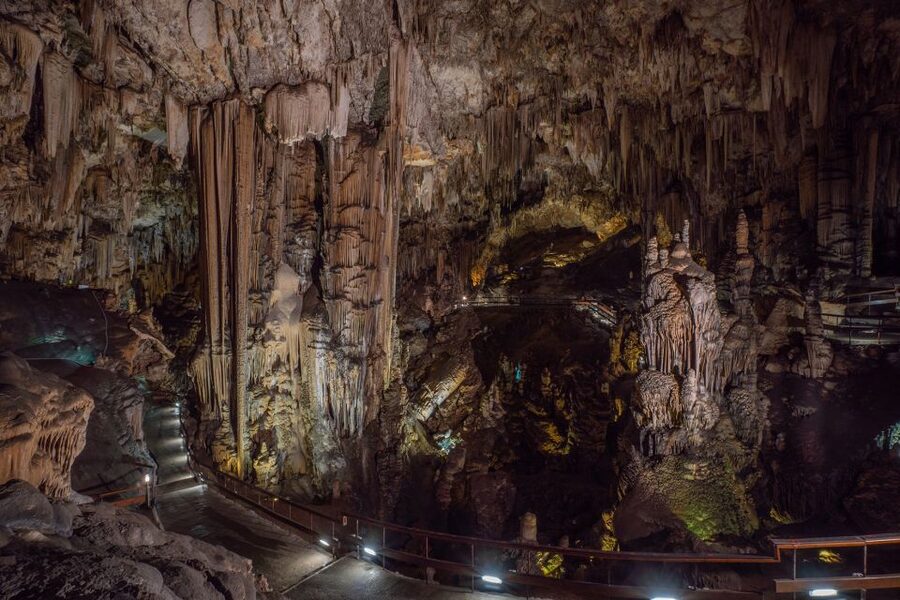
- The Cataclysm Room is the largest and highest chamber open to the public.
- The world’s largest column formed from a stalactite and stalagmite meeting.
- Your phone becomes the guide, with commentary in 17 languages, but download the app before arrival.
- The Nerja Museum adds archaeological and human context that the cave itself cannot show clearly.
- The 360º virtual reality room recreates life on Earth 35,000 years ago.
- Early arrival pays off, with quieter paths and more time to study the formations.
Why the Nerja Caves are worth your time
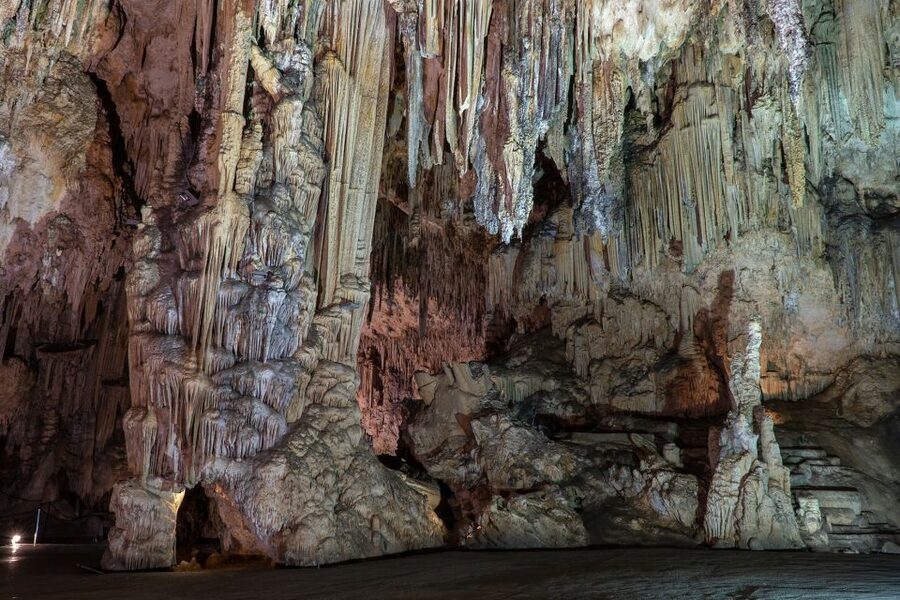
The Caves of Nerja are not a quick novelty stop. They are vast, dark, humid chambers shaped over immense periods by water, mineral deposits, and shifting underground conditions. You walk through a natural record of geology, archaeology, and biology, with the scale changing from narrow passages to rooms that feel more like underground cathedrals.
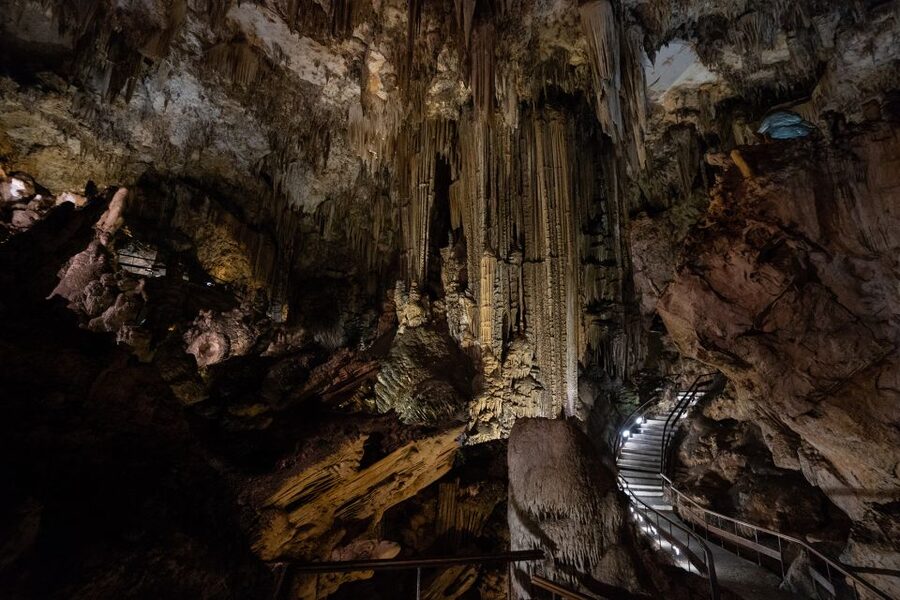
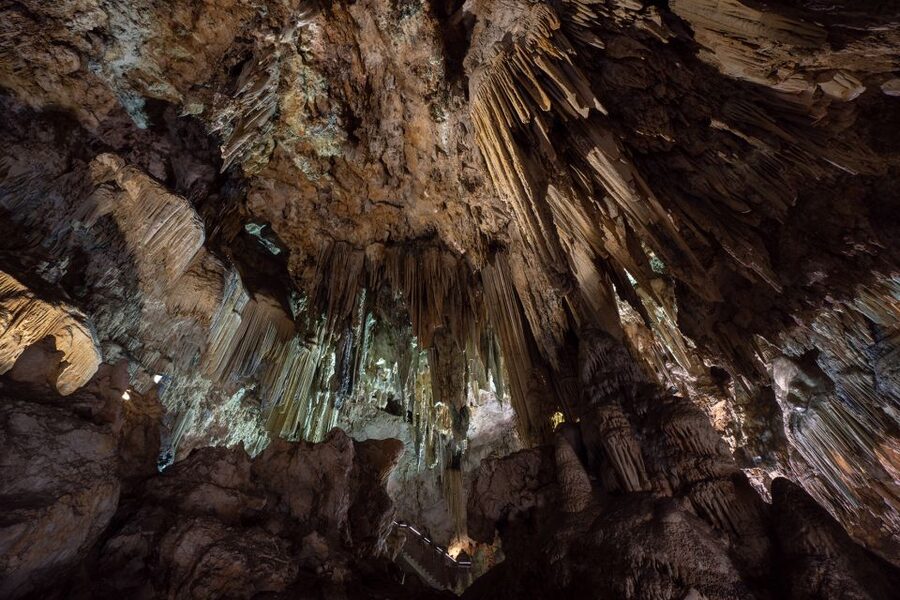
The public route takes you through several cave areas before reaching the Cataclysm Room. This is the main visual payoff. High ceilings, thick columns, and curtains of stone make it easy to forget that you are still near the Mediterranean coast.
I would not come only for the cave paintings. They are difficult or impossible to see on the public route because strong lighting could damage them. The audio commentary refers to paintings that may date to the Neanderthal period, but the darkness and conservation rules mean you should not expect a clear look at them. The museum helps fill that gap.
The cave itself is the reason to visit. The paintings are an extra piece of the story, not the main event.
More cave trips:
- Porto Cristo: Caves of Hams Entry Ticket
★ 4.2 · 6,548 reviews - Mallorca: Caves of Drach Day Trip & Optional Caves of Hams
★ 4.3 · 2,720 reviews - From Málaga: Caves of Nerja, Nerja and Frigiliana Day Tour
★ 4.7 · 2,187 reviews
Entering the underground route
A pre-booked ticket saves you from buying admission at the gate, and timed entry helps control the number of people inside. That matters here. A crowded cave can turn a dramatic chamber into a slow-moving queue, while a quieter visit gives you time to look up, stop at the numbered points, and listen without hurry.
The route is carefully arranged, with walkways, handrails, and lighting along much of the path. Still, it is not a flat stroll. You should expect a good number of steps, including a substantial climb when leaving the caves. One visitor counted about 100 steps straight up on the exit route.
Comfortable shoes are essential. The surfaces are managed for public access, but you are still walking through a natural cave, not a polished museum floor. Bring water, wear comfortable clothes, and pack a light jacket as advised by the venue. Conditions inside can feel warm and humid, although some people find the cave pleasantly cool compared with summer heat outdoors.
If you have limited mobility, think carefully before booking. The experience is not suitable for wheelchair users or people with mobility impairments, and the stairs can be tiring even for otherwise fit visitors.
The audio guide, and how to make it work
The audio guide is one of the best parts of the ticket because it leaves the cave quiet. You are not tied to a group, and you can pause, move forward, or spend extra time in a chamber. The numbered stations explain how the cave formed and point out details you might otherwise walk past.
The guide is available in English, Spanish, German, Arabic, Chinese, French, Dutch, Italian, Japanese, Korean, Norwegian, Polish, Portuguese, Russian, and Swedish. A children’s audio guide is available in Spanish and English, which makes the visit easier to share with younger family members.
The important catch is that this is a mobile audio guide, not necessarily a traditional handheld device handed to you at the entrance. Download the required cave app before you arrive, preferably while connected to reliable Wi-Fi. The underground signal may not support a last-minute download.
Bring your own earbuds or headphones. They make the commentary easier to hear and stop different languages from competing in the same chamber. If you use the phone’s speaker, the sound can be distracting to people around you, and some people have found the volume too low or the controls fiddly.
Allow a few minutes before entering to test the app. The QR code or instructions may not be immediately obvious, and asking a staff member for help at the start is much easier than trying to fix the problem halfway through.
The formations and the Cataclysm Room
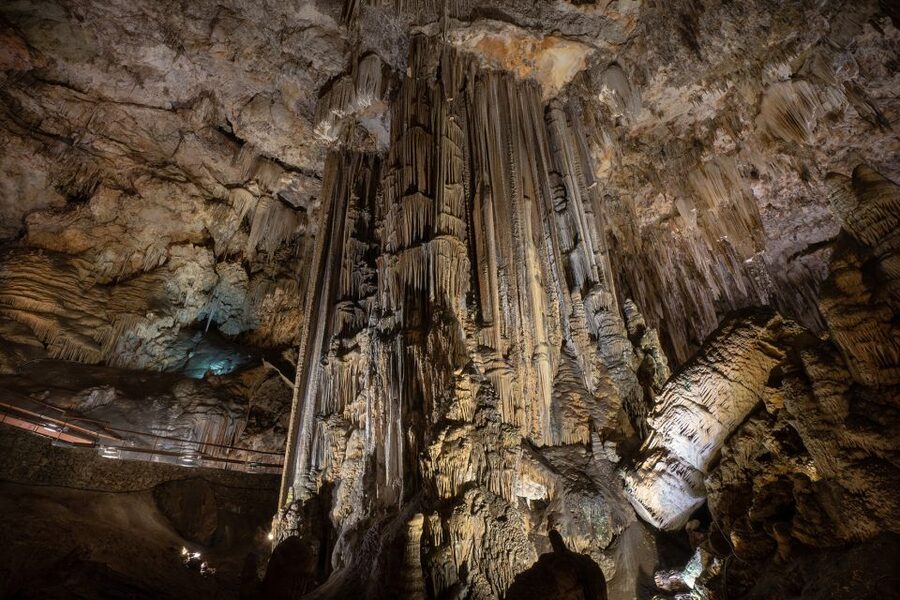
The cave’s formations are the main attraction, and they are best appreciated slowly. Stalactites hang from the ceiling, stalagmites rise from the floor, and some have grown together into thick stone columns. Water carrying dissolved minerals created these shapes drop by drop, though the process is easier to understand once the audio explains it.
The Cataclysm Room gives you the biggest sense of scale. It is the highest and largest chamber open to the public, with ceilings around 20 meters in places. Here you see the great column created by a stalactite meeting a stalagmite. It is described as the largest column in the world, and the sheer width of it makes the claim feel believable.
Lighting is kept low, both to preserve the cave and to maintain its atmosphere. That means photography can be tricky, and smaller details may disappear in the shadows. One visitor wished for brighter walkway lighting, while others found the lighting adequate. I would bring a phone or camera, but I would not plan the visit around getting perfect photographs.
The cave is also easy to rush. You could pass through the main route in under 30 minutes, but that would leave much of the experience on the table. With the audio guide and a slower pace, you might spend an hour or even two inside, depending on how often you stop.
More self-guided tours:
- Barcelona: Sagrada Familia Entry Ticket with Audio Guide
★ 4.6 · 105,312 reviews - Barcelona: La Pedrera-Casa Milà Ticket & Audio Guide Option
★ 4.7 · 15,099 reviews - Granada: Alhambra Entry Ticket with Audio Guide
★ 4.1 · 5,950 reviews - Barcelona: Palau de la Música Self-Guided Tour
★ 4.6 · 3,603 reviews
What the museum adds
The Nerja Museum gives you a useful second view of the site. Inside the cave, the scale and rock shapes dominate your attention. At the museum, you can focus on the people, discoveries, excavations, and objects connected with the site.
This is also the better place to understand the cave art. The actual paintings are not easy to see in the cave, partly because conservation means they cannot be brightly lit. The museum provides a clearer way to understand what was found and why the site matters to archaeology as well as geology.
Plan extra time if museums are important to you. A quick visit gives you the basic story, while a careful visit can take around two hours according to one detailed account. That makes the full experience longer than the cave walk alone.
The museum is especially valuable for anyone who wants more than a succession of impressive rock formations. It gives meaning to the site and shows that the caves are not simply a scenic attraction. They are also a place of human activity and scientific study since their discovery in 1959.
The 360º virtual reality experience
The virtual reality room is included in the ticket, and it is more than a minor extra. The presentation uses a 360º format to recreate life on Earth 35,000 years ago, placing you in a first-person view of the distant past.
You should treat it as a short modern companion to the museum rather than a replacement for the real cave. The cave gives you physical scale and natural silence. The virtual reality room gives you movement, visual context, and a way to picture how people may have lived during the period connected with the site.
This feature helps make the ticket good value for families and mixed-interest groups. One person may be most interested in geology, another in early humans, and children may find the virtual presentation more immediately engaging than a display case.
Check the timing of your visit if you want to see every included element. One late visitor found that parts of the facility were closing, so arriving earlier gives you more breathing room for the museum and virtual reality room rather than treating them as rushed add-ons.
The best time to visit
Early morning is the safest choice if you want a calmer experience. Several visitors who arrived early found the cave quieter, with less pressure to keep moving. This is especially useful if you want to listen to every audio stop or take photographs without people constantly passing in front of you.
The timed-entry system helps prevent severe crowding, but it does not guarantee solitude. The cave is a major attraction in Andalusia, and busy periods can still bring tour groups and families.
The site also works well on a rainy day. Most of the main activity is underground, and the museum and virtual reality room give you indoor alternatives. In hot weather, the cave offers a welcome change from the coast, though the humidity may make it feel warmer than expected.
Give yourself enough time to enjoy the area above ground. There is a café and terrace restaurant with broad views toward Nerja and the Mediterranean. The gardens are pleasant, and families can make use of a large play structure. The ticket is focused on the cave, but these nearby facilities make the visit easier to turn into a half-day outing.
Getting there and handling the practical details
The caves are outside central Nerja, and you should follow the road signs rather than rely blindly on a map pin. One person walking from Nerja took about 45 minutes, with a steep hill near the roundabout for Maro. The red train from Nerja is another option and costs a few euros, according to the information available at the site.
If you drive, check the parking arrangements before leaving your car. Parking may not be free, and payment or exit instructions are not always obvious. Ask at the reception booth if you are unsure about how to pay before heading out.
The ticket is valid for one day, with starting times shown when you check availability. It is non-refundable, so choose your date carefully. At $18, the cost is modest for the cave, museum, and virtual reality room, but the value depends on using all three. If you only walk through the cave quickly, you are leaving part of the admission unused.
Who will enjoy this experience most?
I would recommend it to anyone who likes natural wonders, geology, archaeology, or unusual family outings. The scale is impressive enough for adults, while the children’s audio guide, gardens, play structure, and virtual reality presentation give younger visitors several ways to stay interested.
It is also a good fit for independent sightseers. You are not locked into a fixed spoken tour, and you can move at your own pace. People who prefer silence will appreciate using earbuds rather than listening to a guide speak over the whole group.
I would be cautious if stairs are a problem, if you use a wheelchair, or if you dislike humid enclosed spaces. The route is well maintained, but it is still physically active and underground. I would also skip the audio guide only if you strongly prefer exploring without interpretation. The numbered commentary adds useful information about the formations and the cave’s past.
Final verdict: should you book it?
Yes, if you can manage the stairs and plan to spend at least a couple of hours on site. The caves are the star, with huge chambers and formations that are difficult to grasp from photographs. The museum and 360º presentation make the $18 ticket even better value, especially for families and anyone interested in human origins.
Book an early time if possible. Download the audio app before you go, bring earbuds, and do not expect to see the cave paintings clearly in the dark. If you follow those simple steps, this is one of the strongest low-cost attractions in the Nerja area.
FAQ
How much does entry to the Nerja Caves cost?
The listed price is $18 per person. The ticket includes entry to the cave, a mobile audio guide, the Nerja Museum, and the 360º virtual reality room.
How long is the Nerja Caves experience?
The ticket is valid for one day. The cave walk can take less than 30 minutes at a quick pace, but you can spend an hour or two if you stop often and use the audio guide. The museum and virtual reality room require additional time.
Is an audio guide included?
Yes. A mobile audio guide is included, with options in 17 languages. A children’s audio guide is available in Spanish and English.
Do I need to download an app?
Yes. The audio guide works through a mobile app. Download it before arriving because the underground signal may not be reliable. Bring earbuds or headphones for comfortable listening.
Is the Nerja Caves route suitable for wheelchair users?
No. The experience is not suitable for wheelchair users or people with mobility impairments. The route includes many stairs, including a steep climb when leaving the caves.
What else is included besides the cave visit?
Your ticket includes the Nerja Museum and a 360º virtual reality experience about life on Earth 35,000 years ago. The site also has gardens, a café, a terrace restaurant with views, and a large play structure.
More Audio Tours
- Casa Batllo Admission Ticket with Intelligent Audio Guide
★ 4.5 · 3,168 reviews - Madrid: Las Ventas Bullring Tour with Audio Guide
★ 4.6 · 3,154 reviews - Cordoba: Mosque-Cathedral E-Ticket with Audio Guide
★ 4.1 · 2,124 reviews - Madrid: Prado Museum Ticket with In-App Audio Guide
★ 3.6 · 1,154 reviews
Recently added around Spain
- Half-Day Luxury Catamaran Sailing Cruise in Granada★ 5.0 · 165 reviews
- Jeep Safari to Teide and Masca★ 4.5 · 165 reviews
- Madrid: Thyssen Museum Guided Tour with Skip-the-Line Entry★ 4.5 · 165 reviews
- Visit in Spanish to the Cathedral Mosque. Does not include entrance ticket★ 5.0 · 165 reviews
- Canyoning in Andalucia: Rio Verde Canyon★ 5.0 · 165 reviews
- Guided Tour to Caminito del Rey from Malaga★ 4.5 · 165 reviews
- VIP Private Segway Tour of Palma★ 5.0 · 165 reviews
- Las Palmas: Private Old City Guided Walking Tour with Tapas★ 4.6 · 166 reviews
Cave Tours, compared.

Caves of Drach Day Trip & Optional Caves of Hams
Read our review →
Caves of Nerja, Nerja and Frigiliana Day Tour
Read our review →
Caves of San José Guided Excursion and Ticket
Read our review →
Dinosaurland and Caves of Hams Combined Ticket
Read our review →

Snorkeling and SUP Paddle, Beach and Cave Boat Tour
Read our review →
From Can Picafort: Dolphin Watching and Cave Boat Trip
Read our review →Browse the lists this tour appears in