
Review · GAUDI HOUSE TOURS
La Pedrera-Casa Mila Admission Ticket with Audioguide
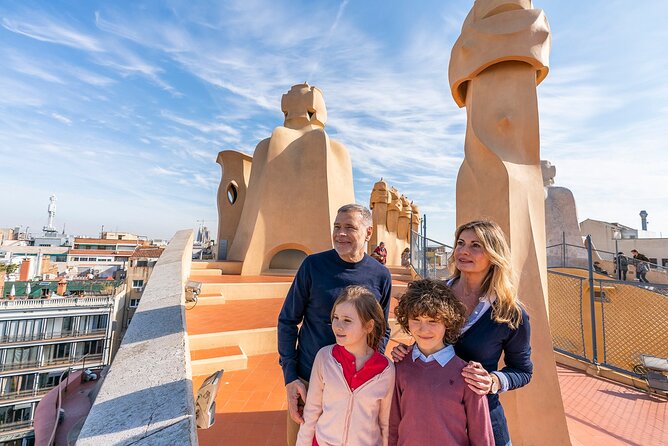
Gaudí saved his strangest tricks for the roof. This self-guided visit to La Pedrera, also called Casa Milà, gives you time to study the building at your own speed, from the swirling courtyards to the famous chimney sculptures. I especially like the included audio guide and the wide choice of entry times. The main drawback is weather: rain can close the roof, with no partial refund.
The visit takes about 90 minutes and costs $41.03 per person. I like that you can skip a long ticket-buying process with a reserved time slot, then move through the building without being tied to a guide. Still, the price feels strongest when you use every part of the route, including the attic, roof terrace, apartment, and exhibition spaces.
In This Review
- Key details before you book
- Why La Pedrera is worth your time
- Your reserved entry at Casa Milà
- The courtyards reveal Gaudí’s working method
- The period apartment makes the building human
- The attic and Espai Gaudí explain the ideas behind the curves
- The roof terrace is the payoff
- Is the $41.03 admission good value?
- Practical advice for a smoother visit
- Who will enjoy Casa Milà most?
- Should you book La Pedrera Casa Milà?
- FAQ
- How long does the La Pedrera Casa Milà visit take?
- Is a live tour guide included?
- Is the rooftop included in the ticket?
- What does the audio guide cover?
- Can I bring luggage or a stroller?
- Are children allowed to visit?
- Can I change or cancel my ticket?
Key details before you book
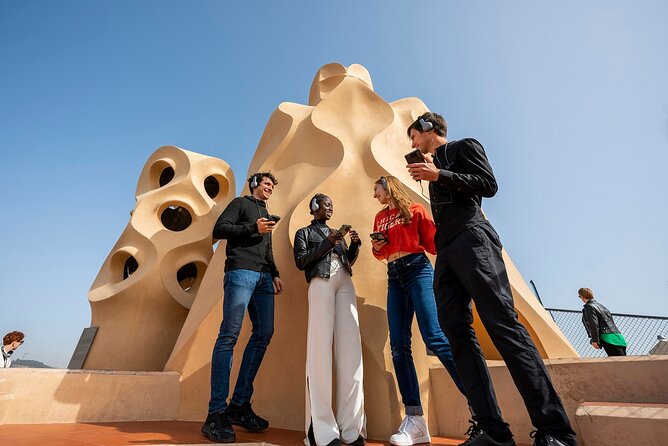
- The roof terrace is the star: Corkscrew chimneys, unusual sculptures, and broad views across Barcelona make this the part to protect in your schedule.
- You explore five floors: The public route covers about 4,500 square metres, including courtyards, an apartment, an exhibition hall, the attic, and the roof.
- The audio guide sets the pace: You listen as much or as little as you like, with no group waiting for a guide to finish.
- Rain changes the experience: The roof closes for safety in wet weather, and that does not qualify you for a full or partial refund.
- Go early if possible: Crowds can build around 10:00 to 10:30, making the narrow spaces and roof harder to enjoy.
- It is more than a photo stop: The commentary explains Gaudí’s ideas, natural forms, and the building’s place in his career.
Why La Pedrera is worth your time
La Pedrera was designed between 1906 and 1912 for the Milà family. Its official name means the quarry, a fitting nickname for the rough, rippling stone exterior along Passeig de Gràcia. This was Gaudí’s last major building before he gave his full attention to La Sagrada Família.
From the street, Casa Milà can look like a huge slab of pale stone with rows of windows. The real surprise comes inside. Gaudí treated the building as a complete work, not just a handsome front. Courtyards, stairways, apartments, ventilation, furniture, and roof details all follow his unusual approach to nature and structure.
I find the building most rewarding when you stop trying to make it look like a normal apartment block. There are few straight, stiff gestures here. Walls curve. Ironwork twists. Murals flow around the courtyards. Chimneys become sculptural figures. You may not love every room, but you will rarely mistake it for anywhere else.
The attraction has an average rating of 4.5 from 1,033 ratings, and the strongest praise centers on three things: the roof, the audio guide, and the chance to move at a personal pace. Those are also the areas that decide whether the admission fee feels worthwhile.
More Gaudi house tours:
- Barcelona: Casa Batlló Entry with Self-Audioguide Tour
★ 4.7 · 25,359 reviews - Barcelona: La Pedrera-Casa Milà Ticket & Audio Guide Option
★ 4.7 · 15,099 reviews - Barcelona: La Pedrera Night Experience
★ 4.4 · 4,633 reviews
Your reserved entry at Casa Milà
You arrive at La Pedrera for the time slot selected when booking. Confirmation is provided at booking, and the mobile ticket makes entry simple. Several people have found the check-in and ticket scanning quick, with little or no line at the time they visited.
That does not mean the building will feel empty once you are inside. The route can become busy, especially later in the morning. Some areas are narrow, and people stop often for photographs. An early time slot, ideally before the reported crowd increase around 10:00 to 10:30, gives you more room to look up and listen.
The experience is described as a small activity with a maximum of nine people, but this is not a traditional guided walk with a named guide leading your group. You receive admission and an audio guide, then follow the public route independently. If you expected a personal guide speaking directly to your group, adjust that expectation before you go.
This format suits you if you prefer control. You can pause at a window, replay an explanation, take photographs, or move on when a display does not hold your attention. It works less well if you want conversation, questions, or a guide to point out details in real time.
The courtyards reveal Gaudí’s working method
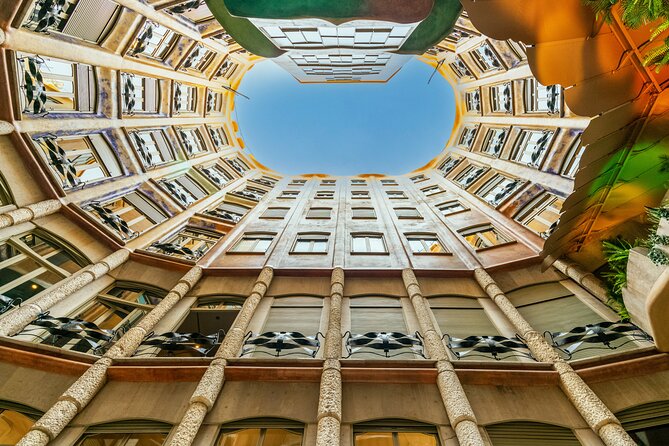
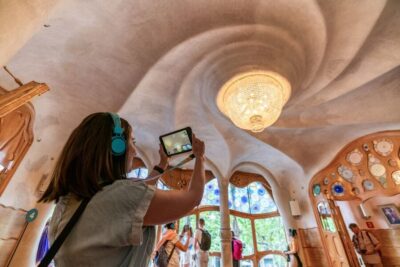
The first major interior surprise is the pair of courtyards connected with Passeig de Gràcia and Provença. These are not plain service wells. Gaudí shaped them with curved surfaces, colorful murals, mosaics, and carefully designed columns.
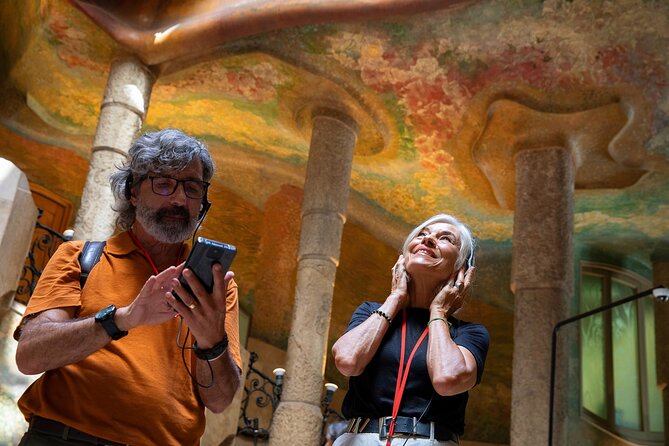
The courtyards helped bring light and air into the building, but they also became part of its visual identity. Look up and around rather than walking straight through. The colors and forms change as you move, which is exactly the kind of detail an audio guide can help you notice.
The lobbies and stair areas continue the same theme. Decorative surfaces and metalwork feel organic rather than rigid. The design does not simply decorate a functional building after the fact. Function and ornament are constantly mixed together.
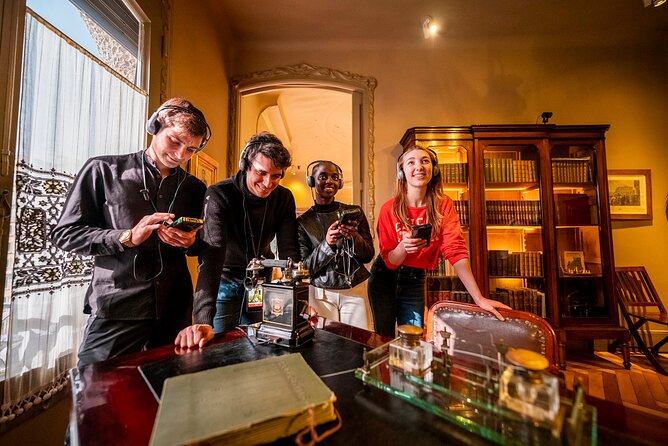
This is where the audio commentary earns its keep. It gives you a way to connect the strange forms with Gaudí’s ideas, instead of seeing only a series of beautiful oddities. Several audio-guide users found the explanations clear and useful, especially for understanding how Gaudí thought about nature and architecture.
The equipment generally works well, although some people have had trouble with headphones or intermittent audio. Check the headset early, before you get too far into the route. If you have hearing loss, a written transcription of the guide is available according to the supplied visitor information.
The period apartment makes the building human
La Pedrera can feel like an architectural laboratory until you enter the reconstructed apartment. Here, the building becomes easier to understand as a place where people actually lived.
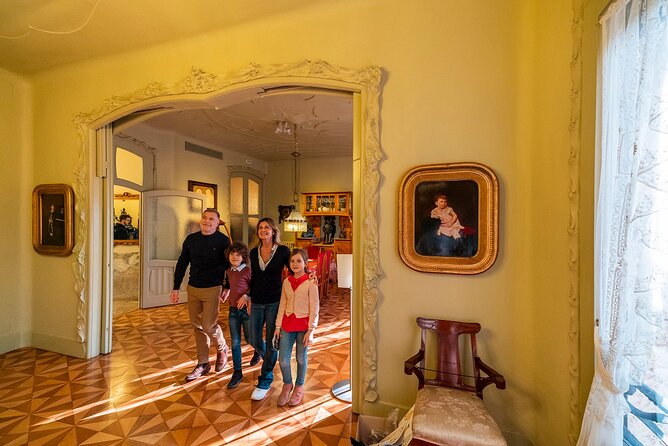
The La Pedrera Apartment recreates an early 20th-century home. Furniture and domestic details show how the Milà family’s residence may have looked, while the surrounding architecture reveals Gaudí’s influence on ordinary daily life. Doors, storage, windows, and room shapes become more interesting when you imagine using them rather than simply photographing them.
This section helps balance the grand roof terrace. The roof gets the attention, but the apartment explains why the building matters as a home as well as a monument. You see how Gaudí’s ideas affected rooms, circulation, and household details.
It also gives you a useful comparison with Casa Batlló and other Gaudí sites. Each building has its own mood. La Pedrera feels less like a polished fantasy palace and more like a bold experiment in urban housing. If you have already seen Casa Batlló, you may find the interior here less immediately theatrical. The appeal is in the structure, the curves, and the connection between practical design and imagination.
A few more Spain trips worth a look
- Barcelona: Sagrada Familia Entry Ticket with Audio Guide
★ 4.6 · 105,312 reviews - Barcelona: Park Güell Admission Ticket
★ 4.4 · 76,534 reviews - Barcelona: 24 or 48-Hour Hop-On Hop-Off Bus Tour
★ 4.4 · 20,872 reviews - Barcelona: Park Guell Guided Tour with Skip The Line Entry
★ 4.7 · 17,563 reviews
The attic and Espai Gaudí explain the ideas behind the curves
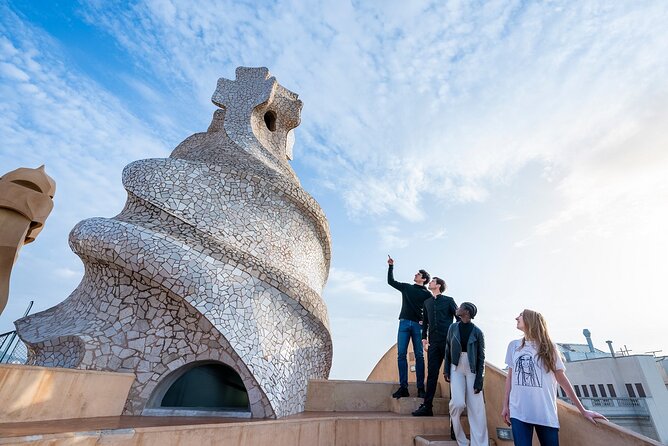
Do not rush past the attic. It is one of the most useful stops for understanding Gaudí’s design process. The space contains displays about his models and the natural forms that influenced his work, helping you see that the building’s curves were not random decoration.
The attic also gives the visit an educational backbone. Instead of asking only what was Gaudí thinking?, you get clues about how he observed the natural world and translated those observations into architecture.
The route includes an exhibition area in the former residence of the Milà family, along with Espai Gaudí, which presents the architect’s life and work. The audio guide adds context as you go, and you are free to continue looking around after the formal commentary ends.
That freedom matters. A 90-minute estimate is enough for a steady visit, but some people finish sooner if they listen only to selected sections. I would allow the full 90 minutes, especially if you want photographs, time on the roof, and a careful look at the attic displays.
If you have limited interest in architecture, the attic and audio guide may be what turns the visit from a quick look at an unusual house into a worthwhile stop. If you prefer only visual highlights, you can move more quickly, though the admission price becomes harder to justify.
The roof terrace is the payoff
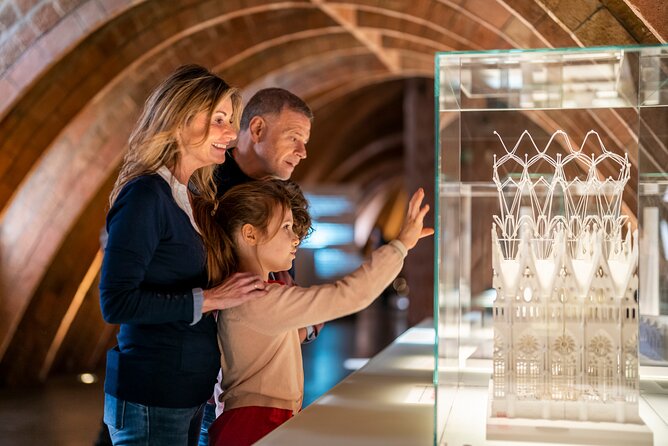
At the top, La Pedrera becomes a collection of sculptural forms against the Barcelona skyline. The roof terrace is famous for its corkscrew chimneys and other strange structures, some of which look like masked figures or armored guardians.
The shapes are not simply placed there for decoration. Gaudí used the roof for practical elements such as chimneys and ventilation, then treated those necessities as part of the building’s artistic language. That blend of use and fantasy is one of the clearest lessons of Casa Milà.
The views are another major reason to visit. You get panoramic views of Barcelona from a distinctive perch, with the city spread beyond the roof forms. The setting makes this a particularly good place to pause after the indoor rooms.
Pay attention to your footing. Parts of the roof can feel tricky, and one visitor described it as a little treacherous if you are not watching where you walk. Keep your attention on the path instead of backing up for a photograph.
Crowding can also be an issue. The roof has limited space, and people sometimes occupy the best photo positions for longer than they should. An early visit helps, but patience is still part of the plan. Staff generally manage the flow well, though busy photo sessions can make the terrace feel cramped.
Most important, rain can close the roof for safety. This is not a minor change. You will miss the building’s most famous outdoor feature and much of the panoramic view. The ticket remains non-refundable, so check the forecast before selecting your date if the roof is your main reason for coming.
Is the $41.03 admission good value?
At $41.03, this is not a casual stop for everyone. You are paying for access to a major Gaudí building, the rooftop, the reconstructed apartment, the attic, the exhibition areas, and an audio guide. The value depends on how much of that route you use.
I think the price is reasonable for visitors who care about architecture and plan to stay for the full 90 minutes. The roof alone is memorable, but the apartment and attic give the experience much more substance. You are not just paying to stand on a terrace and take a skyline photograph.
The value is weaker in heavy rain, when the roof closes, or during a packed visit when it is hard to stop in the narrow spaces. One person found the interior less impressive than expected after seeing other Gaudí buildings. That is a fair warning. Casa Milà is not designed to please every eye, and its rough exterior and unusual rooms can feel less immediately glamorous than Casa Batlló.
The audio guide improves the calculation. It provides structure without forcing you to join a fixed group. It also helps explain Gaudí’s point of view, which is difficult to grasp from photographs alone. Some people found it less polished than the audio at Casa Batlló, and occasional headphone problems have been reported, but the commentary is still a useful part of the ticket.
Practical advice for a smoother visit
Reserve a time that allows room for the roof and attic rather than squeezing Casa Milà between two tight appointments. The advertised duration is about 1 hour and 30 minutes, and that is a sensible minimum if you listen to the commentary.
Arrive with your mobile ticket ready. The attraction is near public transportation, and no hotel pickup or drop-off is provided. Food and drinks are also not included, so plan those separately.
A left-luggage room can hold items that make the visit awkward, including baby strollers, backpacks, suitcases, and tripods. Flash photography and tripods are prohibited. Service animals are allowed, and children must be accompanied by an adult.
You can participate independently, and most people can manage the route. The ticket is valid only on the date selected at booking. It is also non-refundable and cannot be changed, so choose your date carefully.
The audio guide is offered in English in the booking details. Onsite information also indicates a choice of languages, and transcribed commentary is available for people with hearing impairments. Confirm the language you need when arranging your visit rather than assuming every option is included in the same way.
Who will enjoy Casa Milà most?
I would choose this for an independent-minded visitor who likes to set the pace. You will get the most from it if you enjoy design, urban history, photography, or the practical side of architecture.
It is also a good choice before visiting Sagrada Família, Park Güell, or Casa Batlló. The commentary and attic displays give you a useful introduction to Gaudí’s ideas, so later buildings may make more sense.
Families can enjoy the visual surprises, although younger children may not want to listen to every audio section. Anyone who dislikes headsets or prefers a lively human guide may find the format too quiet and self-directed.
If you have only one chance to see a Gaudí building, compare this with the others on your route. Casa Milà offers some of the best roof views and a strong look at Gaudí’s structural thinking. It may not have the instant color impact of Casa Batlló, but it gives you a more complete sense of how an entire building can work as art.
Should you book La Pedrera Casa Milà?
Book it if you want a flexible, well-organized visit with a superb roof, strong city views, and enough indoor material to explain Gaudí’s methods. Choose an early time slot, allow the full 90 minutes, and check the weather closely.
I would skip it only if $41.03 feels too high for an architectural site, or if rain makes the roof closure likely and that terrace is your main goal. For most people who appreciate Gaudí, the combination of courtyards, apartment, attic, audio commentary, and roof makes La Pedrera a worthwhile Barcelona stop.
FAQ
How long does the La Pedrera Casa Milà visit take?
The experience lasts about 1 hour and 30 minutes. Allow the full time if you want to listen to the audio guide and see the courtyards, apartment, attic, exhibition spaces, and roof terrace.
Is a live tour guide included?
No. The ticket includes admission and an audio guide for a self-led visit. You explore independently and can move at your own pace.
Is the rooftop included in the ticket?
Yes. The La Pedrera and rooftop admission ticket includes access to the roof terrace. In rainy weather, the roof may close for safety, and this does not qualify you for a partial or full refund.
What does the audio guide cover?
The audio commentary explains Antoni Gaudí’s life and work, the building’s design, and his architectural ideas. A transcription is available for people with hearing impairments.
Can I bring luggage or a stroller?
La Pedrera Casa Milà has a left-luggage room where you can leave items such as baby strollers, backpacks, suitcases, and tripods.
Are children allowed to visit?
Yes. Children can participate, but they must be accompanied by an adult.
Can I change or cancel my ticket?
No. The ticket is non-refundable and cannot be changed for any reason. It is valid only on the date selected at booking.
Recently added around Barcelona
- Intro Segway Tour Barcelona 1h★ 4.9 · 166 reviews
- Barcelona: Bike or eBike Tour, Top Sights & Local Insights★ 4.9 · 166 reviews
- Instagram Photoshoot Tour in Barcelona★ 5.0 · 167 reviews
- Artisan Ceramic Making Experience★ 5.0 · 168 reviews
- Barcelona: Big Fun Museum Ticket★ 4.2 · 169 reviews
- Sagrada Familia Evening Private Tour with Expert Guide★ 4.5 · 170 reviews
- Gaudi’s Crypt in Colonia Güell with Audioguide★ 4.4 · 170 reviews
- Las Golondrinas Barcelona 60-min Boat Tour★ 4.0 · 170 reviews
Gaudi House Tours, compared.
La Pedrera-Casa Milà Ticket & Audio Guide Option
Read our review →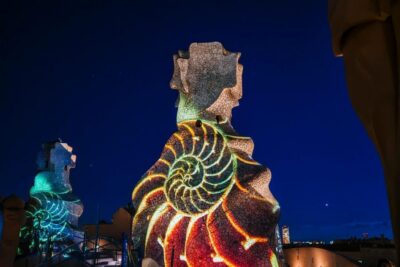
Gaudi’s Casa Vicens Skip-the-Line Entrance Ticket
Read our review →
Casa Batllo Admission Ticket with Intelligent Audio Guide
Read our review →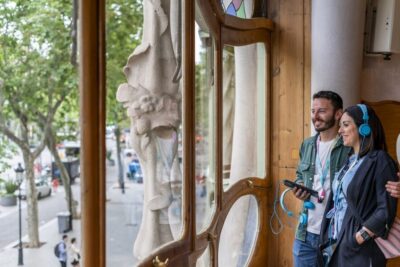
Complete Gaudi Tour: Casa Batllo, Park Guell & Sagrada Familia
Read our review →
Gaudi´s Casa Vicens Skip the Line Ticket with Audioguide
Read our review →Browse the lists this tour appears in