
Review · GAUDI HOUSE TOURS
Barcelona: Casa Batlló Be The First Entry Ticket
Magic begins before Barcelona wakes. Casa Batlló’s Be The First Entry ticket gives you a quiet start inside Antoni Gaudí’s famous house, with fewer people competing for the same photographs and more time to notice its strange, playful details. I like the early access most of all, and I also like the polished audio and tablet experience that shows how rooms may have looked in use. The main drawback is price: at about $53 per person, it costs more than a basic admission, and the tablet can become awkward to carry.
The earliest slots, often around 8:30 or 8:45 a.m., offer the best chance of a calm visit. You may still find a small queue or other early arrivals, but the building becomes much busier later, and one visitor reported leaving after 90 minutes to find the crowds had already ballooned.
In This Review
- Key points to know before booking
- Why the first morning slot matters
- The entrance and how the visit works
- The house itself: Gaudí’s play with light and shape
- Using the tablet without letting it take over
- The Gaudí Dome and its 1,000 screens
- The Gaudí Cube and the final visual show
- The new staircase, courtyard mapping, and store
- How much time should you allow?
- Is $53 a fair price?
- Who will enjoy this ticket most?
- My practical strategy for a better visit
- Should you book Casa Batlló Be The First Entry?
- FAQ
- Where do I start the Casa Batlló Be The First Entry visit?
- What does the ticket include?
- Is there a live guide?
- Which languages are available for the audio guide?
- How long is the visit?
- Is Casa Batlló wheelchair accessible?
- Can I store luggage or a stroller?
Key points to know before booking
- Early entry changes the mood: The first slots let you pause for photos and details before the main crowds arrive.
- The tablet adds virtual reality: Use it at selected points to picture furnishings, former uses, and Gaudí’s ideas.
- Gaudí’s Cube is the grand finale: A six-sided LED room creates a strong visual finish, though one visitor felt dizzy inside.
- The Gaudí Dome uses more than 1,000 screens: It offers a short, highly produced introduction to Gaudí’s world.
- The audio guide comes in 15 languages: Options include English, Spanish, Catalan, French, Italian, German, Portuguese, Chinese, Japanese, Korean, Dutch, Polish, Romanian, Russian, and more.
- You can visit at your own pace: There is no live guide, so you control the rhythm and can stop for photographs.
Why the first morning slot matters
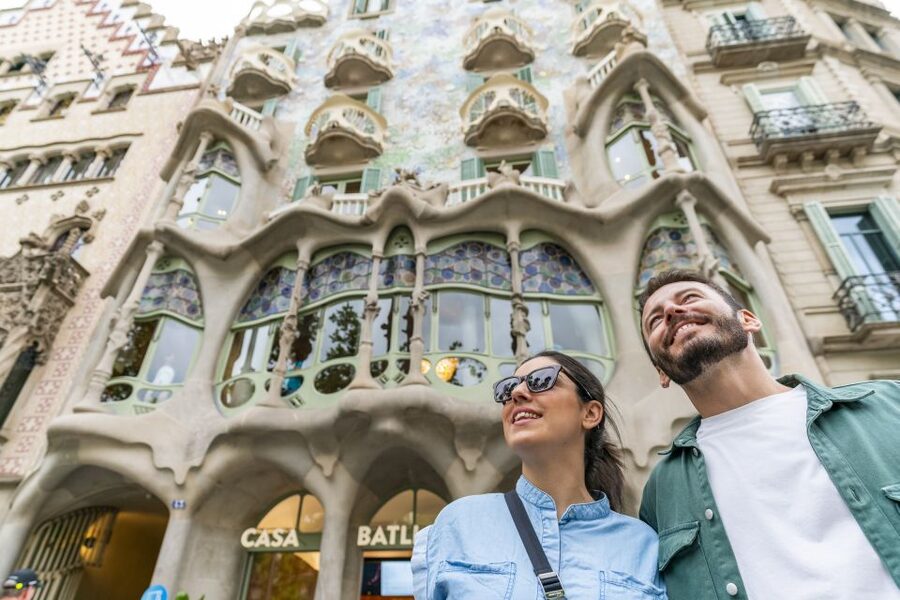
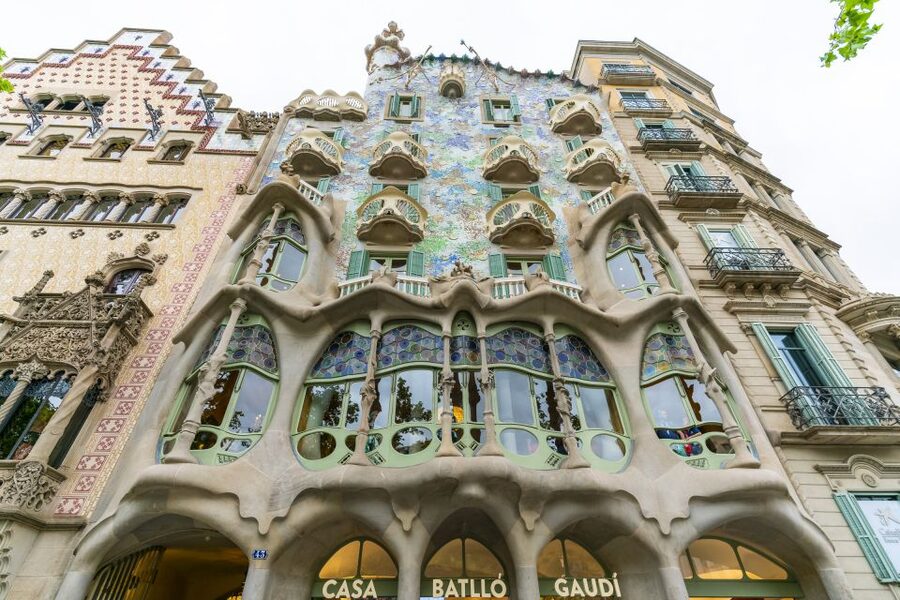
Casa Batlló sits on Barcelona’s Passeig de Gràcia, where its colorful facade competes for attention with grand apartment buildings and expensive shops. From outside, the house is already a visual puzzle, with curved forms, unusual windows, and a roofline that looks less like conventional architecture than something from a dream.
Inside, the early ticket gives you a little breathing room. That matters here because the rooms are full of details that disappear when you are moving shoulder to shoulder. The first visitors can pause in the main room, frame the windows, and look up without constantly waiting for someone to move.
The early hours also help with photography. Several people found that the first entry made it easier to take pictures without strangers in every background. You should still expect other people, especially in popular rooms, but the difference between an early start and a later visit can be considerable.
One practical tip is to arrive before your booked time and aim to be among the first in line. An early ticket does not mean you can ignore the clock. If you enter at 8:30 or 8:45, the advantage is strongest when you use that first window rather than arriving late within it.
More Gaudi house tours:
- Barcelona: Casa Batlló Entry with Self-Audioguide Tour
★ 4.7 · 25,359 reviews - Barcelona: La Pedrera-Casa Milà Ticket & Audio Guide Option
★ 4.7 · 15,099 reviews - Barcelona: La Pedrera Night Experience
★ 4.4 · 4,633 reviews
The entrance and how the visit works
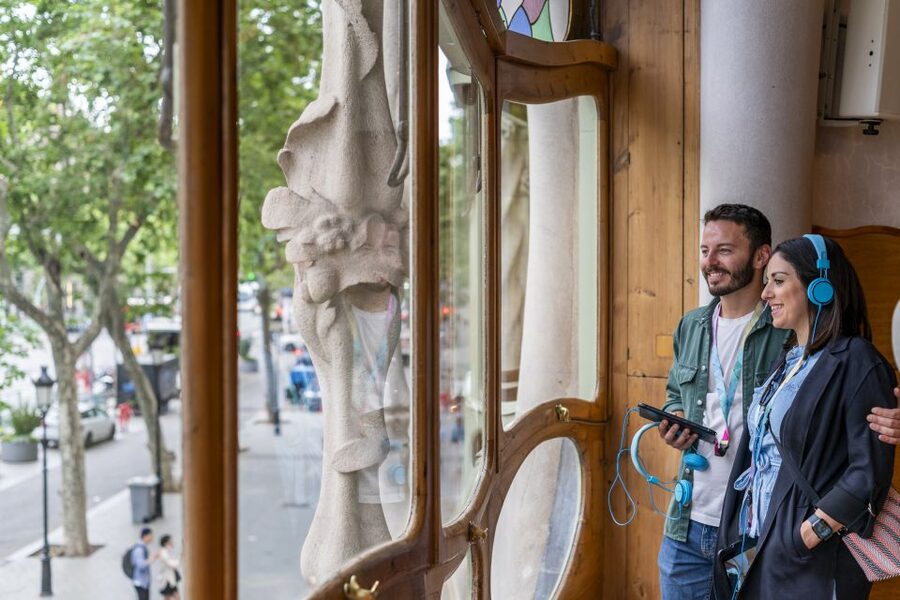
At Casa Batlló, you collect the audio guide and virtual reality tablet before beginning the route. The visit is self-guided, with signs directing you from one part of the house to the next.
You receive headphones for the audio commentary. The script is available in 15 languages, which makes this a practical choice for international visitors who want more than a quick look at the architecture.
There is no live guide leading a group. I see that as a plus if you prefer to stop whenever something catches your eye, but it also means the quality of your visit depends on how much attention you give the audio and tablet. You are not simply carried from room to room by a schedule.
The route is well signed, and the experience can be completed in about 90 minutes without rushing, based on the timing described by visitors. You can take longer if you want to study the building, listen to more commentary, or wait for a clear view in a popular room.
The house itself: Gaudí’s play with light and shape
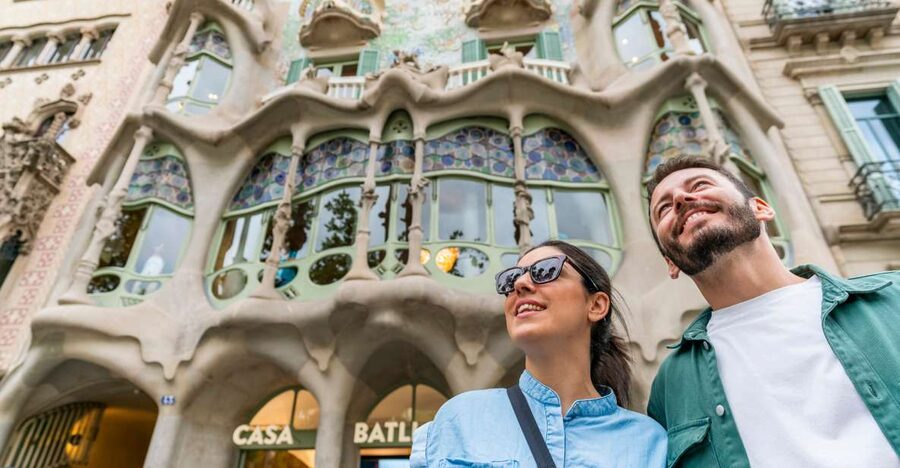
Casa Batlló is one of Gaudí’s masterpieces and a UNESCO World Heritage Site. You come here for the architecture first, but the visit works best when you slow down and notice how the building treats light, space, color, and nature.
The rooms do not feel designed around straight lines and plain surfaces. Curves, changing perspectives, and unusual shapes keep shifting as you walk. The effect is playful, but it is not random. The audio guide helps explain Gaudí’s choices and gives you a better sense of how the house functioned rather than presenting it as a hollow art object.
The furnished areas are especially rewarding. They help turn the building from a collection of famous photographs into a home with rooms, surfaces, and everyday purpose. A tablet can also show how parts of the house may have looked when furnished, which adds useful context to otherwise empty spaces.
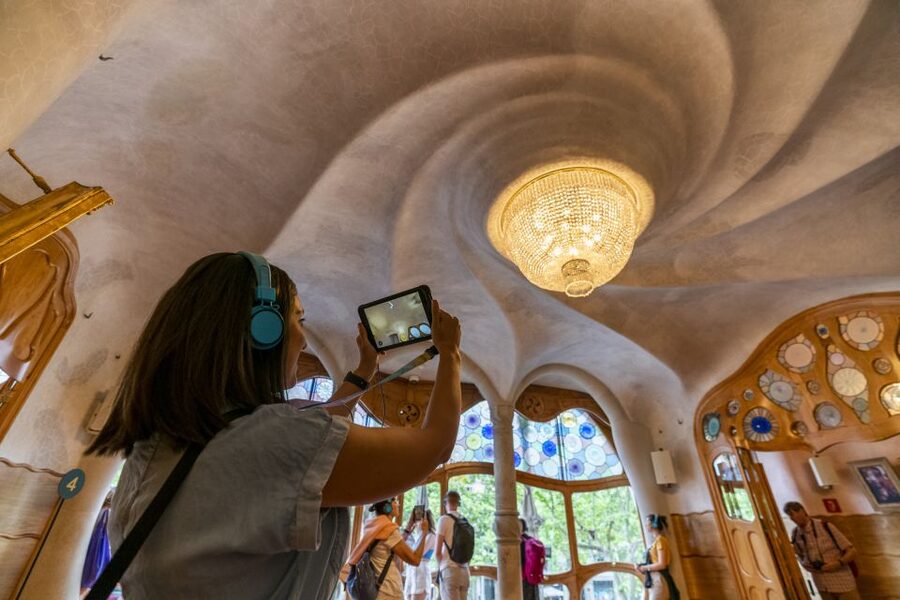
The main room is a good place to take your time. Early light coming through the windows was a highlight for some visitors, and morning conditions can make the colors and curves feel softer. The room is also one of the places where crowd control has the biggest payoff because people naturally stop there for photographs.
You will see many opportunities for pictures, but do not let the camera become the whole visit. Look at the ceiling, window frames, doors, and transitions between rooms. Gaudí’s work rewards the habit of glancing behind you.
Using the tablet without letting it take over
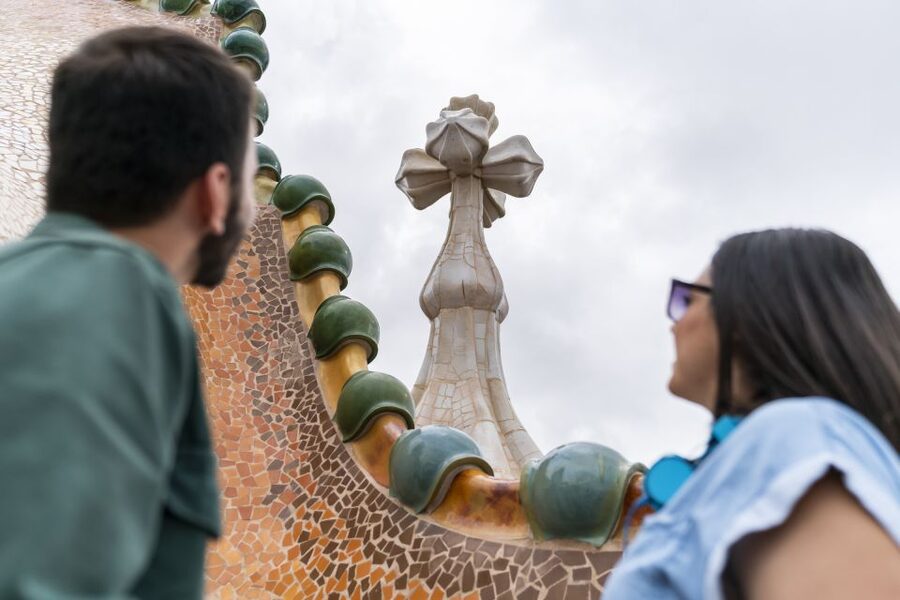
The virtual reality tablet is included with this ticket and works at selected points along the route. It can reveal former furnishings, offer animated views, and show architectural ideas that are not obvious from the bare room in front of you.
This is one of the most useful parts of the experience for visitors who like context. Instead of hearing only that a room was once different, you can use the screen to picture that change. The augmented reality and machine learning elements make the building feel active rather than frozen in the past.
The tablet is not perfect. You must carry it as you walk, and one visitor found that cumbersome. I would keep your belongings light and use the device when it adds something, rather than holding it up constantly.
The best approach is to look at the actual room first. Then use the tablet to compare what you see with the digital reconstruction. That way, the technology supports Gaudí’s architecture instead of distracting you from it.
The early slot makes the tablet easier to use. With fewer people nearby, you are less likely to feel rushed at the points where the screen is most interesting. You can also take photographs between audio stops rather than trying to do everything at once.
A few more Spain trips worth a look
- Barcelona: Sagrada Familia Entry Ticket with Audio Guide
★ 4.6 · 105,312 reviews - Barcelona: Park Güell Admission Ticket
★ 4.4 · 76,534 reviews - Barcelona: 24 or 48-Hour Hop-On Hop-Off Bus Tour
★ 4.4 · 20,872 reviews - Barcelona: Park Guell Guided Tour with Skip The Line Entry
★ 4.7 · 17,563 reviews
The Gaudí Dome and its 1,000 screens
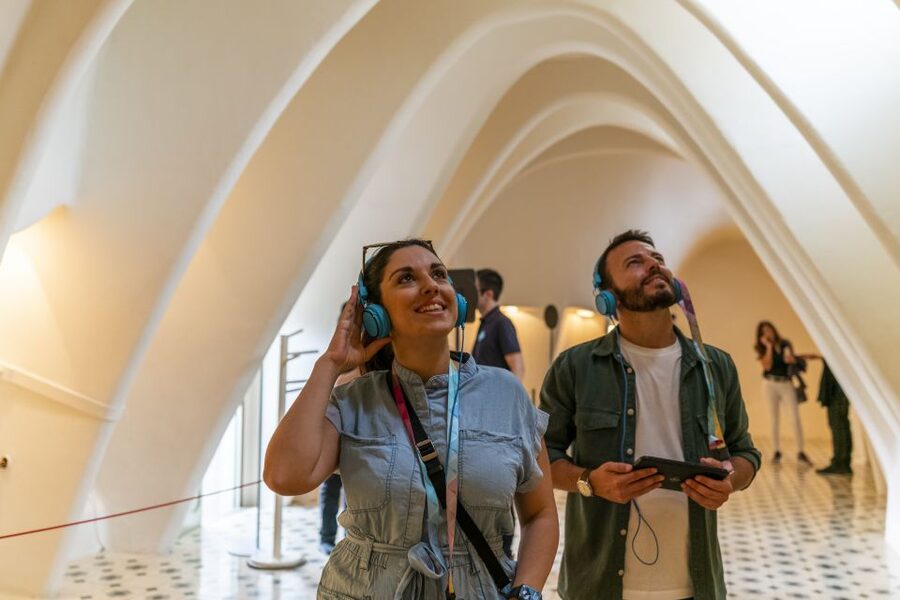
The Gaudí Dome is one of the newer parts of the visit. It uses more than 1,000 screens to create a large-scale visual presentation tied to Gaudí and his ideas.
This is not a traditional museum room with objects in cases. It is a sensory production, designed to surround you with moving images and light. The soundtrack was created by Dani Howard and performed by the Berlin Symphony Orchestra, giving the presentation a strong musical element.
For some people, this will be the most memorable part of the ticket. It gives you a quick, dramatic introduction before or during the main house experience and helps explain the building through mood as well as information.
If you prefer quiet rooms and original architecture without digital effects, you may find it less essential. Still, it is included in the ticket, and the early entry makes it easier to see without being packed tightly into the room.
The Gaudí Cube and the final visual show

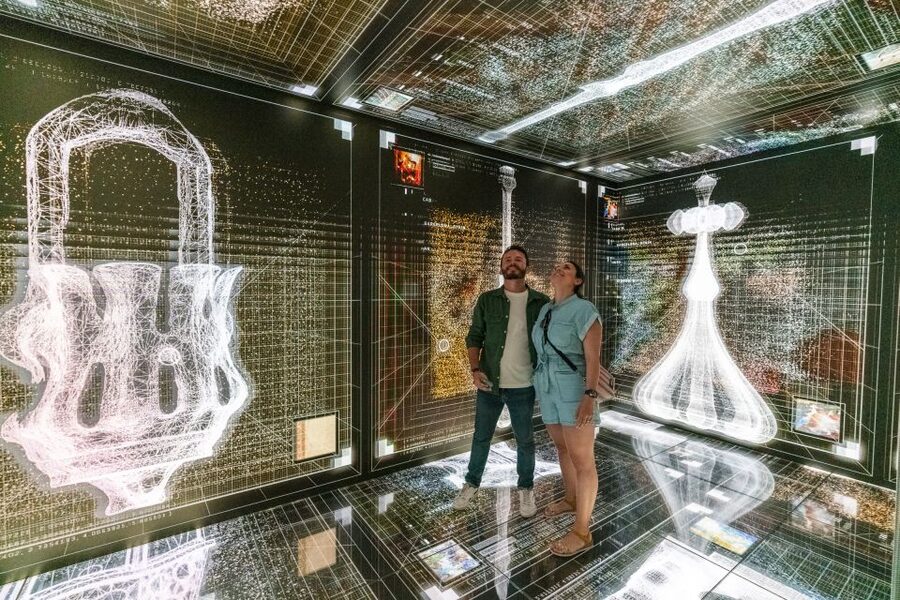
The Gaudí Cube is a six-sided LED cube described as unique in the world. It provides a completely different kind of experience from the historic rooms, using indoor mapping and moving images to create a full visual enclosure.
Many people find this a fun ending. The room gives the visit a clear finale, and early arrivals may have more room to see the entire effect rather than viewing it through a crowd. One visitor who entered with only a few other people found this especially worthwhile.
There is a possible comfort issue. One person felt nauseous inside the cube, so anyone sensitive to moving images or enclosed visual effects should take care. You can enjoy Casa Batlló without treating the cube as the main reason to book.
The cube works best as a bonus after the house itself. Gaudí’s original spaces are the reason to come, while the digital room offers a modern interpretation that helps bring the experience to a lively close.
The new staircase, courtyard mapping, and store
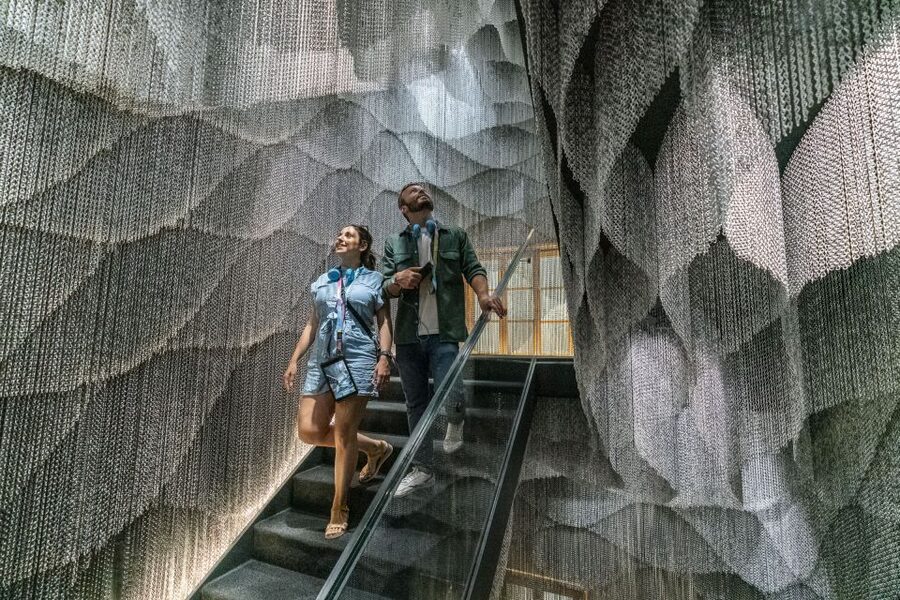
The visit also includes a newer vertical communication core designed by Japanese architect Kengo Kuma. Its centerpiece is a floating ladder made from 13 tons of polished marble, suspended in the air.
That detail gives the building a conversation between Gaudí’s organic forms and a much more recent architectural intervention. You may find the staircase striking even if you are mainly interested in Gaudí, though it also reminds you that Casa Batlló is a current cultural site, not a time capsule untouched by modern design.
Another feature is six-sided indoor mapping in a patio connected with Gaudí’s lights. Like the Dome and Cube, this adds digital interpretation to the historic structure.
At the end, the Simbolic store offers souvenirs and design objects. It is worth a brief look if you want a small reminder of the visit, though you do not need to build extra time around it.
How much time should you allow?
The official information describes the ticket as valid for one day and asks you to check available starting times. It does not set a fixed tour length, which suits a self-guided visit.
Plan on around 90 minutes if you listen to the main commentary, use the tablet at selected points, and stop for photographs. Give yourself more time if you like to read every explanation or want to wait for open views in the most popular rooms.
An early start may affect your morning plans. That is the tradeoff. You gain better light, quieter rooms, and cleaner photographs, but you must reach Passeig de Gràcia early and be ready to begin your day before many Barcelona attractions open.
The building can also feel warm. An early visit is helpful for that reason as well, especially during summer, when a less crowded start should feel more comfortable than arriving later.
Is $53 a fair price?
At about $53 per person, this is not a cheap house visit. You are paying for standard admission, early access, the audio guide, the tablet, the Gaudí Dome, the Gaudí Cube, and access to the original Concierge Room.
The value depends on what you want from Casa Batlló. If you mainly want to see the facade or take one quick look inside, the premium may feel high. If this is one of your main Barcelona sights, the early access can be worth the extra cost because it improves the basic experience rather than simply adding another souvenir.
The strongest value comes from the combination of time and technology. A quieter building lets you use the audio and tablet without feeling pushed along, while the Dome and Cube provide experiences you would not get from a simple walk through the house.
Some visitors compared Casa Batlló favorably with Casa Milà, another major Gaudí site. That is a personal choice, but if you are choosing only one Gaudí house to explore in detail, Casa Batlló offers a particularly complete visit, with furnished areas, digital interpretation, music, and a clear route.
I would pay the premium for a first visit, a special occasion, or a photography-focused morning. I would think twice if your budget is tight or if you dislike staged digital presentations.
Who will enjoy this ticket most?
This works well for first-time visitors to Barcelona who want one polished Gaudí experience. It also suits architecture fans, photographers, families who appreciate visual technology, and anyone who prefers exploring independently.
The audio guide makes it useful for visitors who want historical and architectural context without joining a group. The tablet is especially helpful if you understand ideas better through images than spoken explanation.
It may be less satisfying for people who want a quiet, traditional museum. You will encounter screens, digital effects, and a musical production alongside the original building. The Cube may also bother you if moving images make you uncomfortable.
Casa Batlló is wheelchair accessible. A checkroom is available for luggage and strollers, which can make the visit easier if you are carrying more than a small day bag.
Casa Batlló also works with Specialisterne to support neurodivergent visitors. Its assistance team includes neurodivergent people, making the institution notable for its focus on employment inclusion and visitor support for people on the autism spectrum.
My practical strategy for a better visit
Book the earliest available time and arrive early enough to be near the front of the line. The first few minutes matter because a larger group may enter around 9 a.m., changing the feel of the rooms.
Start with the actual architecture before reaching for the tablet. Listen to the audio in manageable sections, then pause the device when you want to take photographs or simply look.
In the main room, wait for a clear view and watch the morning light. In furnished areas, compare the real room with the tablet’s images. At the Dome and Cube, step back when possible so you can see the full effect.
Do not rush through the original Concierge Room. It is included with this ticket and gives you another chance to see the house at a human scale after the larger digital rooms.
Keep your hands free where possible. The tablet is useful, but carrying it for the entire route can become tiring, particularly when you also have a phone, camera, or bag.
Should you book Casa Batlló Be The First Entry?
Yes, if Casa Batlló is high on your Barcelona list and you care about photographs, calm rooms, or a self-guided visit with strong visual aids. The early start is the real advantage, and the Dome and Cube make the higher price easier to justify.
I would not book it solely for the digital effects. Come for Gaudí’s original rooms, unusual use of space, furnished interiors, and morning light. Treat the tablet, Dome, and Cube as useful additions.
For most people, the best choice is the first available 8:30 or 8:45 slot. You may pay more and get up early, but you gain time when Casa Batlló feels like a house to explore rather than a famous attraction to shuffle through.
FAQ
Where do I start the Casa Batlló Be The First Entry visit?
Go to Casa Batlló and collect your audio guide and virtual reality tablet there. The visit then follows a clearly marked self-guided route.
What does the ticket include?
It includes entry to Casa Batlló, an audio guide, a virtual reality tablet, access to the Gaudí Cube, the Gaudí Dome, and the original Concierge Room.
Is there a live guide?
No. This is a self-guided experience with audio commentary and a virtual reality tablet rather than a live guide.
Which languages are available for the audio guide?
The audio guide is available in Catalan, Spanish, English, Italian, French, Chinese, Dutch, German, Japanese, Korean, Polish, Portuguese, Romanian, and Russian.
How long is the visit?
The ticket is valid for one day and has set starting times based on availability. Many people complete the self-guided route in about 90 minutes without rushing, though you can take longer.
Is Casa Batlló wheelchair accessible?
Yes, Casa Batlló is wheelchair accessible.
Can I store luggage or a stroller?
Yes. A checkroom is available for luggage and strollers if needed.
Recently added around Barcelona
- Intro Segway Tour Barcelona 1h★ 4.9 · 166 reviews
- Barcelona: Bike or eBike Tour, Top Sights & Local Insights★ 4.9 · 166 reviews
- Instagram Photoshoot Tour in Barcelona★ 5.0 · 167 reviews
- Artisan Ceramic Making Experience★ 5.0 · 168 reviews
- Barcelona: Big Fun Museum Ticket★ 4.2 · 169 reviews
- Gaudi’s Crypt in Colonia Güell with Audioguide★ 4.4 · 170 reviews
- Sagrada Familia Evening Private Tour with Expert Guide★ 4.5 · 170 reviews
- Las Golondrinas Barcelona 60-min Boat Tour★ 4.0 · 170 reviews
Gaudi House Tours, compared.
La Pedrera-Casa Milà Ticket & Audio Guide Option
Read our review →
Gaudi’s Casa Vicens Skip-the-Line Entrance Ticket
Read our review →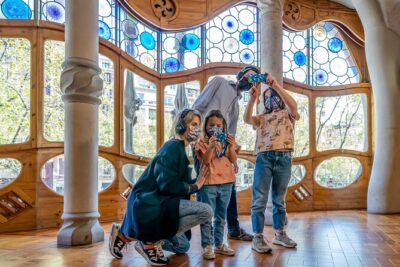
Casa Batllo Admission Ticket with Intelligent Audio Guide
Read our review →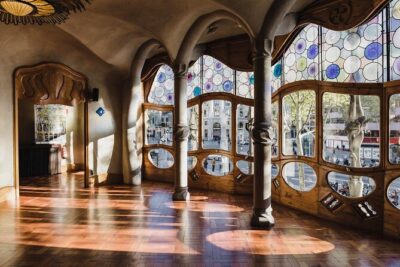
Complete Gaudi Tour: Casa Batllo, Park Guell & Sagrada Familia
Read our review →
La Pedrera-Casa Mila Admission Ticket with Audioguide
Read our review →
Gaudi´s Casa Vicens Skip the Line Ticket with Audioguide
Read our review →Browse the lists this tour appears in