
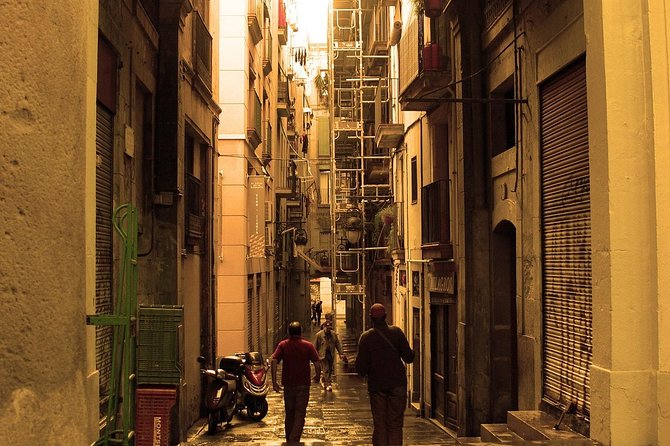
Review · GOTHIC QUARTER TOURS
Barcelona Gothic Quarter’s Deepest Secrets & Sangria
Barcelona rewards curious walkers. The small-group format keeps the tour personal, while guides such as Juliana, Valentina, Sabrina, and Daniel bring plenty of warmth and local advice. I also like that the walk moves beyond postcard sights to Roman walls, Civil War scars, the old Jewish quarter, and tucked-away squares. The main drawback is simple: three hours on foot can feel long, especially if you want a relaxed evening or have limited mobility.
At $65.33 per person, this is not the cheapest Gothic Quarter walk. Still, the price includes a professional guide, small group, and sangria, and the route covers far more ground than a short orientation stroll. I would book it early in your Barcelona stay, since the practical tips and neighborhood overview can help shape the rest of your visit.
In This Review
- Key points to know before you book
- Why this Gothic Quarter walk works best early in your stay
- Starting at Plaça de Catalunya and Las Ramblas
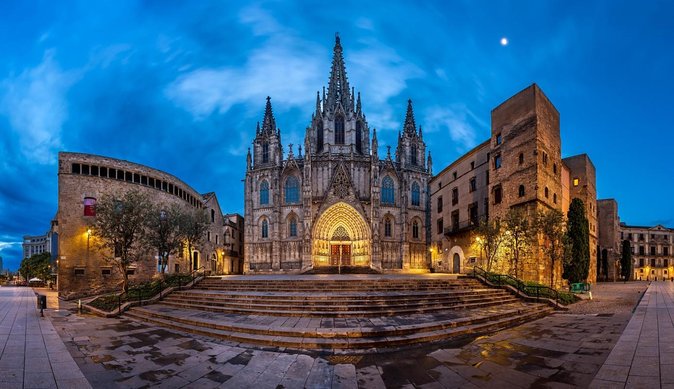
- Santa Maria del Pi and Barcelona Cathedral
- Roman walls, ruins, and the old Jewish quarter
- Plaça Sant Jaume and Barcelona’s political center
- Plaça Sant Felip Neri and the Civil War
- Art schools, Picasso, Miró, Dalí, and Gaudí
- George Orwell Square and the modern city
- Barceloneta, the port, and the sangria finish
- What $65.33 buys you
- Walking demands and practical planning
- Who will enjoy this experience most
- Should you book Barcelona Gothic Quarter’s Deepest Secrets & Sangria?
- FAQ
- How long does the tour last?
- Where does the tour begin?
- Where does the tour end?
- Is sangria included?
- How large is the group?
- Are admission tickets to Barcelona Cathedral and Santa Maria del Pi included?
- Can I cancel for a full refund?
Key points to know before you book
- Roman Barcelona appears beneath the medieval streets: You see ancient ruins and parts of the original Roman walls alongside later churches and civic buildings.
- The route reaches beyond the Gothic Quarter: The walk links Plaça de Catalunya, Las Ramblas, the old center, Barceloneta, and Port Vell.
- Guides make the difference: Juliana and Valentina receive especially warm praise for lively storytelling, local advice, and answering questions.
- The group is capped at 15 people: That matters in narrow lanes and crowded public squares, where a large group can become awkward.
- The finish is social rather than formal: Sangria brings the walking portion to a friendly close, with the end point near Port Vell.
- You may see sights without entering them: Admission to Barcelona Cathedral and Santa Maria del Pi is not included, so plan separate visits if you want to go inside.
Why this Gothic Quarter walk works best early in your stay
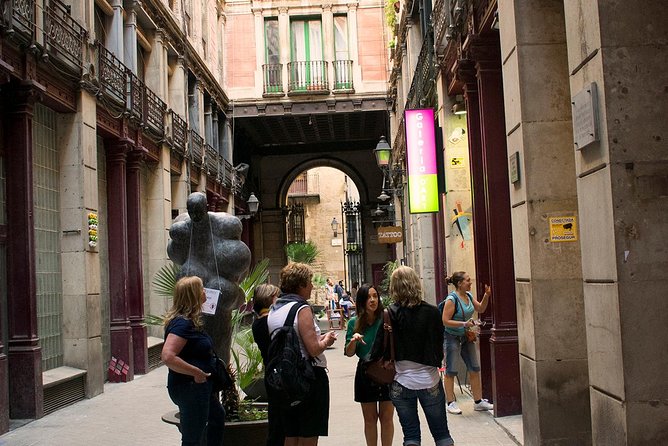
Barcelona’s old center can feel like a puzzle made of narrow lanes, small plazas, church walls, and streets that seem to change direction every few minutes. This tour gives you a map in your head before you start exploring on your own.
The opening point is Café Zurich at Plaça de Catalunya, a useful location near public transportation and at the edge of the old city. From there, you move toward Las Ramblas and into the Gothic Quarter, tracing the city from Roman foundations through medieval religion, Catalan government, Civil War memory, modern art, and the waterfront.
I especially like this broad time span. You are not getting only a parade of church facades. The route connects Barcelona’s ancient past with Picasso, Joan Miró, Salvador Dalí, George Orwell, and the political life of Catalonia. That makes the city easier to understand as a living place, not just a collection of handsome buildings.
Book this for your first or second day if you can. Several people found the early orientation useful for planning later visits, and one particularly practical benefit is that the guide can point out details you might otherwise miss when you return alone.
More Gothic Quarter walks:
- Barcelona Gothic Quarter Tapas & Taverns Food & Wine Tour
★ 5.0 · 1,470 reviews - Barcelona: Gothic Quarter Ghosts and Legends Walking Tour
★ 4.7 · 1,443 reviews - Barcelona: Old Town and Gothic Quarter Walking Tour
★ 4.8 · 1,393 reviews
Starting at Plaça de Catalunya and Las Ramblas
The first formal stop is Plaça de Catalunya, where the guide introduces the route and sets the scene. It is a natural meeting place, but it is also a busy urban crossroads, so arrive with enough time to locate Café Zurich and find your guide.
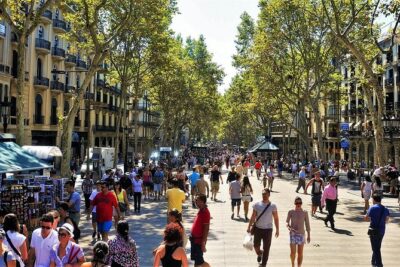
The walk then follows Las Ramblas, Barcelona’s famous central promenade. The scheduled time here is short, about 15 minutes, so do not expect a full tour of every market stall, building, or side street. Instead, use this portion to understand how the grand boulevard connects the newer city with the old quarter.
The next turn is Carrer Petritxol, known as one of Barcelona’s sweetest streets. This is a pleasant change from the broad avenue. The route gives you a taste of the smaller lanes and local food culture before moving toward the Gothic churches.
Santa Maria del Pi and Barcelona Cathedral
The Basilica of Santa Maria del Pi is a quick stop on the walking route, with about five minutes listed. Its Gothic character fits the district perfectly, but the brief timing suggests that the focus is on the exterior and the surrounding story rather than a full interior visit.
Barcelona Cathedral receives a similar short stop. The building is one of the quarter’s major landmarks, so the guide can explain its role and point out details that are easy to overlook when you simply walk past. If you want to enter, note that admission is not included.
This is one place where you should set realistic expectations. The tour is designed as a moving overview, not an extended cathedral visit. If the cathedral matters to you, schedule a separate visit and use the tour to learn what to look for before you go inside.
A memorable detail connected with the cathedral is the group of 13 geese kept there. The guide may explain their meaning and the people represented by shrines inside, but the precise story is intentionally left for the walk. That is a good example of how this experience works best: the guide gives context that turns a familiar sight into a place with layers.
Roman walls, ruins, and the old Jewish quarter
The Gothic Quarter is medieval in appearance, but Roman Barcelona is still under your feet and visible in fragments. The route includes ancient Roman ruins and sections of the original Roman wall, giving you a chance to see how the city began before the narrow medieval streets took shape.
The Archivo Histórico de la Ciudad de Barcelona appears along the way, connected with the Crown of Aragon. The stop is brief, but it adds political depth to the buildings around you. This part of the walk is useful if you enjoy seeing how archives, government spaces, and religious institutions preserve a city’s past.
The Jewish quarter is another important section, including mention of the synagogue. The material provided does not promise an interior visit, so think of this as a historical walk through the area rather than a synagogue tour. A guide is valuable here because the street pattern alone will not explain the community that once lived and worshiped in this part of the city.
This is also where the title’s promise of secrets makes the most sense. The route is not about spooky theater or staged surprises. It is about overlooked traces, old walls, political wounds, and small architectural clues that are easy to miss when you wander without a guide.
A few more Spain trips worth a look
- Barcelona: Sagrada Familia Entry Ticket with Audio Guide
★ 4.6 · 105,312 reviews - Barcelona: Park Güell Admission Ticket
★ 4.4 · 76,534 reviews - Barcelona: Casa Batlló Entry with Self-Audioguide Tour
★ 4.7 · 25,359 reviews - Barcelona: 24 or 48-Hour Hop-On Hop-Off Bus Tour
★ 4.4 · 20,872 reviews
Plaça Sant Jaume and Barcelona’s political center
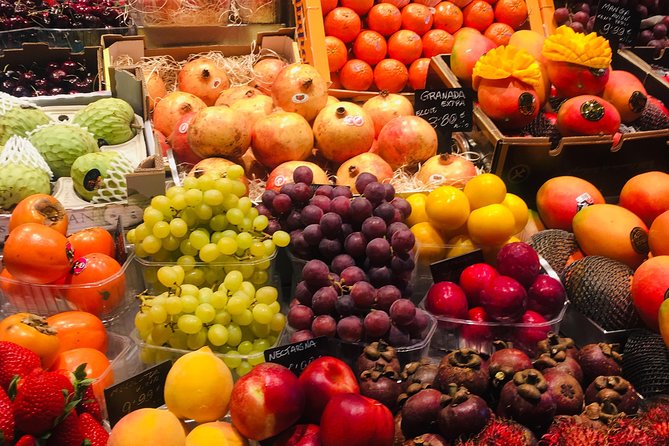
Plaça de Sant Jaume is identified as the government square, and it gives the tour a clear civic center. The stop lasts only about five minutes, but it helps connect Barcelona’s street life with Catalan public institutions.
I appreciate this kind of stop because it prevents the Gothic Quarter from becoming a purely decorative backdrop. Churches and old stone lanes are beautiful, but the district also reflects power, identity, conflict, and government. A good guide can make that connection quickly without turning the walk into a lecture.
The square also sits naturally within the route from the cathedral area toward the quarter’s smaller lanes. You should expect some standing while the guide talks, followed by more walking soon after.
Plaça Sant Felip Neri and the Civil War
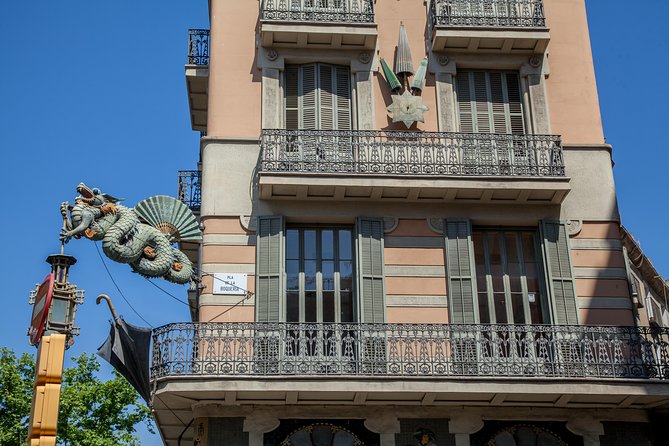
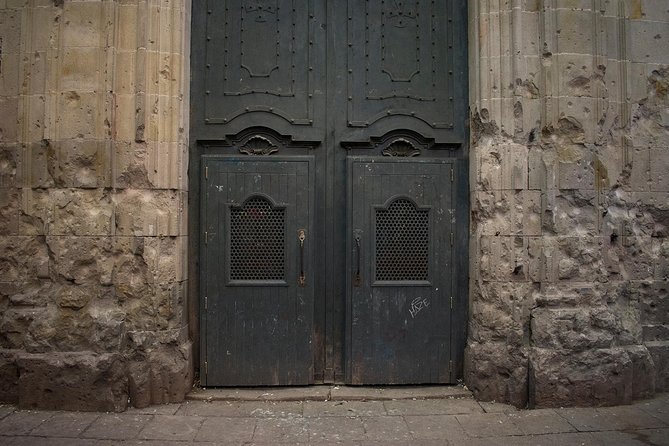
Plaça Sant Felip Neri is one of the most emotionally serious stops. The route discusses the Spanish Civil War and the damage connected with the square. Its quiet setting can make the subject feel more direct than a large museum display.
The listed stop is about eight minutes, longer than several other points. That extra time makes sense. This is a place where the guide can explain what happened and help you read the marks and atmosphere of the square.
The tour does not limit Barcelona to charming lanes and good drinks. It includes the darker side of the city’s past, which gives the final sangria a little more weight. You see that Barcelona’s beauty and pain often sit close together.
Art schools, Picasso, Miró, Dalí, and Gaudí
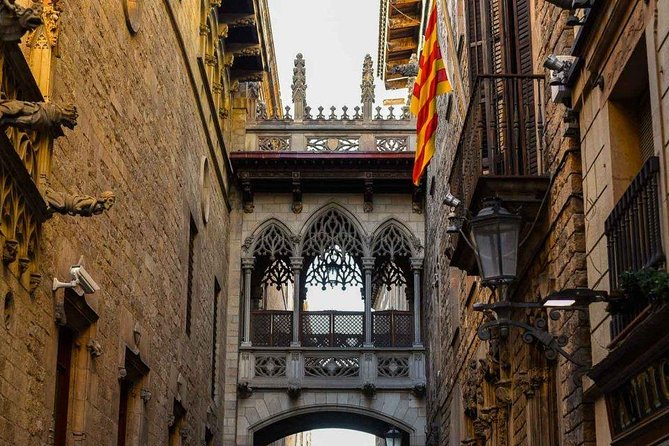
The route adds an unusual cultural thread by visiting the Royal Artistic Circle of Barcelona and the Escuela de Artes Aplicadas y Oficios Artísticos. The art school is associated with major figures including Picasso, Miró, and Dalí. These stops may be brief, but they show how Barcelona’s creative identity grew through schools, studios, and working artists, not only through famous monuments.
The Royal Artistic Circle is linked with Gaudí’s first work of art. Again, do not expect a long museum visit from a five-minute stop. The value is in learning where to look and understanding how the city’s artistic story extends beyond the most photographed buildings.
One person who had already walked through the area alone found the guided version revealed details they would have missed, including actual Picasso artwork. That is an important distinction. You are paying less for access to a major attraction and more for trained attention, interpretation, and a route that points out what your eyes might pass over.
George Orwell Square and the modern city
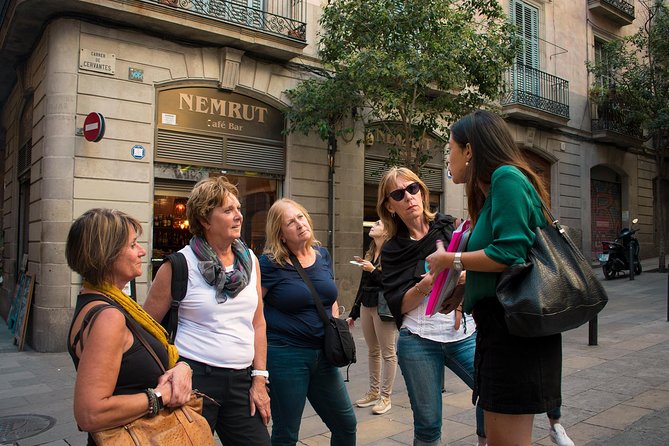
Plaça George Orwell, often called Plaza Tripi, brings the walk into more recent political and cultural territory. The stop connects George Orwell with the Spanish Civil War and gives you another way to think about Barcelona as a city shaped by competing ideas.
This is a good counterpoint to the Roman and medieval material. The tour keeps moving through time instead of treating the Gothic Quarter as frozen in the past. You will see old stone, but you will also hear about modern writers, conflict, art, and changing city life.
Because the route includes many short stops, the guide’s storytelling style matters. Juliana is repeatedly praised for making events feel vivid and personal, while Valentina is described as energetic and able to answer questions. Daniel is noted for humor and a strong supply of information. The company appears to use several guides, so your exact experience will depend on who leads your departure.
Barceloneta, the port, and the sangria finish
The walk eventually heads toward Barceloneta, where the focus shifts to Barcelona’s connection with the beach and sea. This broadens the experience beyond the old quarter and gives you a useful sense of how the historic center relates to the waterfront.
The tour ends at Port Vell. Sangria is included, and the final drink is meant to be shared with conversation rather than treated as a rushed add-on. Several accounts describe the stop as a highlight, with one guide taking the group to a local eatery for sangria, tapas, olives, paella, and other food.
Be careful with expectations here. The official inclusion is sangria, not a full meal, and the supplied details do not guarantee a particular restaurant or food menu on every departure. The experience may finish with a drink and conversation, but extra food purchases should be treated as your own expense.
Ending near the water is practical. You can continue into Barceloneta, remain near Port Vell, or make your own dinner plans after the tour. The end point is not the same as the start, so plan your evening with that in mind.
What $65.33 buys you
At $65.33, this experience costs more than a basic free walking tour. The value depends on how much you want from the guide.
You receive roughly three hours of guided walking, a group limited to 15 people, a professional guide, and sangria. You also cover a long list of areas and themes: Roman ruins, the Jewish quarter, medieval churches, public squares, Civil War history, art education, Las Ramblas, Barceloneta, and Port Vell.
That is a lot of ground. If you only want a quick introduction to the cathedral and a few old streets, this may be too much and too costly. If you want help finding your way through the quarter and enjoy stories that connect small details to bigger events, the price is easier to justify.
The small group is a real part of the value. Narrow Gothic lanes are not ideal for a crowd, and a smaller number makes it easier to hear the guide and ask questions. One booking even ended up with only two participants, turning the outing into something close to a private walk. That cannot be guaranteed, but the 15-person maximum gives you better odds of a personal exchange than a large coach-style tour.
Walking demands and practical planning
You should be ready to walk for close to three hours, with repeated stops for explanations and photographs. One account specifically notes that the group walked a lot, while another appreciated that the tour did not feel too long. Your comfort will depend on your pace and interest in the subject.
Wear sensible shoes. The Gothic Quarter is best explored on foot, and its streets can be confusing enough that navigation becomes part of the value. The tour is near public transportation at the starting point, and most people can participate, but the details do not promise a fully step-free route.
The tour is offered in English and uses a mobile ticket. Confirmation arrives at booking. It is smart to check the exact meeting instructions before leaving your hotel, since Café Zurich at Plaça de Catalunya is a busy area.
You can cancel for a full refund up to 24 hours before the start time. Changes or cancellations inside that window are not accepted, and a minimum group size applies. If the operator cancels because that minimum is not reached, you are offered another date or experience, or a full refund.
Who will enjoy this experience most
I would choose this tour for:
- First-time visitors who want a clear introduction to the old center
- History fans who enjoy Roman, medieval, Jewish, and Civil War stories
- Art lovers interested in Picasso, Miró, Dalí, and Gaudí’s early work
- People who prefer a small group and plenty of chances to ask questions
- Anyone who wants local suggestions for the rest of a Barcelona stay
- Couples, families, or friends who like walking followed by a relaxed drink
I would think twice if you dislike long walks, want extensive interior visits, or prefer a quiet sightseeing pace with only a few stops. The route covers many places quickly, so it favors breadth and storytelling over lingering at one monument.
Should you book Barcelona Gothic Quarter’s Deepest Secrets & Sangria?
Yes, if you want more than a surface tour of Barcelona’s old center. The strongest parts are the small group, the wide historical range, the guide-led navigation, and the lively storytelling associated with guides such as Juliana and Valentina.
I would book it early in your trip and use the walk to mark places for later visits, especially the cathedral, Santa Maria del Pi, the Jewish quarter, and the waterfront. Just remember that the listed church admissions are not included, the sangria is not a guaranteed full meal, and three hours of walking requires comfortable shoes.
For a visitor who wants context, local direction, and a friendly finish, the $65.33 price is fair. For someone seeking only a quick photo stop at the Gothic Quarter, choose a shorter and cheaper option.
FAQ
How long does the tour last?
The experience lasts approximately three hours.
Where does the tour begin?
It begins at Café Zurich, Plaça de Catalunya, 1, in Barcelona.
Where does the tour end?
The tour ends at Port Vell in the Ciutat Vella district.
Is sangria included?
Yes. Sangria is included as part of the experience.
How large is the group?
The tour has a maximum of 15 participants.
Are admission tickets to Barcelona Cathedral and Santa Maria del Pi included?
No. Admission is not included for either Barcelona Cathedral or the Basilica of Santa Maria del Pi.
Can I cancel for a full refund?
Yes. You can cancel at least 24 hours before the local start time for a full refund. Cancellations or changes made less than 24 hours in advance are not accepted.
Recently added around Barcelona
- Intro Segway Tour Barcelona 1h★ 4.9 · 166 reviews
- Barcelona: Bike or eBike Tour, Top Sights & Local Insights★ 4.9 · 166 reviews
- Instagram Photoshoot Tour in Barcelona★ 5.0 · 167 reviews
- Artisan Ceramic Making Experience★ 5.0 · 168 reviews
- Barcelona: Big Fun Museum Ticket★ 4.2 · 169 reviews
- Gaudi’s Crypt in Colonia Güell with Audioguide★ 4.4 · 170 reviews
- Sagrada Familia Evening Private Tour with Expert Guide★ 4.5 · 170 reviews
- Las Golondrinas Barcelona 60-min Boat Tour★ 4.0 · 170 reviews
Gothic Quarter Tours, compared.

Barcelona Gothic Quarter Tapas & Taverns Food & Wine Tour
Read our review →
Gothic Quarter Ghosts and Legends Walking Tour
Read our review →
Barcelona Old Town & Gothic Quarter Small Group Tour
Read our review →
El Born and Gothic Quarter Wine & Tapas Bar Tour
Read our review →
Kids and Family Gothic Quarter Walking Tour in Barcelona
Read our review →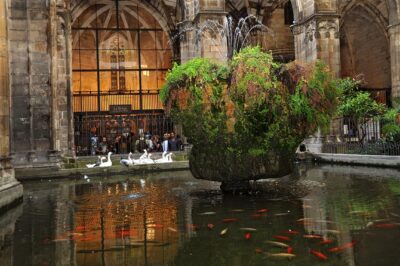
Browse the lists this tour appears in