

Review · SEVILLE TOURS
Tourist bus tour of Seville
Seville rewards a good first circuit. This bus tour gives you 48 hours of hop-on hop-off use, plus two neighborhood walks, which makes it a useful way to get oriented before tackling the city on foot. I also like the included Monumental Seville and illuminated Romantic Seville routes, especially if you have only a short stay. The main caution is service reliability: waits can stretch to 25 minutes or more, and the audio system does not work perfectly on every seat.
At $32.58 per person, the pass can be good value if you use it over two days and claim several discounts. It is less convincing if you ride only once around, since Seville’s center is compact and many of the best sights are best reached by walking.
In This Review
- Quick points to know before you ride
- What the Seville bus pass actually gives you
- Paseo de Colón and the Torre del Oro
- Aquarium, Plaza América, and Plaza de España
- The old tobacco factory and Plaza de Cuba
- Triana, San Jacinto, and the river crossing
- Monastery Santa Maria de las Cuevas and Isla Mágica
- Macarena, La Alameda, and the old center
- Plaza del Duque and Plaza de Armas
- Is $32.58 a fair price?
- The real weakness: waiting and unclear stops
- How I would use the 48 hours
- Who will like this tour most?
- Should you book the Seville tourist bus?
- FAQ
- How long is the Seville tourist bus tour?
- How long is the bus pass valid?
- What languages are available on the audio guide?
- Are walking tours included?
- Does the ticket include a night tour?
- Is hotel pickup included?
- Is there a discount for Isla Mágica?
- Is the bus suitable for most people?
- Can I cancel for a full refund?
Quick points to know before you ride

- Start at Paseo de Colón: Stop 1 puts you beside the Torre del Oro, one of Seville’s easiest landmarks for finding the bus.
- Use the pass for two days: The 48-hour validity gives you time to split the route between sightseeing, walking, and short rides.
- Two free walking tours are included: Santa Cruz and Triana add the street-level context the bus commentary can miss.
- Expect uneven bus service: Some riders report waits of about 25 minutes, and one account describes gaps approaching an hour.
- Bring patience for the audio: Headphones are supplied, but several seats have had faulty plugs or static.
- Look for the green stops carefully: Stop numbers and signs can be hard to identify, so confirm your location before getting off.
What the Seville bus pass actually gives you

This is more than a 75-minute sightseeing circuit. Your ticket covers a hop-on hop-off pass valid for 48 hours, an audio guide in nine languages, headphones, a city map, WiFi on board, two guided walking tours, and two bus programs.
The standard route is called Monumental Seville. The second is an illuminated Romantic Seville tour, designed for seeing the city after dark. The exact timing and route pattern can vary by part of the day, so I would check the departure details before planning a tight appointment around it.
The booking language is English, while the audio guide offers nine languages. That is helpful for mixed-language groups, though you should ask for headphones and confirm the correct audio channel before the bus moves.
The bus operates daily within the stated 9:30 AM to 11:30 PM opening period. A full circuit is advertised at about 1 hour and 15 minutes, but hop-on hop-off service adds waiting time. Think of the 75 minutes as riding time, not the complete time needed to use the service.
A few more Spain trips worth a look
- Seville: Royal Alcázar Entry Ticket
★ 4.6 · 28,378 reviews - Seville: Live Flamenco Dancing Show Ticket at the Theater
★ 4.7 · 16,396 reviews - Seville: 1-Hour Guadalquivir River Sightseeing Eco Cruise
★ 4.2 · 10,281 reviews
Paseo de Colón and the Torre del Oro
Begin at Paseo de Cristóbal Colón, alongside the Guadalquivir River. This is the strongest starting point because the Torre del Oro provides an unmistakable reference point and an excellent first photograph.
The Torre del Oro was once a watchtower, and its position beside the river helps explain Seville’s connection to water, trade, and defense. I would use this stop to get your bearings rather than rush aboard immediately.
If you are new to Seville, starting here makes sense. If you are already near the cathedral or Santa Cruz, the walk to the river may take longer than simply exploring the central streets on foot. The green stop markers can also be difficult to spot, so allow extra time to locate the boarding point.
Aquarium, Plaza América, and Plaza de España
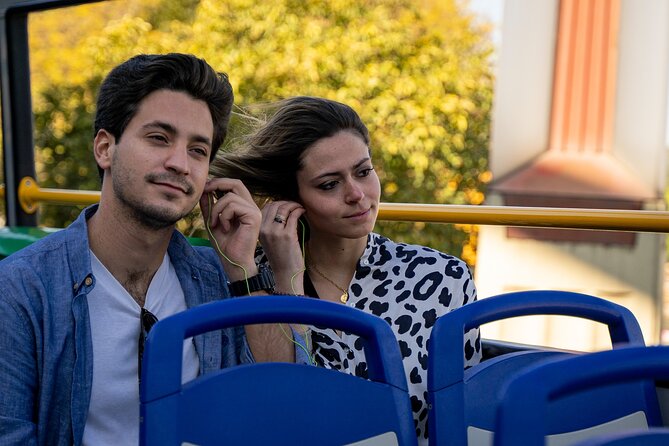
Stop 2 is the Seville Aquarium. This is a practical family stop, particularly if you need a break from churches, plazas, and hot pavement. The shark is the headline attraction, and the aquarium offers a different side of the city from the stone monuments downtown.
At Plaza América, the bus reaches María Luisa Park. This garden area is surrounded by the Museum of Popular Arts and Customs, the Archaeological Museum, and the Pavilion Real. It is a good place to leave the bus and walk at a slower pace.
Plaza de España is the essential stop in this part of Seville. You will find gardens, ponds, grand architecture, and plenty of space to wander. I would not treat it as a quick photo stop. The appeal comes from walking around the broad square and taking in its curved buildings and decorative details.
This cluster of stops shows where the bus is most useful. The Aquarium, Plaza América, and Plaza de España are spread out enough that the ride can save your legs. Still, service gaps matter here. If a bus has just left, you might spend a significant part of your visit waiting in the heat.
The old tobacco factory and Plaza de Cuba

Stop 5 is the University of Seville, housed in a former tobacco factory. The factory moved in the mid-20th century, and the building gradually became part of the university.
This is an important piece of Seville’s working past, but the tour does not turn it into a long museum visit. The bus gives you the location and a short introduction. If you want a fuller understanding, you will need to explore the area independently.
Plaza de Cuba, Stop 6, brings you back toward the river and the Triana side of Seville. It is also a useful point for connecting the bus ride with the included Triana walking tour. I would consider getting off here if you want to trade vehicle sightseeing for a neighborhood stroll.
The bus is at its best when you use it as a bridge between districts. It is not always the best place to study every building along the way, especially when traffic, speed, or a poor seat position blocks the view.
A completely different kind of day out in Seville:
- Seville: Cathedral, Giralda, and Royal Alcázar Guided Tour
★ 4.7 · 9,165 reviews - Seville: Setas de Sevilla Entry Ticket
★ 4.6 · 8,901 reviews - Seville: Cathedral, Giralda & Alcazar Entry With Guided Tour
★ 4.6 · 8,560 reviews - Seville: Priority Access Cathedral, Giralda & Alcázar Tour
★ 4.8 · 7,563 reviews
Triana, San Jacinto, and the river crossing
Calle San Jacinto is a key Triana stop. The street gives you access to one of Seville’s best-known neighborhoods, where a walking tour can add much more than a passing audio track.
The included guided walk through Triana is one of the pass’s strongest extras. I would schedule it separately from the bus ride, since the neighborhood is better understood at street level. The bus gets you there; your feet do the real work.
Stop 8, Puente del Cristo de la Expiración, takes you across the river route near the bridge. It is useful for understanding how Seville’s districts connect, although it may feel less rewarding than Plaza de España or the Torre del Oro if you are sightseeing only from the bus.
The audio commentary can provide useful background, but its quality depends on the equipment. Some seats have faulty headphone sockets, and static has been reported. Before settling in, test the plug. If you cannot hear clearly, move seats early rather than waiting until the next stop.
Monastery Santa Maria de las Cuevas and Isla Mágica
Stop 9 reaches the Monastery Santa Maria de las Cuevas. This is one of the route’s more unusual locations, away from the standard cathedral and plaza circuit. It gives the ride a wider reach and shows that Seville is more than its central postcard sights.
Stop 10 is Isla Mágica, the city’s theme park near the Expo 92 complex. It includes rides, roller coasters, a water park, and a large lake. This is clearly aimed at families and anyone who wants a full activity rather than a short sightseeing stop.
The pass provides a 35 percent discount at Isla Mágica. That is a meaningful saving if the park is already part of your plan, but it should not by itself persuade you to buy the bus pass. The discount has value only if you intend to visit.
The route information also connects Magic Island with the Macarena stop. Pay close attention to the stop number and direction, since unclear stop identification has caused confusion. I would keep the map with you and ask the driver to confirm the stop before you leave the bus.
Macarena, La Alameda, and the old center
Stop 11 is Macarena, an area associated with one of Seville’s best-known neighborhoods and religious traditions. The bus gives you a quick way to reach the northern side of the historic center, though the most rewarding exploration here will be on foot.
Stop 12 is La Alameda de Hércules, described as dating to 1574 and regarded as the oldest public garden in Spain and Europe. Its long public-garden setting makes it a natural place to get off, stretch your legs, and shift from sightseeing transport to local street life.
La Alameda is also a good reminder of the pass’s limits. The bus can deliver you to the district, but it cannot replace wandering through it. Use the ride to cover distance, then give yourself time to walk.
The walking tour in Santa Cruz covers a very different part of Seville. Narrow streets, major monuments, and small squares are easier to appreciate with a guide beside you than through headphones on a moving bus.
Plaza del Duque and Plaza de Armas
Stop 13, Plaza del Duque de la Victoria, has a name tied to the Duke of Medina-Sidonia. It was known from the 16th century as the Duke of Medina-Sidonia’s square because his palace stood there.
This is a useful central stop for shopping areas and the old city. It may not be your main sightseeing destination, but it can save you a long walk when you are carrying bags or heading toward another part of Seville.
The final listed stop is Plaza de Armas. It makes a practical end point for the circuit and connects the route back toward the river and central Seville. As with Plaza del Duque, its value depends on your plans for the day.
The bus does not stop at every major monument in a way that lets you enter directly. That is why I see it as a transport and orientation tool, not a complete substitute for walking tours or individual admissions.
Is $32.58 a fair price?
At $32.58, the pass earns its keep in three situations. First, you are staying for two days and want to cover distant stops without paying for separate rides. Second, you plan to use the night route. Third, you will use the included Santa Cruz and Triana walks or several discounts.
The discounts include 20 percent off the Real Maestranza Bullring, 10 percent off the Seville Aquarium, 20 percent off Paddle Surf Seville at Calle Betis 19, and 10 percent off bicycle rental from Hop On at Calle Arjona 5. You also receive discounts at selected cafés, restaurants, and museums.
There is a free bottle of water at the Intursafe tourist information store on Calle Postigo del Carbón 6. Tourist Bus customers with a Sevirama or Alsa ticket can also use free toilets at Torrons Vicens on Avenida de la Constitución 24B, opposite the cathedral’s Puerta de la Asunción.
If you only ride the 75-minute circuit once, the price is harder to justify. Seville’s central sights are close enough that walking can be cheaper and more flexible. Public transport can also cost less for a single trip, so the pass needs actual use to become good value.
The real weakness: waiting and unclear stops
The biggest problem is not the route. It is the gap between buses. I would plan for delays, especially during hot weather, and avoid using the bus immediately before a restaurant reservation, train, flight, or timed museum entry.
Some passengers have waited around 25 minutes on repeated occasions. One account describes service gaps of up to an hour, while another says buses passed a designated stop without stopping. These reports do not mean every ride will go wrong, but they are enough to change how I would plan the day.
Stop identification is another weak point. The green stop numbers are not always easy to find, and some stops are poorly marked. The bus may not announce the actual stop number clearly, so keep your map open and confirm the district before getting off.
The ride itself has mixed comfort. Wet seats after rain, weak headphone sockets, static, and drivers speaking over the audio have all been reported. Some drivers have also driven too fast for easy photography. Sit where you can see well, test the audio, and do not count on capturing a perfect picture from the upper deck.
How I would use the 48 hours
I would begin at Stop 1, the Torre del Oro, and ride enough of the route to understand the city’s shape. Then I would get off at Plaza de España or Plaza América, where the surroundings reward a proper walk.
On the second portion of the day, I would use the bus for Triana or La Alameda rather than trying to force every stop into one circuit. I would save the Santa Cruz and Triana walking tours for times when I could move at a relaxed pace.
The illuminated Romantic Seville route is useful after dinner, but I would check the departure time carefully. The night program covers many of the same sights in a different mood, so it is best used for atmosphere rather than as a second complete sightseeing lesson.
The most positive experience comes from slowing down. One family used the two-day validity to see Seville without cramming everything into one day, and that is exactly how I would approach it. The pass is not a race around the city.
Who will like this tour most?
I would recommend it to families, first-time visitors, and anyone who wants a broad look at Seville before choosing where to spend more time. The Aquarium, Isla Mágica discount, WiFi, water offer, and ability to rest between stops can be useful with children.
It also suits someone with limited mobility or anyone who wants to reduce long walks between María Luisa Park, the river, Triana, La Alameda, and the northern districts. The walking tours let you add shorter, guided outings when you are ready.
I would be more cautious if you are focused on detailed history, photography, or strict scheduling. The audio is not always dependable, buses may wait or arrive late, and the bus route passes many places you can see only from outside. For those priorities, walking tours and public transport may serve you better.
The service is listed as accessible to most participants, with service animals allowed and public transport nearby. Hotel pickup and return are not included, so you must reach a meeting point on your own.
Should you book the Seville tourist bus?
Book it if you will use the full 48 hours, take at least one walking tour, ride the evening route, or claim several discounts. I especially like it for a first day in Seville, when the wide route helps you decide which neighborhoods deserve your time.
Skip it if you want a tightly timed schedule or a detailed spoken history lesson. The 4.4 rating from 530 ratings suggests a generally positive experience, but the uneven audio, unclear stops, and long waits are real concerns.
My practical choice would be to start at the Torre del Oro, test the headphones immediately, photograph the river sights, and use the bus mainly between districts. Treat walking as the main event and the green bus as a helpful, if imperfect, connector.
FAQ
How long is the Seville tourist bus tour?
The sightseeing circuit takes approximately 1 hour and 15 minutes. Using the hop-on hop-off feature takes longer because you must allow time for buses to arrive and depart.
How long is the bus pass valid?
The ticket is valid for 48 hours as a hop-on hop-off pass.
What languages are available on the audio guide?
The audio guide is available in nine languages. The experience is offered in English, and headphones are provided.
Are walking tours included?
Yes. The ticket includes two free guided walking tours, one in Santa Cruz and one in Triana.
Does the ticket include a night tour?
Yes. The service includes two bus programs, Monumental Seville and illuminated Romantic Seville.
Is hotel pickup included?
No. Round-trip hotel transfer is not included.
Is there a discount for Isla Mágica?
Yes. The Sevirama ticket provides a 35 percent discount at Isla Mágica.
Is the bus suitable for most people?
The experience states that most participants can take part. Service animals are allowed, and the route is near public transportation.
Can I cancel for a full refund?
Yes, if you cancel at least 24 hours before the experience start time. Cancellations or changes made less than 24 hours before the start time are not eligible for a refund.
Recently added around Seville
- Art and Wine in Sevilla★ 5.0 · 165 reviews
- Seville: Cathedral and Alcázar Guided Tour★ 4.6 · 167 reviews
- From Seville: White Villages and Ronda Full-Day Trip★ 4.2 · 168 reviews
- Guided Tour Sevilla Cathedral★ 4.5 · 169 reviews
- Cathedral and Real Alcàzar in Italian★ 5.0 · 170 reviews
- Seville: Guadalquivir River Cruise with Lunch or Dinner★ 4.5 · 170 reviews
- White Villages and Ronda: Day trip from Seville.★ 4.7 · 171 reviews
- Private Walking Tour Alcazar and Cathedral in Sevilla★ 5.0 · 172 reviews
Seville Tours, compared.


Live Flamenco Dancing Show Ticket at the Theater
Read our review →
Cathedral, Giralda & Alcazar Entry With Guided Tour
Read our review →
Priority Access Cathedral, Giralda & Alcázar Tour
Read our review →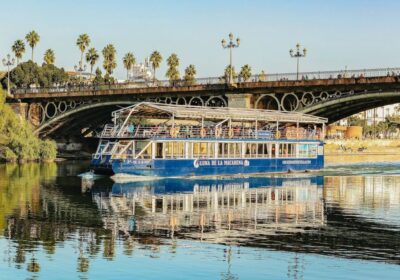

Puro Flamenco Show with Optional Museum Ticket
Read our review →
Browse the lists this tour appears in