
Review · WALKING TOURS
The Spanish Civil War & Franco Barcelona Walking Tour
Barcelona has more wartime traces than you expect. This two-and-a-half-hour walk uses the Old Town as a history book, linking familiar places with the Spanish Civil War, anarcho-syndicalism, political conflict, and Franco’s dictatorship. It is a useful choice if you want more than Gaudí, tapas, and handsome medieval lanes.
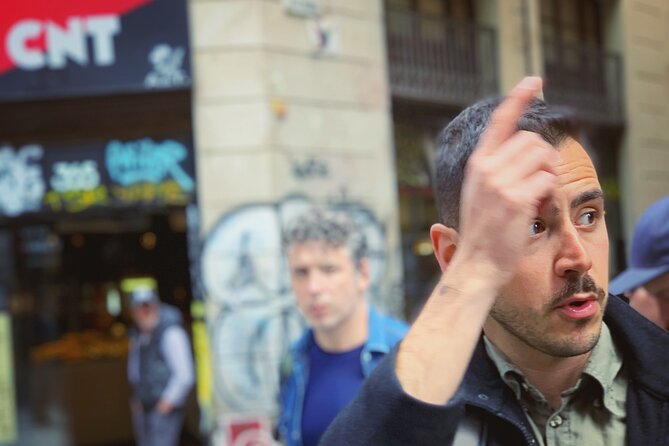
I like the way the tour connects real city locations to photographs and wartime events, rather than keeping the subject in a classroom. I also like the guides’ strong command of a difficult subject. Henrieta, Filipa, Chrysa, Evan, Yannis, and others have been praised for making tangled politics easier to follow. The main drawback is that the tour asks for sustained attention while walking, and one guide received criticism for presenting the story in a confusing order.
The price is $47.16 per person, with group discounts available. A €1 guide-radio fee is paid separately at the meeting point. You should also allow for the fact that the tour uses public streets and has few formal memorials, so the power comes from the guide’s explanation rather than from grand monuments.
In This Review
- Key points before you book
- Why this Barcelona history walk is different
- Plaça Catalunya: starting where the city gathers
- La Rambla: familiar streets, unfamiliar conflict
- Antic Hospital de la Santa Creu: a medieval setting for modern upheaval
- Basilica de Santa Maria del Pi: look beyond the church facade
- Plaça Sant Felip Neri: beauty beside the scars of war
- The political story is the real centerpiece
- How much walking and concentration should you expect?
- Is $47.16 a fair price?
- Who should book this tour?
- Booking details worth knowing
- Should you book the Spanish Civil War and Franco tour?
- FAQ
- How long does the Spanish Civil War and Franco Barcelona Walking Tour last?
- What language is the tour offered in?
- Where does the tour begin?
- Does the tour end where it begins?
- Is the guide-radio headset included?
- What is the cancellation policy?
Key points before you book
- Barcelona’s central streets become historical evidence: Plaça Catalunya, La Rambla, and the Old Town all take on new meaning during the walk.
- The politics are explained in plain terms: You learn about Republican factions, working-class movements, anarcho-syndicalism, Franco, and the forces that led to war.
- Photographs make vanished scenes visible: Guides use historic images to show damage and changes that are not always obvious from the street.
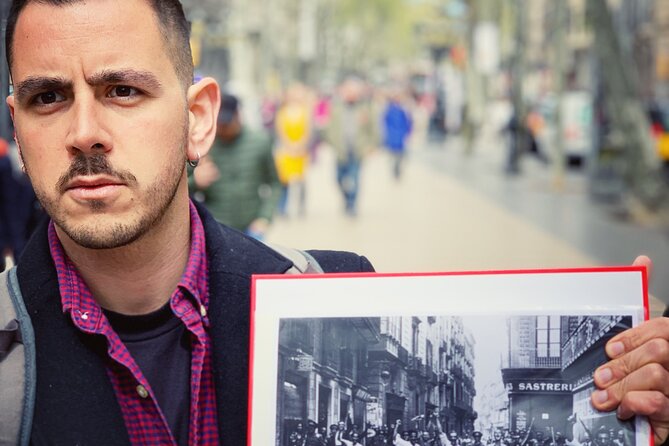
- The guide can make or break the experience: Henrieta, Filipa, Chrysa, Evan, Yannis, and Onno have each been praised for clarity, warmth, and passion.
- Comfortable shoes matter: The walk is often described as walking-intensive, even though one guide was praised for keeping the walking fairly light.
- This is a serious history tour: It suits curious adults who want context, not a light sightseeing stroll.
Why this Barcelona history walk is different
Most Barcelona walking tours focus on Roman remains, medieval churches, modernist buildings, or the city’s food culture. This one asks you to look at the same streets through the years from 1936 to late 1938, then follow the story into Franco’s dictatorship.
That focus gives the city a different character. A busy square is no longer just a place to meet. A church is not only an architectural stop. A narrow street may connect to political violence, working-class protest, or the bombing and destruction of the Civil War.
I value this approach because the war can be hard to understand from a textbook alone. The conflict involved several groups on the Republican side, not only the simple division between Republicans and Nationalists. The tour aims to explain those factions and the competing political goals that shaped Barcelona.
The subject is also sensitive. Spain’s later decision to leave much of this past unspoken is part of the discussion, along with the continuing effect of Franco-era memories. Your guide is expected to handle the subject with care, and the strongest guides do this by combining facts with human stories rather than turning the walk into a political speech.
The experience is offered in English and has a maximum group size of 25 people. That is large enough to create energy but small enough for questions, provided everyone can hear. The €1 radio headset is a sensible extra, especially on a busy street or if your guide speaks while the group is spread along a pavement.
More Walking Tours in Barcelona
- Barcelona Tapas and Wine Experience Small-Group Walking Tour
★ 5.0 · 5,804 reviews - Barcelona: Tapas Walking Tour with Food, Wine, and History
★ 4.8 · 4,261 reviews - Barcelona Tapas Walking Tour: Food, Wine & History
★ 4.5 · 1,928 reviews
Plaça Catalunya: starting where the city gathers
The tour begins near Foot Locker at Plaça de Catalunya, at Pl. de Catalunya 20 in the Ciutat Vella district. This is a practical starting place near public transportation, but it is not a quiet historical courtyard. Expect a busy urban setting with people crossing in every direction.
The square matters because of its role during the Civil War. Your guide sets the political scene here and begins explaining how Barcelona became a center of conflict, labor activism, and competing Republican movements.
This opening is important for first-time students of the war. You need a basic map of the groups and ideas before the later stops make sense. Guides such as Evan and Yannis have been praised for taking time with the complicated political background and making it understandable to people who knew little about the period.
The stop itself lasts about 10 minutes. Do not expect a museum-style display or a preserved wartime installation. The value is in the explanation, the old photographs, and the way the guide points out how an ordinary civic space became part of a national crisis.
La Rambla: familiar streets, unfamiliar conflict
From Plaça Catalunya, the route continues to La Rambla, where you spend about 10 minutes looking at several Civil War-related locations. La Rambla is one of Barcelona’s best-known promenades, which makes the historical contrast especially effective.
You may find it difficult to picture the street during wartime while surrounded by shops, crowds, and ordinary city noise. That is exactly why the period photographs help. They give you a visual comparison between the present street and the damaged, tense city of the 1930s.
The guide also places Barcelona’s working class at the center of the story. This is not just a tale of generals and government leaders. You learn about labor politics, anarcho-syndicalism, and the social pressures that shaped daily life.
I would pay close attention here to the distinctions between political groups. A guide can list names and dates quickly, but the better approach is to explain what each group wanted and why those differences mattered. Henrieta has been praised for explaining the many organizations and people involved with clarity, while other guides have used humor and patient answers to keep the subject approachable.
La Rambla is also where the headset can earn its keep. You may be standing near traffic, pedestrians, and other tour groups. The radio system costs €1 per person and is paid to an outside provider at the meeting point.
Antic Hospital de la Santa Creu: a medieval setting for modern upheaval
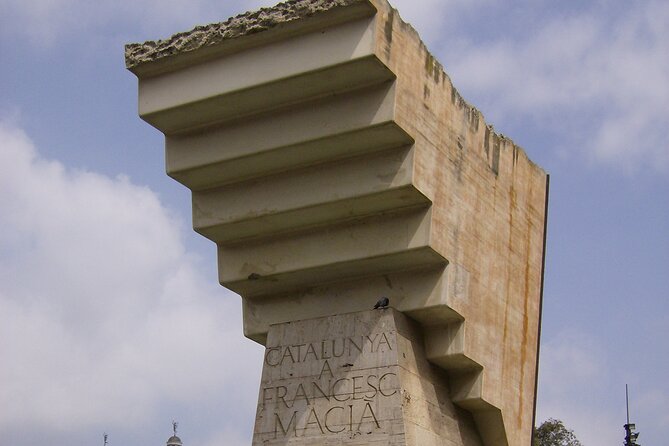
The route then reaches the Antic Hospital de la Santa Creu, a 15th-century hospital. The stop lasts about five minutes, so this is not a long architectural visit. It works as a brief setting for discussing the wartime city and the institutions around it.
The old hospital adds a useful layer to the tour. Barcelona’s Civil War story did not unfold in purpose-built memorials. It happened among buildings that had served the city for centuries and continued to do so afterward.
You should listen for the connection between public institutions and ordinary people. The tour’s strongest moments come when the guide shows how large political events affected workers, families, neighborhoods, and local services.
Because this is a short stop, the guide’s storytelling matters more than the building visit itself. If you want to explore the hospital in detail, you may need separate time before or after the walk. The tour is designed to use the site as part of a larger historical route, not as a full architectural tour.
More walking tours:
- Barcelona: Tapas Food Crawl Walking Tour with Tastings
★ 4.9 · 1,798 reviews - Barcelona: Gothic Quarter Ghosts and Legends Walking Tour
★ 4.7 · 1,443 reviews - Barcelona Helicopter, Sailboat & Old Town Private Walking Tour
★ 5.0 · 1,395 reviews - Barcelona: Old Town and Gothic Quarter Walking Tour
★ 4.8 · 1,393 reviews
Basilica de Santa Maria del Pi: look beyond the church facade
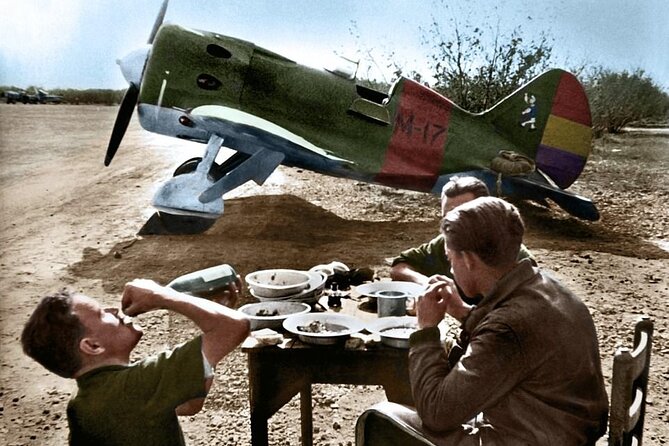
The Basilica de Santa Maria del Pi is another short stop, about five minutes. It is an old church with a less obvious connection to the Civil War, making it one of the places where the tour asks you to look past the surface.
The itinerary notes that admission is not included. That means you should not assume the walking tour ticket covers entry inside the basilica. The visit may focus on the exterior or on the surrounding historical context, so check the day’s arrangements if seeing the interior is important to you.
This stop shows the tour’s main strength: it changes how you read the Old Town. You are not simply moving from one famous sight to another. You are learning to notice traces, absences, and connections that are easy to miss when walking alone.
The brief timing also keeps the route moving. If your attention is fading, this is a good moment to reset, ask a question, and prepare for Plaça Sant Felip Neri, the emotional high point of the walk.
Plaça Sant Felip Neri: beauty beside the scars of war
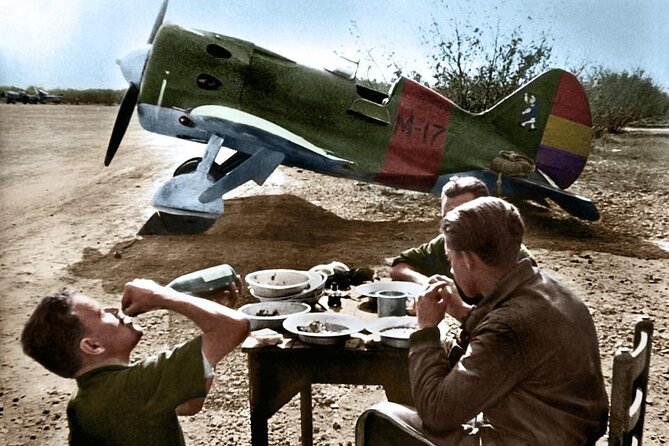
Plaça Sant Felip Neri is described as a beautiful and deeply unsettling reminder of Civil War destruction. The stop lasts about five minutes, but the subject gives it more weight than its short timing suggests.
The square is visually striking, and that beauty can make the evidence of violence harder to process. Your guide uses the location to discuss destruction and memory, helping you understand that the war’s damage was not an abstract event far from daily life.
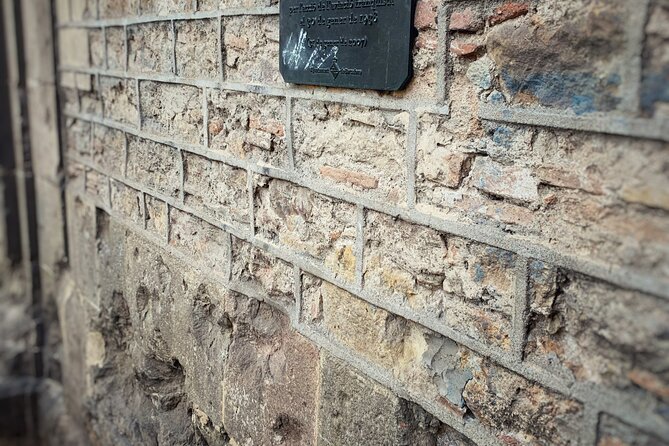
This is also where historic photographs can be especially useful. Present-day Barcelona does not always reveal what happened during the conflict. Images help bridge the gap between a peaceful square and the violence that once affected it.
The guide needs to strike the right tone here. The strongest accounts describe guides who are passionate but thoughtful, and who make room for questions without treating the subject casually. Chrysa, Filipa, and Yannis have each been praised for combining clear explanations with an engaging manner.
Do not expect a theatrical presentation. The effect comes from the location, the evidence, and the words used to connect them. If you prefer upbeat sightseeing with frequent photo opportunities, this may feel heavy. If you want to understand Barcelona’s 20th-century identity, it is likely to be one of the most memorable stops.
The political story is the real centerpiece
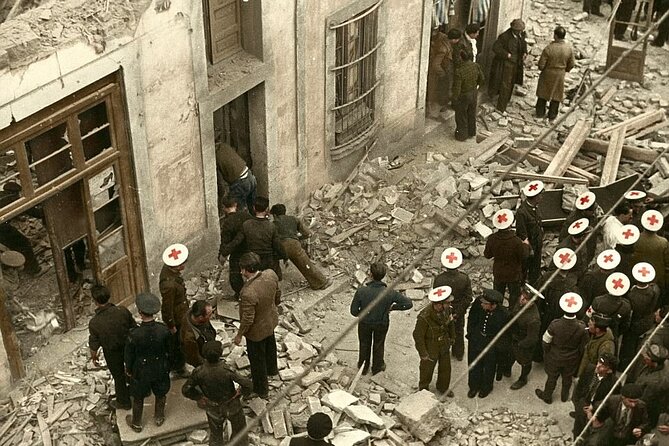
The route is useful, but the political explanation is the heart of the experience. You learn about the factions within the Republican movement, the working-class struggle, anarcho-syndicalism, and the path toward Franco’s dictatorship.
This is not an easy subject. Names, organizations, alliances, and betrayals can blur together. The best guides handle this by slowing down, answering questions, and using maps, photographs, and posters. Evan has been praised for taking enough time to explain difficult political details, while Yannis has been praised for turning a complicated story into a clear sequence.
You should ask questions as you go. The tour is built around discussion, and the guides are described as open to questions and willing, in at least one case, to adjust the route to address the group’s interests.
There is some variation in delivery. One account describes a guide whose explanations felt chaotic, with people introduced before their roles were clear and visual material not shown often enough. That criticism is worth taking seriously. A complex topic needs structure, and the quality of your experience depends heavily on the guide assigned that day.
Still, the overall picture favors strong teaching. Several guides have backgrounds in archaeology or extensive study of Barcelona’s past. Some have provided reading, film, and article suggestions at the end, which is helpful if the tour leaves you wanting more.
How much walking and concentration should you expect?
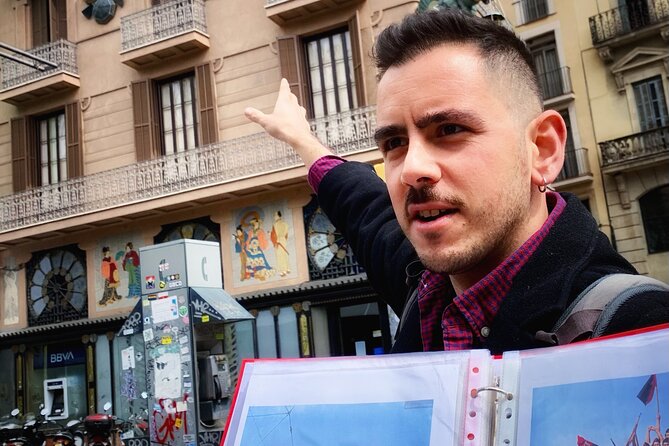
The advertised duration is about two hours and 30 minutes. Some descriptions call the route walking-intensive, while another says the walking was minimal. The safest advice is to prepare for a normal city walking tour with frequent standing stops, rather than a relaxed café-to-café outing.
Wear comfortable shoes. You will be outdoors, moving through central Barcelona streets, and the exact pace may depend on the guide and the group.
The tour also requires concentration. You are not only looking at buildings. You are following a sequence of political and social events, often while standing in a busy public place. The radio headset costs only €1, but it may help you catch dates, names, and explanations.
Most people can participate, and service animals are allowed. The group can include up to 25 people. If you prefer very personal attention, a smaller private walk may suit you better, but this group size remains manageable when the guide uses the headset well.
Is $47.16 a fair price?
At $47.16 per person, this costs more than a basic free walking tour, but it offers a narrower subject and a specialist-style presentation. You are paying for the guide’s preparation, historical images, political explanation, and the chance to connect several Old Town locations into one story.
I think the value is strongest if you already enjoy history or want a serious introduction to 20th-century Spain. The tour can also improve the rest of your Barcelona visit. Afterward, streets and buildings that looked ordinary may carry a new set of questions.
The value is weaker if you want a broad orientation to Barcelona, a food walk, or a tour built around major architectural interiors. Several stops are short, and there is no indication that admission to the basilica is included. The route is about interpretation, not paid attractions.
The 99 percent recommendation rate and 5 out of 5 average from 539 ratings suggest a strong record, but the individual guide remains crucial. Look for a guide who explains the factions in a logical order and regularly uses the photographs. If the guide invites questions, take advantage of it.
Who should book this tour?
I would recommend it to adults, students, history readers, and anyone who wants to understand why Catalonia and Barcelona carry such strong political memories. It is also a good first or second-day activity if you want historical context before exploring the city on your own.
It suits you especially well if you:
- Have little background on the Spanish Civil War and want a clear introduction
- Already know the basic story and want to see its Barcelona locations
- Enjoy political and social history
- Prefer a local guide over a museum audio guide
- Are willing to listen carefully and walk through busy streets
I would think twice if you want a gentle stroll, have limited patience for dates and factions, or expect preserved war sites at every stop. The city has relatively few formal markers of the events, so the guide’s words do much of the work.
Booking details worth knowing
The meeting point is outside Foot Locker at Pl. de Catalunya 20, in Ciutat Vella. The tour is offered in English, and confirmation is provided when you book.
It ends at a different location, so do not plan a tight connection immediately afterward. The end point is not specified in the supplied details, so allow a little flexibility for your next activity.
Free cancellation is available up to 24 hours before the start time. A late cancellation or late change is not refunded. The tour can also be canceled if the weather is poor or if the minimum group size is not reached, with a new date, another experience, or a full refund offered.
Should you book the Spanish Civil War and Franco tour?
Book it if you want Barcelona to make more sense beyond its famous architecture. The best guides, including Henrieta, Filipa, Chrysa, Evan, Yannis, and Onno, turn a difficult subject into a clear, human story tied to the streets beneath your feet.
Go prepared with comfortable shoes, an open mind, and patience for political detail. Bring questions, listen for the differences between Republican factions, and use the photographs to compare the city today with the city of the 1930s.
I would place this tour high on the list for a history-minded visit. It is not the easiest walk in Barcelona, but it offers something many sightseeing tours do not: a serious look at how war, class, ideology, and dictatorship shaped the city you see today.
FAQ
How long does the Spanish Civil War and Franco Barcelona Walking Tour last?
The tour lasts approximately two hours and 30 minutes.
What language is the tour offered in?
The tour is offered in English.
Where does the tour begin?
It begins at Foot Locker, Pl. de Catalunya 20, Ciutat Vella, 08002 Barcelona, Spain.
Does the tour end where it begins?
No. The activity ends at a different location. The provided details do not specify the exact ending point.
Is the guide-radio headset included?
No. A €1 per person guide-radio fee is paid at the meeting point to an external provider.
What is the cancellation policy?
You can cancel up to 24 hours before the experience start time for a full refund. Cancellations or changes made less than 24 hours before the start time are not accepted for a refund.
Recently added around Barcelona
- Intro Segway Tour Barcelona 1h★ 4.9 · 166 reviews
- Barcelona: Bike or eBike Tour, Top Sights & Local Insights★ 4.9 · 166 reviews
- Instagram Photoshoot Tour in Barcelona★ 5.0 · 167 reviews
- Artisan Ceramic Making Experience★ 5.0 · 168 reviews
- Barcelona: Big Fun Museum Ticket★ 4.2 · 169 reviews
- Sagrada Familia Evening Private Tour with Expert Guide★ 4.5 · 170 reviews
- Gaudi’s Crypt in Colonia Güell with Audioguide★ 4.4 · 170 reviews
- Las Golondrinas Barcelona 60-min Boat Tour★ 4.0 · 170 reviews
Walking Tours, compared.
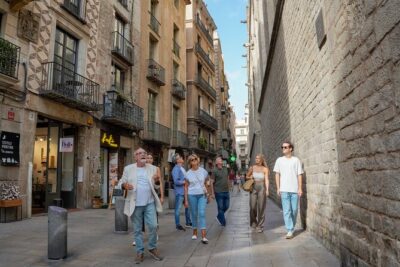
Barcelona Tapas and Wine Experience Small-Group Walking Tour
Read our review →
Tapas Walking Tour with Food, Wine, and History
Read our review →
Albaicín and Sacromonte Guided Sunset Walking Tour
Read our review →
Toledo Tour & Vineyard Walk with Wine Tasting from Madrid
Read our review →
Barcelona Tapas Walking Tour: Food, Wine & History
Read our review →
Madrid Old Town & Royal Palace Walking Tour Skip the Line Ticket
Read our review →
Browse the lists this tour appears in