
Review · TEIDE NATIONAL PARK TOURS
Tenerife: Sunset and Stargazing at Teide National Park
Teide turns sunset into a two-part sky show. I like the mix of sunset views above the clouds and a proper astronomy session rather than a quick look through a telescope. I also like the small-group format, free night-sky photograph, and friendly guides such as Peter, Phil, Roland, and Dani. The main drawback is simple: after dark, the mountain can feel close to freezing, and there are no toilets at or near the viewing sites.
At $47 per person, this 3 to 4-hour outing offers good value if you want both Teide scenery and stargazing without paying for dinner, a cable-car ride, or a visit to the observatory. You can choose pickup in the south of Tenerife, or drive yourself to the meeting point.
Bring more warm clothing than you think you need. Several people arrived in island holiday clothes and wished they had packed a proper winter jacket, long trousers, warm shoes, and several layers.
In This Review
- Key points to know before booking
- Why Teide is such a strong stargazing location
- The drive up from Tenerife’s south coast
- Mirador de los Poleos and the sunset stop
- Moving to the darker stargazing viewpoint
- What you can see through the 12-inch telescope
- Learning the sky without feeling like a classroom
- The free photograph under the stars
- Is $47 good value?
- Who should book this evening?
- Practical advice for a better night
- Should you book the Teide sunset and stargazing tour?
- FAQ
- How long does the Tenerife sunset and stargazing tour last?
- Where does the tour meet?
- Is hotel pickup available?
- Can I join using public transportation or a taxi?
- Is food included?
- Will I visit Teide Observatory or ride the cable car?
- What happens if the weather is poor?
- What can I see through the telescope?
- Is a photograph included?
Key points to know before booking
- A sunset above the clouds: From around 1,400 meters, you may see the sun set over La Gomera, La Palma, and El Hierro.
- A historic volcanic viewpoint: The first stop sits beside a lava flow linked to an eruption recorded in Christopher Columbus’s ship log in 1492.
- A real telescope session: A 12-inch Dobsonian telescope can show planets, galaxies, nebulae, and star clusters when conditions are right.
- Small groups matter: Groups of about eight people per guide allow more time at the telescope and make it easier to ask questions.
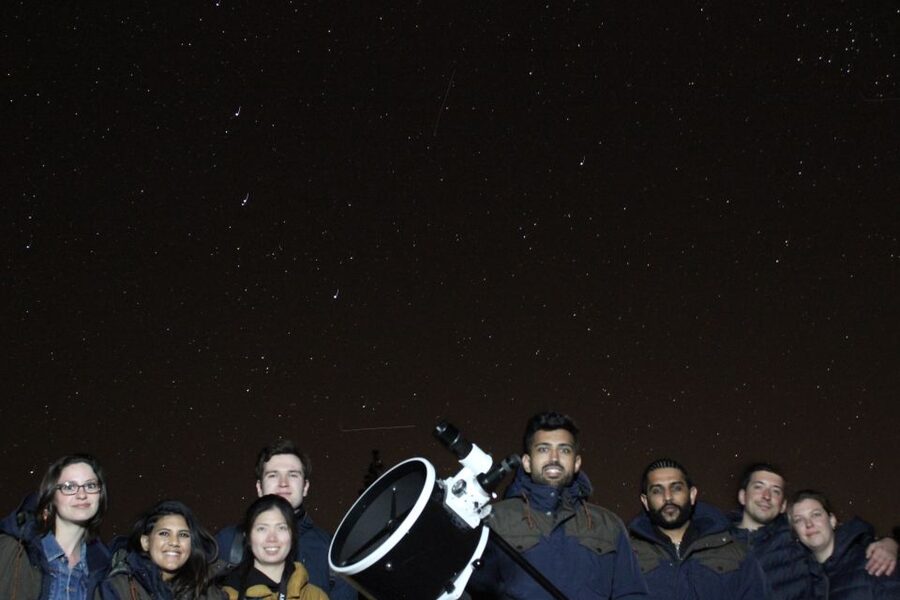
- Free astrophotography: You receive an individual photograph showing you beneath a star-filled sky.
- Cold, dark, and exposed: Wind, clouds, temperature, and moonlight all affect the night, so the experience is weather-dependent.
Why Teide is such a strong stargazing location
Mount Teide rises high above Tenerife, and the tour uses public viewpoints around the national park rather than taking you onto the summit itself. That distinction matters. You are not hiking to Mount Teide, riding the cable car, or visiting Teide Observatory.
The height helps place you above much of the island’s cloud cover. Once the sun drops, the lack of strong artificial light gives the sky a clarity you will not find along the resort coast. The setting is not just a dark field with equipment parked beside it. You look out over black volcanic ground, distant islands, and the changing outline of Teide.
The guides use a laser pointer to identify stars and constellations. They explain how to find Polaris, the North Star, from the stars of Ursa Major. They also show you how to locate the Andromeda galaxy using the Great Square of Pegasus.
That approach makes the session useful even when you are not looking through the telescope. You learn how to find major features of the sky with your own eyes. Greek mythology is part of the storytelling, so the evening has plenty for visitors who enjoy legends as much as astronomy.
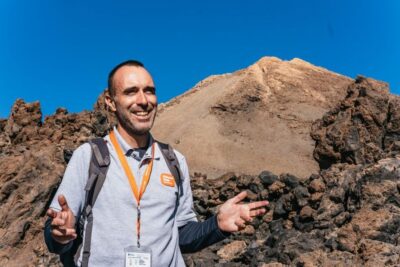
The guides are one of the strongest parts of the experience. Peter is often praised for his astronomy knowledge and easy humour. Phil is known for being a warm, helpful host and a capable driver. Roland, Dani, Jamie, Andrew, and other guides also lead sessions, so the exact personality of your evening depends on the team assigned to your group.
More Teide National Park trips:
- Tenerife: Mount Teide Tour with Cable Car Ticket & Transfer
★ 4.3 · 5,094 reviews - Teide National Park Sunset & Stargazing with Dinner (Star Safari)
★ 5.0 · 2,601 reviews - Teide by Night: Sunset & Stargazing with Telescopes Experience
★ 4.5 · 1,492 reviews
The drive up from Tenerife’s south coast
The trip begins with a van journey of roughly 45 minutes, depending on your pickup point. VIP pickup is available in the south, generally between El Médano and Los Gigantes, with some exceptions. Pickup and drop-off take place at your accommodation or a nearby point within walking distance.
The exact pickup time arrives by WhatsApp on the day of the tour. Do not rely only on the generic time printed on your ticket. Pickup can differ by as much as two hours, so keep your phone available and make sure the booking has the right number.
If your flight arrives in the afternoon, I would not book this for the same night. A delay could make you miss the van, and the operator treats an unreachable or absent participant as a no-show.
The self-drive option can be cheaper and gives you more control, but it requires a rental car. A taxi or public bus will not work for this option. You drive to the first meeting point, then follow the guides in your own car to the second viewpoint after sunset.
The mountain roads are not ideal for a young or inexperienced driver. At the first viewpoint, parking can also be limited. Arriving 15 to 20 minutes early is sensible, especially if you are driving yourself.
Mirador de los Poleos and the sunset stop
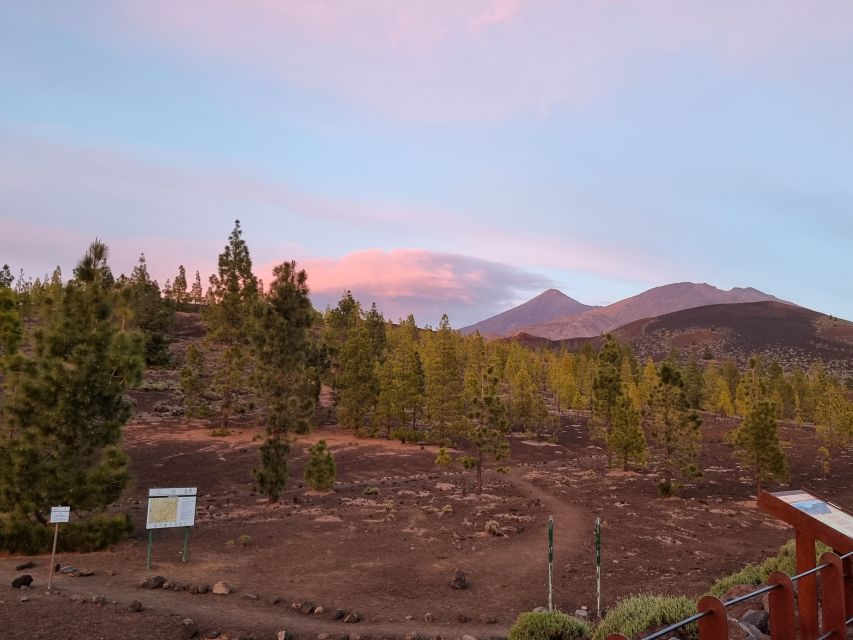
The first viewing point is normally Mirador de los Poleos, although the exact location can change. The site sits at about 1,400 meters beside a lava flow tied to the 1492 eruption recorded in Columbus’s ship log.
This is where the trip shifts from transport to scenery. You look across volcanic ground toward the island horizons and watch the light change over La Gomera, La Palma, and El Hierro. On a clear evening, the cloud layer below can resemble a pale sea, with the higher volcanic peaks rising through it.
The sunset is not a fixed postcard scene. Some evenings bring strong orange and red tones. Others offer softer pinks, purple shadows, or a glowing outline around Teide. The guides allow time for photographs, and you can take pictures with the changing sky behind you.
A glass of Cava is served to celebrate the sunset. A non-alcoholic drink is available, making this part easy for children and anyone avoiding alcohol. The drink is a small touch, but it gives the stop a pleasant sense of occasion without turning it into a formal meal excursion.
One weakness is that the sunset stop can involve waiting before the astronomy part begins. If the group reaches the viewpoint early, you may have a period with little structured commentary. Bring your camera, enjoy the view, and treat this as unhurried scenic time rather than a tightly scripted attraction.
Moving to the darker stargazing viewpoint
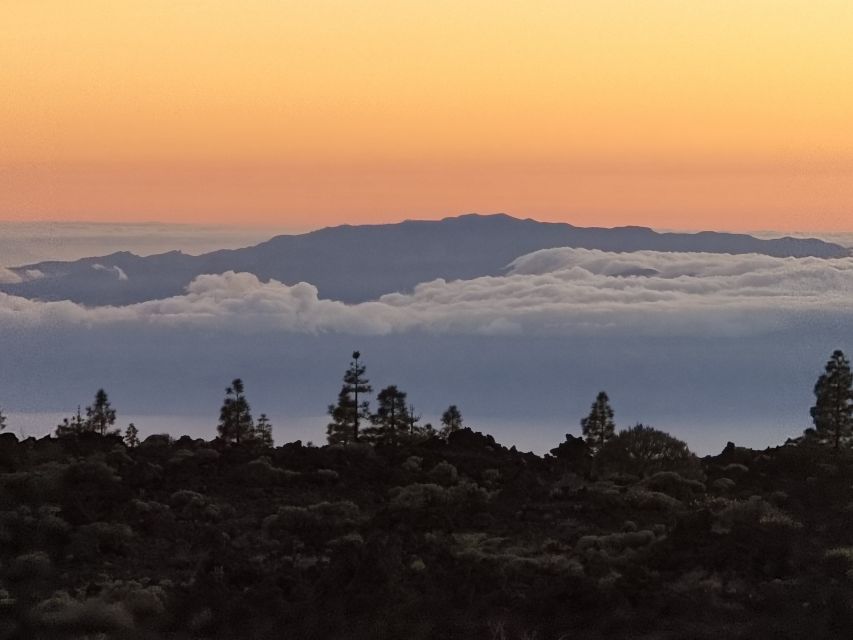
After sunset, the group normally drives about five minutes to another viewpoint. This short transfer places you in a better position for the main astronomy session.
The second stop lasts about two hours and 15 minutes. You remain outdoors for most of it, so comfort depends heavily on your clothing. The supplied warm jackets are listed for the VIP option only. Some departures also provide blankets and hot chocolate, but you should not use those extras as a substitute for packing warm clothes.
The operator may keep the group at the lower viewpoint if high wind, clouds, or low temperatures make the higher location unpleasant or unsafe. That does not cancel the experience. The lower site is still described as suitable for stargazing, and the guides can continue the astronomy program there.
Clouds are not always a disaster. If the sky clears later, the guides can adjust the order of the talk and telescope viewing. The important point is that you should accept some uncertainty. Astronomy depends on the sky, not just the booking calendar.
More stargazing nights:
- Sunset & Stargazing Experience From Teide
★ 4.5 · 1,129 reviews - Teide National Park: Guided Large Telescope Stargazing Tour
★ 4.9 · 319 reviews - Tenerife: Sunset Night Tour and Stargazing at Teide + Dinner
★ 3.8 · 316 reviews - Teide National Park: Stargazing Experience
★ 4.7 · 220 reviews
What you can see through the 12-inch telescope
The tour uses a 12-inch Dobsonian telescope. That is a substantial piece of equipment for a small-group evening, and it allows you to examine objects that are faint or indistinct to the naked eye.
What you see depends on the season and the Moon:
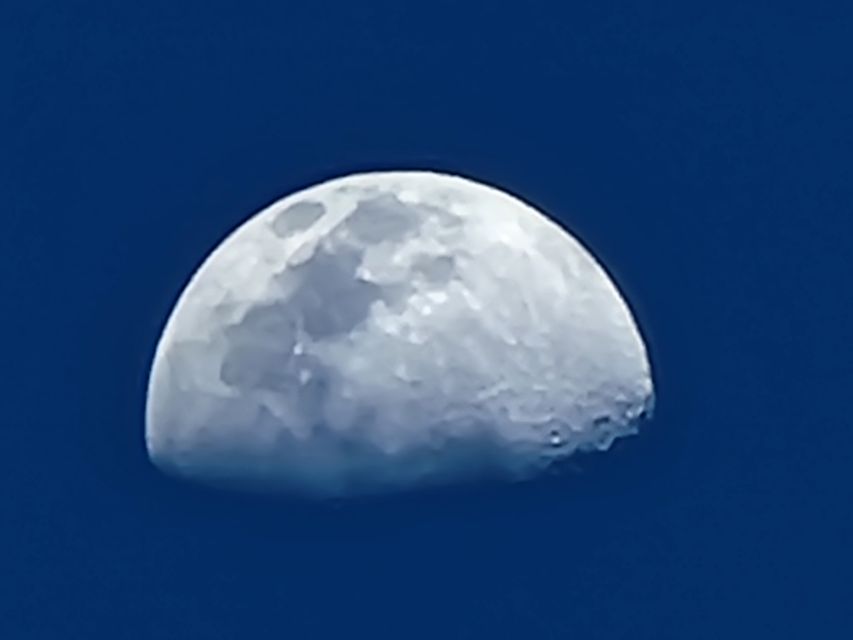
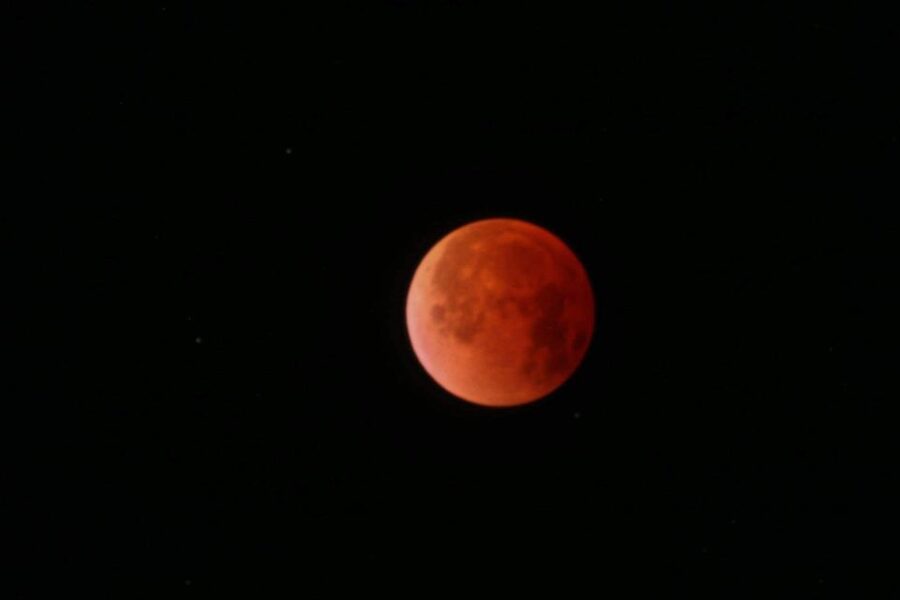
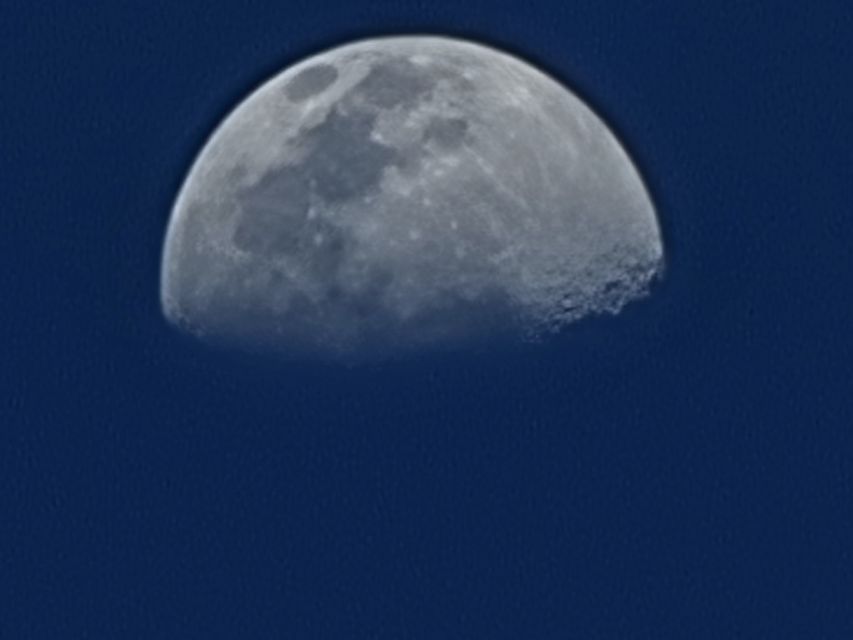
- The Moon: Around full moon, it can become the main attraction, with bright detail across its surface.
- Jupiter: When visible, you may see the planet and its Galilean moons.
- Saturn: When it is in the evening sky, its rings can be visible through the telescope.
- Star clusters: The Pleiades, also called the Seven Sisters, are a winter highlight.
- Galaxies and nebulae: The guides may point out deep-sky objects when the conditions are suitable.
People have particularly enjoyed seeing Saturn’s rings and Jupiter’s moons clearly. Those are the kind of sights that make astronomy feel immediate. You are no longer hearing about a distant planet in a textbook. You are looking directly at it.
The guides also use tracking telescopes, according to the experience offered on some evenings. Small groups help here. With about eight people assigned to a guide, you are less likely to spend the whole session waiting behind a large crowd.
Still, do not expect every object listed above on every date. The Moon can wash out faint galaxies and nebulae, while clouds and wind can limit telescope use. If seeing faint deep-sky objects is your main goal, choose a night near the new moon when possible, or at least a date when the Moon has not yet risen.
Learning the sky without feeling like a classroom
The best part of the presentation is its balance. You get facts, but the guides also use stories and humour. Names such as Peter, Phil, and Roland appear often in connection with lively explanations, though the guide on your date may be someone else.
You will learn practical patterns, not just isolated names. Once you know how Ursa Major helps locate Polaris, you can repeat the exercise on your own. The Great Square of Pegasus gives you another useful reference point for finding Andromeda.
This is suitable for first-time stargazers. You do not need to know the difference between a nebula and a galaxy before arriving. The guides explain the basics clearly, then add detail for anyone who wants more.
Teenagers can enjoy it too. The combination of lasers, telescopes, planets, and short stories keeps the session from feeling like a lecture. Younger children are allowed with the self-drive option, but children under five are not accepted on the VIP tour.
The free photograph under the stars
An individual astrophotography photograph is included at no extra charge. The guide or photographer positions you beneath the night sky and creates an image that shows both you and the stars.
This is different from taking a quick phone picture. Ordinary phones often struggle with a dark person against a bright star field. The supplied photograph gives you a proper keepsake of the evening, and it is one of the better-value inclusions at this price.
You should still take your own sunset pictures. The Cava glass, lava fields, cloud sea, and outline of Teide give you plenty of natural subjects before the light fades.
Is $47 good value?
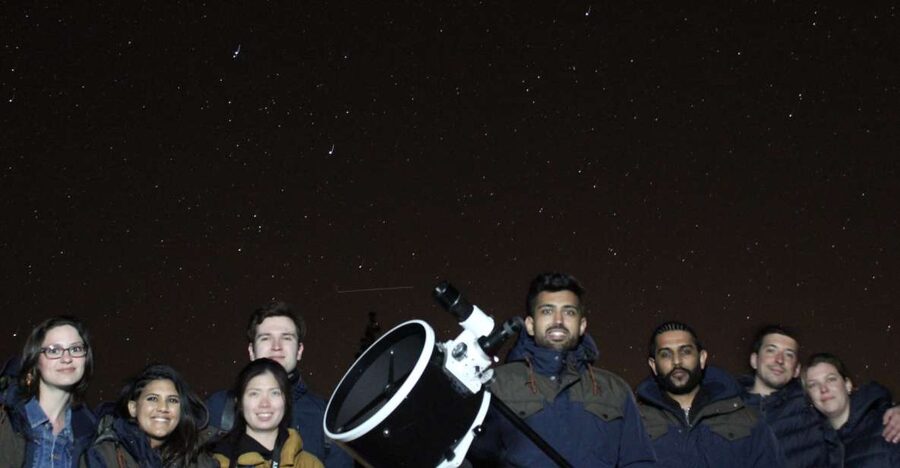
At $47, the price is fair for a 3 to 4-hour guided outing. You receive transport if you select the appropriate pickup option, a stargazing session, a starlight-certified English-speaking guide, the telescope program, a drink at sunset, and an individual astrophotography photograph.
The value improves if you want a focused evening rather than a long dinner excursion. You are paying for the guide’s astronomy knowledge, access to specialist equipment, transportation in the VIP option, and the chance to see Teide after dark.
The price does not include food, the cable car, Teide Observatory, or hiking. That is not a problem if your aim is sunset and astronomy, but it matters if you want a full Mount Teide day trip.
The VIP option costs more than the basic price may suggest, depending on availability. Its main benefit is door-to-door service in the southern pickup area and, according to the listed inclusions, warm jackets. The self-drive option can suit people already renting a car and staying outside the pickup zone.
Who should book this evening?
I would choose this for you if you want:
- A small-group experience rather than a large coach outing
- Sunset scenery and astronomy in one trip
- Clear, friendly explanations without needing prior astronomy knowledge
- A free photograph to take home
- A good activity for couples, families with older children, or curious teenagers
- A south Tenerife pickup from resorts between El Médano and Los Gigantes
I would think twice if you dislike cold weather, standing outdoors, mountain roads, or uncertain conditions. There are no toilet facilities at or near the viewpoints, and people with altitude sickness should not book.
You also need to understand the pace. This is not a hike, and you will not reach the summit of Mount Teide. It is a scenic drive followed by a fairly long outdoor astronomy session.
Practical advice for a better night
Pack as if you are visiting winter, not the beach. Take a proper jacket, long-sleeved shirt, long trousers, warm socks, and warm shoes. Several layers are better than one thick item because wind can make the temperature feel much lower.
Wear comfortable shoes, but do not bring pets, bicycles, or baby carriages. If you use a wheelchair, tell the operator before booking so the arrangements can be discussed.
Keep your phone charged for WhatsApp messages and photography. Self-drive participants should arrive early at the first meeting point and be ready to follow the guide’s vehicle after sunset.
If you want the darkest possible sky, aim for a date near the new moon. If you prefer planets or a dramatic Moon, a brighter lunar phase may be better. Ask about the expected sky objects when you receive the day-of-tour message.
Should you book the Teide sunset and stargazing tour?
Book it if you want a well-priced evening that combines Tenerife’s volcanic scenery with real guided astronomy. The sunset is beautiful, but the telescope session is the reason this outing feels more worthwhile than a simple viewpoint stop.
Choose VIP if hotel pickup, warm jackets, and a simple door-to-door evening matter most. Choose self-drive if you have a rental car, feel comfortable on mountain roads, and want the lower-cost route.
I would not book it without warm clothes or if you need guaranteed clear skies. For everyone else, especially first-time stargazers and couples looking for a memorable final evening in Tenerife, this is an easy experience to recommend.
FAQ
How long does the Tenerife sunset and stargazing tour last?
The experience lasts about 3 to 4 hours. The listed schedule includes around 45 minutes of driving, a 45-minute sunset stop, a short transfer, and about 2 hours and 15 minutes of guided stargazing.
Where does the tour meet?
The normal self-drive meeting point is Mirador de los Poleos, but you should check the exact location on Google Maps and follow the meeting details sent by WhatsApp on the day.
Is hotel pickup available?
Pickup and drop-off are available with the VIP option in the south of Tenerife, generally between El Médano and Los Gigantes, with some exceptions. You must provide the exact accommodation address at least 24 hours before the tour.
Can I join using public transportation or a taxi?
No. The self-drive option requires your own rental car. You drive to the first meeting point and follow the guides to the stargazing location in your car.
Is food included?
No food is included. A glass of Cava or a non-alcoholic drink is provided at sunset. Some departures have also offered hot chocolate during the cold evening, but you should bring suitable warm clothing.
Will I visit Teide Observatory or ride the cable car?
No. The activity takes place at public viewpoints around Teide National Park. It does not include the cable car, Teide Observatory, hiking, or a hike to Mount Teide.
What happens if the weather is poor?
If wind, clouds, or low temperatures are unsuitable for the higher viewpoint, the guides may remain at the lower location. That viewpoint can still be used for stargazing.
What can I see through the telescope?
Depending on the season and conditions, you might see the Moon, planets such as Jupiter and Saturn, galaxies, nebulae, and star clusters including the Pleiades.
Is a photograph included?
Yes. Each participant receives a photograph made with astrophotography techniques, showing them beneath the stars.
More Evening Experiences
- Tenerife: Sunset Catamaran Tour with Transfer, Buff & Drinks
★ 4.8 · 570 reviews - Tenerife: Mount Teide Sunset and Night Tour with Pickup
★ 4.5 · 245 reviews - 3-Hour Teide Sunset Quad Trip in Tenerife
★ 5.0 · 205 reviews - Sunset and Stars at Teide National Park
★ 4.5 · 168 reviews
More National Parks
- Tenerife: Snorkeling Tour in a Marine Protected Area
★ 4.9 · 636 reviews - Small Group Teide National Park Volcanic and Forest Wonders
★ 5.0 · 402 reviews - Tenerife: Teide National Park Guided Buggy Tour
★ 4.6 · 299 reviews - Tenerife Grand Tour: including Teide National Park and Masca
★ 4.0 · 191 reviews
Recently added around Tenerife
- Jeep Safari to Teide and Masca★ 4.5 · 165 reviews
- Tenerife Sunset Catamaran tour with transfer – Food and Drinks included.★ 5.0 · 166 reviews
- Tour with Whale and Dolphin Watching plus food included★ 4.5 · 166 reviews
- Costa Adeje: Tuk Tuk Tour★ 4.6 · 167 reviews
- Private Surfing Lesson at Playa de las Américas★ 5.0 · 167 reviews
- Sunset and Stars at Teide National Park★ 4.5 · 168 reviews
- Tenerife Snorkeling Tour in turtle habitat★ 4.0 · 168 reviews
- Tenerife: Hard Rock Cafe Set Menu Lunch or Dinner & Drink★ 4.1 · 169 reviews
Teide National Park Tours, compared.
Mount Teide Tour with Cable Car Ticket & Transfer
Read our review →
Teide National Park Sunset & Stargazing with Dinner (Star Safari)
Read our review →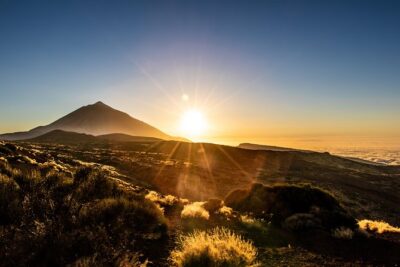
Teide by Night: Sunset & Stargazing with Telescopes Experience
Read our review →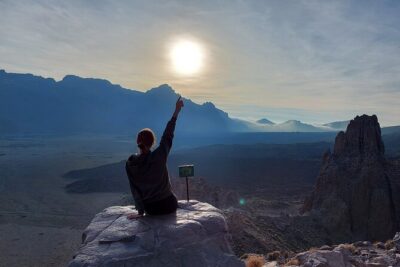
Mount Teide Summit Hiking Adventure with Cable Car
Read our review →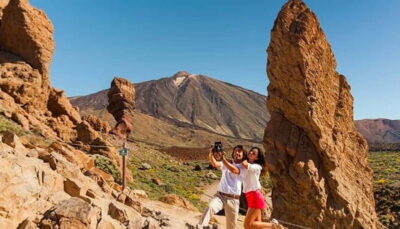
Teide, Icod de los Vinos & Garachico Full Day Tour
Read our review →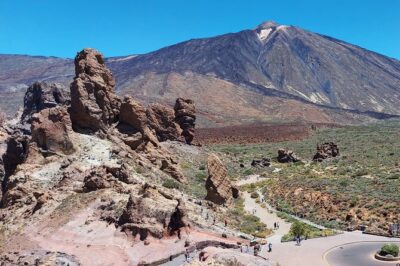
Small Group Teide National Park Volcanic and Forest Wonders
Read our review →Browse the lists this tour appears in