
Review · MADRID TOURS
Spanish Civil War start of 2 World War, Guernica Franco
The war is written into Madrid’s streets. This 2.5-hour walking tour connects bomb-scarred buildings, political landmarks, wartime art, and Franco-era monuments to explain how Spain split apart and how the conflict shaped Europe. I especially like the clear seven-stop route and the use of maps, images, audio, and video to make a difficult subject easier to follow. The main drawback is that the tour covers a huge amount of history in a short time, so some topics receive only a quick introduction.
I also like that the route goes beyond military dates. You’ll hear about propaganda, money, music, blood transfusions, cinema, Christmas truces, and daily life under bombardment. Guides named in guest feedback include Victor, Maikel, Guillermo, Adria, and Chato, with Chato noted for extending the walk beyond the scheduled two and a half hours. Expect a serious subject, but not a dry lecture.
In This Review
- Key points to know before you go
- Why this Madrid Civil War walk is worth your time
- Starting at Plaza del Callao: cinema, rubble, and civilian life
- Palacio del Senado and the making of two Spains
- Plaza de España: Franco and the 900-day defense of Madrid
- Templo de Debod: money, propaganda, and memory
- Paseo del Pintor Rosales: Guernica and art under fire
- Cuartel General del Ejército del Aire: music, medicine, and the war’s aftermath
- The Victory Arch: what should a monument say?
- Price, group size, and what the value really means
- Who should book this historical walk?
- My verdict: book it for context, not just monuments
- FAQ
- Where does the tour begin?
- Where does the tour end?
- How long does the tour last?
- What language is offered?
- What is included?
- Are entrance tickets included?
- How many people can join?
- Can I cancel for a refund?
Key points to know before you go
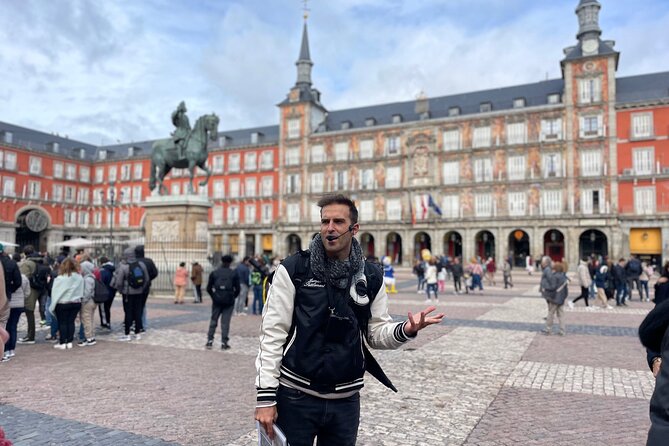
- Seven important Madrid locations: The route runs from Plaza del Callao to the Victory Arch near Moncloa.
- A street-level view of the Civil War: You’ll connect buildings, plazas, monuments, and military sites with specific events.
- Picasso and Guernica: The walk explains civilian bombing and art during wartime, including the Prado’s role under fire.
- Franco and the siege of Madrid: You’ll look at the defense of the capital, the dictatorship that followed, and the debate over memorials.
- Helpful visual material: Maps, images, audio, and videos supplement the guide’s explanations.
- Very low advertised price: At $3.62 per group of up to 15, the value is unusually strong, though tips are not included.
Why this Madrid Civil War walk is worth your time
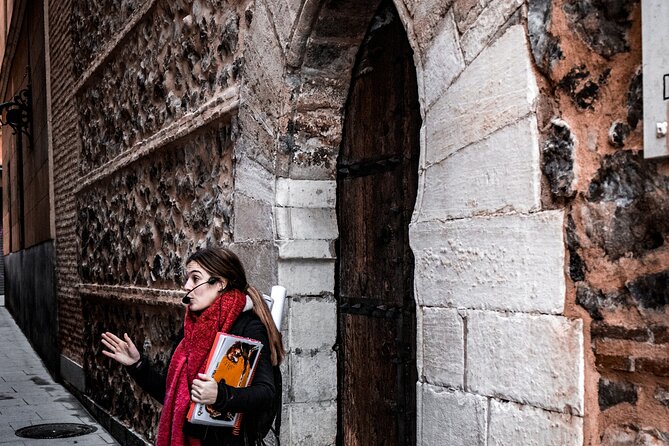
Madrid is a good place to study the Spanish Civil War because the conflict is not locked away in a distant museum. It appears in public squares, government buildings, monuments, and the long urban route from central Madrid to Moncloa.
This tour gives you a working outline of the conflict. You’ll learn how two sharply divided visions of Spain turned into civil war, how Madrid endured a siege lasting about 900 days, and how the end of the war led into dictatorship and the wider crisis of Europe in the late 1930s.
I like this approach because it does not reduce the conflict to a simple battle between two sides. The tour includes fascists, anarchists, socialists, Franco, foreign influence, propaganda, money, and ordinary people trying to live through violence. The result should help you understand later visits to the Reina Sofía, the Prado, or Civil War memorials elsewhere in Spain.
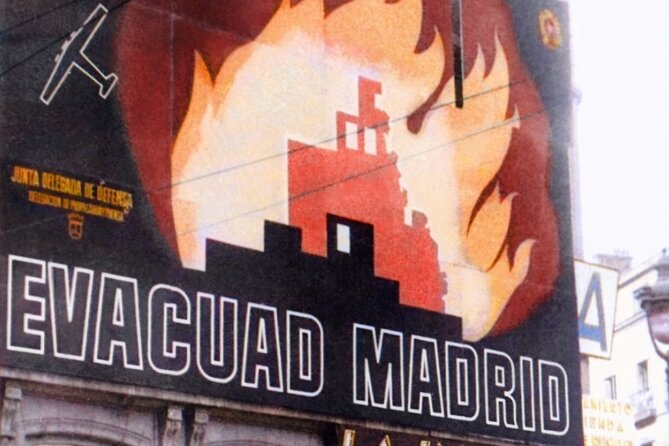
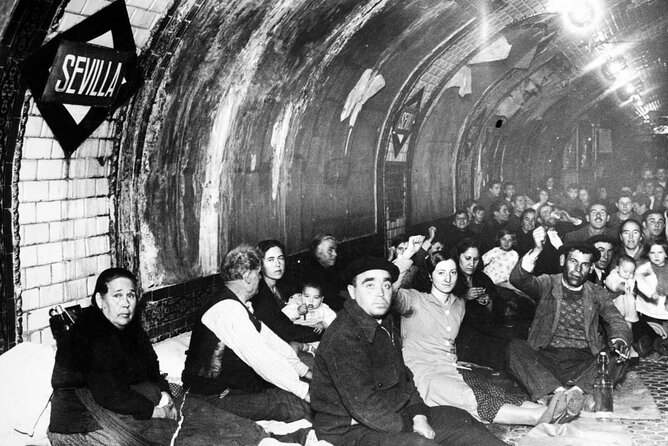
The guide also adds material beyond what you can see from the pavement. Maps can show the changing front lines. Images can reveal what streets looked like under bombardment. Audio and video can give more weight to speeches, songs, and propaganda. That extra material matters because many of the physical traces in Madrid are subtle.
The subject is serious, and the pace is brisk. You’ll walk between seven stops, with talks of roughly 15 to 20 minutes at each. If you want a full military study, this will feel too short. If you want a strong introduction before exploring Madrid on your own, the format works well.
A few more Spain trips worth a look
- Madrid: Tour Bernabéu Entry Ticket
★ 4.5 · 21,573 reviews - Madrid: Prado Museum Entry Ticket
★ 4.6 · 17,509 reviews - Madrid: Royal Palace Fast-Access Admission Ticket
★ 4.6 · 13,856 reviews
Starting at Plaza del Callao: cinema, rubble, and civilian life
The meeting point is on C. del Postigo de San Martín, close to Plaza del Callao in central Madrid. The first stop focuses on bombing in the heart of the city and on buildings that still show scars from the fighting.
This is a useful opening because it puts civilians first. The Civil War was not only fought at distant fronts. Madrid’s residents faced bombardment, fear, shortages, and hard choices about how to spend an ordinary day.
One of the more memorable ideas here is the question of whether a Spaniard at war would still go to the movies. That small detail gives the conflict a human scale. It asks how people tried to preserve routine when the city around them was under attack.
You should pay attention to the contrast between modern Madrid and the older wartime images. The present-day streets can look calm and polished, while the visual material shows how exposed the capital once was. This is one reason the supplied maps and photographs are useful rather than decorative.
Palacio del Senado and the making of two Spains
At the Palacio del Senado, the tour turns to the causes of the war. The stop examines how Spain became divided and how political conflict moved toward armed rebellion and civil war.
The phrase two divided Spains is central here. You’ll look at the opposing political visions that made compromise increasingly difficult. The talk also places Spain in an international setting, presenting the country as a kind of test range for ideas, weapons, and methods that would soon matter across Europe.
That wider view is valuable. The Spanish Civil War is often treated as an isolated national tragedy, but the tour links it to the forces that helped lead into World War II. You’ll hear about the ways outside powers treated Spain as a place to test military and political strategies.
The Senado stop is also a reminder that government buildings are not just impressive facades. They help explain who claimed authority, which institutions mattered, and why control of Madrid carried such symbolic weight.
Plaza de España: Franco and the 900-day defense of Madrid
The next stop at Plaza de España focuses on Francisco Franco and the defense of the capital. Madrid endured a siege of about 900 days, and the tour uses that long ordeal to explain both military pressure and life behind the lines.
This part should be especially useful if you know Franco mainly as the dictator who ruled Spain after the war. The walk connects his rise during the conflict with the political system that followed. That link is important, since the war did not end Spain’s political struggle. It set the terms for decades of dictatorship.
The discussion of Madrid under pumps adds a practical, unsettling detail about life in a city under pressure. Wartime sayings add another layer, showing how language can record fear, endurance, humor, and political loyalty.
Because this is a street tour, you won’t get a long stop inside a museum or archive. Instead, the guide builds the story in the open air, using the square as a place to think about the capital’s symbolic role. Bring your attention to the guide’s visual material, since the modern surroundings alone cannot show the full wartime picture.
A completely different kind of day out in Madrid:
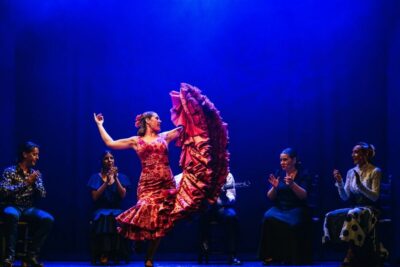
- Madrid: “Emociones” Live Flamenco Performance
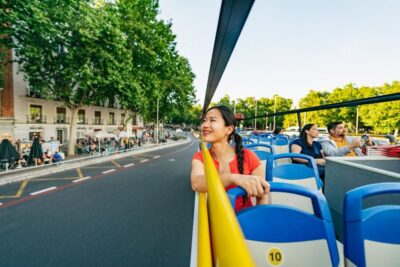
★ 4.8 · 12,866 reviews - Madrid: Panoramic Route City Tour
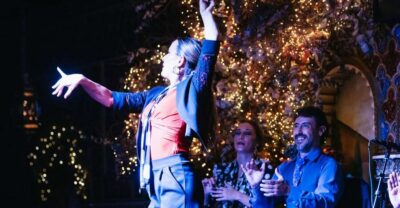
★ 4.1 · 12,259 reviews - Madrid: Live Flamenco Show with Food and Drinks Options
★ 4.5 · 9,901 reviews - Avila & Segovia Tour with Tickets to Monuments from Madrid
★ 5.0 · 9,762 reviews
Templo de Debod: money, propaganda, and memory
At the Templo de Debod, the topic shifts to money and propaganda. Who paid for the war? How did each side present its cause? What happened when political movements turned the conflict into a war of ideas?
These questions help you see that military strength depends on more than soldiers and weapons. Funding, foreign backing, public messaging, and control of information all shape a conflict. The propaganda section should be particularly helpful for understanding why the war attracted such strong international attention.
The temple itself gives the stop an unusual setting. It is not a Civil War monument, but it provides a recognizable Madrid landmark around which the guide can discuss wartime memory and public space. Nearby, the Sculpture to the Fallen of the Civil War brings the subject back to remembrance.
I like this pairing of political ideas with physical memorials. You’ll hear how people were persuaded during the war, then consider how later generations chose to remember the dead. The two topics belong together, since monuments often tell you as much about the period when they were built as about the events they commemorate.
This is also a good place to ask questions. The subject can become confusing quickly, especially when different political groups, foreign powers, and shifting alliances enter the story. A guide who explains terms clearly makes a real difference here. Adria was praised for presenting the subject with clarity, warmth, and sensitivity, qualities that are useful at this point in the route.
Paseo del Pintor Rosales: Guernica and art under fire
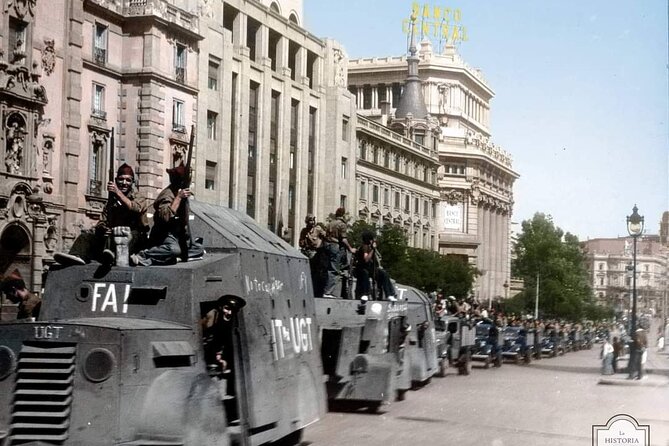
The Paseo del Pintor Rosales stop explores Picasso’s Guernica and the bombing of civilians. It also turns to the Prado Museum and the protection of art during the war.
This section links two kinds of destruction. Bombing attacked people and neighborhoods, while museums faced the threat of losing irreplaceable works. The discussion of Guernica gives you a way to think about how art can record outrage without being a literal battlefield report.
You should not expect to see Picasso’s painting here. The value comes from learning how the bombing of civilians became part of the painting’s meaning, and how the work later became one of the best-known artistic responses to the conflict.
The Prado section widens the focus. Protecting paintings during wartime required planning and sacrifice, and it shows that cultural objects were treated as part of Spain’s identity. If you plan to visit the Prado or the Reina Sofía, this stop can give those museum visits more context.
The mention of Christmas in truce adds a gentler note without pretending that the war was gentle. A temporary pause offers a glimpse of people on opposite sides taking a breath. It also shows why small moments of relief can become powerful memories in a long conflict.
Cuartel General del Ejército del Aire: music, medicine, and the war’s aftermath
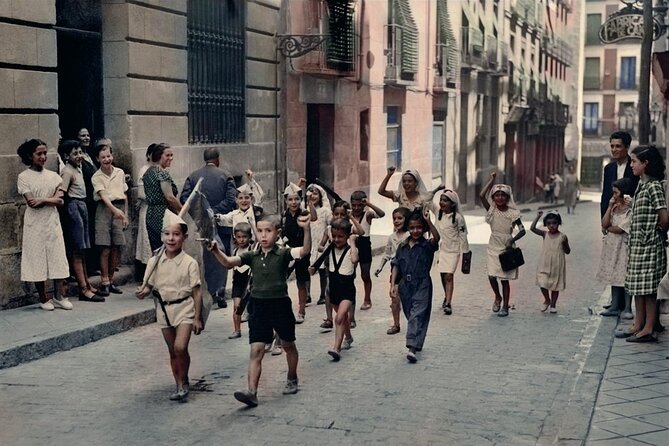
At the Cuartel General del Ejército del Aire, the tour turns to music, medical care, and the end of the war. The reference to They won’t happen and Sun Face shows how songs could express political identity and morale.
Music is an effective way to make the conflict feel less abstract. Political movements used songs to gather support, build loyalty, and give people a shared voice. You’ll get a glimpse of how ideology moved through daily life, not just through speeches and military orders.
The discussion of the first remote blood transfusion adds a striking medical detail. It brings the focus down to the level of saving one life in the middle of mass death. That contrast is powerful: while commanders and governments pursued large goals, doctors and volunteers dealt with immediate human needs.
This stop also explains how the end of the Spanish Civil War opened the door to World War II and dictatorship. The wording is best understood as a connection between conflicts and political eras, not as a claim that Spain’s civil war directly became the world war. Spain’s experience helped reveal the tensions that were already spreading across Europe.
The Victory Arch: what should a monument say?
The final stop is the Victory Arch, or Arco de la Victoria, near Moncloa. The subject here is less about a single battle and more about public memory. Should a monument tied to victory be destroyed, preserved, or reinterpreted?
That question remains relevant because monuments are never neutral objects. A triumphal arch can honor one side while causing pain to another. Keeping it may preserve evidence of the past, but it can also make an old political message feel present.
The tour ends with reflections on war rather than a neat final verdict. I appreciate that choice. You are left to consider what Madrid should do with symbols created by dictatorship and victory, and how a city can remember without celebrating repression.
The end point is at Arco de Moncloa on Avenida de la Memoria, near Metro Moncloa. That makes the finish practical. You can continue by public transport or use the guide’s personalized suggestions for more things to do in Madrid.
Price, group size, and what the value really means
The advertised price is $3.62 per group of up to 15 people. For a 2.5-hour guided walk with a local guide and visual material, that is an exceptional price if available for your booking date.
The low price should not lead you to expect a private tour. The activity allows up to 30 participants, while the stated group price covers up to 15. Check the exact booking terms before paying so you understand how your party is handled.
Tips are not included. Since the guide provides historical explanation, maps, images, audio, videos, and follow-up recommendations, you should plan to tip if the experience helps you. The low base price makes that easier, but tipping remains your choice.
There are no required entry fees during the route. That keeps the cost simple, though you should budget separately for museums or other Madrid sights you visit afterward.
Who should book this historical walk?
I would choose this tour if you want to understand Madrid beyond its food, plazas, and grand architecture. It suits you especially well if you plan to visit the Prado, Reina Sofía, or other sites linked to Spanish political history.
It is also a good fit for anyone who wants a balanced introduction to the conflict. The route covers Franco, fascists, anarchists, socialists, foreign involvement, civilian bombing, propaganda, medicine, art, and memory. You do not need specialist knowledge before arriving.
The walk may be less suitable if you dislike serious political history or prefer a relaxed sightseeing route with little discussion. The subject includes death, dictatorship, and civilian suffering, and the schedule gives each topic limited time.
Wear comfortable shoes and allow the full 2.5 hours. The route crosses central Madrid and finishes near Moncloa, so you should not plan a tight appointment immediately afterward. Most people can participate, service animals are allowed, and the route is near public transportation.
My verdict: book it for context, not just monuments
Book this tour if you want the story behind Madrid’s streets. Its strongest feature is the connection between places that you can see now and events that changed Spain’s politics, art, and public memory.
The guides receive especially strong praise for making a difficult subject clear, lively, and personal. Victor is described as both informative and fun, Maikel as thoughtful and timely, Guillermo as helpful for learning the city, Adria as clear and sensitive, and Chato as generous with his time. Guide quality can vary by date, but those descriptions point to the experience’s main strength.
The $3.62 group price makes the decision easy if that rate applies to your booking. Just remember that this is an introduction, not a full course in the Spanish Civil War. If you want a sharp, human account of Madrid during the conflict, followed by time to explore the city on your own, this is a very good choice.
FAQ
Where does the tour begin?
It begins at C. del Postigo de San Martín, 26, Centro, 28013 Madrid, Spain.
Where does the tour end?
It ends at the Victory Arch, or Arco de Moncloa, at Avenida de la Memoria, 32, Moncloa-Aravaca, Madrid. Metro Moncloa is nearby.
How long does the tour last?
The scheduled duration is approximately 2 hours and 30 minutes.
What language is offered?
The tour is offered in English.
What is included?
It includes a local guide, exclusive maps, images, audio, videos, and other material. It also includes a link to personalized Madrid recommendations and personalized attention from the guide after the tour.
Are entrance tickets included?
There are no required site entries during the route, so entry tickets are not needed for the listed stops.
How many people can join?
The activity has a maximum of 30 participants. The stated price is $3.62 per group of up to 15 people.
Can I cancel for a refund?
Yes. You can cancel at least 24 hours before the start time for a full refund. Cancellations or changes made less than 24 hours before the start time are not accepted for a refund.
Recently added around Madrid
- Madrid: Thyssen Museum Guided Tour with Skip-the-Line Entry★ 4.5 · 165 reviews
- Axe Throwing 1 hour session★ 5.0 · 166 reviews
- Madrid Food Walking Tour with Tapas and Vermouth★ 5.0 · 167 reviews
- Toledo Full-Day Walking Tour with Guide from Madrid★ 4.5 · 170 reviews
- Madrid: Top Pub Crawl Madrid & Party★ 5.0 · 173 reviews
- Madrid Gourmet Tapas Small Group Tour★ 5.0 · 175 reviews
- Street Art Guided Tour in Madrid★ 5.0 · 175 reviews
- Iberian Ham and Wine Small Group Tour in Madrid★ 5.0 · 176 reviews
Madrid Tours, compared.
Live Flamenco Show with Food and Drinks Options
Read our review →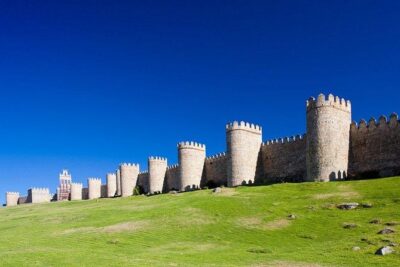
Avila & Segovia Tour with Tickets to Monuments from Madrid
Read our review →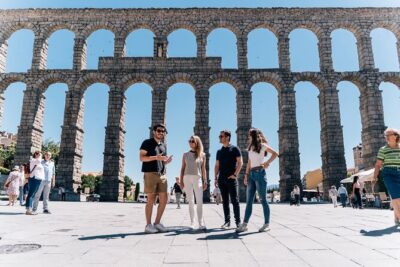
Three Cities in One Day: Segovia, Avila and Toledo from Madrid
Read our review →Browse the lists this tour appears in