
Review · MADRID TOURS
Street Art Guided Tour in Madrid
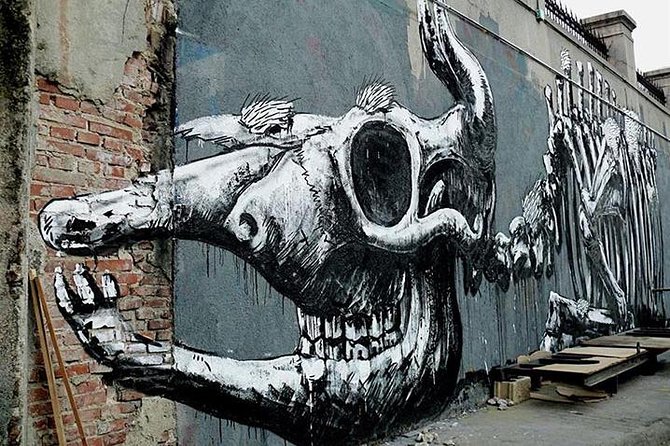
Street art tells Madrid’s untidy, creative story. This two-hour walk takes you beyond postcard Madrid and into Lavapiés, where former industrial buildings, legal murals, stencils, and community projects reveal how local artists shape their city. I especially like the access to La Tabacalera’s graffiti-covered walls and the chance to learn from guides who work close to the art world, including Santi and Julia. The small group of up to 13 people also gives the walk a more personal feel.
There is one important catch: the route can be affected by opening hours and changing artwork. La Tabacalera has restricted weekday timing, and some stops, including the walls of Esta es Una Plaza, are only possible when the site is open. If you want a fixed parade of famous murals, this may feel less polished than expected.
In This Review
- Key points to know before you book
- Why this Madrid walk feels different
- Starting near Teatro Valle-Inclán
- La Tabacalera and its changing walls
- Esta es Una Plaza: art with a useful purpose
- Walking through Lavapiés for a full hour
- Campo de Cebada and the 15-M story
- What the guide adds to the art
- Is $30.38 a fair price?
- Who should book this walk?
- Final verdict: book it for context, not a checklist
- FAQ
- Where does the Street Art Guided Tour in Madrid start?
- Where does the tour finish?
- What time does the tour start?
- How long does the tour last?
- Is the tour offered in English?
- Can I cancel for a full refund?
Key points to know before you book

- La Tabacalera is the main artistic anchor: See exterior graffiti, stencils, and a former tobacco warehouse now used for performances and exhibitions.
- Lavapiés gives the tour its local character: The walk explains the district’s multicultural identity alongside its street art.
- The route includes community-made spaces: Esta es Una Plaza and Campo de Cebada show how residents reclaimed urban areas for gardens, films, music, and gatherings.
- The guides make the difference: Santi, Julia, and other local guides are praised for humor, passion, and practical insight into the artists and their methods.
- Art changes from season to season: A street-art festival may be underway, or a wall may look different from photos taken months earlier.
- Plan for a walking tour in all weather: The tour runs in rain or shine, and food, drinks, hotel transfers, and transport are not included.
Why this Madrid walk feels different
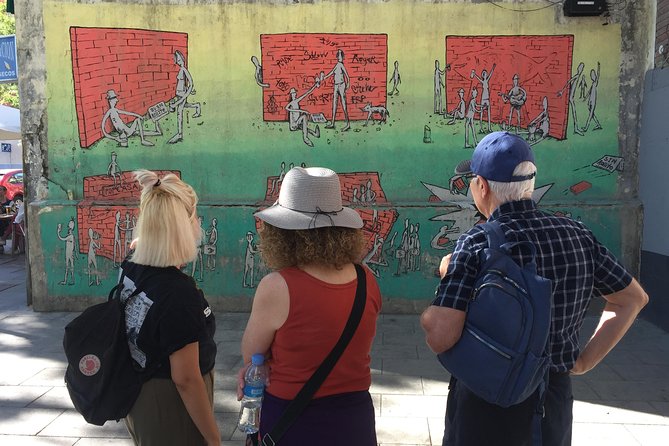
Madrid has grand museums and formal galleries, but this tour points your attention toward walls, courtyards, old factories, and public spaces. That shift matters. You are not simply looking at isolated paintings. You are learning how art appears in a neighborhood, who controls it, and how residents use neglected places.
The walk lasts about two hours and is offered in English, with multilingual guiding also available in French and Spanish. At $30.38 per person, I see it as a reasonable price if you want context rather than a self-guided list of walls. You are paying for a local guide who can connect the art to Madrid’s neighborhoods, politics, festivals, and social movements.
The strongest praise goes to the guides. Santi is described as friendly, funny, and deeply connected to the area. Julia is praised for being informative and kind. One guide was an active street artist who showed personal work, which added a useful layer: you could ask about technique, permission, and the difference between sanctioned murals and unauthorized graffiti.
The experience is not designed as a standard sightseeing loop. It is better for you if you enjoy asking questions, looking closely, and accepting that public art is temporary. A mural may be fresh during a festival and painted over later. That is part of the subject, not a flaw in the subject.
A few more Spain trips worth a look
- Madrid: Street Art Tour with Local Graffiti Hunter
★ 4.8 · 270 reviews - Barcelona Street Art and Graffitti Bicycle Tour
★ 5.0 · 361 reviews
Starting near Teatro Valle-Inclán
The meeting point is Teatro Valle-Inclán at Plaza de Ana Diosdado. The scheduled start time is 11:15 a.m., and the route finishes at Plaza de Cascorro, near La Latina and Tirso de Molina metro stations.
That arrangement works well for a morning in central Madrid. You begin near a major cultural venue and end in an area with easy onward transport. Hotel pickup is not included, so you need to reach the starting point yourself. Since the walk finishes in a different place, it is wise to bring only what you want to carry for two hours.
The route description also places La Neomudéjar near the opening section, about a five-minute walk from the starting area. On the way, you may pass the big-headed babies monument near Atocha and the avant-garde art center located in the station’s Mediodía metro area. These details help set the tone: Madrid’s art scene is not confined to a museum entrance.
La Neomudéjar occupies a former power plant once linked to the railway station. The old industrial setting gives the art more weight than a clean gallery wall would. The space has been used by Spanish and international artists, including Himen, Ze Carrión, and Laguna626.
The political angle is especially interesting here. Some works respond to Article 626, described as legislation intended to penalize graffiti creators. Your guide can help you separate simple decoration from work that comments on control of public space, policing, and artistic freedom.
La Tabacalera and its changing walls
La Tabacalera de Lavapiés is one of the most useful stops because it brings several layers together. The building was once a 19th-century tobacco warehouse where more than 1,000 workers chopped, shredded, and rolled tobacco products. Today, it functions as a creative center with performance, painting, dancing, singing, exhibitions, and street art.
You first see the exterior walls. Give yourself time to look beyond the color. The guide focuses on the artists, the message, and the techniques used. You might hear about spray work, stencils, lettering, layering, and the difference between a planned mural and a quick piece made under pressure.
The basement adds another mood. Hundreds of street-art projects and stencils line the walls, making the space feel more like an evolving archive than a finished exhibition. It is a good place to understand why photographs can mislead. A wall that looks packed and dramatic in an online image may have been repainted, altered, or partly removed by the time you arrive.
La Tabacalera also connects art with organized festivals. The exterior walls are linked with one of Madrid’s major urban-art events, and the tour may coincide with sanctioned work being painted for a festival. One especially fortunate visit included conversations with artists creating new pieces for the Calle Lavapiés festival, an event described as taking place once a year.
You should not count on meeting artists, since that depends on timing. But if festival work is underway, the stop becomes much more than a viewing session. You may see how a blank wall becomes a public artwork and ask questions while the process is still visible.
There is a practical limitation. La Tabacalera has restrictive weekday hours, so access and timing can affect what you see. The exterior walls may remain central even if every interior area is not available. If entering the building matters to you, check the scheduled date and be prepared for the possibility of a changed stop.
Esta es Una Plaza: art with a useful purpose
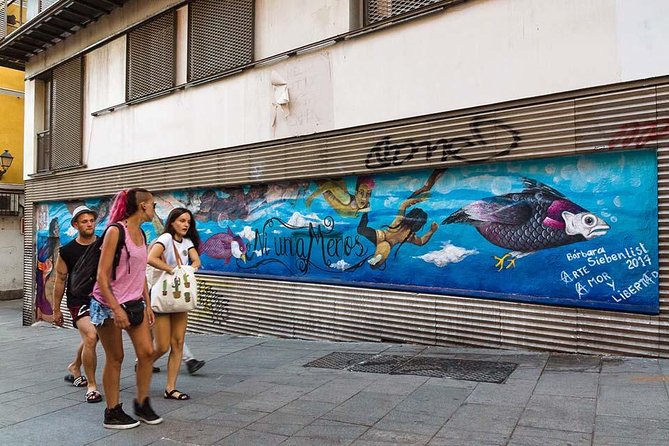
Esta es Una Plaza is an urban garden and community space in Lavapiés. The route includes a visit to its walls, but that part is only guaranteed when the site is open.
That qualification is worth taking seriously. You should treat this as a possible bonus rather than the one stop on which your decision depends. When accessible, it offers a different idea of public art. Here, the point is not only what has been painted. The space itself shows how residents can turn an urban corner into something social, green, and shared.
The guide can place the garden within Lavapiés, a district known for cultural variety and street art. That local setting is one of the walk’s best features. You are not being taken to isolated works with no connection to daily life. You are walking through a neighborhood where art appears beside ordinary streets, shops, housing, and public meeting places.
I would pay attention to how the guide explains permission and ownership. Some murals are officially sanctioned, while other marks exist outside formal approval. That distinction helps you read the neighborhood with more care. A wall is not just a wall, and a painted surface may carry a dispute about who gets to use public space.
A completely different kind of day out in Madrid:
- Madrid: Tour Bernabéu Entry Ticket
★ 4.5 · 21,573 reviews - Madrid: Prado Museum Entry Ticket
★ 4.6 · 17,509 reviews - Madrid: Royal Palace Fast-Access Admission Ticket
★ 4.6 · 13,856 reviews - Madrid: “Emociones” Live Flamenco Performance
★ 4.8 · 12,866 reviews
Walking through Lavapiés for a full hour
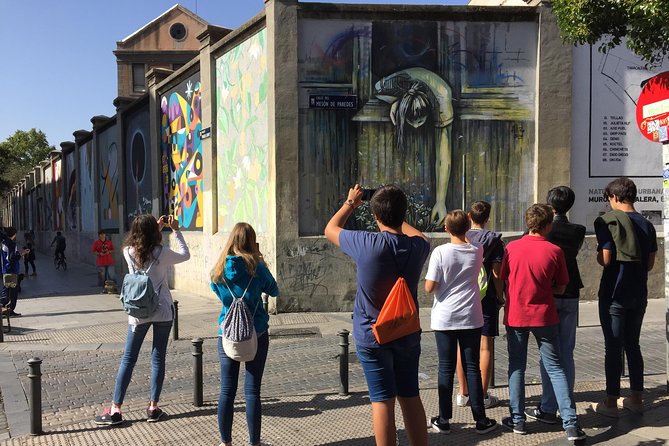
About an hour is devoted to Lavapiés itself. This is not wasted time between art stops. The district is the setting that gives the tour meaning.
Lavapiés is described as multicultural, diverse, and full of graffiti and street art. The guide explains its development and points out works as you move through the streets. The pace lets you notice pieces that would be easy to miss on your own, especially smaller stencils, works high on a wall, and art placed in relation to a doorway or courtyard.
Several of the strongest comments about the tour praise this neighborhood focus. The walk can lead you to an area you might otherwise skip, and the art becomes a way to understand Madrid beyond its major attractions. You may leave with a better sense of how local identity, creative work, and neighborhood life overlap.
The main weakness is listening while walking. One Italian-language comment raised a fair concern: if the guide is speaking while the group is moving, it can be hard to hear every detail and look around at the same time. A guide cannot face backward throughout the walk, so you may need to stay reasonably close during explanations.
The group limit of 13 helps, but it does not turn the walk into a private tour. If you need every sentence or prefer to stop for long periods at each piece, ask questions at the planned stops and position yourself near the guide. A private booking would be a different format, but this tour itself is not described as private.
Campo de Cebada and the 15-M story
The broader route description ends at Campo de Cebada, known as The Barley Field. This public gathering place began after Spain’s 15-M Movement, when citizens reclaimed streets and squares for community use.
The site once held a swimming pool. Local associations later organized it as a space for summer films, music, and a collective vegetable garden. That history gives the final stop a social purpose that is easy to miss if you think of street art only as decoration.
The exact stop sequence deserves a quick note. The detailed route information centers on La Tabacalera, Esta es Una Plaza, and a longer walk through Lavapiés, while the wider description also includes La Neomudéjar and Campo de Cebada. Because La Tabacalera has restricted weekday timing and community spaces may have opening limits, you should confirm the stops for your chosen date if seeing one particular location is essential.
Either way, the walk’s central idea remains consistent: Madrid’s street art is tied to old industrial buildings, neighborhood groups, festivals, and debates about public space. That is more useful than simply collecting a few attractive photographs.
What the guide adds to the art
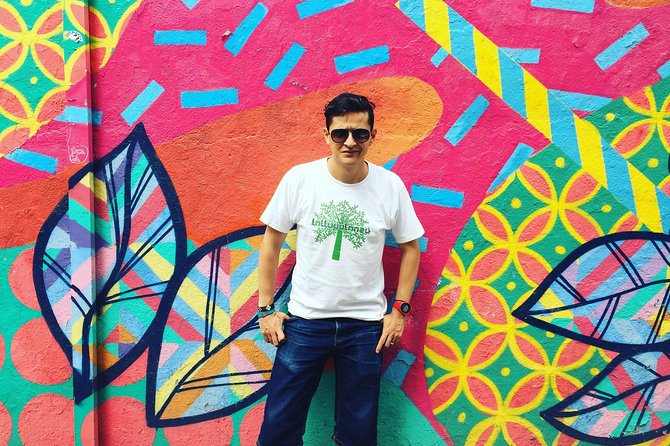
A good street-art guide does not need to identify every painter. The real value is knowing what to look for and why a piece matters in its setting.
This experience has earned strong praise for guide quality. Santi is repeatedly singled out for being engaging and well informed about the district and its art. Julia is praised for clear information and a warm manner. Another guide was an actual street artist, which helped explain the work from inside the creative community.
The best guides respond to the group. If you are interested in technique, ask about spray paint, stencils, layering, or the difference between festival murals and unauthorized pieces. If politics interest you, ask about Article 626, public permission, and the 15-M Movement. If you care more about the district, ask how Lavapiés has changed and how the art fits into daily life.
One positive account describes a guide adjusting well to the group’s questions and interests. That is important because street art can be interpreted in many ways. A fixed speech would make the walk feel stiff. The praise suggests the strongest guides use the planned route as a starting point rather than a script.
Still, guide quality can vary. One less enthusiastic assessment described a new guide and a less engaging presentation, although the person still enjoyed the neighborhood and the chance to try spray painting. I would book this experience for its format and subject, while recognizing that the individual guide shapes much of the result.
Is $30.38 a fair price?
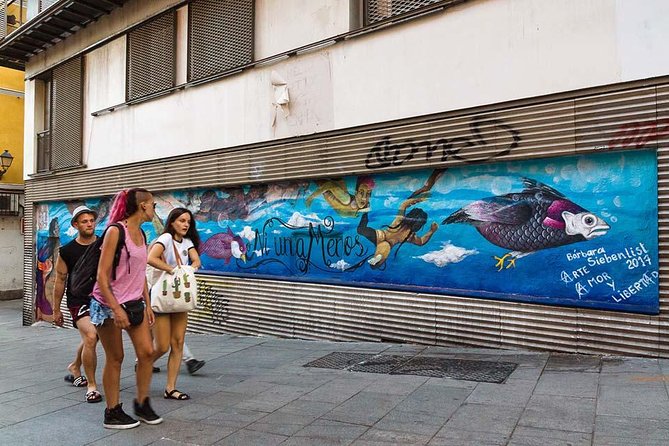
At $30.38, the tour is not the cheapest way to see Lavapiés. You can walk the district for free, and the art changes too often for a printed checklist to remain current.
The fee makes sense if you want interpretation. You receive a local guide, a planned route, access to the Muros La Tabacalera area, and a short explanation of the artists, methods, social setting, and neighborhood history. You also avoid spending your first hour wondering which walls matter or walking past a stencil without noticing it.
Food and drinks are not included, but that is reasonable for a two-hour city walk. Hotel pickup and drop-off are also excluded. You should budget for your own transport to the meeting point and any snack or drink you want before or after the walk.
I consider the tour good value for first-time visitors who want a fresh view of Madrid. It is less compelling for serious street-art followers who already know Lavapiés well, unless you particularly want a local artist’s perspective or access to current festival work.
Who should book this walk?
I would recommend it to you if you:
- Want an alternative to Madrid’s major museums and monuments.
- Enjoy learning how art connects with politics and neighborhood life.
- Prefer a small group and a guide-led walk.
- Like changing, imperfect art more than a polished gallery show.
- Are curious about Lavapiés but might not explore it alone.
- Can walk for two hours in all weather.
Families can participate, and most people are able to join. Service animals are allowed. The tour is near public transportation, though you must arrange your own route to the start.
You may want to skip it if you need guaranteed access to every listed site, dislike graffiti that is not formally sanctioned, or want a highly structured tour with long, quiet viewing periods. The experience is active and outdoors, and the art is not guaranteed to match photographs taken at another time.
Final verdict: book it for context, not a checklist
I would book this tour if you want Madrid to feel less like a collection of famous buildings and more like a city shaped by its residents. The best parts are the guide’s personal connection to the art, the former industrial spaces at La Tabacalera and La Neomudéjar, and the community story behind places such as Campo de Cebada.
Go with flexible expectations. The route can be affected by opening hours, public art changes, and the guide assigned to your group. If you stay near the guide and ask questions, the $30.38 fee buys a useful local introduction to Lavapiés and Madrid’s living street-art culture.
FAQ
Where does the Street Art Guided Tour in Madrid start?
The tour starts at Teatro Valle-Inclán, Plaza de Ana Diosdado, in central Madrid.
Where does the tour finish?
The tour finishes at Plaza de Cascorro. The nearest metro stations are La Latina and Tirso de Molina.
What time does the tour start?
The stated start time is 11:15 a.m.
How long does the tour last?
The experience lasts approximately two hours.
Is the tour offered in English?
Yes. English is offered, and multilingual guiding is also listed in French and Spanish.
Can I cancel for a full refund?
Yes. You can cancel at least 24 hours before the local start time for a full refund. Cancellations or changes made less than 24 hours before the start are not refunded or accepted.
Recently added around Madrid
- Madrid: Thyssen Museum Guided Tour with Skip-the-Line Entry★ 4.5 · 165 reviews
- Axe Throwing 1 hour session★ 5.0 · 166 reviews
- Madrid Food Walking Tour with Tapas and Vermouth★ 5.0 · 167 reviews
- Toledo Full-Day Walking Tour with Guide from Madrid★ 4.5 · 170 reviews
- Madrid: Top Pub Crawl Madrid & Party★ 5.0 · 173 reviews
- Madrid Gourmet Tapas Small Group Tour★ 5.0 · 175 reviews
- Iberian Ham and Wine Small Group Tour in Madrid★ 5.0 · 176 reviews
- Entrance to the Flamenco Temple Room in Madrid with Tapas Option★ 5.0 · 176 reviews
Madrid Tours, compared.





Live Flamenco Show with Food and Drinks Options
Read our review →
Avila & Segovia Tour with Tickets to Monuments from Madrid
Read our review →
Three Cities in One Day: Segovia, Avila and Toledo from Madrid
Read our review →Browse the lists this tour appears in