
Review · CYCLING TOURS
Seville: Dutch Cycling Highlights Tour with local guide
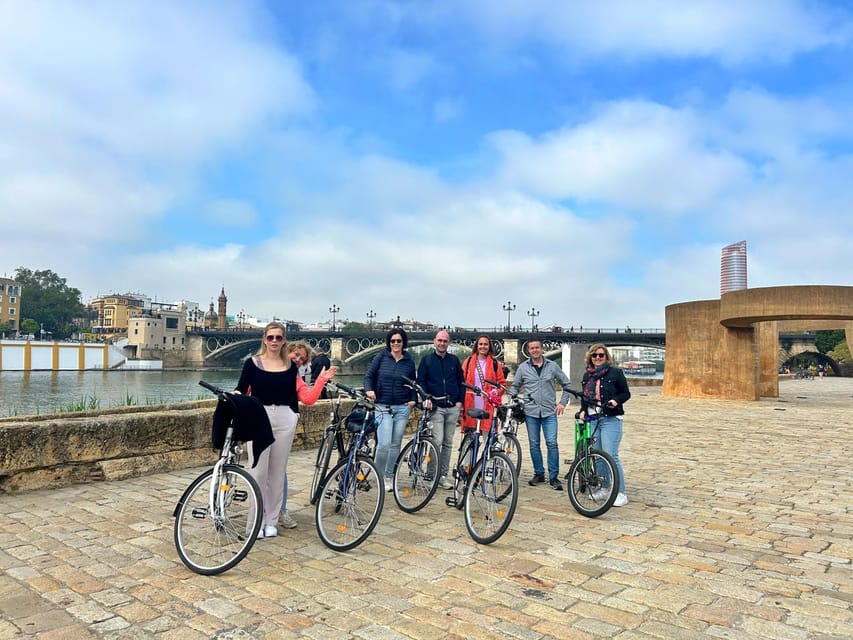
Seville reveals itself best at street level. This three-hour bicycle tour links famous sights with quieter corners, led in Dutch by a local guide who adds useful restaurant and city tips along the way. I like the relaxed pace and the chance to cover far more ground than you could on foot. I also like the built-in drink stop in María Luisa Park, a small touch that makes the ride feel social rather than rushed.
The main consideration is that the route offers an overview, not long visits inside each sight. You pass La Giralda, the cathedral, Plaza de España, Triana, and other major landmarks, but the tour does not include extended sightseeing time at each one. If you want detailed interior visits, you will need separate tickets and extra time afterward.
This is especially useful at the start of a Seville stay. You get your bearings, hear stories about the city, and collect practical suggestions from guides such as Erik, Loes, and Milou. The tour has a 4.7 rating from 163 bookings, with repeated praise for the guides’ enthusiasm, clear explanations, and calm cycling pace.
In This Review
- Key points at a glance
- Starting behind Santa Cruz’s tiled lanes
- La Giralda and the cathedral from the saddle
- Torre del Oro and the riverside connection
- María Luisa Park and the 20-minute drink break
- Plaza de España, one of Seville’s great photo stops
- Crossing toward Triana and the bullring
- What the Dutch guides add
- Is $38 a fair price?
- Who will enjoy this ride most?
- Practical tips for getting more from the tour
- Should you book this Dutch cycling tour?
- FAQ
- Is the tour conducted in Dutch?
- How long does the cycling tour last?
- Where does the tour start?
- Where does the tour finish?
- Does the route include Plaza de España?
- Are bicycles provided?
- Is there a break during the tour?
Key points at a glance
- Dutch-speaking guidance throughout: The tour is specifically designed for Dutch-speaking visitors, with a live local guide in Dutch.
- A strong first-day orientation: The route connects Santa Cruz, María Luisa Park, Plaza de España, Triana, and several major monuments.
- A gentle three-hour ride: The pace is described as calm, with stops for explanations, photographs, and a drink.
- Useful Seville advice: Guides share suggestions for restaurants, squares, and ways to enjoy the city after the ride.
- Family equipment is available: Children’s bicycles, seats, and helmets are included.
- Good value for a city overview: At $38 per person, the tour combines transport, guiding, sightseeing, and local advice in one outing.
Starting behind Santa Cruz’s tiled lanes
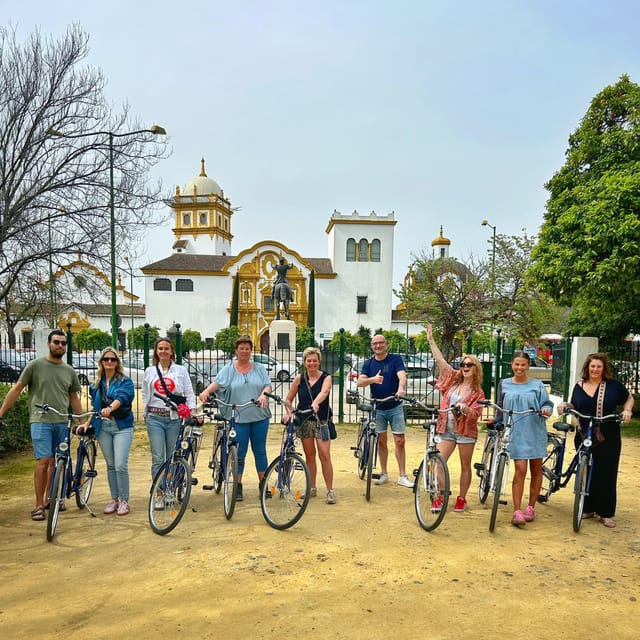
The meeting point is Rent a Bike Sevilla in the Barrio Santa Cruz, behind the Jardines de Murillo. That location places you near one of Seville’s most atmospheric areas before you even begin cycling.
Santa Cruz was once the city’s Jewish quarter and is now known for narrow lanes, whitewashed buildings, small plazas, and orange trees. The route begins here, so you start in a part of Seville where walking and cycling make more sense than using a car. The meeting point is also near several major sights, which makes it practical if you are staying in or around the historic center.
After receiving a bicycle, you set off with the Dutch-speaking guide. The emphasis is not on speed. Feedback about the tour repeatedly points to a calm tempo and a pleasant route, which matters in a city where you will want time to look up, take photographs, and listen.
You should still be comfortable riding a bicycle in an urban setting. The tour is designed as a relaxed city ride, but it remains a cycling experience rather than a bus tour. If you prefer to move only on foot, this will not be the right way to see Seville.
More Bike Tours in Seville
- Seville Highlights Bike Tour (English)
★ 5.0 · 2,225 reviews - Seville: Highlights City Bike Tour
★ 4.8 · 2,168 reviews - Seville: Relaxing City Bike Tour with a Tour Guide
★ 4.8 · 1,588 reviews
La Giralda and the cathedral from the saddle
One of the first major sights on the route is La Giralda, Seville’s famous bell tower, together with the cathedral. These are among the clearest examples of why Seville is often described as an open-air museum.
La Giralda began as the minaret of a mosque and later became the bell tower of the cathedral. From a bicycle, you get a useful first look at its scale and decoration without committing to an interior visit. The guide’s explanation gives the monument context, while the short stop or passing view helps you decide if you want to return later.
The cathedral deserves more time than a cycling tour can provide. It is one of the city’s essential paid sights, but this activity is not an entry tour. I see that as both a limit and an advantage. You do not lose the rhythm of the ride waiting in line, but you should plan a separate visit if the cathedral is high on your list.
The tour includes the convenience of skipping a ticket line because you are not buying entry to these attractions as part of the outing. In practical terms, this means the activity keeps moving and focuses on seeing the city from outside.
Torre del Oro and the riverside connection
The route continues toward Torre del Oro, the golden defensive tower beside the Guadalquivir River. Its position helps explain Seville’s long connection with river traffic, trade, and travel.
This is a good cycling stop because the city opens up around the river. You are no longer looking only at tight historic streets and grand façades. The tower, water, and broad surroundings create a change of pace, and the guide can connect the monument to the city’s wider story.
You should think of this part of the ride as a visual introduction rather than a museum visit. The tour takes you past the tower, but the supplied details do not include an interior stop. If you want to visit it inside, ask the guide for practical advice during the ride.
The route also passes San Telmo Palace, an ornate building with a striking façade. It is another reminder that Seville’s sights are spread through ordinary city streets, rather than confined to one museum district.
María Luisa Park and the 20-minute drink break
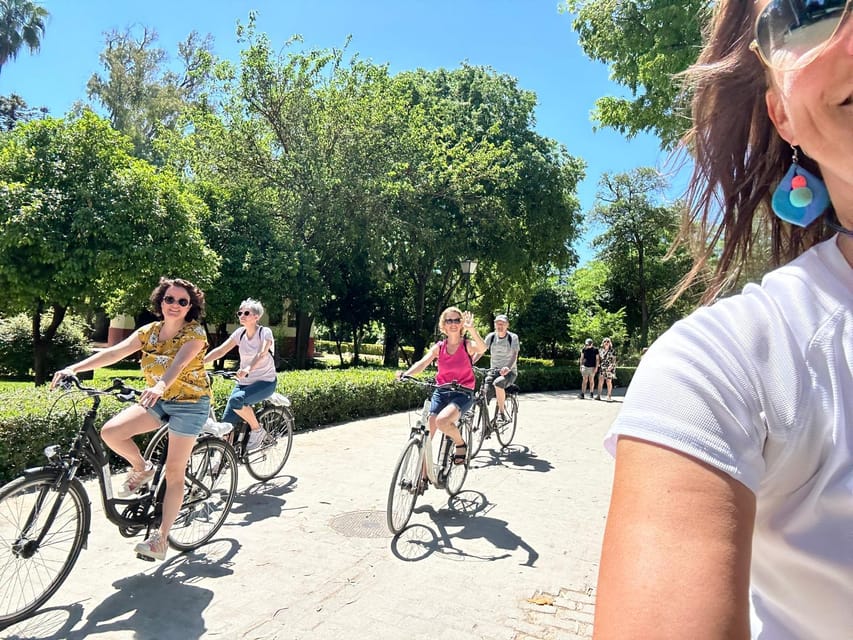
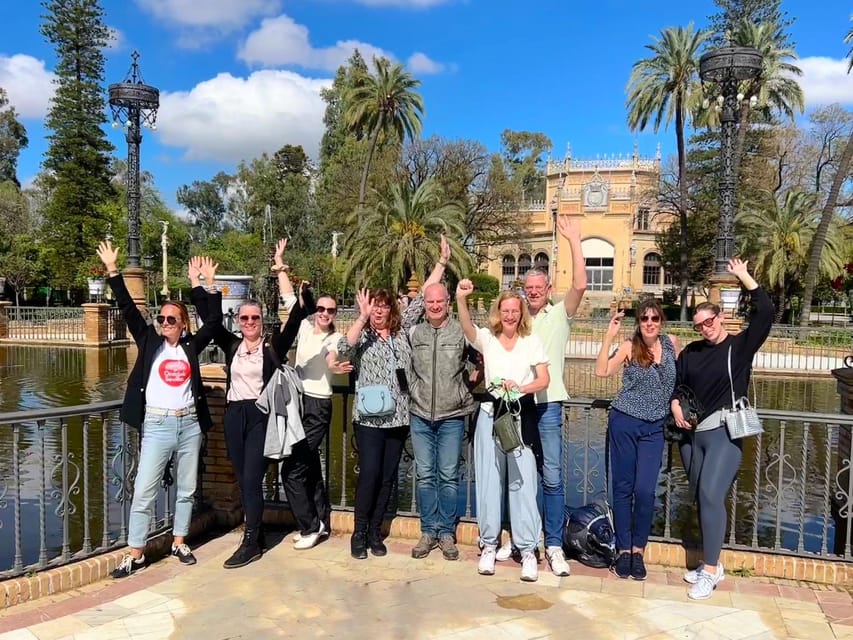
María Luisa Park is the planned break point, with about 20 minutes to stop for something to drink. This pause is one of the most useful parts of the schedule.
Three hours on a bicycle can feel tiring if the route never stops. Here, you have time to rest, chat with the group, and take in the park at a slower pace. Several comments specifically praise the chance to enjoy a drink together in the park, which suggests that this is more than a quick roadside pause.
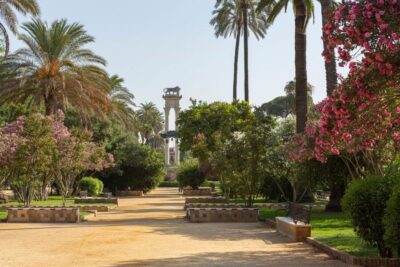
María Luisa Park also gives the tour a welcome change from monuments and city streets. The park contains some of Seville’s best-known public spaces and leads naturally toward Plaza de España. You get a chance to see how the city uses gardens and grand civic architecture together.
The break is not a full meal stop, so do not count on it as lunch. It is best understood as a short refreshment pause. If you need a substantial meal, plan that before or after the tour.
More bike tours:
- Seville: City Sightseeing and Local Culture Bike Tour
★ 4.9 · 1,120 reviews - Seville Electric Bike Tour – Small Group
★ 5.0 · 841 reviews - Seville: Guided Tour by Electric Bike
★ 4.8 · 712 reviews - Sunset Guided Bike Tour in Seville
★ 5.0 · 438 reviews
Plaza de España, one of Seville’s great photo stops
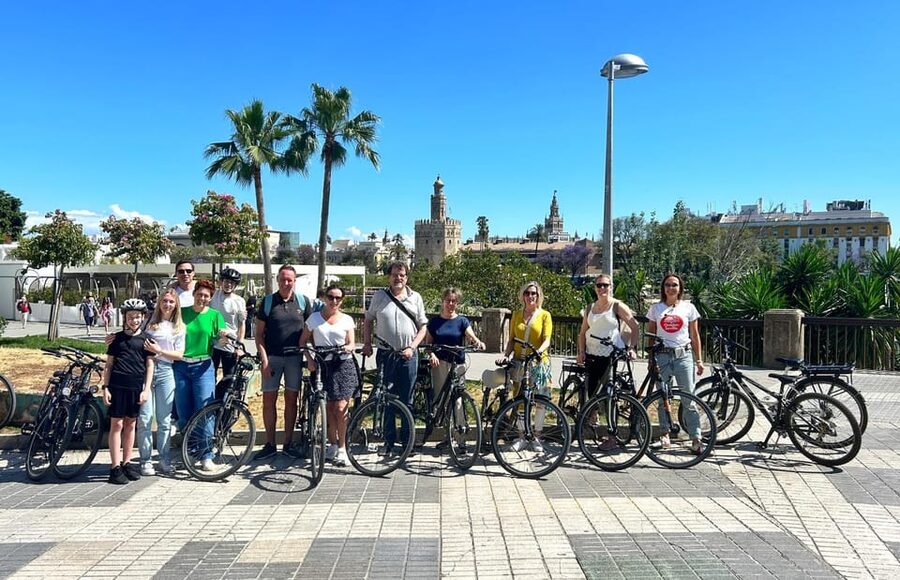
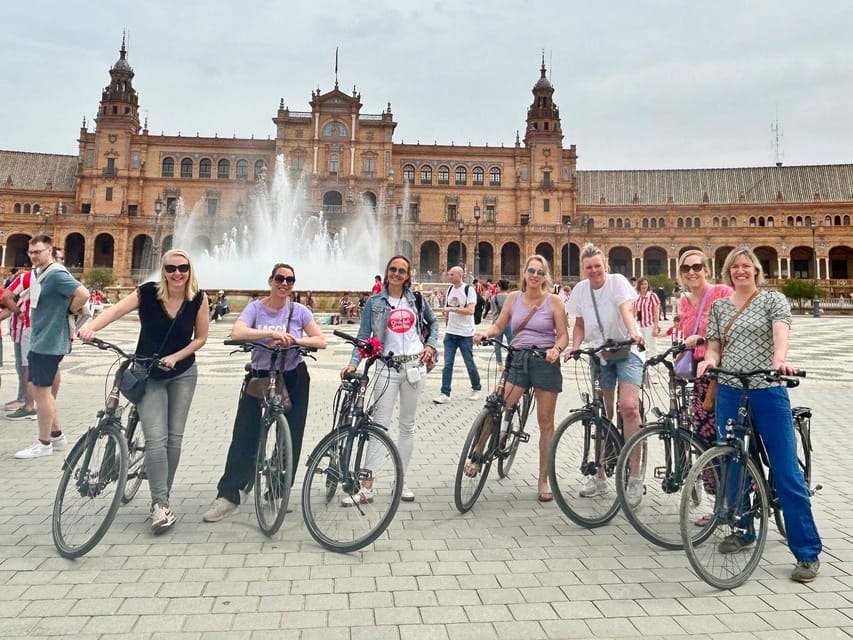
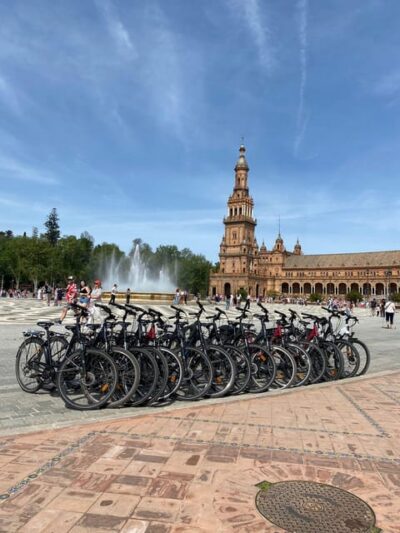
Plaza de España is likely to be one of the visual highlights. Its broad semicircle, tiled alcoves, bridges, towers, and water features make it easy to see why visitors call Seville an open-air museum.
A bicycle is useful here because you can approach the square as part of a wider route instead of making it your only destination. You can pause for photographs and listen to the guide’s explanation, then continue toward the next part of the city.
The square can attract plenty of attention, so the amount of time available for photographs may depend on the group and the pace of the day. The tour promises many photo opportunities, but it is not structured as a long photography session. If you want carefully composed pictures with no time pressure, return on your own.
The guide’s role is important here. A large monument can easily become a quick photo and a name on your phone. A good explanation helps you remember why the place matters and gives you details to notice when you return.
Crossing toward Triana and the bullring
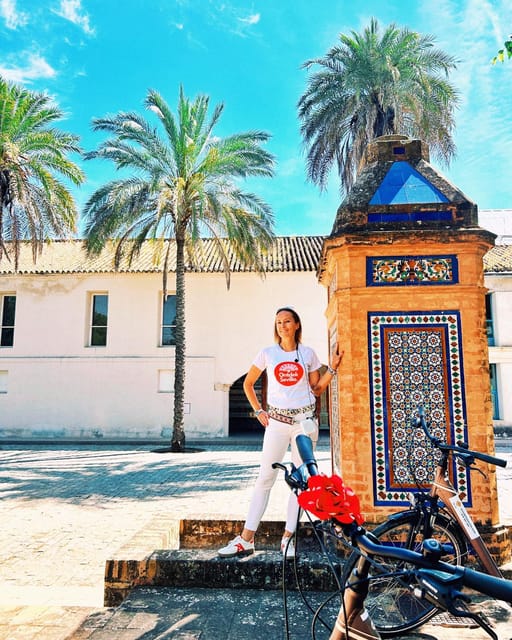
The route includes Triana and Plaza de Toros, giving you a look beyond the most familiar postcard views. Triana sits across the Guadalquivir and has a strong local identity, with its own streets, squares, and traditions.
The supplied tour details do not promise a long stop inside the bullring. You should expect to see it as part of the cycling route and hear the guide explain its place in Seville. That keeps the activity varied, but it also means the tour is not a dedicated bullfighting or Triana history visit.
I like this wider route because it avoids reducing Seville to the cathedral and Plaza de España alone. You see how the city’s districts connect, and you gain a better sense of direction for later walks. The tour also gives you a chance to ask the guide about squares and restaurants that may not appear in a standard sightseeing plan.
The route is described as pleasant and varied, with several stops along the way. One four-star assessment wished there had been time to see even more. That is a fair warning: the tour covers a lot, so some sights receive only a short explanation.
What the Dutch guides add
The strongest part of this experience is the guide. Dutch is guaranteed, and the live commentary is delivered by a local guide rather than through an audio recording.
The names Erik, Loes, and Milou appear in the feedback, with particular praise for their enthusiasm and clear explanations. Erik is described as both expert and enthusiastic, while Milou is praised for bringing information in a friendly way and offering useful tips about Seville and its residents.
That local advice can be worth as much as the sightseeing. Ask about the tastiest restaurants, pleasant squares, and where to spend time after the ride. The tour is not simply about collecting landmark names. It is meant to help you enjoy the rest of your stay with better choices.
A Dutch-speaking tour can also make small details easier to catch. You can ask questions naturally, follow local stories without translating in your head, and compare suggestions with the guide as you ride. For Dutch-speaking visitors, that is the main reason to choose this activity over a general-language bicycle tour.
Is $38 a fair price?
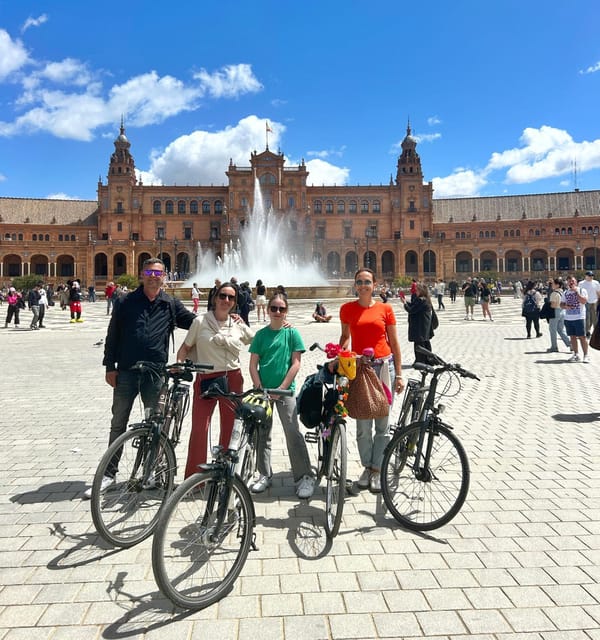
At $38 per person, the value is solid if you want an overview of Seville rather than a single monument visit. The price includes the bicycle, a Dutch-speaking local guide, the three-hour route, and the drink break in María Luisa Park.
You are also paying for convenience. A bicycle lets you connect Santa Cruz, the river, María Luisa Park, Plaza de España, Triana, and other sights in one outing. Reaching all of those areas on foot would take more time and energy, while a taxi would remove much of the street-level experience.
The value is lower if you already know Seville well or plan to spend your entire visit inside museums and monuments. This is an orientation tour. You see many places from the outside and receive explanations, but you do not get extended entry time at the cathedral, bullring, Torre del Oro, or San Telmo Palace.
The free cancellation option up to 24 hours before departure also reduces the risk of booking early. You can reserve now and pay later, which helps if your schedule is still changing. Starting times depend on availability, so check the current options before booking.
Who will enjoy this ride most?
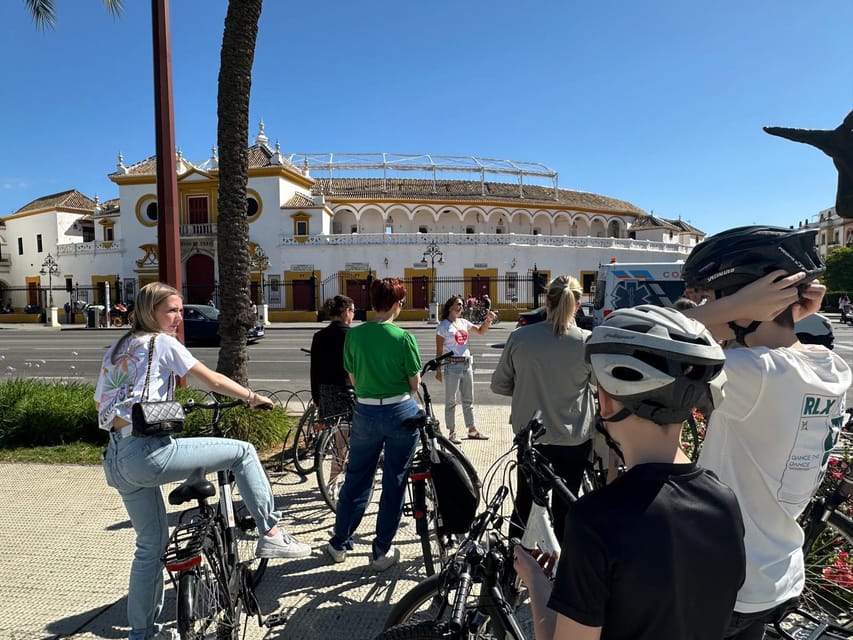
I would recommend this tour to first-time visitors who want to understand Seville’s layout quickly. It is also a strong fit for Dutch-speaking couples, families, and small groups who prefer an easy ride with plenty of explanation.
Families have a practical advantage because children’s bicycles, seats, and helmets are included. The details do not specify age limits or exact bicycle arrangements, so you should confirm the best setup when booking if you are traveling with young children.
This tour also suits you if you like learning where to eat and which squares deserve a return visit. The guide’s advice is aimed at helping you plan the rest of your stay, not just filling the three hours.
You may want another option if you dislike bicycles, need a very slow sightseeing schedule, or want long interior visits. One assessment found the route and information excellent but wished more sights had been included. That is the natural tradeoff of a three-hour city ride.
Practical tips for getting more from the tour
Book it near the beginning of your Seville stay if you can. The route gives you a useful map of the city, and the restaurant and square suggestions will be more helpful when you still have several days ahead.
Wear comfortable clothes and shoes suitable for cycling. Bring a phone or camera because the route passes La Giralda, the cathedral, Torre del Oro, Plaza de España, Triana, and other strong photo locations.
Keep the 20-minute park break in mind when planning your day. It gives you time for a drink, but not necessarily a full meal, so avoid scheduling an important lunch immediately afterward unless you have checked the tour timing.
Listen for the practical details as carefully as the historical ones. The guide can tell you where to return, what to visit inside, and which areas deserve another walk. Those tips may shape your Seville plans more than another list of dates and architectural terms.
Should you book this Dutch cycling tour?
Book it if you want a friendly, Dutch-language introduction to Seville with a calm pace, broad route, and useful local advice. The combination of Santa Cruz, the river, María Luisa Park, Plaza de España, Triana, and major monuments gives you a strong first look for $38.
Skip it if you want to spend most of your time inside attractions or if cycling is not comfortable for you. For everyone else, especially Dutch-speaking visitors arriving at the start of a city break, this is a practical way to get your bearings and discover where to return on foot.
FAQ
Is the tour conducted in Dutch?
Yes. The activity includes a live Dutch-speaking local guide, and Dutch is the stated tour language.
How long does the cycling tour last?
The tour lasts three hours.
Where does the tour start?
It starts at Rent a Bike Sevilla in Barrio Santa Cruz, behind the Jardines de Murillo.
Where does the tour finish?
The tour returns to Rent a Bike Sevilla.
Does the route include Plaza de España?
Yes. The route passes through María Luisa Park and includes Plaza de España among the main sights.
Are bicycles provided?
Yes. A bicycle is included, along with children’s bicycles, seats, and helmets.
Is there a break during the tour?
Yes. The itinerary includes a 20-minute break in Parque de María Luisa for something to drink.
Recently added around Seville
- Seville: Paella Showcooking Experience★ 4.7 · 161 reviews
- Art and Wine in Sevilla★ 5.0 · 165 reviews
- Seville: Cathedral and Alcázar Guided Tour★ 4.6 · 167 reviews
- From Seville: White Villages and Ronda Full-Day Trip★ 4.2 · 168 reviews
- Guided Tour Sevilla Cathedral★ 4.5 · 169 reviews
- Cathedral and Real Alcàzar in Italian★ 5.0 · 170 reviews
- Seville: Guadalquivir River Cruise with Lunch or Dinner★ 4.5 · 170 reviews
- White Villages and Ronda: Day trip from Seville.★ 4.7 · 171 reviews
Cycling Tours, compared.

Quad Bike Tour, Snorkeling, and Cliff Jumping
Read our review →
Barcelona 3-hour Bike or E-Bike Tour: Highlights and Hidden Gems
Read our review →
Best of Madrid: 3-Hour Guided Bike Tour in Small Groups
Read our review →Browse the lists this tour appears in