Review · TICKETS
Sant Pau Recinte Modernista Entrance Ticket in Barcelona
Barcelona has another architectural wonder. Sant Pau Recinte Modernista lets you explore one of Europe’s largest Art Nouveau complexes at your own pace, with restored pavilions, colorful mosaics, underground tunnels, gardens, and former hospital rooms. I like the freedom of a self-guided visit, and I especially like how the site connects beautiful design with the practical story of medical care.
Prebooking costs about $21.78 per person and secures admission during busy periods. The main drawback is that the tour can feel poorly signposted, and the audio guide costs an additional €4 at the entrance. If you want a guide to lead you from room to room, this ticket is not that kind of experience.
In This Review
- Key points to know before you go
- Why Sant Pau deserves time on your Barcelona itinerary
- Starting at the Sant Salvador Pavilion
- The Administration Pavilion and exhibition spaces
- Underground tunnels and the practical side of the hospital
- Sant Rafael Pavilion and the old Surgery Room
- The Domènech i Montaner Room, Pau Gil Room, and Main Hall
- Sant Jordi Pavilion and temporary exhibitions
- How long should you spend inside?
- Is the $21.78 ticket good value?
- Who will enjoy Sant Pau most?
- Practical tips for a better visit
- Should you book the Sant Pau ticket?
- FAQ
- How long does the Sant Pau Recinte Modernista visit take?
- Is a guide included with the admission ticket?
- Is the ticket available on a mobile phone?
- Can I cancel the ticket for a refund?
- Is Sant Pau near public transportation?
- Are service animals allowed?
Key points to know before you go
- Hospital architecture with a human purpose: The pavilions were designed as part of a working medical complex, not simply as decoration.
- Mosaics, stained glass, and tiled roofs: Look closely at the exterior details, where color and sculpture turn practical buildings into works of art.
- Underground tunnels connect the site: These passages once helped move patients between the pavilions.
- A quiet alternative near the Sagrada Família: Sant Pau is only a short distance from Barcelona’s famous basilica, but usually feels calmer.
- Self-guided and flexible: You can enter with a mobile ticket and set your own pace, usually spending one to two hours.
- Audio help costs extra: A paper guide is provided, while an audio narration device costs about €4.
Why Sant Pau deserves time on your Barcelona itinerary
Barcelona is famous for Gaudí, but the city’s Modernisme movement involved more than one architect. Sant Pau was designed by Lluís Domènech i Montaner, a major figure in Catalan Art Nouveau. Here, artistic ambition was applied to an entire hospital complex, not just a single house or church.
That makes Sant Pau different from many city sights. You are not looking at a decorative shell with no practical purpose. You are seeing a carefully planned medical center, with separate pavilions, gardens, tunnels, treatment rooms, and shared facilities.
The result is both beautiful and unexpectedly moving. Mosaics and stained glass might make you stop for a photograph, but the old surgery room and hospital exhibits remind you why these spaces existed. The site connects architecture with the changing story of healthcare from the hospital’s founding in 1401 through the 21st century.
I would allow at least 90 minutes. You can move through faster, but that would mean rushing past the tile work, historical displays, and underground passages. With time to read and take photographs, two hours is more comfortable.
A few more Spain trips worth a look
- Barcelona: Sagrada Familia Entry Ticket with Audio Guide
★ 4.6 · 105,312 reviews - Barcelona: Park Güell Admission Ticket
★ 4.4 · 76,534 reviews - Barcelona: Casa Batlló Entry with Self-Audioguide Tour
★ 4.7 · 25,359 reviews
Starting at the Sant Salvador Pavilion
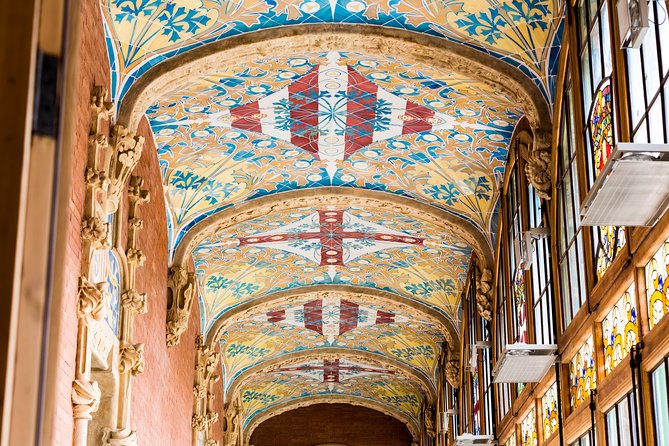
The visit begins at the Sant Salvador Pavilion, where the history of the Hospital de la Santa Creu i Sant Pau is introduced. The story reaches back to 1401 and continues into the modern era, giving you a useful timeline before you explore the rest of the complex.
This is an important first stop because Sant Pau can otherwise feel like a collection of beautiful buildings without a clear thread. The historical presentation explains how the hospital developed and how its medical role changed over time.
On the upper floor, you will find a contemporary installation shaped like a dragon. It honors Domènech i Montaner and his place in Catalan Modernisme. It is an unusual contrast with the older architecture below, but it gives the opening section a modern touch.
The exhibition area also includes an interactive touch table and a video presentation. These help explain both the hospital’s contribution to medicine and its artistic design. Information is available in English, which makes the visit easier to follow if you do not read Catalan or Spanish.
The Administration Pavilion and exhibition spaces
Your prepaid voucher is shown at the entrance, and the self-guided route begins at the Administration Pavilion during the site’s opening hours. The mobile ticket is useful here because you can arrive with your admission ready on your phone instead of stopping to buy a ticket at the door.
Prebooking matters most during busy periods. Some people have been allowed in earlier than the time printed on their ticket, but you should not count on that. Treat your chosen time as your planned arrival and keep enough flexibility in your day.
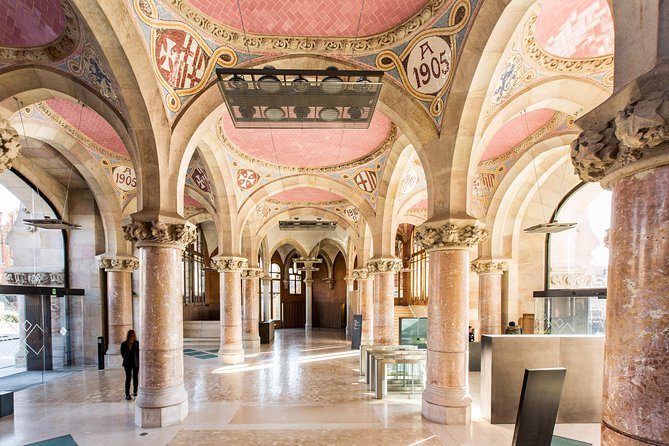
The Administration Pavilion offers some of the most impressive architectural details. Look for stained glass, sculptures, domes, decorative tile, and carefully worked surfaces. The decoration is not limited to one grand room. It continues across the complex, so the visit rewards slow looking.
I like this part of Sant Pau because it shows how the architect brought beauty into a place associated with illness. The design was not just meant to impress wealthy clients. It shaped an institution intended for patients, doctors, nurses, and families.
Underground tunnels and the practical side of the hospital
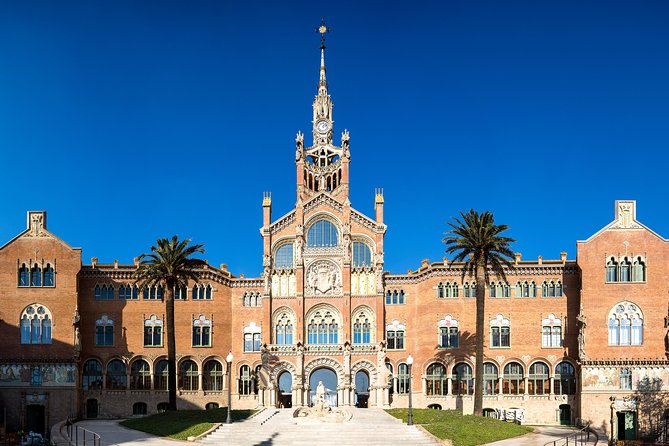
The underground tunnels are one of the most memorable parts of the visit. They connect the pavilions and extend into the gardens, creating a practical network below the more ornate buildings.
These passages were used to move patients from one part of the hospital to another. That detail changes the way you see the whole complex. The pavilions were not isolated monuments. They were working parts of one connected medical system.
The tunnels also provide a welcome change of pace. After looking at facades, domes, and mosaics, you move below ground into a more functional setting. The tiled passageways still have visual appeal, but their purpose is easier to understand.
Signposting is not perfect. Some sections can be easy to miss, and one self-guided visit described the route as confusing. Pick up the paper map at entry and use it as you move through the site. If you are especially interested in the tunnels, make sure you confirm where they fit into the route before moving on.
A completely different kind of day out in Barcelona:
- Barcelona: 24 or 48-Hour Hop-On Hop-Off Bus Tour
★ 4.4 · 20,872 reviews - Barcelona: Park Guell Guided Tour with Skip The Line Entry
★ 4.7 · 17,563 reviews - Barcelona: La Pedrera-Casa Milà Ticket & Audio Guide Option
★ 4.7 · 15,099 reviews - Barcelona in 1 Day: Sagrada Familia, Park Guell,Old Town & Pickup
★ 5.0 · 13,541 reviews
Sant Rafael Pavilion and the old Surgery Room
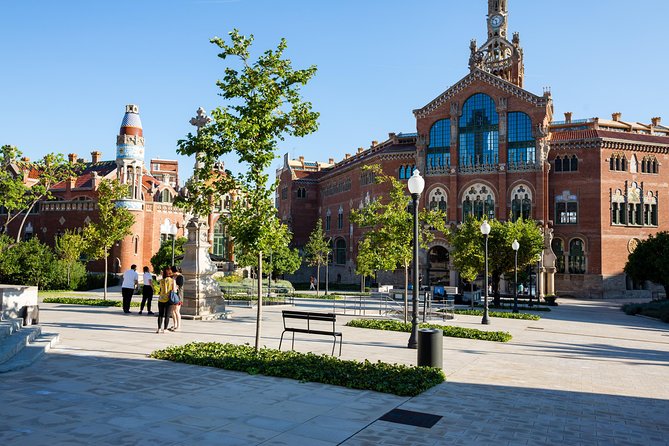
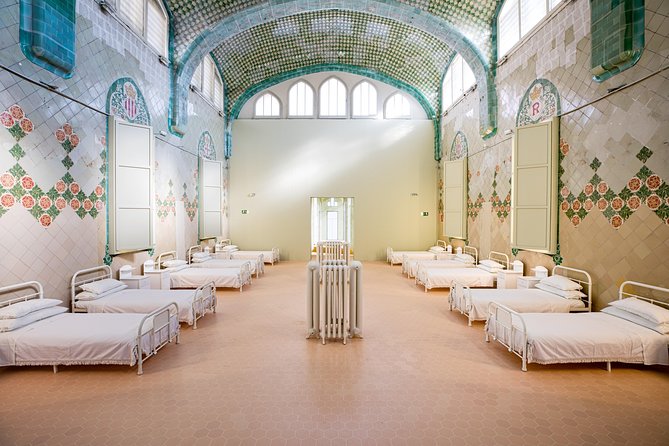
The restored Sant Rafael Pavilion gives you a stronger sense of the hospital as a place of treatment. The old Surgery Room is another important stop, particularly if you are interested in medicine or the practical history of hospitals.
This is where Sant Pau becomes more than an architecture visit. The building design remains the main attraction, but the medical displays explain how patients were cared for and how treatment changed over time.
You may also see old hospital equipment. It is not presented as a separate medical museum in the supplied details, but the presence of historic equipment adds a useful human scale to the visit. It helps you imagine the complex in use rather than viewing it only as a restored monument.
The restored rooms are also a good reason to consider the audio narration. The standard ticket does not include a guide, and the audio device costs around €4. Several people considered that a worthwhile extra, especially because the architecture alone does not explain every room’s original purpose.
The Domènech i Montaner Room, Pau Gil Room, and Main Hall
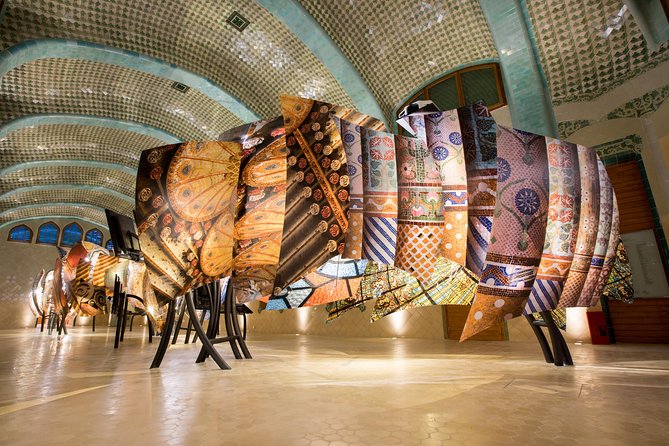
The Lluís Domènech i Montaner Room, Pau Gil Room, and Main Hall form the grander interior portion of the route. These rooms help show the range of the complex, from functional medical spaces to ceremonial areas with more formal decoration.
Take your time with the ceilings and tile work. The craftsmanship is easy to miss if you simply follow the path and look straight ahead. Sant Pau’s beauty is often in the repeated details: patterned surfaces, colored glass, sculpted elements, and small decorative touches around doors and windows.
The Main Hall offers a useful pause in the route. Seats are available in some indoor areas, which helps on a hot or rainy day. Air conditioning indoors was also appreciated during warm weather.
Access to lifts may not be as straightforward as some visitors hope. If stairs are difficult for you, ask staff about available lift access when you arrive rather than waiting until you reach a higher room. Most people can participate, but the route may still require attention to stairs and uneven movement between sections.
Sant Jordi Pavilion and temporary exhibitions
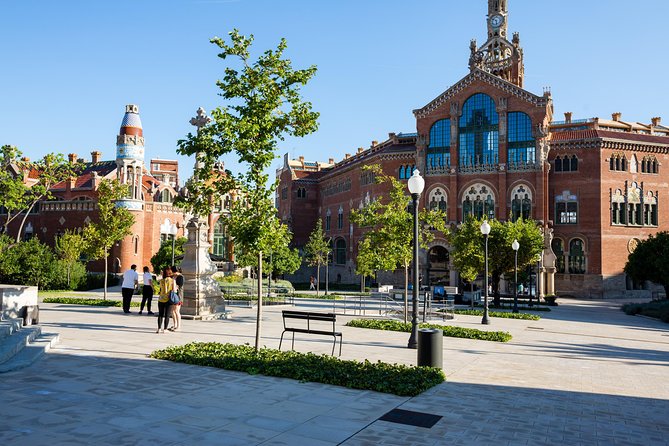
The visit ends at the Sant Jordi Pavilion, which hosts rotating temporary exhibitions. The exact content can change, so this part of the experience is less predictable than the permanent architecture and history displays.
That changing element can be a bonus if you return to Barcelona. It also gives the final section a different character after the historical route through the hospital buildings.
Keep in mind that occasional private events or influencer gatherings may block parts of the complex. This is not the normal experience described by the ticket, but it is a practical risk at a major cultural site. If access to a particular pavilion matters greatly to you, check conditions on the day or ask at the entrance.
How long should you spend inside?
The advertised visit takes about one to two hours. I think 90 minutes is a sensible minimum if you want to read the displays and see the main buildings. Two hours gives you room for photographs, the tunnels, the gardens, and a slower look at the interiors.
The complex is large, so this is not a quick room-by-room museum visit. You move between buildings and outdoor areas. The gardens make the route more pleasant, and the open setting can feel like a relief after Barcelona’s crowded central sights.
The quiet atmosphere is one of Sant Pau’s strongest advantages. It is close to the Sagrada Família, yet it can feel far less pressured. You can stop to study a mosaic without being pushed along by a large group.
A hop-on hop-off bus Green Line stop is located outside the complex. Sant Pau is also near public transportation, making it easy to pair with the Sagrada Família or another sight in the area.
Is the $21.78 ticket good value?
At about $21.78, the ticket is not a bargain-basement attraction, but it offers a substantial visit. You get access to a large architectural complex, restored pavilions, exhibition areas, tunnels, gardens, and historic hospital rooms.
The value is strongest for three types of visitors: architecture fans, people interested in medical history, and anyone who wants a major Barcelona sight without a large guided group. The visit gives you more than a single facade and usually fills a useful hour and a half or two hours.
The price is less convincing if you only want exterior photographs. You can admire parts of the complex from outside, and one quiet Monday visit had little ticket-line advantage. In that situation, paying for entry may not feel worthwhile if private events also limit access.
The ticket price is reportedly similar to buying directly from the Sant Pau website. The advantage of booking ahead is the admission guarantee and, in some cases, greater flexibility to change or cancel. Free cancellation is available up to 24 hours before the experience’s start time. Changes or cancellations inside that window are not accepted for a refund.
Remember that food, drinks, and a guide are not included. The audio narration is an extra €4, but I would consider it if you want more context than the signs provide.
Who will enjoy Sant Pau most?
I would recommend this visit to anyone who enjoys Barcelona’s Modernisme, especially if you have already seen Gaudí and want to understand the wider movement. The site gives Domènech i Montaner the attention he deserves.
It also suits people who like history with a practical edge. You will see how hospital care was organized, how buildings were connected, and how a major medical institution changed across centuries.
Families can set their own pace, and most people can take part. Service animals are allowed. If you have limited mobility, ask about lift access at the start, since the route includes multiple buildings and some visitors have found the lift arrangements less convenient than expected.
This is not the best choice if you want a lively guide, a tightly organized group route, or a short attraction with no reading. The self-guided format gives freedom, but it also means you must use the map and decide how much historical material you want to absorb.
Practical tips for a better visit
- Bring your mobile voucher: Show it at the front desk for check-in.
- Take the paper map: The route can be confusing in places, and you may otherwise miss a pavilion or passage.
- Consider the €4 audio guide: It adds context about the rooms and hospital’s development.
- Allow 90 minutes to two hours: A quick visit will not do justice to the tunnels, pavilions, and gardens.
- Look up and look down: Domes and stained glass deserve attention, but so do tiled floors and underground passages.
- Pair it with the Sagrada Família: The two sites are close, making Sant Pau an efficient addition to a sightseeing day.
- Ask about closures: Events can occasionally block sections of the complex.
- Plan for weather: Indoor spaces offer air conditioning and seating, while the route also includes gardens and outdoor walking.
Should you book the Sant Pau ticket?
Book it if you want architecture with a real social purpose. Sant Pau is beautiful, but its value comes from the combination of design, medicine, history, and space. The mosaics and domes may draw you in, while the tunnels and treatment rooms give the visit substance.
I would book ahead if Sant Pau is important to your Barcelona plans, particularly during a busy travel period. The ticket guarantees entry and avoids wasting time at the entrance. Add the audio guide if you prefer structured explanations, and use the map carefully if you choose the basic self-guided visit.
Skip it only if your schedule is extremely tight or if you are interested solely in famous-name attractions. For everyone else, Sant Pau is a calm, rewarding stop that adds a different side of Barcelona to your trip.
FAQ
How long does the Sant Pau Recinte Modernista visit take?
The visit takes approximately one to two hours. Allow around 90 minutes at minimum if you want to see the main pavilions, tunnels, exhibits, and gardens without rushing.
Is a guide included with the admission ticket?
No. The admission ticket provides entry for a self-guided visit. A paper guide is available, and an audio narration device can be rented at the entrance for about €4.
Is the ticket available on a mobile phone?
Yes. The experience includes a mobile ticket. You can show the voucher on your phone at the front desk for check-in.
Can I cancel the ticket for a refund?
Yes. You can cancel up to 24 hours before the experience’s start time for a full refund. Cancellations or changes made less than 24 hours in advance are not accepted for a refund.
Is Sant Pau near public transportation?
Yes. Sant Pau is near public transportation, and a hop-on hop-off bus Green Line stop is located outside the complex.
Are service animals allowed?
Yes. Service animals are allowed, and most people can participate in the visit. If stairs are difficult for you, ask about lift access when you arrive.
Recently added around Barcelona
- Intro Segway Tour Barcelona 1h★ 4.9 · 166 reviews
- Barcelona: Bike or eBike Tour, Top Sights & Local Insights★ 4.9 · 166 reviews
- Instagram Photoshoot Tour in Barcelona★ 5.0 · 167 reviews
- Artisan Ceramic Making Experience★ 5.0 · 168 reviews
- Barcelona: Big Fun Museum Ticket★ 4.2 · 169 reviews
- Gaudi’s Crypt in Colonia Güell with Audioguide★ 4.4 · 170 reviews
- Sagrada Familia Evening Private Tour with Expert Guide★ 4.5 · 170 reviews
- Las Golondrinas Barcelona 60-min Boat Tour★ 4.0 · 170 reviews
Tickets, compared.

Sagrada Familia Entry Ticket with Audio Guide
Read our review →