
Review · PAELLA EXPERIENCES
Paella and Sangria Workshop in Malaga
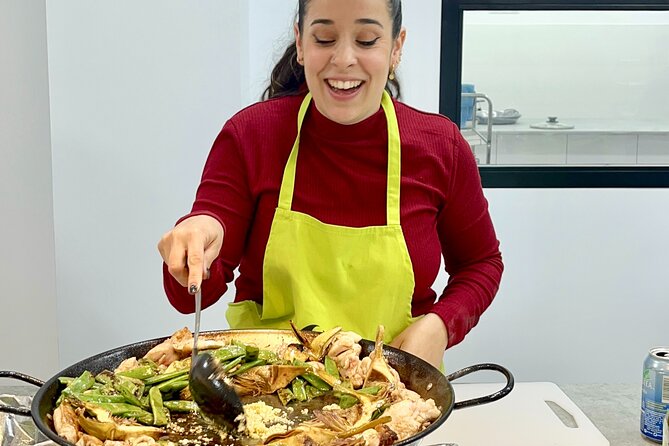
Paella is best learned at the pan. This three-hour class brings you into a Malaga kitchen to prepare ajoblanco, Malagueño soak, traditional Valencian paella, fresh sangria, and an Andalusian dessert. I like the hands-on cooking and the strong local flavor, especially the lessons on rice, liquid, and traditional methods. I also like that instructors such as Diego, Laura, and Nahuel mix cooking with stories about Spanish food and life.
The main thing to consider is the paella style. The traditional version uses chicken rather than seafood, and one participant found the paprika-heavy flavor and sugar-free sangria less appealing. The price is $84.66 per person, so this makes the most sense if you value a full meal, instruction, drinks, and a social evening rather than a quick demonstration.
In This Review
- Key points at a glance
- What your three hours in the Malaga kitchen look like
- Ajoblanco gives the class a local beginning
- Malagueño soak adds a Costa del Sol specialty
- The paella lesson focuses on rice, liquid, and restraint
- Sangria is part of the lesson, not just a welcome drink
- Dessert and the final meal make the price easier to judge
- Diego, Laura, and Nahuel shape the mood
- The 14-person maximum keeps it personal
- Who should book this Malaga cooking class
- Timing, booking, and cancellation details
- Should you book the Paella and Sangria Workshop?
- FAQ
- Where does the Paella and Sangria Workshop begin?
- Where does the activity end?
- How long does the workshop last?
- What language is the class offered in?
- What dishes will I prepare?
- Is sangria included in the cooking activity?
- Is dessert included?
- Does the paella use seafood?
- Can dietary requirements be accommodated?
- What is the cancellation policy?
Key points at a glance
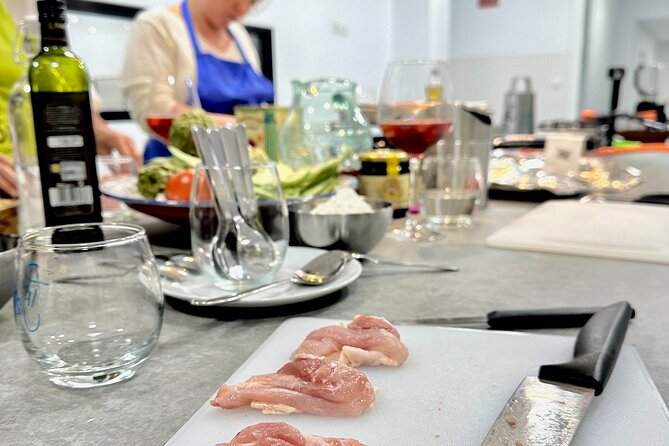
- Three dishes from Malaga and Spain: Prepare cold ajoblanco, Malagueño soak, and original Valencian paella.
- Sangria made during class: You prepare the drink as part of the lesson, not as a premade extra.
- A real meal at the end: The food you cook becomes a generous lunch or dinner, with drinks and dessert.
- Practical paella skills: Learn how to judge the right amount of rice and liquid, plus traditional cooking methods.
- Small class size: The maximum is 14 people, which allows for a shared, social kitchen experience.
- Good for mixed ages: Past participants included children, teenagers, adults, and older cooks.
What your three hours in the Malaga kitchen look like
The class begins at C. Martínez Campos, 15, in Malaga’s Distrito Centro. It ends at the same meeting point, so you do not need to arrange a second pickup location or find your way across town after the meal.
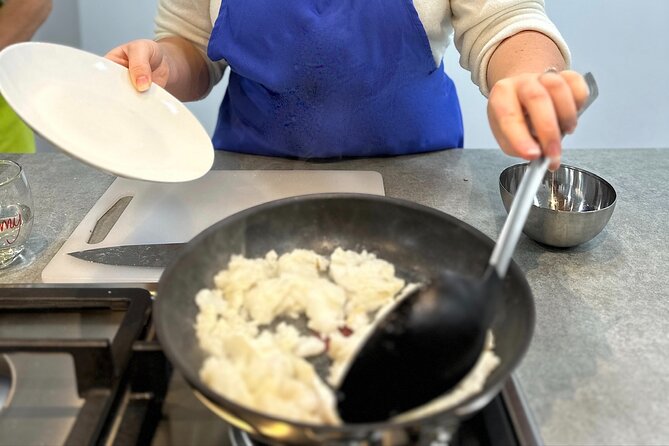
The format is practical from the start. You do not simply watch a chef assemble paella while standing behind a counter. You help prepare several dishes, make sangria, listen to explanations, and eat the results together. That makes the three-hour length feel useful rather than padded.
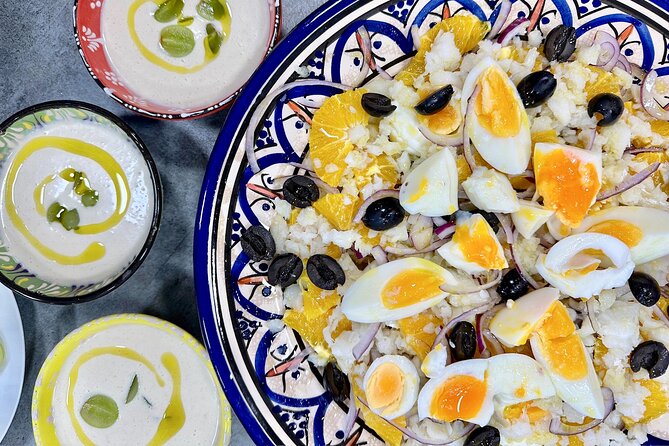
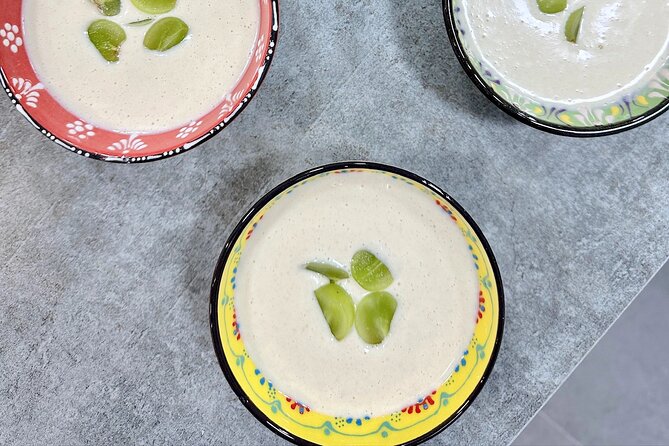
The exact order can vary, but the experience centers on three savory preparations. First comes ajoblanco, often translated as white garlic. This is a cold soup made from almonds, and it offers a good introduction to Andalusian cooking. It is simple in appearance but depends on balance, texture, and the quality of its ingredients.
Next is Malagueño soak, described as a typical dish from the Costa del Sol. The supplied menu calls it a starter, alongside ajoblanco. The class gives you a chance to see how local food can be more than the familiar tourist staples of tapas and seafood.
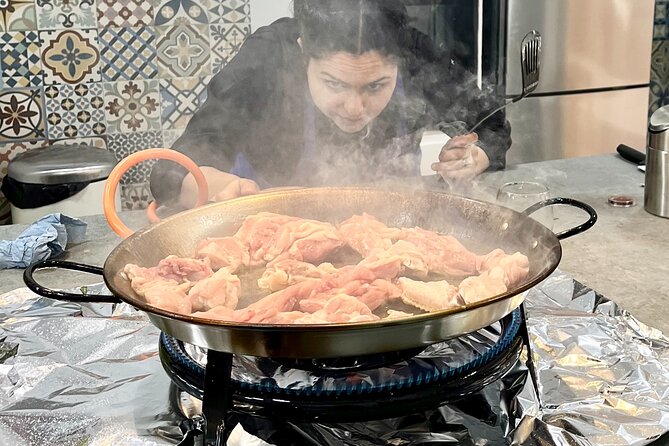
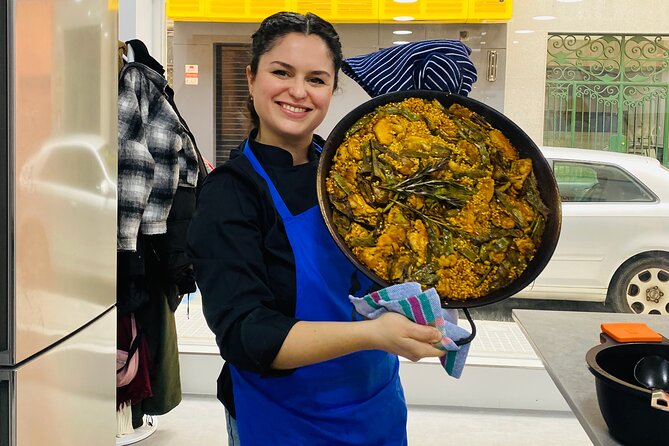
The main event is Valencian paella, presented as the original style. This point matters. Many visitors expect paella to mean seafood, but the traditional preparation taught here uses chicken. If your ideal paella is loaded with prawns and mussels, you should adjust your expectations before booking.
More paella experiences:
- Málaga: Spanish Cooking Workshop with Paella and Sangria
★ 4.9 · 613 reviews - Malaga: Sailing Catamaran with Swimming and Paella Lunch
★ 4.1 · 578 reviews - Paella Cooking Class in Malaga
★ 5.0 · 209 reviews
Ajoblanco gives the class a local beginning
Ajoblanco is one of the most distinctive dishes on the menu. The soup is served cold and made from almonds, so it is quite different from the tomato-based cold soups many people associate with Spain.
You learn how a short ingredient list can still require care. The lesson is not only about following steps. Instructors explain ways to improve flavor and texture, and several participants specifically valued the cooking tips shared by Diego and Laura.
I like this opening because it broadens the class beyond paella. You leave with a better sense of Malaga’s own food traditions, not just the Spanish dish that appears on menus around the world.
The cold soup may also be the easiest course to reproduce at home. It does not depend on a special paella pan, and the method should be manageable for cooks with modest experience. Recipes are expected to be shared, although a few participants had to follow up because their recipes had not arrived yet.
Malagueño soak adds a Costa del Sol specialty
The second savory dish is Malagueño soak, a local preparation from the Costa del Sol. It is described in the menu as a starter and in the class outline alongside the soup and paella as one of the three main cooking tasks.
This course helps break up the lesson. You move from a cold almond soup to another local dish before taking on the rice. That gives the class more variety and means the final meal feels like a proper spread rather than a single-dish workshop.
The menu descriptions use slightly different wording, calling this course a salad in some places and Malagueño soak in others. You should not book expecting a fixed restaurant-style menu with every detail spelled out. The important point is that you prepare a local starter, learn how it fits into Malaga’s food culture, and eat it with the paella later.
The paella lesson focuses on rice, liquid, and restraint
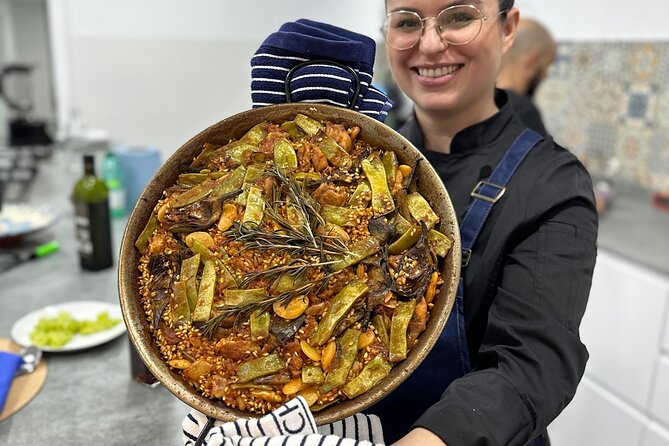
Paella is the reason most people book this experience, and the lesson goes beyond adding ingredients to a pan. A central tip is getting the rice-to-liquid balance right, a small technical detail that often separates successful paella from wet or undercooked rice.
The instructors explain traditional methods step by step. Diego is praised for making the process easy to follow, while Laura is described as clear, funny, and good at explaining how to make the best paella. The teaching style sounds active rather than formal, with questions welcomed and participants helping at the pan.
The traditional Valencian version uses chicken instead of seafood. One useful bonus lesson is an easy way to debone chicken legs and thighs. That is the kind of practical kitchen skill you can use beyond this recipe.
You should also know that flavor is personal. Most of the feedback was strongly positive, but one participant did not enjoy the paella’s heavy paprika character. That is a fair reminder that an authentic preparation may not match every palate.
The class also teaches method and context. You learn where paella came from and why the traditional preparation differs from the seafood versions common outside Spain. If you have tried making paella at home and struggled with the rice, this is likely the most valuable part of the afternoon.
A few more Spain trips worth a look
- Paella Cooking Class with English Guide in Malaga
★ 5.0 · 149 reviews - The Ultimate Tapas Workshop in Malaga
★ 5.0 · 119 reviews - Malaga: The Ultimate Tapas Workshop with Market Visit
★ 4.9 · 108 reviews - Barcelona Paella Cooking Class with Market Visit, Tapas & Sangria
★ 5.0 · 2,531 reviews
Sangria is part of the lesson, not just a welcome drink
Sangria is prepared during the cooking session. That gives you a chance to learn how it is made and hear about its place in Spanish food culture.
The drink is described as fresh rather than a premixed, tourist-oriented version. Several participants enjoyed it, though one person found the zero-sugar style too dry. Again, expectations matter. If you prefer sweet sangria, ask about the recipe and flavor balance during the class.
The drink also helps make the class social. You cook alongside people from different countries, share the work, and sit down together at the end. That atmosphere was one of the most praised parts of the experience, with participants describing the class as relaxed, friendly, and easy to join even without much cooking experience.
Dessert and the final meal make the price easier to judge
After the cooking, you taste all the dishes together. The meal includes ajoblanco, Malagueño soak, paella, sangria, and an Andalusian sorbet. Some descriptions also refer to dessert wine, so drinks appear to be part of the final meal, with several beverage choices available.
At $84.66 per person, this is not the cheapest way to eat in Malaga. You can find a meal for less, and a restaurant does not ask you to chop, stir, or listen to a lesson first.
The value comes from combining dinner with an activity. You receive roughly three hours of instruction, a full multi-course meal, sangria, cultural background, and recipes intended for use at home. If you want a memorable evening and practical skills, the cost is easier to justify.
The food portion is also substantial. Participants describe the meal as filling, and the class gives you a chance to eat everything you helped make. That is a better value than a short cooking demonstration followed by a small tasting plate.
Diego, Laura, and Nahuel shape the mood
The teaching team is an important part of the experience. Diego is repeatedly praised for being personable, clear, and entertaining. He explains techniques, answers questions, and adds stories about Spanish food and culture.
Laura receives equally warm praise for her cooking and teaching. She is described as friendly, funny, and helpful, and one family considered her the highlight of their time in Malaga. Nahuel is also mentioned as a welcoming instructor who helped create an easygoing class.
The staff do more than explain recipes. They share local restaurant suggestions and talk about living and cooking in Spain. That extra conversation can be useful if you are still deciding where to eat during your stay.
The tone appears relaxed rather than intimidating. A 13-year-old took an active role in the cooking, and another family included a teenage child who considered the class a trip highlight. A separate comment says participants ranging from age three to 70 enjoyed the course.
The 14-person maximum keeps it personal
The class has a maximum of 14 participants. That is not a private lesson, but it is small enough to support a shared kitchen atmosphere.
Your experience can change depending on the group. A larger class may feel more social, while a very small group gives you more direct contact with the instructor. One session had only two people, allowing for especially detailed explanations.
The group format is part of the appeal. You meet people from different places, divide tasks, and sit down for the meal together. If you prefer a quiet, private cooking lesson, this may feel too communal. If you enjoy conversation and meeting people during a trip, the format should suit you well.
Who should book this Malaga cooking class
I would recommend it to couples looking for a date, families with older children, solo visitors who enjoy social activities, and anyone who wants more than a restaurant meal. It also suits cooks of mixed ability because the teaching is step by step and the recipes are traditional without requiring professional skills.
This is especially useful for people who want to recreate Spanish food at home. The rice and liquid lesson, chicken preparation, cold soup, and sangria method all have clear value after you return.
You may want to skip it if you dislike group activities, do not drink sangria, or want seafood paella above all else. The class is also a poor fit if you are seeking a quick one-hour activity. Three hours is a meaningful portion of your day, though the meal and instruction make the time feel full.
Vegan, vegetarian, and gluten-free options are available with advance notice. You need to provide that information before the experience, not assume it can be arranged when you arrive.
Timing, booking, and cancellation details
The class is offered in English and uses a mobile ticket. Confirmation arrives within 48 hours of booking, subject to availability, so do not wait until the last minute if your Malaga schedule is tight. It is often booked about 30 days in advance.
The meeting point is near public transportation in central Malaga. The activity returns to that same location, which makes it easy to fit into a day of sightseeing without arranging a complicated transfer.
Free cancellation is available if you cancel at least 24 hours before the local start time. Cancellations or changes made within 24 hours are not refunded or accepted. The class also requires a minimum number of participants, and if that minimum is not met, you are offered another date or experience, or a full refund.
The overall rating is 4.8 from 108 reviews, with 95 percent recommending the experience. Those figures suggest a strong record, but the small differences in paella and sangria preferences are worth keeping in mind.
Should you book the Paella and Sangria Workshop?
Book it if you want to cook, eat, and learn in one sitting. The strongest reasons are the hands-on paella instruction, the local dishes beyond paella, the fresh sangria, and the warm teaching style associated with Diego, Laura, and Nahuel.
I would give it extra credit for showing the traditional chicken version of Valencian paella rather than simply serving the seafood style most visitors expect. Just arrive ready for a group class, a three-hour commitment, and flavors that may be less sweet or less familiar than you prefer.
For a first cooking experience in Malaga, the combination of food, practical tips, local stories, and a full meal makes this a solid use of $84.66.
FAQ
Where does the Paella and Sangria Workshop begin?
It begins at C. Martínez Campos, 15, Distrito Centro, 29001 Málaga, Spain.
Where does the activity end?
The class ends back at the meeting point.
How long does the workshop last?
The experience lasts approximately three hours.
What language is the class offered in?
The workshop is offered in English.
What dishes will I prepare?
You will prepare ajoblanco, also called white garlic soup, Malagueño soak, and traditional Valencian paella.
Is sangria included in the cooking activity?
Yes. Sangria is made during the class as part of the experience.
Is dessert included?
Yes. The menu includes an Andalusian sorbet, and the meal is enjoyed after the cooking.
Does the paella use seafood?
The traditional paella taught in this class uses chicken rather than seafood.
Can dietary requirements be accommodated?
Vegan, vegetarian, and gluten-free options are available with prior notice.
What is the cancellation policy?
You can cancel at least 24 hours before the local start time for a full refund. Cancellations or changes made less than 24 hours before the start are not refunded or accepted.
Recently added around Malaga
- Ronda: Guided Walking Tour★ 4.6 · 104 reviews
- Private Day Trip to Ronda from Malaga with Driver-Guide★ 5.0 · 105 reviews
- Malaga Private Gastronomic Tour: Tapas, Wine & Rooftops★ 5.0 · 105 reviews
- Visit Oil Mill Museum and Olive Oil Tasting in Ronda★ 4.5 · 105 reviews
- Ferry Benalmádena <> Fuengirola★ 4.5 · 107 reviews
- Ronda: Spanish – Classical & Flamenco – Guitar Concert★ 4.8 · 108 reviews
- Malaga: The Ultimate Tapas Workshop with Market Visit★ 4.9 · 108 reviews
- Malaga: Electric Bike Rental★ 4.3 · 110 reviews
Paella Experiences, compared.
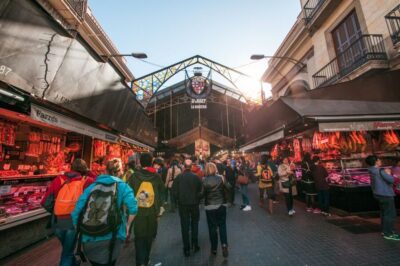
Paella Cooking Experience & Boqueria Market Tour
Read our review →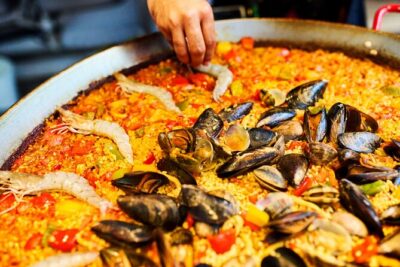
Barcelona Paella Cooking Class with Market Visit, Tapas & Sangria
Read our review →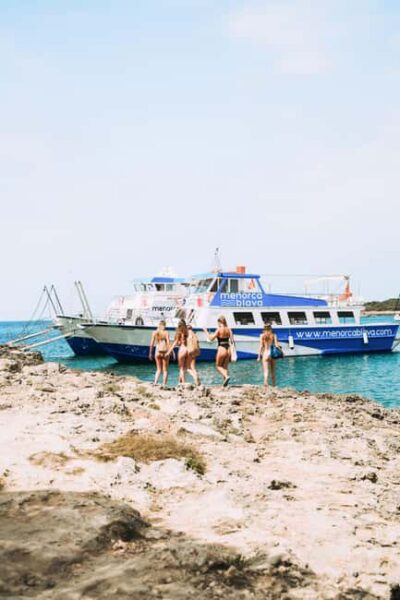
Natural Coves and Beaches Boat Trip & Paella Lunch
Read our review →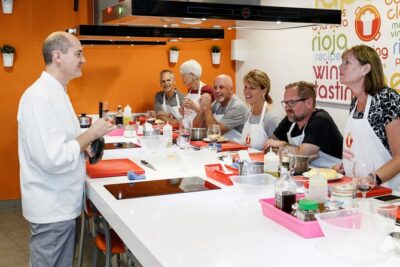
Spanish Cooking Class Paella Tapas and Sangria in Madrid
Read our review →
Barcelona Food Tour: Tapas, Paella, Sangria & 8+ Local Tastings
Read our review →
Paella and Sangria Workshop in the City Center
Read our review →
Paella Cooking Class, Wine Tasting & Central Market in Valencia
Read our review →
Girona & Costa Brava Small Group Tour From Barcelona with Paella!
Read our review →Browse the lists this tour appears in