
Review · EVENING EXPERIENCES
Medina Azahara Guided Tour at Night
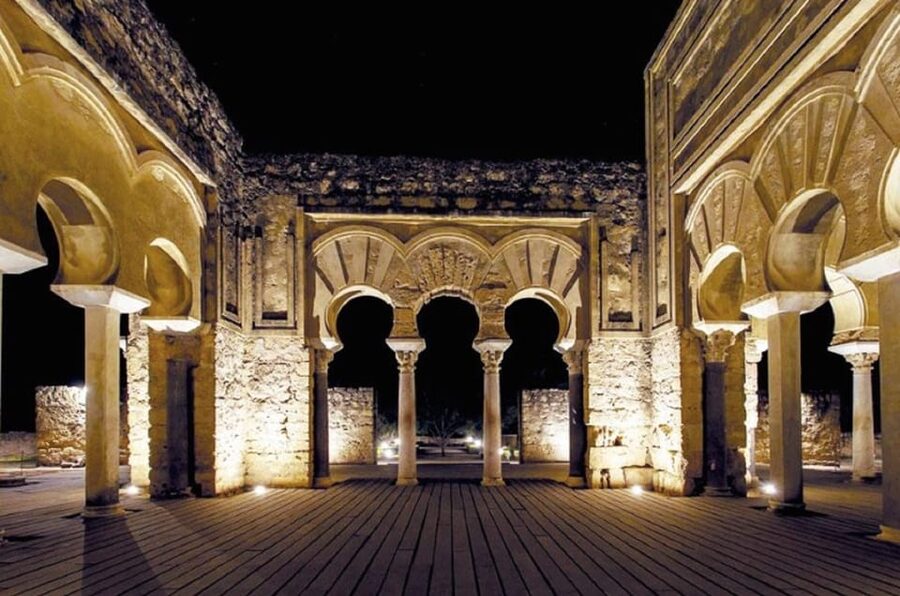
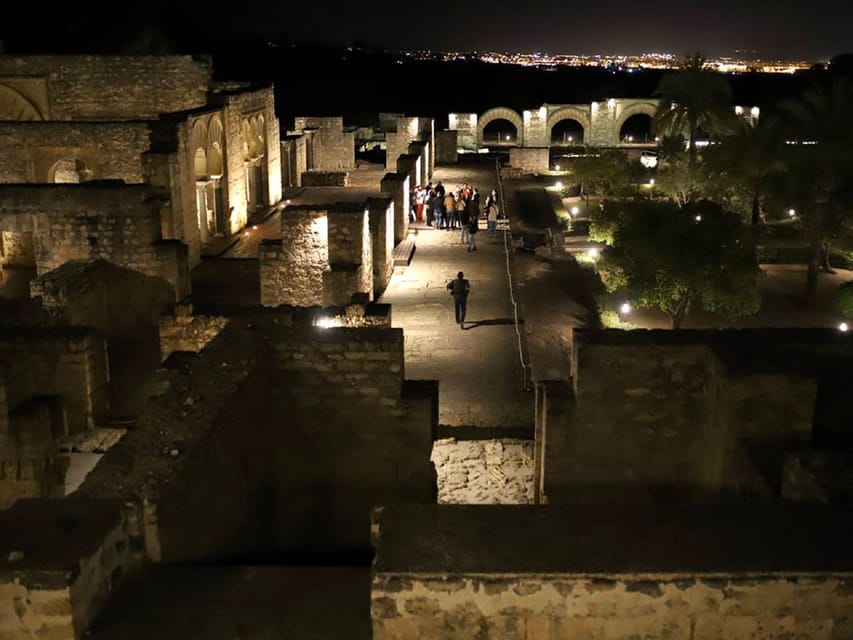
The caliph’s city looks different after dark. Medina Azahara at night gives you a cooler, quieter way to see the former capital of al-Andalus, with palace remains, formal gardens, and mosque ruins spread across the hills outside Córdoba. I like the evening setting and the chance to understand why this short-lived city mattered so much.
I also like that you can choose round-trip transport from Córdoba or arrange your own way there. At $17 per person, including entry and a guided visit, it offers good value for a focused history outing. The main catch is important: the guide speaks Spanish, and the site is not lit as dramatically as Córdoba’s famous Mezquita.
In This Review
- Key points to know before booking
- Why Medina Azahara matters
- Arriving from Córdoba after sunset
- Walking through the ruins in evening light
- Palaces, mosques, and formal gardens
- The Spanish-language guide makes a difference
- Is $17 a fair price?
- Who will enjoy this night tour most?
- Night visit or daytime visit?
- Practical advice for a smoother evening
- Should you book Medina Azahara at night?
- FAQ
- Where is Medina Azahara?
- How long does the guided tour last?
- What language is the live tour in?
- Is transportation from Córdoba included?
- Is the bus lanzadera included without Córdoba transportation?
- What does the tour include?
- Are food and drinks included?
- Can I cancel the booking for a refund?
Key points to know before booking
- A former caliphal capital: Medina Azahara was built by Abd-ar-Rahman III al-Nasir as the center of Umayyad power in Córdoba.
- Night brings cooler conditions: The evening timing helps you avoid the worst daytime heat in Andalusia.
- Spanish guide only: You need a good level of Spanish, or at least enough to follow a history talk.
- Two transport choices: Select round-trip transport from Córdoba, or make your own way to the site.
- The lighting is subtle: Expect soft evening light and some illumination, not a full theatrical light show.
- Plan your return: Night transport can be difficult if you do not book the Córdoba transfer option.
Why Medina Azahara matters
Medina Azahara was not simply a palace. It was a planned city built near Córdoba during the 10th century, when the Umayyad Caliphate of Córdoba was one of the most important powers in the western Mediterranean.
Abd-ar-Rahman III al-Nasir ordered the city’s construction after taking the title of caliph. The site became a center for government, ceremony, religion, and court life. Its palaces, mosques, gardens, and formal spaces were designed to show the strength of the caliph and the order of his court.
That power did not last forever. Medina Azahara flourished for about 80 years in the 10th and 11th centuries before conflict and political change brought its short life to an end. Today, only part of the city has been excavated, so the ruins give you both a sense of scale and a clear reminder of how much remains below the ground.
A guide adds real value here. Without context, you might see rows of stone, fragments of walls, and open courtyards. With the story of Abd-ar-Rahman III and the Umayyad capital, the remains become easier to read.
A few more Spain trips worth a look
- Córdoba: Local Wine Tasting Evening
★ 4.9 · 234 reviews - Barcelona: Daytime or Sunset Catamaran Cruise with Music
★ 4.3 · 5,923 reviews - Barcelona: La Pedrera Night Experience
★ 4.4 · 4,633 reviews
Arriving from Córdoba after sunset
The tour may begin at different meeting points, depending on the option you book. If you choose round-trip transport from Córdoba, the evening is simpler. You meet at the stated point, ride to the archaeological site, take the guided visit, and return to the same general meeting point at the end.
That transport choice matters more at night than it would during the day. The site sits outside Córdoba, and getting back on your own can be difficult after the tour. One of the most useful practical tips is to choose the transport option unless you already have a clear plan for reaching and leaving Medina Azahara.
If you book without transport from Córdoba, you need to account for the shuttle bus, called the bus lanzadera. The supplied information specifically notes that this shuttle ticket is not included for bookings without the Córdoba transport option. It carries visitors from the parking area to the main entrance, so you should not assume that driving to the parking area takes you directly to the ruins.
Check your meeting instructions carefully before the day. The starting point can vary by booking option, and the activity finishes back at the meeting point.
Walking through the ruins in evening light
The tour lasts about two to two and a half hours. That gives you enough time for a guided walk through the main archaeological area without turning the visit into an all-night outing.
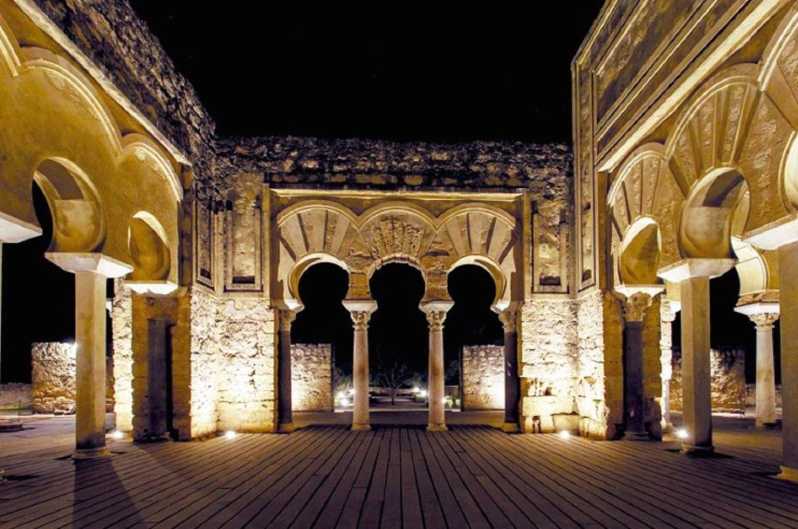
The evening setting is the main attraction. During the day, white stone and open ground can feel exposed under the Andalusian sun. At night, the air should feel more comfortable, and the fading light gives the ruins a calmer mood. You stroll beneath the sky while the guide explains the city’s role in medieval Spain.
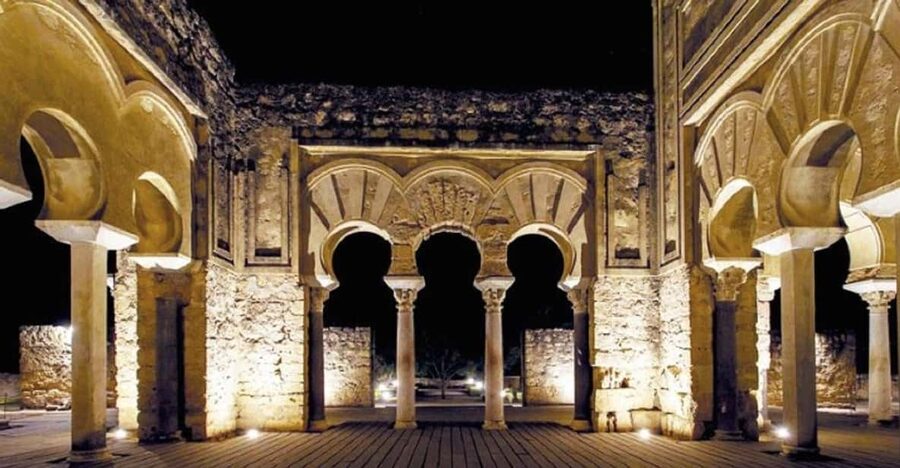
Do not expect every corner to glow with dramatic lighting. The site is illuminated, but the lighting is fairly restrained. One guest who had enjoyed the night visit to the Mezquita found Medina Azahara less theatrically lit. That is a fair comparison. The Mezquita has a powerful interior lighting scheme, while Medina Azahara is a wide outdoor ruin where darkness remains part of the experience.
I see this as both a strength and a limitation. Soft light can make the stone feel atmospheric, but it may also make details harder to see. If you want to inspect every carved surface and architectural fragment, a daytime visit may suit you better. If you want a cooler walk with a strong sense of place, the night visit has an appeal of its own.
An evening or sunset start might be especially pleasing. One assessment suggested that the tour could work even better in the late afternoon, when the stone might catch the last golden light before darkness. If your available time allows it, check the start time closely rather than assuming that every departure begins after full nightfall.
Palaces, mosques, and formal gardens
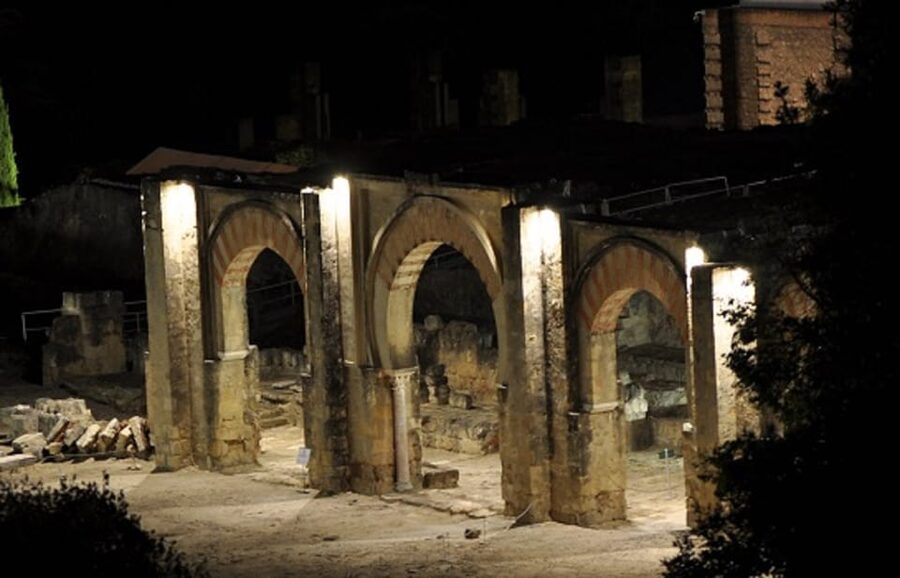
The route focuses on the remains of the palace-city. You can expect to see parts of the palaces, mosque remains, and formal gardens, with the guide explaining how these spaces fitted into the larger city.
The palaces are the clearest reminder that Medina Azahara was a working seat of power, not a small country retreat. The setting helped communicate rank and control. Even in ruin, the scale and arrangement of the buildings point to a carefully planned court complex.
The mosque adds another layer to the visit. Medina Azahara was a political center, but it was also a religious city shaped by the authority of the caliph. Seeing the mosque remains alongside the palatial areas helps you connect government, ceremony, and faith rather than treating each ruin as an isolated monument.
The formal gardens are important too. They show that the city was designed for more than defense or administration. Gardens and ordered outdoor spaces offered beauty, ceremony, and a controlled setting for court life. In the evening, their layout may be easier to appreciate as a whole than individual decorative details.
You will not receive the full picture from the stones alone. The archaeological site has been exposed over time, but it is still a ruin rather than a reconstructed palace. The live guide is therefore central to the experience. Listen for explanations of how the city flourished, why Abd-ar-Rahman III created it, and how its importance changed over the following decades.
A completely different kind of day out in Cordoba:
- Córdoba: Skip-the-Ticket-Line Mosque-Cathedral Guided Tour
★ 4.6 · 9,634 reviews - Cordoba Mosque-Cathedral: Skip-the-Line Guided Tour
★ 4.7 · 6,610 reviews - Córdoba: Jewish Quarter, Mosque, and Alcázar Tour
★ 4.7 · 4,279 reviews - Cordoba: Equestrian Show General Entry
★ 4.5 · 2,333 reviews
The Spanish-language guide makes a difference
This is a Spanish-language tour. That point should be treated as a booking requirement, not a minor footnote.
If you speak Spanish comfortably, the guide can give the site a much stronger sense of purpose. The tour is built around historical explanation, so following the commentary helps you understand what you are seeing and why each area matters.
If you speak Italian, you may pick up some of the meaning, but that is not guaranteed. One person with some Italian found the organization and transport good but could not fully judge the guide because too much of the Spanish was difficult to follow. That is a useful warning for anyone relying on a related language.
If you speak neither Spanish nor Italian, I would not choose this tour unless you are happy to enjoy the setting with only partial historical explanation. The ruins are appealing on their own, but the main value of a guided visit comes from the story.
An audio guide in additional languages would make the visit easier for international audiences, but no such option is included in the supplied details. At present, you should book on the assumption that all live commentary is in Spanish.
Is $17 a fair price?
At $17 per person, the tour is priced reasonably for an evening archaeological visit. The fee includes the entrance ticket and guided tour. If you select the Córdoba transport option, round-trip transport is included as well.
That last point changes the value calculation. A $17 entry and guide price is already fair, but adding transport can save you the trouble of arranging an evening journey to the outskirts of Córdoba. It also gives you a clearer end to the night, which is useful when public transport options are limited.
The price does not include food or drinks. This is not a major issue because the tour lasts only two to two and a half hours, but you should eat beforehand if your departure time overlaps with dinner. The tour is an outing to an archaeological site, not a food-focused evening.
For bookings without transport from Córdoba, remember the extra cost of the bus lanzadera from the parking area to the main entrance. The supplied information does not state its price, so allow for that separately when comparing options.
The ability to reserve now and pay later also helps if your Córdoba schedule is still moving around. Free cancellation is available up to 24 hours before the activity for a full refund. Those terms make the tour a relatively low-risk addition to a short Andalusian stay.
Who will enjoy this night tour most?
I would recommend it most strongly to you if you meet three conditions: you want to see Medina Azahara, you prefer cooler evening sightseeing, and you understand Spanish well enough to follow a live guide.
It also suits anyone who has already spent hot afternoons visiting Córdoba’s monuments and wants a change of pace. The open-air setting, fading light, and historical focus offer a different experience from the city’s indoor attractions.
History-minded visitors should find plenty to value. Medina Azahara helps explain the reach of the Córdoba caliphate, and the guide can connect the palace-city’s remains to the wider story of Moorish Spain.
The tour is less suitable if you want highly dramatic lighting, a self-guided visit in English, or close study of small architectural details. Darkness and restrained illumination are part of the setting, but they can make some features less clear.
Families and older visitors should also consider the two to two and a half hour walking format. The supplied details do not describe the exact route, surface, or accessibility arrangements, so check directly if you have mobility concerns.
Night visit or daytime visit?
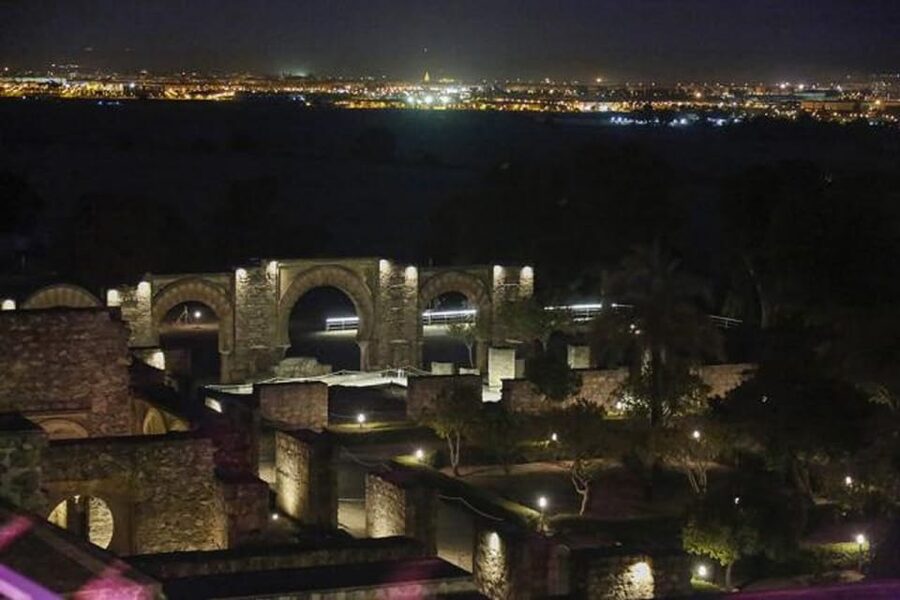
The night tour solves one clear problem: heat. Andalusian afternoons can be punishing, and an evening visit lets you explore after the strongest sun has faded.
It also changes the mood. You see fewer harsh shadows and may get a more reflective experience among the ruins. The open site, the dark sky, and the quiet setting can make the vanished city feel more distant and mysterious.
Daylight gives you better visibility. If your main goal is photography, architectural detail, or careful study of the gardens and stonework, daytime may be the safer choice. The night tour is about atmosphere and relief from the heat, not maximum visual clarity.
A sunset departure could offer the best balance, with enough light to see the site clearly and cooler conditions for the later part of the walk. Start times vary, so check availability rather than assuming the tour will begin at a particular hour.
Practical advice for a smoother evening
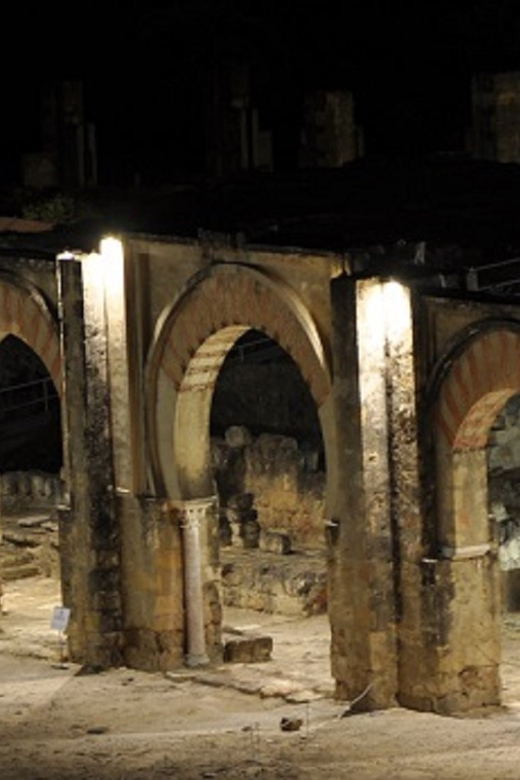
First, confirm the language before paying. The guide is Spanish-speaking, and this is the single most important factor in deciding if the tour fits you.
Next, choose transport from Córdoba if you do not already have a dependable plan for getting to and from the site. Night transport is difficult, and the included return ride removes much of the uncertainty.
If you are making your own way, remember that the bus lanzadera from the parking area to the main entrance costs extra. Build that shuttle into both your budget and your timing.
Bring water before the tour begins, since food and drinks are not included. Wear comfortable shoes for the walking portion, and check the exact start time so you can arrive at the correct meeting point.
Finally, set realistic expectations about lighting. You will see the ruins at night, but not under a grand theatrical display. The appeal is the combination of history, open space, cooler air, and evening atmosphere.
Should you book Medina Azahara at night?
Book it if you want an affordable guided visit to one of Córdoba’s most important archaeological sites, prefer evening sightseeing, and can follow Spanish. The combination of entrance, guide, and optional Córdoba transport makes the $17 price attractive, especially when the return journey is a concern.
Skip it if you need English commentary or want a brightly lit presentation like the nighttime Mezquita experience. For the right audience, this is a thoughtful way to see the former caliphal capital. Just treat the Spanish guide and transport choice as essential details, not afterthoughts.
FAQ
Where is Medina Azahara?
Medina Azahara is an archaeological site on the outskirts of Córdoba in Andalusia, Spain.
How long does the guided tour last?
The tour lasts approximately two to two and a half hours. Starting times vary, so check availability when booking.
What language is the live tour in?
The live guide speaks Spanish. No English or Italian guide is specified.
Is transportation from Córdoba included?
Round-trip transportation from Córdoba is included only if you select that booking option.
Is the bus lanzadera included without Córdoba transportation?
No. If you book without the bus from Córdoba, the ticket for the shuttle bus from the parking area to the main entrance is not included.
What does the tour include?
The tour includes the entrance ticket and guided tour. Round-trip transportation from Córdoba is included when that option is selected.
Are food and drinks included?
No. Food and drinks are not included in the activity.
Can I cancel the booking for a refund?
Yes. You can cancel up to 24 hours in advance for a full refund. The activity also allows you to reserve now and pay later.
Recently added around Cordoba
- Tour to the Mosque-Cathedral of Córdoba with admission included★ 5.0 · 103 reviews
- Sights, Sounds, and Scents of Córdoba’s Patios★ 4.4 · 109 reviews
- Cordoba Mosque-Cathedral & City Private Tour★ 5.0 · 117 reviews
- Best of Cordoba Guided Tour★ 4.5 · 121 reviews
- Guided tour of the Mosque-Cathedral of Cordoba in Spanish★ 5.0 · 130 reviews
- Cordoba: Mosque, Jewish Quarter and Alcazar★ 4.5 · 135 reviews
- Bike Tour Córdoba★ 5.0 · 148 reviews
- Cordoba: Flamenco Show at Tablao El Jaleo & Optional Dinner★ 4.7 · 163 reviews
Evening Experiences, compared.
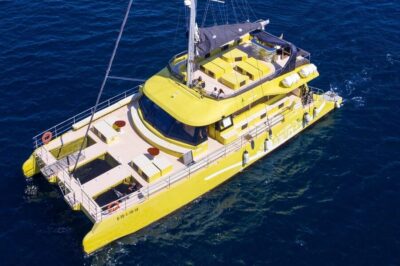
Daytime or Sunset Catamaran Cruise with Music
Read our review →



Albaicín and Sacromonte Guided Sunset Walking Tour
Read our review →
Sunset or Day Catamaran Cruise with Tapa & Drink
Read our review →
Browse the lists this tour appears in