
Review · WALKING TOURS
Madrid: Welcome to Madrid Guided Walking Tour in English
Madrid reveals itself one street at a time. This 2.5-hour English walking tour links the city’s Islamic beginnings with its Habsburg and Bourbon eras, giving you a useful first look at the royal center, grand plazas, Gran Vía, and Spain’s political heart. I especially like the route’s strong historical storyline and the way it reaches major sights without requiring museum admission. I also like the guides’ mix of facts, humor, and restaurant tips.
The main consideration is the walking pace. You cover a lot of ground in 2.5 hours, and one review specifically called it a long walk. Photo stops can be brief, too, so you may need to take pictures quickly and save detailed sightseeing inside the monuments for another time.
In This Review
- Key points to know before you book
- Starting beside Teatro Real and the Royal Palace
- Almudena Cathedral and the city’s changing styles
- Three centuries around Plaza de la Villa
- Plaza Mayor, royal celebrations, and darker chapters
- Puerta del Sol, the center of modern Madrid
- The Royal Academy of Fine Arts and Goya
- Gran Vía and the push toward a modern capital
- The Prado Museum and Madrid’s cultural identity
- Ending at the Congress of Deputies
- The guides are the biggest strength
- Price, pace, and practical value
- Who should take this Madrid walk?
- Should you book it?
- FAQ
- How long is the Madrid walking tour?
- What language is the tour offered in?
- Where does the tour meet?
- Which Madrid sights are included on the route?
- Are hotel pickup and drop-off included?
- Does the $31 payment include the guide’s payment?
Key points to know before you book
- A wide-ranging central route: You see the Royal Palace, Almudena Cathedral, Plaza Mayor, Puerta del Sol, Gran Vía, the Prado Museum exterior, and the Congress of Deputies.
- Madrid’s story has a clear arc: The tour begins with Arabic Mayrit, moves through the Habsburg city, and explains Bourbon-era modernization under Charles III.
- The guides make the difference: Daniel, Adam, Sebastian, Esmeralda, Joaquin, Dina, and Duarte all receive praise for clear English, humor, energy, and lively storytelling.
- It is a walking orientation, not an inside tour: The route introduces major landmarks, but entrance tickets and extended visits inside the Royal Palace, cathedral, or Prado are not included.
- The $31 price needs a little explaining: This payment covers the reservation and guide payment for the general pay-as-you-wish format, rather than being simply an admission ticket.
- Easy meeting point: Meet outside Teatro Real at Opera Metro station and look for the yellow umbrella.
Starting beside Teatro Real and the Royal Palace
Your meeting point is outside the Teatro Real, beside Opera Metro station. Look for the yellow umbrella. This is a practical place to begin because you are already in Madrid’s historic center, close to the Royal Palace and several of the city’s most important old streets.
The opening section sets up Madrid’s unusual origin story. Before it became the capital of a global empire, the settlement was known as Mayrit, an Arabic name connected with abundant water. That detail gives you a useful reminder that Madrid was not created only as a royal showcase. Its foundations reach back to the Islamic period, long before the grand avenues and palace façades that most first-time visitors associate with the city.
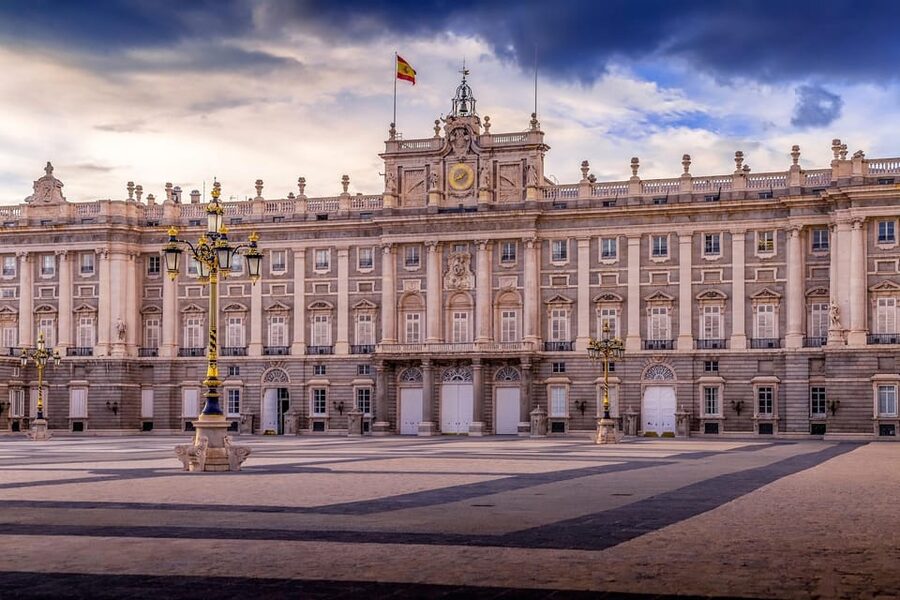
From there, the tour moves toward the Royal Palace. You see the palace as a symbol of Madrid’s role as Spain’s political center, but the route does not include an interior visit. That is both a limit and a benefit. You do not spend a large portion of your 2.5 hours waiting in a ticket line or moving through palace rooms. Instead, you get context and a street-level introduction before deciding if you want to return for a separate visit.
More Walking Tours in Madrid
- Toledo Tour & Vineyard Walk with Wine Tasting from Madrid
★ 5.0 · 2,546 reviews - Madrid Walking Tour from Puerta del Sol to Retiro Park
★ 5.0 · 2,285 reviews - Madrid Old Town & Royal Palace Walking Tour Skip the Line Ticket
★ 4.5 · 1,829 reviews
Almudena Cathedral and the city’s changing styles
Almudena Cathedral follows naturally from the palace. Its position near the royal complex helps explain the close connection between Spain’s monarchy and Catholic identity. The building is also useful for understanding Madrid’s changing architectural tastes, since its appearance combines several neo-styles rather than presenting one perfectly uniform design.
Your guide will help you read the exterior instead of simply pointing at it. That is important in Madrid, where a quick look can leave you with a jumble of domes, towers, stonework, and newer additions. The cathedral is a visual marker of how the city kept building and reshaping itself as its political importance grew.
You should not expect a full religious-art visit here. The experience is designed around the city streets and exterior interpretation. If you want quiet time inside the cathedral, plan to return separately.
Three centuries around Plaza de la Villa
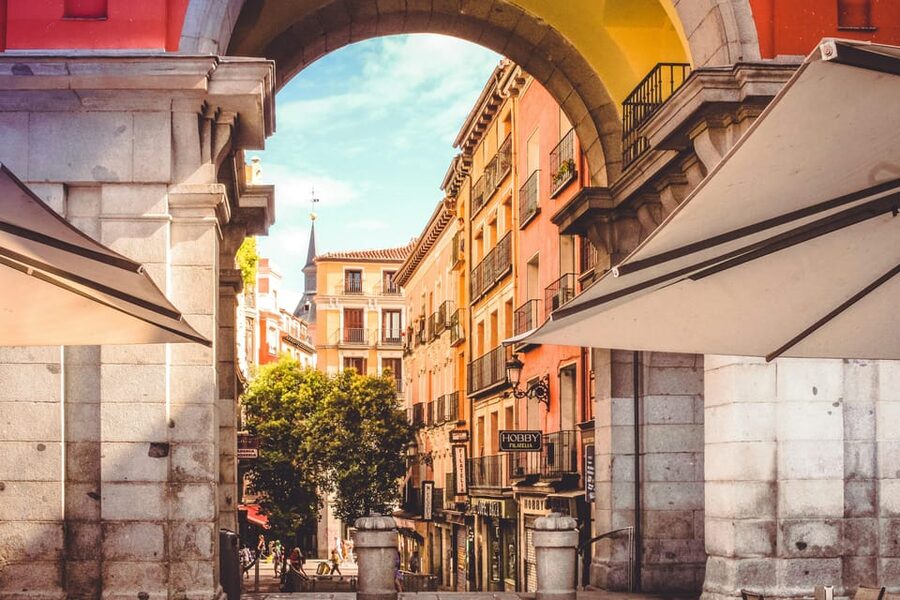
Plaza de la Villa offers one of the route’s most satisfying stops. The square brings together architectural styles from three centuries, so you can see Madrid’s layers in one compact space. This is where the tour’s historical method works well: instead of treating each building as an isolated object, the guide explains how the city changed around it.
The square also helps break up the grand royal story. Madrid was not only palaces and imperial decisions. It was a working city with civic buildings, local power, and daily business. The scale here feels more intimate than the wide spaces that come later.
A guide who can explain dates without turning the stop into a lecture is especially valuable. Daniel, Adam, Sebastian, Esmeralda, Joaquin, Dina, and Duarte are repeatedly praised for presenting Spanish history in a friendly, entertaining way. Names may vary on your departure, but the strongest pattern is clear: the guide’s delivery is central to the experience.
Plaza Mayor, royal celebrations, and darker chapters
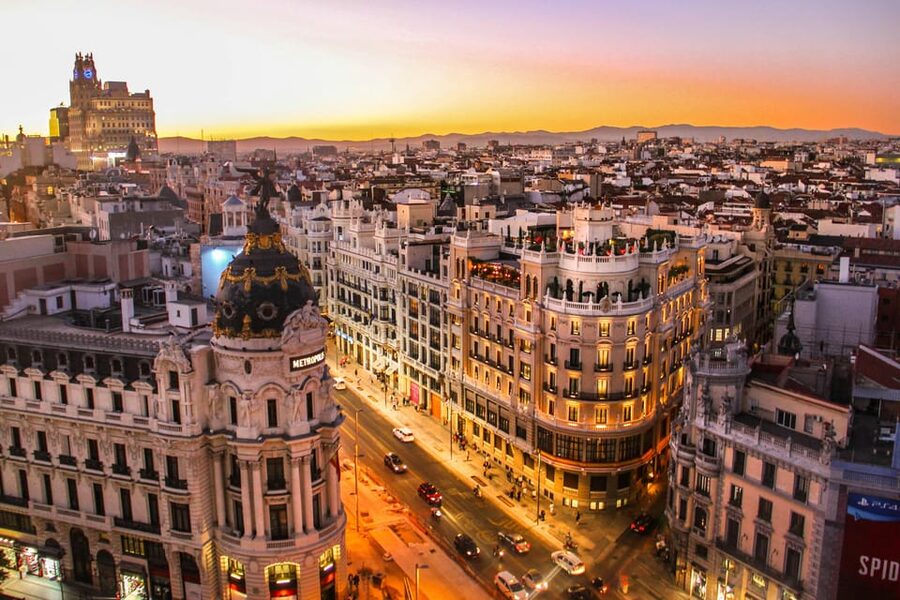
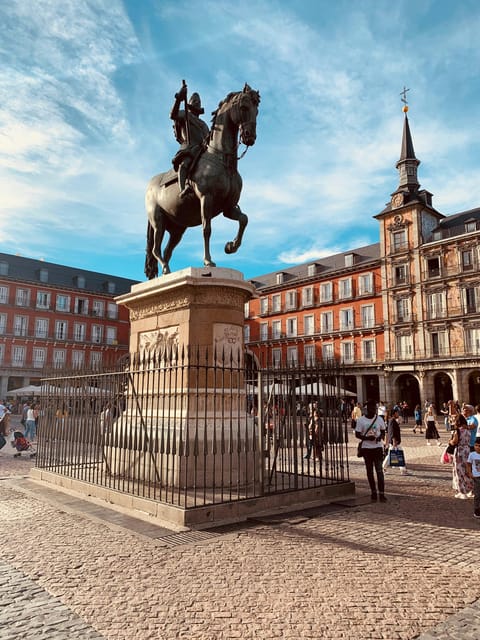
The route then reaches Plaza Mayor, one of Madrid’s most recognizable spaces. Today, it is lined with cafés and surrounded by handsome façades, but its past was not limited to celebration and leisure. The square hosted royal events and public spectacles, including Inquisition trials.
That contrast gives the stop some weight. You are not simply being shown a pretty plaza. You are being asked to consider how public spaces can serve ceremony, punishment, commerce, and entertainment across different periods.
Plaza Mayor can be crowded and visually busy, so your guide’s position and voice matter. Stay close enough to hear, especially when the group is moving through the square. The tour does not promise a long pause for sitting or extended photography, and the route’s quick rhythm may feel rushed if you want carefully framed pictures of every façade.
Still, this is one of the best places to connect Madrid’s grand public image with its more complicated past. The guide’s historical and social explanations are a major part of the value.
More walking tours:
- Madrid: Spanish Inquisition and Legends Evening Walking Tour
★ 4.7 · 1,396 reviews - Madrid: Welcome to Madrid Guided Walking Tour
★ 4.9 · 984 reviews - Madrid: 6-Hour Day Trip to Toledo with Guided Walking Tour
★ 4.0 · 865 reviews - Madrid Historical Walking Tour
★ 5.0 · 721 reviews
Puerta del Sol, the center of modern Madrid
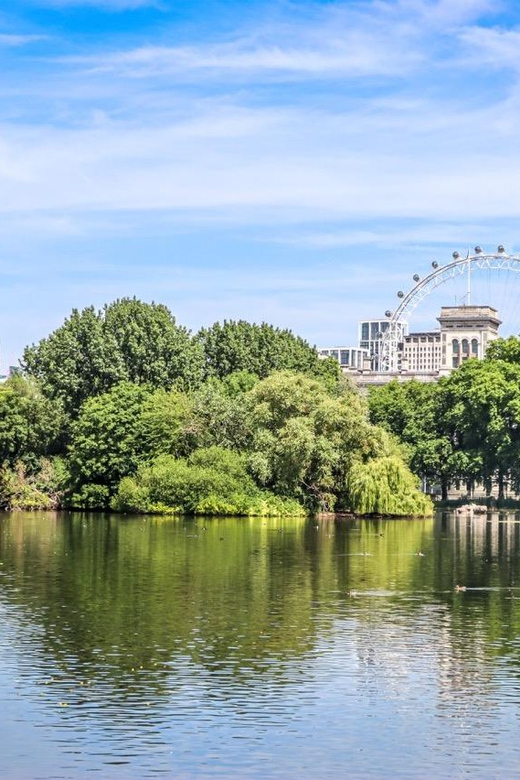
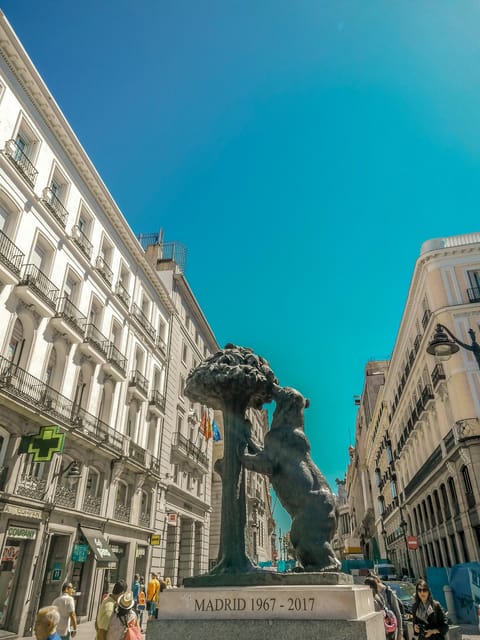
From Plaza Mayor, you continue to Puerta del Sol. This is Madrid’s central meeting place, and it gives you a different feel from the older, more enclosed squares. Here, the city’s movement, commerce, and public life come together.
The stop is useful because it places Madrid on a practical map. You can connect the old center with the streets leading toward Gran Vía, the Prado area, and the Congress of Deputies. If this is your first day in Madrid, that orientation can save time later. Several guides also offer suggestions for further sightseeing, bars, and restaurants, helping you turn the tour into a plan for the rest of your stay.
Dina is praised for offering restaurant and bar recommendations, while Adam and Joaquin are singled out for useful suggestions about what to do next. Those tips are not a formal part of the advertised route, so they may vary by guide, but they add a welcome local angle.
The Royal Academy of Fine Arts and Goya
The walk passes the Royal Academy of Fine Arts, associated with artists such as Francisco Goya, who studied there. This stop adds an art connection before the route reaches the Prado Museum.
Madrid is famous for its museums, but this tour does not take you inside them. That distinction matters. You get enough background to understand why the city’s art institutions are important, then you can choose a separate museum visit based on your interests and available time.
If you plan to visit the Prado, this tour can help you recognize its place within Madrid’s wider story. The route gives you a basic sense of how art, monarchy, education, and public culture developed alongside one another. It will not replace a guided Prado visit, though, and art lovers may want more time devoted to specific paintings or artists.
Gran Vía and the push toward a modern capital
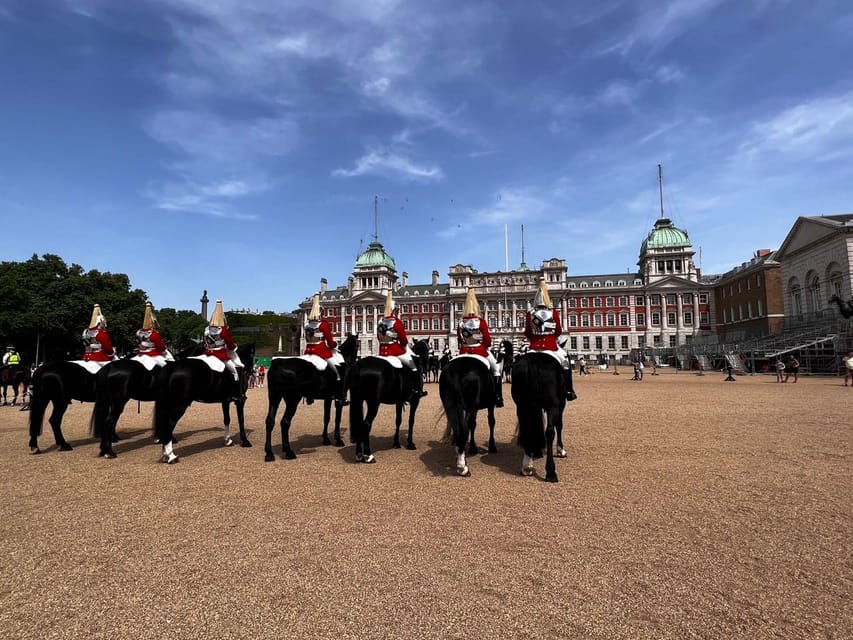
Gran Vía is one of the tour’s major visual changes. After the medieval lanes and older plazas, the avenue represents Madrid’s 19th-century modernization and its ambition to become a leading European metropolis.
Your guide explains the avenue as more than a shopping street. Its construction reflects a city trying to improve movement, commerce, entertainment, and public image. The scale is grander, the buildings are more theatrical, and the urban plan feels very different from the old center.
This part of the walk can be particularly helpful if you are trying to understand why Madrid feels like several cities joined together. The Islamic settlement, Habsburg core, Bourbon improvements, 19th-century modernization, and later democratic capital all appear in one route.
Gran Vía is also where the walking format can feel most demanding. Traffic, crowds, and the wide avenue can make it harder to hear. Keep near the guide, and do not assume every stop will allow a long photo break. Karla specifically noted that you need to be quick with pictures, even while praising Joaquin’s passion and clear explanations.
The Prado Museum and Madrid’s cultural identity
The Prado Museum is another exterior stop. Seeing it from the street gives you a sense of its place in Madrid’s cultural center, but admission is not included, and the tour does not provide an indoor museum visit.
That is not necessarily poor value. A 2.5-hour city walk already covers a broad route. Adding the Prado’s galleries would turn this into a different and much longer experience. If you have limited time, the exterior stop helps you decide if the museum deserves a dedicated block on your schedule. If art is a top priority, reserve a separate visit rather than expecting this walk to cover the collection.
The tour’s wider art context is still useful. It connects the Royal Academy, Goya, the Prado, royal patronage, and the city’s changing identity. That kind of connection is easy to miss when you visit each sight on separate days.
Ending at the Congress of Deputies
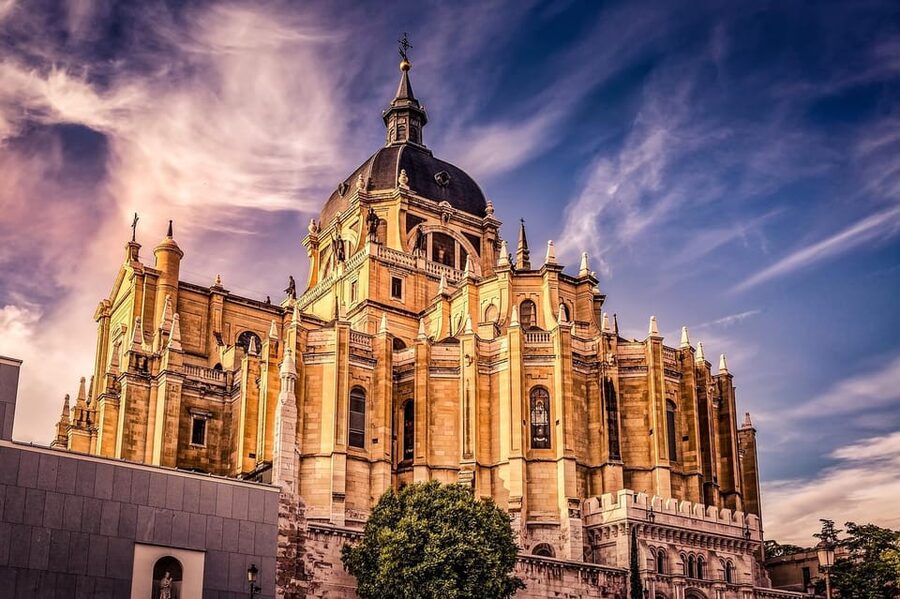
The final stop is the Congress of Deputies, Spain’s lower house of parliament. The route ends here with a look at the country’s modern democratic life, including the moment when Spanish democracy was tested.
This ending gives the tour a satisfying progression. You begin with Islamic Madrid, move through monarchy and empire, see the city’s modernization, and finish with the institutions of contemporary Spain. It is a broader story than a standard royal-center walk.
The Congress is another exterior focus, not a scheduled interior tour. Even so, the stop helps prevent the experience from becoming a parade of old buildings. Madrid is not only a museum of past rulers. It is also a living capital shaped by political change.
The guides are the biggest strength
The most praised part of this experience is the guiding. The descriptions repeatedly point to clear English, strong command of Spanish history, humor, personal stories, and an ability to keep the group involved.
Daniel is praised for balancing facts with entertainment. Adam is described as dynamic and patient, with useful explanations throughout the route. Sebastian receives repeated praise for his local perspective and friendly manner. Esmeralda, also called Esme, is celebrated for her storytelling and passion for Madrid’s history and art.
Joaquin is especially well regarded for quirky details, expressive delivery, and his enthusiasm for Madrid. Dina brings high energy and practical recommendations, while Duarte is praised for enthusiasm, humor, and helpful advice. These individual strengths matter because a historical walk depends less on the number of stops than on how clearly the guide connects them.
The guide may also keep the group moving by asking questions and inviting interaction. That makes the history easier to remember, but it means this is not a quiet, self-paced stroll. You are joining a shared group experience.
Price, pace, and practical value
At $31 per person, the walk offers solid value if you want a broad city introduction with a live English-speaking guide. You are paying for interpretation, route planning, and a useful overview of central Madrid, not for palace, cathedral, or museum entry.
The payment arrangement deserves attention. This is the general pay-as-you-wish tour format, but in this booking the amount covers the reservation fee and the guide’s payment. It is not simply a low booking fee followed by an entirely separate expected payment. If you want a smaller private tour, the operator says that can be arranged on request.
The published duration is 2.5 hours. A few experiences may run longer, but you should plan around the advertised time. Wear comfortable shoes, carry water, and leave room for a steady walk through the center. There is no hotel pickup or drop-off, so you need to reach Opera Metro station on your own.
Free cancellation is available up to 24 hours before the start for a full refund. You can also reserve and pay later, which helps if your Madrid schedule is still changing.
Who should take this Madrid walk?
I would choose this tour for a first visit, especially if you want to understand how Madrid’s neighborhoods and landmarks fit together before exploring on your own. It suits curious adults, couples, solo visitors, and families with older children who can manage a continuous 2.5-hour walk.
It is also a good choice if you enjoy history told through stories, politics, art, architecture, and local recommendations. The strongest guides appear to give you more than dates and names. They explain why Madrid changed and offer ideas for the rest of your visit.
I would be more cautious if you need a slow pace, long photography stops, or extensive time indoors. The route is broad rather than leisurely. Visitors focused mainly on the Prado or the Royal Palace should book separate entry visits and treat this tour as the city orientation.
Should you book it?
Yes, if you are visiting Madrid for the first time and want a lively introduction to the historic center. The route covers an impressive number of landmarks, the historical sequence is easy to follow, and the guide quality appears to be the experience’s greatest asset.
Book it early in your stay so you can use the advice about museums, restaurants, bars, and neighborhoods afterward. Just arrive ready to walk, stay close to the yellow umbrella, and think of the tour as a smart overview rather than a series of inside visits.
FAQ
How long is the Madrid walking tour?
The tour lasts 2.5 hours.
What language is the tour offered in?
The tour is offered in English with a live guide.
Where does the tour meet?
Meet outside Teatro Real at Opera Metro station. Look for the yellow umbrella.
Which Madrid sights are included on the route?
The route includes the Royal Palace, Almudena Cathedral, Plaza de la Villa, Plaza Mayor, Puerta del Sol, the Royal Academy of Fine Arts, Gran Vía, the Prado Museum, and the Congress of Deputies, along with additional sights along the way.
Are hotel pickup and drop-off included?
No. Hotel pickup and drop-off are not included.
Does the $31 payment include the guide’s payment?
Yes. The amount covers the reservation fee and the guide’s payment for the general pay-as-you-wish tour format.
Recently added around Madrid
- Madrid: Thyssen Museum Guided Tour with Skip-the-Line Entry★ 4.5 · 165 reviews
- Axe Throwing 1 hour session★ 5.0 · 166 reviews
- Madrid Food Walking Tour with Tapas and Vermouth★ 5.0 · 167 reviews
- Toledo Full-Day Walking Tour with Guide from Madrid★ 4.5 · 170 reviews
- Madrid: Top Pub Crawl Madrid & Party★ 5.0 · 173 reviews
- Madrid Gourmet Tapas Small Group Tour★ 5.0 · 175 reviews
- Street Art Guided Tour in Madrid★ 5.0 · 175 reviews
- Iberian Ham and Wine Small Group Tour in Madrid★ 5.0 · 176 reviews
Walking Tours, compared.
Barcelona Tapas and Wine Experience Small-Group Walking Tour
Read our review →
Tapas Walking Tour with Food, Wine, and History
Read our review →
Albaicín and Sacromonte Guided Sunset Walking Tour
Read our review →
Toledo Tour & Vineyard Walk with Wine Tasting from Madrid
Read our review →

Barcelona Tapas Walking Tour: Food, Wine & History
Read our review →
Madrid Old Town & Royal Palace Walking Tour Skip the Line Ticket
Read our review →
Browse the lists this tour appears in