
Review · MUSEUMS
Madrid: Reina Sofía Museum Guided Tour
Art makes more sense with a good guide. This 75-minute visit to Madrid’s Reina Sofía Museum gives you a focused route through Spanish modern art, with close attention to Picasso, Dalí, Miró, Cubism, Surrealism, and the powerful Guernica. I especially like the clear explanations of difficult modern art and the chance to stay inside afterward and explore at your own pace. The $38 price is reasonable if you want structure and museum admission handled for you.
The main consideration is time. The Reina Sofía is large, and 75 minutes only covers selected works. Some past tours have moved quickly, and the bilingual format means the guide may explain everything in both English and Spanish. If you want long stretches of quiet viewing, you may prefer visiting independently after the tour, or using the guided visit as an introduction.
In This Review
- Key Points to Know Before You Book
- Why the Reina Sofía Works Best With a Plan
- Meeting at Calle de Santa Isabel 52
- A Former Hospital With an Unusual Interior
- Following Cubism, Surrealism, and Modernism
- Meeting Picasso, Dalí, and Miró
- The Final Stop: Picasso’s Guernica
- How Long Is 75 Minutes in a Museum This Size?
- Group Size, Language, and Guide Quality
- Is $38 a Fair Price?
- Practical Rules Inside the Museum
- Who Should Book This Reina Sofía Tour?
- Should You Book It?
- FAQ
- How long does the Reina Sofía guided tour last?
- What languages are available?
- Is museum admission included?
- Can I stay in the museum after the tour?
- Is the museum wheelchair accessible?
- What items are not allowed?
Key Points to Know Before You Book
- Picasso’s Guernica is the emotional high point: The tour builds toward Picasso’s famous anti-war painting and explains its symbols, setting, and historical meaning.
- The route connects major art movements: You learn how Cubism, Surrealism, abstract art, and modernism relate to one another instead of seeing isolated paintings.
- The guide makes modern art easier to read: Guides such as Livia, Alex, Helena, Paula, Elena, and Nerea have been praised for friendly, lively explanations and a good sense of pace.
- You can keep exploring afterward: Your ticket lets you remain in the museum once the guided portion ends, which helps make up for the short tour.
- The visit takes place in a former hospital: The vaulted halls and gardens add an architectural layer to the museum visit.
- The tour is bilingual: Live commentary is provided in English and Spanish, and private groups are available.
Why the Reina Sofía Works Best With a Plan
The Reina Sofía is not the kind of museum you can fully understand by simply wandering from room to room. Its collection covers major shifts in 20th-century art, from recognizable forms to paintings that can seem puzzling at first glance.
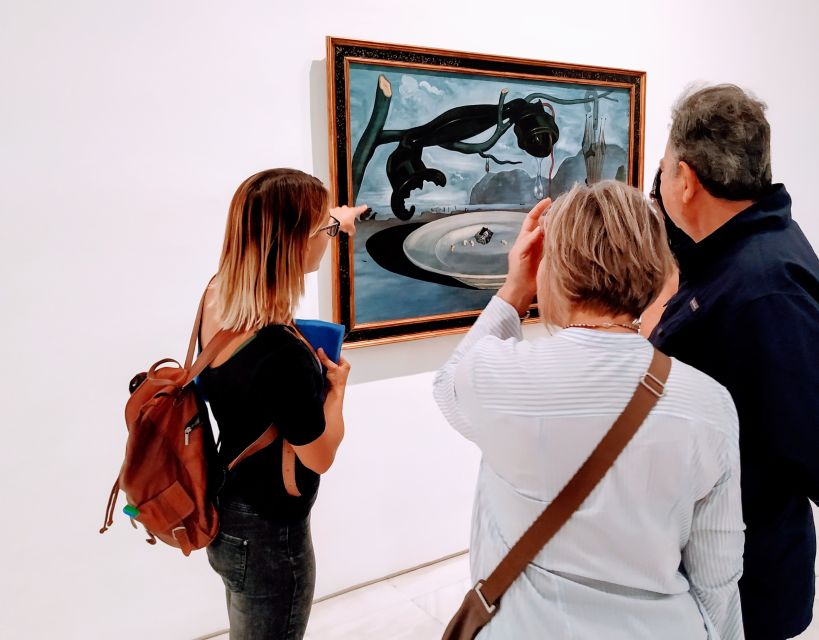
A guide gives you a route and a reason to look closely. Instead of asking yourself why a painting is made from broken shapes, odd angles, or dreamlike images, you get an explanation of the artist’s aims and the period that shaped the work.
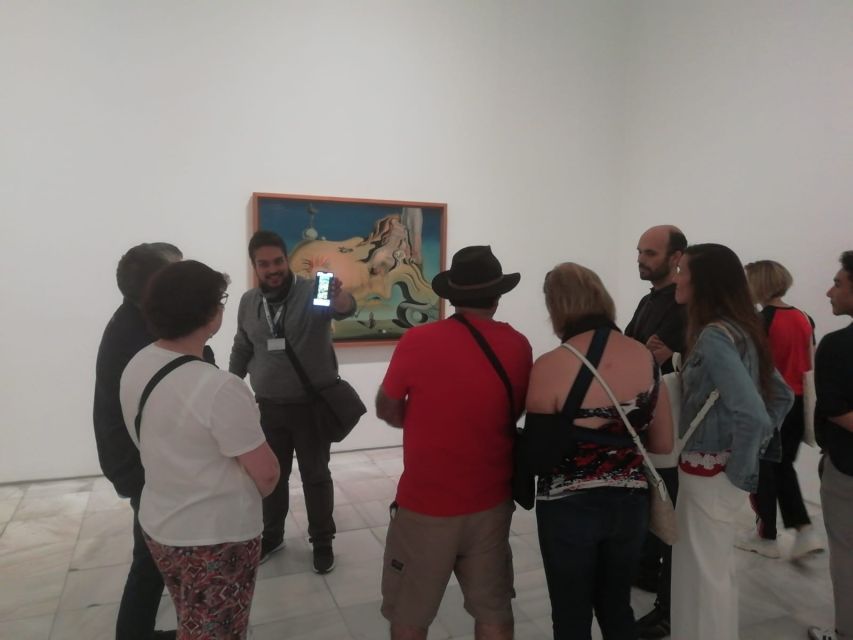
That structure matters most if modern art is not your usual museum territory. The guides focus on visual details, symbolism, artistic technique, and the lives of the people who made the work. One especially effective approach, noted in past tours, is to ask you what you see before explaining the painting. That turns the visit into a conversation rather than a lecture.
The museum is dedicated to Spanish art, with major collections devoted to Pablo Picasso, Salvador Dalí, and Joan Miró. The guided route also places their work alongside broader movements such as Cubism, Surrealism, modernism, and abstract art.
You should not expect to see every important room. The point is to understand a selection of major works and leave with a clearer sense of how Spanish art developed during a turbulent century.
More Museums in Madrid
- Madrid: Prado Museum Entry Ticket
★ 4.6 · 17,509 reviews - Madrid: Reina Sofía Museum Entrance Ticket
★ 4.5 · 6,889 reviews - Madrid: Small Group of Prado Museum Tour & Optional Tapas
★ 4.6 · 2,437 reviews
Meeting at Calle de Santa Isabel 52
The meeting location is at the Reina Sofía Museum, with the stated address at C. de Sta. Isabel, 52. Your exact meeting details can vary according to the option booked, so check the booking information carefully before setting out.
There is no transportation included. You make your own way to the museum, and the tour finishes at the same museum address. That is simple for a central Madrid sightseeing day, especially if you are already visiting the nearby museums and streets around the Atocha area.
Arrive wearing comfortable shoes. You will be walking through galleries and hallways, and the museum itself is spacious enough that the physical route matters. Large bags and luggage are not allowed, so do not arrive with a suitcase or an oversized day bag.
The tour includes museum admission and skip-the-ticket-line access. That can be useful at busy times, since the guide takes care of the entrance process while you focus on the collection.
A Former Hospital With an Unusual Interior
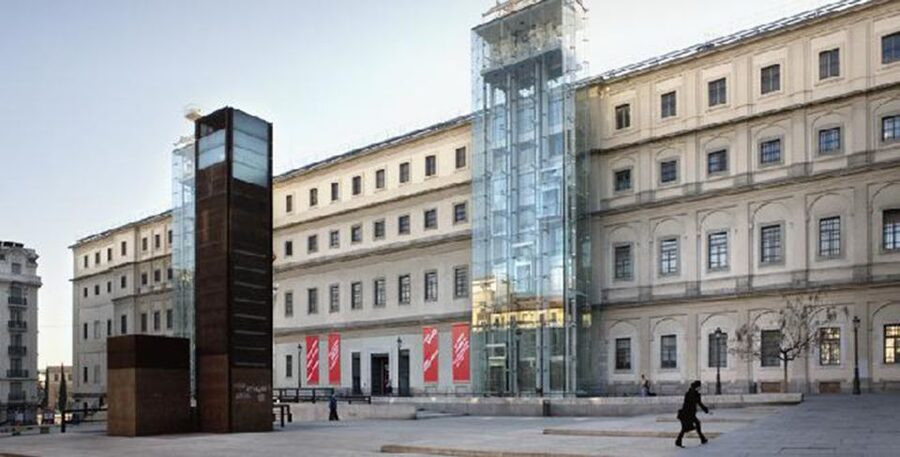
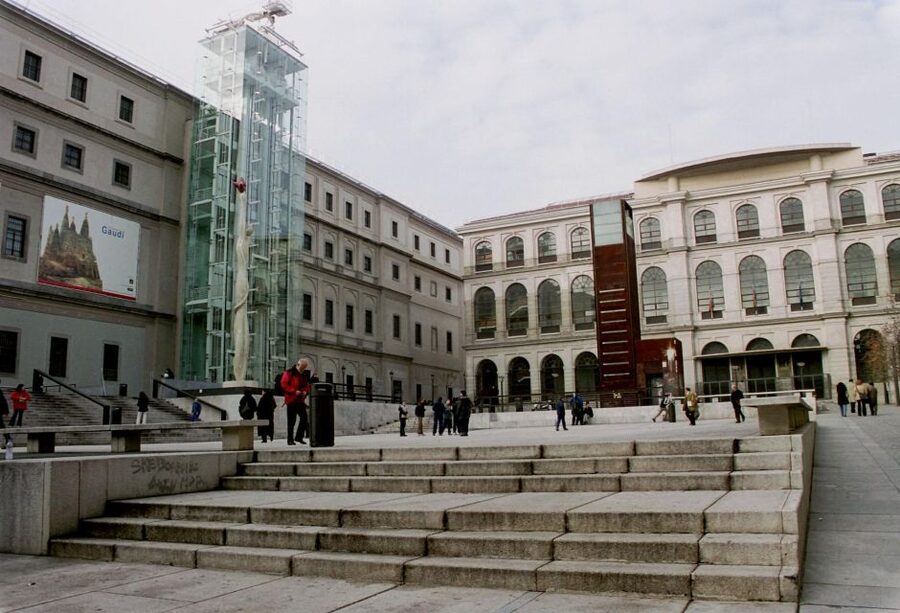
Before the paintings take over your attention, look at the building. The Reina Sofía occupies a former hospital, and its old structure gives the visit a different mood from a purpose-built gallery.
The vaulted hallways are particularly worth noticing. They provide a reminder that this was once a working medical institution, not simply a blank container for modern art. The building’s institutional character also suits the serious subjects found in parts of the collection.
The tour includes a walk through the museum’s gardens, where you can view the building from outside. This is a welcome change of pace after standing in galleries, and it gives you a chance to see the relationship between the older structure and the museum’s modern function.
Do not expect the gardens to be a separate sightseeing stop. They are part of the museum visit and help round out the experience. The paintings remain the main event, but the setting adds useful context.
Following Cubism, Surrealism, and Modernism
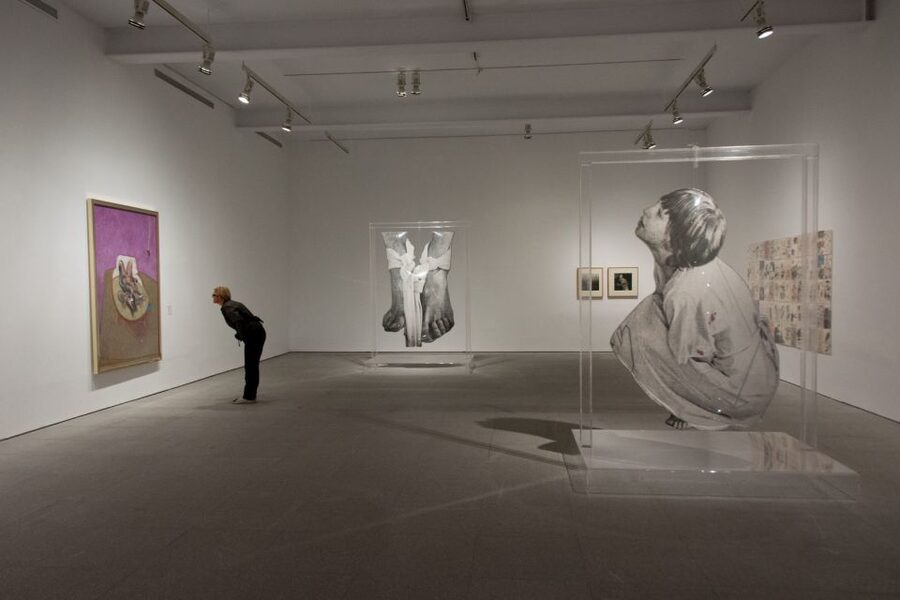
A major strength of the tour is its attention to art movements. Modern art can feel like a series of sudden breaks, but the guide helps connect the changes.
Cubism receives attention because it altered the way artists presented space and form. Instead of showing one fixed view, Cubist artists could break a subject into planes and angles. Once you understand that idea, many seemingly chaotic compositions become easier to approach.
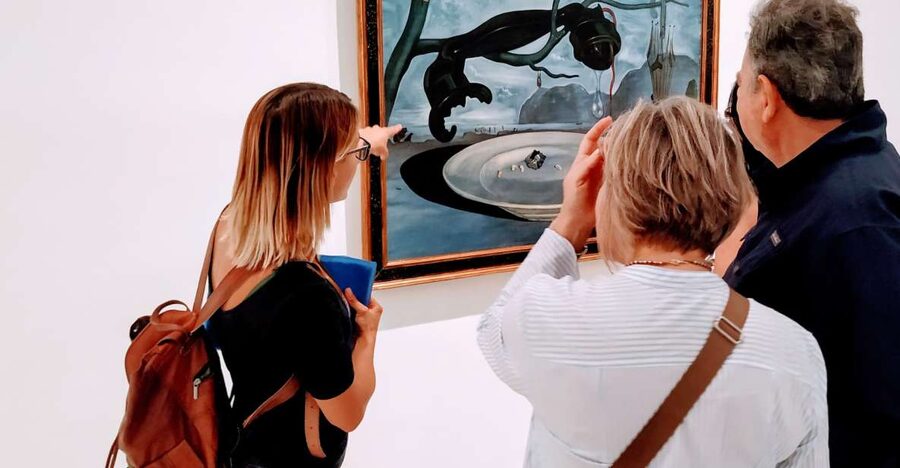
Surrealism brings a different challenge. Dream imagery, unexpected combinations, and strange scenes are not meant to behave like ordinary pictures. The guide explains how artists used these methods and points out details that you might otherwise overlook.
Abstract art can be the hardest stop for visitors who want an obvious subject. Here, the discussion of color, line, shape, texture, and technique becomes especially useful. You do not need to decide that every abstract work is to your taste. The benefit is learning how to look at it on its own terms.
The tour also places artists in a time line. Past visitors have appreciated guides who explained the artistic periods in chronological order, then connected each style to the artist’s life and the events around the work. That approach makes the museum feel less like a jumble of famous names.
More museums:
- Madrid: Prado Museum Guided Tour with Skip-the-Line Ticket
★ 4.5 · 2,018 reviews - Madrid: Prado Museum Guided Tour With Fast Access
★ 4.8 · 1,785 reviews - Prado Museum Small Group Tour with Skip the Line Ticket
★ 5.0 · 1,738 reviews - Royal Palace & Prado Museum Skip the Line Guided Tour
★ 4.5 · 1,347 reviews
Meeting Picasso, Dalí, and Miró
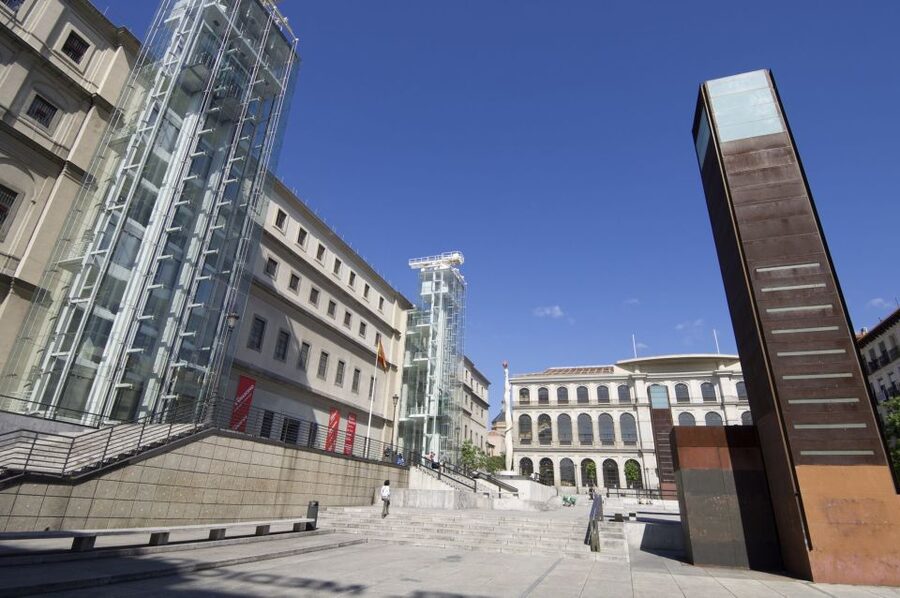
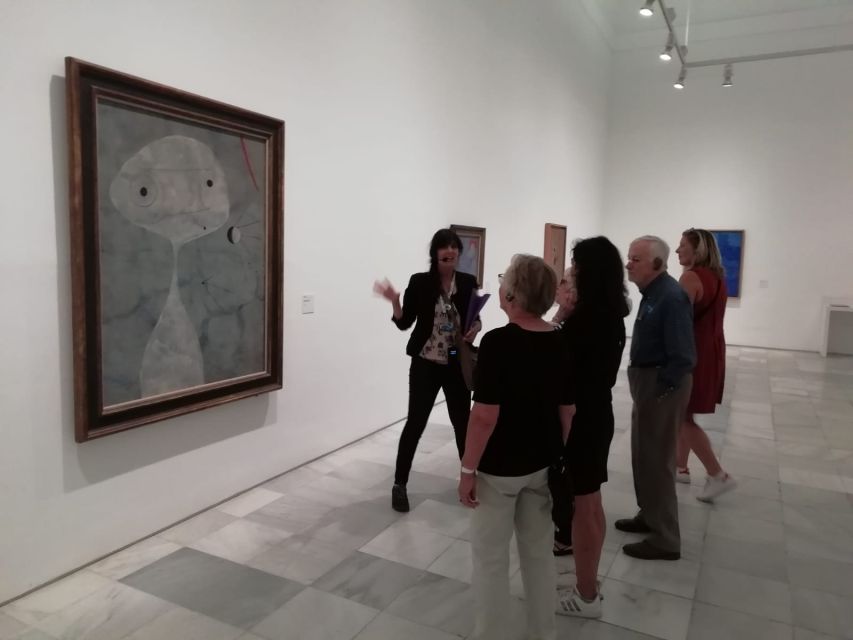
The Reina Sofía’s Spanish collection gives the tour a strong center. Picasso, Dalí, and Miró are familiar names, but seeing their work together shows how different their solutions could be.
Picasso’s work demonstrates constant experimentation. Dalí takes you toward the strange and dreamlike side of Surrealism. Miró offers another path into modern art, with forms and symbols that can appear simple until you examine how they are arranged.
The guide does more than identify the artists. You learn about artistic choices, symbolism, and technique. That may mean looking at how a figure has been distorted, how a composition directs your eye, or how a familiar subject has been stripped down and rebuilt.
Several guides have been praised for making difficult paintings accessible without talking down to the audience. That is an important distinction. A good museum guide should not tell you what you are required to feel. The better approach is to give you enough information to form your own response.
Families can also benefit from this style. One past guide, Irene, was singled out for working well with both children and adults and adjusting the experience to the group. The tour is not described as a special children’s program, but an engaging guide can make modern art less intimidating for younger visitors.
The Final Stop: Picasso’s Guernica
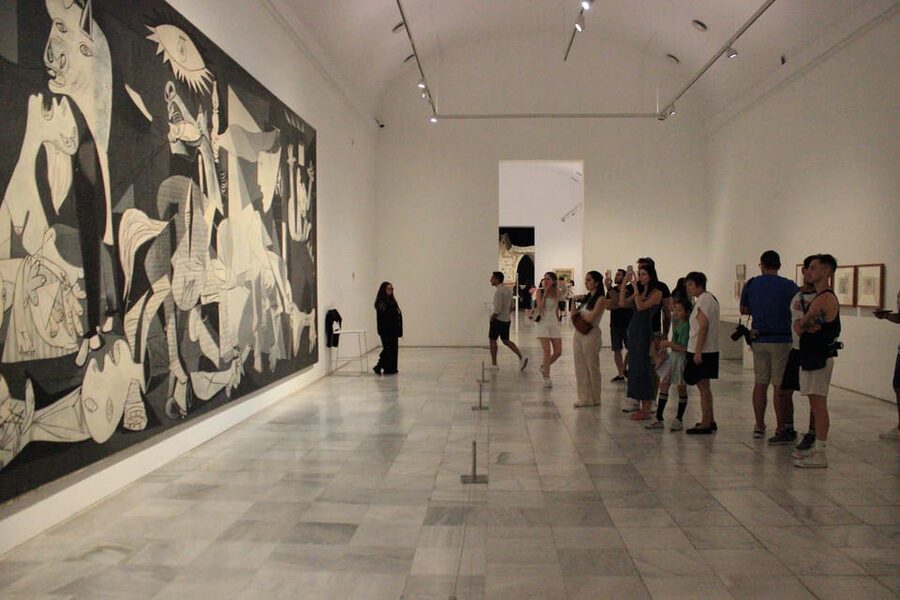
The visit builds toward Picasso’s Guernica, the museum’s best-known work and the reason many people choose this tour.
The mural-sized painting is widely regarded as one of the most powerful anti-war works in art. Its scale matters. Reproductions can show the composition, but they cannot fully convey the effect of confronting a work of this size in person.
The guide explains the history behind the painting and draws attention to its symbolism. You learn how the figures, gestures, faces, and stark visual language contribute to its sense of suffering and alarm.
This is usually not treated as a quick photo stop. The tour places Guernica at the end, giving you a framework for understanding the artistic movements and historical setting that came before it. That choice works well for many people, though one practical drawback is that visitors most eager to reach the painting may find the earlier portion slower than expected.
At the same time, 75 minutes leaves limited room for prolonged silence in front of the work. One past visitor wished the tour were longer, while another felt the guide covered the right number of paintings without creating overload. Both reactions make sense. The tour gives you a strong introduction, not an hour of uninterrupted study at Guernica.
If this painting is your central goal, listen carefully during the explanation, then stay afterward and return to the gallery independently if museum rules and access allow.
How Long Is 75 Minutes in a Museum This Size?
The advertised duration is 75 minutes, though one past account described a tour closer to an hour and a half, while another found it slightly shorter than 75 minutes. The practical lesson is to allow flexibility rather than planning your next activity too tightly.
The guided route covers highlights, not the entire collection. You may move briskly between works, especially when the guide is explaining in both English and Spanish. A bilingual tour can be useful if your group includes speakers of both languages, but it naturally takes more time than a single-language talk.
Some visitors have loved the efficient pace and the way the guide avoided showing too many paintings. Others felt a few works received less viewing time than they wanted. If you enjoy detailed study, treat the tour as your orientation and use the remaining museum time for a slower second look.
You are free to remain inside after the guided visit. This is one of the most valuable features of the experience. The guide gives you the story and direction, then you can continue through other galleries and temporary exhibitions on your own.
Group Size, Language, and Guide Quality
The tour includes live commentary in English and Spanish. The information describes the tour as bilingual, simultaneously using both languages. In some past arrangements, a second guide arrived and the group separated into smaller English and Spanish groups. That produced a more comfortable experience, but you should not assume every departure will work exactly that way.
Guide quality is central here. The strongest praise has gone to guides who combine solid art knowledge with warmth, humor, questions, and a sensible pace. Livia was described as especially sweet and informative. Alex was praised for passion and humor. Helena, Paula, Elena, Nerea, Ali, Xavier, and others were also singled out for clear and engaging presentations.
The feedback is not entirely uniform. One person found the guide moved too quickly through individual works, and another noted that the group format affected how much time was available at each painting. A crackly microphone was also a problem on one earlier visit.
Those are not reasons to reject the tour, but they explain why expectations matter. You are buying a guided overview, not a private art class. A private-group option is available if you want a more personal format and greater control over questions and pace.
Is $38 a Fair Price?
At $38 per person, the value depends on how you use the 75 minutes. The price includes admission, a professional guide, guided commentary, and skip-the-ticket-line access. If you are new to modern art or short on time, that package is sensible.
The real value is not simply getting through the door. It is the interpretation. A self-guided visit may cost less or give you more freedom, but you may spend time trying to work out where to begin and which rooms deserve priority.
The tour is a stronger buy if Guernica is important to you, if you want context for Picasso, Dalí, and Miró, or if you prefer a clear route through a large museum. It is less compelling for a confident art student who already knows the collection and wants to set an entirely personal schedule.
Because you can stay after the tour, you have a chance to extend the value. Plan enough time for independent viewing, rather than treating the 75-minute guide visit as your whole museum experience.
Practical Rules Inside the Museum
Photography rules require attention. Some rooms do not permit photographs, while areas that do allow photography prohibit flash, selfie sticks, tripods, and other camera stabilization. The supplied information also says photography inside is not allowed, so follow the museum staff and posted rules rather than relying on a general assumption that pictures are permitted.
Large bags, luggage, selfie sticks, flash photography, and tripods are not allowed. Comfortable shoes are the one item specifically recommended.
The museum is wheelchair accessible. That makes the tour workable for wheelchair users, though you should still check the exact meeting option and any current museum procedures before arrival.
Cancellation is flexible up to 24 hours before the experience for a full refund. You can also reserve now and pay later, which may help if your Madrid schedule is still shifting.
Who Should Book This Reina Sofía Tour?
I would choose this tour for a first visit to the Reina Sofía, especially if you want help with modern art rather than a simple list of names and dates.
It suits you well if:
- You want to see Guernica with historical and visual context.
- You are curious about Cubism, Surrealism, and abstract art but are not sure where to start.
- You have limited time in Madrid.
- You prefer a guide who can point out symbolism and technique.
- You want to keep exploring the museum after the formal tour.
- You are visiting with family and want an engaging introduction.
You may prefer an independent visit if you dislike group pacing, want to photograph your route, or plan to spend long periods with just a few paintings. The museum is large enough to reward a full day, and this guided experience cannot cover everything.
Should You Book It?
Book it if you want the Reina Sofía to feel understandable from the start. The guides have generally been praised for clear English, friendly manner, art knowledge, and the ability to explain abstract work in plain terms. The route through major movements and the final encounter with Guernica give the museum a strong shape.
For $38, admission plus a focused guide is fair, particularly when skip-the-line entry and post-tour museum access are included. Just remember that 75 minutes is an introduction. Give yourself extra time afterward, and expect a bilingual group format that may move faster than a private visit.
If you want a thoughtful first look at Spain’s 20th-century art, this is a practical choice. If your ideal museum day means lingering quietly at every painting, use the tour to get oriented, then slow down on your own.
FAQ
How long does the Reina Sofía guided tour last?
The tour is scheduled to last 75 minutes. Some past experiences have run a little shorter or longer, so leave extra time before your next Madrid activity.
What languages are available?
Live commentary is available in English and Spanish. The tour is described as bilingual and may be given in both languages at the same time.
Is museum admission included?
Yes. The price includes entrance to the Reina Sofía Museum and the guided tour.
Can I stay in the museum after the tour?
Yes. Once the guided visit ends, you can remain inside and continue exploring independently, including other galleries and temporary exhibitions.
Is the museum wheelchair accessible?
Yes. The museum is wheelchair accessible.
What items are not allowed?
Luggage and large bags are not allowed. Selfie sticks, flash photography, and tripods are also prohibited. Photography rules vary by room, so follow the museum’s instructions, and do not use flash or camera stabilization.
Recently added around Madrid
- Madrid: Thyssen Museum Guided Tour with Skip-the-Line Entry★ 4.5 · 165 reviews
- Axe Throwing 1 hour session★ 5.0 · 166 reviews
- Madrid Food Walking Tour with Tapas and Vermouth★ 5.0 · 167 reviews
- Toledo Full-Day Walking Tour with Guide from Madrid★ 4.5 · 170 reviews
- Madrid: Top Pub Crawl Madrid & Party★ 5.0 · 173 reviews
- Madrid Gourmet Tapas Small Group Tour★ 5.0 · 175 reviews
- Street Art Guided Tour in Madrid★ 5.0 · 175 reviews
- Iberian Ham and Wine Small Group Tour in Madrid★ 5.0 · 176 reviews
Museums, compared.

FC Barcelona Museum “Barça Immersive Tour” Ticket
Read our review →
Park Güell and Gaudí House Museum Entry Ticket
Read our review →
Puro Flamenco Show with Optional Museum Ticket
Read our review →

Girona & Dali Museum Small Group Tour with Pick-up from Barcelona
Read our review →
Oceanogràfic, Hemisfèric & Science Museum Combo
Read our review →Browse the lists this tour appears in