
Review · ROYAL PALACE TOURS
Madrid: Guided Visit to the Royal Palace
Royal splendor comes with a few practical catches. This 1.5-hour visit takes you through the grandest public rooms of Madrid’s Royal Palace, once home to Spain’s kings and still the official royal residence. I like the expert bilingual guides, who bring monarchs, artworks, and palace customs to life, and I like the separate entrance that helps you avoid the longest general admission lines. The main drawback is time: this is a large palace with more than 300 rooms, but the guided route covers only its principal highlights.
The meeting point is at Isabel II Square, not at the palace entrance itself. That detail matters. Several people had trouble finding the guide or spent time waiting outside, including one group that waited 40 minutes in the cold. Arrive early, look for the white umbrella, and give yourself enough time to get oriented.
In This Review
- Key points to know before booking
- Why the Royal Palace is worth seeing
- Finding the group at Isabel II Square
- Entering through a separate entrance
- The Sabatini staircase and the state rooms
- Reception rooms and the modern royal connection
- The Banqueting Hall and Porcelain Room
- The Royal Chapel and Giaquinto’s fresco
- The Throne Room and Tiepolo’s ceiling
- What the €40 price gets you
- Who will enjoy this tour most
- Practical advice for a smoother visit
- Should you book the Royal Palace guided visit?
- FAQ
- How long does the Royal Palace tour last?
- How much does the tour cost?
- Where does the tour begin?
- How do I find the guide?
- Does the tour start at the Royal Palace entrance?
- Is the tour available in English?
- Can the tour be bilingual?
- Is the Royal Palace tour wheelchair accessible?
- Can I bring food and drinks inside?
- Do I need to store my bag?
Key points to know before booking

- The tour begins away from the palace entrance: Meet near the statue of Isabel II in Plaza de Isabel II, then walk with the group to a side entrance.
- The grand staircase sets the tone: Francesco Sabatini designed this impressive approach to the palace’s state rooms.
- The Throne Room is a major highlight: Giovanni Battista Tiepolo painted its ornate ceiling.
- The route includes royal interiors: Expect the reception room, private rooms, banqueting hall, Porcelain Room, Royal Chapel, and Throne Room.
- Bilingual tours can move quickly: If the guide explains everything in English and Spanish, the 90-minute schedule may feel tight.
- A €1 locker coin is useful: Large bags must be stored near the Hall, and the coin is refunded when you collect your belongings.
Why the Royal Palace is worth seeing
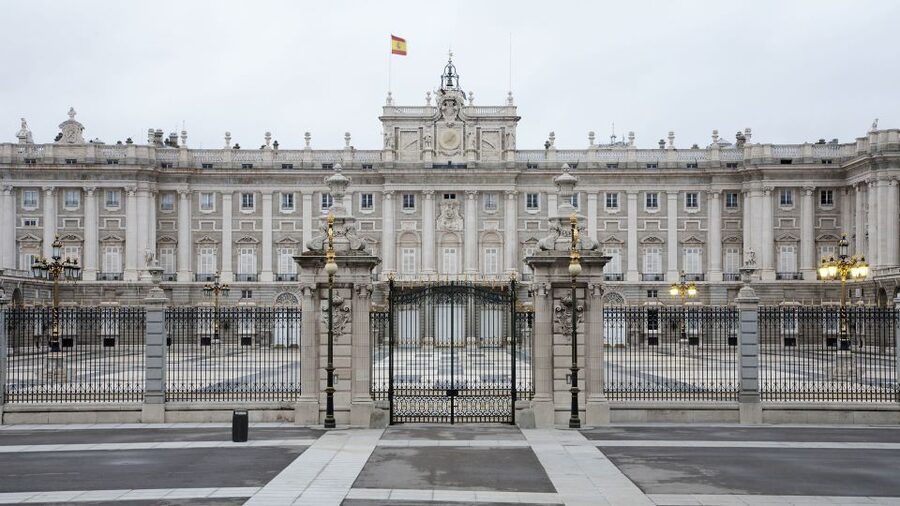
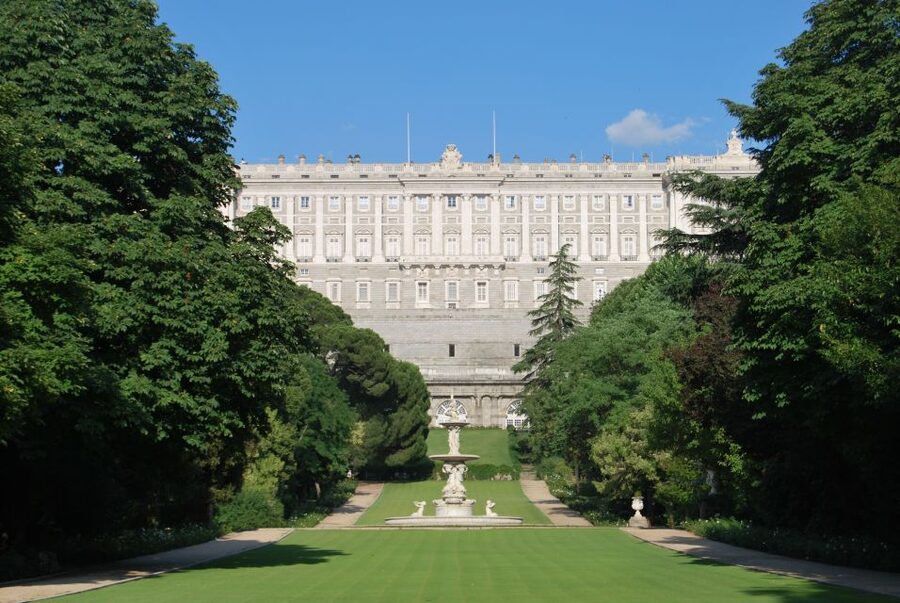
Madrid’s Royal Palace is not a quiet country manor. It is a formal, ceremonial building designed to display royal power. The scale is the first surprise: more than 300 rooms, broad stairways, decorated ceilings, frescoes, tapestries, polished wood, and marble interiors.
You will not see all those rooms during this tour. The public route focuses on the palace’s most impressive spaces, which is sensible during a short visit, but it also explains why some people find the experience too brief. If you have seen many grand palaces in Spain and Portugal, some rooms may feel familiar. The value here comes from the combination of architecture, royal ceremony, art, and a guide who explains how the building was used.
I especially like having a guide in a palace this large. Without context, you may notice a painted ceiling or an elaborate door without understanding its purpose. A good guide helps you connect the rooms to the monarchy, official receptions, state dinners, and the everyday lives of the king and queen.
The tour is offered in English or Spanish. In some cases, it may be bilingual. That can be useful for mixed-language groups, but it also means the guide must repeat explanations. One four-star assessment noted that the pace felt rushed because everything was presented in both languages.
More Royal Palace visits:
- Madrid: Royal Palace Fast-Access Admission Ticket
★ 4.6 · 13,856 reviews - Madrid: Royal Palace Expert Guided Tour with Skip-the-Line
★ 4.7 · 6,986 reviews - Madrid Essential: Historic Center, Plaza Mayor & Royal Palace
★ 5.0 · 6,416 reviews
Finding the group at Isabel II Square
Your tour begins at Isabel II Square, near the statue of Isabel II at Plaza de Isabel II, 5. This is close to the palace, but it is not the palace’s main entrance. That distinction is the single most important arrival tip.
Look for a guide carrying a white umbrella. Since the meeting point is in an open square and not directly beside the palace doors, allow extra time to locate the group. A few minutes early is wise, especially if you are unfamiliar with central Madrid.
Once everyone has gathered, the group walks together to a separate entrance. The route itself is short, but an unclear meeting point can create stress before the tour begins. If you arrive early, the square gives you a convenient place to pause before entering, with cafés and places to sit nearby.
The group size can be pleasantly small. One highly praised visit had only eight people, while another Spanish-language booking ended up being a private experience with one guide and one participant. Group size can vary, so do not count on a private tour, but a small group makes it easier to hear explanations and ask questions.
Entering through a separate entrance
The separate entrance is one of the tour’s strongest practical benefits. You still pass through security, but the guided group avoids the standard admission line. That can save useful time, especially during busy periods such as Holy Week.
This is not a license to arrive late. You need to meet the guide first, and the group enters together. There was also one report of names missing from the booking list, which caused an initial problem. It did not spoil the tour itself, but it is another reason to keep your booking details handy.
Large bags and other sizeable items must go into lockers near the Hall. Bring a €1 coin for the locker. The coin is refunded when you retrieve your belongings. Food and drinks are not allowed inside the palace, so finish your coffee or carry only what you need.
The palace is wheelchair accessible, but the route includes a notable staircase and several people found the number of steps difficult with a pram or trolley. If you use a stroller, confirm how the accessible route will work before setting out.
The Sabatini staircase and the state rooms
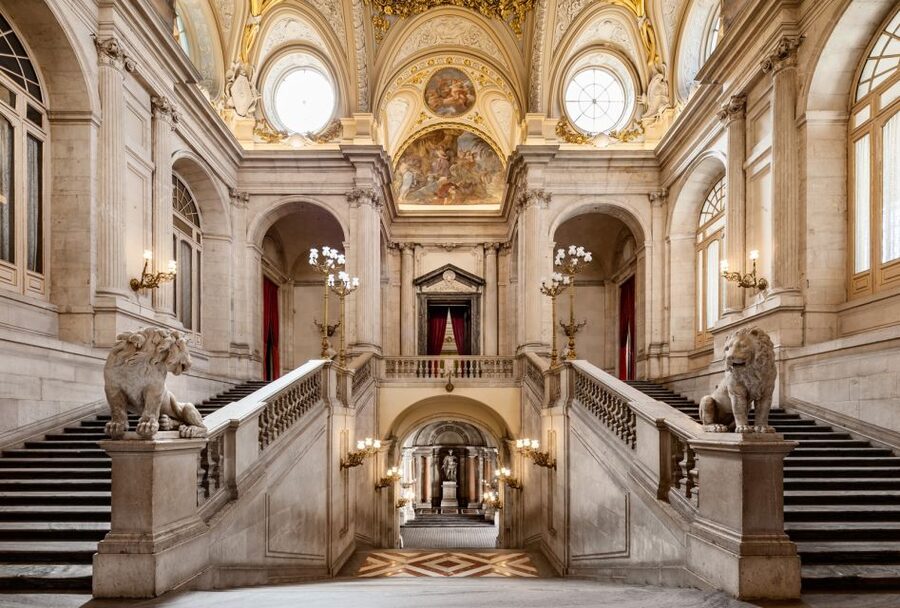
The tour begins its visual crescendo with the staircase designed by Francesco Sabatini. This is not a modest entrance. The broad stone steps, formal proportions, and royal setting immediately show that the palace was built for ceremony.
Your guide uses this area to explain the building’s purpose and the monarchy that occupied it. That historical framing is one of the best reasons to choose a guided visit rather than simply walking through on your own. You learn to read the palace as a working institution, not just a series of decorated rooms.
The route then moves through the most important state interiors. You will see ornate frescoes, carved and polished wood, marble surfaces, mahogany doors and windows, and works by well-known artists. The decoration can feel almost excessive, but that is the point. Royal rooms were designed to impress ambassadors, visiting officials, and anyone attending a formal event.
The guide also discusses curiosities of the Spanish monarchy. The strongest guides use small details to make the history easier to follow. Pacho received special praise for explaining each part of the palace clearly, while Tamar was described as friendly, helpful, and very clear. Guides can vary, but the tour’s best feature is consistently the human explanation.
A few more Spain trips worth a look
- Madrid: Tour Bernabéu Entry Ticket
★ 4.5 · 21,573 reviews - Madrid: Prado Museum Entry Ticket
★ 4.6 · 17,509 reviews - Madrid: “Emociones” Live Flamenco Performance
★ 4.8 · 12,866 reviews - Madrid: Panoramic Route City Tour
★ 4.1 · 12,259 reviews
Reception rooms and the modern royal connection

One of the stops is the reception room used for international meetings, with King Felipe as host. This gives the palace a link to present-day Spain. You are not only looking at an old royal residence. You are seeing rooms that remain connected to official state business.
That contrast is useful. The palace’s decoration belongs to earlier centuries, while its ceremonial role continues. A guide can point out how rooms that look like museum galleries still carry a formal public purpose.
The tour also takes you toward the private rooms of the king and queen. These areas offer a different feel from the huge state rooms, although the exact amount of time spent in each space depends on the guide and the pace of the group. The distinction between public ceremony and private royal life is one of the more interesting threads running through the visit.
Because the palace is so large, the tour cannot give equal attention to every room. You may leave wishing you had more time in certain spaces. That is the tradeoff for a structured 90-minute route.
The Banqueting Hall and Porcelain Room
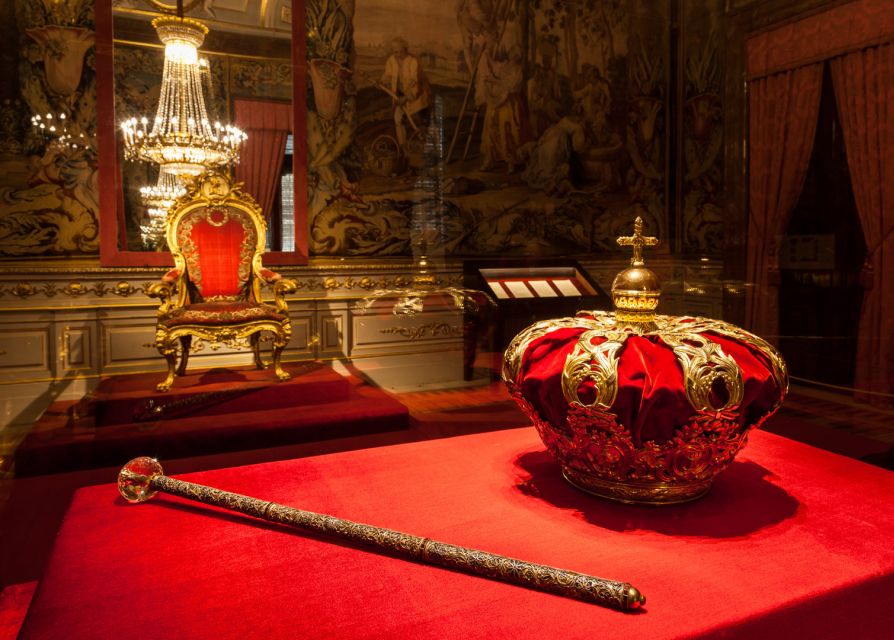
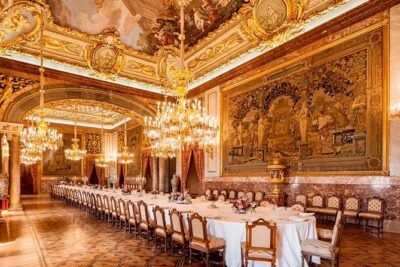
The great banqueting hall shows how the palace functioned as a venue for major formal occasions. It is the kind of room where scale matters more than a single object. Stand back and take in the proportions, decoration, and relationship between the room and the ceremonies held there.
The Porcelain Room offers a sharper change of mood. Its decoration is more intimate and distinctive, and it gives you a close look at the level of craftsmanship used in royal interiors. The palace is not decorated in one uniform style. Room by room, you encounter different materials, colors, artistic treatments, and practical functions.
A guide is particularly helpful here because the details can blend together after several rooms. The best commentary gives you a few clear things to notice rather than filling every second with dates. One praised guide was described as friendly, patient, and able to explain the palace’s story at a comfortable pace.
The Royal Chapel and Giaquinto’s fresco
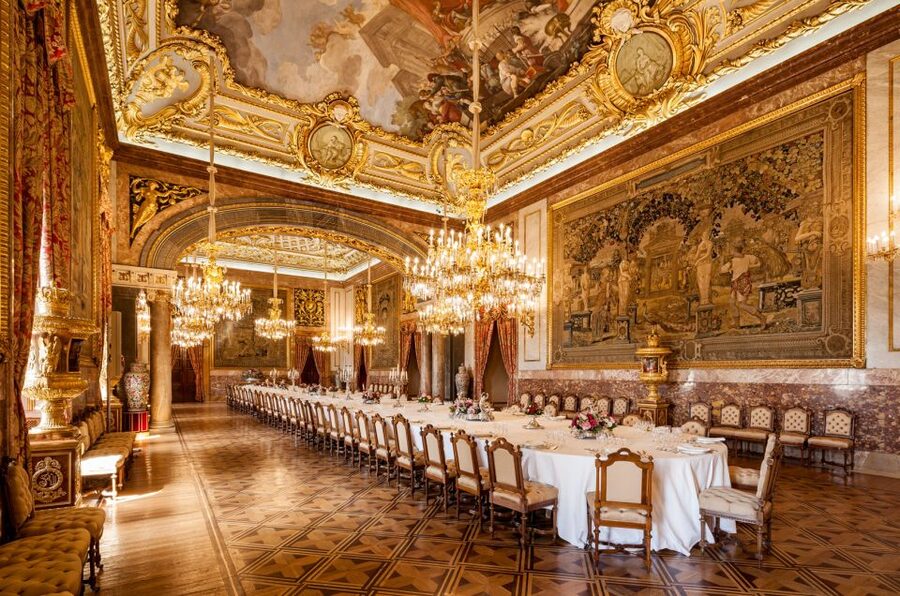
The Royal Chapel is another important stop. Its fresco was painted by Corrado Giaquinto, giving you a chance to see religious art within the royal setting.
The chapel also helps explain how monarchy and religion were connected inside the palace. This is not simply a place for decoration. It formed part of the royal household and ceremonial life.
If religious art is not your main interest, the chapel still deserves attention for its ceiling painting and setting. Look up before moving on. Palace visits often reward you most when you pause above eye level, where frescoes and painted ceilings carry much of the visual drama.
The Throne Room and Tiepolo’s ceiling

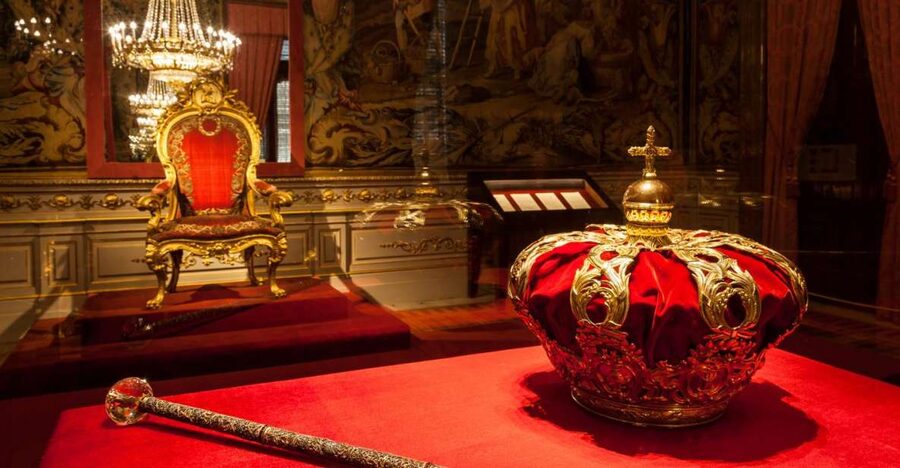
The Throne Room is the tour’s grandest visual stop. Its ceiling was painted by Giovanni Battista Tiepolo, and the room’s wealth of decoration was designed to reinforce the authority of the Spanish crown.
The marble interiors, mahogany details, painted surfaces, and ornate ceiling work create a room meant for display rather than comfort. It is a ceremonial space, and you can feel that difference. This is where the palace’s message becomes clearest: royal power was presented through scale, expensive materials, art, and controlled access.
Take your time looking upward and across the room. The guided route may keep moving, especially when the tour is bilingual or the palace is crowded. If you enjoy art, the ceiling alone deserves a quiet moment.
The palace can become crowded during peak periods. One visit during Holy Week had more people than usual, making it harder to linger. The guide remained a major help, but you should expect the pace and personal space to change with the day.
What the €40 price gets you

At $40 per person, this is not the cheapest way to enter the Royal Palace. You are paying for admission, a live expert guide, and access through a separate entrance. The key question is not simply the ticket price. It is how much you value saved time and useful explanation.
I think the price is reasonable if you want the palace’s main story in a compact visit. The guide helps you understand why the staircase, reception rooms, chapel, banqueting hall, and Throne Room matter. Skipping the longest general line can also be valuable when your Madrid schedule is tight.
The value is weaker if you prefer to move slowly, study individual artworks, or spend much longer inside a palace. Ninety minutes can feel short for a building of this size. One person felt the tour was too brief, even while praising the guide.
If you book, treat this as an introduction rather than a complete palace study. The guided route gives you the framework. If you still have energy and the rules allow you to continue, use any remaining access to look more closely at the rooms that caught your attention.
Who will enjoy this tour most
I would recommend this experience to first-time visitors who want a clear introduction to the Spanish monarchy and the palace’s most decorated interiors. It also suits anyone who dislikes standing in a long admission queue or who prefers a guide to explain what they are seeing.
Families may appreciate the short length, but the stairs and formal pace can be awkward with a pram or trolley. Children who like grand rooms, kings, and royal stories may enjoy it, while younger children may struggle with the quiet museum setting.
Art lovers will appreciate the frescoes, Tiepolo’s ceiling, tapestries, and the collection of stringed instruments. History fans will get more from the visit because the guide connects the rooms to different monarchs and their contributions.
I would be more cautious if you have already visited many European palaces and want access to a large number of rooms. The Royal Palace is impressive, but the public route is limited. You may find the architecture and royal setting worthwhile, yet still wish the visit lasted longer.
Practical advice for a smoother visit
Arrive early at Isabel II Square, and do not walk straight to the palace entrance expecting to find the group there. Check for the white umbrella and keep the meeting point details easy to reach.
Wear comfortable shoes. The tour includes stairs, and you will be standing and walking through a formal building for about 90 minutes.
Bring a €1 coin for the locker. Leave food and drinks outside, and avoid carrying large bags that must be stored.
Choose your language carefully when booking. English and Spanish tours are available, but a bilingual tour may take longer at each stop because the guide repeats the explanation.
Plan a little space around the tour. Delays can happen at the meeting point or security entrance, and the palace visit itself may finish back at the original meeting point.
Should you book the Royal Palace guided visit?
Book it if you want the palace’s major rooms explained by a live guide, prefer a small or organized group, and value using a separate entrance. The Throne Room, Sabatini staircase, Royal Chapel, Porcelain Room, and state reception spaces make a strong introduction to royal Madrid.
Skip it if you want a slow, self-guided look at every possible room or if you have already seen many similar palaces and need a more unusual attraction. The 1.5-hour schedule is efficient, but it can feel rushed, especially when the tour is bilingual.
For most first-time visitors, I think the guide adds enough value to justify the $40 price. Just arrive early, expect security and lockers, and remember that the palace meeting point is in the square, not at the palace doors.
FAQ
How long does the Royal Palace tour last?
The guided visit lasts 1.5 hours.
How much does the tour cost?
The listed price is $40 per person.
Where does the tour begin?
It begins near the statue of Isabel II in Isabel II Square, at Plaza de Isabel II, 5, Madrid.
How do I find the guide?
Look for a guide carrying a white umbrella.
Does the tour start at the Royal Palace entrance?
No. The group meets in Isabel II Square and then walks together to a separate entrance.
Is the tour available in English?
Yes. Tours are offered in English and Spanish.
Can the tour be bilingual?
In some exceptional cases, the tour may be conducted in both English and Spanish.
Is the Royal Palace tour wheelchair accessible?
Yes, the activity is listed as wheelchair accessible.
Can I bring food and drinks inside?
No. Food and drinks are not permitted inside the palace.
Do I need to store my bag?
Large items and bags must be left in the locker room near the Hall. A €1 coin is useful for the locker and is refunded when you leave.
Recently added around Madrid
- Madrid: Thyssen Museum Guided Tour with Skip-the-Line Entry★ 4.5 · 165 reviews
- Axe Throwing 1 hour session★ 5.0 · 166 reviews
- Madrid Food Walking Tour with Tapas and Vermouth★ 5.0 · 167 reviews
- Toledo Full-Day Walking Tour with Guide from Madrid★ 4.5 · 170 reviews
- Madrid: Top Pub Crawl Madrid & Party★ 5.0 · 173 reviews
- Madrid Gourmet Tapas Small Group Tour★ 5.0 · 175 reviews
- Street Art Guided Tour in Madrid★ 5.0 · 175 reviews
- Iberian Ham and Wine Small Group Tour in Madrid★ 5.0 · 176 reviews
Royal Palace Tours, compared.
Royal Palace Expert Guided Tour with Skip-the-Line
Read our review →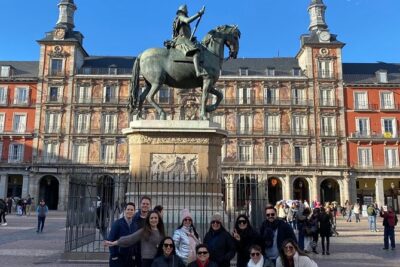
Madrid Essential: Historic Center, Plaza Mayor & Royal Palace
Read our review →
Madrid Old Town & Royal Palace Walking Tour Skip the Line Ticket
Read our review →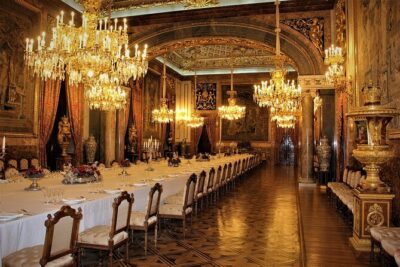
Royal Palace Guided Tour with Skip the Line Ticket
Read our review →
Royal Palace & Prado Museum Skip the Line Guided Tour
Read our review →Browse the lists this tour appears in