
Review · HISTORICAL TOURS
Guided Tour of Historic and Monumental Trujillo
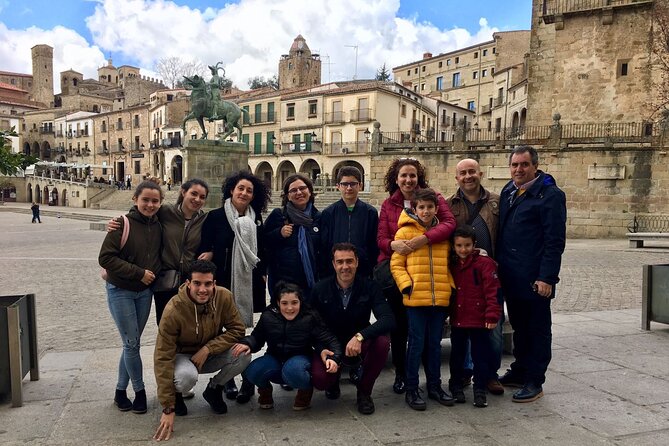
Time travel starts in the main square. This two-hour walk through Trujillo links Renaissance palaces, medieval walls, churches, convents, and the Muslim alcazaba in one compact route. I like the clear focus on the town’s most important sights, and I like that the guide points out good photo spots along the way. At $13.90 per person, it offers a lot of context for a modest price.
The main consideration is pace. You cover a long list of landmarks in about two hours, so this is more of an informed overview than a slow visit to every building. You may also want separate time after the tour to explore places such as the castle or Santa María la Mayor at greater length.
The walk begins and ends at Plaza Mayor, keeping the logistics simple. The group can include up to 30 people, which is manageable but not especially small. A previous booking praised guide Ana for making the route both entertaining and complete, a useful sign that the quality of the experience depends partly on who leads your particular departure.
In This Review
- Key points to know before booking
- Plaza Mayor gives you the right opening scene
- Renaissance façades and the Palacio de San Carlos
- Inside the medieval center, where the town changes character
- Luis de Chaves and the Catholic Monarchs
- Old religious foundations and the route to the castle
- Pizarro’s house and Trujillo’s overseas connections
- Santa María la Mayor rewards a closer look
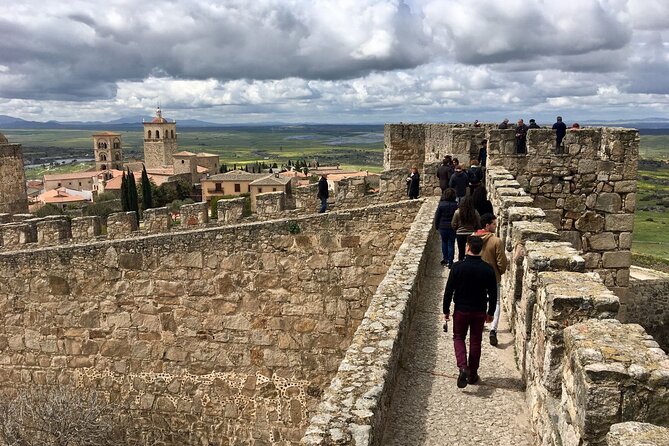
- Gates, walls, and the final defensive quarter
- How much value do you get for $13.90?
- Timing, group size, and practical details
- Who will enjoy this Trujillo walk most?
- Should you book the Guided Tour of Historic and Monumental Trujillo?
- FAQ
- Where does the tour begin?
- Where does the tour end?
- How long does the experience last?
- How much does the tour cost?
- Is the ticket mobile?
- What is the maximum group size?
- Is confirmation provided after booking?
- Are service animals allowed?
- Is the tour near public transportation?
- Can I cancel for a full refund?
Key points to know before booking
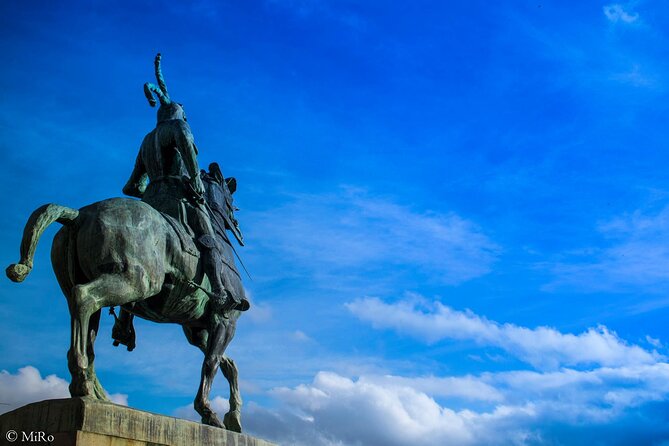
- Trujillo’s Plaza Mayor anchors the tour: Begin beside the equestrian statue of Francisco Pizarro, surrounded by grand Renaissance buildings.
- The route enters the medieval town: Expect walls, gates, strong houses, churches, palaces, towers, and the former Muslim fortress.
- You get several layers of Spanish history: The walk touches Muslim Trujillo, medieval military orders, the Catholic Monarchs, the age of exploration, and film locations.
- The castle is part of the route: You see the 10th to 12th-century alcazaba and its cistern, known as an aljibe.
- The tour is photo-friendly: Your guide recommends particularly attractive corners and viewpoints during the walk.
- The price favors first-time visitors: For $13.90, you receive a guided introduction to the historic center without a separate admission charge listed for the stops.
Plaza Mayor gives you the right opening scene
The tour starts at TurismoTrujillo.es Actividades Turísticas, at Plaza Mayor 20. This is a useful meeting point because the square immediately shows you why Trujillo is worth a stop in Extremadura.
Plaza Mayor is ringed by Renaissance palaces and centered on the equestrian monument to Francisco Pizarro, the conqueror of Peru. The opening portion lasts about 20 minutes, giving your guide time to explain the square and its role in the town.
The statue is more than a photo prop. It introduces the connection between Trujillo and the Spanish conquest of the Americas. Several local families gained wealth and influence through overseas expeditions, and their grand homes helped shape the square you see today.
You also hear about the square’s construction in the 16th century. Work began in 1562 by order of Hernando Pizarro. That date helps place the architecture in the right setting: this is not simply a medieval plaza left unchanged, but a public space reshaped during Trujillo’s period of wealth and power.
The guide also highlights recommended photographic corners. That small addition matters. A good walking tour should help you notice where to stand, not just name the buildings in front of you.
More history and heritage tours:
- Madrid Essential: Historic Center, Plaza Mayor & Royal Palace
★ 5.0 · 6,416 reviews - Barcelona: Tapas Walking Tour with Food, Wine, and History
★ 4.8 · 4,261 reviews - Sevilla Food Tour: Tapas, Wine, History & Traditions
★ 5.0 · 3,468 reviews
Renaissance façades and the Palacio de San Carlos
The Palacio de San Carlos, also called the Palacio de los Vargas-Carvajal, gives you a close look at Plateresque design. This Spanish style is known for its finely worked ornament, often compared to delicate stonework on a silver-plated surface.
You spend only a few minutes on this stop, so expect an exterior explanation rather than a long interior visit. The original Plateresque façade remains, along with another façade facing Domingo Street. I would pay attention to the contrast between the two sides, since the building’s position and additions are part of its story.
This is one of the useful features of a guided route through Trujillo. You may walk past a noble residence and see only an old stone wall. With a short explanation, the façade becomes evidence of family status, changing streets, and the town’s growth beyond its earlier defensive core.
The nearby Pizarro statue receives its own brief stop. The two-minute pause is enough for photographs and a quick explanation, but you should not expect a long historical lecture there. The larger story has already begun in Plaza Mayor.
Inside the medieval center, where the town changes character
From the square, the route moves into Trujillo’s historic center. Here the feel changes. Renaissance public spaces give way to narrower streets, fortified houses, manor residences, churches, convents, and sections of the old wall.
The most useful thing about this part of the tour is the connection between buildings. You are not seeing isolated monuments. Strong houses guarded important families, religious buildings shaped daily life, and the walls controlled movement through the town.
The route includes thematic connections with Isabel la Católica, Carlos V, the Discoverers, and film locations. Those themes give you several ways to understand Trujillo. You can follow the town through royal history, military power, overseas expansion, or its later use as a setting for screen productions.
Do not expect every theme to receive equal time. Two hours requires selection. Still, the range makes this walk a good first introduction if you are not sure which part of Trujillo interests you most.
Luis de Chaves and the Catholic Monarchs
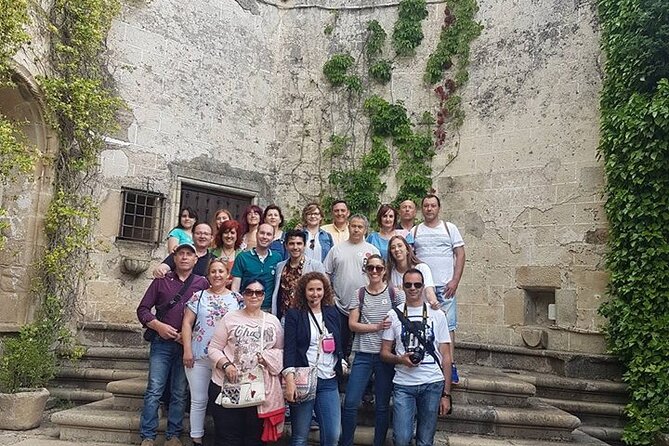
Casa-Fuerte de Luis de Chaves El Viejo is one of the route’s most important stops. This strong house dates from the 13th and 14th centuries and is linked to the Catholic Monarchs during the Wars of Succession.
The building helps explain why Trujillo contains so many fortified residences. Noble families needed homes that could also provide defense. Thick walls and strong entrances were practical features, not just displays of status.
The connection with the Catholic Monarchs gives the stop added weight. The building is tied to a period when political control in Spain was being firmly reshaped, and Trujillo played a part in those struggles.
You get about 10 minutes here. That is enough for a focused explanation and photographs. If military architecture is your main interest, you may wish the stop were longer, but the short visit keeps the overall walk moving.
A few more Spain trips worth a look
- Barcelona: Sagrada Familia Entry Ticket with Audio Guide
★ 4.6 · 105,312 reviews - Barcelona: Park Guell Guided Tour with Skip The Line Entry
★ 4.7 · 17,563 reviews - Barcelona: La Pedrera-Casa Milà Ticket & Audio Guide Option
★ 4.7 · 15,099 reviews - Málaga: Caminito del Rey Guided Tour with Transportation
★ 4.8 · 12,183 reviews
Old religious foundations and the route to the castle
The Palacio Viejo, or Palacio de la Cadena, is associated with a 13th-century church founded by the Military Order of Santiago. This stop brings together religion and warfare, two forces that were closely linked in medieval Spain.
Military orders were not simply church organizations. They also controlled territory, defended borders, and held political influence. A brief explanation here helps you read the old town as a place shaped by both faith and fortified power.
The route then reaches the Castillo de Trujillo. The castle occupies the highest and most defensive part of the town, and its Muslim alcazaba dates from the 10th to the 12th centuries. The stop also includes the aljibe, or cistern, an essential part of life inside a fortress.
The scheduled castle visit is about 10 minutes. That is the clearest drawback for anyone who enjoys ruins and wide views. You will get the historical framework and a look at the key structures, but you should not treat this walk as a full castle tour.
If you want more time for the walls, the fortress, or the views from the high ground, plan a return visit after the guided walk. The tour helps you understand what you are looking at, while a second visit lets you explore at your own pace.
Pizarro’s house and Trujillo’s overseas connections
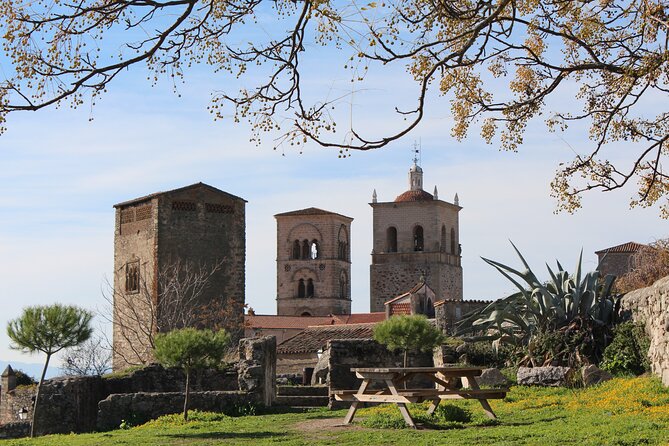
The Pizarro House Museum is described as a 15th-century Hidalgo manor house. Its place in the route connects the town’s medieval architecture with the family name most closely associated with Peru’s conquest.
The museum reference is important, but the tour information does not promise a long museum visit or specify a separate interior entry. You should think of this stop as part of the guided exterior and historical route unless your booking details say otherwise.
The Casa Fuerte de los Escobar adds another personal story. This 15th-century military building was home to María de Escobar, identified with bringing wheat and barley seeds to Peru. That detail broadens the usual conquest narrative.
It reminds you that exchanges between Spain and the Americas involved more than soldiers and precious metals. Crops, food, plants, and farming knowledge also crossed the Atlantic. The stop is brief, around 10 minutes, but the human detail makes it especially memorable.
Santa María la Mayor rewards a closer look
I would pay close attention when the route reaches Iglesia de Santa María la Mayor. It is recognized as a National Monument and includes earlier Romanesque remains, including the Torre Julia.
The church also contains a Spanish-Flemish altarpiece by Fernando Gallego. That gives the stop artistic importance as well as architectural interest. Even if you are not an expert in church art, the combination of earlier Romanesque traces, Gothic construction, and the altarpiece shows how buildings changed over time.
The available timing does not specify a fixed number of minutes for this stop. That may allow the guide some flexibility, but you should not assume the tour includes an extended interior visit or guaranteed access to every feature.
If church interiors are high on your list, ask locally about opening times after the tour. The walk introduces Santa María la Mayor, but independent time may be needed to appreciate its details without the pressure of a group schedule.
Gates, walls, and the final defensive quarter
The route continues to the Triumph Gate, a key entrance in Trujillo’s walls. Gates were practical control points, but they also marked the boundary between the protected town and the roads beyond it.
Nearby, the Bejarano Redoubt is a 13th-century strong house that defended the Puerta del Triunfo. This pairing is useful because it lets you see how a gate and a fortified residence worked together. Defense depended on a network of structures, not one isolated wall.
The final stop is Puerta de San Andrés, one of the seven gates in the town wall. It sits beside the Church of San Andrés, adding another layer to the route’s mix of military and religious buildings.
Ending near the walls gives the walk a satisfying shape. You begin in the open grandeur of Plaza Mayor, move through the old town and up to the fortress, then return through gates and defensive buildings. The activity ends back at the original meeting point, so you do not need to arrange a separate pickup.
How much value do you get for $13.90?
At $13.90 per person, this is a strong-value introduction to Trujillo. You are paying for about two hours of explanation, route planning, and historical connections rather than simply walking through the town alone.
The value is highest if this is your first visit. The route covers enough ground to show you what matters, and the guide can point out details you might miss while navigating on your own. It also saves you from trying to organize the castle, walls, palaces, churches, and gates into a sensible order.
The price is less compelling if you already know Trujillo well or prefer unhurried photography. The group may include up to 30 people, and the schedule has to keep moving. You may have only a few minutes at some buildings.
The tour lists admission as free at the stops. That means the cost is mainly for the guided experience, not a bundle of expensive entrance tickets. Check the day’s arrangements if entering a specific monument is essential to you, since the supplied details do not promise extended access to every interior.
Timing, group size, and practical details
The experience lasts about two hours. Wear shoes suited to old streets and uneven surfaces, since the route includes a medieval center, walls, gates, and the hilltop castle area. The provided information does not specify the exact amount of climbing, so anyone who needs a gentler pace should confirm details before booking.
The group can have a maximum of 30 people. That keeps it within a reasonable size for a town walk, though you may find a larger group less intimate than a private or small-group outing.
You receive confirmation when booking, and the ticket is mobile. The meeting point is TurismoTrujillo.es Actividades Turísticas, Plaza Mayor 20, in Trujillo, Cáceres. The tour returns to that same point, which is helpful if you plan lunch, another museum, or a second look at the square afterward.
The activity is near public transportation, and service animals are allowed. Most people can take part. Free cancellation is available up to 24 hours before the start time for a full refund, while later cancellations and changes are not accepted.
Who will enjoy this Trujillo walk most?
I would choose this tour if you want a useful first look at Trujillo without spending a large amount. It suits you especially well if you enjoy architecture, royal history, medieval defenses, religious buildings, or the story of Spain’s connection with the Americas.
It also works for a short visit. With a two-hour route and a central meeting point, you can fit it into a day when you are passing through Extremadura and still have time to revisit your favorite monument.
Families and mixed-interest groups may find the broad subject matter helpful. The guide moves from statues to palaces, from fortress walls to churches, so the walk does not depend on one narrow topic.
I would hesitate if you want long interior visits, detailed art history, or a quiet photography session. In that case, use the tour as your orientation, then return independently to the castle, Santa María la Mayor, or whichever palace catches your eye.
Should you book the Guided Tour of Historic and Monumental Trujillo?
Book it if you want the town’s main sights explained in a clear two-hour route. The combination of Plaza Mayor, the Pizarro connection, medieval defenses, the Muslim alcazaba, Santa María la Mayor, and the old gates gives you a strong introduction for $13.90.
The best reason to choose it is the structure. Trujillo can feel like a maze of impressive stone buildings, but this walk ties them into a story. Guide Ana’s praised ability to make the route both complete and entertaining is exactly what you want from a short city tour.
Skip it only if you already have a detailed plan or know you will want to linger at each site. For most first-time visitors, it is an affordable way to get your bearings, spot the best photo corners, and decide where to spend the rest of your time.
FAQ
Where does the tour begin?
It begins at TurismoTrujillo.es Actividades Turísticas, Plaza Mayor 20, 10200 Trujillo, Cáceres, Spain.
Where does the tour end?
The activity ends back at the meeting point in Plaza Mayor.
How long does the experience last?
The tour lasts approximately two hours.
How much does the tour cost?
The listed price is $13.90 per person.
Is the ticket mobile?
Yes. The experience includes a mobile ticket.
What is the maximum group size?
The tour can have a maximum of 30 participants.
Is confirmation provided after booking?
Yes. Confirmation is received at the time of booking.
Are service animals allowed?
Yes. Service animals are allowed on the activity.
Is the tour near public transportation?
Yes. The meeting point is near public transportation.
Can I cancel for a full refund?
Yes. You can cancel at least 24 hours before the experience begins for a full refund. Cancellations or changes made less than 24 hours before the start time are not accepted.
Recently added around Spain
- Half-Day Luxury Catamaran Sailing Cruise in Granada★ 5.0 · 165 reviews
- Jeep Safari to Teide and Masca★ 4.5 · 165 reviews
- Madrid: Thyssen Museum Guided Tour with Skip-the-Line Entry★ 4.5 · 165 reviews
- Visit in Spanish to the Cathedral Mosque. Does not include entrance ticket★ 5.0 · 165 reviews
- Canyoning in Andalucia: Rio Verde Canyon★ 5.0 · 165 reviews
- Guided Tour to Caminito del Rey from Malaga★ 4.5 · 165 reviews
- VIP Private Segway Tour of Palma★ 5.0 · 165 reviews
- Las Palmas: Private Old City Guided Walking Tour with Tapas★ 4.6 · 166 reviews
Historical Tours, compared.
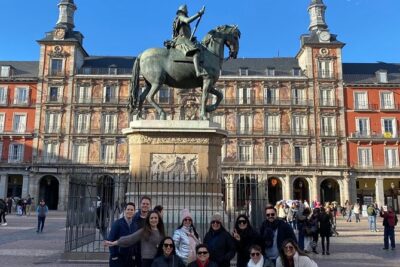
Madrid Essential: Historic Center, Plaza Mayor & Royal Palace
Read our review →
Tapas Walking Tour with Food, Wine, and History
Read our review →
Sevilla Food Tour: Tapas, Wine, History & Traditions
Read our review →
Valencia Old Town Tour with Wine & Tapas in 11th Century Historic Monument
Read our review →
Barcelona Tapas Walking Tour: Food, Wine & History
Read our review →
Ultimate Seville Tapas, Wine & History Small Group Tour
Read our review →
Skip-the-Line Great Mosque-Cathedral History Tour
Read our review →
Browse the lists this tour appears in