
Review · MADRID TOURS
From Madrid: Gems of Andalusia 6-Day Sightseeing Tour
Spain packs a lot into six days. This organized journey from Madrid takes you through Roman Mérida, Córdoba, Seville, Ronda, the Costa del Sol, and Granada, with the Alhambra as its grand finale. I like the route because it links major southern Spanish sights without asking you to plan every hotel, transfer, and entrance ticket yourself.
I especially like the included Alhambra, Mosque-Cathedral, and Seville Cathedral admissions, since those are the places that can be difficult to arrange independently. I also like the mix of famous cities and smaller stops, from Roman ruins in Mérida to the cliff-top views of Ronda. The main caution is pace: you cover a great deal of ground, and some stops leave little time for wandering.
This is a bilingual English and Spanish tour, with a maximum advertised group size of 40 and a tour director traveling with you. Local guides lead visits in Córdoba, Seville, and Granada. Some departures have been reported as much larger or combined with other Julia Travel groups, so I would confirm the actual group arrangement before paying.
In This Review
- Key points to know before booking
- What the six-day route actually feels like
- Day 1: Roman Mérida and the road to Córdoba
- Day 2: Córdoba’s Mosque-Cathedral and Jewish Quarter
- Day 3: Seville’s cathedral, Santa Cruz, and Plaza de España
- Day 4: Ronda’s gorge and the Costa del Sol
- Day 5: Granada and the Alhambra
- Day 6: Returning to Madrid
- Hotels, meals, and coach travel
- The guides make a major difference
- Is $1,189.45 a fair price?
- Who should book this Andalusia tour?
- Should you book it?
- FAQ
- Where does the tour start and end?
- What entrance fees are included?
- Are meals included?
- Is the tour conducted in English?
- How much luggage can I bring?
- How far in advance can I cancel for a full refund?
Key points to know before booking
- Mérida opens the tour with Roman Spain: You see the theater, amphitheater, bridge, and other remains in a World Heritage city.
- Córdoba’s Mosque-Cathedral is the historical centerpiece: The guided visit is included, along with a walk through the Jewish Quarter.
- Seville gives you the fullest free time: The cathedral, Santa Cruz, Plaza de España, and María Luisa Park are covered, with the afternoon available for your own plans.
- Ronda is scenic but brief: You have time to enjoy the gorge and mountain views, though a guided bullring visit is not included in the stated package.
- The Alhambra is the grand finale: Entrance to the Alhambra and Generalife Gardens is included, but access arrangements can cause waiting.
- The price pays for convenience: At $1,189.45 per person, the package includes five hotel breakfasts, hotels, luxury-coach transport, insurance, guided visits, and major entrance fees.
What the six-day route actually feels like
I see this as a highlights tour rather than a slow Andalusian holiday. You change hotels several times, spend long stretches on the coach, and often arrive in a city with only an afternoon or evening available.
That trade-off can be worthwhile if you are visiting Spain for the first time and want to see the main sights without renting a car. It is less suitable if you prefer late mornings, long lunches, or several days in one place.
The tour begins at 8:30 a.m. outside the Aloft Madrid Gran Via on Calle de Jacometrezo. You should arrive early with your passport or identity document, since the operator requires each passenger’s full name, passport or ID details, and nationality for the included insurance.
Other Madrid trips people book alongside this one:
- Madrid: Tour Bernabéu Entry Ticket
★ 4.5 · 21,573 reviews - Madrid: Prado Museum Entry Ticket
★ 4.6 · 17,509 reviews - Madrid: Royal Palace Fast-Access Admission Ticket
★ 4.6 · 13,856 reviews
Day 1: Roman Mérida and the road to Córdoba
The first day heads west through Extremadura, a region linked with explorers who left Spain for the New World. The main stop is Mérida, the regional capital and one of Spain’s finest places for seeing Roman remains in an open city setting.
You can expect to see the Roman theater, amphitheater, bridge, and other ancient structures. The stop is valuable because it gives the tour a broader historical frame before Andalusia begins. Spain is not only Moorish palaces and white villages. Mérida shows the Roman foundation beneath much of the country.
The itinerary allows a long block of time for Mérida and the onward journey to Córdoba, but the exact amount of free exploration can depend on the day’s transport schedule. I would use the stop for the major ruins first rather than trying to fit in every corner of the old town.
Later, you continue to Córdoba for the night. The first day is demanding, with an early start and substantial time on the road. Pack water, keep your camera accessible, and avoid placing everything you need in the coach luggage compartment.
The provided route information also refers to Cáceres as a highlight of the broader journey, describing its UNESCO-listed medieval center. The day-by-day plan supplied for this six-day version specifically lists Mérida, not a separate Cáceres visit, so ask the operator to confirm which historic city your departure includes.
Day 2: Córdoba’s Mosque-Cathedral and Jewish Quarter
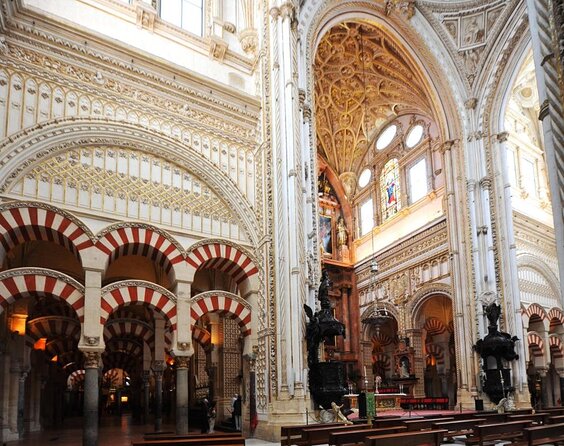
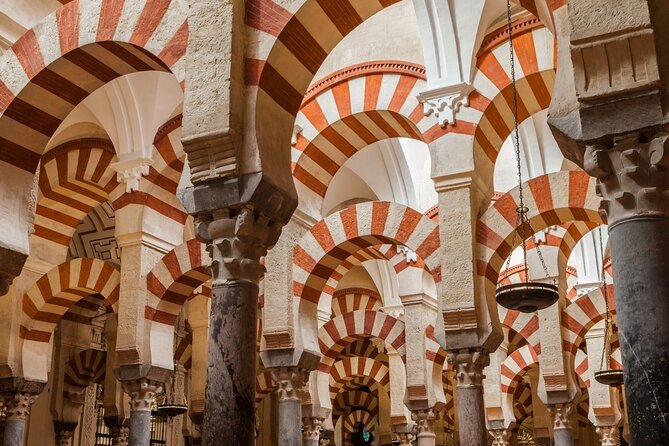
Córdoba is one of the strongest stops on the entire route. The included visit to the Mosque-Cathedral takes you into a building that began as a mosque and now functions as a Catholic cathedral. Its forest of arches and columns makes the site unlike almost any other major monument in Europe.
A local guide leads the visit, then takes you through the narrow streets of the Jewish Quarter. The lanes are compact, irregular, and often crowded, so comfortable walking shoes matter. You will also want a little time for photographs, since the guided pace may not leave much room to stop whenever you like.
This is one place where the tour’s organization has real value. The main admission is included, and a guide gives the building its political, religious, and architectural context. On your own, you might spend too much time trying to understand the many layers of the site or waiting for tickets.
The downside is limited personal time. Some departures have allowed only a short period for photos or for walking farther across the Roman Bridge. If Córdoba interests you most, consider adding a separate stay before or after the organized tour rather than expecting this short visit to satisfy every curiosity.
In the afternoon, the coach takes roughly two hours to Seville. You check into your next hotel and have the evening there. Depending on the hotel location, you may need a taxi or a fairly long walk to reach the historic center.
Day 3: Seville’s cathedral, Santa Cruz, and Plaza de España
Seville receives the most attention on the itinerary, and rightly so. The morning city tour combines panoramic views with a visit inside Seville Cathedral, identified in the tour material as the second-largest Catholic church in the world after St. Peter’s in Rome.
The cathedral is immense, and the included entrance is a major benefit. The tour does not clearly promise access to every part of the complex or the Giralda tower, so check what your local guide includes. If climbing the Giralda or visiting the Royal Alcázar matters to you, use the free afternoon to arrange those plans if tickets are available.
The walk through Barrio de Santa Cruz is one of Seville’s most atmospheric moments. Its lanes and small plazas are tied to the legends of Carmen and Don Juan, and the neighborhood rewards slow wandering more than a quick checklist. I would note the route during the guided walk, then return alone after lunch.
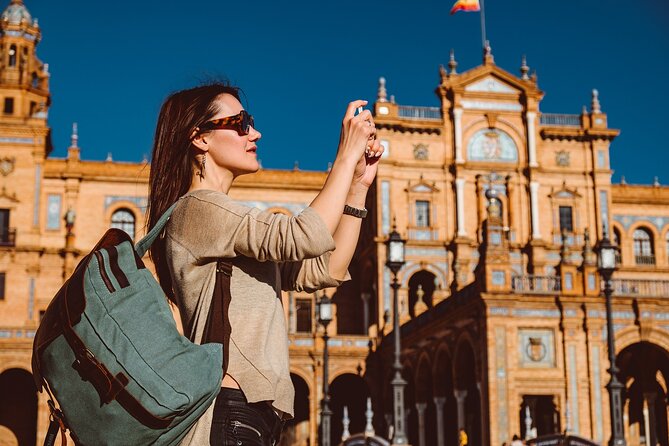
The tour also includes María Luisa Park and Plaza de España. Plaza de España is one of Seville’s most memorable public spaces, with tiled alcoves representing Spain’s provinces and a broad semicircular design made for photographs. The park gives you a welcome change of pace after the cathedral and old-town streets.
The afternoon at leisure is an important part of the tour. You can choose a tapas crawl, revisit Santa Cruz, shop for local crafts, or arrange an optional activity. Some departures have offered flamenco performances and other add-ons, but prices and details can vary, so ask before setting aside cash.
Hotel quality in Seville appears to vary by departure and hotel category. Some upgraded properties are comfortable and well located, while certain buffet meals have drawn criticism. I would treat included hotel dinners, if offered as part of a different package, as a convenience rather than a reason to skip Seville’s local restaurants.
A few more Spain trips worth a look
- Madrid: “Emociones” Live Flamenco Performance
★ 4.8 · 12,866 reviews - Madrid: Panoramic Route City Tour
★ 4.1 · 12,259 reviews - Madrid: Live Flamenco Show with Food and Drinks Options
★ 4.5 · 9,901 reviews - Avila & Segovia Tour with Tickets to Monuments from Madrid
★ 5.0 · 9,762 reviews
Day 4: Ronda’s gorge and the Costa del Sol
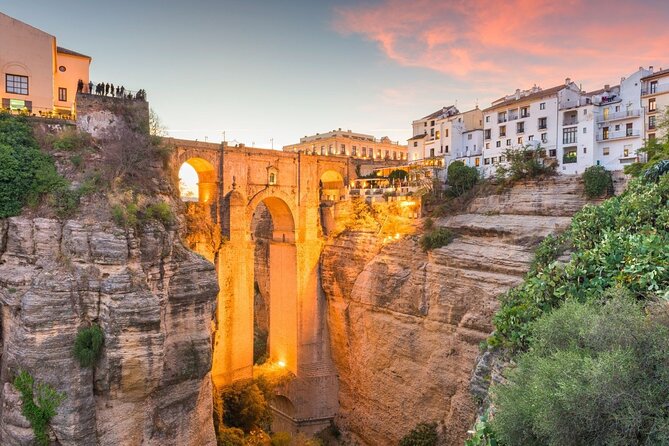
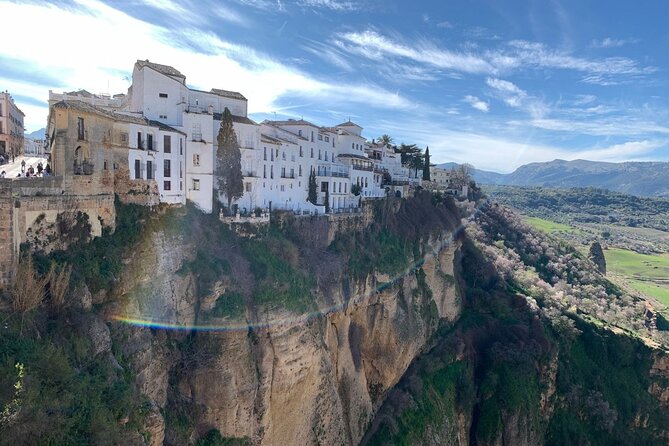
After breakfast, the coach heads south through typical Andalusian villages to Ronda. This is a very different setting from Seville and Córdoba. Ronda sits dramatically above a deep gorge, with mountain and valley views that make it one of the most photogenic stops on the route.
You have time at leisure rather than a clearly included guided walking tour. That gives you freedom, but it also means you need a plan. Focus on the viewpoints around the gorge, the old town lanes, and the bullring area.
Ronda’s bullring is described as Spain’s oldest. It is a strong photo stop, but the stated package does not include entry to the bullring. Optional guided visits have not always included admission, so check the exact cost and contents before agreeing to one.
I like the inclusion of Ronda because it breaks up the major-city schedule. Still, the visit can feel short. The town’s old quarter, gorge, viewpoints, and bullring could easily fill a full day, while this itinerary gives you only a brief introduction.
The coach then continues to the Costa del Sol for the night. The change from hill town to modern coastal resort can feel abrupt. Torremolinos and nearby resort areas are practical for hotels and transport, but they do not offer the same historic atmosphere as Ronda or Granada.
You have an afternoon at leisure, though the timing may not leave much room for a serious beach outing. Hotel location is worth checking closely. Some properties are near the coast, while rooms may face an interior wall or less attractive side of the building. An upgrade can improve the hotel itself without guaranteeing a sea view.
Day 5: Granada and the Alhambra
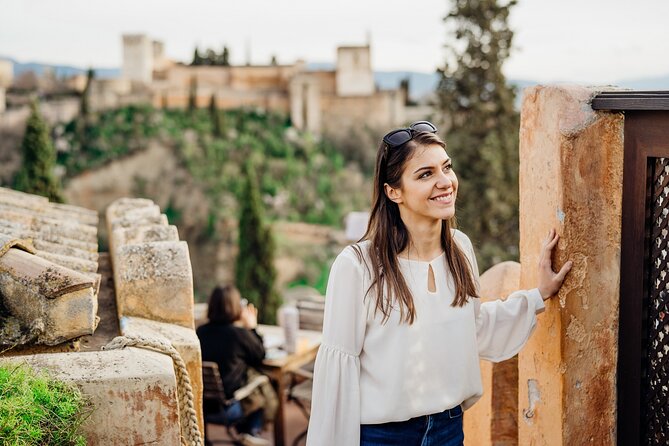
Granada is the emotional high point of the trip. It was the last stronghold of the Moorish kingdoms in Spain until 1492, and the Alhambra remains one of Europe’s most memorable palace complexes.
The included visit covers the Alhambra and Generalife Gardens. The palace courtyards, carved decoration, water channels, and gardens reward careful attention, so listen closely to the local guide and keep your group within sight. This is not a place where you want to lose time searching for the meeting point.
Entry arrangements can create delays. Group tickets and timed access need to be handled correctly, and some departures have experienced long waits before entering. Bring patience, water, and a small snack, especially if your lunch schedule is tight.
The Generalife Gardens add a lighter, more open section to the visit. Washington Irving drew inspiration from Granada for Tales of the Alhambra, and you can understand why the setting has attracted writers and artists for centuries. The gardens are not simply an extra stop. They help explain the palace’s relationship with light, water, shade, and the surrounding hills.
The itinerary includes a hotel night in Granada and lists an optional Flamenco Zambra show. A cave-style flamenco performance can be a memorable way to end the day, but late returns are possible. Some optional evening programs combine flamenco with an Albaicín visit, and the quality, order, and price of those elements can vary. Ask exactly what is included before you pay.
The tour may not provide much time for Granada’s city center, the Royal Chapel, or a relaxed walk through the Albaicín. If those matter to you, use any free time carefully and consider staying in Granada independently after the tour.
Hotel quality in Granada is the most repeated concern in the supplied comments. Some properties have been comfortable, while others have been dated, noisy, outside the center, or awkwardly arranged. I would pay close attention to the hotel category and name at booking, but remember that room assignment and departure inventory can change.
Day 6: Returning to Madrid
The final morning begins with breakfast and a northbound coach ride to Madrid. The tour ends back at the starting meeting point, and the listed schedule allows a long travel block for the return.
This is mainly a transfer day, not a sightseeing day. Do not plan a tight Madrid museum reservation or an evening flight unless you have confirmed the actual arrival time with the operator. Road conditions and group stops can affect the schedule.
The advantage is simple: you finish where you started without arranging a one-way rental car or separate train ticket. The drawback is that your final day offers little time for an extra city visit.
Hotels, meals, and coach travel
The package includes hotel accommodation and five breakfasts. Food and drinks are otherwise not included unless specifically stated, so budget for lunches, dinners, coffee, bottled water, and optional activities.
Hotel standards can vary. Some properties are praised for comfort and location, while others are described as tired, noisy, or far from the center. Even upgraded packages may not produce the same quality in every city.
The coach is a practical way to connect Mérida, Córdoba, Seville, Ronda, the Costa del Sol, Granada, and Madrid. It saves you from driving unfamiliar roads and handling several hotel-to-hotel transfers. The road network is generally considered good, but the ride itself can be less comfortable on some departures, especially if the bus is crowded or the air conditioning is weak.
The advertised maximum is 40 people, but Julia Travel sometimes combines related routes or changes passengers along the way. A bilingual tour can also make announcements feel longer and less direct. If you want an English-only, small-group experience, confirm those details in writing.
Pack one regular suitcase and one handbag per person. Extra luggage may be charged, and you are responsible for handling your own bags. I would pack light and keep a small day bag ready for each walking tour.
The guides make a major difference
The strongest praise is reserved for the tour directors and local city guides. Guides named in the supplied feedback include Ismael, Margarita, Laura, and Sonsoles. Ismael is repeatedly described as an exceptional historian, while Margarita is praised for her energy and humor. Laura is noted for taking special care of a small English-speaking pair within a mostly Spanish-speaking group.
Local guides in Córdoba, Seville, and Granada can add far more than a basic walk-by. Their explanations help you read the Mosque-Cathedral, understand Seville’s symbols, and appreciate the Alhambra beyond its pretty courtyards.
The main director’s job is harder when a group is large and bilingual. Some departures have had unclear instructions, delayed hotel check-ins, confusing bus changes, and weak explanations during free time. Keep your own notes, save the hotel address, and ask questions early rather than waiting until you are standing beside the coach.
Is $1,189.45 a fair price?
At $1,189.45 per person, the price is not cheap, but it covers several expensive and useful pieces: five nights of accommodation, five breakfasts, luxury-coach transportation, travel insurance, a bilingual director, local guided visits, and entrance to the Mosque-Cathedral, Seville Cathedral, and Alhambra and Generalife Gardens.
The value is strongest if you would otherwise need to arrange multiple intercity transfers and major monument tickets. The Alhambra alone requires careful planning, and the tour removes much of that work.
The value is weaker if you are comfortable booking trains, hotels, and local guides on your own. You may prefer to spend three nights in Seville and two in Granada rather than changing cities so often. You would also have more control over hotel locations, meals, and time at Ronda.
I would budget extra for lunches, dinners, taxis, optional flamenco, and any bullring or additional monument admissions. The base price is best understood as a structured sightseeing package, not an all-inclusive holiday.
Who should book this Andalusia tour?
I would recommend it to a first-time Spain visitor who wants to see the main Andalusian sights quickly. It suits you if you enjoy history, guided explanations, organized transport, and a full schedule.
You should also be comfortable walking on cobbled streets, standing during monument visits, climbing or navigating uneven streets, and carrying your own luggage. The tour advises a moderate fitness level, and that advice is important.
I would hesitate if you dislike large groups, bilingual commentary, fixed meal times, or hotel changes. It is also a poor fit if you want long afternoons at the beach or several unplanned hours in each historic center.
Should you book it?
Book this tour if convenience matters more than independence. The route is smart, the major entrances are included, and Córdoba, Seville, Ronda, and Granada give you an excellent first look at southern Spain.
Before booking, confirm three details: the actual group size, the hotel names and locations, and the precise stops included in your departure, especially Mérida versus Cáceres. If the answers are satisfactory, this is a useful way to cover a large part of Andalusia in six days.
If you want a slower, more personal trip, use this route as a planning outline and visit Seville, Córdoba, and Granada independently. You will see fewer places, but you will have more time to experience them.
FAQ
Where does the tour start and end?
It starts at 8:30 a.m. at the Aloft Madrid Gran Via, Calle de Jacometrezo 4, Madrid. The tour ends back at the same meeting point in Madrid.
What entrance fees are included?
Admission is included for the Mosque of Córdoba, Seville Cathedral, and the Alhambra and Generalife Gardens. Entry to Ronda’s bullring and optional activities are not listed as included.
Are meals included?
Five breakfasts are included. Food and drinks are not included unless specifically stated.
Is the tour conducted in English?
The tour is offered in English and uses a bilingual tour director who speaks English and Spanish. Confirm the language arrangement and expected group size before booking if you specifically want an English-only departure.
How much luggage can I bring?
Each person may bring one regular suitcase and one handbag. Extra luggage is likely to incur a charge, and you are responsible for handling your bags.
How far in advance can I cancel for a full refund?
You must cancel at least six full days before the experience start time for a full refund. Cancellations made two to six full days before departure receive a 50 percent refund, while cancellations less than two full days before departure are not refunded.
Recently added around Madrid
- Madrid: Thyssen Museum Guided Tour with Skip-the-Line Entry★ 4.5 · 165 reviews
- Axe Throwing 1 hour session★ 5.0 · 166 reviews
- Madrid Food Walking Tour with Tapas and Vermouth★ 5.0 · 167 reviews
- Toledo Full-Day Walking Tour with Guide from Madrid★ 4.5 · 170 reviews
- Madrid: Top Pub Crawl Madrid & Party★ 5.0 · 173 reviews
- Madrid Gourmet Tapas Small Group Tour★ 5.0 · 175 reviews
- Street Art Guided Tour in Madrid★ 5.0 · 175 reviews
- Iberian Ham and Wine Small Group Tour in Madrid★ 5.0 · 176 reviews
Madrid Tours, compared.


Live Flamenco Show with Food and Drinks Options
Read our review →
Avila & Segovia Tour with Tickets to Monuments from Madrid
Read our review →
Three Cities in One Day: Segovia, Avila and Toledo from Madrid
Read our review →Browse the lists this tour appears in