
Review · HALF-DAY
From Madrid: El Escorial and Valley’s Basilica Half Day Tour
Royal tombs and a monumental basilica. This five-hour trip from Madrid pairs the immense Monastery of San Lorenzo de El Escorial with the Valley of the Fallen, two serious and unusual sites that explain much about Spain’s monarchy, empire, religion, and civil war. I like the efficient half-day format and the chance to reach both places without arranging transport yourself. I also like that admission, a guide, and an audio headset are included.
The main caution is timing. El Escorial receives about two hours, while the Valley of the Fallen gets roughly 45 minutes, so you will see the key areas but will not have much freedom to linger. The bilingual format can also affect how much English information you receive, depending on the group and guide.
In This Review
- Key points at a glance
- Leaving Madrid for San Lorenzo de El Escorial
- Entering Philip II’s Monastery
- Why a guide matters inside El Escorial
- The short transfer to the Valley of the Fallen
- Inside the basilica and crypt
- A five-hour schedule that keeps the day manageable
- What the $78 price includes
- Who should choose this Madrid excursion?
- Should you book the El Escorial and Valley of the Fallen tour?
- FAQ
- How long does the tour last?
- Where does the tour begin?
- What languages are available?
- What is included in the price?
- How much time is spent at El Escorial?
- How much time is spent at the Valley of the Fallen?
- Is the tour suitable for wheelchair users?
Key points at a glance
- Two very different monuments in one morning: El Escorial presents royal power, art, and burial traditions, while the Valley of the Fallen carries the weight of Spain’s Civil War memory.
- The Royal Pantheon is a major highlight: You can see the burial place of Spanish kings, queens, and royal children beneath the monastery.
- A practical bus trip from Madrid: The ride takes about an hour each way, with a short 15-minute transfer between the two sites.
- Guides can make or break the visit: Guides such as Pilar, Carlos, Ana, Anne, and Sylvia have been praised for clear explanations and a comfortable pace.
- The Valley of the Fallen is impressive but difficult: Its vast cross, basilica, and crypt are powerful sights, but the political and human story behind the site is somber.
- Good value at $78: Transport and all stated admissions are included, which makes the price fair if you want both monuments in one outing.
Leaving Madrid for San Lorenzo de El Escorial
The tour begins at VPT Tours, then travels by coach for about one hour to San Lorenzo de El Escorial. That transfer is one of the practical reasons to choose the excursion. You avoid working out the public transport connections and can use the ride to settle into the day.
The coach has air conditioning, and the ride has been described as clean and comfortable. That matters in warmer months, when walking around stone courtyards and exposed viewpoints can become tiring. The bus returns you to the same Madrid meeting point after the visits, so the outing fits neatly into a free morning or afternoon.
You should wear comfortable shoes. El Escorial is a large complex, and the visit includes corridors, courtyards, royal rooms, and the tombs. The Valley of the Fallen also involves walking through a major basilica and crypt. This is not a strenuous hike, but it is not a sit-down sightseeing trip either.
The tour does not include meals or drinks, and food and beverages are not allowed in the vehicle. Plan to eat before departure or after returning to Madrid. Large bags, oversize luggage, and pets are not permitted, so bring only what you need for the visit.
A few more Spain trips worth a look
- Madrid: Half-Day Spanish Cooking Class
★ 5.0 · 345 reviews - Toledo Half-Day Tour with St Tome Church & Synagoge from Madrid
★ 4.5 · 314 reviews - Half Day tour to Toledo from Madrid optional Santo Tome Church
★ 4.5 · 303 reviews
Entering Philip II’s Monastery
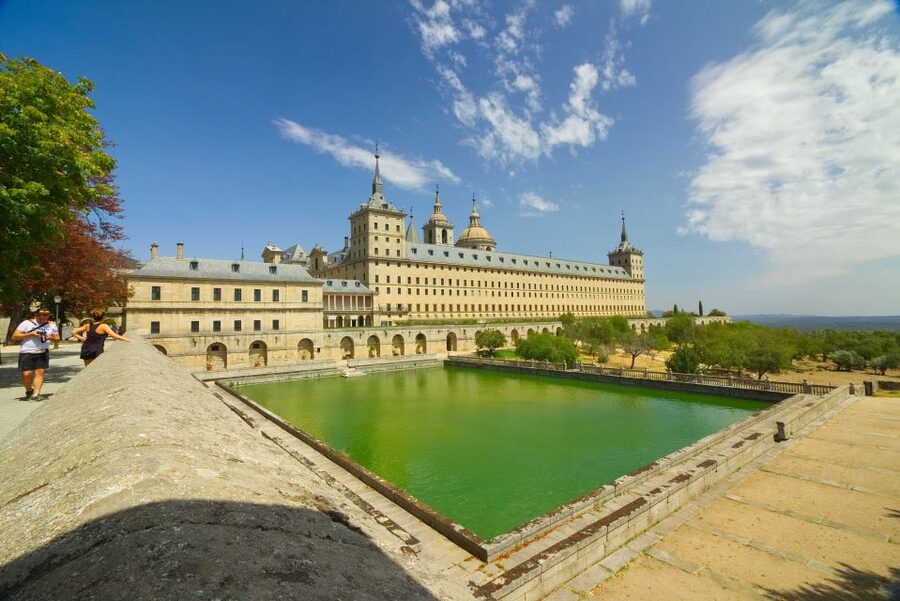
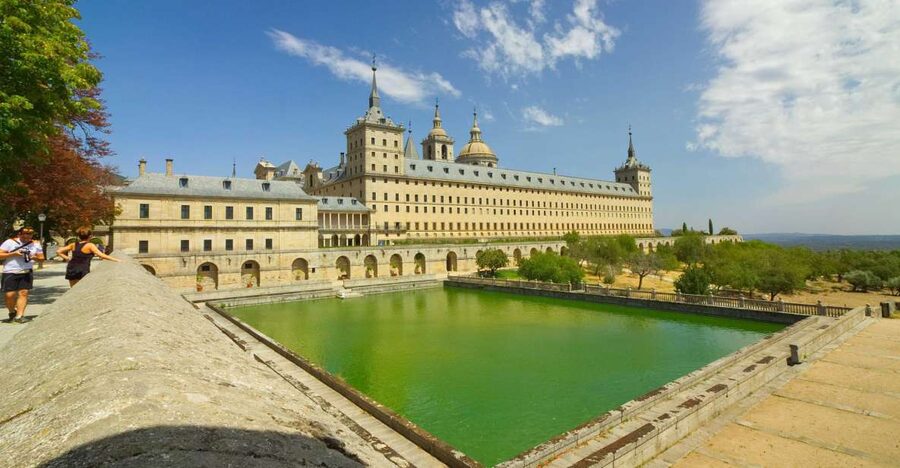
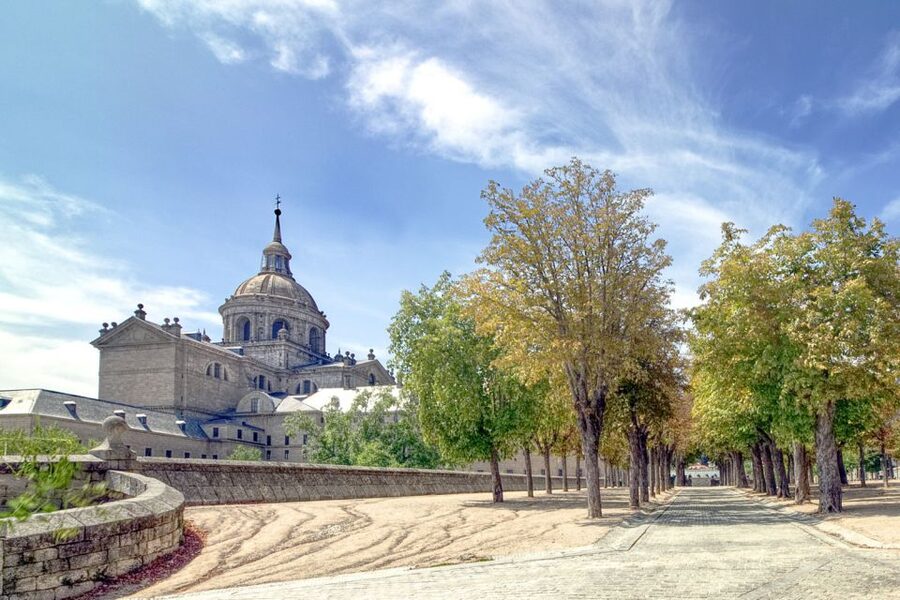
El Escorial is the heart of the tour. Built during the reign of King Philip II, the complex served several purposes at once: royal residence, monastery, place of worship, and royal pantheon. It was designed to express the authority of the Spanish monarchy at the height of the Spanish Empire.
The scale can be hard to grasp from the outside. Inside, the building unfolds through formal spaces and long passages rather than one single palace room. A guide helps connect the parts, explaining how royal life, religious duty, and dynastic burial were tied together.
The two-hour visit includes the Cloister of the 4 Evangelists, the Palace of Philip II, and the Royal Pantheon. The cloister offers a calmer contrast to the grand royal rooms, with an architectural style meant to support the monastery’s religious purpose. It is a good place to pay attention to the layout rather than rushing from one famous room to another.
The Palace of Philip II gives the visit a more personal angle. Instead of seeing only a grand public residence, you get a sense of the private quarters associated with the king. The rooms are part of a larger story about a ruler who used El Escorial as both a home and a symbol of control.
The Royal Pantheon is likely to be the strongest stop for anyone interested in Spain’s monarchy. The burial monuments include kings, queens, and royal children, including infants. The tombs make the royal succession feel less abstract. You are not simply learning a list of monarchs; you are seeing how a dynasty marked its continuity, status, and loss.
The building also has a library, but access is not guaranteed. If seeing it is important to you, keep expectations modest. One visitor specifically wished the library had been open, after seeing images of its interior. The tour focuses on the areas included in the guided visit, not on providing unlimited access to every room.
Why a guide matters inside El Escorial
El Escorial contains enough rooms, symbols, and royal names to blur together without explanation. A good guide gives the building a readable structure. Instead of treating the monastery as a string of grand interiors, the visit can show you how Philip II’s political and religious aims shaped the entire complex.
Several guides have received praise for their pacing and explanations. Pilar was described as thorough while still allowing the group to see everything without feeling rushed. Carlos was praised for making the royal palace more engaging, and Sylvia was remembered for both her personal manner and her explanations of the monastery and tombs.
The experience is not identical with every guide. English delivery has sometimes been difficult to follow, and one person found that only about a quarter of the information was presented in English during a supposedly bilingual tour. Another had trouble hearing the guide because of wind, breathing sounds, and a weak receiver.
The audio headset is intended to solve that problem, but it has not always worked perfectly. Test yours early and tell the guide or tour staff immediately if you cannot hear. Staying near the guide is sensible, especially in crowded rooms or when the group is moving through a large complex.
The tour operates in Spanish and English. If everyone in your group speaks English, the commentary may be delivered only in English, which can make the experience more direct. In a mixed group, though, the two languages can reduce the amount of time available for each explanation.
The short transfer to the Valley of the Fallen
After El Escorial, the coach travels about 15 minutes to the Valley of the Fallen. The distance is short, but the change in subject is large. You move from the ceremonial world of Spanish kings to a memorial connected with the Spanish Civil War.
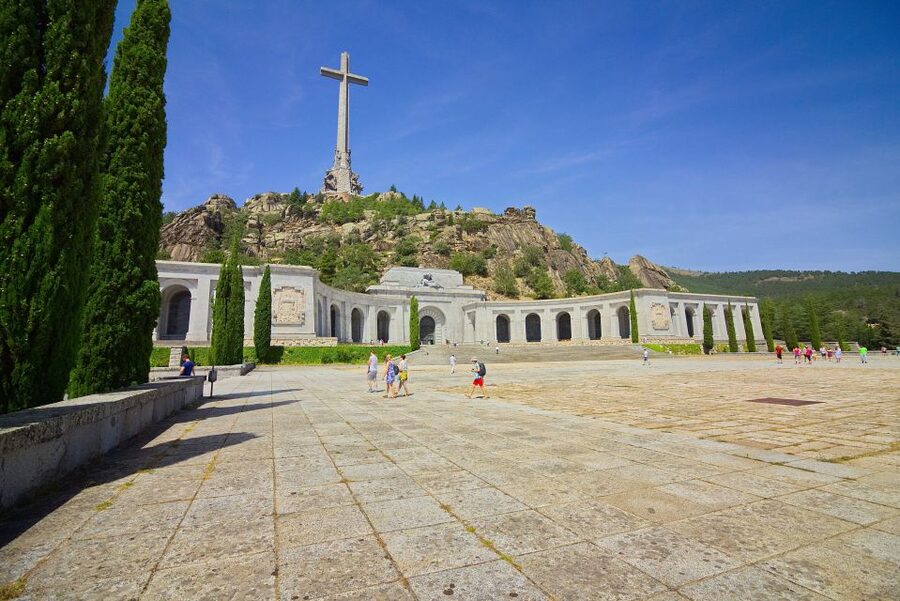
The site was built in 1936 as a memorial to those who died in the conflict. The complex lies in the Guadarrama Mountains and includes a huge cross, a basilica, and a crypt carved into the rock beneath the mountain. The cross rises more than 150 meters, making it visible as a striking feature of the site.
The setting adds to the effect. You are looking across a mountain valley at a monument designed to dominate its surroundings. Even before entering the basilica, the size of the construction gives you an idea of the ambition behind it.
This is also the more politically and emotionally difficult part of the tour. The Valley of the Fallen is not simply a grand church in a beautiful setting. Its history is tied to Franco’s dictatorship, and the construction involved prisoners, a fact that gives the monument a darker human context.
You should expect a serious visit rather than a light sightseeing stop. One person described the site as impressive because of the enormous work involved, but also as a dead attraction. That judgment captures the mixed response it can produce: the architecture is hard to ignore, while the meaning remains painful and contested.
A completely different kind of day out in Madrid:
- Madrid: Tour Bernabéu Entry Ticket
★ 4.5 · 21,573 reviews - Madrid: Prado Museum Entry Ticket
★ 4.6 · 17,509 reviews - Madrid: Royal Palace Fast-Access Admission Ticket
★ 4.6 · 13,856 reviews - Madrid: “Emociones” Live Flamenco Performance
★ 4.8 · 12,866 reviews
Inside the basilica and crypt
The tour includes admission to the Valley of the Fallen and a visit inside the basilica. You do not have to be satisfied with an exterior view of the cross or a distant photograph. The interior gives you a closer look at the scale of the memorial and the way the basilica is built into the mountain.
The crypt is part of the visit, and its underground setting creates a clear contrast with the open mountain views outside. At El Escorial, royal burial is presented within a monastery built for a dynasty. Here, burial and memorial are linked to a national conflict and its aftermath.
The scheduled visit lasts about 45 minutes. That is enough to enter the basilica, hear the main explanation, and take in the central features, but it is not a long independent visit. One person felt that ten extra minutes would have helped. I agree that you should arrive ready to move at the group’s pace.
The Valley’s short time allocation is the biggest compromise of the itinerary. If you want to study architectural details, spend a long period in the crypt, or take many photographs, you may feel hurried. Flash photography and video recording are not allowed, so bring your attention rather than expecting to document every corner.
The site can also be visually powerful even in limited time. The basilica, crypt, cross, and mountain setting create a strong final chapter to the tour. It is a very different experience from El Escorial, and that contrast is one of the outing’s best features.
A five-hour schedule that keeps the day manageable
The complete schedule is approximately:
- One hour by coach from Madrid to El Escorial
- Two hours at the monastery
- Fifteen minutes by coach to the Valley of the Fallen
- Forty-five minutes at the basilica and memorial
- Fifty minutes by coach back to Madrid
That adds up to a compact five-hour outing. The schedule works well if you want to see major sights outside Madrid without giving up an entire day. It also leaves room for a museum, meal, or neighborhood walk once you return.
The tradeoff is that both visits are tightly organized. El Escorial is too large to see every corner in two hours, and the Valley of the Fallen is too significant for a casual ten-minute stop. You get a guided introduction to both, not unlimited time at either.
The pace has generally suited older people and those who prefer organized sightseeing. A comfortable coach and a measured walking speed can make the day easier than planning separate visits yourself. Still, the tour is not suitable for wheelchair users, and anyone with mobility concerns should consider that the monastery and basilica require walking through substantial interior spaces.
What the $78 price includes
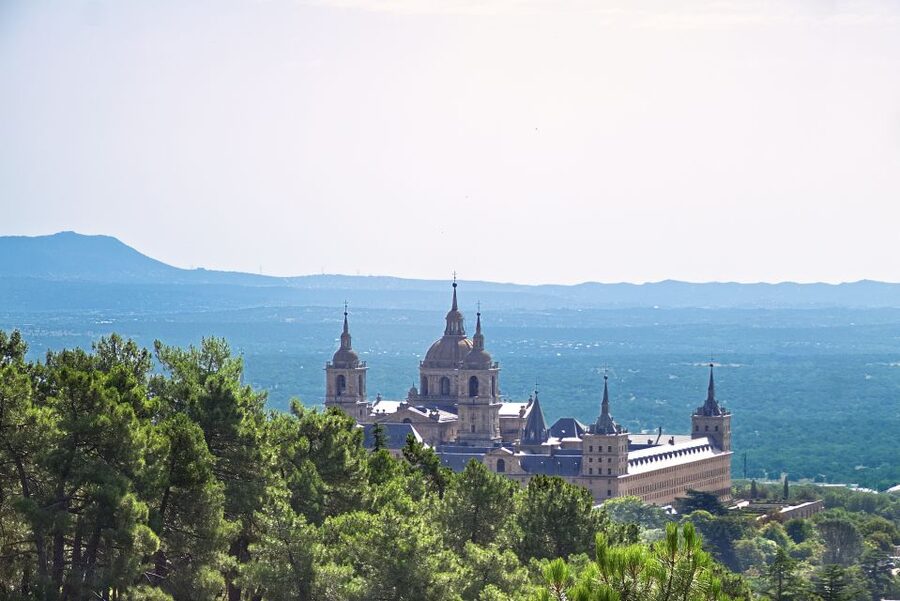
At $78 per person, the tour is fairly priced if you value convenience. The cost includes round-trip transportation, a live guide, admission and a guided visit at El Escorial, entry to the Valley of the Fallen and its basilica, plus an audio headset.
Buying those elements separately would require more planning, and transport is the main advantage here. You are paying for a single organized route that links two sites about nine kilometers apart, rather than solving the connections on your own.
The price is less attractive if you only want to see one monument or prefer long, unstructured visits. The schedule is fixed, and the guided format limits independent time. For a first visit to the area, though, the combination offers a useful amount of history for a half-day.
The strongest value comes from the contrast. El Escorial gives you royal architecture, religious art, royal tombs, and the world of Philip II. The Valley of the Fallen gives you a much more modern and troubling memorial story. Seeing both helps you compare different ways power and memory have been presented in Spain.
Who should choose this Madrid excursion?
I would recommend this tour to you if you have at least one free morning or afternoon in Madrid and want a guided introduction to Spanish royal history beyond the capital. It is especially useful if El Escorial is high on your list but you do not want to arrange transport or admissions yourself.
It suits people who enjoy architecture, monarchy, religious buildings, and political history. The Royal Pantheon is a strong reason to go, and the Valley of the Fallen adds a difficult but important subject that many short sightseeing trips leave out.
It may not suit you if you dislike fixed schedules, need wheelchair access, or want plenty of time for photographs and quiet exploration. You should also be comfortable listening through an audio headset and possibly receiving information in a bilingual format.
Guide quality matters. Pilar, Carlos, Ana, Anne, and Sylvia have each been praised for clear explanations, friendly manners, and a good pace. At the same time, reports of weak English delivery, poor headsets, and limited group engagement mean you should not assume every departure will feel identical.
Should you book the El Escorial and Valley of the Fallen tour?
Book it if you want two major historical sites in five hours, with transport and admission handled for you. The monastery is the stronger attraction for most people, especially the Palace of Philip II and Royal Pantheon, while the Valley of the Fallen provides a dramatic and sobering contrast.
I would choose it early in a Madrid visit if you want context for Spain’s monarchy and twentieth-century politics. I would skip it only if you need extensive independent time, have mobility limits, or prefer to focus entirely on Madrid’s city-center sights.
Before departure, wear supportive shoes, carry only a small bag, and check that your headset works. Keep the English-language limitation in mind if your group is bilingual. With those expectations, the $78 cost offers a practical and worthwhile half-day beyond Madrid.
FAQ
How long does the tour last?
The tour lasts five hours, including transportation from Madrid and the return journey.
Where does the tour begin?
The meeting point is VPT Tours, listed as VPT Travel for All.
What languages are available?
The live guide service is available in Spanish and English.
What is included in the price?
The price includes transportation, a tour guide, entrance and a guided visit to the Monastery of San Lorenzo de El Escorial, entrance to the Valley of the Fallen and its basilica, and an audio headset.
How much time is spent at El Escorial?
The scheduled visit to San Lorenzo de El Escorial lasts about two hours.
How much time is spent at the Valley of the Fallen?
The scheduled visit to the Valley of the Fallen lasts about 45 minutes and includes the basilica interior.
Is the tour suitable for wheelchair users?
No. The experience is not suitable for wheelchair users. Comfortable shoes are recommended, and large bags, oversize luggage, pets, food, and drinks are not allowed in the vehicle.
Recently added around Madrid
- Madrid: Thyssen Museum Guided Tour with Skip-the-Line Entry★ 4.5 · 165 reviews
- Axe Throwing 1 hour session★ 5.0 · 166 reviews
- Madrid Food Walking Tour with Tapas and Vermouth★ 5.0 · 167 reviews
- Toledo Full-Day Walking Tour with Guide from Madrid★ 4.5 · 170 reviews
- Madrid: Top Pub Crawl Madrid & Party★ 5.0 · 173 reviews
- Madrid Gourmet Tapas Small Group Tour★ 5.0 · 175 reviews
- Street Art Guided Tour in Madrid★ 5.0 · 175 reviews
- Iberian Ham and Wine Small Group Tour in Madrid★ 5.0 · 176 reviews
Half-Day, compared.

Montserrat Half-Day Tour with Tapas and Gourmet Wines
Read our review →
Montserrat Monastery Half Day Experience from Barcelona
Read our review →
Montserrat: Morning or Afternoon Half-Day Trip with Pickup
Read our review →

Montserrat Half Day with Cable Car and Easy Hike from Barcelona
Read our review →
Montserrat Half Day Afternoon Tour from Barcelona
Read our review →Browse the lists this tour appears in