
Review · NATIONAL PARKS
Donana National Park and El Rocío: Guided Tour from Seville
Wild Spain begins just beyond Seville. This full-day outing takes you from rice fields and bird-filled marshes to the sandy village of El Rocío, Atlantic dunes, pine forest, and Doñana National Park. I like the tour for two clear reasons: the itinerary covers several very different ecosystems, and the small-group format can make the day feel personal when you have a strong guide such as José, Ramón, Patricia, Sergio, or Luismi.
The main caution is transport and guide language. A vehicle shared by up to 15 people can mean cramped seats and poor views, while bilingual guiding has sometimes left English-speaking passengers with shorter explanations. Wildlife also follows nature’s schedule, not yours. You may see flamingos, storks, deer, wild horses, or even an Iberian lynx, but no sighting is guaranteed.
In This Review
- Quick facts about this Doñana day trip
- Why Doñana makes a worthwhile day from Seville
- Leaving Seville for La Puebla del Río
- Dehesa de Abajo and the white stork colony
- El Rocío, a sandy village with a famous hermitage
- Palacio del Acebrón and the La Rocina walk
- Lunch and the Matalascañas coast
- The 4×4 return through Doñana
- Vehicles, seating, and the small-group promise
- English guiding and what to expect
- Is $107.68 good value?
- Who should book this experience?
- Should you book the Doñana and El Rocío tour?
- FAQ
- How long does the Doñana National Park tour last?
- What is included in the price?
- Is lunch included?
- Where does the tour start?
- Does the tour pick up at my hotel?
- Is the tour offered in English?
- How many people can join the tour?
- Will I definitely see an Iberian lynx?
- Is the beach visit included?
- Can I cancel for a refund?
Quick facts about this Doñana day trip
- A long 10-hour outing: You leave Seville early and return after visiting marshes, forest, village, coast, and dunes.
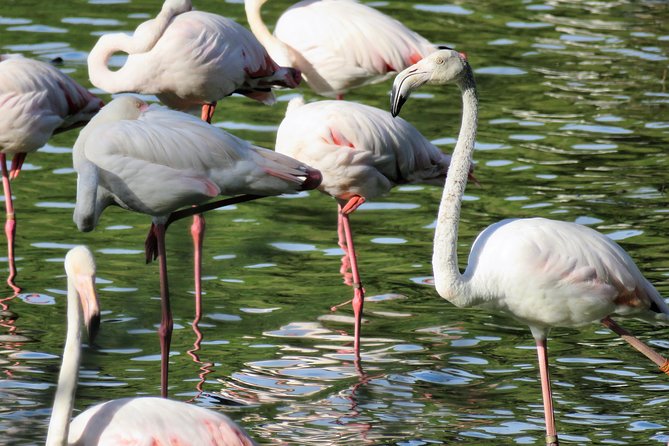
- Birdwatching is the strongest feature: Rice fields and wetlands can produce sightings of storks, flamingos, spoonbills, ducks, geese, grebes, larks, and other species.
- El Rocío feels unlike ordinary Andalusia: Its sandy streets, horses, and white hermitage create an unusual western-town atmosphere.
- The vehicle can shape your day: Some departures use a 4×4, while several accounts describe a minivan or a crowded Toyota 4×4.
- The season matters: Spring, when water fills more of the marsh, is often better for birdlife. October can be pleasant but quieter for animals.
- Lunch is extra: The meal stop is part of the day, but food and drinks are not included, and the quality can vary.
Why Doñana makes a worthwhile day from Seville
Doñana is not a single scenic viewpoint. It is a broad natural area shaped by water, sand, woods, marshes, rice fields, and pasture. That variety explains the tour’s appeal. In one day, you get a useful introduction to the northern side of the park and its surrounding countryside without arranging several separate excursions.
The first part of the day focuses on water and birds. Later, you walk beside the La Rocina stream, visit the coast near Matalascañas, and cross forested areas by vehicle. The changes are frequent enough to keep the day moving, though they also mean you do not spend all day inside the national park itself.
I especially like the contrast between the rural marshes and El Rocío. After watching birds in wet fields, you arrive in a village where sandy streets are used by horses and pedestrians. It feels more like a film set than a standard Andalusian town, but it is a living place with a major religious tradition.
The tour is rated 4.5 out of 5 from 240 ratings, which reflects the strong potential of the day but also the uneven parts. The best outings depend heavily on the guide, the vehicle, the weather, and the amount of water in the marshes.
A few more Spain trips worth a look
- From Seville: Doñana National Park Day Trip
★ 4.3 · 380 reviews - Donana National Park: Guided Day Tour from Seville
★ 4.5 · 372 reviews - Tenerife: Sunset and Stargazing at Teide National Park
★ 4.7 · 2,826 reviews
Leaving Seville for La Puebla del Río
Pickup begins early. The designated meeting point is at C. Rastro, 12a, though pickup instructions also list Calle Trajano 6 and Hotel Don Paco at Plaza Padre Jerónimo de Córdoba 4. The company says it collects from most centrally located hotels, but some passengers have had to walk about 20 minutes to a meeting point.
I would confirm your exact pickup location before the morning of the tour. Arrive early, too. Several people received urgent calls when the guide thought they were late, even though they had arrived at the stated time. That is an avoidable start to a long day.
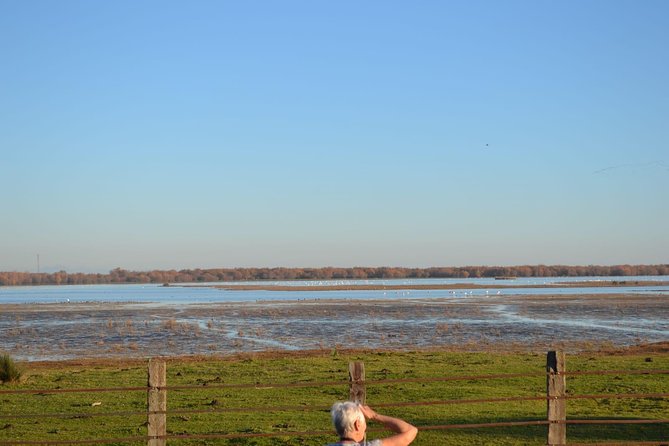
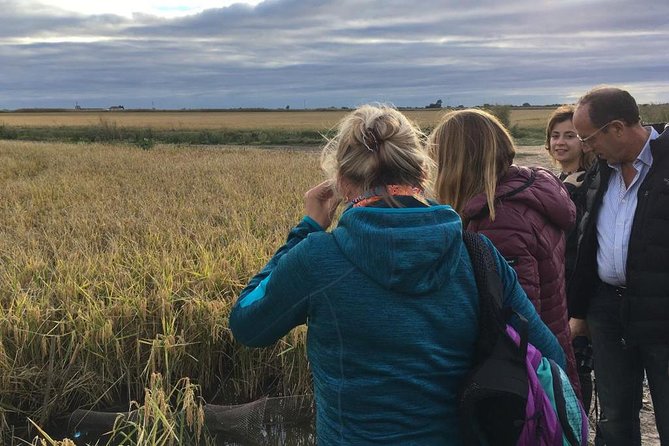
The first proper stop is La Puebla del Río, near the Guadalquivir River. The surrounding rice fields are important because they hold water through much of the year. That makes this area particularly useful for birds, especially when other parts of Doñana are dry.
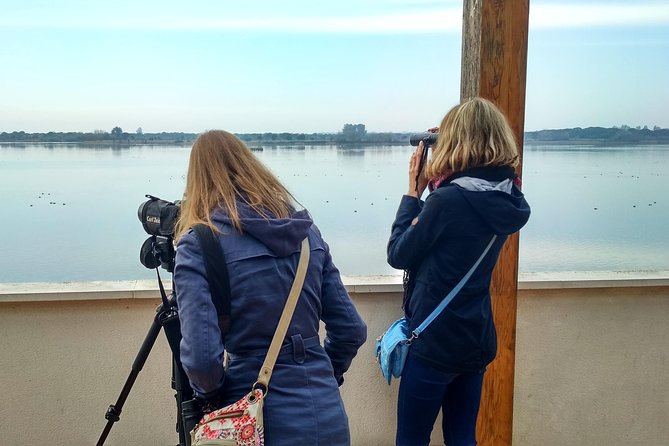
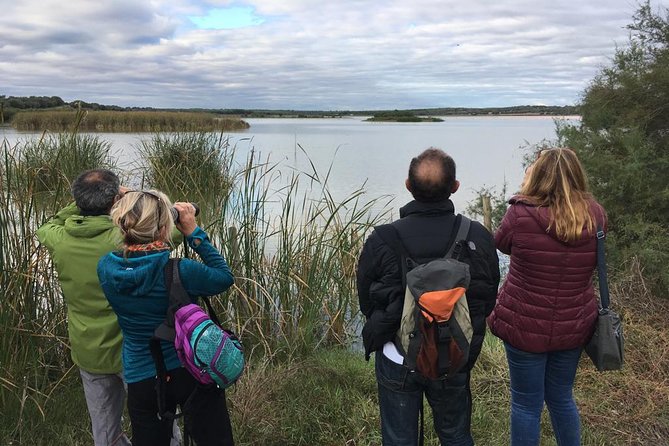
You spend about 40 minutes here. The stop is less about grand views and more about understanding how farming and wildlife share the same water system. If you enjoy birdwatching, bring binoculars and a camera with a useful zoom. If you are expecting a dramatic park entrance, this opening may feel modest.
Dehesa de Abajo and the white stork colony
At Dehesa de Abajo, the setting changes to old olive trees, oaks, marsh, and open pasture. The area is noted for Europe’s largest colony of white storks, and the rice fields nearby can attract thousands of birds.
This is one of the day’s strongest stops. The guide can explain what you are seeing, point out nests, and help separate distant birds that look like little white marks to the untrained eye. Past sightings have included flamingos, spoonbills, geese, ducks, grebes, larks, swallows, and stonechats.
The exact wildlife count depends on season and water levels. One outing produced very few animals, while another included storks with chicks, flamingos, deer, rabbits, wild horses, and a young Iberian lynx. That difference is not unusual in a natural park. The tour can show you good habitat, but it cannot order the animals onto the roadside.
The stop lasts about an hour. Allow some patience here. Birdwatching is often quiet work, and the best moment may be a guide spotting something small before you do.
El Rocío, a sandy village with a famous hermitage
El Rocío is the most unusual cultural stop. Its sandy streets are made for horses, not just cars, and the village has a deliberately old-fashioned feel. The white Hermitage of El Rocío, also known as the shrine of the Virgin of El Rocío, is the central sight.
You have about an hour to see the chapel and take in the village. The timing is enough for a visit and a walk, but not for a leisurely exploration. One practical tip is to watch your footing on the sand and wear shoes that can handle an uneven surface.
The village becomes especially evocative around the annual pilgrimage, when large numbers of pilgrims pass through the area. The tour is not simply a nature excursion at this point. It shows how religion, horses, rural traditions, and the park are tied together.
Some people consider El Rocío the highlight of the day. Others would rather spend that hour in the park. That choice depends on your interests. If you want both culture and nature, the stop gives the itinerary welcome variety. If your priority is wildlife photography, you may wish the walking time were longer.
A completely different kind of day out in Seville:
- Seville: Royal Alcázar Entry Ticket
★ 4.6 · 28,378 reviews - Seville: Live Flamenco Dancing Show Ticket at the Theater
★ 4.7 · 16,396 reviews - Seville: 1-Hour Guadalquivir River Sightseeing Eco Cruise
★ 4.2 · 10,281 reviews - Seville: Cathedral, Giralda, and Royal Alcázar Guided Tour
★ 4.7 · 9,165 reviews
Palacio del Acebrón and the La Rocina walk
Next comes the Palacio del Acebrón, near the Arroyo de la Rocina. The palace provides a short cultural and scenic pause before the walking section. You spend roughly 30 minutes here, so think of it as an introduction rather than a long architectural visit.
The more important part for many people is the circular walk near the La Rocina stream. The route is designed to help you read the park. Your guide may point out animal tracks, native plants, and the connection between water and wildlife.
This is where a good guide makes a real difference. José has been praised for explaining birds, mammals, reptiles, insects, and plants, while Ramón and Sergio have also been singled out for strong guiding. Luismi is particularly focused on birds. A guide who knows the area can turn a patch of scrub or a muddy track into a small lesson in survival.
The walk lasts about an hour. It is not presented as a demanding hike, but you should still wear comfortable shoes and bring water. The tour information says most people can participate, yet anyone who dislikes walking on natural trails should keep expectations modest.
Lunch and the Matalascañas coast
After the walk comes a lunch break at your own expense. The meal is typically based on local food, but the stop is not a guaranteed highlight. Some people found the restaurant service and food disappointing, while others had a pleasant meal with welcoming staff.
I would treat lunch as practical fuel rather than a central reason to book the tour. If you have dietary needs, ask the guide or restaurant staff clearly before ordering. One vegetarian passenger found the selection and quality limited.
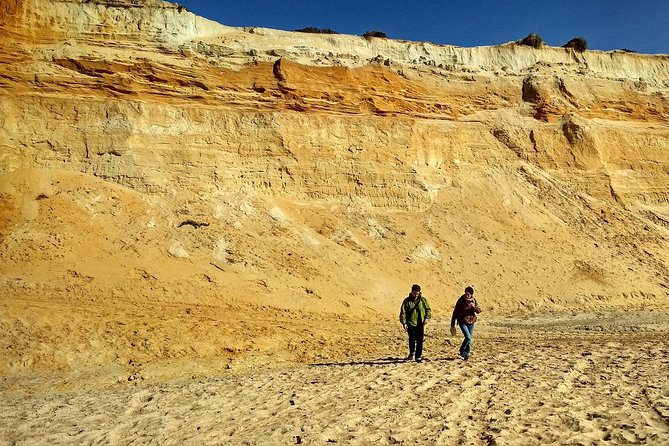
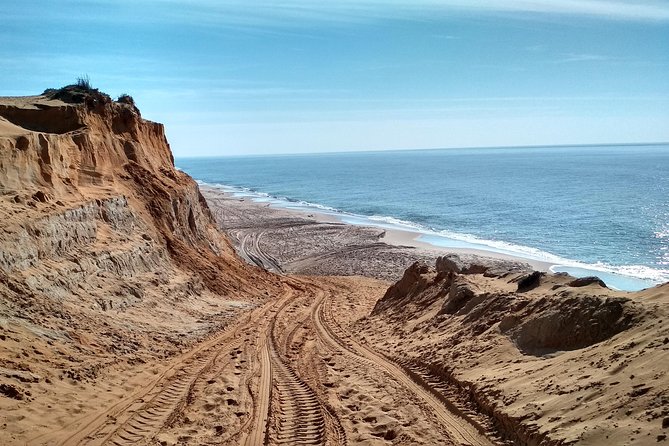
The coastal stop is at Playa de Matalascañas, where you see Doñana’s shore and its moving dune system. The tour explains the largest dune ecosystem in Spain and how the dunes change over time. You get about an hour near the beach.
Pack a swimsuit in warm weather. One outing included roughly 45 minutes at the beach, enough for a quick swim if conditions allow. Poor weather can alter the plan, and the operator may cancel the experience if conditions are unsafe.
This stop gives the day a physical change of pace. After marshes, birds, and woodland, you have open sand and the Atlantic coast. Still, some nature-focused visitors would prefer less beach time and more walking inside the park.
The 4×4 return through Doñana
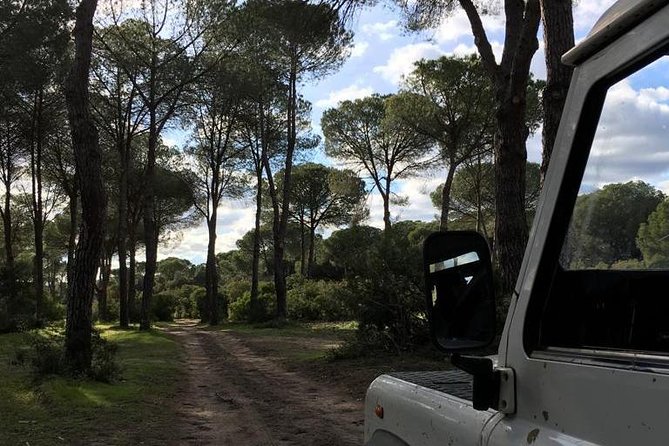
The final section is supposed to cross forested areas of Doñana by 4×4 on the return to Seville. The aim is to look for larger mammals, including deer, wild boar, wild horses, rabbits, and the Iberian lynx. The return takes about two hours and may continue through sunset in the Asperillo pine forest.
This is the most exciting part when the road is open and the guide is alert. One group saw a young lynx cub, while others found deer, wild boar, horses, and many birds. Another outing ended with a memorable ride through puddles in the 4×4.
But this section has an important limitation. Weather and safety conditions can close parts of the route. On at least one departure, the promised forest crossing did not take place, and the group remained mostly on peripheral public roads. If seeing the national park interior is your main goal, ask before departure which routes are currently open.
The lynx is a rare sight, not a scheduled attraction. A guide may know where signs or sightings have occurred, but you should book this as a chance to search for wildlife, not a guaranteed lynx safari.
Vehicles, seating, and the small-group promise
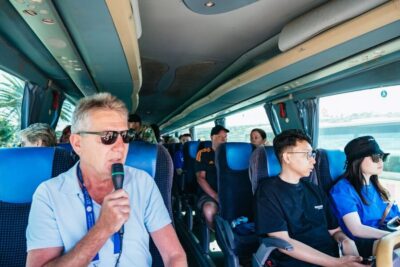
The tour allows a maximum of 15 people, but the vehicle arrangement matters more than the headline group size. Some departures use a good minivan. Others have used a Toyota 4×4 with six passengers plus the driver, including rear seats with small, dirty windows and limited room for camera equipment.
If you are tall, prone to motion discomfort, or serious about photography, ask what vehicle is planned. The back seats can offer a poor view, especially on a long ride over uneven roads. A simple seat rotation at the beginning would help, but it may not happen unless the group agrees to it.
The phrase 4×4 can also create the wrong expectation. This is not always a rugged jeep adventure. It may be a minivan, and some planned off-road sections can close because of weather. The vehicle is transportation first, wildlife platform second.
On the positive side, a small group can make it easier to ask questions and get help spotting animals. Strong guides such as José, Ramón, and Sergio have been praised for patience, humor, and detailed explanations. The quality of your day rises sharply when the guide actively interprets what you see.
English guiding and what to expect
The experience is offered in English, but several departures have mixed English and Spanish groups. This can work well when the guide gives full explanations in both languages. It can also become frustrating when Spanish conversations run longer and English summaries are brief.
I would confirm that the tour is operating in English if that is essential for you. Do not assume every explanation will be repeated at equal length. One passenger expecting French guiding also found that the promised language was not available.
This issue is especially important on the nature stops. Bird names, plant uses, animal tracks, and park rules are the details that turn scenery into understanding. If you miss those explanations, the day becomes a scenic drive with occasional stops.
The best guides appear to be passionate about the area. Sergio has a biology background, José has been praised for spotting and explaining a wide range of species, and Ramón is frequently appreciated for his bird expertise. Patricia has also been described as friendly and attentive.
Is $107.68 good value?
At $107.68 per person, this is not a cheap outing, but it covers a lot: round-trip shared transport, a professional driver-guide, a 4×4 vehicle, several nature stops, a walking route, El Rocío, the coast, and about 10 hours away from Seville.
The value is strongest if you do not have a car and want one organized day that combines nature and culture. Creating this route independently would require transport, timing, local knowledge, and a way to reach places scattered around the park.
The value is weaker if you mainly want a guaranteed 4×4 safari, a long hike, or a quiet English-only experience. Lunch costs extra, seating may be uncomfortable, and some attractions receive only brief visits. You are paying for access, transport, and interpretation, not a private wildlife expedition.
Free cancellation is available up to 24 hours before the start time. Weather or an insufficient number of participants can also lead to a changed date or full refund.
Who should book this experience?
I would recommend it to you if you enjoy birds, plants, rural culture, and changing scenery. It suits first-time visitors to Andalusia who want to see a side of the region beyond Seville, especially without renting a car.
It is also a good match for people who enjoy flexible wildlife watching. You may see a remarkable number of species, but you need to accept slow moments and empty stretches of road.
I would be cautious if you need generous legroom, dislike long drives, or want every explanation in polished English. Serious photographers should ask about seating and the vehicle. Families and older visitors should also consider that the day is long, with stops, walking, beach time, and a late return.
Should you book the Doñana and El Rocío tour?
Book it if you want a broad introduction to Doñana and like the idea of combining wetlands, birdlife, a strange and memorable village, dunes, and forest in one day. The strongest guide can make this a superb outing, and a lucky group may see flamingos, storks, deer, wild horses, or even an Iberian lynx.
Skip it if your only goal is an extended off-road wildlife drive inside the park. Before paying, confirm the pickup point, the guiding language, the expected vehicle, and whether weather has closed any interior routes. With those expectations clear, this is a useful and often rewarding escape from Seville.
FAQ
How long does the Doñana National Park tour last?
The experience lasts approximately 10 hours, including transport from Seville, the nature stops, El Rocío, the beach, and the return journey.
What is included in the price?
The price includes a professional driver-guide, shared round-trip transport, transport by 4×4 vehicle, pickup and drop-off service in most downtown Seville hotels, and a small-group guided day trip.
Is lunch included?
No. Food and drinks are not included, so you should budget separately for lunch.
Where does the tour start?
The listed starting point is C. Rastro, 12a, 41004 Sevilla, Spain. Other pickup points include Calle Trajano 6 and Hotel Don Paco at Plaza Padre Jerónimo de Córdoba 4.
Does the tour pick up at my hotel?
Pickup is offered at most downtown Seville hotels, but some people are directed to a nearby meeting point instead. Confirm the exact location before the tour.
Is the tour offered in English?
The experience is offered in English. Some departures combine English and Spanish speakers, so you should confirm how bilingual explanations will be handled.
How many people can join the tour?
The maximum group size is 15 people.
Will I definitely see an Iberian lynx?
No. The lynx is a wild animal, and sightings are not guaranteed. Some departures have seen one, while others have seen little wildlife.
Is the beach visit included?
Yes. The itinerary includes a stop at Playa de Matalascañas, where you can see the coast and Doñana’s changing dunes.
Can I cancel for a refund?
You can cancel for a full refund up to 24 hours before the experience begins. Cancellations or changes made less than 24 hours before the start time are not refundable.
Recently added around Seville
- Art and Wine in Sevilla★ 5.0 · 165 reviews
- Seville: Cathedral and Alcázar Guided Tour★ 4.6 · 167 reviews
- From Seville: White Villages and Ronda Full-Day Trip★ 4.2 · 168 reviews
- Guided Tour Sevilla Cathedral★ 4.5 · 169 reviews
- Cathedral and Real Alcàzar in Italian★ 5.0 · 170 reviews
- Seville: Guadalquivir River Cruise with Lunch or Dinner★ 4.5 · 170 reviews
- White Villages and Ronda: Day trip from Seville.★ 4.7 · 171 reviews
- Private Walking Tour Alcazar and Cathedral in Sevilla★ 5.0 · 172 reviews
National Parks, compared.


Teide National Park Sunset & Stargazing with Dinner (Star Safari)
Read our review →
Arrecife/Playa Blanca: Timanfaya National Park Area Day Tour
Read our review →
Jávea: Cala Tango and San Antonio Nature Reserve Kayak Tour
Read our review →
Browse the lists this tour appears in