Review · TICKETS
Barcelona: Sant Pau Recinte Modernista Entry Ticket
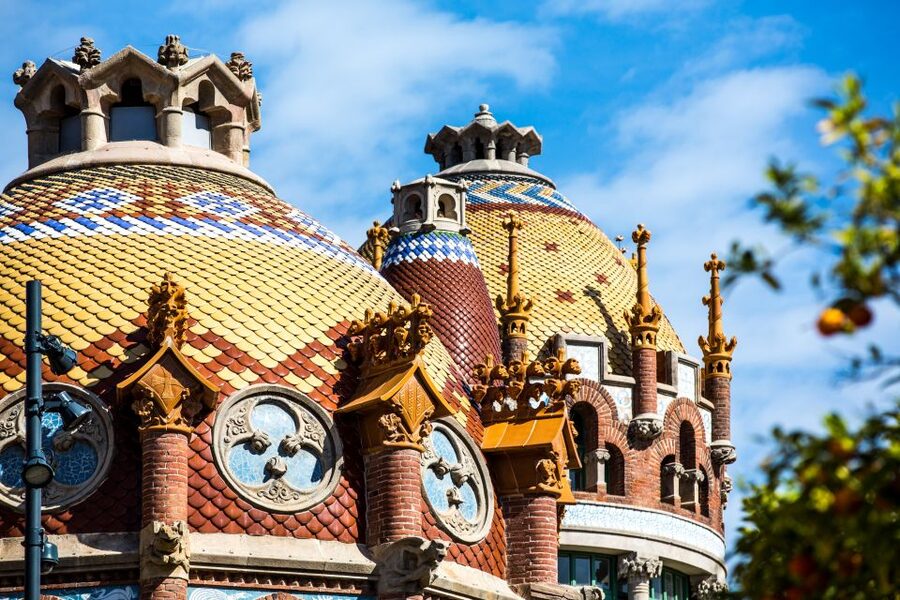
Look beyond Gaudí for Barcelona’s grandest surprise. Sant Pau Recinte Modernista is a spectacular former hospital complex where colorful mosaics, stained glass, sculpture, gardens, and practical medical design come together. I especially like the peaceful courtyards and the way the restored pavilions show how early 20th-century healthcare was shaped by fresh air, gardens, hygiene, and dignity. The underground passageways and preserved hospital displays add real substance beyond the pretty façades.
At $21 per person, the ticket is good value if you care about architecture, social history, medicine, or thoughtful design. The main consideration is that this is an entry ticket, not a guided tour, so you explore at your own pace with the site’s displays and available visitor material. If you want a running explanation from a guide, you may find the experience less satisfying without an audio guide or organized tour.
In This Review
- Key points to know before you go
- Why Sant Pau deserves time beyond Sagrada Família
- Entering the garden city at Calle Sant Antoni Maria Claret
- The pavilions: beauty with a medical purpose
- Underground passageways and restored interiors
- A self-guided visit, not a guided tour
- Courtyards, gardens, and a welcome pause
- How the price compares with the experience
- Timing, access, and practical planning
- Who will enjoy Sant Pau most
- Should you book the Sant Pau ticket?
- FAQ
- How long does the Sant Pau Recinte Modernista visit take?
- Is a guide included with the ticket?
- How much does admission cost?
- Where is Sant Pau Recinte Modernista located?
- Is Sant Pau wheelchair accessible?
- Can children enter Sant Pau?
- Can visitors over 65 enter for free?
- Are pets allowed inside Sant Pau?
Key points to know before you go
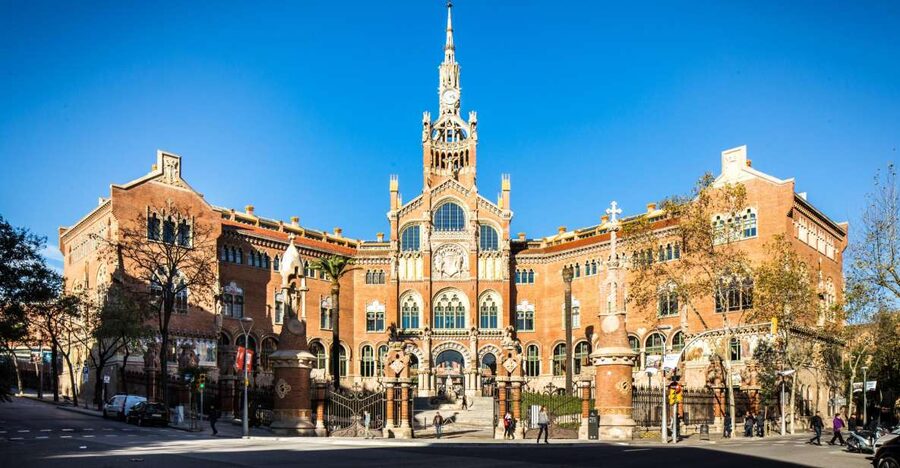
- A working hospital transformed into a museum: Sant Pau served Barcelona as a public hospital for roughly a century before restoration began.
- The architect was Lluís Domènech i Montaner: His Modernista plan created a garden city of separate pavilions rather than one crowded hospital block.
- The underground passages are part of the visit: Tunnels connect the buildings and add a practical, slightly mysterious layer to the complex.
- Plan on 1.5 hours at minimum: Many people spend closer to two hours because there is a lot to examine in the courtyards, pavilions, and exhibition areas.
- Go early for a calmer visit: A 9:30 a.m. arrival can give you quieter courtyards and more time to look closely.
- It is close to other major sights: Sant Pau is only a short distance from Sagrada Família and has a nearby metro station.
Why Sant Pau deserves time beyond Sagrada Família
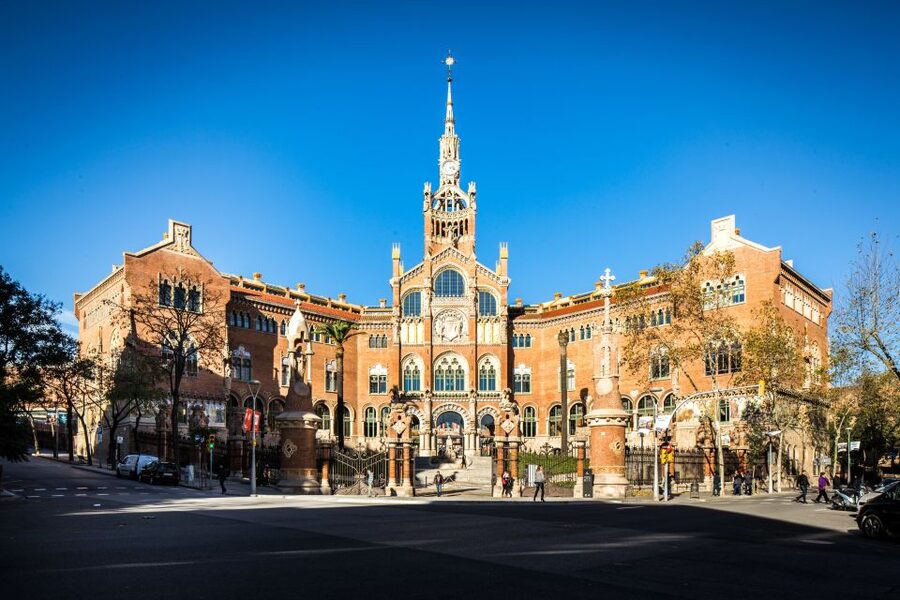
Barcelona has no shortage of famous Modernista buildings, but Sant Pau offers something different. It is not a single house, church, or apartment block. It is a complete medical campus, planned as a garden city for sick people who needed light, air, space, and clean surroundings.
That idea feels remarkably modern. The old Hospital de la Santa Creu in El Raval had become too small by the late 19th century, so the institution needed a new home. Lluís Domènech i Montaner designed the replacement complex between 1905 and 1930, combining practical hospital planning with the decorative style now known as Catalan Modernisme.
I like the way Sant Pau makes you think about architecture as part of care. The buildings were not decorated simply to impress wealthy owners. This was a public hospital linked to charitable work and welfare, intended to serve people who could not easily afford treatment.
The result is easy to admire and surprisingly moving. You see a beautiful complex, but you also see a place built around illness, recovery, poverty, medical progress, and human dignity. That combination gives the visit more weight than a quick photo stop.
A few more Spain trips worth a look
- Barcelona: Sagrada Familia Entry Ticket with Audio Guide
★ 4.6 · 105,312 reviews - Barcelona: Park Güell Admission Ticket
★ 4.4 · 76,534 reviews - Barcelona: Casa Batlló Entry with Self-Audioguide Tour
★ 4.7 · 25,359 reviews
Entering the garden city at Calle Sant Antoni Maria Claret
The official address is Calle Sant Antoni Maria Claret, 167, 08025 Barcelona. From the outside, the first impression comes from the scale and order of the complex. Instead of funneling everyone into one enormous building, the plan spreads hospital functions across separate pavilions connected by underground routes.
That arrangement gives Sant Pau an almost small-town feeling. Gardens and open spaces separate the buildings, while the decorative façades make each section worth inspecting. You can walk between pavilions, pause in the courtyards, and see how the complex was designed to make a hospital feel less closed and institutional.
The main entrance is the obvious place to slow down. Do not only photograph the front. Walk around the sides of the buildings, where mural mosaics and smaller decorative details reward a closer look. One useful rule here is simple: keep looking up, then look back down at the floor and walls. Stained glass, ceramic work, sculpture, and mosaics appear at different levels.
The site is close to Sagrada Família, making Sant Pau easy to pair with a visit to Gaudí’s basilica. The two places also make a useful comparison. Sagrada Família is a soaring religious work still tied closely to Gaudí’s personal vision. Sant Pau is a broad civic project by Domènech i Montaner, where ornament serves a hospital plan.
The pavilions: beauty with a medical purpose
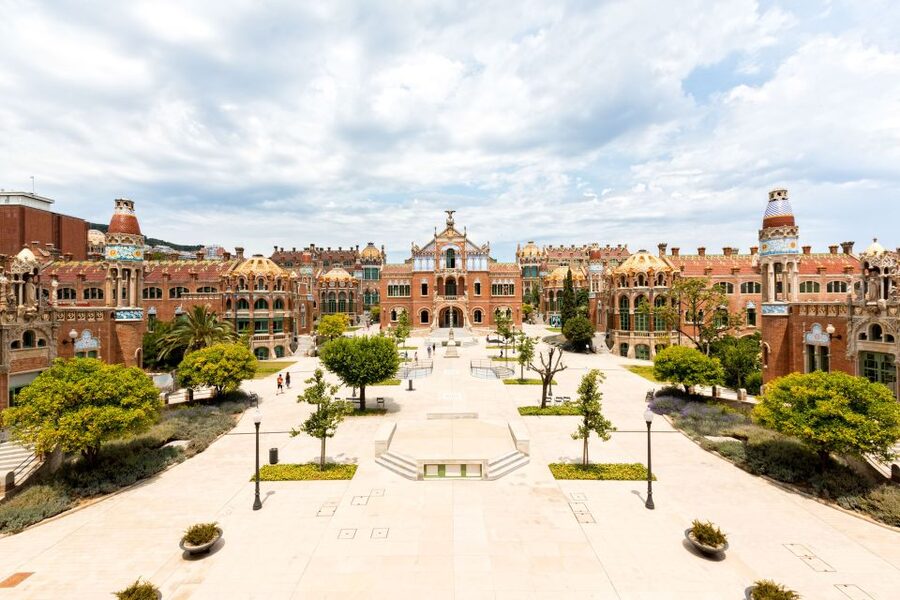
The restored pavilions are the heart of the experience. Their Art Nouveau decoration is not limited to one grand room. You find color and pattern across the complex, including tiles, sculptural details, stained glass, and mosaics.
The beauty can initially distract you from the original purpose. These were hospital buildings, not simply art galleries. The design aimed to give patients better surroundings, with gardens, sunlight, ventilation, and separate structures that helped organize treatment and reduce overcrowding.
Inside, the visit gives you a clearer sense of daily hospital life. Displays include medical instruments from the period and a hospital room arranged as it was in 1932. That recreated room is especially useful because it moves the story away from abstract architecture. You can picture the building as a functioning hospital rather than a newly polished monument.
The medical material is a strong reason to choose Sant Pau over another architecture stop. If you work in healthcare or have an interest in nursing, medicine, or public health, you will likely find the displays especially rewarding. The site shows how treatment changed over time and how staff, patients, and hospital administration were part of the institution’s daily life.
I also appreciate that the complex does not separate science from beauty. The mosaics and stained glass are memorable, but so are the practical ideas behind the buildings. Sant Pau asks you to consider how the surroundings might affect a sick person’s recovery.
Underground passageways and restored interiors
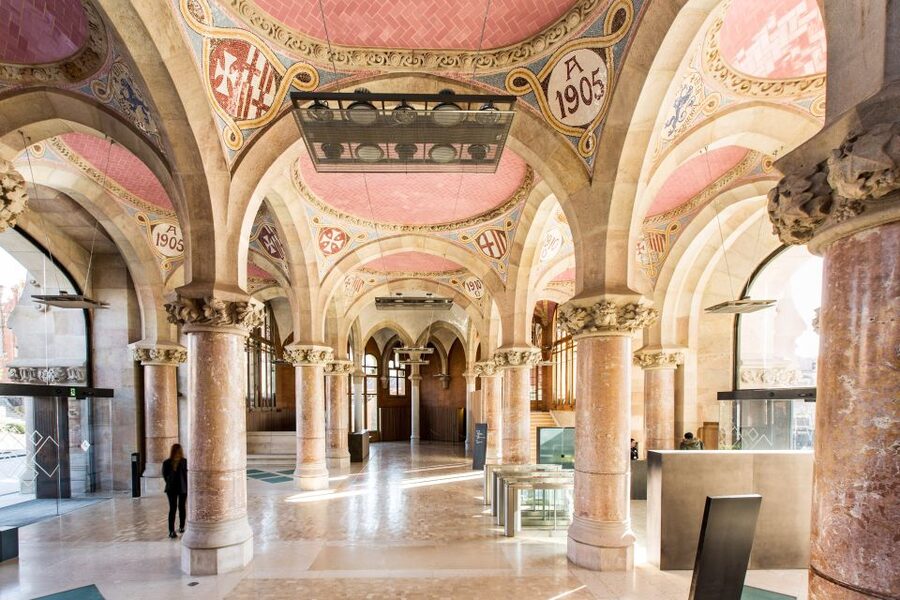
The underground tunnels connect the hospital buildings. They are one of the most distinctive parts of the visit because they reveal the less glamorous machinery of the complex. Above ground, Sant Pau presents gardens and decorated façades. Below ground, the passageways show how staff could move between buildings while keeping the site organized.
The tunnels also help you understand the plan. From the surface, the pavilions can feel like separate monuments. Below, their connections become clear. You are not simply wandering through unrelated buildings. You are tracing the operating system of an institution.
Some visitors may find that not every building is open at all times. The accessible areas give you plenty to see, but the experience is not a complete tour of every room in the former hospital. If you are expecting a fully staged reconstruction with actors, a large number of furnished wards, or access to every pavilion, adjust your expectations.
That said, the open buildings are presented well enough to make the former hospital understandable. A short explanatory video also helps place the site in context. It may not be immediately obvious where to find it, so keep an eye out for the small room that contains it rather than assuming all the historical material is in the main route.
A completely different kind of day out in Barcelona:
- Barcelona: 24 or 48-Hour Hop-On Hop-Off Bus Tour
★ 4.4 · 20,872 reviews - Barcelona: Park Guell Guided Tour with Skip The Line Entry
★ 4.7 · 17,563 reviews - Barcelona: La Pedrera-Casa Milà Ticket & Audio Guide Option
★ 4.7 · 15,099 reviews - Barcelona in 1 Day: Sagrada Familia, Park Guell,Old Town & Pickup
★ 5.0 · 13,541 reviews
A self-guided visit, not a guided tour
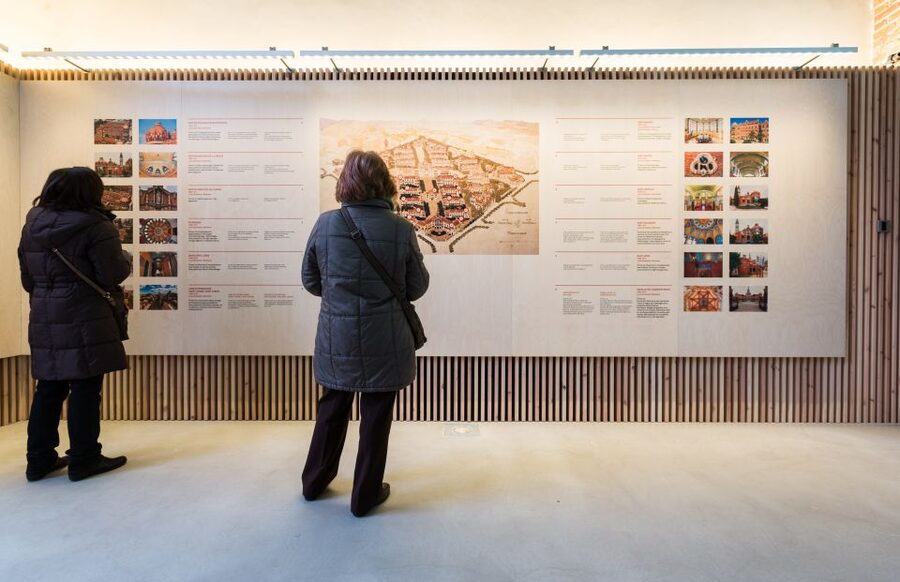
This $21 ticket provides admission to Sant Pau Recinte Modernista. It does not include a guide. That distinction matters.
I like self-paced sightseeing when a site has many small details. You can stop beneath a mosaic, sit in a courtyard, or reread a display without holding up a group. You can also move quickly through sections that interest you less. Several hours can pass easily if you enjoy architectural details and historical exhibits.
The drawback is that you must build the story for yourself. Signage has not always been perfectly clear, especially outdoors and at points where you need to decide which direction to take next. A printed pamphlet may be enough for independent sightseers, but an audio guide is a smart addition if you want more context without joining a group.
You should allow at least the advertised 1.5 hours. Two hours is a more comfortable target if you want to explore the pavilions, inspect the decoration, watch the video, and spend time in the gardens. People with a strong interest in medicine or architecture may want longer.
The lack of a guide is not automatically a weakness. It keeps the visit flexible and often quieter than Barcelona’s biggest attractions. But if you learn best through a clear narrative, arrange an audio guide or guided option rather than expecting the basic ticket to provide one.
Courtyards, gardens, and a welcome pause
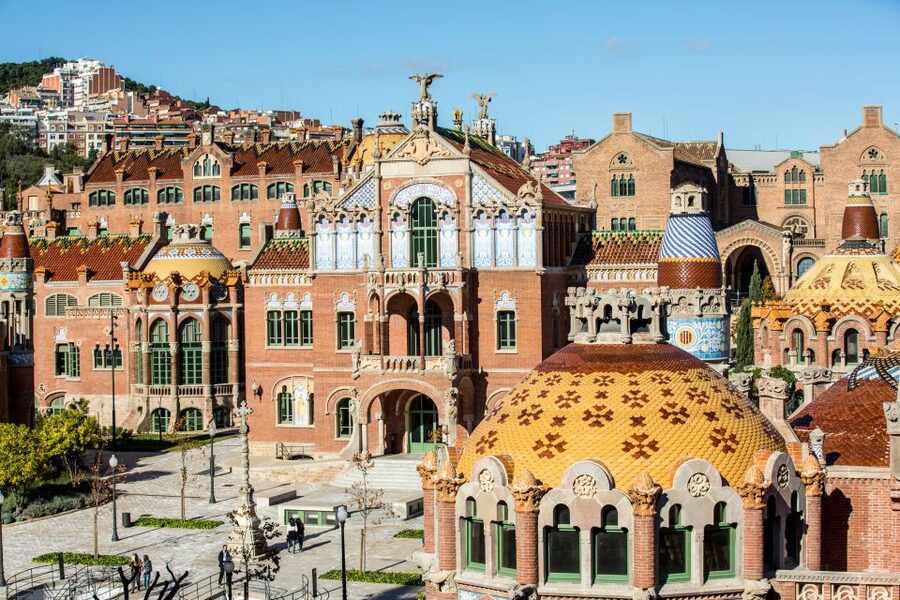
The outdoor spaces are not filler between buildings. They are central to the original hospital concept. The complex was planned as a garden city, with pavilions set among open areas instead of packed into a single dense structure.
That layout gives you room to breathe, especially after time in Barcelona’s busy central streets. The courtyards offer places to pause and study the architecture from a distance. You can see the relationship between the buildings more clearly from outside than from the interior passageways.
The gardens also explain the medical thinking of the period. Fresh air, natural light, and pleasant surroundings were considered important to recovery. The setting turns those ideas into something visible rather than leaving them as historical claims on a wall.
Bring time for the side façades. The grand front buildings get most of the attention, but the side areas contain mural mosaics and other details that are easy to miss if you follow a hurried route. If you enjoy photography, the courtyards give you a chance to frame the pavilions without the tight crowds found at some of Barcelona’s headline sights.
There is no café mentioned as part of the complex, and one practical comment about the visit specifically wished for one. Plan your snack or coffee outside the site. Cafés are available nearby, according to the practical experience of people who have visited.
How the price compares with the experience
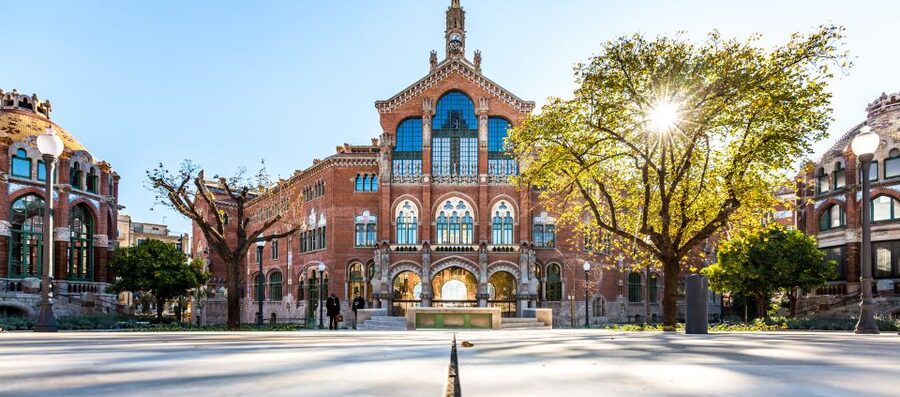
At $21, Sant Pau is not a throwaway admission, but I consider it fair for the amount of architecture and history on display. You are paying to enter a large restored complex rather than a single room, and the visit can fill a substantial part of your morning or afternoon.
The value is strongest for three types of people. First, architecture fans get one of Barcelona’s major Modernista works without needing to see it only from the street. Second, people interested in medicine can examine instruments, hospital spaces, and changing healthcare practices. Third, anyone who likes social history gets a look at a charitable public institution designed for ordinary patients.
The value is weaker if you only want a quick photograph or if your schedule is already packed with Barcelona’s major ticketed sights. Sant Pau rewards attention. You need time to read, walk, and look closely. Rushing through for 30 minutes would make the $21 feel less worthwhile.
It is also a good choice if you have already visited Sagrada Família, Parc Güell, or the Picasso Museum and want a different side of Barcelona. Sant Pau has the visual drama of a major monument, but its story is grounded in public service and healthcare.
Timing, access, and practical planning
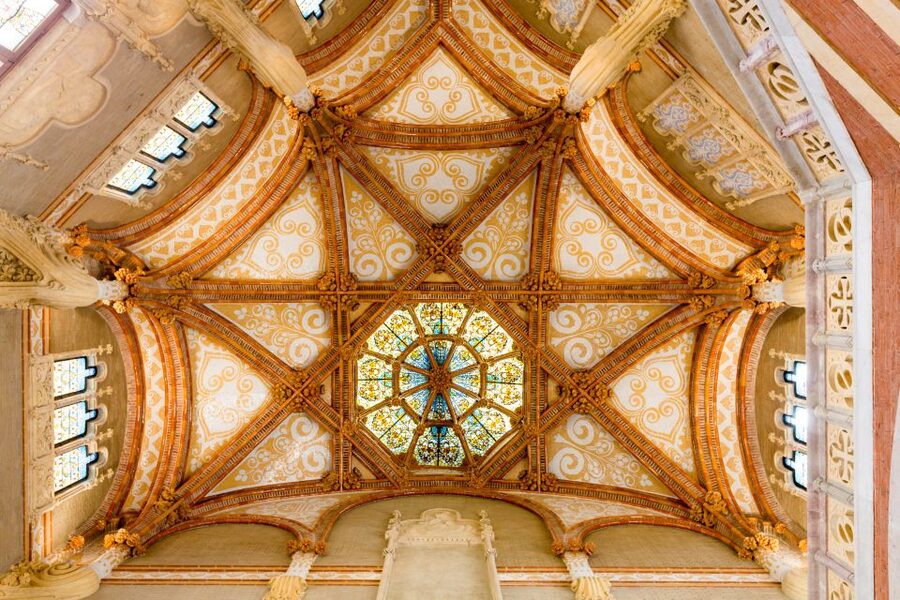
The ticket is valid for one day, with the available starting times shown when you check availability. You are not locked into a fixed 1.5-hour guided itinerary because the admission is self-paced.
Early morning is a smart choice. A 9:30 a.m. arrival can give you quieter grounds and cooler conditions, especially during Barcelona’s hotter months. It also leaves time afterward for Sagrada Família, nearby cafés, or another part of the city.
The location is easy to reach, with a metro station nearby. That is useful if you are connecting the visit to other parts of Barcelona, and it can be convenient on a departure day. One practical detail from the visit experience is that lockers are available, with space suitable for carry-on luggage. Do not treat that as a reason to bring large bags, but it can help if you are moving through the city with compact luggage.
Sant Pau is wheelchair accessible. Pets are not allowed, and smoking, alcohol, and drugs are prohibited on the site. Children 11 and under may enter free, but they must be accompanied by a parent or guardian.
Visitors over 65 can receive free access on the first Sunday of the month. Check the current conditions when booking, but this can make that date especially useful for older visitors.
The ticket allows free cancellation up to 24 hours in advance, and you can reserve now and pay later. Those terms are helpful if your Barcelona plans are still shifting, though the main decision should remain your available time and interest in the subject.
Who will enjoy Sant Pau most
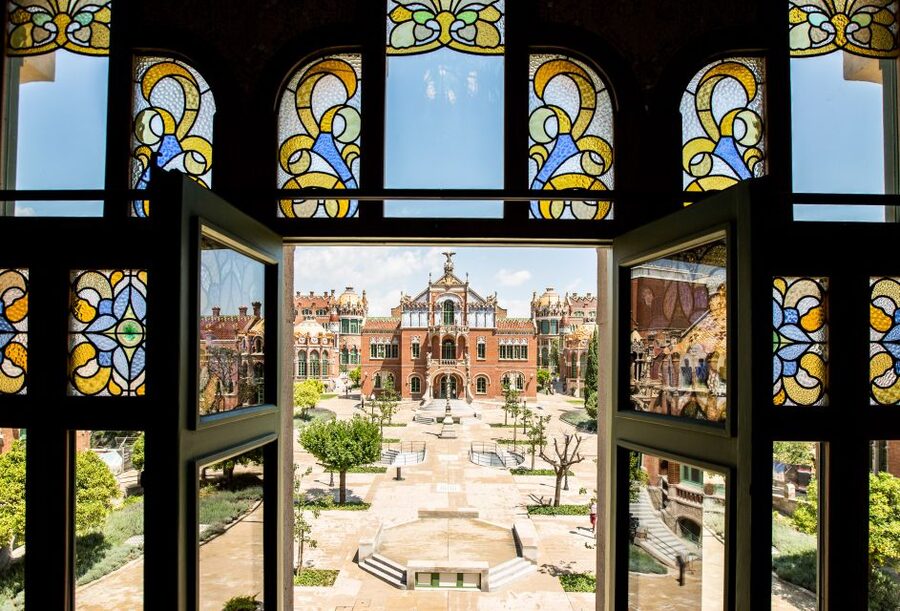
I would put Sant Pau high on the list for anyone who likes Modernista architecture but wants more than another ornate façade. The complex gives you gardens, interiors, tunnels, hospital displays, and a clear social purpose.
Healthcare workers, nurses, medical students, and anyone interested in public health may find the visit unusually personal. The period instruments and recreated 1932 hospital room connect the decorative buildings to real work and real patients.
Families can also make good use of the visit, particularly if children respond to buildings, tunnels, and visual details. The free entry for children under 12 helps with cost, although an adult must accompany them.
The visit may not suit you if you need a guide to explain every room or if you prefer a fast, highly structured attraction. You may also feel frustrated if you expect every pavilion to be open. Check your expectations, use the available material, and give yourself enough time.
Should you book the Sant Pau ticket?
Book it if you want Barcelona’s Modernisme with a practical human story. Sant Pau offers dazzling architecture, but its best quality is the way beauty and healthcare planning fit together. The gardens, mosaics, stained glass, tunnels, instruments, and preserved room create a fuller experience than a simple exterior visit.
I would book the $21 ticket, arrive early, allow two hours, and use an audio guide if you want more explanation. Pairing it with Sagrada Família is convenient, but do not squeeze Sant Pau into a rushed gap. This is a place where slowing down pays off.
FAQ
How long does the Sant Pau Recinte Modernista visit take?
The described visit lasts about 1.5 hours, but you can spend closer to two hours exploring at your own pace. People interested in the architecture, medical displays, and gardens may want longer.
Is a guide included with the ticket?
No. The ticket includes entrance to Sant Pau Recinte Modernista, but not a guided tour. You explore independently using the site’s visitor information and available displays.
How much does admission cost?
The listed price is $21 per person.
Where is Sant Pau Recinte Modernista located?
The meeting and entrance address is Calle Sant Antoni Maria Claret, 167, 08025 Barcelona.
Is Sant Pau wheelchair accessible?
Yes, the experience is listed as wheelchair accessible.
Can children enter Sant Pau?
Yes. Children 11 and under are permitted to attend, and participants under 12 have free admission. A parent or guardian must be present.
Can visitors over 65 enter for free?
Visitors over 65 can receive free access on the first Sunday of the month.
Are pets allowed inside Sant Pau?
No. Pets are not allowed. Smoking, alcohol, and drugs are also prohibited.
Recently added around Barcelona
- Intro Segway Tour Barcelona 1h★ 4.9 · 166 reviews
- Barcelona: Bike or eBike Tour, Top Sights & Local Insights★ 4.9 · 166 reviews
- Instagram Photoshoot Tour in Barcelona★ 5.0 · 167 reviews
- Artisan Ceramic Making Experience★ 5.0 · 168 reviews
- Barcelona: Big Fun Museum Ticket★ 4.2 · 169 reviews
- Sagrada Familia Evening Private Tour with Expert Guide★ 4.5 · 170 reviews
- Gaudi’s Crypt in Colonia Güell with Audioguide★ 4.4 · 170 reviews
- Las Golondrinas Barcelona 60-min Boat Tour★ 4.0 · 170 reviews
Tickets, compared.
Sagrada Familia Entry Ticket with Audio Guide
Read our review →