
Review · JEWISH QUARTER TOURS
Barcelona: Jewish Quarter 2-Hour Walking Tour
History hides in plain sight here. This two-hour Gothic Quarter walk traces Barcelona’s medieval Jewish community through narrow lanes, Roman walls, synagogue sites, and the remains of a mikve. I like the small group size, limited to six people, and I like that guides such as Edu, Ella, and Lilach bring maps, images, and personal stories into the conversation. The main drawback is that the tour’s depth depends on access to the synagogue sites, and the Old Synagogue has sometimes been closed.
This is not a broad sightseeing walk with a quick Jewish-history footnote. It focuses tightly on the Jewish quarter and the community that lived here for centuries before the violence of 1391 forced a tragic end to its presence in medieval Barcelona. At $76 per person, it is a serious spend for two hours, but the price can make sense if you want context you would be unlikely to find by simply wandering the Gothic Quarter.
In This Review
- Key points at a glance
- Why this short walk matters in Barcelona
- Beginning at Plaça Sant Jaume
- Walking the medieval Jewish quarter
- Sinagoga Mayor Barcelona and the Old Synagogue
- The medieval mikve and the alchemist’s house
- Four synagogue locations in central Barcelona
- The guide makes or breaks the experience
- Pace, access, and comfort
- Is $76 per person a fair price?
- Who should book this Jewish Barcelona walk?
- Practical advice before you go
- Should you book it?
- FAQ
- How long is the Barcelona Jewish Quarter walking tour?
- Where does the tour begin?
- Where does the tour end?
- What language is the tour conducted in?
- How many people can join the group?
- Is the Synagogue Museum entrance fee included?
- Is hotel pickup available?
- Is the tour wheelchair accessible?
Key points at a glance
- Sinagoga Mayor Barcelona: Visit the site presented as Spain’s oldest synagogue and one of Europe’s oldest Jewish houses of worship.
- Four synagogue locations: Follow the guide through Barcelona’s center to identify four places connected with Jewish worship.
- Medieval mikve: See the unusual remains of a ritual bath linked to the old Jewish community.
- Roman walls and narrow lanes: Walk through the small quarter near the ancient walls, where traces of Jewish Barcelona are easy to miss.
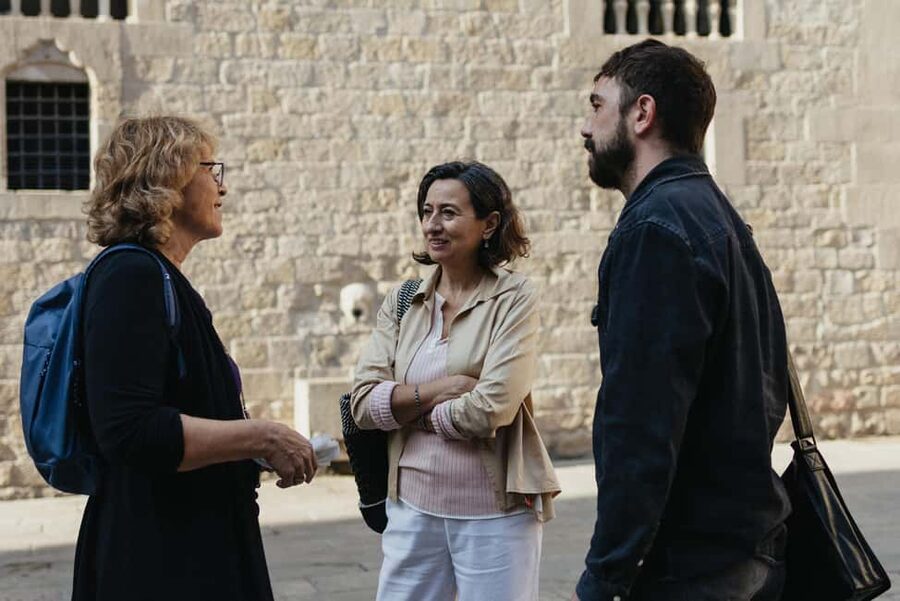
- Small-group format: With no more than six participants, you can ask questions and set a comfortable pace.
- Flexible planning: The tour is wheelchair accessible, runs in English, and allows cancellation up to 24 hours before departure for a full refund.
Why this short walk matters in Barcelona
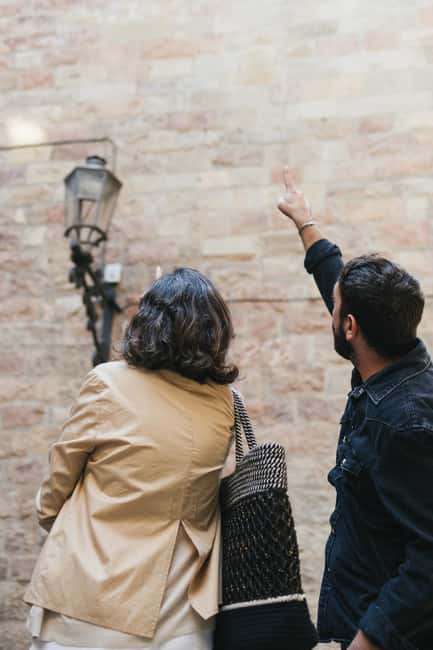
Barcelona’s Gothic Quarter can feel like a maze of handsome stone buildings, church towers, souvenir shops, and busy pedestrian lanes. Without help, it is easy to pass through the former Jewish quarter without seeing much evidence of the people who lived there.
That is the value of this experience. The guide supplies the missing frame. You learn how Jewish communities began arriving in Spain as early as the third century, following the destruction of the Second Temple in Jerusalem in 70 CE. In Barcelona, the community grew over the centuries and became important in civic, political, and spiritual life.
The story is not presented as a simple tale of peaceful coexistence. The tour explains that Jewish residents lived in relative peace for long periods, then faced a brutal attack in 1391. That event brought a dramatic end to the community’s presence in Spain, and the walk gives you a way to connect that historical break with the streets under your feet.
I value tours that explain both what survived and what disappeared. Here, you are not simply shown a grand monument. You are shown faint traces, altered buildings, ruins, and locations that require explanation. That makes the guide central to the experience.
More Walking Tours in Barcelona
- Barcelona Tapas and Wine Experience Small-Group Walking Tour
★ 5.0 · 5,804 reviews - Barcelona: Tapas Walking Tour with Food, Wine, and History
★ 4.8 · 4,261 reviews - Barcelona Tapas Walking Tour: Food, Wine & History
★ 4.5 · 1,928 reviews
Beginning at Plaça Sant Jaume
The tour starts at Plaça Sant Jaume, next to the Alcampo store. This is a practical meeting point in the Gothic Quarter, but it is also a useful place to begin because the square sits in the historic heart of Barcelona.
You should arrive ready for a walking tour through narrow medieval streets. The activity lasts two hours and ends back at the same meeting point, so you do not need to arrange transport from a distant neighborhood afterward.
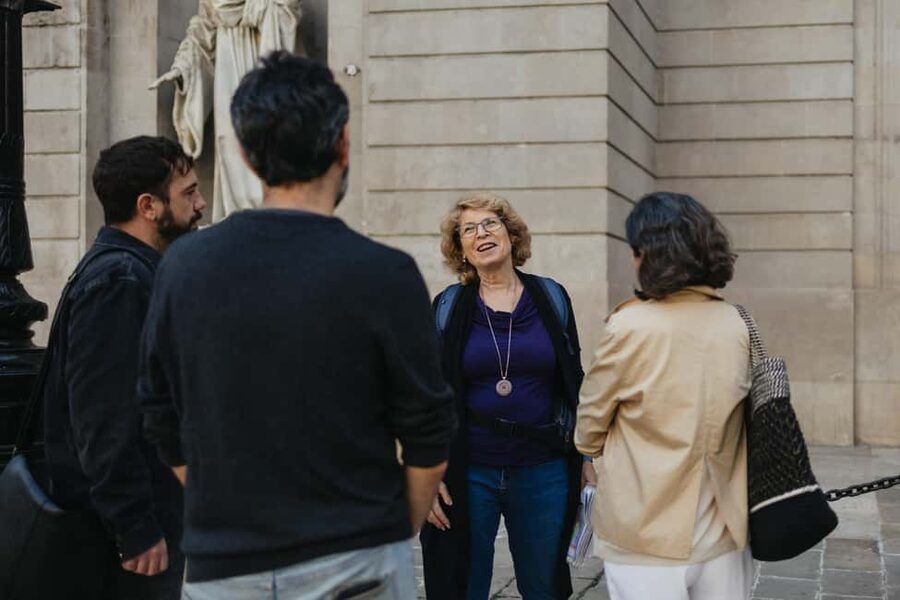
The limited group size matters here. Six people or fewer is much easier to manage in tight lanes than a large crowd. It also gives you a better chance to hear the guide clearly and ask about family history, architecture, language, religion, or Barcelona’s changing neighborhoods.
Several guides receive especially warm praise for their teaching style. Edu is described as personable, patient, and attentive to walking speed. He has used maps and images to explain older versions of the city and has adjusted his pace for groups with walking difficulties. Ella is praised for her clear explanations of Catalonia, Barcelona, and Jewish medieval history. Lilach is noted for an engaging and friendly approach.
You cannot choose a particular guide from the information provided, but the pattern is clear: the human guide is the main reason to book this rather than rely on a guidebook.
Walking the medieval Jewish quarter
The route takes you into a compact area near the Roman walls. The streets are narrow, old, and sometimes visually confusing. That is part of the appeal, but it also means you should not expect a polished open-air museum with large signs at every turn.
The guide points out the location of the Jewish quarter and explains how the community lived within the wider city. You will hear about the political and spiritual importance of Jewish residents and the way the neighborhood developed over the centuries.
I find this sort of walking most useful when the guide links physical details to daily life. A lane is no longer just an attractive medieval passage. It becomes part of a neighborhood where families worked, worshipped, studied, and carried out trade.
The route also includes the ruins of a house owned by a Jewish alchemist. The remains offer a different angle on the community. Instead of seeing Jewish Barcelona only through religious buildings, you get a glimpse of work, scholarship, and urban life.
The buildings and ruins may require some imagination. This is not a place where every structure remains intact, and the tour cannot recreate a lost neighborhood. The guide’s explanations, along with historic images or maps when available, help you understand what the surviving fragments once meant.
Sinagoga Mayor Barcelona and the Old Synagogue
The central stop is Sinagoga Mayor Barcelona, presented as the oldest synagogue in Spain and one of the oldest in Europe. Visiting this site gives the tour a clear physical focus after the initial walk through streets and former property lines.
The experience also includes the ruins of the Old Synagogue, identified with Shlomo Ben Adret. This is an important stop for anyone interested in medieval Jewish life because it helps connect the community’s religious practice with the buildings that once supported it.
There is a practical catch. The entrance fee to the Synagogue Museum is not included in the tour price. You should also be aware that the Old Synagogue has occasionally been closed, so access to every interior space is not guaranteed.
That possibility does not erase the value of the walk, but it changes what you are paying for. The tour remains a guided history experience through the quarter, not simply an admission ticket to a synagogue. Still, if seeing the inside of the Old Synagogue is your main reason for booking, check current access conditions before committing.
The listing promises skip-the-ticket-line access, which can save time when the site is open. Since the entrance charge is separate, ask for the current fee when you book or meet the guide.
More Jewish Quarter walks:
- Córdoba: Jewish Quarter, Mosque, and Alcázar Tour
★ 4.7 · 4,279 reviews - Cordoba Mosque & Jewish Quarter Tour with Tickets
★ 4.6 · 1,996 reviews - Córdoba: Mosque-Cathedral, Jewish Quarter and Alcázar Tour
★ 4.7 · 1,426 reviews - Cordoba: Jewish Quarter and Mosque-Cathedral Guided Tour
★ 4.6 · 996 reviews
The medieval mikve and the alchemist’s house
The medieval mikve is one of the more unusual parts of the route. A mikve is a Jewish ritual bath, and the surviving site gives you a direct link to religious practice in the old community.
This stop is valuable because it broadens the story beyond synagogues. Religious life depended on many spaces, some grand and public, others private and functional. The mikve helps you understand that the Jewish quarter was a lived neighborhood, not only a collection of formal institutions.
The ruins of the alchemist’s house add another layer. The tour uses the site to discuss the art, architecture, and working life connected with a Jewish owner. You may find that the remains are modest, but their meaning grows once the guide explains the person and community behind them.
These stops reward careful listening. You will not necessarily see a complete room or a dramatic monument. Instead, you are asked to read fragments. That can be more satisfying than a quick photo stop, but it may disappoint anyone looking for large, fully restored buildings.
Four synagogue locations in central Barcelona
The walk identifies four synagogue locations in Barcelona’s city center. This is a strong feature for anyone trying to understand how the community occupied the city rather than viewing it through one surviving building.
The guide explains how the locations relate to the wider Jewish quarter and to the changing history of Barcelona. You will move through streets where the evidence can be faint, so pay attention to signs, building details, and the guide’s sense of place.
This part of the tour also shows why going alone can be tricky. You might walk past a location without realizing its importance. The guide helps you see the connection between modern Barcelona and the medieval city beneath it.
The four sites are not described as four fully functioning synagogues open for visits. Think of them as places connected with Jewish worship and community life, some surviving as ruins or identified historic locations. That distinction is important when setting expectations.
The guide makes or breaks the experience
A two-hour history walk can become a string of dates and names. This one works best when the guide turns those facts into a conversation.
Edu is repeatedly praised for adjusting the pace, answering questions, and speaking clearly in English. He has also been willing to learn from the group, which can make the experience feel less like a lecture. Groups with teenagers have found his conversational style helpful, especially when he connects historical information with questions and discussion.
Ella is praised for her thoroughness and command of Catalan, Barcelona, and Jewish history. If you are building a family-history project, this kind of guide can be particularly useful because the route may help you understand where a family story fits within the wider city.
Lilach is described as engaging, friendly, and able to answer questions. The different guide comments point to a shared strength: strong preparation combined with a warm manner.
No guide can guarantee that every stop will be open or that two hours will answer every question about Spanish Jewish history. But the small group gives the guide room to respond to your interests. That is far more useful than a large tour where the schedule leaves no time for questions.
Pace, access, and comfort
The tour is wheelchair accessible, and the guides have shown care with walking pace. That is encouraging for visitors with mobility concerns, but the route still takes place in an old quarter with narrow streets and historic surfaces. You should confirm the details of current access if you need a particular accommodation.
The two-hour length is well judged for a focused introduction. It is long enough to establish the historical sequence, visit the main sites, and take questions. It is short enough to fit before lunch, after another Gothic Quarter activity, or at the beginning of a Barcelona stay.
I would not schedule a demanding attraction immediately afterward if you want time to think about what you have seen. The material covers centuries, religious practice, urban life, and persecution. A little breathing room helps.
The tour is in English. That makes it a useful choice for English-speaking visitors who want detailed explanations without relying on written plaques or translation apps.
Is $76 per person a fair price?
At $76 per person, this is not a bargain walking tour. You are paying for a small group, a specialist subject, and a live guide who can answer questions. The price looks more reasonable if your interest is family history, Jewish heritage, medieval Barcelona, or the relationship between the city’s Roman and Gothic layers.
The cost is harder to justify if you only want a general introduction to the Gothic Quarter. Barcelona offers plenty of free streets and squares to explore on your own, and this tour covers a relatively small area in two hours.
Remember that hotel pickup costs an additional €30, and the Synagogue Museum entrance fee is not included. I would skip the pickup unless you have a clear reason to need it. The starting point is central, and arranging your own way to Plaça Sant Jaume should preserve the tour’s value.
The reserve-now, pay-later option is useful if your schedule is still shifting. Cancellation is free up to 24 hours in advance, which gives you some protection if your Barcelona plans change.
Who should book this Jewish Barcelona walk?
I would recommend it most strongly to:
- Anyone researching Jewish family roots in Barcelona or Catalonia
- Visitors who want religious and cultural history, not only architecture
- People who prefer small groups and direct conversation
- Families with older children or teenagers who respond well to stories and questions
- Visitors who want to understand the Gothic Quarter before exploring it independently
- Anyone interested in how a community can leave traces even after its buildings and institutions have disappeared
I would be more cautious if you want a long interior visit inside a synagogue, a broad tour of modern Jewish Barcelona, or a route centered on food and present-day community life. The focus is medieval Jewish history and the physical remains of the old quarter.
Practical advice before you go
Wear comfortable shoes and expect a steady walk through historic streets. The group has sometimes moved at a pace suited to older participants or people with walking limitations, but you should still be prepared to spend the full two hours on foot.
Bring questions. The best use of a small group is conversation, especially if you have family names, historical interests, or questions about Barcelona’s Jewish past.
Confirm the opening status of the Old Synagogue and the separate museum entrance fee before the tour. The route remains worthwhile if an interior is closed, but knowing this in advance prevents disappointment.
If you are visiting Barcelona for several days, consider taking this tour early in your stay. It can change how you read the Gothic Quarter afterward. Streets that first seemed anonymous may carry a clearer connection to the people who once lived there.
Should you book it?
Book this tour if you want a focused, human explanation of Jewish Barcelona and you value places that require context. The strongest reasons are the small group, the route through four synagogue locations, the mikve, the alchemist’s house, and the chance to hear a guide such as Edu, Ella, or Lilach connect the remains to the community that created them.
Skip it if your priority is a cheap general walk or guaranteed access to every synagogue interior. At $76, plus the separate museum fee, it requires a real interest in the subject. For the right visitor, though, it offers something a casual Gothic Quarter stroll cannot: a clearer sense of the Jewish community that shaped Barcelona and the painful history that erased much of its visible presence.
FAQ
How long is the Barcelona Jewish Quarter walking tour?
The tour lasts two hours.
Where does the tour begin?
It begins in Plaça Sant Jaume, next to the Alcampo store.
Where does the tour end?
The activity ends back at the meeting point in Plaça Sant Jaume.
What language is the tour conducted in?
The live tour guide speaks English.
How many people can join the group?
The group is limited to six participants.
Is the Synagogue Museum entrance fee included?
No. The entrance fee to the Synagogue Museum is not included.
Is hotel pickup available?
Yes. Hotel pickup is available for an additional €30.
Is the tour wheelchair accessible?
Yes. The activity is listed as wheelchair accessible.
More 2-Hour Experiences
- Barcelona: Two-Hour Midday or Sunset Sailing Cruise
★ 4.8 · 1,732 reviews - Barcelona: 2-Hour City Sights Guided Segway Tour
★ 4.9 · 453 reviews - Barcelona: 2-Hour Sailboat Tour with Snacks and Drinks
★ 4.8 · 357 reviews - 2-Hour Sailing Tour in Barcelona with Open Bar & Snacks
★ 5.0 · 318 reviews
More Walking Tours
- Barcelona: Tapas Food Crawl Walking Tour with Tastings
★ 4.9 · 1,798 reviews - Barcelona: Gothic Quarter Ghosts and Legends Walking Tour
★ 4.7 · 1,443 reviews - Barcelona Helicopter, Sailboat & Old Town Private Walking Tour
★ 5.0 · 1,395 reviews - Barcelona: Old Town and Gothic Quarter Walking Tour
★ 4.8 · 1,393 reviews
Recently added around Barcelona
- Intro Segway Tour Barcelona 1h★ 4.9 · 166 reviews
- Barcelona: Bike or eBike Tour, Top Sights & Local Insights★ 4.9 · 166 reviews
- Instagram Photoshoot Tour in Barcelona★ 5.0 · 167 reviews
- Artisan Ceramic Making Experience★ 5.0 · 168 reviews
- Barcelona: Big Fun Museum Ticket★ 4.2 · 169 reviews
- Sagrada Familia Evening Private Tour with Expert Guide★ 4.5 · 170 reviews
- Gaudi’s Crypt in Colonia Güell with Audioguide★ 4.4 · 170 reviews
- Las Golondrinas Barcelona 60-min Boat Tour★ 4.0 · 170 reviews
Jewish Quarter Tours, compared.
Cordoba Mosque & Jewish Quarter Tour with Tickets
Read our review →
Mosque-Cathedral, Jewish Quarter and Alcázar Tour
Read our review →
Jewish Quarter and Mosque-Cathedral Guided Tour
Read our review →
Mosque-Cathedral, Alcazar & Jewish Quarter with Tickets
Read our review →
Mosque-Cathedral of Cordoba and Jewish Quarter Tour
Read our review →
Small-Group Jewish Quarter Discovery Walking Tour
Read our review →Browse the lists this tour appears in