
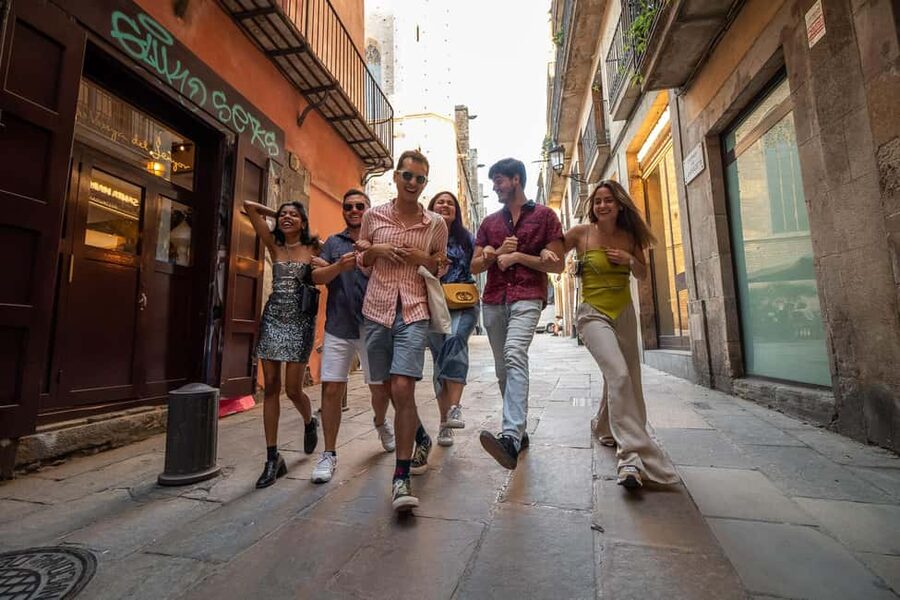
Review · WALKING TOURS
Barcelona: Guided Walking Tour
Barcelona’s old quarter rewards slow walking. This two-hour tour links Roman Barcino, medieval streets, Gothic churches, and Catalan stories in a compact route led by an English-speaking guide. I especially like the story-driven approach and the chance to see both famous sights and tucked-away corners without giving up half a day. The $22 price is also appealing for a first look at central Barcelona. One consideration: the route includes several outdoor stops, so hot weather, rain, and uneven streets can affect your comfort.
You begin at Plaça Nova, near the large Barcino letters, then walk toward the Gothic Quarter and El Born. Guides such as Sara, Mariah, Lindsay, Petra, Tamara, and Vanessa have earned praise for lively delivery, good pacing, humor, and useful local context. The exact guide can vary, but you should expect a tour built around stories, questions, and short explanations rather than a long lecture.
In This Review
- Key details at a glance
- Why this short walk works so well in Barcelona
- Starting at Plaça Nova and the Barcino marker
- Els Quatre Gats and Barcelona’s creative side
- The Kiss of Freedom and visual storytelling
- Barcelona Cathedral and the Gothic Quarter’s main church
- La Casa de l’Ardiaca and the city’s quieter details
- The Bishop’s Bridge and one of the Gothic Quarter’s photographs
- Plaça Sant Felip Neri and Barcelona’s darker past
- Plaça Sant Jaume and the civic heart of Catalonia
- Plaça de l’Àngel and the route toward El Born
- Finishing near Santa Maria del Mar
- Guide style, group feel, and pacing
- Is $22 good value?
- Who should book this walk?
- My final verdict: book it for a smart first look
- FAQ
- How long is the Barcelona walking tour?
- What language is the tour conducted in?
- Where does the tour begin?
- What sights are included?
- Is food or drink included?
- What should I bring?
- Can I cancel or pay later?
Key details at a glance
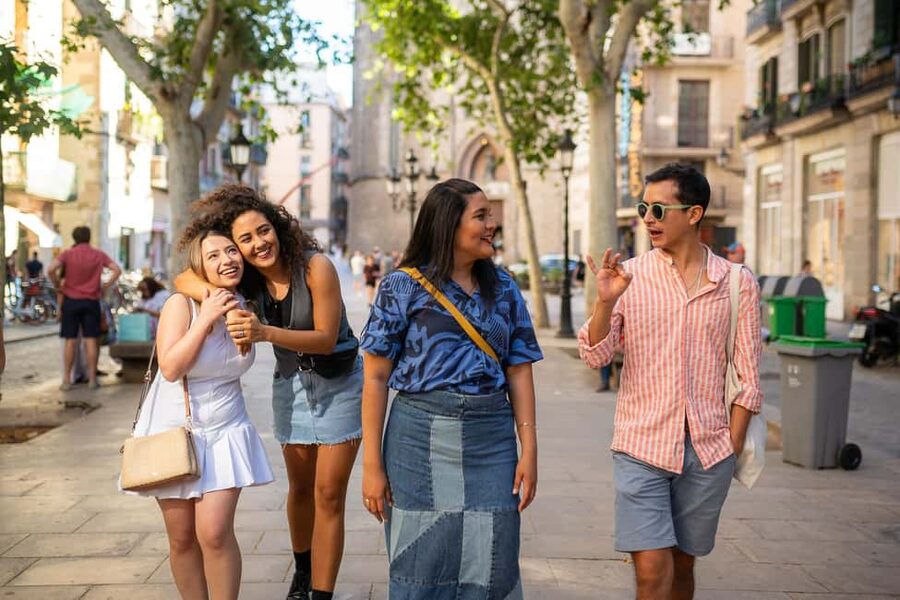
- Two thousand years in two hours: The route moves from Roman Barcelona to medieval power centers and modern Catalonia.
- A compact Gothic Quarter route: You visit Barcelona Cathedral, Sant Felip Neri Square, the Bishop’s Bridge, and other historic corners.
- Storytelling is central: Expect legends, dark episodes, cultural facts, and small details that make buildings easier to understand.
- A reasonable $22 introduction: The price works well if you want orientation before exploring Barcelona on your own.
- Relaxed pacing: Several stops last about 10 minutes, giving you time to listen, take photos, and ask questions.
- Check the ending point: The route lists Santa Maria del Mar as the final stop, while the meeting details say the activity ends back at the starting point.
Why this short walk works so well in Barcelona
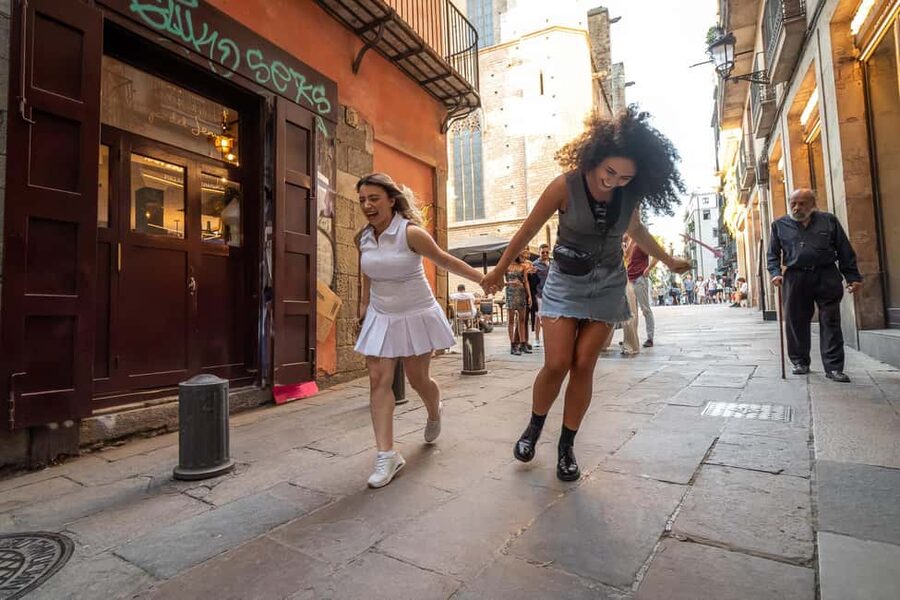
Barcelona can feel confusing at first. Its broad modern avenues, Gothic lanes, Roman walls, grand churches, and Catalan symbols belong to different periods, yet they often appear within a few minutes of one another.
That makes a guided walk useful. You are not simply looking at old stone. You are learning how Roman Barcino shaped the city center, how medieval Barcelona grew around religious and civic buildings, and how Catalan identity still affects daily life.
I like the two-hour length. It is long enough to give you a proper introduction, but short enough to fit around lunch, a museum visit, or an afternoon at the Sagrada Família. The stops are generally planned in short blocks of roughly 10 minutes, which helps keep the pace moving.
The guide-led format is also important. These lanes can look like a maze, and many details sit above eye level or behind plain doorways. A local guide can point out a small plaque, an unusual bridge, or a scarred wall that you might otherwise walk past.
The strongest part of the experience is the human delivery. The guides are expected to tell stories, not recite dates. Sara is praised for clear explanations and interesting accounts of Barcelona’s past. Mariah is described as energetic and funny, while Lindsay is noted for mixing small stories with facts and keeping a relaxed pace. Petra, Tamara, Vanessa, and others are also praised for warmth and enthusiasm.
That style will suit you if you prefer history with personality. If you want a highly academic architectural tour or a detailed visit inside every church, this walk may feel too light and fast.
More Walking Tours in Barcelona
- Barcelona Tapas and Wine Experience Small-Group Walking Tour
★ 5.0 · 5,804 reviews - Barcelona: Tapas Walking Tour with Food, Wine, and History
★ 4.8 · 4,261 reviews - Barcelona Tapas Walking Tour: Food, Wine & History
★ 4.5 · 1,928 reviews
Starting at Plaça Nova and the Barcino marker
The meeting point is Plaça Nova, at number 40, directly in front of the prominent sculpture displaying the large letters Barcino. Look for the yellow Carpe Diem Tours sign and the guide waiting nearby.
This is a fitting place to begin because Barcino refers to Roman Barcelona. Before the Gothic Quarter became a maze of medieval streets, this area was the center of a Roman settlement. The opening sets up the main idea of the walk: Barcelona is not one city from one period, but many layers occupying the same small area.
You should arrive ready to walk rather than expecting a stationary talk. Wear comfortable shoes and clothes, and bring a camera. The route is through historic central streets, where smooth pavement may give way to older, uneven surfaces.
Els Quatre Gats and Barcelona’s creative side

The first listed stop is Els Quatre Gats, a famous café associated with Barcelona’s artistic life. The guided explanation lasts about 10 minutes.
This stop helps widen the tour beyond medieval churches and Roman walls. Barcelona’s identity also grew through artists, writers, and cafés where new ideas circulated. The short visit gives you a sense of how the old center remained useful long after the Middle Ages ended.
You should think of this as a context stop rather than a full café experience. Food and drinks are not included, and the tour does not promise a sit-down visit. The value comes from hearing why the place matters and how it fits into the city’s cultural story.
The Kiss of Freedom and visual storytelling
The Kiss of Freedom is another brief guided stop. Its name points to a public artwork with a strong emotional and civic message.
This is the kind of place that can be easy to miss if you are focused only on major monuments. A guide gives the image meaning and helps connect public art with Barcelona’s ideas about memory, freedom, and community.
You will have a camera opportunity here, but remember that a short stop is not designed for a long photography session. If you want carefully composed pictures, you may need to return later on your own.
More walking tours:
- Barcelona: Tapas Food Crawl Walking Tour with Tastings
★ 4.9 · 1,798 reviews - Barcelona: Gothic Quarter Ghosts and Legends Walking Tour
★ 4.7 · 1,443 reviews - Barcelona Helicopter, Sailboat & Old Town Private Walking Tour
★ 5.0 · 1,395 reviews - Barcelona: Old Town and Gothic Quarter Walking Tour
★ 4.8 · 1,393 reviews
Barcelona Cathedral and the Gothic Quarter’s main church
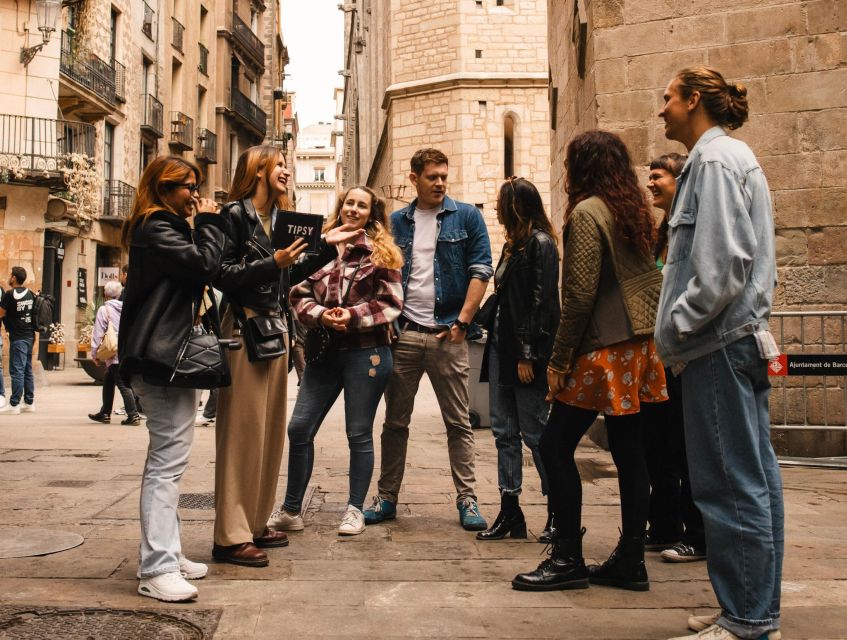
Barcelona Cathedral receives its own 10-minute explanation. It is one of the key landmarks in the old city and gives the walk a clear focal point.
The cathedral helps you understand the scale and ambition of medieval Barcelona. Its presence also shows how religious institutions shaped the city’s streets, power, and public life. The guide’s role is especially useful here because the building can be read in many ways: as a place of worship, a work of architecture, and a marker of Barcelona’s medieval importance.
Do not expect this tour to function as a full interior visit. The activity is described as a walking tour with stops and guided explanations, not as an extended cathedral admission visit. If entering the cathedral is a priority, ask the guide about timing or plan a separate visit.
The short format has one clear advantage. You get the setting and the main story without spending too long in one place. That works well for a first morning in Barcelona, when you are still deciding which sights deserve more of your time.
La Casa de l’Ardiaca and the city’s quieter details
La Casa de l’Ardiaca is a more intimate stop than the cathedral. This historic building sits beside the cathedral area and adds another layer to the story of Barcelona’s religious and civic life.
The appeal here is detail. A guide can explain how a building relates to the surrounding quarter, how institutions operated in earlier centuries, and why a doorway or courtyard deserves attention. These are the moments when a walking tour earns its fee. You are not just checking off landmarks. You are learning to notice how the old center is put together.
The stop lasts about 10 minutes, so expect an overview rather than a room-by-room explanation. That is fine if you want a broad introduction, but less suitable if you are looking for specialist architectural analysis.
The Bishop’s Bridge and one of the Gothic Quarter’s photographs
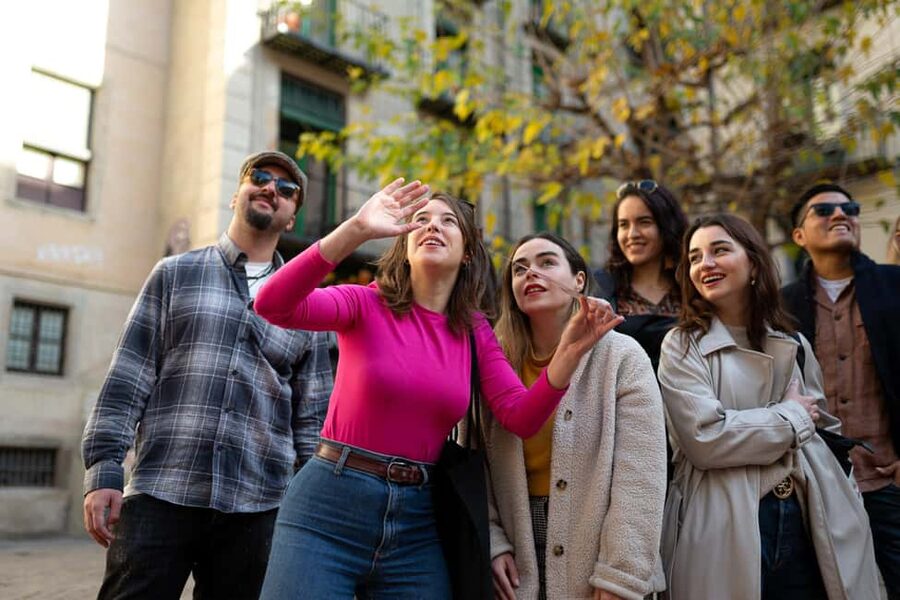
The Bishop’s Bridge is one of the route’s most recognizable visual stops. Its ornate stonework crosses a narrow passage and has become a favorite place for photographs.
It is also a good example of why a guide helps. You can admire the bridge in seconds, but its design and place in the surrounding quarter invite questions. The guide can explain the story attached to it and help separate documented history from the legends that gather around old buildings.
Keep your camera ready, but do not assume you will have unlimited time in the passage. The tour has a schedule, and narrow streets can become crowded. A relaxed guide may allow a few extra moments, but the group still needs to keep moving.
Plaça Sant Felip Neri and Barcelona’s darker past
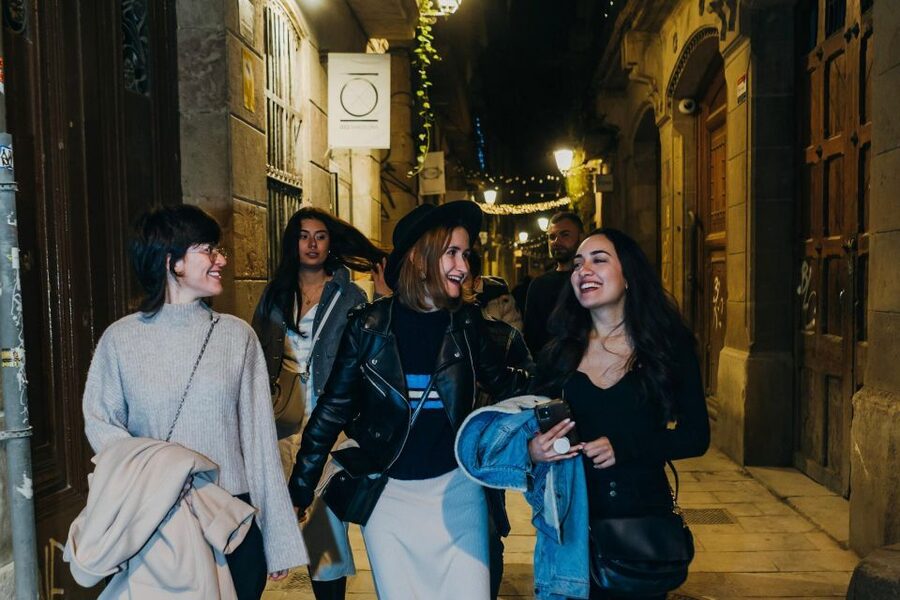
Plaça Sant Felip Neri is among the most affecting stops on the walk. It is a quiet square with an atmosphere very different from the larger streets nearby.
This is where the tour’s promise of dark history becomes more serious. The square carries memories of violence and loss, and the damaged walls offer a visible reminder that Barcelona’s past was not only a period of grand churches and artistic achievement.
A good guide handles this kind of stop with care. Petra, for example, is praised for remaining composed and considerate during a difficult moment on tour. That matters because historical storytelling should respect the subject rather than turn suffering into a dramatic prop.
You may find this stop more reflective than entertaining. That change of mood is useful. It gives the tour emotional range and shows that the old city cannot be reduced to pretty stone lanes and postcard views.
Plaça Sant Jaume and the civic heart of Catalonia
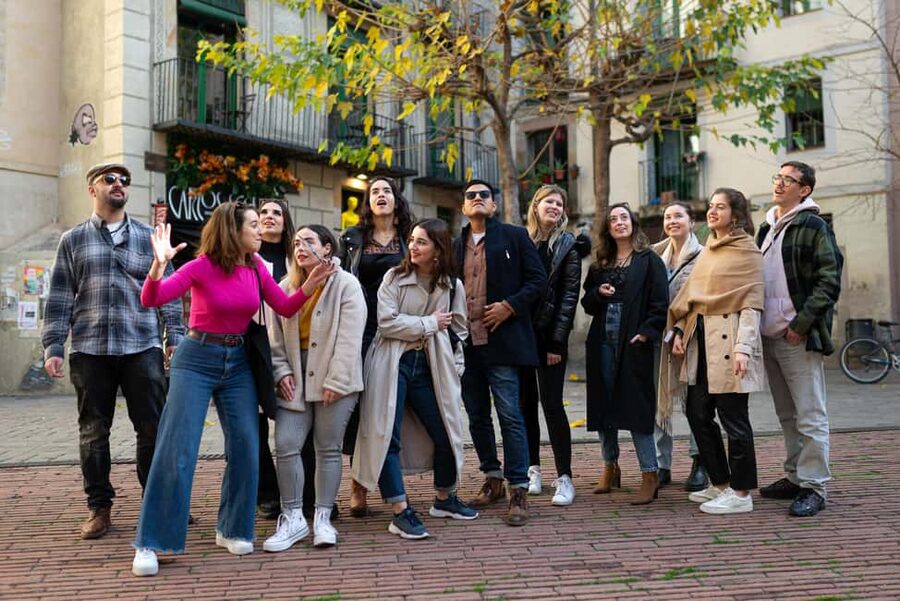
Plaça Sant Jaume is highlighted as one of Barcelona’s important civic spaces, even though it is not listed as a separate timed stop in the sequence. It is a natural place to discuss Catalan politics, identity, and public life.
This is one of the most valuable cultural parts of the experience. Barcelona is in Catalonia, a region with its own language, traditions, and strong sense of identity. A guide can help you understand why local history matters here and why civic spaces remain important.
You should expect interpretation rather than a political debate. The goal is to give you useful context as you walk through the city. If you have questions about Catalonia, this is a good point to ask them.
Plaça de l’Àngel and the route toward El Born
The walk continues to Plaça de l’Àngel, a useful transition between the Gothic Quarter and the El Born area. The route does not remain in one small pocket of the old city. It gives you a broader feel for how adjacent districts connect.
Several comments about the tour praise this wider route. Tamara’s version, for example, is described as covering mostly the Gothic Quarter while also giving a taste of El Born. That makes the walk a useful starting point if you plan to explore both areas later.
You should not expect a complete tour of El Born in two hours. Instead, you get an introduction and a sense of direction. Afterward, you can choose to return for more churches, shops, food, or museums at your own pace.
Finishing near Santa Maria del Mar
The listed route finishes at the Basilica de Santa Maria del Mar, one of the most important churches in the El Born district. Reaching this church gives the walk a satisfying geographic progression from the cathedral area toward another major medieval landmark.
The basilica is a strong final reference point because it helps you understand that Barcelona’s old center extends beyond the Gothic Quarter’s most famous lanes. It also leaves you in a useful area for continuing your day.
There is one practical detail to clarify before booking. The stop sequence names Santa Maria del Mar as the finish, while the meeting information says the activity ends back at the original meeting point. Those locations are not the same, so check the current instructions or ask the operator where your guide will leave you.
Guide style, group feel, and pacing
The tour is offered in English, with a live guide. A private group option is available, which may appeal to families or friends who want more control over questions and pace.
The strongest pattern in the guide feedback is energy without exhausting the group. Mariah is praised for comedy and enthusiasm. Lindsay is praised for keeping the walk lively while maintaining a relaxed speed. Vanessa is described as caring and energetic, and Sara receives repeated praise for being friendly, clear, and well organized.
That consistency suggests the operator puts real weight on presentation. Still, every guide has a different style. Some will tell more legends, some will focus more on architecture, and some may spend extra time on Catalan history.
The tour appears well suited to people who like to ask questions. Guides are described as happy to explain details, pause for photos, and allow bathroom breaks when needed. Tamara receives particular praise for being considerate with breaks and pictures.
Is $22 good value?
At $22 per person, this is a fair price for a two-hour guided introduction to Barcelona’s oldest central districts. You are paying for a live English-speaking guide, a carefully arranged route, and interpretation that connects separate sights into one story.
The value is strongest on your first day. You will learn the shape of the Gothic Quarter, identify places worth revisiting, and gain enough background to make later walks more rewarding.
It is also a good choice if you have limited time. A two-hour tour does not require the planning of a full-day excursion, and the route includes several major landmarks without charging separately for transportation.
Food and drinks are not included, so plan a café stop before or after. That is hardly a problem in Barcelona, but it is worth remembering if you are booking several activities close together.
The price is less compelling if you already know the Gothic Quarter well or prefer exploring alone. In that case, you may get more from a museum ticket or a longer specialist tour.
Who should book this walk?
I would recommend it to first-time visitors, couples, families with older children, and anyone who wants history explained in plain language. It is especially useful for you if you want a quick orientation before exploring the Gothic Quarter and El Born independently.
The route should also suit people who dislike very long walking tours. Guides keep the stops short, and the overall duration is manageable. Comfortable shoes still matter, since this is a walking experience through historic streets.
You may want something else if you need wheelchair-specific information, a detailed architectural study, interior access to every church, or a tour in another language. The supplied details confirm English only, and they do not provide specific accessibility information.
Free cancellation is available up to 24 hours before the tour for a full refund, and you can reserve now and pay later. Those terms are useful if your Barcelona schedule is still shifting.
My final verdict: book it for a smart first look
Book this tour if you want Barcelona’s old center to make sense quickly. The route covers Roman origins, medieval landmarks, public art, Catalan identity, and some of the city’s more somber stories, all for $22 and within two hours.
I like the balance of major sights and smaller stops, along with the repeated praise for friendly, lively guides and relaxed pacing. Just wear sensible shoes, bring water and a camera, and confirm the final meeting point before setting out. For a first introduction to the Gothic Quarter and El Born, this is a practical, good-value choice.
FAQ
How long is the Barcelona walking tour?
The tour lasts two hours. Starting times vary, so check availability when booking.
What language is the tour conducted in?
The live tour guide conducts the experience in English.
Where does the tour begin?
The guide meets you at Plaça Nova, 40, in front of the large Barcino sculpture and the yellow Carpe Diem Tours sign.
What sights are included?
The route includes Els Quatre Gats, The Kiss of Freedom, Barcelona Cathedral, La Casa de l’Ardiaca, the Bishop’s Bridge, Plaça Sant Felip Neri, Plaça de l’Àngel, and the Basilica de Santa Maria del Mar. Plaça Sant Jaume is also highlighted as a place to discover during the city walk.
Is food or drink included?
No. Food and drinks are not included in the tour price.
What should I bring?
Bring comfortable shoes, comfortable clothing, and a camera.
Can I cancel or pay later?
You can cancel up to 24 hours in advance for a full refund. You can also reserve your place and pay later.
Recently added around Barcelona
- Intro Segway Tour Barcelona 1h★ 4.9 · 166 reviews
- Barcelona: Bike or eBike Tour, Top Sights & Local Insights★ 4.9 · 166 reviews
- Instagram Photoshoot Tour in Barcelona★ 5.0 · 167 reviews
- Artisan Ceramic Making Experience★ 5.0 · 168 reviews
- Barcelona: Big Fun Museum Ticket★ 4.2 · 169 reviews
- Gaudi’s Crypt in Colonia Güell with Audioguide★ 4.4 · 170 reviews
- Sagrada Familia Evening Private Tour with Expert Guide★ 4.5 · 170 reviews
- Las Golondrinas Barcelona 60-min Boat Tour★ 4.0 · 170 reviews
Walking Tours, compared.
Barcelona Tapas and Wine Experience Small-Group Walking Tour
Read our review →
Tapas Walking Tour with Food, Wine, and History
Read our review →
Albaicín and Sacromonte Guided Sunset Walking Tour
Read our review →
Toledo Tour & Vineyard Walk with Wine Tasting from Madrid
Read our review →
Barcelona Tapas Walking Tour: Food, Wine & History
Read our review →
Madrid Old Town & Royal Palace Walking Tour Skip the Line Ticket
Read our review →
Browse the lists this tour appears in