Review · BARCELONA TOURS
Barcelona & Gaudi. Regular Tour
Barcelona’s buildings tell wild stories. This three-hour walk pairs practicing architects with Gaudí’s boldest works, adding social, political, and artistic context that a quick photo stop cannot provide. I especially like the small maximum of 20 and the chance to see Casa Milà, Casa Batlló, Casa Calvet, and the Manzana de la Discordia in one focused route. The main drawback is clear: you do not go inside any of the buildings.
I also like that the tour looks beyond Gaudí. Domènech i Montaner, Puig i Cadafalch, the Antoni Tàpies Foundation, Eixample courtyards, anarchism, utopian socialism, and the Spanish Civil War all enter the story. The material can be dense, but the best guides, including Pia, have been praised for making it lively, warm, funny, and easy to follow.
In This Review
- Key points about this Barcelona architecture walk
- Why this Gaudí walk works so well
- Casa Milà, the first lesson in Gaudí’s free-form design
- Casa Batlló and the strange beauty of a city facade
- The Manzana de la Discordia, Barcelona’s architectural argument
- Casa Calvet and Gaudí before the full breakthrough
- The Antoni Tàpies Foundation and Modernism’s wider reach
- The ideas behind the facades
- Courtyards, side details, and the value of looking around
- What the $54.44 price buys you
- Timing, meeting point, and practical planning
- Who will enjoy this walk most
- Is Barcelona & Gaudí worth booking?
- FAQ
- How long is the Barcelona & Gaudí tour?
- What time does the tour start?
- Where does the tour meet?
- Where does the tour finish?
- Is the tour offered in English?
- What is the maximum group size?
- Do you enter the buildings?
- Which Gaudí buildings are included?
- Which other architecture can you see?
- Can you cancel for a full refund?
Key points about this Barcelona architecture walk
- Three hours with practicing architects: You get architectural analysis from guides who work in the field, not only a list of dates and famous names.
- A close look at the Manzana de la Discordia: Casa Batlló, Casa Amatller, and Casa Lleó Morera form one of Barcelona’s most striking Modernist blocks.
- Gaudí in social and religious context: The route follows his path from social concerns toward a powerful spiritual vision.
- Small group limit of 20: This gives you a better chance to hear explanations and ask questions than a large coach tour.
- Exterior-focused sightseeing: You see the major facades but do not enter Casa Milà, Casa Batlló, Casa Calvet, or the other buildings.
- Easy central meeting point: The walk begins and ends near the Monument al Llibre at Gran Via de les Corts Catalanes, at 10:30 a.m.
Why this Gaudí walk works so well
Barcelona can make architecture feel like a competition. One street offers a sculpted balcony, the next has a tiled roof shaped like a dragon, and before long you are snapping pictures without knowing what you are seeing. This walk slows the process down.
The guide connects form with ideas. You learn why Gaudí’s buildings look organic, how Modernist architects answered the ambitions of Barcelona’s bourgeoisie, and why the city’s expansion gave architects such a large canvas. That context is the real value here.
I would not choose this experience if I only wanted entry tickets or a quick list of Gaudí highlights. I would choose it if I wanted to understand why Barcelona’s architecture developed in such a distinctive way.
The walk lasts about three hours and is offered in English. It begins at 10:30 a.m., a useful time for combining it with an afternoon visit to another part of the city. Since the group can include up to 20 people, you get the energy of a shared outing without the feel of a big mass tour.
The route is centered in the Eixample, where several of Gaudí’s best-known buildings sit close together. That makes the walk efficient, but it also means you are spending much of the morning on city streets. Wear comfortable shoes and expect to look upward often.
A few more Spain trips worth a look
- Barcelona: Sagrada Familia Entry Ticket with Audio Guide
★ 4.6 · 105,312 reviews - Barcelona: Park Güell Admission Ticket
★ 4.4 · 76,534 reviews - Barcelona: Casa Batlló Entry with Self-Audioguide Tour
★ 4.7 · 25,359 reviews
Casa Milà, the first lesson in Gaudí’s free-form design
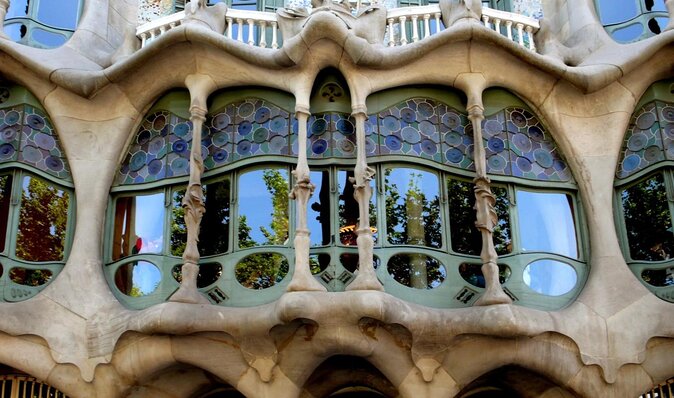
The tour starts at Casa Milà, better known as La Pedrera. Its rough stone exterior and rolling balconies immediately show how far Gaudí moved from the straight lines and tidy symmetry of conventional apartment design.
From the street, the building can look almost unfinished or melted. That oddness is exactly what makes it useful as a first stop. Your guide can point out how Gaudí treated the facade less like a flat wall and more like a moving surface.
Because you remain outside, you will not see La Pedrera’s interior spaces, roof sculptures, or apartment rooms on this experience. That limits the visit for anyone hoping for a full architectural tour, but it also keeps the walk moving and allows time for several other buildings.
I like beginning here because Casa Milà introduces the central question of the tour: where does architecture end and sculpture begin? You will return to that question again and again as the route continues.
Casa Batlló and the strange beauty of a city facade
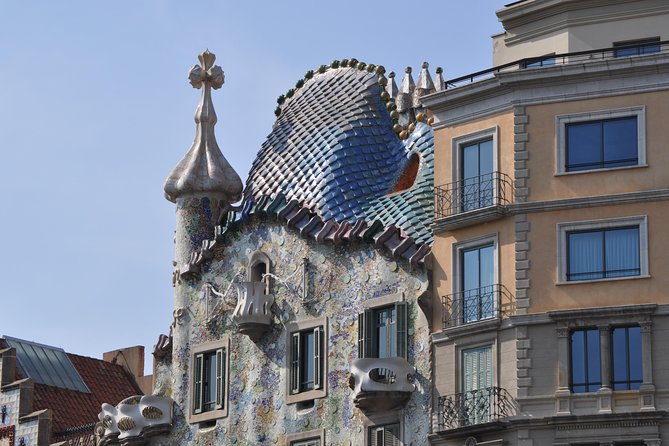
Casa Batlló is often the building that stops people in their tracks. Its colorful surface, curved forms, and unusual balconies give the impression of a creature looking back at the street.
The guide’s job here is not simply to point out the famous roof. The larger lesson is how Gaudí transformed an existing urban building into something that feels almost alive. The facade becomes a story about texture, light, bones, masks, and movement, depending on how the explanation is handled.
This is also one of the busiest visual moments of the walk. You may want to take photographs, but try to keep listening. The architectural details are easier to remember when you understand the ideas behind them.
Again, the visit is exterior only. If you want to explore Casa Batlló’s rooms, staircase, and interior design, you will need a separate admission. This tour helps you decide if that extra visit is worth your time.
The Manzana de la Discordia, Barcelona’s architectural argument
The Manzana de la Discordia is one of the best parts of the route because several major Modernist buildings sit together on the same block. The name refers to discord, and the facades seem to compete for attention.
Casa Batlló is here, along with Casa Amatller by Puig i Cadafalch and Casa Lleó Morera by Domènech i Montaner. Seeing them side by side is far more useful than viewing each one in isolation. You can compare their different approaches to ornament, color, symbolism, and structure within a few steps.
This is where the tour’s architectural training matters. A general city walk might label the buildings and move on. An architect can help you notice how each designer responds to the same urban setting in a different way.
Casa Amatller brings another major figure into the story, while Casa Lleó Morera shows the work of Domènech i Montaner, also responsible for other important Modernist projects in Barcelona. The contrast keeps the tour from becoming a single-artist biography.
For me, this block offers the clearest explanation of why Barcelona Modernism is more than Gaudí. Gaudí is the star, but he was part of a larger creative moment filled with competing visions.
A completely different kind of day out in Barcelona:
- Barcelona: 24 or 48-Hour Hop-On Hop-Off Bus Tour
★ 4.4 · 20,872 reviews - Barcelona: Park Guell Guided Tour with Skip The Line Entry
★ 4.7 · 17,563 reviews - Barcelona: La Pedrera-Casa Milà Ticket & Audio Guide Option
★ 4.7 · 15,099 reviews - Barcelona in 1 Day: Sagrada Familia, Park Guell,Old Town & Pickup
★ 5.0 · 13,541 reviews
Casa Calvet and Gaudí before the full breakthrough
Casa Calvet gives you a different view of Gaudí. Compared with Casa Batlló or Casa Milà, it can appear more restrained. That makes it a valuable stop because you can see how Gaudí worked within a more conventional urban commission.
The building helps frame his development. Rather than presenting him as a fully formed genius who appeared out of nowhere, the guide can show how his ideas changed over time. The route’s attention to eclecticism and the end of Modernism adds useful historical shape to that story.
Casa Calvet is also a reminder that an architect’s work depends on the client, the neighborhood, and the commission. Not every building allows the same freedom. That practical point makes the more extreme Gaudí projects easier to understand.
You will view the exterior only, so this stop is best for people interested in comparing styles. If your priority is a dramatic facade at every stop, Casa Calvet may feel quieter. If you want to trace Gaudí’s development, it earns its place.
The Antoni Tàpies Foundation and Modernism’s wider reach
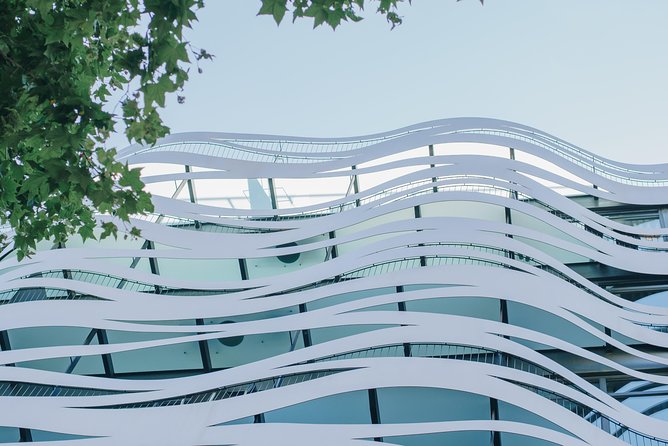
The Antoni Tàpies Foundation adds a later artistic voice to the route. Its building helps extend the conversation beyond Gaudí and into the continuing life of Barcelona’s architectural culture.
The stop is especially useful because it prevents the walk from treating Modernism as a sealed-off period. Barcelona’s design story did not end with Gaudí’s last major works. The route instead links architecture with changing artistic ideas and with the city’s shifting intellectual climate.
The foundation also connects the walk to Antoni Tàpies, one of Barcelona’s important modern artists. You should not expect an art museum visit during this tour, but the exterior gives the guide another way to discuss how the city’s creative identity developed.
This stop may appeal most to people who enjoy connections between architecture and art. If you want only Gaudí, it can feel like a side trip. I think it improves the walk by showing that Barcelona’s creative life is broader than one famous architect.
The ideas behind the facades
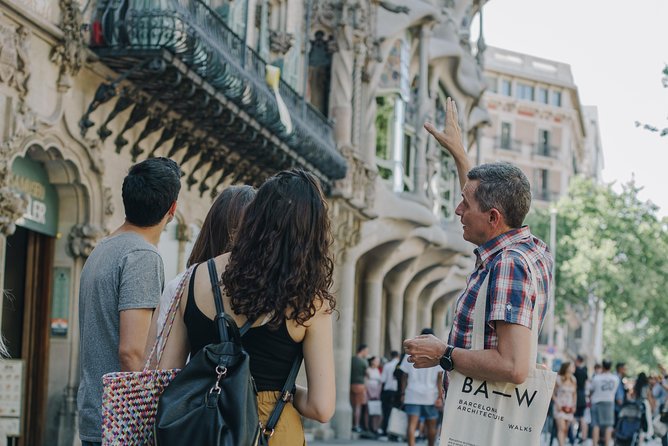
The most unusual feature of this tour is its subject matter. It does not stop at decorative details. The guide may discuss utopian socialism, positivist materialism, the intellectual bourgeoisie, anarchism, the Spanish Civil War, beatification, and the religious direction of Gaudí’s later work.
That is a lot for three hours. You will not receive a full university course, but you will get a framework for reading the city. Barcelona’s architecture becomes tied to class, politics, faith, industry, and competing hopes for the future.
The route also follows Gaudí’s movement from social concerns toward a total focus on the divine. That idea helps explain why his later work feels so different from ordinary civic or residential architecture. The phrase last great cathedral builder makes more sense once you see how architecture became a spiritual task for him.
Some of the terminology may be challenging if you have no background in architecture or Spanish history. That is the main intellectual caution. You should feel comfortable asking for a simpler explanation, especially in a group of up to 20 people.
The guide’s personality matters here. Pia has been praised for combining precise information about Gaudí with compassion, humor, and genuine enthusiasm. Those qualities are important on a subject that can become dry very quickly.
Courtyards, side details, and the value of looking around

The route includes some less obvious Eixample courtyards. These spaces help explain the urban plan around the grand facades and show that Barcelona’s architectural character is not limited to the buildings that appear on postcards.
Do not expect a long private-courtyard exploration or a separate museum visit. The details are part of the walking conversation, not a major standalone attraction. Still, they give you a break from the busiest streets and help you notice the city’s planning.
This is where I find a guide-led walk more useful than a self-guided photo hunt. You can easily find Casa Batlló on a map. It is harder to understand how the surrounding blocks, courtyards, and social ambitions shaped the city.
The walk’s exterior focus also means you keep moving. You do not spend half an hour waiting in an entrance line or managing timed admission. In exchange, you give up access to the interiors.
What the $54.44 price buys you
At $54.44 per person, this is not the cheapest way to see Barcelona’s architecture. You are paying for a three-hour English-language walking lesson led by a practicing architect, not for admission to a building.
That distinction matters. The price offers good value if you want interpretation, comparisons, and historical context. It offers weaker value if your main goal is to enter Casa Batlló or La Pedrera, since those tickets are not included and the buildings remain outside-only stops.
The maximum group size of 20 helps justify the cost. A smaller group gives the guide more room to answer questions and prevents the walk from becoming a speech delivered to a crowd. The strongest praise for this experience centers on the guide’s ability to be organized, funny, passionate, and clear, and that personal contact is what you are buying.
The tour is also efficient. In three hours, you cover several major facades and add Casa Amatller, Casa Lleó Morera, the Tàpies Foundation, Casa Calvet, and selected courtyards to the picture. You would need to plan carefully to make the same comparisons on your own.
Timing, meeting point, and practical planning
Meet at the Monument al Llibre on Gran Via de les Corts Catalanes, 634, in the Eixample. The start time is 10:30 a.m., and the walk returns to the same meeting point.
That central start and finish makes planning simple. You do not need to arrange a separate pickup or find your way to a distant neighborhood after the tour. The route is also near public transportation.
The walk requires good weather. If poor weather cancels it, you are offered another date or a full refund. A minimum number of participants is also required, so a cancellation is possible if that minimum is not reached.
You receive confirmation when booking, and mobile tickets are accepted. Service animals are allowed, and most people can take part. Since this is a three-hour architecture walk, I would still plan for steady walking and plenty of time standing outdoors.
Free cancellation is available until 24 hours before the 10:30 a.m. start. Canceling later, or changing the booking within that window, does not qualify for a refund.
Who will enjoy this walk most
I would recommend this tour to you if you like cities best when someone explains how they were made. It suits architecture students, curious first-time visitors, and anyone who wants more than a collection of beautiful facades.
It also works well for people who have already seen photographs of Gaudí but feel they are missing the larger story. The comparison with Domènech i Montaner and Puig i Cadafalch is especially helpful.
You may want something else if you need interior access, a fast sightseeing loop, or a tour built mainly around photographs. The intellectual material can also be more detailed than some visitors want during a morning walk.
Families with older children may find the strange shapes and dramatic buildings appealing, but the amount of historical and architectural discussion will depend on the child. Since the activity is offered in English, you should choose it only if everyone in your group can comfortably follow an English-language talk.
The 99 percent recommendation rate and five-star score from 180 reviews point to a very dependable experience, especially for guide quality. I would pay close attention to the guide assigned on your date, since the personal delivery is central to the tour’s success.
Is Barcelona & Gaudí worth booking?
Book it if you want to understand Barcelona’s Modernist buildings rather than simply photograph them. The mix of practicing architects, a 20-person group limit, major Gaudí facades, rival Modernist designers, and social context makes the $54.44 worthwhile for an architecture-minded visitor.
Skip it if entering the buildings is your priority. In that case, use this walk as an exterior introduction only, then arrange separate tickets for Casa Batlló or La Pedrera.
For most curious visitors, I would place this early in a Barcelona stay. It gives you a way to read the city for the rest of your visit, and it may make the next Gaudí facade you see feel a little less mysterious.
FAQ
How long is the Barcelona & Gaudí tour?
The experience lasts approximately three hours.
What time does the tour start?
The tour starts at 10:30 a.m.
Where does the tour meet?
It meets at the Monument al Llibre, Gran Via de les Corts Catalanes, 634, in Barcelona’s Eixample district.
Where does the tour finish?
The activity ends back at the meeting point.
Is the tour offered in English?
Yes. The tour is offered in English.
What is the maximum group size?
The tour allows a maximum of 20 participants.
Do you enter the buildings?
No. The tour visits the buildings from the outside and does not include interior access.
Which Gaudí buildings are included?
The route includes Casa Milà, also called La Pedrera, Casa Batlló, and Casa Calvet.
Which other architecture can you see?
The route includes the Manzana de la Discordia, Casa Amatller, Casa Lleó Morera, the Antoni Tàpies Foundation, and some Eixample courtyards.
Can you cancel for a full refund?
Yes. You can cancel at least 24 hours before the start time for a full refund. Late cancellations and changes within 24 hours are not refunded.
Recently added around Barcelona
- Intro Segway Tour Barcelona 1h★ 4.9 · 166 reviews
- Barcelona: Bike or eBike Tour, Top Sights & Local Insights★ 4.9 · 166 reviews
- Instagram Photoshoot Tour in Barcelona★ 5.0 · 167 reviews
- Artisan Ceramic Making Experience★ 5.0 · 168 reviews
- Barcelona: Big Fun Museum Ticket★ 4.2 · 169 reviews
- Gaudi’s Crypt in Colonia Güell with Audioguide★ 4.4 · 170 reviews
- Sagrada Familia Evening Private Tour with Expert Guide★ 4.5 · 170 reviews
- Las Golondrinas Barcelona 60-min Boat Tour★ 4.0 · 170 reviews
Barcelona Tours, compared.
Sagrada Familia Entry Ticket with Audio Guide
Read our review →

La Pedrera-Casa Milà Ticket & Audio Guide Option
Read our review →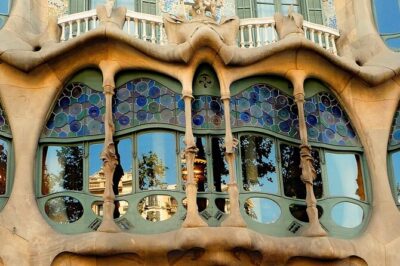
Barcelona in 1 Day: Sagrada Familia, Park Guell,Old Town & Pickup
Read our review →