
Review · SPAIN
Visit Trujillo Medieval Scene and Route of the Discoverers
Trujillo rewards slow looking. This guided walk turns the town’s stone streets, royal connections, and conquistador palaces into a readable story, beginning in the grand Plaza Mayor and climbing toward the medieval castle. I especially like the included monument entries during daytime visits and the way the tour adds themed threads about Isabel la Católica, Carlos V, and the Discoverers. The main catch is the walking: cobbles, slopes, and a packed route can make the experience feel longer than its listed two and a half hours.
You pay about $18.54 per person for a small-to-medium group capped at 35 people. That is a fair price for a guided introduction to one of Extremadura’s most historic towns, especially since the Castle and Cisterns and Santa María la Mayor are included during the day. The exact guide shapes the experience, but names praised in feedback include Alicia, Ana, José, and Esmeralda, all noted for clear, lively storytelling.
In This Review
- Key points to know before you book
- Starting beneath Trujillo’s Renaissance façades
- Climbing toward the Castle and Cisterns
- Santa María la Mayor and Trujillo’s religious side
- Palaces built by powerful families
- The discoverers story, with more than one point of view
- Why the guide matters so much
- Timing, cost, and what the price really covers
- Who will enjoy this Trujillo walk
- Should you book the Medieval Scene and Route of the Discoverers?
- FAQ
- Where does the tour start?
- What time does the tour begin?
- How long does the experience last?
- Are castle admission and the cisterns included?
- Is Santa María la Mayor included?
- How large can the group be?
- Can I cancel for a full refund?
Key points to know before you book
- Castle and cisterns included: Daytime admission covers Trujillo’s hilltop Alcazaba and its old water storage spaces.
- A town told through people: The route links palaces and streets to Isabel la Católica, Carlos V, and Trujillo’s famous conquistador families.
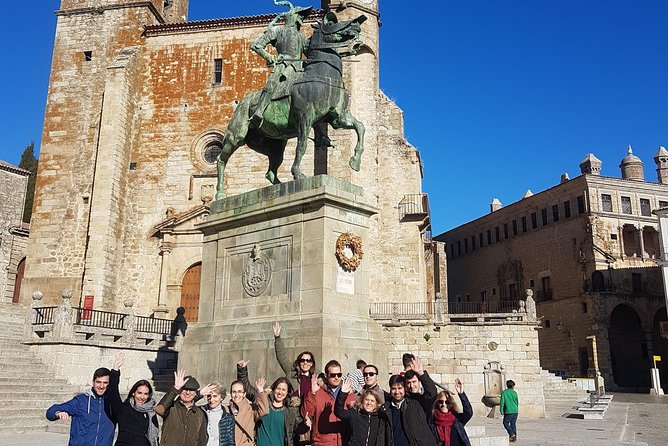
- The Plaza Mayor is the opening scene: Renaissance façades, the equestrian statue of Francisco Pizarro, and the Church of San Martín frame the start.
- Expect a walking tour with uphill sections: The castle and medieval quarter require effort on cobbled streets.
- Guides bring local color: Alicia is praised for history, architecture, family stories, women’s roles, and Extremadura’s biodiversity.
- Best value comes before 8 p.m.: Monument tickets are included for daytime visits, but not for visits beginning after 20:00.
Starting beneath Trujillo’s Renaissance façades
The tour begins at 10:30 a.m. in Plaza Mayor de Trujillo, the natural stage for understanding the town. This broad square is lined with Renaissance palaces and is also called Plaza de la Hispanidad, a name that points toward Trujillo’s links with Spain’s Atlantic expansion.
I like beginning here because the square gives you an instant visual lesson. Wealthy families built grand homes around public space, and their coats of arms, balconies, and stone details tell you who held power. Your guide can explain how Trujillo’s local families connected the town to events far beyond Extremadura.
The square is also a practical meeting point. You can get your bearings before the route moves into narrower medieval streets. It is worth taking a few minutes to look upward before following the group. The façades, corner balconies, shields, and church tower are easy to miss when you focus only on the guide.
The first section also introduces Trujillo as a setting for film. The town’s preserved stone streets and medieval architecture have made it suitable for cinema stages, adding another layer to the route. The tour presents Trujillo not only as a town of explorers, but also as a place valued for its art, buildings, economy, and natural setting.
Other Spain trips people book alongside this one:
- Barcelona: Sagrada Familia Entry Ticket with Audio Guide
★ 4.6 · 105,312 reviews - Barcelona: Park Güell Admission Ticket
★ 4.4 · 76,534 reviews - Seville: Royal Alcázar Entry Ticket
★ 4.6 · 28,378 reviews
Climbing toward the Castle and Cisterns
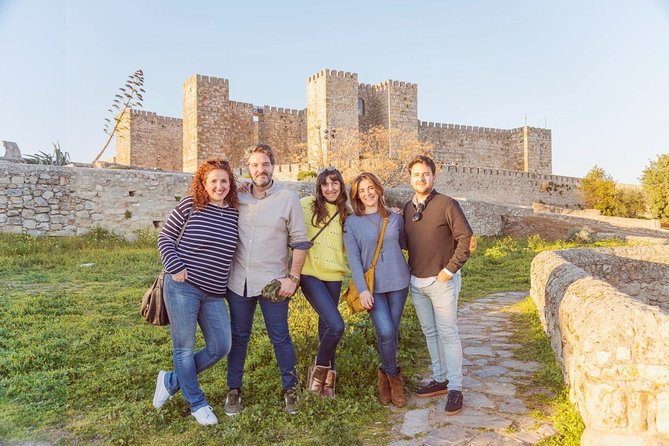
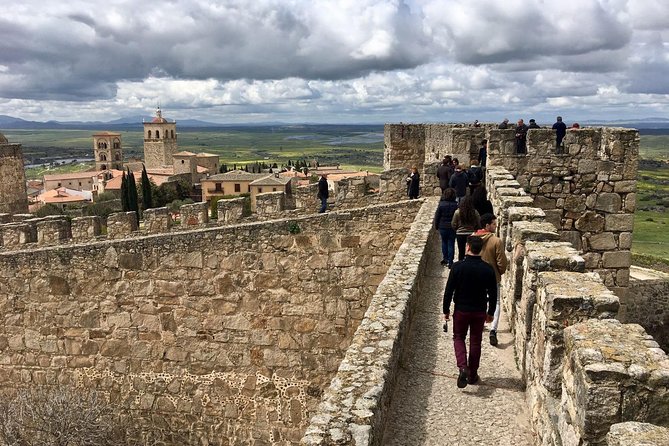
From the square, the walk continues into the old walled town. Trujillo’s medieval quarter is best understood on foot, but it is not a flat stroll. You should expect cobblestones, uneven surfaces, and an uphill route toward the castle.
The Castillo de Trujillo occupies the highest ground and gives the walk its strongest sense of place. The Alcazaba recalls the town’s Islamic past, while later fortifications reflect the long contest for control of this strategic hill. The exact emphasis depends on the guide, but the castle helps connect the town’s military role with its later period of wealth.
The included cisterns are a worthwhile part of the visit. These old water reservoirs show the practical side of medieval life, when storing water inside a fortified settlement was a basic matter of survival. A palace can look impressive, but a cistern explains how people actually lived through sieges and dry seasons.
The stated stop at the castle lasts about 15 minutes, though the full route allows more time for the wider historic center. Do not expect a long, museum-style castle visit with every room explored. This is a guided overview, designed to place the fortress within Trujillo’s broader story.
The views from the higher parts of town are among the best reasons to bring a camera. The guide points out useful photographic corners during the walk, which is helpful because the prettiest angles are not always the obvious ones. Wear shoes with a firm sole, particularly if you dislike slippery or uneven paving.
Santa María la Mayor and Trujillo’s religious side
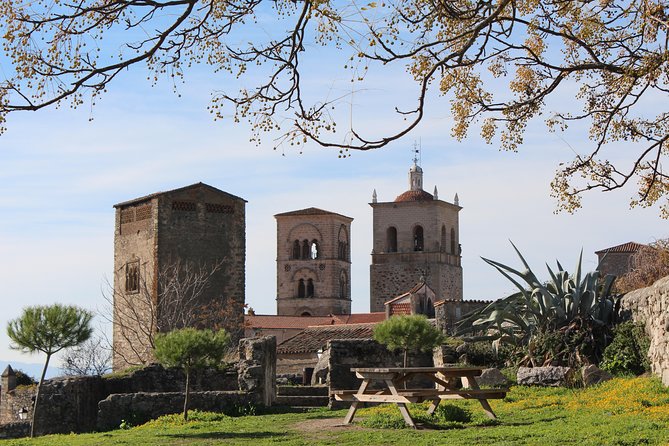
The Church of Santa María la Mayor is one of the tour’s main interior stops. It is described as a National Interest Monument and as the most important church in Cáceres province. The visit is listed at about 15 minutes, so the purpose is to see the key features and understand the church’s place in the town rather than examine every detail at leisure.
This stop matters because Trujillo’s story is not only about military families and overseas conquest. Churches, convents, towers, and manor houses show the social structure of a medieval and Renaissance town. Religious buildings also help explain how public life, family status, and local identity were displayed in stone.
The tour’s value here depends heavily on interpretation. Architectural details can seem decorative until someone explains why a shield, balcony, image, or tower was placed where it was. Alicia is particularly praised for explaining the meaning behind such details, while Ana is described as presenting the town in an easy, friendly way.
The visit is not meant to replace independent time inside the church. If Santa María la Mayor is especially important to you, check how much time remains after the guided portion. The tour gives you orientation, but a short scheduled stop may feel brisk for anyone who enjoys lingering over church interiors.
Palaces built by powerful families
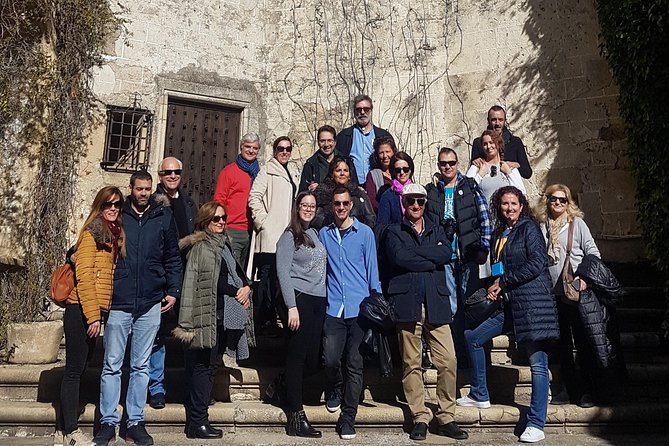
Trujillo’s Plaza Mayor and old center are filled with buildings tied to local families. The route includes the Palacio del Marqués de la Conquista, a Plateresque palace on the square. Its ornate style reflects the money and status that flowed back to Trujillo during Spain’s imperial period.
The Palacio de San Carlos adds a different architectural note. Dating from the 16th and 17th centuries, it is described as classicist rather than Plateresque. Seeing these buildings close together lets you compare changing tastes instead of treating the old quarter as one undifferentiated block of stone.
The Palacio de Orellanas-Pizarro is connected with the first corregidor of Cuzco. That link gives the Discoverers theme a personal scale. Instead of hearing only about famous voyages and battles, you see how overseas power affected specific families and their homes in Trujillo.
The route also includes the Pizarro House Museum, presented as a recreation of a late 15th-century hidalgo manor house. This stop is useful because it shifts attention from monumental façades to domestic life. You get a sense of how a minor noble household might have been arranged and how social rank showed itself in an ordinary residence.
The tour does not offer a full interior visit to every palace named along the route. Several stops are short, around 10 minutes. I see that as a strength for a first visit, since you cover a lot without spending the whole morning in one building, but it can feel rushed if you want detailed architectural study.
A completely different kind of day out in Spain:
- Barcelona: Casa Batlló Entry with Self-Audioguide Tour
★ 4.7 · 25,359 reviews - Seville: Cathedral and La Giralda Entry Ticket
★ 4.5 · 24,592 reviews - Madrid: Tour Bernabéu Entry Ticket
★ 4.5 · 21,573 reviews - Barcelona: 24 or 48-Hour Hop-On Hop-Off Bus Tour
★ 4.4 · 20,872 reviews
The discoverers story, with more than one point of view
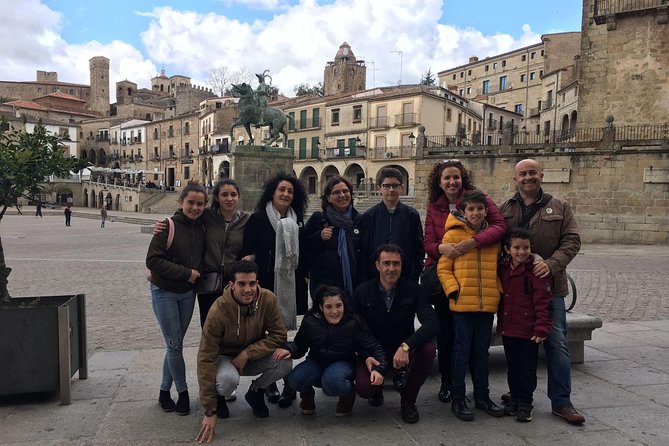
Trujillo is closely tied to the Spanish conquest of the Americas, and the tour makes that connection central. Francisco Pizarro is the best-known name, but the streets and palaces also point to a wider network of families, officials, and soldiers.
A good guide should give you more than a list of conquerors. The strongest feedback about Alicia describes explanations of the economic and artistic effects of Trujillo’s overseas connections, along with the role of women in these families. That wider framing matters. It helps you see how money, marriage, inheritance, religion, and social rank shaped the town.
The Isabel la Católica Route and Carlos V Route add two royal threads. They place Trujillo within the politics of the Spanish monarchy, rather than presenting it as an isolated provincial town. The route is also linked to cinema stages, so the town’s modern use as a historic setting sits alongside its medieval and Renaissance past.
You should expect a Spanish-centered interpretation of the Discoverers period, with attention to local pride and major historical figures. If you want a detailed account of Indigenous societies, colonial violence, or competing American perspectives, this tour may not go far enough based on the information available. Still, the family stories and architectural evidence can give you a useful starting point for thinking about that complicated past.
Why the guide matters so much
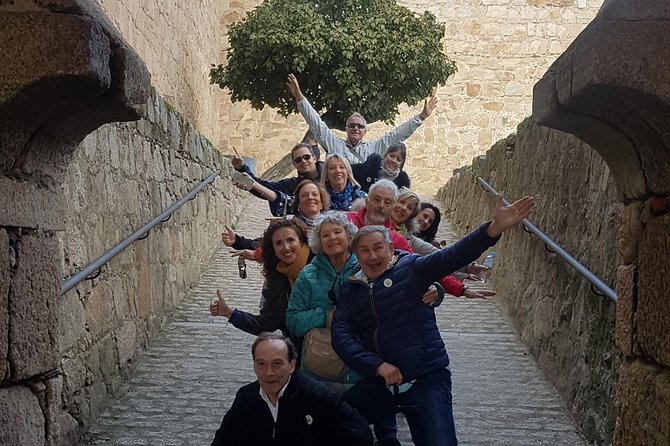
The best part of this experience is likely the person leading it. The route covers many buildings in a short time, and a guide has to keep the story moving without turning it into a string of dates.
Alicia is repeatedly praised for making history lively and for explaining local customs, buildings, family connections, and even Extremadura’s biodiversity. José is described as passionate, dynamic, and attentive to the whole group. Ana receives praise for answering questions, presenting the material with warmth, and sometimes extending the visit beyond its scheduled time. Esmeralda is also described as matching the quality of the setting with a pleasant presentation.
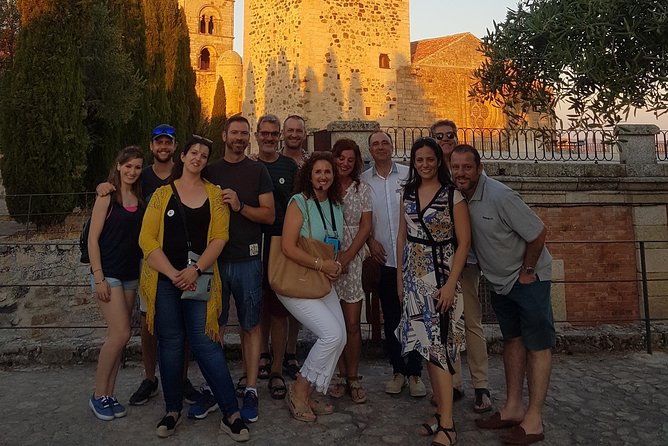
These names do not guarantee who will lead your departure. They do show the qualities to hope for: clear explanations, a sense of humor, and the ability to connect a balcony or coat of arms with a larger story. The most useful guides do not simply point at a palace. They tell you why it is there and who paid for it.
Group size can reach 35 people. That is not a private walk, and you may need to stay close to hear clearly in narrow streets. The size remains manageable for a standard city tour, but anyone wanting long conversations at each stop should consider that a larger group limits personal attention.
Timing, cost, and what the price really covers
At $18.54 per person, this is priced as an affordable orientation rather than a luxury tour. The value is strongest if you would otherwise pay separately for entry to the castle and Santa María la Mayor, since those admissions are included in daytime visits.
There is a timing detail worth taking seriously. The experience is advertised at about two hours and 30 minutes, but the stop descriptions add up to a longer outline, including three hours for the main guided visit and several shorter monument stops. In practice, the pace may vary, and some guides may spend extra time answering questions. Plan loosely rather than scheduling an immediate departure afterward.
Tickets to the castle and cisterns and Santa María la Mayor are not included when the visit begins after 20:00. The stated start time is 10:30 a.m., so the usual daytime departure should receive the included entries, but confirm the details if you are considering another time.
The activity uses a mobile ticket, which keeps the start simple. Confirmation arrives at booking. It begins and ends at the meeting point in Trujillo, Cáceres, with no transport from another town included. Since the tour is a walking experience, arriving ready for streets and slopes matters more than bringing anything elaborate.
Free cancellation is available up to 24 hours before the start time. A minimum number of participants is required, and if that minimum is not reached, you are offered another date or experience, or a full refund.
Who will enjoy this Trujillo walk
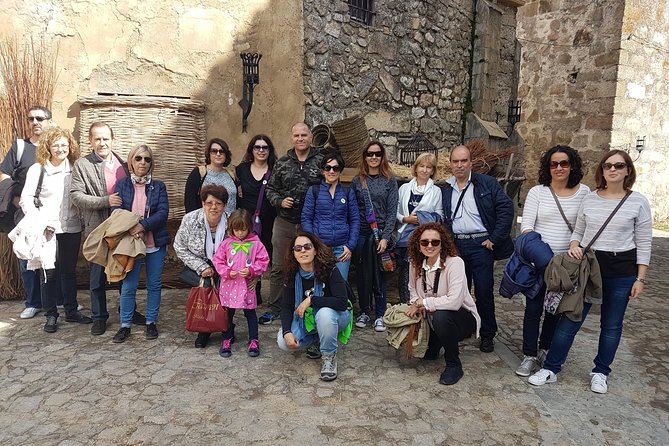
I would choose this tour for a first visit to Trujillo, especially if you want the main sights arranged into one readable story. It suits people who enjoy architecture, medieval towns, royal history, church interiors, and the complicated legacy of Spain’s conquistador families.
It is also a good match for photographers. The guide points out corners worth framing, and the route moves between the open Plaza Mayor, high castle ground, narrow medieval lanes, and formal palace façades.
Families and mixed-age groups may appreciate the guide’s storytelling, but the walking surface deserves attention. Most people can participate, and service animals are allowed, yet the route’s cobbles and uphill sections may challenge anyone who has trouble with uneven ground.
You might skip it if you prefer exploring entirely alone or if you need a slow, highly detailed visit inside each monument. The short stops cover a lot, but they do not leave unlimited time for every church, palace, and museum.
Should you book the Medieval Scene and Route of the Discoverers?
Book it if you want Trujillo’s essential sights, castle, church, palaces, and conquistador connections in one affordable morning walk. The combination of included daytime entries and strong guide feedback makes $18.54 good value.
Go in prepared for hills, cobbles, a group that may reach 35 people, and a schedule that can stretch beyond the stated two and a half hours. If possible, keep the rest of your day flexible. With a lively guide such as Alicia, Ana, José, or Esmeralda, this can turn Trujillo from a pretty stone town into a place with names, motives, conflicts, and human stories.
FAQ
Where does the tour start?
It starts in Trujillo, Cáceres, Spain, at Plaza Mayor de Trujillo.
What time does the tour begin?
The stated start time is 10:30 a.m.
How long does the experience last?
The advertised duration is approximately two hours and 30 minutes. The detailed route can take longer, depending on the pace and the guide.
Are castle admission and the cisterns included?
Yes. Admission to the Alcazaba or Castle and its cisterns is included for daytime visits.
Is Santa María la Mayor included?
Yes. The Church of Santa María la Mayor is included for daytime visits. Monument tickets are not included for visits from 20:00.
How large can the group be?
The maximum group size is 35 people.
Can I cancel for a full refund?
Yes, if you cancel at least 24 hours before the experience start time. Cancellations made less than 24 hours ahead are not refunded, and changes within that period are not accepted.
Recently added around Spain
- Half-Day Luxury Catamaran Sailing Cruise in Granada★ 5.0 · 165 reviews
- Jeep Safari to Teide and Masca★ 4.5 · 165 reviews
- Madrid: Thyssen Museum Guided Tour with Skip-the-Line Entry★ 4.5 · 165 reviews
- Visit in Spanish to the Cathedral Mosque. Does not include entrance ticket★ 5.0 · 165 reviews
- Canyoning in Andalucia: Rio Verde Canyon★ 5.0 · 165 reviews
- Guided Tour to Caminito del Rey from Malaga★ 4.5 · 165 reviews
- VIP Private Segway Tour of Palma★ 5.0 · 165 reviews
- Las Palmas: Private Old City Guided Walking Tour with Tapas★ 4.6 · 166 reviews