
Review · HISTORICAL TOURS
Vigo: Walking Tour with local History & Culture
Vigo rewards curious walkers. This two-hour tour links the old town, San Sebastián Castle, and the port while explaining how the city grew around its estuary. I like the strong mix of history and practical advice, especially the stories about the Treasure of Rande and the food tips shared at the end. The main caution is the route’s hills and uneven sections, which can tire anyone with walking or balance problems.
I also like the views from the castle and the chance to see Vigo through a local guide’s eyes rather than simply ticking off monuments. Guides such as José Manuel, Jorge, Pedro, Omar, and Borja have been praised for their humor, clear English, and affection for the city. Large groups can be harder to hear, even with a microphone, and the walk may run longer than two hours.
In This Review
- Key points to know before you go
- Starting with O Sireno in Porta do Sol
- From Policarpo Sanz to the García Barbón Theatre
- Rúa do Príncipe and the modern city
- Climbing toward San Sebastián Castle
- San Sebastián Castle and Vigo’s defensive past
- Rúa Ferrería and Praza da Constitución
- Praza da Igrexa and the old town
- Rúa Pescadería and the route to the port
- The Port of Vigo and the Treasure of Rande
- How the $22 price works
- Group size, weather, and pace
- Who should book this Vigo walking tour?
- Should you book it?
- FAQ
- Where does the Vigo walking tour start?
- How long does the tour last?
- What languages are available?
- Is the tour wheelchair accessible?
- Does the tour include entrance fees?
- What is the meeting point landmark?
- What does the tour cover?
- How does payment work?
Key points to know before you go
- Start beneath Vigo’s famous man-fish: Meet at O Sireno in Porta do Sol square, looking for the guide’s red umbrella.
- See Vigo from San Sebastián Castle: The stop brings wide views over the city and the Ría de Vigo.
- Hear the Treasure of Rande story: The port section connects Vigo’s maritime past with legends of sunken riches.
- Expect useful local advice: Guides suggest places for Galician food, drinks, shopping, and further visits.
- Allow for hills and rough paving: The walk is wheelchair accessible with an accompanying person, but some slopes and rocky surfaces require care.
- Pay at the end: The experience is tip-based, with a listed price of $22 per person and no payment required at booking.
Starting with O Sireno in Porta do Sol
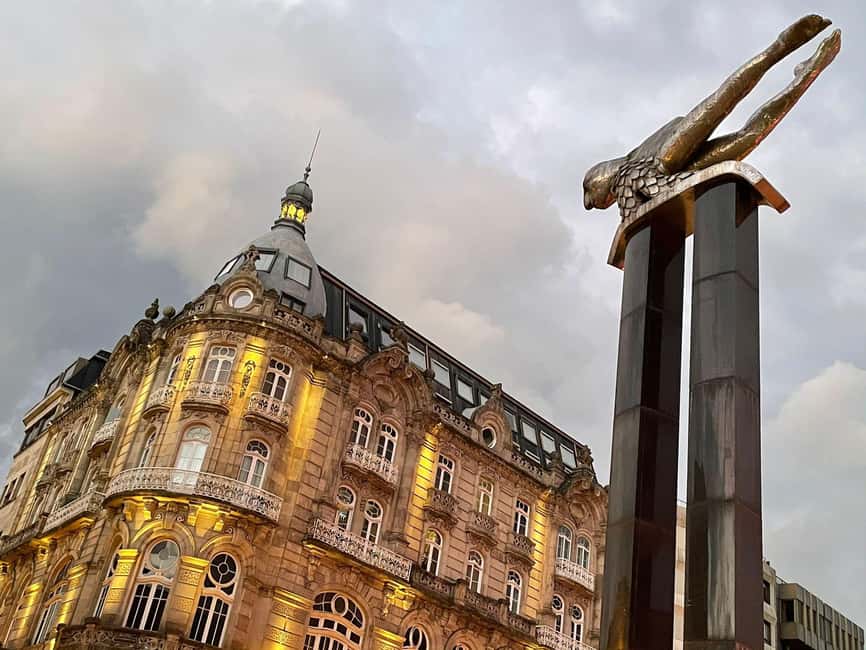
The tour begins in Praza Porta do Sol, one of the easiest places in central Vigo to recognize. Look for the tall sculpture of O Sireno, a man-fish figure raised above the square. The statue is not at eye level, so scan upward rather than searching for a guide standing beside a small monument.
A red umbrella identifies the meeting point. That simple detail matters in a busy city center, especially if several groups gather nearby. Arrive with comfortable shoes and enough time to locate the sculpture without rushing.
Porta do Sol gives the guide a useful opening scene. From here, the tour sets up Vigo as a city shaped by its position on the water, its commercial life, and its links with other parts of Europe. The introduction is not only about old stones. It helps you understand why Vigo matters within Galicia.
The city can surprise first-time visitors. It is not presented as a preserved medieval town from end to end. Instead, old streets, newer buildings, public art, shops, theaters, and port avenues sit close together. That mixture is part of Vigo’s character.
More history and heritage tours:
- Madrid Essential: Historic Center, Plaza Mayor & Royal Palace
★ 5.0 · 6,416 reviews - Barcelona: Tapas Walking Tour with Food, Wine, and History
★ 4.8 · 4,261 reviews - Sevilla Food Tour: Tapas, Wine, History & Traditions
★ 5.0 · 3,468 reviews
From Policarpo Sanz to the García Barbón Theatre
After the opening talk, you walk along Rúa Policarpo Sanz toward the García Barbón Theatre. These short walking sections keep the tour moving while the guide shifts between buildings and the wider story of Vigo.
The theater stop lasts only a few minutes, but it adds an architectural and cultural note to the route. This is helpful if you want more than military history and waterfront views. The guide may also explain how important figures and public institutions helped shape Vigo’s modern identity.
The tour uses historical photographs, maps, and supporting material. These tools can make a short stop more useful, since you are not asked to imagine the past from a bare façade alone. In a large group, the guide may use a microphone. That improves the sound, though one recent experience found that people still needed to move toward the front to hear clearly.
This is a good example of the tour’s overall style. You are not entering every building or spending half an hour at one landmark. Instead, you get a connected walk through several parts of the city, with enough explanation to decide where you want to return later.
Rúa do Príncipe and the modern city
Rúa do Príncipe brings you into one of Vigo’s main central streets. The stop at the RC Celta shop introduces a local passion that may be easy to miss if you focus only on monuments. Football is part of daily life in Galicia, and the club gives the guide a natural way to discuss local identity.
I appreciate this kind of detail because it keeps the tour grounded. A city is not only its churches, castles, and statues. Shops, sports, food, and everyday loyalties tell you how people connect with the place now.
The route through this area also helps you get your bearings. You learn how the historic center relates to the central shopping streets and the lower port area. If you have only one day in Vigo, this orientation can save time later.
The stop itself is brief, so do not expect a full football history lesson. Its value is the local flavor and the chance to see how the guide connects Vigo’s public life to its streets.
Climbing toward San Sebastián Castle
The route then heads toward Castelo de San Sebastián. This is where the physical side of the walk becomes more important. The tour includes hills, and one section may feel demanding if you have arthritic knees, limited stamina, or trouble on uneven ground.
A recent participant praised the steady pace but found the hills and rocky surfaces tiring. That is fair warning. The tour is listed as wheelchair accessible, with an accompanying person required, and one wheelchair user had a very positive experience with José Manuel, who made sure access was possible. Still, accessibility does not mean the route is flat or effortless.
Take your time on the uphill sections. The guide may adjust the pace, and the tour has received praise for considerate pacing, shade breaks, and checks on personal comfort. If you use a wheelchair or have balance concerns, contact the provider before booking so you can understand how the route will work for your needs.
The climb is worth it for the viewpoint. San Sebastián Castle offers a strong visual introduction to Vigo and its estuary. You can better understand the city’s position once you see the water spread beyond the streets and the port below.
More walking tours:
- Barcelona Tapas and Wine Experience Small-Group Walking Tour
★ 5.0 · 5,804 reviews - Granada: Albaicín and Sacromonte Guided Sunset Walking Tour
★ 4.9 · 2,962 reviews - Toledo Tour & Vineyard Walk with Wine Tasting from Madrid
★ 5.0 · 2,546 reviews - Madrid Walking Tour from Puerta del Sol to Retiro Park
★ 5.0 · 2,285 reviews
San Sebastián Castle and Vigo’s defensive past
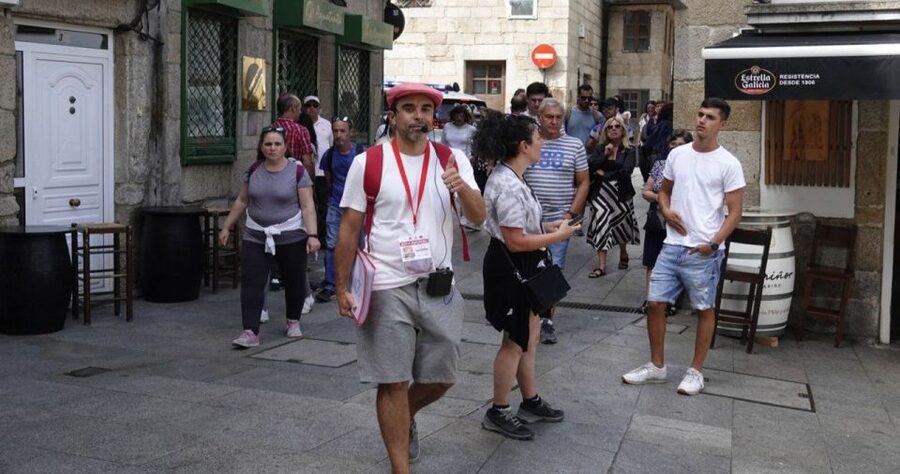
The castle stop lasts about 15 minutes. It is one of the tour’s most useful pauses because the view and the history work together.
The old town’s survival was not guaranteed. Vigo faced serious threats, and its defensive sites help explain why the city developed as it did. At the castle, the guide can connect Vigo’s position on the estuary with its military and maritime importance.
This is also a good place for photographs, but do not treat it as only a viewpoint. The castle gives shape to stories that might otherwise seem abstract. Once you see the water routes and the city’s position, the discussion of ships, trade, attacks, and strategic importance becomes easier to follow.
The tour does not include an entrance fee to paid attractions. The castle portion is presented as a guided outdoor stop, so you should not assume that admission to any interior site is part of the experience.
Rúa Ferrería and Praza da Constitución
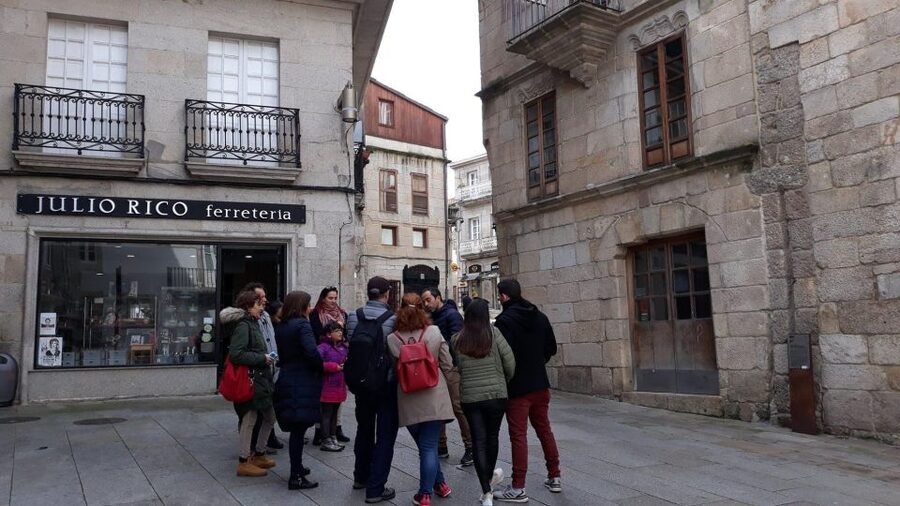
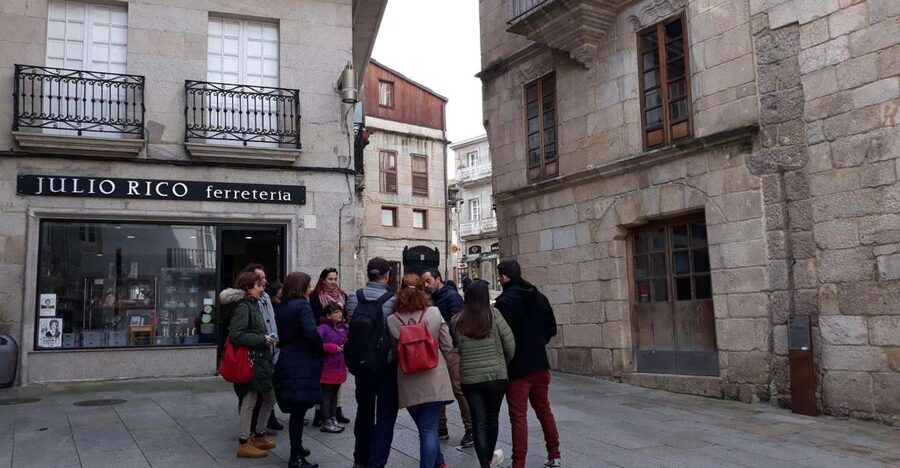
From the castle, the walk continues through Rúa Ferrería to Praza da Constitución. These streets provide a closer look at Vigo’s older center, where narrow routes and traditional squares create a different mood from the broad port avenues.
Praza da Constitución is given around 10 minutes. The guide uses the square to explain more of Vigo’s civic and architectural past. This is a comfortable point in the route for asking questions, particularly if you want to understand how the historic center changed over time.
The walk is not simply a straight march between headline sights. Short transitions let you notice how the scale of the streets changes. You move from open views to enclosed lanes, then into a more formal square. That variety gives the two hours a good rhythm.
Still, the route can feel less substantial if you are expecting long visits inside major monuments. One participant found that the tour contained less content than similar walks elsewhere, despite praising the guide. I would treat this as an overview rather than a full specialist tour.
Praza da Igrexa and the old town
The next major pause is Praza da Igrexa, reached via the older streets of the center. The guided portion here lasts about 15 minutes, making it one of the longer stops.
This is where Vigo’s historic core comes into focus. The guide discusses the city’s past, local customs, architecture, and people connected with Vigo’s rise as a destination. The emphasis is on stories that make the streets easier to read, not simply on listing construction dates.
The guides receive especially strong praise for storytelling. Jorge has been described as enthusiastic and clear in English, while Borja was praised for presenting himself as a passionate ambassador for Vigo and Galicia. Pedro was singled out for energy and strong historical explanations. These comments point to an important strength: the experience depends partly on who leads your group, but the provider has several guides who bring personality to the route.
English and Spanish are offered. In mixed groups, the guide may need to alternate languages. One participant found that a guide could not fully cover both languages in the available time, while another said the English was fluent even in a group of more than 15 people. If language clarity is especially important to you, confirm the departure language when you book.
Rúa Pescadería and the route to the port
The walk then heads down Rúa Pescadería toward the port. This transition is one of the most appealing parts of the tour because it connects old Vigo with the city’s working and recreational waterfront.
Rúa Pescadería carries the flavor of Vigo’s food culture. The guide’s recommendations are a real benefit here. You can ask where to find Galician dishes, which places suit a casual drink, and where to shop for souvenirs. Several guides have been praised for giving organized food suggestions rather than vague advice.
That practical help can be worth more than another ten minutes of general commentary. If you are in Vigo for a short stop, knowing where to eat after the walk can turn a pleasant tour into a useful first afternoon in the city.
The route toward the water may also make the hills more noticeable, especially on the return portions or sloping streets. Wear shoes with a firm grip, and do not plan a demanding activity immediately afterward if you tire easily.
The Port of Vigo and the Treasure of Rande
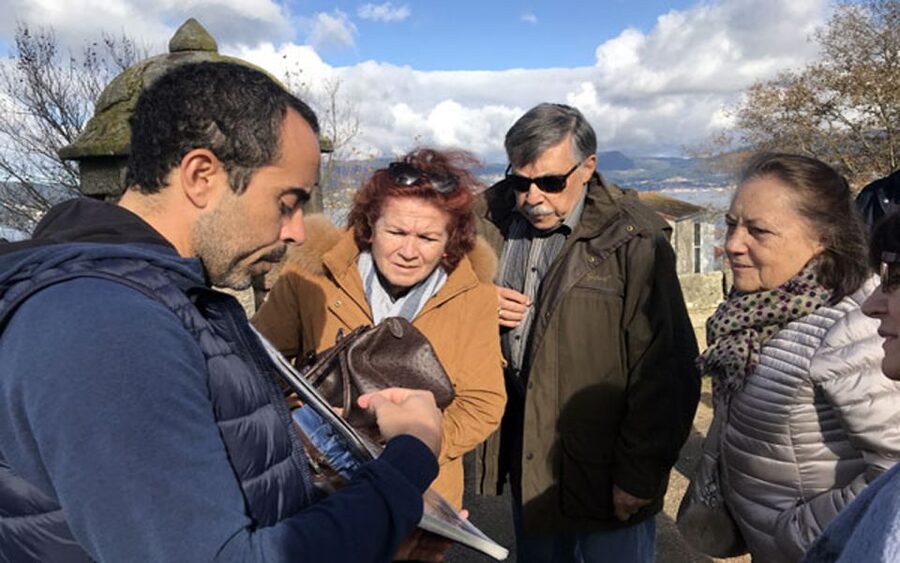
The final guided stop takes about 20 minutes at the Port of Vigo. This is the tour’s clearest link between past and present.
The guide explains the development of the port and Vigo’s migratory history. The city’s relationship with Britain and France also receives attention because of its port and strategic position. This wider context helps you see Vigo as more than a local fishing center. Its waterfront shaped work, travel, commerce, and connections far beyond Galicia.
Then comes the Treasure of Rande, the story that gives the harbor section extra drama. Legends of sunken treasure surround the estuary, and the guide uses them to explain the waters near Vigo and the long fascination with ships and lost riches.
The story is best enjoyed as part of the area’s folklore and maritime past. Do not expect a treasure hunt or a visit to a museum collection. The value is in hearing how legends attach themselves to a real port with a long strategic history.
The port also makes a sensible finishing point. You end close to the water, with a clearer idea of how Vigo’s old streets connect to its modern maritime life. Before leaving, ask the guide for specific suggestions on food, drinks, shopping, or places to visit nearby.
How the $22 price works
The listed cost is $22 per person, but this is a tip-based walking tour paid at the end according to your satisfaction. You can reserve without paying immediately, which keeps the booking flexible, and cancellation is free up to 24 hours before the start time.
For the money, the value comes from the guide’s local explanation rather than admission tickets. You receive about two hours of guided walking, views over the Ría de Vigo, historical maps and photographs, and personal suggestions for the rest of your stay.
I would consider it good value if you are new to Vigo, visiting on a cruise or short stop, or want a quick introduction before exploring independently. It is less suitable if you want interior access to monuments, a slow architectural study, or a route with almost no hills.
The tip-based format also means the final amount is part of your decision. You are paying for the guide’s time, stories, route planning, and recommendations, not for a packaged attraction with included entrances.
Group size, weather, and pace
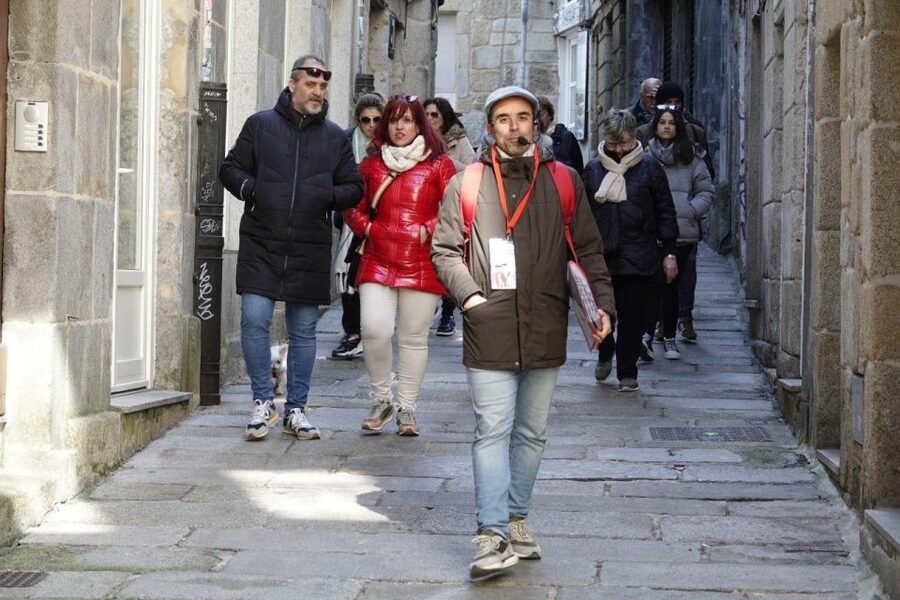
The tour runs in English or Spanish and may use a microphone when the group is large. Even so, stay near the guide at busy stops. A very large group can make it harder to hear and can reduce the personal feel of the walk.
Small groups can be much better for questions. One couple ended up in a group of only three, which allowed more conversation and a more personal pace. You cannot count on that size, but the guide’s willingness to answer questions is a recurring strength.
Weather matters in Vigo. Rain and wind did not prevent several people from enjoying the walk, but you should bring suitable clothing. Most of the experience takes place outdoors, and the best views are less rewarding when you are cold, wet, or trying to protect a phone from rain.
The planned duration is two hours, though one group finished about 30 minutes late. That extra time may be welcome if you enjoy a relaxed explanation, but it matters if you have a train, meal reservation, shore excursion, or other timed plan afterward.
Who should book this Vigo walking tour?
I would choose this tour if you want a first look at Vigo’s history, old town, port, and food culture in one compact outing. It suits curious first-time visitors, cruise passengers, couples, families with reasonably mobile older children, and anyone who wants local suggestions before choosing where to eat.
It is also a good match for visitors who enjoy stories about how a city works. The tour covers migration, defense, football, architecture, local customs, port development, and maritime legends. That range gives you a feel for modern Vigo as well as its past.
You should think twice if steep streets are a serious problem, if you need frequent seating, or if you prefer indoor attractions. Ask about the route if you use a wheelchair. The tour can accommodate wheelchair users with an accompanying person, but the hills and uneven sections still deserve careful planning.
The overall rating is 4.6 from 236 reviews, with repeated praise for guides who are friendly, humorous, enthusiastic, and clear in English. José Manuel, Jorge, Pedro, Omar, George, Borja, and others have each been praised for making the city understandable and welcoming.
Should you book it?
Book it if you have limited time and want Vigo to make sense quickly. The views from San Sebastián Castle, the old-town squares, and the port stories give you a useful framework for exploring on your own afterward.
I would especially book early in your visit, then use the guide’s food and sightseeing suggestions for the rest of the day. Just wear supportive shoes, keep the group in sight, and leave a little spare time after the advertised two hours.
Skip it if you want a flat, fully accessible route with long indoor visits. For most visitors who can manage Vigo’s hills, this is a friendly and fairly priced introduction to a city that is easy to underestimate.
FAQ
Where does the Vigo walking tour start?
It starts in Praza Porta do Sol, near the O Sireno sculpture, also known as the man-fish. Look for a guide carrying a red umbrella.
How long does the tour last?
The scheduled duration is approximately two hours. One experience ran about 30 minutes longer, so avoid booking another activity immediately afterward.
What languages are available?
The live tour guide is available in English and Spanish. In mixed groups, the guide may alternate between the two languages.
Is the tour wheelchair accessible?
Yes, the tour is described as wheelchair accessible, but an accompanying person is required. The route includes hills and some uneven or rocky surfaces, so plan carefully.
Does the tour include entrance fees?
No. Entrance fees are not included. The experience focuses on guided outdoor stops through Vigo’s streets, castle area, squares, and port.
What is the meeting point landmark?
The meeting point is the O Sireno statue in Porta do Sol. The sculpture is high above the ground, so look upward when searching for it.
What does the tour cover?
The route includes O Sireno, Rúa Policarpo Sanz, the García Barbón Theatre, Rúa do Príncipe, an RC Celta shop stop, San Sebastián Castle, Rúa Ferrería, Praza da Constitución, Praza da Igrexa, Rúa Pescadería, and the Port of Vigo.
How does payment work?
This is a tip-based tour paid at the end according to your satisfaction. The listed price is $22 per person, and you can reserve now while paying later.
Recently added around Spain
- Half-Day Luxury Catamaran Sailing Cruise in Granada★ 5.0 · 165 reviews
- Jeep Safari to Teide and Masca★ 4.5 · 165 reviews
- Madrid: Thyssen Museum Guided Tour with Skip-the-Line Entry★ 4.5 · 165 reviews
- Visit in Spanish to the Cathedral Mosque. Does not include entrance ticket★ 5.0 · 165 reviews
- Canyoning in Andalucia: Rio Verde Canyon★ 5.0 · 165 reviews
- Guided Tour to Caminito del Rey from Malaga★ 4.5 · 165 reviews
- VIP Private Segway Tour of Palma★ 5.0 · 165 reviews
- Las Palmas: Private Old City Guided Walking Tour with Tapas★ 4.6 · 166 reviews
Historical Tours, compared.
Madrid Essential: Historic Center, Plaza Mayor & Royal Palace
Read our review →
Tapas Walking Tour with Food, Wine, and History
Read our review →
Sevilla Food Tour: Tapas, Wine, History & Traditions
Read our review →
Valencia Old Town Tour with Wine & Tapas in 11th Century Historic Monument
Read our review →
Barcelona Tapas Walking Tour: Food, Wine & History
Read our review →
Ultimate Seville Tapas, Wine & History Small Group Tour
Read our review →
Skip-the-Line Great Mosque-Cathedral History Tour
Read our review →
Browse the lists this tour appears in