
Review · HISTORICAL TOURS
Tarragona: Roman Heritage Guided Walking Tour
Rome left a powerful calling card here. This two-hour walk brings Tarragona’s Roman walls, Circus vaults, and seaside Amphitheater into one compact visit. I like the $17 price, which includes the guide and entrance to the Circus, and I like the mix of outdoor ruins, a city model, and a 3D audiovisual presentation.
I also like the setting: Tarragona’s ancient monuments are woven into its modern streets rather than fenced off in a distant archaeological park. The main drawback is time. Two hours gives you a useful introduction, but it can feel short when the guide is explaining several major sites, especially if the group is large or the weather slows everyone down.
- The Roman walls are among the oldest Roman walls outside Italy.
- The Circus vaults connect the modern city with ancient chariot racing.
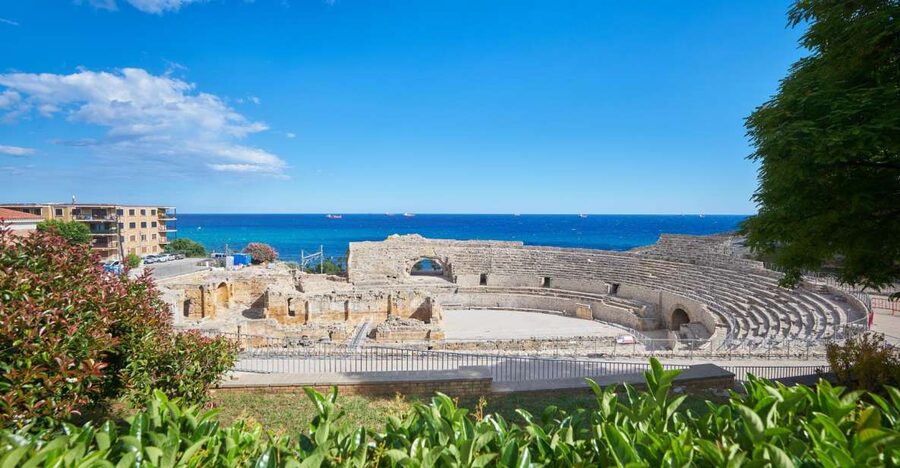
- The Amphitheater sits beside the Mediterranean, with open sea views.
- A large city model helps you picture ancient Tarragona as a working Roman capital.
- The 3D audiovisual display adds context before you enter the Amphitheater.
- The tour costs $17 and is led in Catalan or Spanish by an official city guide.
In This Review
- Starting Beside Tarragona’s Ancient Walls
- Roman Ruins Hidden Among Modern Streets
- The City Model Makes Ancient Tarragona Easier to Picture
- Inside the Circus Vaults and the World of Chariot Racing
- The 3D Presentation Before the Amphitheater
- The Amphitheater Beside the Mediterranean
- What the $17 Price Really Buys You
- The Guide Makes the Difference
- Walking Comfort, Weather, and Access
- Who Will Get the Most From This Walk?
- Booking Flexibility and Timing
- Should You Book the Tarragona Roman Heritage Tour?
- FAQ
- How much does the Tarragona Roman Heritage Guided Walking Tour cost?
- How long does the tour last?
- Where is the meeting point?
- What languages are available?
- Is the tour wheelchair accessible?
- Can I cancel or pay later?
Starting Beside Tarragona’s Ancient Walls
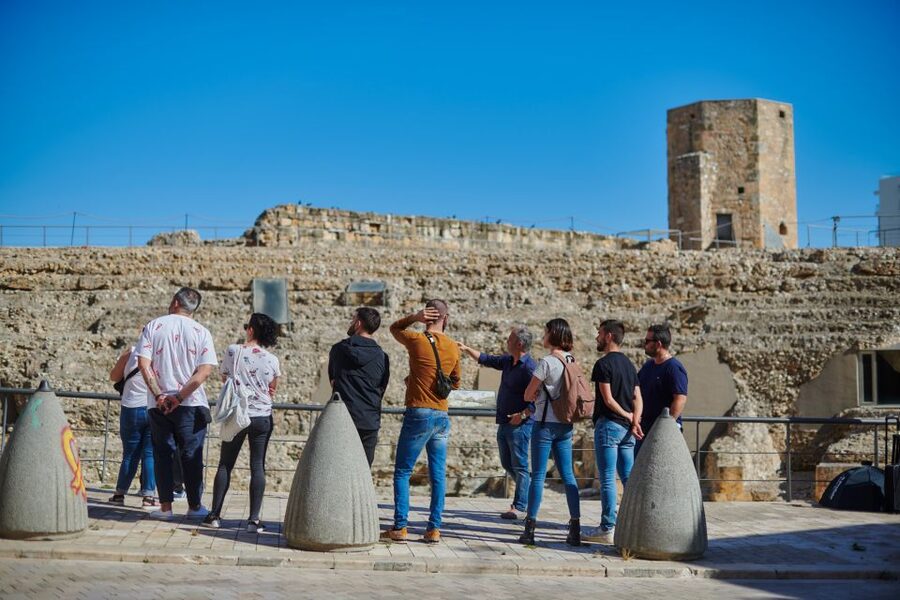
You meet at the Itinere, Turisme & Cultura office, next to the Roman walls. Arrive 10 minutes early. That gives you time to find the office and join the group without starting the walk in a rush.
The walls are the right place to begin. They immediately show why Tarragona mattered to Rome. The city was built on a hill beside the Mediterranean, giving Rome a strong position for controlling access to the Iberian Peninsula. Your guide explains why this location became the Roman gateway for the wider peninsula.
The walls are also a useful reminder that Tarragona was not simply a small town with a few scattered ruins. It was a serious Roman center, placed where military power, sea access, and regional control met. You get that big picture before moving into the streets.
I find this opening especially helpful if Roman history is new to you. Instead of seeing old stone and guessing what it means, you learn why the city was placed here in the first place. The walls become part of a plan, not just a photo stop.
Roman Ruins Hidden Among Modern Streets
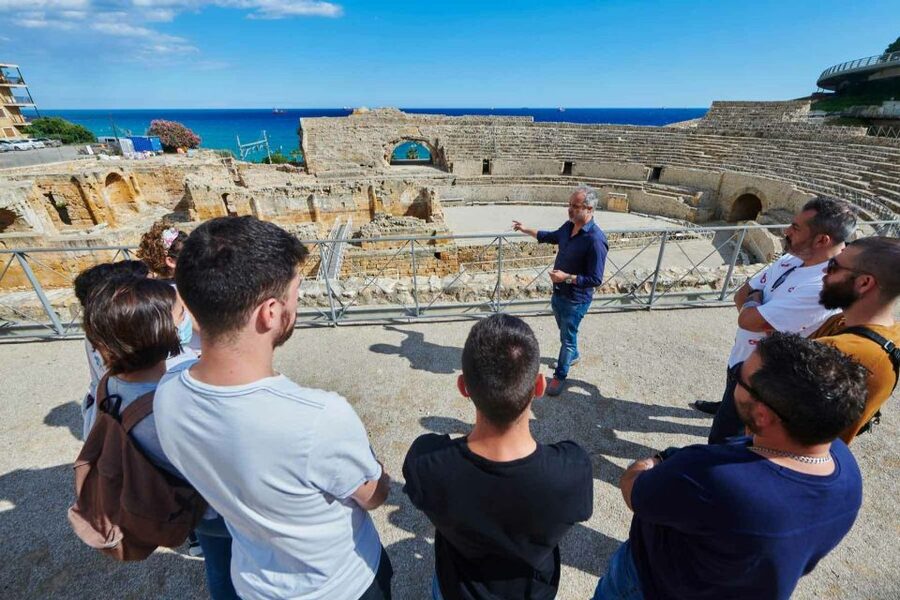
From the walls, the walk continues through Tarragona’s historic center. This is one of the most appealing parts of the experience because Roman remains appear alongside present-day homes, streets, and squares.
That mixture makes Tarragona feel like a living city rather than an archaeological display. Ancient structures are not isolated from daily life. They are part of the ground under the city and part of the routes people still use.
Your guide explains how the Roman buildings once worked and where they fitted into the larger city. The route is less about rushing from one monument to the next and more about learning how the ancient city occupied this hill.
That approach can make a major difference. Large ruins are easy to admire, but their purpose is not always obvious. A wall, vault, or fragment becomes more meaningful when you understand how it served the city. The guide connects the remains to the urban plan and helps you picture Tarragona at its Roman height.
More history and heritage tours:
- Madrid Essential: Historic Center, Plaza Mayor & Royal Palace
★ 5.0 · 6,416 reviews - Barcelona: Tapas Walking Tour with Food, Wine, and History
★ 4.8 · 4,261 reviews - Sevilla Food Tour: Tapas, Wine, History & Traditions
★ 5.0 · 3,468 reviews
The City Model Makes Ancient Tarragona Easier to Picture
A large model of the city gives the tour a useful pause from the streets. Here, the guide can show you how Tarragona looked in Roman times and explain the role of its main buildings.
I consider this one of the most useful teaching points on the walk. Ancient cities can be difficult to understand when only pieces remain. A model lets you see the relationship between the walls, public buildings, Circus, and Amphitheater in one view.
Pay attention to this explanation if you enjoy maps and city planning. It helps you understand that the monuments were not random structures. They formed part of a planned Roman center, with different spaces serving public entertainment, administration, defense, and daily life.
The city model also helps if you have limited time in Tarragona. After the tour, you can look at the streets and ruins with a better sense of how they fit together. You may not remember every Roman term, but you should leave with a clear mental picture of the city.
Inside the Circus Vaults and the World of Chariot Racing
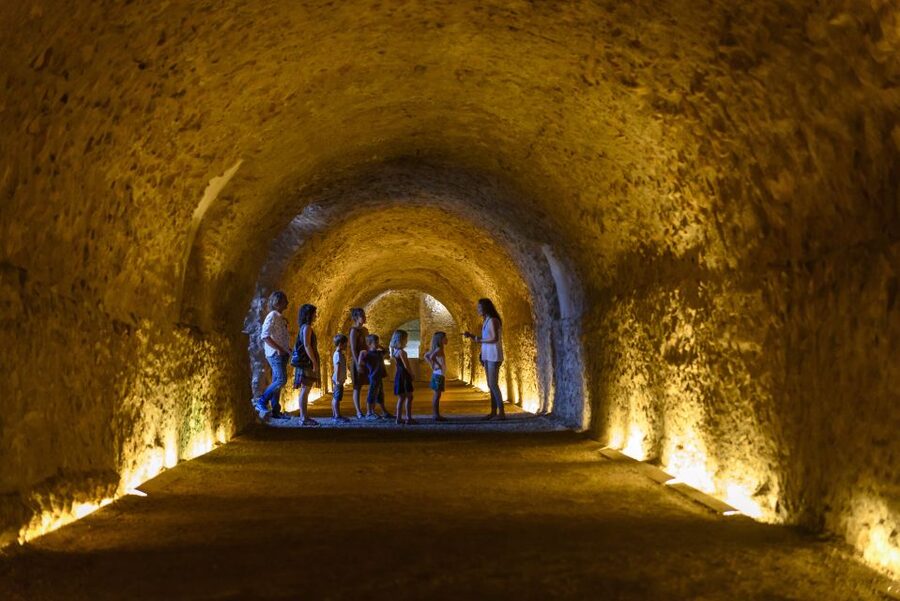
The tour includes entrance to the Circus, one of its clearest practical advantages. You visit the vaults connected with the ancient racing stadium and hear about the chariot races held there.
The vaults offer a different experience from the open walls and streets. You move through enclosed Roman spaces and get a feel for the structure beneath the public spectacle. This is where the tour shifts from military Tarragona to entertainment Tarragona.
Chariot racing was more than a quick afternoon diversion. It drew crowds and formed a major part of Roman public life. The guide uses the Circus to explain the excitement and scale of those events, helping you picture horses, drivers, and spectators moving through a purpose-built stadium.
The site works well for families and for anyone who finds military history a little dry. The idea of chariot races is easy to grasp, and the vaults give the story a physical setting. You are not only looking at a foundation. You are walking through part of the structure that supported a huge public venue.
There is a practical limit, however. The full tour covers several places, so the Circus segment cannot become a long standalone visit. If you want a very detailed study of Roman racing architecture, you may want more time than this tour provides. For a first look, the included entrance adds good value to the $17 cost.
The 3D Presentation Before the Amphitheater
Before heading to the Amphitheater, you watch an audiovisual presentation using 3D images. This adds a visual layer to the explanations and helps reconstruct what the ancient buildings may have looked like when they were in use.
I like this part because Roman sites can be hard to read in their present condition. Stone survives, but paint, crowds, movement, and the original scale are harder to imagine. A digital reconstruction can bridge some of that gap without requiring you to study a long museum display.
The presentation also gives the guide a chance to review the story before the final major stop. You have already learned why Tarragona mattered, seen how the city was organized, and visited the Circus. The 3D material prepares you to look at the Amphitheater as a functioning venue rather than simply an attractive ruin.
One piece of useful feedback about the tour praised the video in particular. That matches the structure of the visit: the presentation breaks up the walking and gives you a clear visual explanation at a point when the sites are beginning to fit together.
More walking tours:
- Barcelona Tapas and Wine Experience Small-Group Walking Tour
★ 5.0 · 5,804 reviews - Granada: Albaicín and Sacromonte Guided Sunset Walking Tour
★ 4.9 · 2,962 reviews - Toledo Tour & Vineyard Walk with Wine Tasting from Madrid
★ 5.0 · 2,546 reviews - Madrid Walking Tour from Puerta del Sol to Retiro Park
★ 5.0 · 2,285 reviews
The Amphitheater Beside the Mediterranean
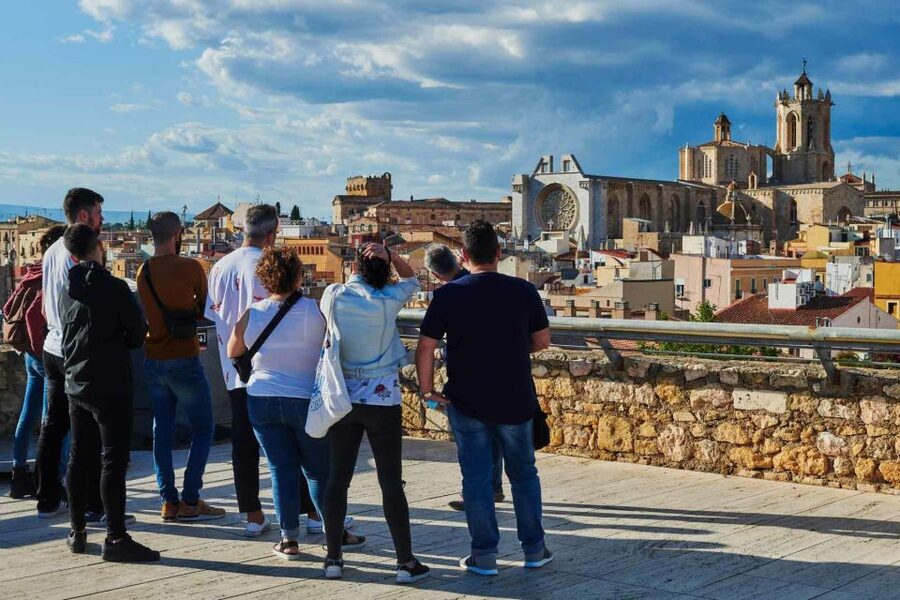
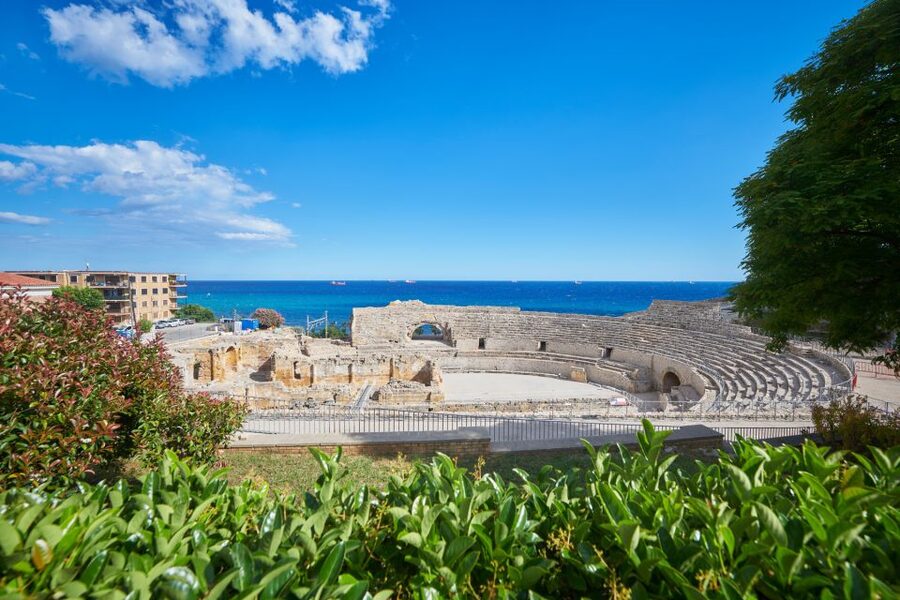
The Amphitheater is the visual finish of the tour. Its location by the sea gives it a setting that is hard to ignore. You can look across the ancient arena toward the Mediterranean and understand why this is likely to be one of the most memorable stops.
Here, the guide explains gladiator contests and animal hunts held in ancient times. These events were designed for a crowd, and the Amphitheater’s open position helps you grasp its public role. It was built for spectacle, sound, and a large audience.
The sea view adds beauty, but the site is not only a scenic stop. The guide also reviews the stadium’s long story up to the present day. That broader view matters because Roman monuments often survive through layers of later use, change, and preservation.
I would save your camera for this section, but listen before taking photos. The views are easy to appreciate on your own. The guide’s explanation is what turns the arena from a dramatic backdrop into a place where public punishment, combat, and staged hunts once took place.
What the $17 Price Really Buys You
At $17 per person, this is a strong-value introduction to Tarragona’s Roman center. You receive a two-hour guided walk, an official city guide, entrance to the Circus, explanations at the Roman walls and Amphitheater, and the city model and audiovisual presentation.
The value is strongest if you are visiting Tarragona for a short time or arriving without a plan. You do not need to work out how the major Roman remains connect, and you avoid spending your first hour trying to interpret scattered ruins on your own.
The price is less compelling if you want a slow archaeological study. Two hours moves at an efficient pace, and one person found the program too short, suggesting three hours would allow more room. That is a fair point. Tarragona has enough Roman material to support a longer visit, but a longer tour would also cost more and require more energy.
For most people, I would treat this as an orientation tour. It gives you the framework. You can then return to a favorite site or continue exploring independently if your schedule allows.
The Guide Makes the Difference
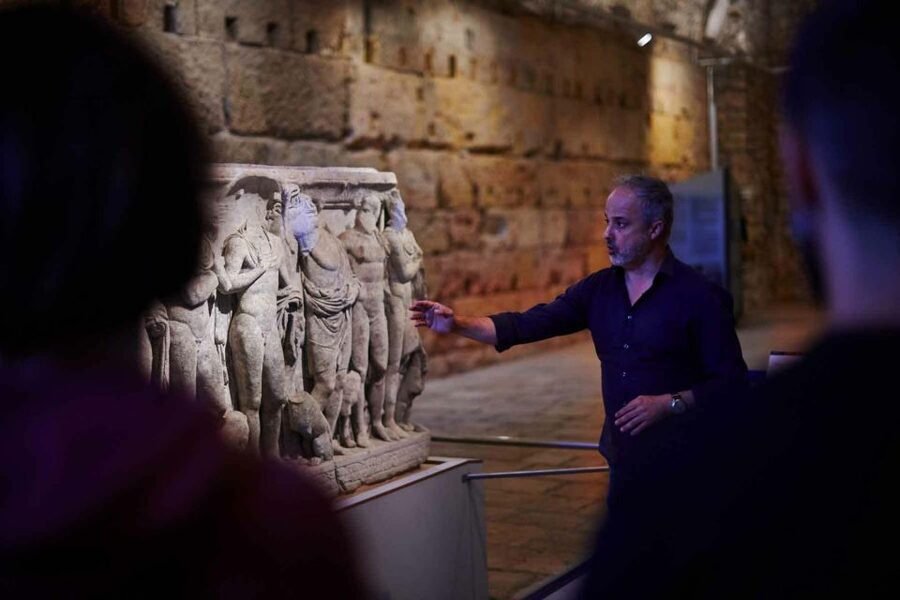
The tour is offered in Catalan or Spanish, and the guide is an official city guide. You should choose this experience only if you are comfortable following explanations in one of those languages.
The clearest praise has gone to Adrià, whose explanations were described as easy to understand, well informed, and delivered with obvious pride in Tarragona. That last quality matters. Roman ruins can feel distant, but a guide who cares about the city can make the past feel connected to the place you are walking through now.
Adrià was also praised for the video presentation and for making the history accessible. If he leads your tour, you may find that the visual material and spoken explanation work especially well together.
The experience is not flawless in every setting. At a busy start, several groups may leave at about the same time, creating noise and making it harder to follow a guide. One account described roughly three groups of 20 people departing together. If that happens, stay close to your guide and move toward the front when possible.
The group size is not specified as a standard feature, so I would not assume an intimate walk. If you prefer quiet, detailed discussion, the quality may depend on the day, the number of groups, and how clearly the guide can be heard.
Walking Comfort, Weather, and Access
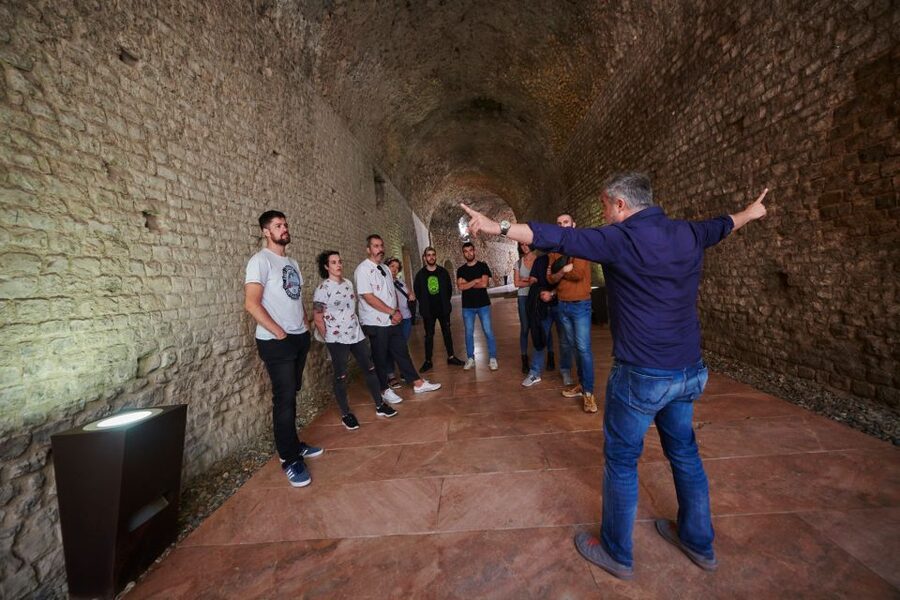
Wear comfortable shoes. The route moves through streets and historic sites, and the tour is built around walking rather than a bus or another form of transport.
Weather can affect the experience. Much of the visit takes place outdoors, including the walls and Amphitheater. Rain can make the tour less comfortable and may make it harder to hear explanations. One particularly wet visit was still judged acceptable, but poor weather will naturally reduce the pleasure of the walk.
The activity is listed as wheelchair accessible. That is useful information for planning, though the experience still involves historic areas, so you may want to confirm any personal access needs before booking.
Do not bring luggage or large bags. A small day bag is the sensible choice, but oversized luggage is not allowed. This matters if you are arriving or departing Tarragona with suitcases. Plan to leave them elsewhere before meeting the group.
Who Will Get the Most From This Walk?
I would recommend the tour to first-time visitors who want a clear introduction to Tarragona’s Roman past without committing to a full-day program. It also suits families, because the Circus, chariot racing, gladiators, and 3D presentation give the history several easy entry points.
It is a good choice for people who like context. If you want to know why the city was built where it was, how the monuments fitted together, and what happened inside them, the guide adds real value.
The tour may also suit cruise passengers or anyone with a limited window in Tarragona. Two hours is long enough to see the key Roman sites while leaving part of the day for the rest of the city.
I would hesitate if you need an English-language tour. The available languages are Catalan and Spanish, with no English option stated here. I would also hesitate if your main goal is extended time at a single monument. This is a broad introduction, not a slow site study.
Booking Flexibility and Timing
You can cancel up to 24 hours before the activity for a full refund. You can also reserve now and pay later, which helps if your schedule is still changing.
The listed duration is two hours, but starting times depend on availability. Check the time carefully and arrive 10 minutes early at the Itinere office beside the Roman walls. A late arrival would be especially awkward at the beginning, since the opening explanation sets up the rest of the route.
If you are visiting in poor weather, bring the comfortable shoes requested for the tour and dress for outdoor walking. The tour operator does not allow luggage or large bags, so keep your belongings light.
Should You Book the Tarragona Roman Heritage Tour?
Book it if you want a fairly priced, well-organized introduction to Tarragona’s Roman center. The combination of the oldest Roman walls outside Italy, Circus vaults, a city model, 3D images, and the sea-facing Amphitheater gives you more than a simple walk past ruins.
The main question is language and pace. You need Catalan or Spanish, and you should be comfortable with a two-hour route that covers several important places. If you are, $17 is a sensible investment, especially for a first visit.
I would book this tour early in a Tarragona visit, then use what you learn to decide which Roman site deserves a closer look. Adrià’s clear explanations and the strong audiovisual material can make the ancient city easier to understand. Just allow for possible crowding, arrive early, and do not expect the depth of a three-hour specialist tour.
FAQ
How much does the Tarragona Roman Heritage Guided Walking Tour cost?
The tour costs $17 per person. The price includes the guided tour of Tarragona and entrance to the Circus.
How long does the tour last?
The walking tour lasts two hours. Starting times depend on availability.
Where is the meeting point?
Meet at the Itinere, Turisme & Cultura office next to the Roman walls. You should arrive 10 minutes before the scheduled start.
What languages are available?
The tour is offered in Catalan and Spanish.
Is the tour wheelchair accessible?
Yes, the activity is listed as wheelchair accessible.
Can I cancel or pay later?
You can cancel up to 24 hours in advance for a full refund. You can also reserve your place and pay later.
Recently added around Salou and Costa Dorada
- From Salou: Montserrat Monastery and Colonia Güell★ 4.5 · 167 reviews
- Half Day Cycling Tour from Salou★ 5.0 · 190 reviews
- Cambrils: Sunset Catamaran Cruise with Drinks★ 4.7 · 201 reviews
- Salou: Siurana Medieval Village Guided Tour w/ Hotel Pickup★ 4.5 · 213 reviews
- Salou: Scuba Diving for Beginners★ 4.8 · 227 reviews
- From Salou: Barcelona City Center Tour★ 4.4 · 247 reviews
- Costa Dorada: Aquopolis Entry Ticket★ 3.9 · 275 reviews
- Cambrils: Parc Samà Entry Ticket★ 4.4 · 295 reviews
Historical Tours, compared.
Madrid Essential: Historic Center, Plaza Mayor & Royal Palace
Read our review →
Tapas Walking Tour with Food, Wine, and History
Read our review →
Sevilla Food Tour: Tapas, Wine, History & Traditions
Read our review →
Valencia Old Town Tour with Wine & Tapas in 11th Century Historic Monument
Read our review →
Barcelona Tapas Walking Tour: Food, Wine & History
Read our review →
Ultimate Seville Tapas, Wine & History Small Group Tour
Read our review →
Skip-the-Line Great Mosque-Cathedral History Tour
Read our review →
Browse the lists this tour appears in