
Review · COOKING CLASSES
Seville: 3.5-Hour Spanish Cooking Class & Triana Market Tour
Cook lunch, then eat your lesson. This Triana Market cooking class gives you two useful Seville experiences in one: a guided look at local produce followed by hands-on preparation of salmorejo, spinach with chickpeas, paella, and dessert. I especially like that the school sits inside the market, and that you do more than watch a chef work. You chop, stir, season, and help bring the meal together.
The class costs $88 per person, which is fair once you count the market visit, ingredients, apron, sangria, the meal, and two additional drinks. The main consideration is timing: the market tour is available only in the morning, and the exact second and third dishes can change. If you want a quiet, private lesson or a fixed menu, this may not be your best fit.
In This Review
- Why this Seville cooking class is worth your morning
- Starting at Triana Market, Plaza del Altozano
- What the market walk teaches you about Andalusian food
- Inside the kitchen: a class built around participation
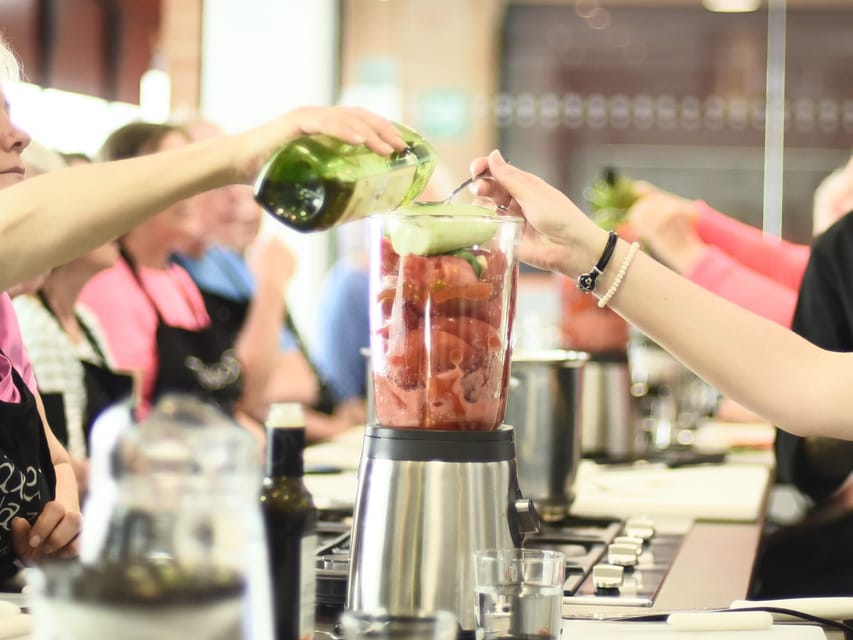
- Salmorejo, a cool start to the meal
- Spinach with chickpeas and the changing second dish
- Paella with chicken, vegetables, and a vegetarian option
- Sangria, lunch, and the part you do not have to cook
- How much value do you get for $88?
- Timing, language, and practical details
- Who should book this experience?
- Should you book the Triana Market cooking class?
- FAQ
- Where does the cooking class meet?
- How long does the experience last?
- What language is the class conducted in?
- What dishes are prepared?
- Is there a vegetarian option?
- Are drinks included?
- Is the market tour available all day?
Why this Seville cooking class is worth your morning
- Triana Market is your classroom setting: The cooking school is at stalls 75 to 77 inside the market at Plaza del Altozano, so the food lesson begins where local ingredients are sold.
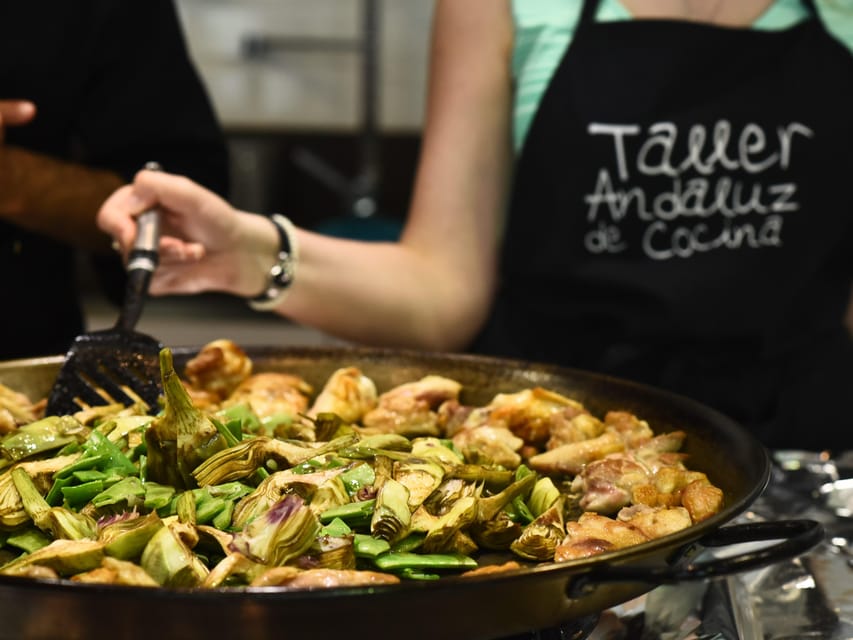
- You make three main dishes and a light dessert: The planned menu includes salmorejo, spinach with chickpeas, Valencian-style paella with chicken and seasonal vegetables, and a simple dessert.
- The class is genuinely hands-on: You are given jobs rather than sitting through a long demonstration. Past participants have learned skills such as finely chopping garlic, preparing artichokes, and deboning chicken.
- Vegetarians are accommodated: A separate vegetable paella is prepared when a vegetarian is in the group, and the alternative dishes can be adjusted.
- Drinks are part of the experience: Sangria is prepared during the class, then you receive up to two more drinks with the meal, such as local beer, white wine, red wine, or soda.
- The teaching style is warm and relaxed: Guides and chefs such as Dom, Leo, Maria, Pedro, Sabrina, Ana, and Clara have been praised for humor, patience, clear instruction, and making every participant feel involved.
Starting at Triana Market, Plaza del Altozano
The meeting point is easy to identify: Triana Market, Plaza del Altozano, stalls 75 to 77, in Seville. The cooking school is inside the food market, which matters more than it might sound. You are not being shown a generic cooking studio filled with ingredients bought elsewhere. The market gives the lesson a sense of place.
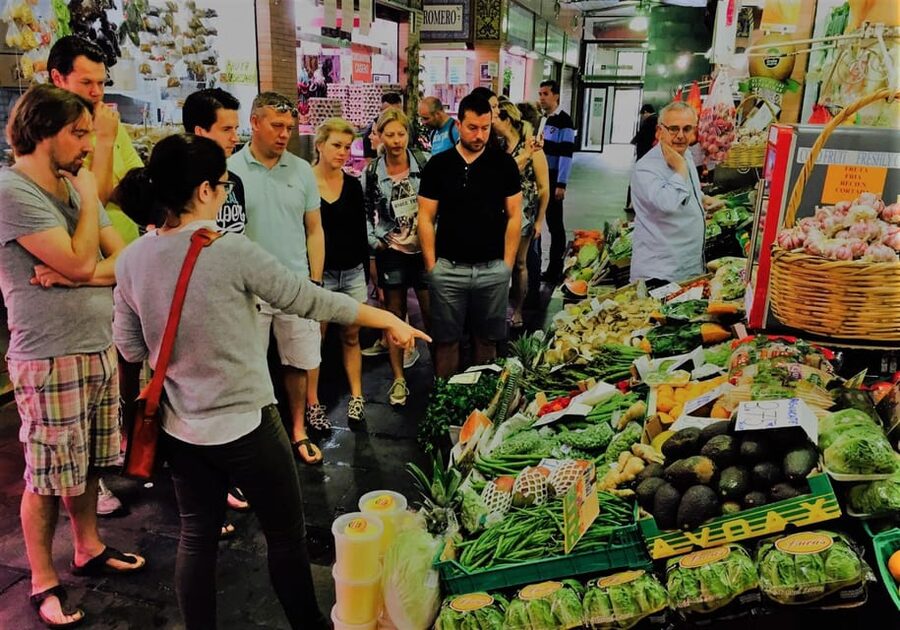
The morning begins with a short guided walk through the market. You learn about the products sold at different stalls and the ingredients used in Andalusian cooking. The guide may stop to explain meats, cheeses, vegetables, and other local foods before the cooking starts.
That market visit is brief, but it gives you a useful frame for the class. Salmorejo is no longer just a cold tomato soup on a menu. Chickpeas, spinach, garlic, seasonal vegetables, and chicken become part of a food culture you can see and touch.
I also like the advice to arrive early if you take the morning version. You can look around the market before the class and buy something for breakfast. That turns the meeting point into more than a place to wait.
Do keep in mind that this is an active food market, not a closed museum. You are sharing the space with people shopping for their daily food. A good guide, including Clara and Sabrina on some sessions, keeps the group focused while respecting the market’s regular customers.
More cooking classes:
- Seville: Spanish Cooking Class with Dinner
★ 4.9 · 900 reviews - Spanish Cooking Class & Triana Market Tour in Sevilla
★ 5.0 · 760 reviews - Spanish Cooking Class and Dinner in Seville
★ 5.0 · 261 reviews
What the market walk teaches you about Andalusian food
The value of the market tour is not simply seeing rows of produce. It helps explain why Andalusian cooking often depends on a short list of fresh, strongly flavored ingredients.
Your guide gives a short account of the market and points out foods that appear in the class. You may hear about the products used in the dishes, as well as local meats and cheeses. The information comes before the cooking, so you understand what you are handling once you move into the kitchen.
This part is especially useful if Seville is your first stop in Spain. The tour introduces you to foods you may later see in tapas bars, grocery shops, and restaurant kitchens. One participant wished for written notes about the meats and cheeses because there was so much to remember. That is a fair point. Bring your phone notes app if you want to record unfamiliar names.
The market walk also makes this experience a good early activity in your Seville stay. You can pick up ideas for other food stops and gain a better sense of what to look for when ordering. It is not a full market history tour, so do not expect a long lecture. Its job is to prepare you for the cooking lesson.
Inside the kitchen: a class built around participation
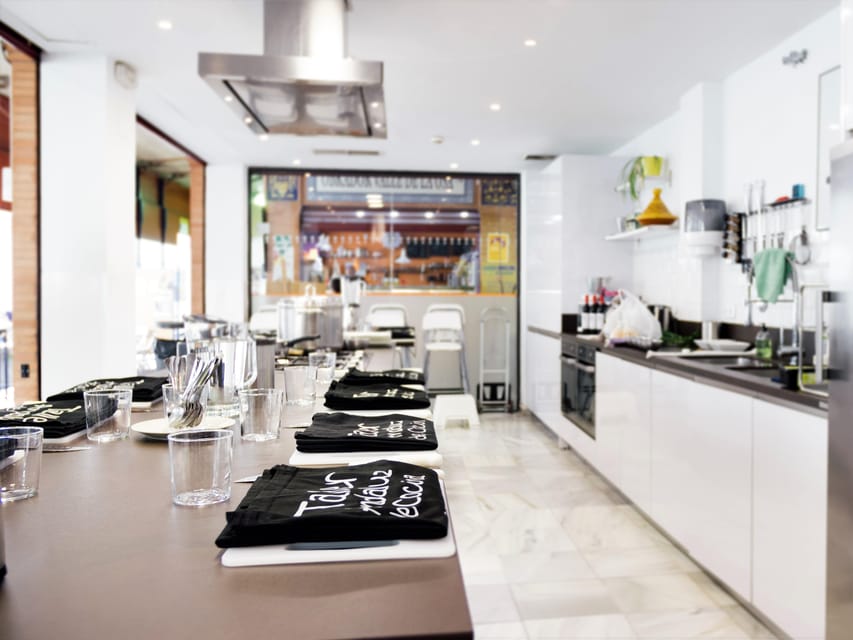
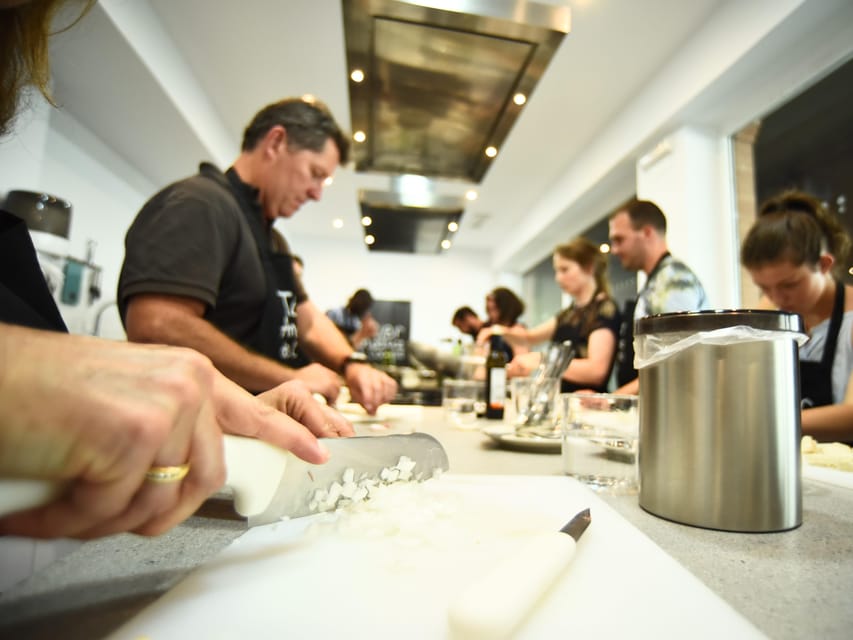
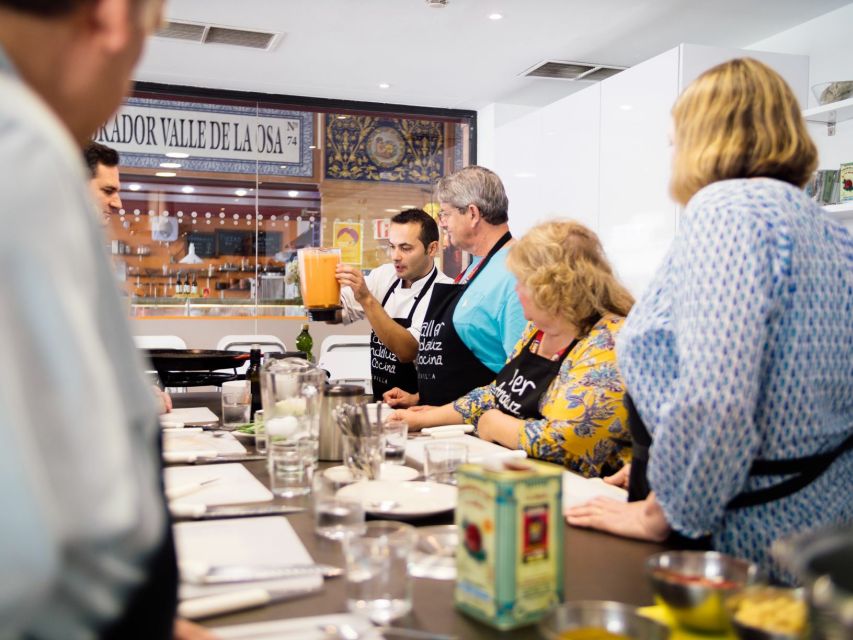
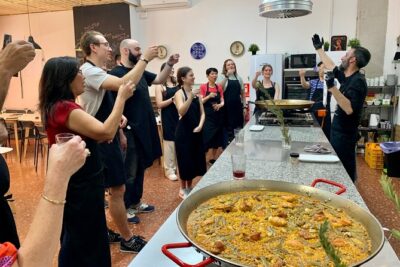
After the market visit, you move into the cooking area at the school. The room has been described as clean, spacious, and well arranged, with seating and work areas that let the group follow the chef. You receive an apron, and the ingredients are supplied.
The chef leads the class in English. The teaching style varies slightly by instructor, but the strongest pattern is a good mix of demonstration and participation. Chefs such as Dom, Leo, Maria, and Pedro have been praised for explaining each step clearly, answering questions, and giving people room to work without abandoning them.
That balance is important. A class can fail in two opposite ways. You can spend three hours watching someone else cook, or you can be handed a knife and left to guess what to do. Here, the chef demonstrates techniques, then invites people to take part in the preparation.
You might learn how to finely chop garlic, prepare an artichoke, or debone a chicken. These are useful skills you can repeat at home, unlike a souvenir that stays in a suitcase. The class also explains some of the reasons behind the cooking methods, including the science and timing that help the dishes work.
The mood is deliberately social. Sangria is made and served during the cooking, which helps people talk while the food comes together. The humor of chefs such as Leo and Dom has been a major part of the appeal, but the joking does not replace instruction. The best sessions seem to combine clear guidance with an easygoing atmosphere.
Salmorejo, a cool start to the meal
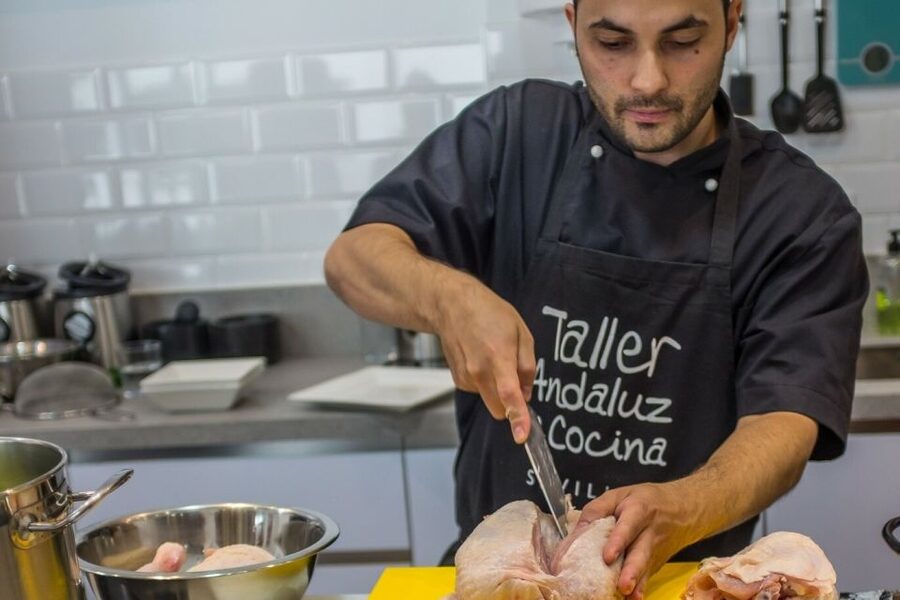
The first planned dish is salmorejo, a thick, cold Andalusian soup made with tomato, bread, olive oil, garlic, and seasoning. On some occasions, the class prepares gazpacho instead.
That variation is worth noting. Both dishes are familiar symbols of southern Spanish cooking, but they are not identical. Salmorejo is thicker and creamier, while gazpacho is lighter and more pourable. If you have a strong preference, ask at the beginning which version is planned.
This is a good first recipe for a class because it teaches how a few simple ingredients can produce a dish with plenty of flavor. You also get a direct connection to the warm climate of Andalusia, where cold soups are practical as well as traditional.
The soup is prepared as part of the group meal, not served as a separate restaurant course. That means you see how it is made and later taste the result with the people who helped prepare it.
More market tours:
- Barcelona: Paella Cooking Experience & Boqueria Market Tour
★ 4.8 · 3,661 reviews - Barcelona Paella Cooking Class with Market Visit, Tapas & Sangria
★ 5.0 · 2,531 reviews - Paella Cooking Class, Wine Tasting & Central Market in Valencia
★ 5.0 · 1,150 reviews - Valencian paella cooking class, tapas and visit to Ruzafa market.
★ 5.0 · 828 reviews
Spinach with chickpeas and the changing second dish
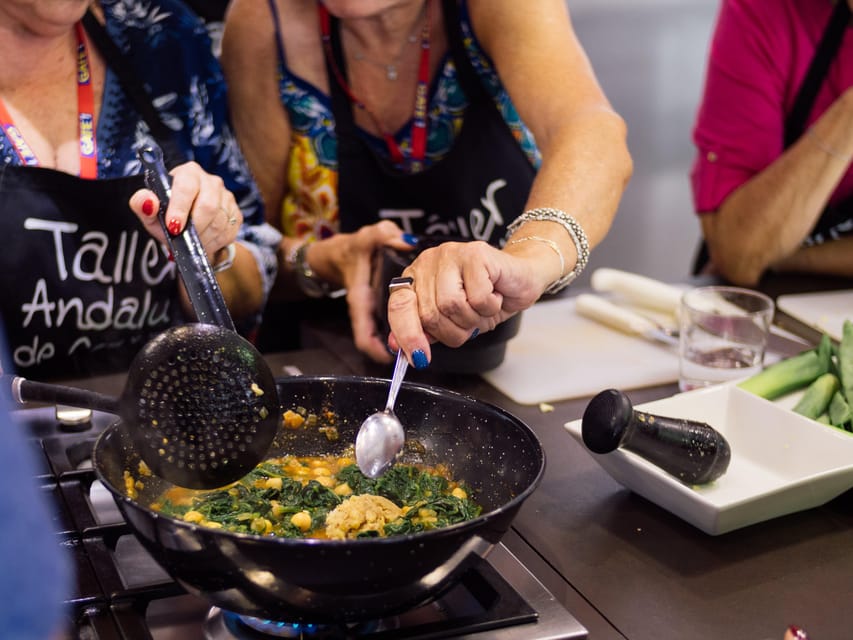
The standard second dish is spinach with chickpeas, a satisfying combination that shows the importance of vegetables and pulses in Andalusian cooking. It is a useful counterpoint to the paella, since it is earthy, filling, and not centered on meat or seafood.
The class may instead prepare flamenco eggs, cod fritters, or garlic prawns. The final choice can depend on the session and the ingredients available. This keeps the class tied to the market, but it also means you should not book with the assumption that every dish will appear exactly as listed.
For many people, this changing element is a plus. You get a menu shaped by local products rather than a rigid cooking demonstration. For picky eaters, it is one more reason to tell the operator about restrictions before the class.
The instructors make an effort to include different skill levels. You do not need to arrive as an experienced cook. Several participants with little confidence in the kitchen found the instruction approachable, while more capable cooks still picked up practical tricks.
Paella with chicken, vegetables, and a vegetarian option
Paella Valenciana is the main event for many people. Here it is made with chicken and seasonal vegetables, rather than presented as a seafood-only dish. The group works through the preparation, then shares the finished paella as part of lunch.
The paella has received especially strong praise for flavor. Several people found it the best dish of the day, and one participant returned to the market afterward to buy the ingredients. That is a useful sign of the class’s purpose: you are not simply eating paella in Seville, you are learning enough to try it again at home.
The exact level of personal work can depend on the group size and the way the chef divides tasks. Still, the format gives everyone a chance to contribute. Reviews describe participants chopping, stirring, and working at individual stations rather than watching from the edge.
If you are vegetarian, tell the operator before attending. A separate vegetable paella is prepared when a vegetarian is in the group. Vegetarians have also found the class welcoming, including sessions where a participant was the only vegetarian present.
The class is not presented as vegan, allergy-free, or suitable for every restriction by default. Send details about allergies, intolerances, or dietary needs in advance. That is essential because the dishes are prepared as a group and the alternatives need planning.
Sangria, lunch, and the part you do not have to cook
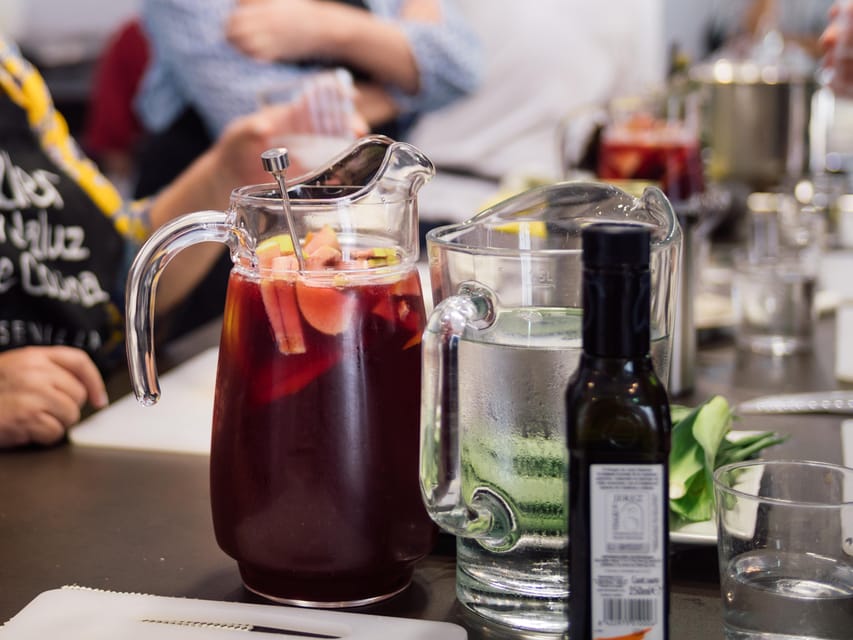
During the preparation, you make sangria and drink it while working. The activity includes sangria, then up to two additional drinks with the meal. Those extras can be local beer, white wine, red wine, or soda.
That drink allowance adds real value to the $88 price, especially because the class ends with a full meal rather than a small tasting. You eat the dishes prepared during the lesson, including the soup, second course, paella, and dessert.
The dessert is light. Depending on the session, it may be lemon sorbet with cava or a similar lemon-based finish. It is a sensible ending after several substantial dishes and a warm kitchen.
The meal is also the social payoff. You sit down with the group and taste what everyone helped prepare. If you are traveling with a partner, family member, or friend, this gives you an activity to share without requiring everyone to have the same cooking ability.
The experience includes two extra drinks, but it is not an unlimited drinking event. If you are seeking a food tour built around many separate alcoholic tastings, choose a tapas experience instead. This class puts food preparation first.
How much value do you get for $88?
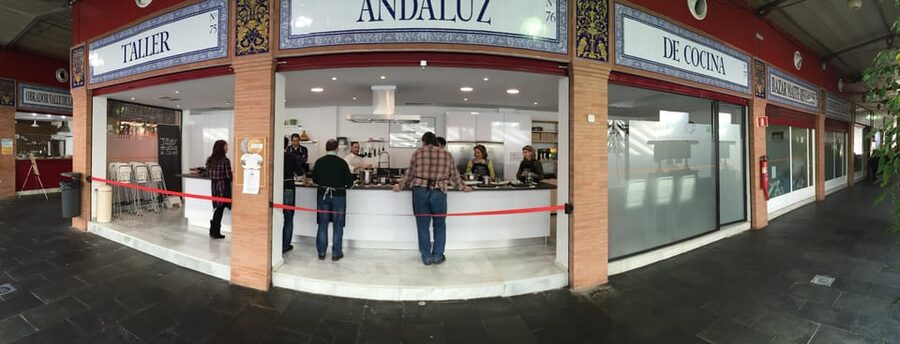
At $88 per person, this is not the cheapest way to eat lunch in Seville. You could find a good local meal for less. The comparison changes once you count the guided market visit, the English instruction, all ingredients, apron use, sangria, the cooking experience, the meal, and two additional drinks.
I consider the price reasonable for someone who wants an activity as well as food. You are paying for three and a half hours of structured time, not just a plate of paella. You also leave with recipes and techniques you can use at home. One participant specifically appreciated receiving the recipes by email.
The value is strongest when you actively participate. If you stand back and let the chef handle every task, you are paying for a cooking class but receiving something closer to a demonstration. Ask for a job if you have not yet been assigned one.
A small class can make the experience feel more personal. One session had only three participants, which allowed close guidance from the chef. Other sessions have included larger groups, but the kitchen is arranged so people can take part. The group size is not specified in advance, so do not assume you will receive a private lesson.
Timing, language, and practical details
The total duration is three and a half hours. The market portion takes place in the morning, so check the available start time carefully when booking. The cooking class may be scheduled as a morning or afternoon experience, but the market tour itself is morning-only.
The class is conducted in English with a live guide. Guides and chefs vary by date, so you may meet Dom, Leo, Maria, Pedro, Sabrina, Ana, Clara, Carlo, Kai, Lydia, Pilar, or another member of the team. The recurring strengths are clear explanations, friendliness, humor, and active help at the workstations.
Wear something comfortable and practical. You receive an apron, but cooking involves chopping, stirring, and handling ingredients. The activity is not a formal dining occasion.
Tell the operator about allergies, intolerances, and dietary restrictions before the day of the class. Vegetarians can be accommodated with a separate vegetable paella, but advance notice is the sensible approach.
Free cancellation is available up to 24 hours before the experience for a full refund. You can also reserve now and pay later, which helps if your Seville plans are still shifting.
Who should book this experience?
I would choose this class for you if you want to connect food with place. It works particularly well for first-time visitors to Seville, couples, families, and friends who enjoy doing something together rather than sitting through another guided walk.
It also suits mixed-ability groups. A confident cook can learn small techniques, while a beginner can follow the chef’s instructions and take on manageable jobs. The tone is friendly rather than formal, and the food is familiar enough to be approachable.
Vegetarians should consider it, provided they notify the operator. The separate vegetable paella is a useful accommodation, and past participants have felt included even when they were the only vegetarian in the group.
I would hesitate if you dislike group activities, have severe dietary restrictions that have not been discussed in advance, or want a guaranteed menu. The second dish may change, the chef may vary, and the class is designed around shared cooking rather than a private lesson.
Should you book the Triana Market cooking class?
Yes, if you want a practical, social introduction to Andalusian food. The strongest reasons are the setting inside Triana Market, the chance to make paella and other local dishes yourself, and the generous finish of eating the full meal with sangria and two additional drinks.
Book it early in your Seville stay if possible. The market visit can help you choose later food stops, and the recipes give you a useful souvenir beyond photographs. Arrive early for the morning session if you want time to look around or buy breakfast.
Skip it only if you want a fixed menu, a private kitchen lesson, or a food tour with constant tastings and no cooking. For most people who like food, conversation, and a little kitchen work, $88 buys a well-filled Seville morning.
FAQ
Where does the cooking class meet?
It meets inside Triana Market at Plaza del Altozano, stalls 75 to 77, in Seville.
How long does the experience last?
The cooking class and market tour last three and a half hours.
What language is the class conducted in?
The live tour guide and cooking class are in English.
What dishes are prepared?
The planned menu includes salmorejo, or sometimes gazpacho, spinach with chickpeas, Valencian paella with chicken and seasonal vegetables, and a light dessert such as lemon sorbet with cava.
Is there a vegetarian option?
Yes. A separate vegetable paella is prepared if there is a vegetarian in the group. You should inform the operator about dietary needs in advance.
Are drinks included?
Yes. Sangria is served during the cooking, and up to two additional drinks per person are included with the meal. Choices can include local beer, white wine, red wine, or soda.
Is the market tour available all day?
No. The market tour is available only in the morning. Check the available starting times when booking.
More Workshops
- Seville: Flamenco Dance Class with Optional Costume
★ 4.9 · 1,032 reviews - Seville: Paddle Surf Route and Class
★ 5.0 · 346 reviews - Sevilla: Rooftop Paella Cooking Class & 30-minute expert Q&A
★ 5.0 · 198 reviews - Flamenco Dance Class in Seville with optional Flamenco Costume
★ 5.0 · 191 reviews
More Shopping Tours
- Valencia: Paella Cooking Class with Central Market Tour
★ 5.0 · 721 reviews - Barcelona: Paella Cooking Class with Market Visit and More
★ 4.9 · 711 reviews - San Sebastian Pintxo Food, Wine & Market Foodie Tour(Small Group)
★ 5.0 · 621 reviews - Cap de Formentor: Market, Beach, and Alcudia Tour
★ 4.3 · 620 reviews
Recently added around Seville
- Art and Wine in Sevilla★ 5.0 · 165 reviews
- Seville: Cathedral and Alcázar Guided Tour★ 4.6 · 167 reviews
- From Seville: White Villages and Ronda Full-Day Trip★ 4.2 · 168 reviews
- Guided Tour Sevilla Cathedral★ 4.5 · 169 reviews
- Cathedral and Real Alcàzar in Italian★ 5.0 · 170 reviews
- Seville: Guadalquivir River Cruise with Lunch or Dinner★ 4.5 · 170 reviews
- White Villages and Ronda: Day trip from Seville.★ 4.7 · 171 reviews
- Private Walking Tour Alcazar and Cathedral in Sevilla★ 5.0 · 172 reviews
Cooking Classes, compared.
Paella Cooking Experience & Boqueria Market Tour
Read our review →
Barcelona Paella Cooking Class with Market Visit, Tapas & Sangria
Read our review →
Barcelona Interactive Spanish Cooking Experience
Read our review →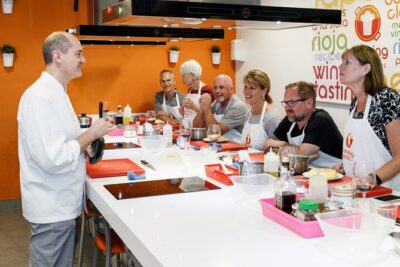
Spanish Cooking Class Paella Tapas and Sangria in Madrid
Read our review →
Paella Cooking Class, Wine Tasting & Central Market in Valencia
Read our review →
Paella Cooking Class in Madrid with Bottomless Wine Pairing
Read our review →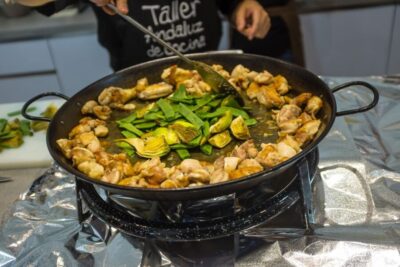
Valencian paella cooking class, tapas and visit to Ruzafa market.
Read our review →Browse the lists this tour appears in