
Review · LANZAROTE TOURS
Private and Guided Tour to the Salinas de Janubio with Tasting
Salt turns volcanic. The Janubio saltworks give Lanzarote a rare, hands-on story about food, family, and island life. I like the artisanal salt-making process and the tasting of Flor de Sal with local wine and goat cheese. The main drawback is that the tour involves a lot of slow walking under strong sun and wind.
This 90-minute visit costs $26.62 per person and is conducted in English. I also like that it is private, so only your own group takes part. Guide quality can vary, and one English-language visit was hard to follow, so it is worth confirming the language arrangements when you book.
In This Review
- Key points to know before you go
- Why Salinas de Janubio is worth your time
- The 90-minute walk through the saltworks
- From cookers to hand extraction
- The salt ponds and volcanic setting
- The tasting at Bodega de la Sal
- Guide quality and language considerations
- Is $26.62 a fair price?
- Getting there and planning your visit
- Who will enjoy this Janubio experience?
- Should you book Salinas de Janubio?
- FAQ
- How long does the Salinas de Janubio tour last?
- Is the tour private?
- Is the tour offered in English?
- What happens during the tasting?
- Is the tour suitable for most people?
- What happens if bad weather cancels the tour?
Key points to know before you go
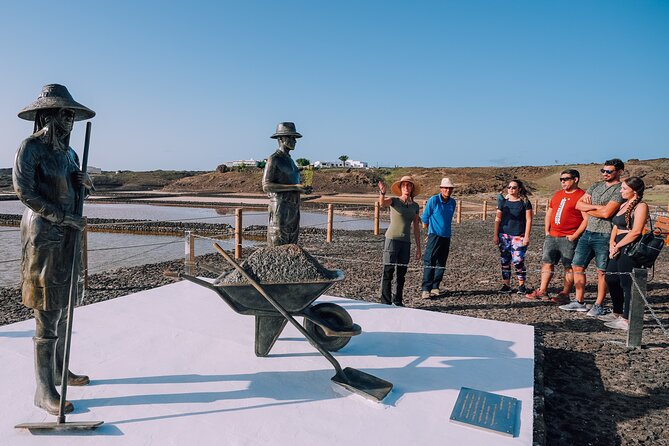
- 127 years of family salt-making: Salinas de Janubio has operated without interruption for more than 127 years, with the work passed from one generation to the next.
- A working salt system: You see the cookers, water mills, channels, extraction areas, and manual methods used to produce sea salt.
- A walk with little shade: The route is flat but can feel long because the pace is slow and the sun and wind are exposed.
- A proper tasting at the end: The visit finishes with Flor de Sal, Janubio flavors, local wine, and goat cheese.
- A private English-language experience: Only your group participates, though some guides also lead visits in Spanish, French, German, or other languages.
- Easy to pair with nearby sights: Janubio’s black sand beach and a nearby restaurant make sensible additions to the outing.
Why Salinas de Janubio is worth your time
Lanzarote is famous for volcanoes, beaches, and the work of artist and architect César Manrique. Salinas de Janubio shows another side of the island: a working place shaped by sea water, wind, stone, and patient family labor.
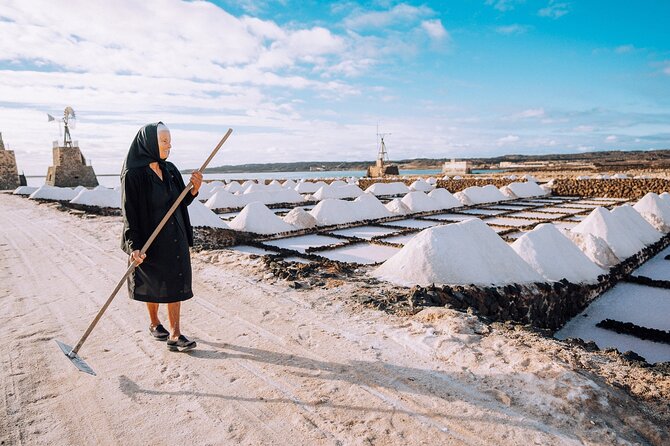
This is the only saltworks in Lanzarote and the Canary Islands with more than 127 years of continuous activity. That fact gives the visit weight. You are not looking at a recreated attraction built only for sightseeing. You are seeing a traditional industry that still explains part of the island’s food culture and economy.
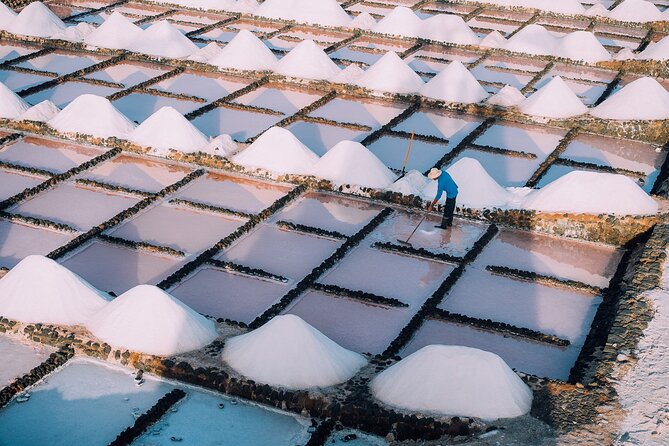
The setting is striking. Salt ponds spread across a dark volcanic area, and the pools can show different colors depending on algae and the concentration of salt in the water. Against the black volcanic ground, the shallow pools create a sharp pattern of pale, pinkish, and earthy tones.
I like the way this tour connects a simple kitchen ingredient to a whole working system. Salt does not just appear in a packet. Here, you can see how sea water moves through the site, how evaporation is managed, and how salt is gathered by hand.
The visit also has an environmental side. The lagoon and salt ponds attract bird life, so you may spot birds around the water during the walk. The tour is not presented as a wildlife outing, but the birds add another reason to slow down and look carefully.
More food and drink tours:
- Wine Lovers: Wine Tasting Tour at El Grifo Bodega Lanzarote
★ 4.9 · 238 reviews - Madrid: Live Flamenco Show with Food and Drinks Options
★ 4.5 · 9,901 reviews - Montserrat & Cogwheel Train, Gourmet Wine Tasting & Tapas/Lunch
★ 5.0 · 6,290 reviews
The 90-minute walk through the saltworks
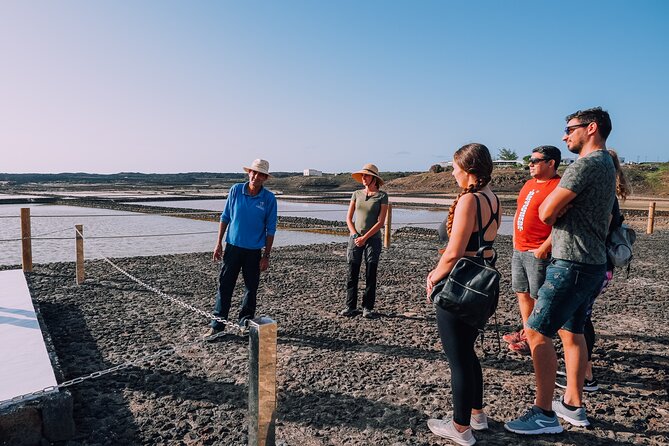
The experience lasts about an hour and a half. It takes place on foot and follows the operation from the water and salt ponds through to extraction and packaging.
The walk is flat, but do not mistake flat for effortless. The guide explains the process at a slow pace, and you spend time moving between different parts of the saltworks. One visitor described walking a lot, even though the route had no steep climbs.
That slower rhythm works well for anyone who wants detail. You can ask questions, look at the structure of the ponds, and understand how each stage connects to the next. It may feel too long if you prefer quick photo stops and a short explanation.
Come ready for outdoor conditions. The site can be sunny and very windy, and one account described rain during a visit. Bring water, sunscreen, and a hat. Comfortable shoes are sensible because the tour is spent walking rather than sitting.
The open setting is part of the appeal, but it also creates the main practical weakness. Shade does not appear to be the focus of the route, so the weather will shape your experience. On a cool, clear day, the walk should feel pleasant. In strong sun or wind, it can become tiring.
From cookers to hand extraction
The guide explains how sea salt moves from the cookers to the final product. You learn about the hydraulic layout, the mills used to draw water, and the architecture that makes the saltworks function.
The hydraulic system is one of the most useful parts of the tour because it turns the site from a collection of colorful ponds into a machine. Water must be moved, held, and allowed to evaporate in stages. The channels, mills, and shallow basins each have a role.
The salt is produced in an artisanal and manual way, following methods used in the past. That does not mean the process is simple. It depends on careful timing, local conditions, and repeated physical work.
You also hear about the family history of the operation. The saltworks have passed from generation to generation, which helps explain why the place feels tied to Canarian culture rather than being just an industrial curiosity.
The best guides make these details easy to picture. Martin has received especially warm praise for explaining each stage clearly and with energy. Yurena has also been singled out for being friendly and informative, with explanations that connect Janubio to the wider story of Lanzarote.
Guide style matters here. The saltworks are fascinating once the system is explained, but the ponds alone will not tell you how everything works. A lively guide can make the mills, channels, and evaporation stages memorable. A less engaging guide may leave you simply looking at a series of shallow pools.
The salt ponds and volcanic setting
The colored pools are the visual highlight. Their tones come from algae and changing salt concentrations, creating strong contrast with the island’s dark volcanic ground.
This is a good place for photographs, but it is better if you take time to understand what you are photographing. The colors are not random decoration. They reflect changes in the water and the stages of production.
The site also has ethnographic and environmental value. In plain terms, you get a look at how people have worked with the island’s natural conditions, while also seeing a habitat linked to the lagoon and salt ponds.
I would not book this tour only for dramatic scenery. Lanzarote has plenty of larger views and more famous sights. Janubio’s appeal is quieter and more specific. It rewards curiosity about food, local work, island engineering, and traditions that have lasted.
The nearby black sand beach adds a useful contrast. After looking at shallow salt ponds and old working structures, you can continue to a volcanic beach and see another expression of Lanzarote’s geology. A restaurant nearby makes it possible to turn the visit into a longer stop.
A few more Spain trips worth a look
- Lanzarote: Guided Off-Road Volcano Buggy Tour
★ 4.7 · 4,385 reviews - Lanzarote: Full-Day Island Highlights Tour
★ 4.6 · 2,660 reviews - Lanzarote: Dolphin-Watching Sunset Cruise with Transfers
★ 4.2 · 2,435 reviews - Arrecife: Timanfaya and Green Lagoon for Cruise Passengers
★ 4.6 · 2,010 reviews
The tasting at Bodega de la Sal
The final tasting is the most praised part of the experience. It takes place at Bodega de la Sal and includes Flor de Sal and the Flavors of Janubio.
The tasting gives the tour a satisfying finish because you do not only learn about salt as a product. You get to taste it. Salt is often treated as a background ingredient, but different forms of salt can have different textures and uses.
The tasting has also included local wine and goat cheese, along with salt served on tomatoes. That combination keeps the stop firmly connected to Lanzarote rather than turning it into a generic snack break.
You may also receive a neatly packaged portion of salt to take home. That is a useful souvenir because it is small, practical, and tied directly to the place you visited.
Allow enough time for this final section. One visitor found the tasting rushed, while other visits made it the clear highlight. The difference may come from group pace, language needs, or the guide’s style. If tasting matters to you, ask questions and do not be shy about taking a moment to enjoy it.
The setting can add to the mood. One tasting took place with the salt hall as a backdrop, which sounds far more memorable than being handed a sample at an ordinary shop counter.
Guide quality and language considerations
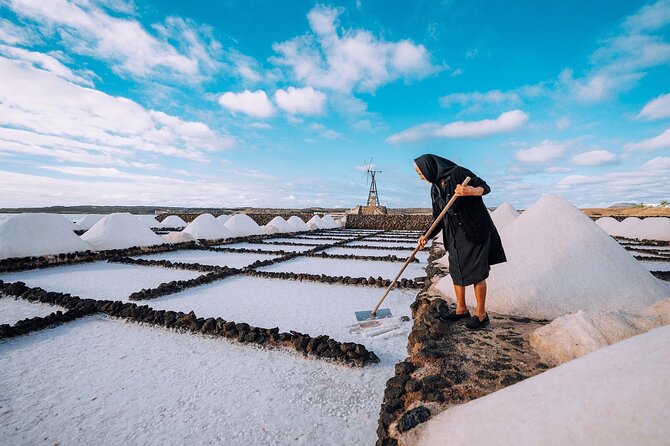
The tour is offered in English, and only your group participates. That private format is a real advantage because you can ask questions without competing with a large crowd.
Guide feedback has been especially strong for Martin and Yurena. Martin is described as careful with details, entertaining, and passionate about the production process. Yurena has been praised for her friendly manner and clear information about Canarian culture and Lanzarote’s wider past.
Language ability is worth checking. Some guides conduct the visit in more than one language, and one English-speaking visitor found the explanations difficult to understand. A French-speaking group was accommodated in French when numbers were small.
This does not mean the English experience will always be a problem. It does mean you should treat the language as an important part of the booking. If your understanding depends on detailed explanations, confirm that the scheduled guide can lead the tour comfortably in English.
There has also been an isolated complaint about an unfriendly guide. The provider apologized for that experience. Most of the available feedback is very positive, but this is a useful reminder that a tour built around one guide’s storytelling can vary from one departure to another.
Is $26.62 a fair price?
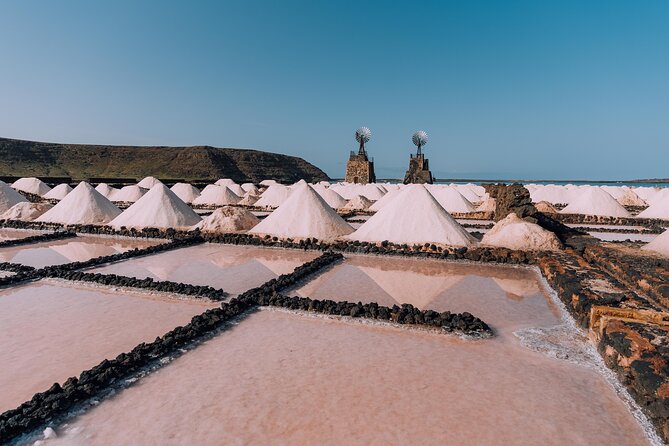
At $26.62 per person, I consider this good value if you want more than a quick look at the salt ponds.
You are paying for a private 90-minute guided visit, access to a working salt-making site, an explanation of the hydraulic system and family operation, and a tasting at the end. The group format matters because your questions can shape the visit.
The price is less attractive if you only want photographs. You can see attractive salt ponds without needing a long explanation, and the walk may feel slow if you are not interested in traditional production.
The tasting improves the value. Local wine, goat cheese, tomatoes, and Flor de Sal turn the final part into more than a standard guided walk. A small salt gift, when provided, adds a practical touch.
The experience also fills a useful gap in a Lanzarote schedule. It is different from a beach outing or a volcano viewpoint. If you have already visited the island’s major scenic stops, Janubio gives you a closer look at everyday work and local food traditions.
Getting there and planning your visit
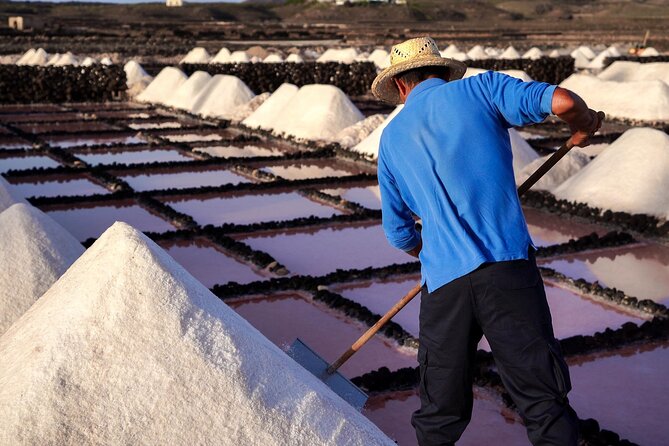
Salinas de Janubio is in Lanzarote, and the site is near public transportation. One account describes reaching it from Playa Blanca by taking the number 60 bus, with the journey taking about 10 minutes.
Because transport details can change, check the current bus schedule before setting out. The tour is short enough to combine with the black sand beach and the nearby restaurant, but you should leave room for the guided walk, tasting, and transport connections.
The visit requires good weather. If poor weather causes a cancellation, you can choose another date or receive a full refund. You can also cancel for a full refund up to 24 hours before the scheduled start time. Changes or cancellations made within 24 hours are not accepted for a refund.
Service animals are allowed, and most people can take part. The main physical demand is walking outdoors at a slow pace. If heat, wind, or extended standing is difficult for you, consider the conditions before booking.
The tour is typically booked about 11 days ahead. That is a useful sign that you should not leave it until the last morning of your trip, especially if your schedule is tight.
Who will enjoy this Janubio experience?
I would recommend it to you if you like working sites, local food, traditional crafts, and places with a clear connection to island life.
It suits curious families, couples, photographers, and anyone who has had enough of standard sightseeing. Children who enjoy seeing how things are made may find the salt process more interesting than another viewpoint, though the slow pace and sun may test younger attention spans.
It is also a good choice for food-minded visitors. The tasting gives you a direct sense of how Flor de Sal is used, and the wine, goat cheese, and tomatoes make the ending social and easy to enjoy.
You may want to skip it if you want a fast attraction with little walking, or if your main goal is dramatic scenery. The saltworks are beautiful, but the real reward comes from listening and asking questions.
Should you book Salinas de Janubio?
Book it if you want a small, personal experience that explains how Lanzarote’s people have worked with the sea for more than a century. The combination of salt ponds, old water-moving methods, family tradition, bird life, and tasting makes the visit feel useful rather than disposable.
I would book early, confirm the English-language arrangements, and plan for sun, wind, water, and comfortable shoes. Then pair Janubio with the nearby black sand beach or restaurant.
At $26.62, this is an easy recommendation for visitors who value local stories and hands-on food experiences. It is a weaker choice only if you want a quick photo stop or dislike slow outdoor walks.
FAQ
How long does the Salinas de Janubio tour last?
The guided visit lasts approximately 1 hour and 30 minutes.
Is the tour private?
Yes. Only your group participates in this private activity.
Is the tour offered in English?
Yes. English is one of the offered languages.
What happens during the tasting?
The visit ends at Bodega de la Sal with a tasting of Flor de Sal and the Flavors of Janubio. The tasting has also included local wine, goat cheese, and salt served on tomatoes.
Is the tour suitable for most people?
Most people can participate, and service animals are allowed. You should be prepared to walk outdoors at a slow pace in conditions that may be sunny or windy.
What happens if bad weather cancels the tour?
If the experience is canceled because of poor weather, you can choose a different date or receive a full refund. You can also cancel up to 24 hours before the start time for a full refund.
Recently added around Lanzarote
- Surf lessons in Famara 9:15-14:30h (4 hours of class)★ 5.0 · 173 reviews
- 2hrs Dolphins Sunset Sailing Cruise With Drink★ 4.0 · 184 reviews
- Timanfaya, Jameos Agua & Cueva Verdes – Highlights Lanzarote★ 4.5 · 188 reviews
- 2-hour Buggy Tour from Costa Teguise★ 4.5 · 195 reviews
- Day Sail to La Graciosa★ 4.0 · 196 reviews
- Surf class in Famara 9:15-12:00 or 11:45-14:30 (2h class)★ 5.0 · 199 reviews
- 3 Hour Guided Buggy Tour Around the Island of Lanzarote★ 4.5 · 202 reviews
- Water Taxi: Puerto del Carmen – Puerto Calero★ 4.5 · 204 reviews
Lanzarote Tours, compared.


Dolphin-Watching Sunset Cruise with Transfers
Read our review →
Arrecife: Timanfaya and Green Lagoon for Cruise Passengers
Read our review →
Timanfaya Park and Jameos del Agua Full-Day Tour
Read our review →
Timanfaya Park, Jameos Agua, & Cueva Verdes Tour
Read our review →
Puerto del Carmen: Dolphin-Watching Speedboat Tour with Swim
Read our review →
Tour to Timanfaya, Jameos del Agua, Cueva de los Verdes and viewpoint from the cliff
Read our review →Browse the lists this tour appears in