
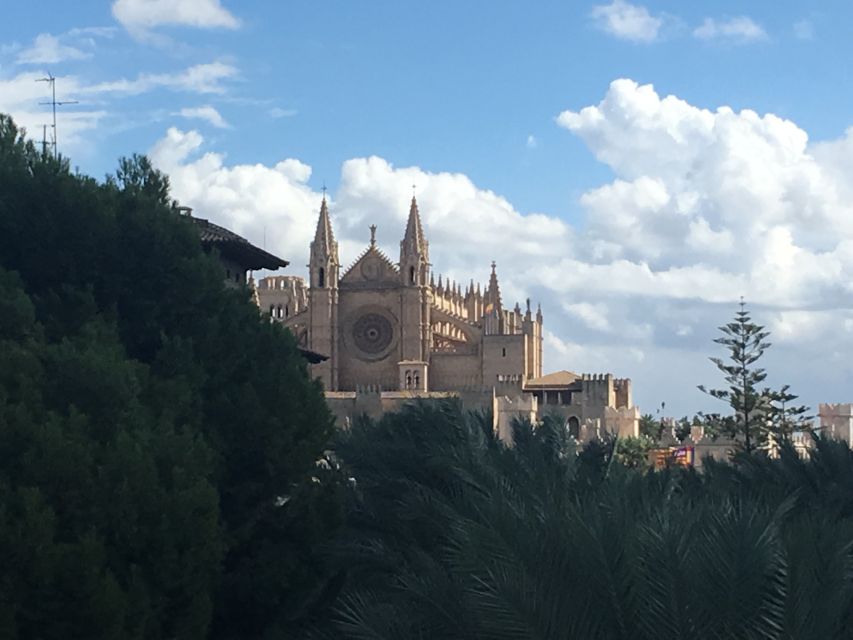
Review · MALLORCA TOURS
Palma de Mallorca: Guided Tour of the Old Town
Palma’s old town rewards slow looking. This walking tour brings together La Seu cathedral, medieval streets, city palaces, ornate patios, and Modernisme buildings in about two hours. I like the strong mix of major sights and smaller details, especially the stories tied to architects such as Guillem Sagrera and the disciples of Antoni Gaudí. I also like the chance to finish with Palma’s food culture at a lively market hall. The main drawback is that entrance fees, food, and drinks are not included, and the walk is not suitable for wheelchair users.
The tour is especially appealing if you want context before exploring Palma on your own. Guides Maja and Yvonne have been praised for making the walk lively, answering questions, and adding practical restaurant advice. The standard live guide language is German, while private tours are offered in English, French, and German, so check the exact option before booking.
In This Review
- Key details to know before you book
- Why Palma’s old town works so well on foot
- Starting near Av. d’Antoni Maura
- La Seu and the cathedral quarter
- La Lonja, Consolat de Mar, and Palma’s trading past
- Palaces, patios, and Modernisme details
- The Jewish quarter, city wall, and civic Palma
- BORN, squares, gardens, and everyday city life
- A market hall and a taste of Mediterranean Palma
- What the $46 price really buys you
- Who will enjoy this walking tour most
- Should you book Palma’s old town tour?
- FAQ
- How long does the Palma old town tour last?
- What language is the regular guided tour?
- Are cathedral and other entrance fees included?
- Is food or drink included?
- Where does the tour meet?
- Can I bring luggage or book this tour with a wheelchair?
Key details to know before you book
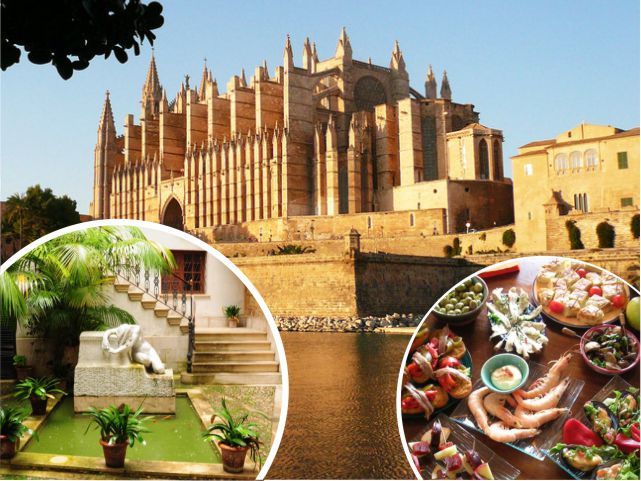
- La Seu anchors the route: The cathedral gives the walk a clear focus and connects Palma’s religious, artistic, and political past.
- The route covers more than famous façades: You’ll see patios, palaces, gardens, squares, the Jewish quarter, the city wall, and government buildings.
- Architecture gets the spotlight: Stories include Guillem Sagrera, Pere Morey, Modernisme designers, and architects influenced by Antoni Gaudí.
- A market hall adds a food stop: You can get a sense of Mediterranean cooking while walking through Palma’s lively food center, though purchases are your responsibility.
- The format is flexible: Choose a join-in tour in German or look for a private or small-group option in German, English, or French.
- The practical cost is $46: That is a fair price for a guided introduction, but the value depends on how much you want interpretation rather than simply sightseeing.
Why Palma’s old town works so well on foot
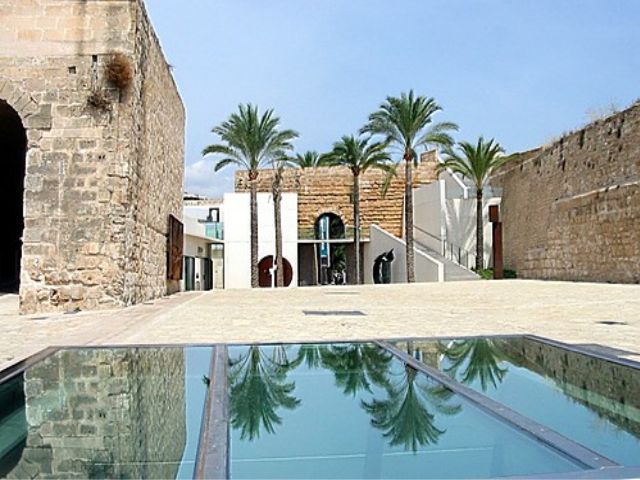
Palma is best understood at walking speed. A bus can show you the outline of the city, but it cannot take you through a narrow lane, pause at a palace courtyard, or explain why a plain-looking doorway matters.
This tour focuses on the old town, where several periods of Palma’s story sit close together. The route links the era when the Mediterranean was the world’s main economic zone with later civic, religious, and artistic changes. That broad frame helps you see the city as more than a collection of pretty buildings.
You’ll move through squares, streets, gardens, monuments, and secular buildings. The guide’s job is to connect them. That matters in Palma because the most interesting details are often easy to miss: an interior patio glimpsed through an open entrance, a government building with a long political story, or a palace that reflects the wealth of a former merchant family.
The walk lasts about 105 minutes to two hours. I would allow the full two hours in your planning, since the longer version gives the guide more time for questions and stories. It is a compact introduction, not an all-day historical course, but it should give you a useful map of the center.
A few more Spain trips worth a look
- Palma: Cathedral of Mallorca Skip-the-Line Entry Ticket
★ 4.6 · 14,386 reviews - Palma de Mallorca: 5-Hour Catamaran Cruise with Lunch & Swim
★ 4.5 · 9,957 reviews - Porto Cristo: Caves of Hams Entry Ticket
★ 4.2 · 6,548 reviews
Starting near Av. d’Antoni Maura
The listed starting point is Av. d’Antoni Maura, with two possible meeting point options shown under the same address. Your exact meeting place may depend on the option you select, so check the booking details before setting out.
This area is a practical place to begin because the old town sights are close by. Still, do not arrive assuming every tour uses precisely the same corner. The meeting point can vary, and private or small-group arrangements may have different instructions.
Wear comfortable shoes. Palma’s old center is made for walking, and the experience includes streets, squares, and uneven historic areas rather than a seated sightseeing format. Large bags and luggage are not allowed, which is useful to know if you are arriving straight from a hotel, ferry, or airport connection.
The tour begins and ends at listed points on Av. d’Antoni Maura. That makes it easy to continue exploring afterward, but the activity does not include transport between sights. You are paying for the guide’s interpretation and route, not a vehicle.
La Seu and the cathedral quarter
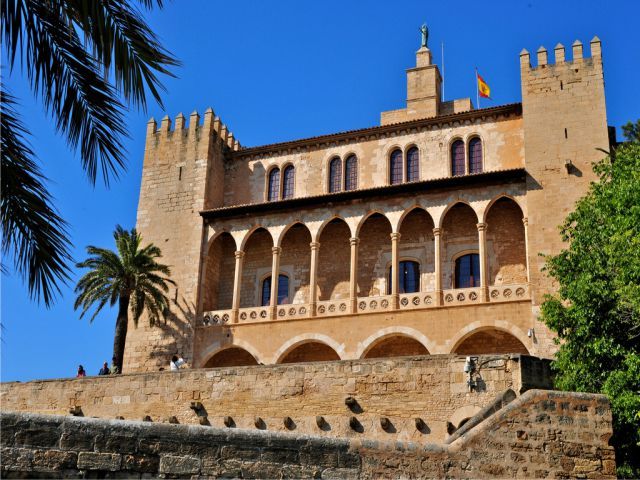
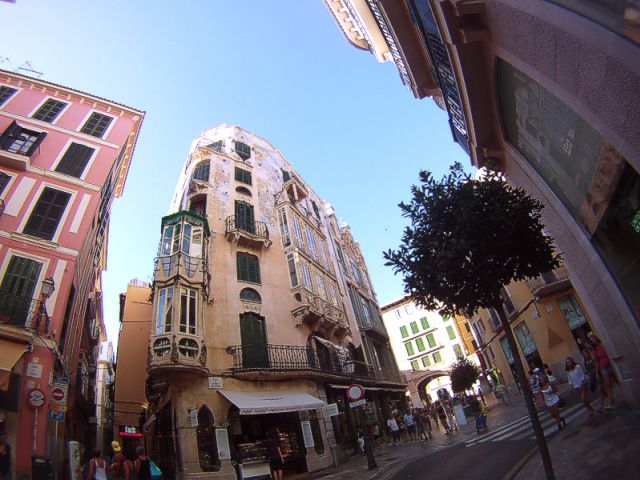
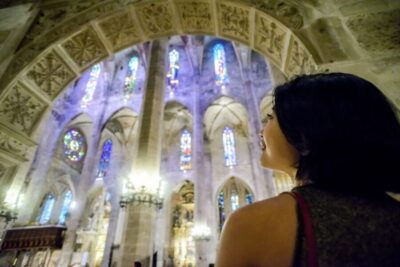
La Seu is the tour’s biggest visual landmark. The cathedral also provides the best starting point for understanding Palma’s power: religion, trade, government, architecture, and the sea all meet in this part of the city.
The guide discusses Guillem Sagrera and Pere Morey, names that add substance to the building’s story. Instead of simply taking a photograph of the exterior, you can learn about the people involved in shaping one of Palma’s defining works.
The cathedral is part of the walking tour, but entrance fees are not included. That distinction matters. You should expect to see and discuss the building from the route, while any interior visit or paid admission would be your own decision and expense. The tour does not promise an included cathedral ticket.
Near La Seu, the route also takes in the Almudaina palace. Its presence helps explain the layers of authority in Palma, from royal power to church influence and civic government. You will get more from this area if you pay attention to how the major buildings relate to one another, rather than treating each stop as an isolated monument.
La Lonja, Consolat de Mar, and Palma’s trading past
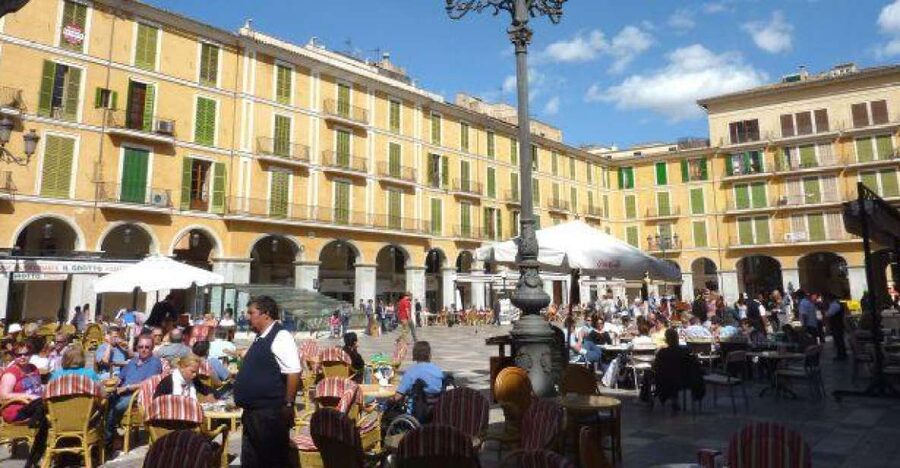
La Lonja, the old exchange, is one of the most useful stops for understanding why Palma once mattered so much around the Mediterranean. The building points to commerce, shipping, contracts, and the people who made money from sea routes.
The nearby Consolat de Mar adds another piece to that picture. Together, these sites move the tour beyond churches and royal buildings. You see a city shaped by trade, not only by faith or politics.
This is where a guide can add real value. Without explanation, La Lonja may look like another impressive Gothic building. With context, it becomes evidence of a working commercial city. You begin to picture Palma as a place where merchants, sailors, officials, and craftsmen met around the waterfront and exchange district.
The tour’s historical reach stretches from the island’s first settlement through later periods and into the present. That broad range is useful, although it also means the guide must keep moving. If you want a long architectural lecture at each building, a private option would likely suit you better than a quick shared walk.
A completely different kind of day out in Mallorca:
- Palma de Mallorca: City Sightseeing Hop-On Hop-Off Bus Tour
★ 4.1 · 4,450 reviews - Mallorca: Island Tour with Boat, Tram & Train from the South
★ 4.4 · 3,888 reviews - Palma: Catamaran Cruise with Swimming and Snorkelling
★ 4.3 · 2,859 reviews - Mallorca: Caves of Drach Day Trip & Optional Caves of Hams
★ 4.3 · 2,720 reviews
Palaces, patios, and Modernisme details
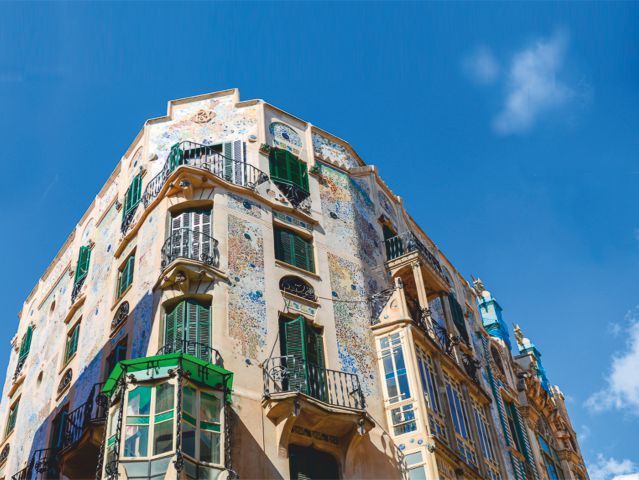
Some of Palma’s best sights are not the large monuments. The old town’s patios, or ornate interior courtyards, reveal how private homes and palaces were designed around shade, air, stonework, and social life.
Access to individual patios can vary, and the tour description does not promise entry into every courtyard. Even so, the guide draws attention to these spaces as part of Palma’s lesser-seen character. Watch doorways and open entrances as you walk. A modest entrance may lead to a much more decorated interior.
The route also highlights city palaces, manors, gardens, and Modernisme architecture. The Modernisme buildings bring Palma into a later artistic period, with forms and decoration linked to the influence of Antoni Gaudí’s pupils. That gives the walk more range than a strictly medieval route.
I like this part because it makes the city feel layered rather than frozen in the past. You might see a medieval street, a grand palace, and a modern decorative façade within a short walk. The guide helps you compare them and spot the change in taste, wealth, and building style.
The Jewish quarter, city wall, and civic Palma
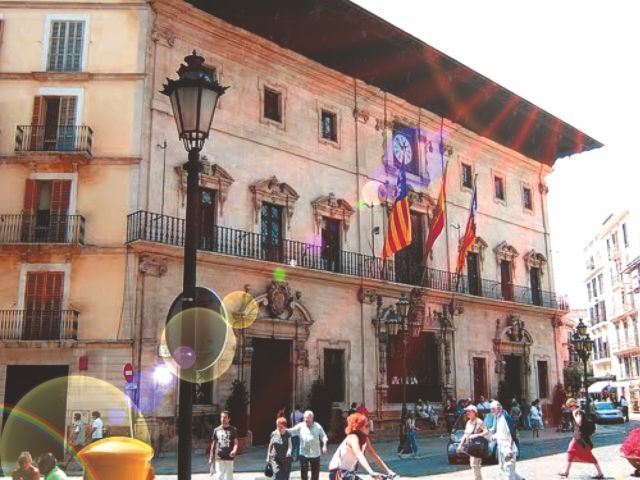
The Jewish quarter adds another important side of Palma’s past. It reminds you that the city was shaped by different communities and traditions, not by one single story.
The route also includes the government building, the episcopal palace, and sections of the city wall. These stops broaden the tour again. The government building represents civic authority, the episcopal palace points to church power, and the wall shows how the city protected and defined itself.
This variety is one of the tour’s strongest features. You are not simply moving from one postcard view to another. You get religious buildings, royal spaces, commercial structures, private palaces, civic offices, and defensive works.
The tradeoff is pace. A two-hour tour can introduce many sites, but it cannot examine each one in detail. I would treat the walk as a well-guided orientation. Mark the places you want to revisit, then return later for a slower look or an interior visit if admission is available.
BORN, squares, gardens, and everyday city life
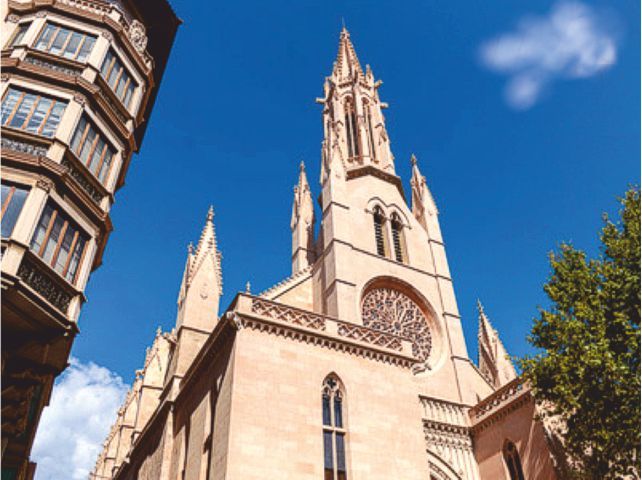
BORN is included among the main sights. Along with Palma’s squares and gardens, it helps connect the historic center with the city you see today.
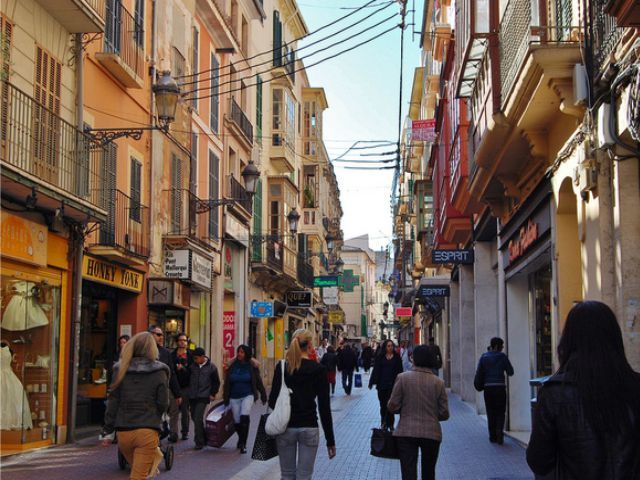
The tour is not only about grand history. The guide points out streets and public spaces where ordinary city life continues around the old buildings. This is important because Palma’s center is not a museum set apart from daily life. It is a working part of the city, with shops, food, government offices, homes, and people moving through the same spaces as sightseers.
Plaça Cort is another key stop. Squares such as this give you a sense of how Palma organizes public life. Listen for the details about monuments, buildings, and local figures, since the guide’s anecdotes are likely to make these places easier to remember.
Maja has been praised for turning the walk into an entertaining lesson, with stories about history, culture, architecture, and local highlights. Yvonne has also been praised for giving practical food advice and answering questions about Palma. Those details suggest that the best part of the experience may be the conversation between major stops, not just the monuments themselves.
A market hall and a taste of Mediterranean Palma
The route includes a lively market hall where you can get a sense of Mediterranean food culture. This is a welcome change of rhythm after so many palaces, churches, and civic buildings.
The stop is about atmosphere and orientation, not a provided meal. Food and drinks are not included, so bring your own budget if you want to buy something. The activity does not specify tastings, a cooking demonstration, or a dedicated food tour.
Even without included samples, the market can help you plan later meals. A guide who gives restaurant advice may be especially useful here. Yvonne’s tour has been praised for linking the historical walk with current dining suggestions, which gives the experience a practical edge.
I would not book this tour mainly for the market stop. Book it for the old town’s architecture and stories, then treat the market as a useful final note. If food is your main interest, you will need a more specialized activity.
What the $46 price really buys you
At $46 per person, this is not the cheapest way to walk around Palma. You can see many exteriors on your own for nothing. The question is whether you want a guide to explain what you are seeing and point out details you might miss.
For that purpose, the price is reasonable. You receive about two hours of live guiding through a concentrated historic area, with coverage of the cathedral, La Lonja, Almudaina palace, BORN, patios, the Jewish quarter, city walls, civic buildings, and the market hall.
The value improves if you are visiting Palma for the first time, have limited time, or prefer a clear route instead of reading several guidebook entries while walking. It is also useful if architecture interests you, since the focus includes Gothic buildings, palaces, Modernisme, and the work of named architects.
The value is weaker if you already know the center well or want paid interior visits included. You will need to pay separately for any admissions, as well as for food and drinks. The tour itself is an introduction, not an entrance-ticket package.
Free cancellation up to 24 hours before the start and reserve-now, pay-later booking make the $46 commitment easier to manage. Still, the important choice is language and format. The regular live guide is German, while private tours are available in English, French, and German. Confirm that detail before paying.
Who will enjoy this walking tour most
I would recommend the experience to first-time visitors who want a quick but thoughtful introduction to Palma. It suits couples, friends, and small groups who enjoy stories about buildings and city life more than a checklist of photo stops.
It also fits anyone who likes architecture. The route brings together cathedral design, Gothic trade buildings, royal and church architecture, palace courtyards, and Modernisme details. You do not need specialist knowledge. The guide supplies the names and context.
German-speaking visitors have the clearest fit with the standard format. The strong praise for Maja and Yvonne centers on friendly, entertaining explanations, detailed answers, and the feeling of being guided by someone who knows Palma well.
A private or small-group tour is the better choice if you want to ask many questions, move at your own pace, or select English or French. The activity data confirms those formats are available, though the exact meeting point and timing depend on the option booked.
This is not a good match for anyone who cannot manage a walking route, since it is not suitable for wheelchair users. It is also a poor choice if you need to carry luggage or large bags, which are not permitted.
Should you book Palma’s old town tour?
Book it if you want Palma explained, not merely photographed. At $46, the tour earns its keep through the guide’s stories, the range of architecture, and the useful connection between famous landmarks and less obvious places such as patios, the Jewish quarter, and the city wall.
Choose the German join-in option if that is your preferred language. If you need English or French, select a private tour, and verify the language before booking. Plan for comfortable shoes, no large bag, and extra money for admissions, food, or drinks.
I would skip it only if you already know Palma’s old town well or want a tour built around cathedral interiors and included tickets. For most first visits, this is a lively, well-paced way to get your bearings and learn which parts of Palma deserve a second look.
FAQ
How long does the Palma old town tour last?
The activity lasts between 105 minutes and two hours. Check availability for the exact starting time and duration of your selected option.
What language is the regular guided tour?
The live tour guide language is German. Private tours are available in English, French, and German.
Are cathedral and other entrance fees included?
No. Entrance fees are not included in the tour price.
Is food or drink included?
No. Food and drinks are not included. The route includes a market hall where you can see Palma’s Mediterranean food culture, but any purchases are separate.
Where does the tour meet?
The listed meeting area is Av. d’Antoni Maura, 22, but the meeting point may vary according to the option you book. Check your booking details carefully.
Can I bring luggage or book this tour with a wheelchair?
Large bags and luggage are not allowed, and the activity is not suitable for wheelchair users. Comfortable shoes are recommended.
Recently added around Mallorca
- VIP Private Segway Tour of Palma★ 5.0 · 165 reviews
- Guided Tasting Tour in 16th century House and Olive Oil Factory★ 5.0 · 169 reviews
- Mallorca Alcudia: Jack Sparrow Cave Jet Ski Tour★ 4.3 · 171 reviews
- Half day on a private sailboat in Mallorca (port d’andratx)★ 5.0 · 172 reviews
- Santa Ponsa: Try Scuba Diving in a Marine Reserve★ 4.9 · 172 reviews
- Mallorca Sailing Adventure with Snorkeling, Snacks & Drinks★ 5.0 · 176 reviews
- From Andratx: Formula Sunset Driving Tour★ 4.8 · 176 reviews
- Playa de Palma: Banana Boat Ride★ 4.3 · 177 reviews
Mallorca Tours, compared.
Cathedral of Mallorca Skip-the-Line Entry Ticket
Read our review →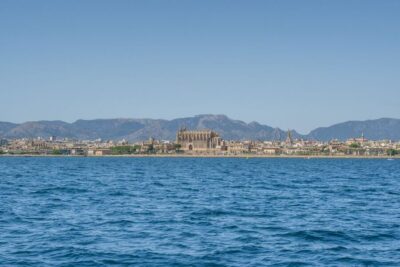
Island Tour with Boat, Tram & Train from the South
Read our review →
Catamaran Cruise with Swimming and Snorkelling
Read our review →
Caves of Drach Day Trip & Optional Caves of Hams
Read our review →
Quad Bike Tour, Snorkeling, and Cliff Jumping
Read our review →Browse the lists this tour appears in